
Categories List
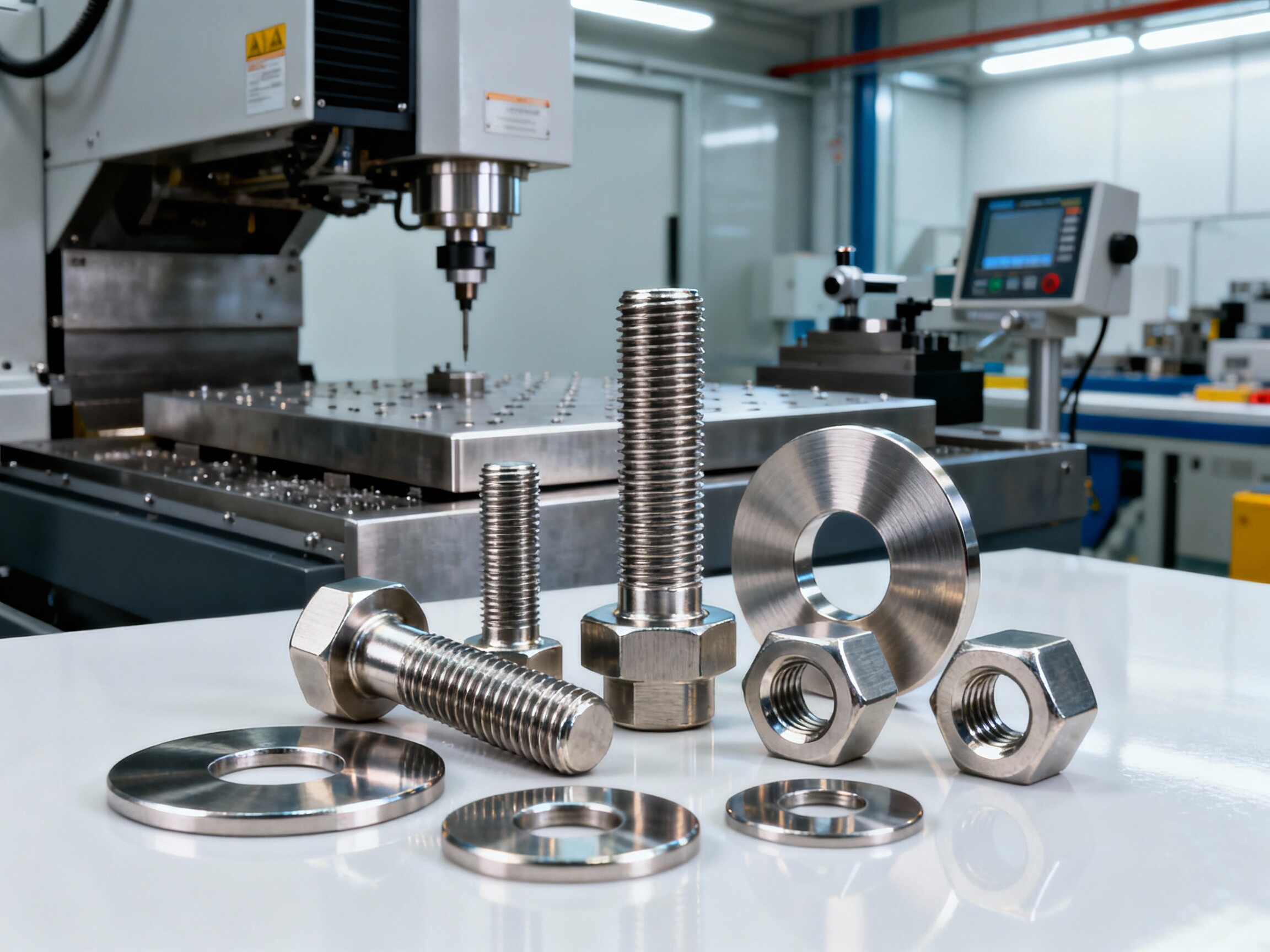

Why 17-4 PH Fasteners are a Premium Choice
As a leading manufacturer of special alloy fasteners, RAYCHIN recognizes the critical need for components that deliver unwavering reliability under extreme conditions. 17-4 PH stainless steel fasteners stand out as a premier solution, offering an exceptional balance of high strength, good corrosion resistance, and dimensional stability. These precipitation hardening fasteners are engineered for performance, making them indispensable in sectors where failure is not an option. This comprehensive guide delves into the specifics of 17-4 PH alloy fasteners, answers common technical queries, and provides a detailed comparison with alternative materials to empower your design and procurement decisions.
1. In-Depth Look: 17-4 PH Material Composition
The superior performance of 17-4 PH stainless steel fasteners is rooted in their precise metallurgical composition. Designated as UNS S17400, this martensitic precipitation-hardening alloy derives its name from its approximate composition of 17% Chromium and 4% Nickel.
Chromium (Cr): 15.0 - 17.5% – The primary element providing corrosion resistance in 17-4 PH fasteners.
Nickel (Ni): 3.0 - 5.0% – Stabilizes the austenitic structure, enhancing toughness and ductility.
Copper (Cu): 3.0 - 5.0% – The key to precipitation hardening; copper-rich clusters form during aging, significantly increasing strength.
Manganese (Mn): ≤1.0%
Silicon (Si): ≤1.0%
Columbium (Cb) + Tantalum (Ta): 0.15 - 0.45% – These elements form stable carbides, improving strength and grain structure.
Carbon (C): ≤0.07% – Kept low to minimize carbide precipitation and maintain corrosion resistance.
Iron (Fe): Balance
This carefully balanced chemistry allows 17-4 PH fasteners to be supplied in a solution-treated Condition A, which is relatively soft and machinable, and then later aged to achieve high strength.
2. Mechanical Properties of 17-4 PH Fasteners
The mechanical properties of 17-4 PH high-strength fasteners are highly dependent on the heat treatment (aging) condition. This allows for customization based on the application's need for strength versus toughness.
17-4 PH fasteners in the popular H900 condition offer an outstanding strength-to-weight ratio, excellent fatigue resistance, and good service up to approximately 600°F (316°C).
3. Primary Application Fields for 17-4 PH Fasteners
The unique property profile of 17-4 PH stainless steel fasteners makes them the material of choice for demanding environments:
Aerospace Fasteners: Used in landing gear, engine mounts, and structural components due to their high strength and moderate weight.
Oil & Gas and Chemical Processing Equipment: Ideal for valves, pumps, and fittings exposed to mildly corrosive media and high stress.
Marine & Offshore Hardware: Suitable for marine-grade 17-4 PH fasteners in seawater pumps, shafts, and fittings where chloride resistance is crucial.
Power Generation: Employed in turbine blades, compressor parts, and nuclear reactor components.
High-Performance Automotive: Used in racing components and turbocharger parts.
4. FAQ: Answering Top Questions on 17-4 PH Fasteners
Q1: How does the corrosion resistance of 17-4 PH compare to 304 or 316 stainless fasteners?
A: 17-4 PH fasteners offer good corrosion resistance, superior to most carbon and low-alloy steels, but generally less than austenitic grades like 304 or 316 in aggressive chemical environments. Their key advantage is combining this corrosion resistance with much higher strength. For marine splash zones or chemical exposure, Condition H1150 is often recommended for best performance.
Q2: Can 17-4 PH fasteners be welded?
A: Yes, but with precautions. 17-4 PH fastener welding is best performed in the solution-treated Condition A. Post-weld, the entire assembly must be re-solution treated and aged to restore uniform mechanical properties and corrosion resistance. For critical applications, consulting with RAYCHIN engineers is advised.
Q3: What are the machining considerations for 17-4 PH?
A: Machinable 17-4 PH fasteners are most easily fabricated in Condition A. After machining, aging treatment develops the final high strength. It is essential to account for predictable, minimal dimensional changes during the final aging process.
Q4: What temperature range is suitable for 17-4 PH fasteners?
A: 17-4 PH high-temperature fasteners retain excellent mechanical properties up to about 600°F (316°C). For prolonged service above this temperature, alternative precipitation-hardening alloys like A-286 are recommended, as over-aging and loss of strength can occur.
5. Detailed Material Comparison: 17-4 PH vs. Alternatives
Selecting the right fastener material requires careful trade-offs. Below is a detailed comparison to guide your choice.
Partner with RAYCHIN for Your 17-4 PH Fastener Needs
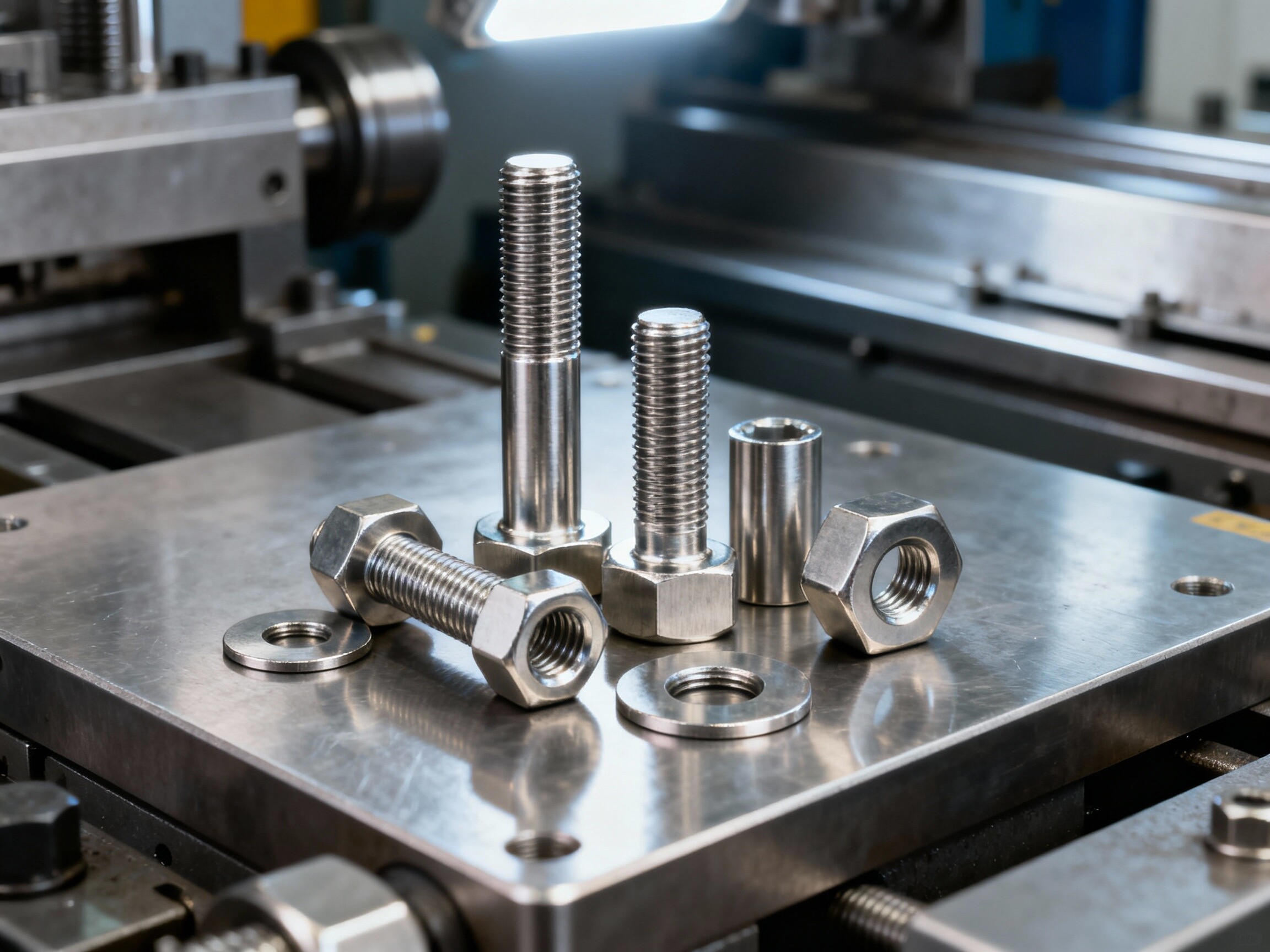
At RAYCHIN, we are experts in manufacturing precision custom 17-4 PH fasteners—including bolts, screws, nuts, and studs—tailored to your specific condition and certification requirements (AMS 5643, ASTM A564). Our technical team can help you navigate the choice between 17-4 PH, 15-5 PH, and other specialty alloy fasteners to optimize your design for performance, durability, and cost.
17-4 PH fasteners, 17-4 PH stainless steel fasteners, precipitation hardening fasteners, high-strength corrosion-resistant fasteners, 17-4 PH bolt supplier, 17-4 PH material properties, 17-4 PH vs 15-5 PH, 17-4 PH H900, marine-grade 17-4 PH fasteners, aerospace fasteners 17-4 PH, custom 17-4 PH fasteners, machinable 17-4 PH, 17-4 PH alternative materials, PH stainless steel fasteners.
Request A Quote! We'll respond as soon as possible(within 12 hours)
Get a Quote