
Categories List
Recent Posts
 PEEK Fasteners | Polyetheretherketone Bolts, Nuts, Screws – High-Performance Polymer | RAYCHIN LIMITED
 High-Temperature Alloy Fasteners: Complete Material Guide, Chemistry, Performance Comparison | RAYCHIN LIMITED
 High-Temperature Fastener Material Selection Guide | A286, Inconel 718, Nimonic 80A, Waspaloy – RAYCHIN LIMITED
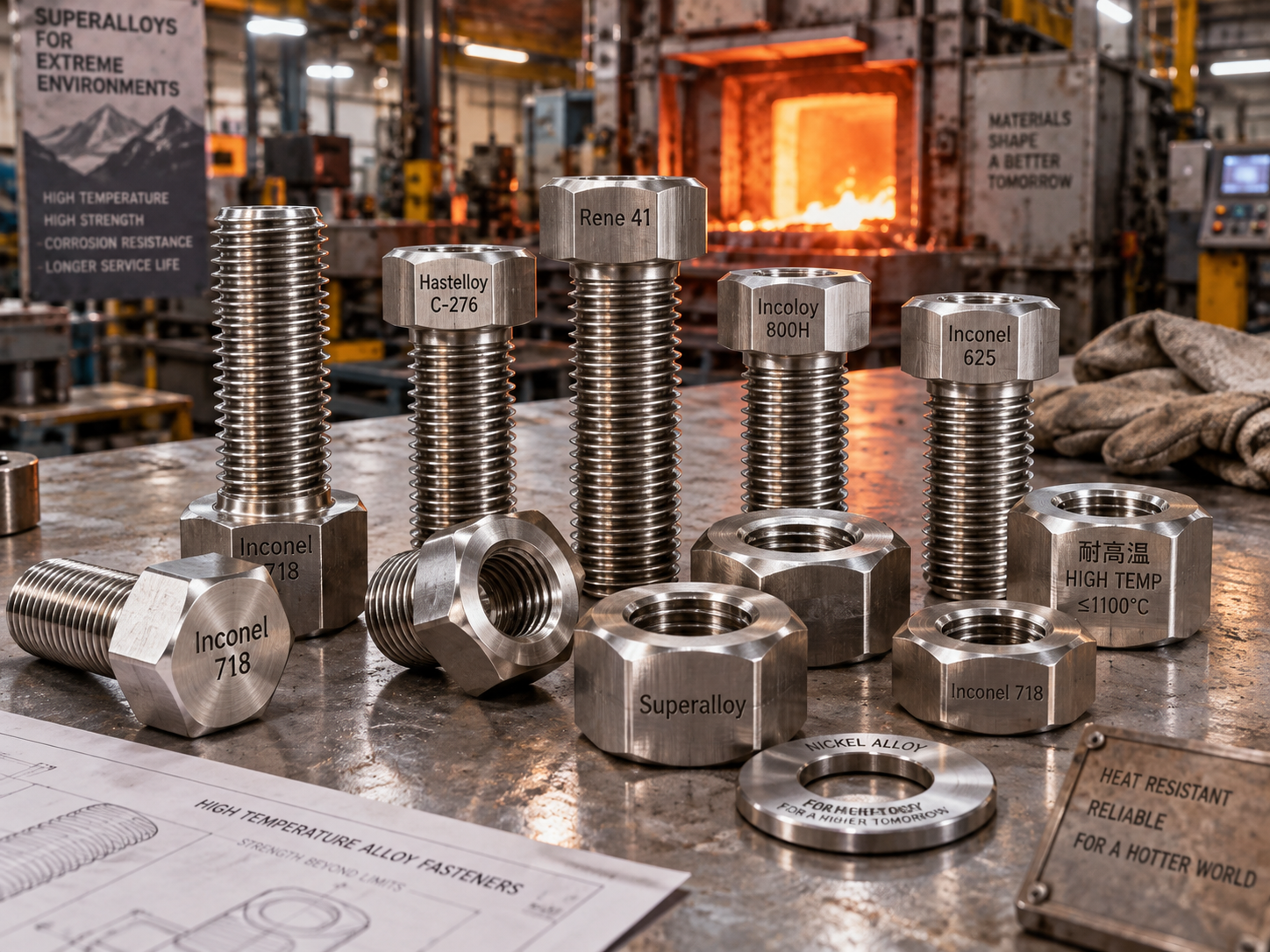
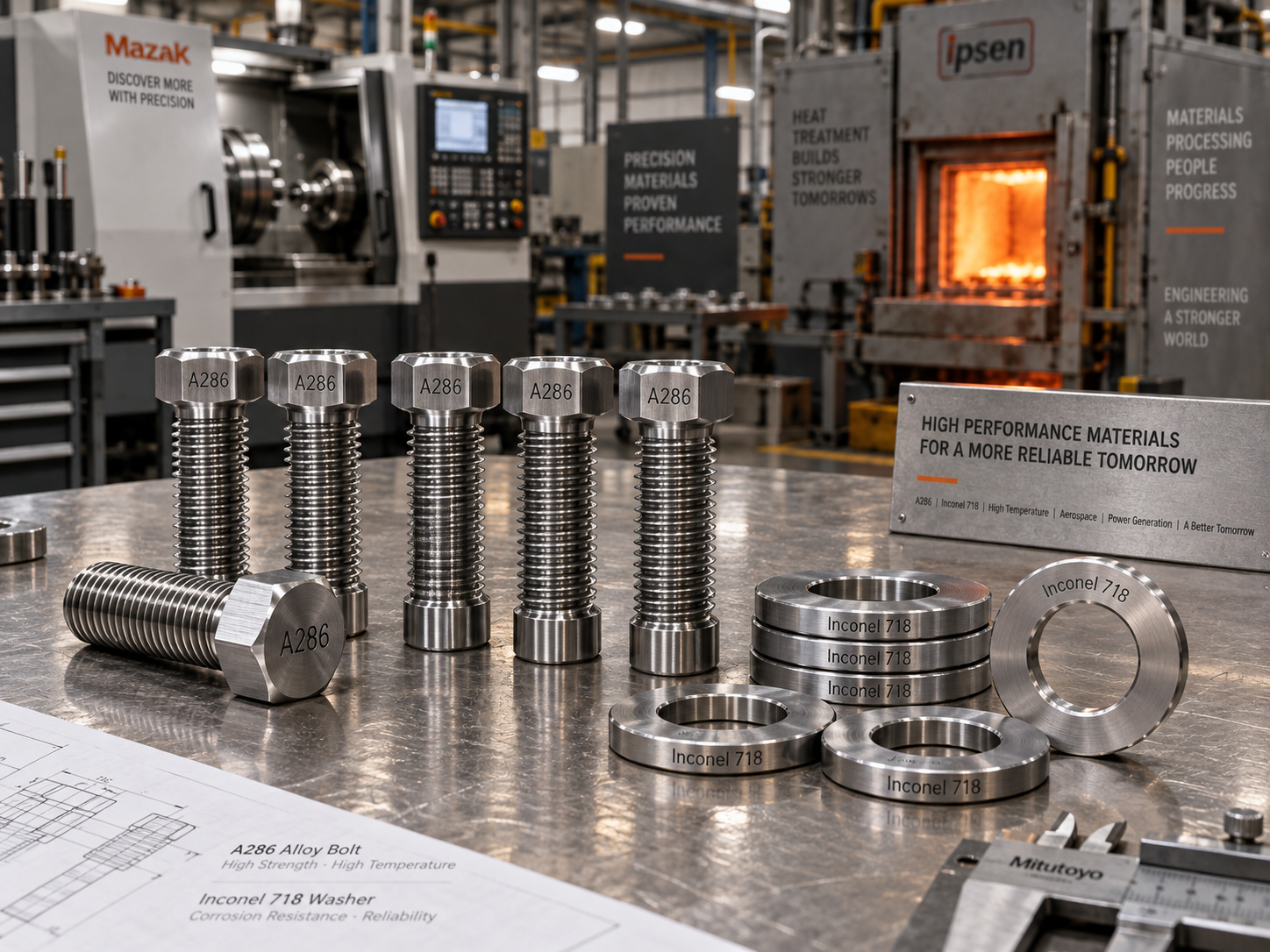
A286 Bolt vs. Standard Bolts: Which One Wins?
When extreme environments demand uncompromising reliability, the battle between A286 bolts and standard bolts becomes critical. Engineered for superior performance, A286 fasteners (including A286 screws and nuts) offer exceptional yield strength up to 140 ksi - nearly double that of standard grades. This technical comparison explores why aerospace technicians and industrial engineers increasingly specify these premium fasteners for high-stress applications where failure isn't an option.
1. Defining the Contenders: Material Science Behind A286 and Standard Fasteners
The fundamental difference lies in their metallurgical composition. A286 bolts are precipitation-hardened iron-nickel-chromium alloys conforming to AMS 5731/5734 standards, with titanium and molybdenum additives creating a microstructure resistant to both creep and stress rupture. Standard bolts typically use SAE Grade 5 (medium carbon steel) or Grade 8 (medium carbon alloy steel), with yield strengths maxing out at 92 ksi. The A286 bolt yield strength advantage becomes particularly evident in thermal cycling conditions - where standard fasteners lose up to 40% of their clamping force after just 50 cycles at 600°F (315°C), A286 maintains 85%+ retention. This explains their dominance in jet engine assemblies and nuclear reactor components where thermal fatigue is inevitable.
2. Performance Showdown: Technical Comparison Under Extreme Conditions
For applications involving cryogenic storage or turbine exhaust systems, standard bolts simply can't compete. The A286 screw's ability to maintain ductility at liquid nitrogen temperatures (-320°F/-196°C) makes it indispensable in LNG facilities. Meanwhile, its oxidation resistance outperforms even stainless steel at sustained high temperatures - a critical factor for exhaust manifold fasteners in performance automotive applications.
3. Application-Specific Advantages: Where A286 Fasteners Dominate
Five industries where the A286 bolt justifies its premium cost through operational savings:
- Aerospace: FAA-approved for engine mounts and flight control systems due to vibration resistance exceeding NASM25027 specs
- Oil & Gas: Sulfide stress cracking resistance meets NACE MR0175 for sour service wells
- Power Generation: Creep resistance at 1200°F prevents turbine casing bolt failures between overhaul cycles
- Chemical Processing: Passes ASTM G48 Method A pitting tests for hydrochloric acid exposure
- Defense: MIL-S-25043 compliance ensures reliability in armored vehicle suspensions
In contrast, standard bolts frequently require oversizing or redundant fastening to achieve similar safety margins - adding weight and maintenance complexity. For example, offshore platform walkways using A286 nuts show 60% fewer replacement incidents over 5-year inspections compared to galvanized carbon steel alternatives.
4. Cost-Benefit Analysis: When to Specify A286 Fasteners
While A286 fasteners carry a 3-5x material cost premium over standard grades, total cost of ownership often favors them in these scenarios:
- High downtime cost environments: A single bolt failure in a paper mill dryer section can cause $18,000/hour in lost production
- Inaccessible installations: Satellite components or submerged valves where replacement requires disassembly
- Safety-critical systems: Elevator suspension components or pharmaceutical reactor vessels
For less demanding applications like temporary scaffolding or non-load bearing architectural elements, standard bolts remain cost-effective. Interestingly, some users combine both - using A286 for critical joints while specifying standard bolts for secondary connections. This hybrid approach optimizes project budgets without compromising safety.
5. Technical Misconceptions: Clarifying A286 Limitations
Despite their advantages, A286 fasteners aren't universal solutions. Three common misconceptions:
- Myth: A286 works for all chemical environments
Reality: Vulnerable to hydrochloric and hydrofluoric acids - Waspaloy Nuts may be better for these cases - Myth: Higher strength always means better
Reality: Excessive torque can gall threads - always use anti-seize compounds - Myth: A286 replaces all specialty alloys
Reality: For ultra-high temps beyond 1300°F, cobalt-based alloys like MP35N outperform it
Proper heat treatment is another often-overlooked factor. While solution annealing at 1800°F followed by aging at 1325°F develops optimal A286 bolt yield strength, some suppliers shortcut this process - always request mill certification reports.
6. Why Choose RAYCHIN for Your A286 Fastener Needs
With 15 years specializing in superalloy fasteners, RAYCHIN LIMITED brings unmatched expertise in A286 applications. Our metallurgists work directly with clients to:
- Customize heat treatments for specific operating conditions
- Provide traceable material certifications meeting EN 10204 3.1 standards
- Offer value engineering - suggesting optimal grades like Waspaloy Nuts when appropriate
- Maintain ISO 9001:2015 certified manufacturing with full process controls
Contact our technical team today for fastener recommendations tailored to your project's mechanical, thermal, and chemical requirements - because in extreme environments, compromise isn't an option.
Request A Quote! We'll respond as soon as possible(within 12 hours)
Get a Quote