This technical document provides an extensive comparison of Inconel and other high-performance fastener materials. It serves as a decision-support tool for engineers and procurement specialists selecting materials for critical applications in aerospace, energy, chemical processing, marine, and medical industries.
1. Material Composition & Classification
| Material Family | Specific Grade | Primary Base | Key Alloying Elements (%) | Material Class |
| Nickel-Based Superalloys | Inconel 718 | Nickel (~50-55%) | Cr (~17-21%), Fe (bal.), Nb+Ta (~5%), Mo (~3%), Ti (~0.8%), Al (~0.5%) | Age-hardenable Ni-Cr alloy |
| Inconel 625 | Nickel (~58% min) | Cr (~20-23%), Mo (~8-10%), Fe (~5% max) | Solid-solution strengthened |
| Hastelloy C-276 | Nickel (~57%) | Mo (~15-17%), Cr (~14.5-16.5%), Fe (~4-7%), W (~3-4.5%) | Ni-Mo-Cr "C-family" |
| Monel K-500 | Nickel (~63-70%) | Cu (~27-33%), Al (~2.3-3.15%), Ti (~0.35-0.85%) | Age-hardenable Ni-Cu |
| Iron-Based Superalloys | A286 | Iron (~55-60%) | Cr (~15%), Ni (~25%), Mo (~1.3%), Ti (~2.1%), Al (~0.2%) | Precipitation-hardening Fe-Ni-Cr |
| Incoloy 925 | Iron (~44%) | Ni (~42%), Cr (~21%), Mo (~3%), Ti (~2.1%) | Fe-Ni-Cr superalloy |
| Stainless Steels | AISI 316/316L | Iron (~65-70%) | Cr (~16-18%), Ni (~10-14%), Mo (~2-3%) | Austenitic stainless |
| 254 SMO (UNS S31254) | Iron (~62%) | Cr (~20%), Ni (~18%), Mo (~6.1%), Cu (~0.7%), N (~0.2%) | Super-austenitic |
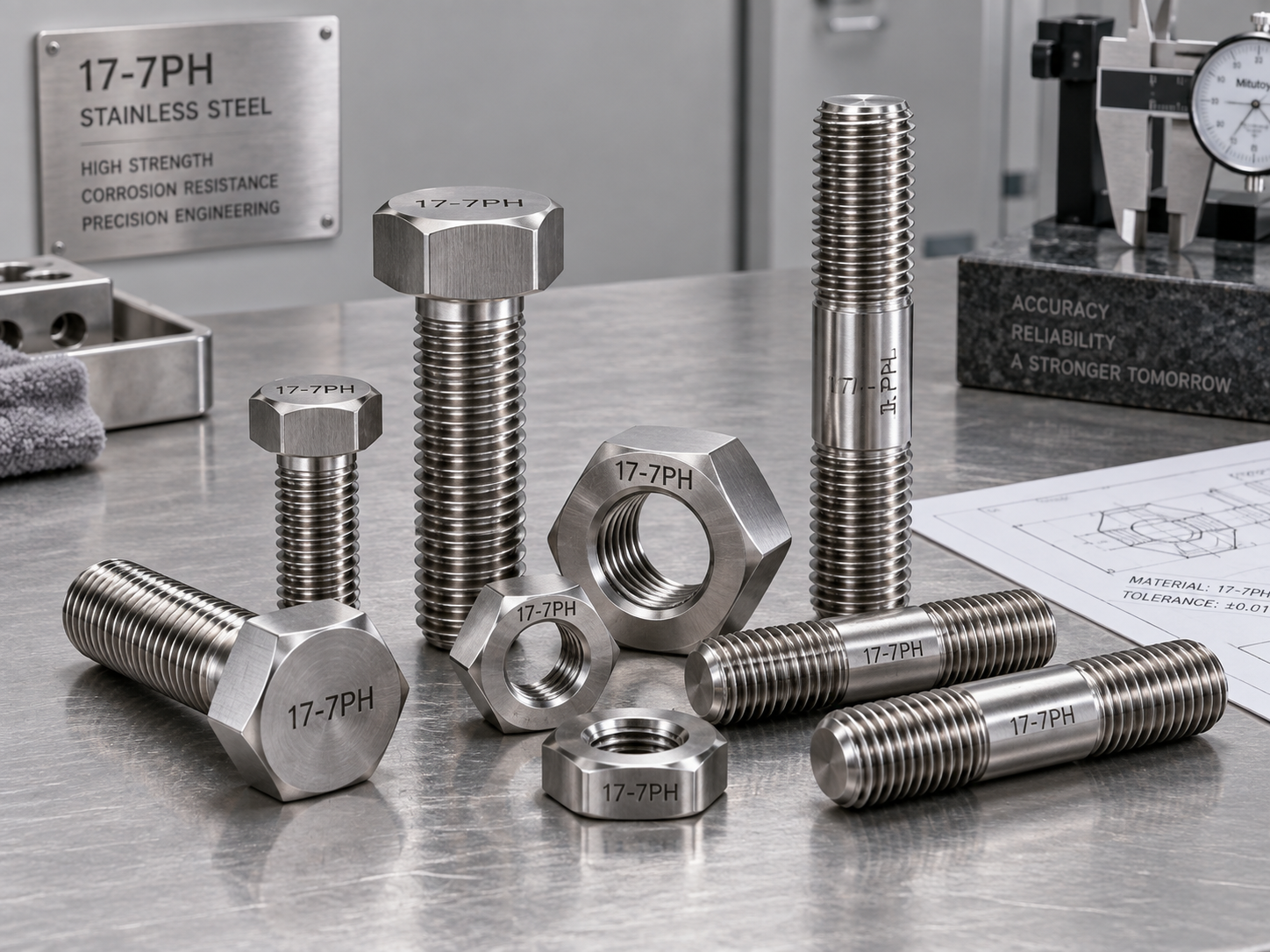
| 17-4PH (630) | Iron (~75%) | Cr (~15-17.5%), Ni (~3-5%), Cu (~3-5%) | Precipitation-hardening |
| 15-5PH | Iron (~77%) | Cr (~14-15.5%), Ni (~3.5-5.5%), Cu (~2.5-4.5%) | Precipitation-hardening |
| PH 13-8 Mo | Iron (~73%) | Cr (~12.5-13.5%), Ni (~7.5-8.5%), Mo (~2-2.5%) | Precipitation-hardening |
| Titanium Alloys | Ti-6Al-4V (Grade 5) | Titanium (~90%) | Al (~6%), V (~4%) | Alpha-beta alloy |
| Ti-6Al-4V ELI | Titanium (~90%) | Al (~6%), V (~4%) | Extra-low interstitial |
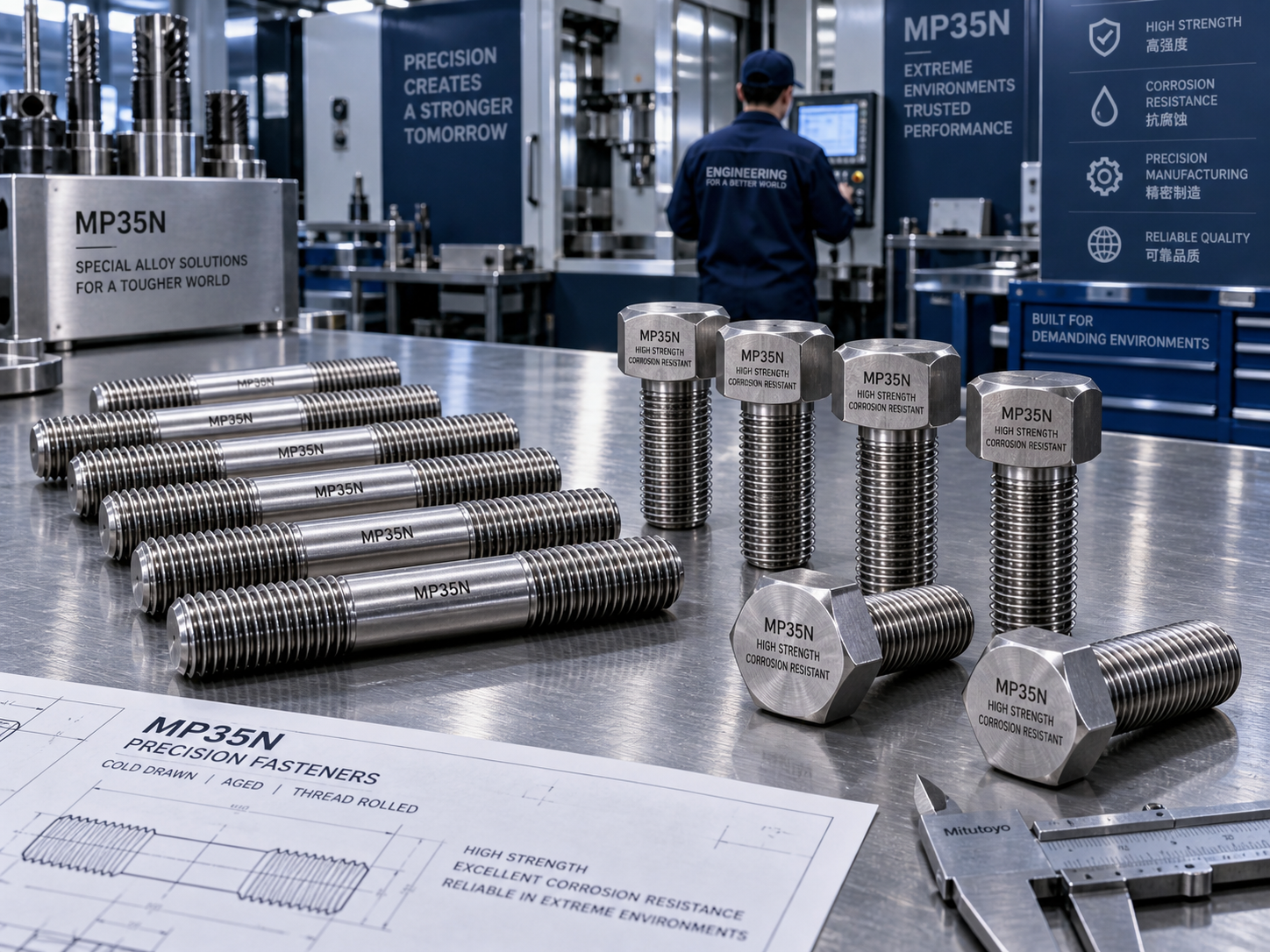
| Cobalt-Based Alloys | MP35N | Cobalt (~35%) | Ni (~35%), Cr (~20%), Mo (~10%) | Multi-phase strengthening |
| Aluminum Alloys | 7075-T6 | Aluminum (~90%) | Zn (~5.6%), Mg (~2.5%), Cu (~1.6%) | High-strength Al-Zn-Mg-Cu |
| Low-Alloy Steels | AISI 4340 | Iron (~95%) | Cr (~0.8%), Ni (~1.8%), Mo (~0.25%) | Quench & temper steel |
2. Mechanical Properties Comparison
| Material | Tensile Strength (MPa) | Yield Strength (0.2% Offset, MPa) | Elongation (%) | Hardness (HRC) | Fatigue Ratio* |
| Inconel 718 | 1,240 - 1,380 | 1,030 - 1,170 | 12-20 | 35 - 45 | 0.40-0.45 |
| Inconel 625 | 830 - 1,000 | 410 - 520 | 30-45 | 20 - 30 | 0.35-0.40 |
| Hastelloy C-276 | 790 - 1,000 | 350 - 415 | 40-60 | 85-95 HRB | 0.35-0.40 |
| A286 | 900 - 1,000 | 600 - 700 | 15-25 | 30 - 38 | 0.40-0.45 |
| Incoloy 925 | 900 - 1,050 | 550 - 700 | 20-30 | 25-35 | 0.35-0.40 |
| AISI 316 | 515 - 620 | 205 - 310 | 40-50 | 20 - 30 | 0.40-0.45 |
| 254 SMO | 650 - 750 | 300 - 400 | 35-45 | 90-100 HRB | 0.40-0.45 |
| 17-4PH H900 | 1,310 - 1,380 | 1,170 - 1,240 | 10-14 | 40 - 47 | 0.40-0.45 |
| 15-5PH H900 | 1,240 - 1,380 | 1,070 - 1,170 | 10-15 | 38 - 44 | 0.40-0.45 |
| PH 13-8 Mo H950 | 1,380 - 1,450 | 1,240 - 1,310 | 10-15 | 43 - 47 | 0.40-0.45 |
| Ti-6Al-4V | 900 - 1,100 | 830 - 1,000 | 10-15 | 35 - 40 | 0.45-0.50 |
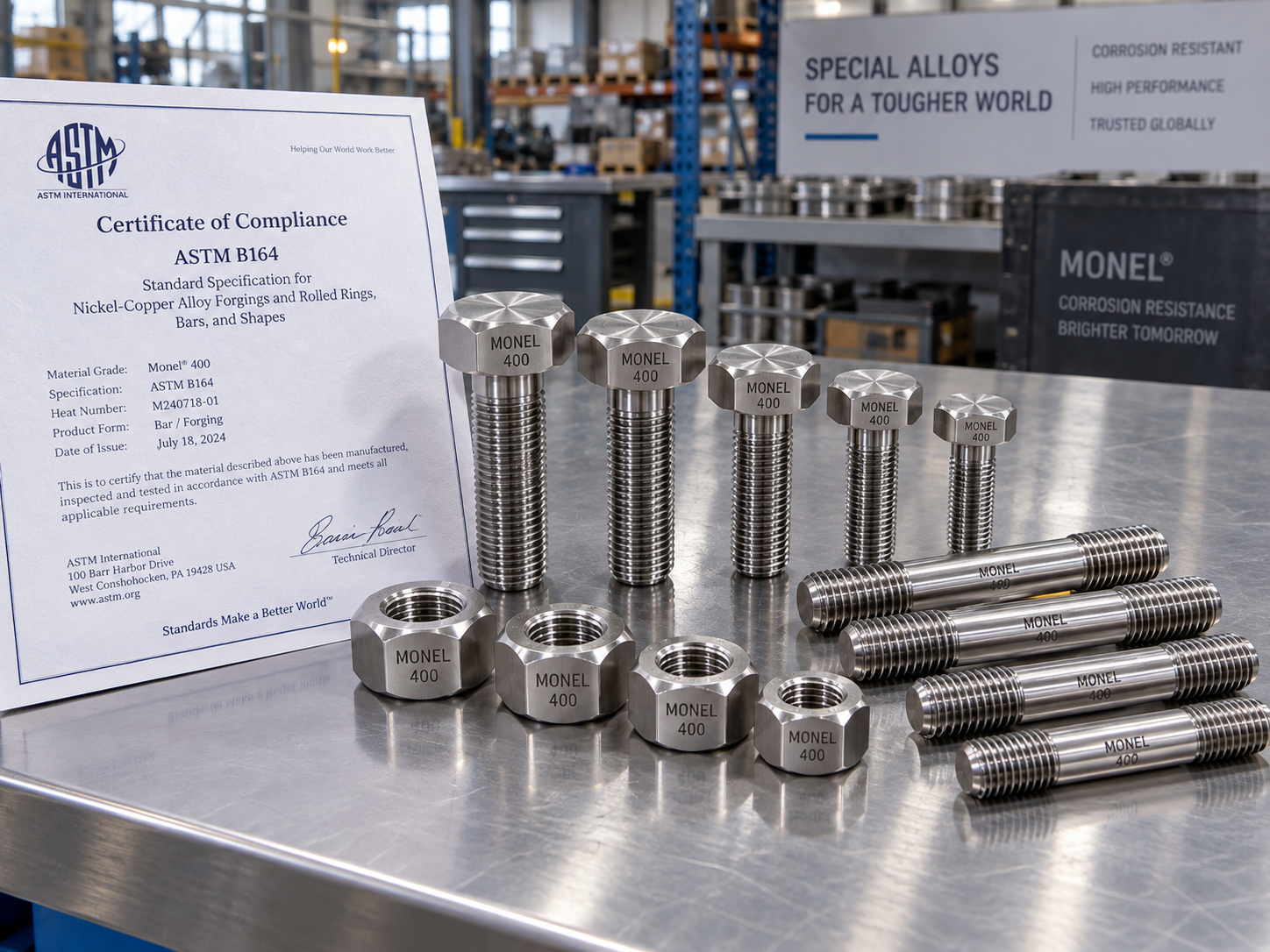
| Monel K-500 | 1,000 - 1,200 | 690 - 860 | 20-30 | 25 - 35 | 0.40-0.45 |
| MP35N | 1,450 - 1,650 | 1,350 - 1,550 | 10-20 | 35 - 45 | 0.45-0.50 |
| 7075-T6 | 520 - 570 | 430 - 480 | 7-12 | 60-70 HRB | 0.30-0.35 |
| 4340 (Q&T) | 1,000 - 1,200 | 850 - 1,000 | 10-15 | 32 - 40 | 0.45-0.50 |
*Fatigue Ratio = Fatigue Endurance Limit / Tensile Strength
3. Temperature Capability & Thermal Properties
| Material | Continuous Service Max | Short-Term Peak | Cryogenic Limit | CTE (10⁻⁶/°C) | Thermal Conductivity (W/m·K) |
| Inconel 718 | 700°C | 800°C | -250°C | 13.0 | 11.4 |
| Inconel 625 | 650°C | 980°C | -250°C | 12.8 | 9.8 |
| Hastelloy C-276 | 400°C | 1,100°C | -196°C | 11.2 | 10.2 |
| A286 | 650°C | 700°C | -250°C | 16.2 | 13.7 |
| Incoloy 925 | 540°C | 700°C | -196°C | 14.0 | 11.7 |
| AISI 316 | 400°C | 870°C | -250°C | 16.0 | 16.3 |
| 254 SMO | 350°C | 450°C | -196°C | 16.5 | 13.5 |
| 17-4PH | 290°C | 425°C | -40°C | 10.8 | 18.4 |
| 15-5PH | 290°C | 425°C | -40°C | 10.8 | 18.4 |
| PH 13-8 Mo | 425°C | 540°C | -196°C | 10.8 | 15.5 |
| Ti-6Al-4V | 430°C | 480°C | -250°C | 8.6 | 6.7 |
| Monel K-500 | 480°C | 540°C | -250°C | 13.9 | 17.0 |
| MP35N | 315°C | 540°C | -253°C | 12.8 | 13.0 |
| 7075-T6 | 120°C | 175°C | -273°C | 23.6 | 130 |
| 4340 | 200°C | 400°C | -40°C | 12.3 | 44.5 |
4. Corrosion Resistance Assessment
4.1 Pitting & Crevice Corrosion Resistance
| Material | PREN* Value | Critical Pitting Temp. (°C) | Critical Crevice Temp. (°C) | Chloride Resistance |
| Inconel 625 | ~55 | >85 | >65 | Excellent |
| Hastelloy C-276 | ~69 | >85 | >85 | Superior |
| 254 SMO | ≥43 | >50 | >25 | Excellent |
| AISI 316 | ~25 | 15-25 | 0-5 | Good |
| Ti-6Al-4V | N/A (TiO₂ passivation) | >100 | >100 | Exceptional |
| Monel K-500 | N/A (Cu-rich) | >50 | >40 | Excellent in seawater |
| MP35N | ~45 | >65 | >50 | Excellent |
| 17-4PH | ~18 | <0 | <0 | Poor |
*PREN = %Cr + 3.3×%Mo + 16×%N (Higher = Better Pitting Resistance)
4.2 Chemical Media Compatibility
| Material | Reducing Acids | Oxidizing Acids | Alkalis | Chloride SCC | Hydrogen Embrittlement |
| Inconel 718 | Excellent | Excellent | Excellent | Excellent | Susceptible (HTHA) |
| Hastelloy C-276 | Exceptional | Good | Excellent | Excellent | Good resistance |
| AISI 316 | Poor-Fair | Excellent | Good | Poor | Susceptible |
| Ti-6Al-4V | Poor | Exceptional | Good | Immune | Susceptible |
| Monel K-500 | Excellent | Poor | Excellent | Excellent | Susceptible |
| MP35N | Good | Good | Excellent | Excellent | Good resistance |
| 254 SMO | Poor | Excellent | Good | Good | Good resistance |
5. Application Domains & Industry Usage
| Material | Primary Industries | Typical Fastener Applications | Industry Standards |
| Inconel 718 | Aerospace, Oil & Gas, Nuclear | Jet engine bolts, turbine fasteners, downhole tools | AMS 5731, ASTM A453 Gr.660 |
| Inconel 625 | Marine, Chemical, Aerospace | seawater valves, scrubber bolts, exhaust systems | ASTM B446, NACE MR0175 |
| Hastelloy C-276 | Chemical Processing, FGD | Reactor agitators, chimney liners, scrubber bolts | ASTM B574, NACE MR0103 |
| A286 | Aerospace, Automotive | Turbine casing bolts, turbocharger fasteners | ASTM A453 Gr.660, AMS 5737 |
| Incoloy 925 | Oil & Gas, Chemical | OCTG connectors, wellhead components | API 6A CRA, NACE MR0175 |
| AISI 316 | General Industry, Marine | Chemical plant fasteners, marine hardware | ASTM A193 B8/B8M, A320 |
| 254 SMO | Desalination, Pulp & Paper | Seawater pump bolts, bleach plant fasteners | ASTM A479, EN 1.4547 |
| 17-4PH/15-5PH | Aerospace, General | Aircraft fittings, nuclear waste casks | ASTM A564 Gr.630, AMS 5643 |
| PH 13-8 Mo | Aerospace, Nuclear | Landing gear bolts, reactor components | AMS 5629, ASTM A564 Gr.630 |
| Ti-6Al-4V | Aerospace, Medical | Airframe fasteners, orthopedic implants | ASTM F136, AMS 4928 |
| Monel K-500 | Marine, Chemical | Marine propeller shafts, pump bolts | ASTM F467 (M-30H), UNS N05500 |
| MP35N | Medical, Deep Sea | Surgical implants, subsea connectors | ASTM F562, AMS 5844 |
| 7075-T6 | Aerospace, Sports | Aircraft structural bolts, bicycle components | ASTM B211, AMS 4045 |
| 4340 | Aerospace, Automotive | Landing gear bolts, crankshaft fasteners | ASTM A29, AMS 6414 |
6. Cost Analysis & Economic Factors
6.1 Relative Cost Index (AISI 316 = 1.0)
| Material | Raw Material Index | Machining Cost Factor | Heat Treatment Cost | Total Cost Index |
| AISI 316 | 1.0 | 1.0 | 1.0 | 1.0 |
| 4340 | 0.8 | 1.2 | 1.5 | 1.2 |
| 7075-T6 | 1.5 | 1.0 | 1.0 | 1.3 |
| 17-4PH | 2.0 | 1.1 | 1.2 | 1.6 |
| A286 | 3.0 | 1.3 | 1.5 | 2.3 |
| 254 SMO | 4.0 | 1.3 | 1.0 | 2.8 |
| Ti-6Al-4V | 6.0 | 1.8 | 1.5 | 4.0 |
| Incoloy 925 | 6.0 | 1.5 | 1.5 | 4.0 |
| Monel K-500 | 7.0 | 1.6 | 1.8 | 4.5 |
| Hastelloy C-276 | 8.0 | 1.8 | 1.0 | 5.5 |
| Inconel 625 | 9.0 | 2.0 | 1.0 | 6.0 |
| Inconel 718 | 10.0 | 2.2 | 2.5 | 7.2 |
| MP35N | 12.0 | 2.0 | 2.0 | 8.0 |
6.2 Machinability & Fabrication
| Material | Machinability Rating* | Forgeability | Weldability | Recommended Cutting Tools |
| 4340 | 65% | Excellent | Good (preheat) | Coated carbides, ceramic |
| AISI 316 | 45% | Good | Excellent | High-speed steel, carbide |
| 7075-T6 | 70% | Fair | Poor | Carbide, diamond |
| 17-4PH | 45% | Good | Good | Carbide, CBN |
| A286 | 25% | Fair | Good | Carbide, ceramic |
| Ti-6Al-4V | 40% | Poor | Good | Carbide, diamond-coated |
| Inconel 718 | 15% | Poor | Fair (post-weld HT) | Ceramic, CBN, carbide |
| Hastelloy C-276 | 25% | Poor | Excellent | Carbide, careful cooling |
| MP35N | 20% | Poor | Fair | Carbide, low speeds |
*Based on 1212 steel = 100%
7. Standards & Specifications
7.1 Material Specifications
| Material | Bar/ Wire Standard | Fastener Product Standard | Heat Treat Standard | Testing Standard |
| Inconel 718 | AMS 5662 | AMS 5731, ASTM A453 | AMS 5663 | ASTM E8, E21 |
| Inconel 625 | ASTM B446 | ASTM B446, ASME SB446 | AMS 5666 | ASTM G28, G48 |
| Hastelloy C-276 | ASTM B574 | ASTM F468 (N10276) | AMS 5754 | ASTM G28, G48A |
| A286 | AMS 5731 | ASTM A453 Gr.660 | AMS 5732 | ASTM E8, E21 |
| AISI 316 | ASTM A276 | ASTM A193 B8/B8M | AMS 2759 | ASTM A262, A923 |
| 254 SMO | ASTM A479 | ASTM A193 B8M (special) | - | ASTM A262, G48 |
| Ti-6Al-4V | ASTM B348 | ASTM F136, AMS 4928 | AMS H-81200 | ASTM E8, E1447 |
| Monel K-500 | ASTM B164 | ASTM F467 (M-30H) | AMS 4676 | ASTM G28 |
| MP35N | ASTM F562 | ASTM F467 (R30035) | AMS 5844 | ASTM F2063 |
7.2 Industry-Specific Approvals
Aerospace: NADCAP, FAA, EASA approvals
Oil & Gas: NACE MR0175/MR0103, API 6A/17D
Nuclear: ASME III, RCC-M, KTA standards
Medical: ISO 13485, FDA, CE marking
Marine: DNV, ABS, Lloyd's Register
8. Material Selection Guidelines
8.1 Decision Matrix by Application Environment
| Operating Environment | First Choice | Second Choice | Cost-Effective Alternative | Critical Considerations |
| High Temp (>600°C) + Stress | Inconel 718 | Haynes 282 | A286 | Creep rupture strength |
| Seawater Immersion | Monel K-500 | Inconel 625 | 254 SMO | Biofouling, crevice corrosion |
| Sour Service (H₂S) | Inconel 718/725 | Incoloy 925 | Super duplex | NACE compliance, SSC resistance |
| Chemical Reducing Acids | Hastelloy C-276 | Inconel 625 | Zirconium | Concentration, temperature |
| Cryogenic Service | 304/316 Stainless | Inconel 718 | Ti-6Al-4V | Impact toughness at low temp |
| High Strength-to-Weight | Ti-6Al-4V | 7075-T6 | MP35N | Fatigue, galvanic corrosion |
| Medical Implants | Ti-6Al-4V ELI | MP35N | 316LVM | Biocompatibility, MRI compatibility |
| High Wear Applications | MP35N | Stellite 6B | Tool steel | Galling resistance, lubrication |
8.2 Failure Mode Considerations
| Material | Susceptible Failure Modes | Preventive Measures |
| Inconel 718 | Stress relaxation at high temp, notch sensitivity | Proper heat treatment, radius design |
| A286 | σ-phase embrittlement (650-900°C exposure) | Control service temperature |
| Titanium alloys | Hydrogen embrittlement, galling | Surface treatments, lubricants |
| Stainless steels | Chloride SCC, sensitization | Control environment, proper heat treat |
| Aluminum alloys | Exfoliation corrosion, fatigue | Anodizing, proper clamping |
| MP35N | Manufacturing defects, improper heat treat | Strict process control |
9. Sustainability & Lifecycle Considerations
9.1 Environmental Impact Metrics
| Material | Recycled Content Typical | Energy Intensity* | CO₂ Footprint (kg/kg) | Critical Material Risk |
| Carbon Steels | >85% | 1.0 | 1.8-2.2 | Low |
| Stainless Steels | 60-80% | 3-4 | 4.2-6.5 | Medium (Ni, Mo) |
| Aluminum Alloys | >90% | 8-10 | 8-12 | Low (energy intensive) |
| Titanium Alloys | 30-60% | 20-25 | 25-35 | High (Ti sponge) |
| Nickel Alloys | 50-70% | 15-20 | 15-25 | High (Ni, Co) |
| Cobalt Alloys | 40-60% | 25-30 | 30-40 | Critical (Co supply) |
*MJ per kg of material produced, relative to carbon steel
9.2 Lifecycle Cost Factors
Initial Cost: Material + fabrication
Installation Cost: Handling, torque requirements
Maintenance Cost: Inspection, replacement frequency
Failure Cost: Downtime, safety incidents, environmental impact
End-of-Life: Recycling value, disposal costs
10. Emerging Trends & Future Developments
10.1 Advanced Materials
Additive Manufacturing Alloys: Tailored compositions for 3D printing
Nanostructured Materials: SPD-processed ultrafine-grained alloys
Multi-Material Fasteners: Gradient or composite structures
Smart Fasteners: Embedded sensors for health monitoring
10.2 Surface Engineering
PVD/CVD Coatings: AlCrN, DLC, multilayer systems
Laser Surface Modification: Cladding, texturing, hardening
Electrochemical Processes: Micro-arc oxidation, plasma electrolysis
10.3 Digital Integration
Material Digital Twins: Simulation of performance under real conditions
Blockchain Traceability: Full material provenance tracking
AI-Driven Selection: Machine learning for optimal material choice
Conclusion & Final Recommendations
Selection Priority Checklist:
Safety & Reliability: Must meet or exceed all safety factors
Environmental Compatibility: Resist all corrosion mechanisms present
Temperature Capability: Sufficient margin above operating temperatures
Mechanical Requirements: Strength, fatigue, creep as needed
Manufacturability: Can be fabricated to required tolerances
Cost Effectiveness: Lowest total lifecycle cost
Availability: Supply chain security and lead times
Sustainability: Environmental impact and recyclability
Inconel's Unique Position:
Inconel alloys, particularly 718 and 625, remain the premium choice for applications demanding the trifecta of high temperature capability, exceptional corrosion resistance, and high strength. Their higher cost is justified when:
Temperatures exceed 600°C
Corrosive environments are severe or unpredictable
Failure consequences are catastrophic
Long service life is required with minimal maintenance
Practical Implementation Strategy:
Phase 1: Thorough environment analysis and requirement definition
Phase 2: Preliminary material screening using this guide
Phase 3: Prototype testing in simulated service conditions
Phase 4: Cost-benefit analysis of top 2-3 candidates
Phase 5: Final selection with contingency planning
Final Note: No material is universally superior. The optimal choice always depends on the specific combination of mechanical, chemical, thermal, and economic requirements. When in doubt, consult with materials engineers and consider real-world testing before full-scale implementation.