
Categories List
Recent Posts
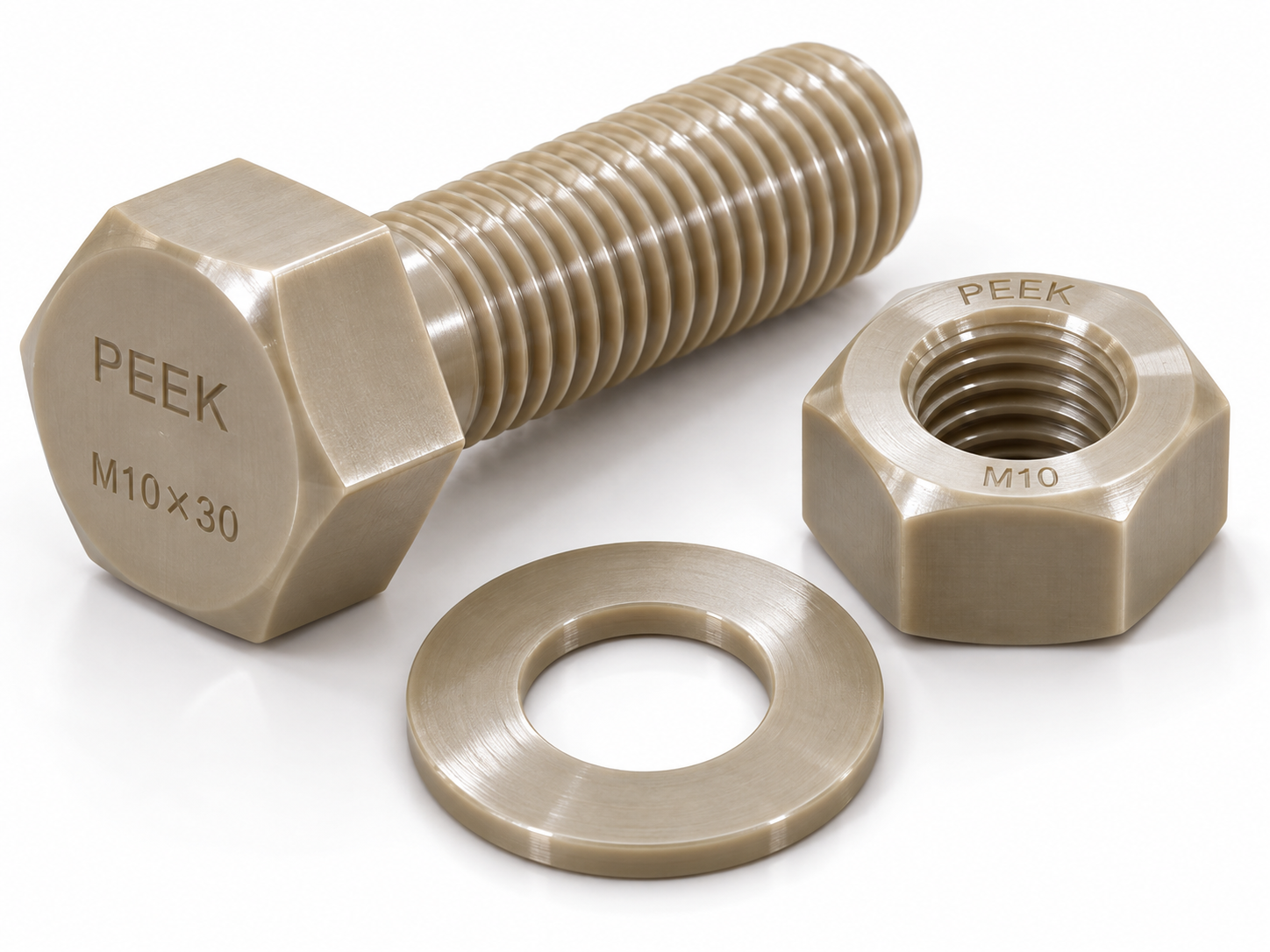
 PEEK Fasteners | Polyetheretherketone Bolts, Nuts, Screws – High-Performance Polymer | RAYCHIN LIMITED
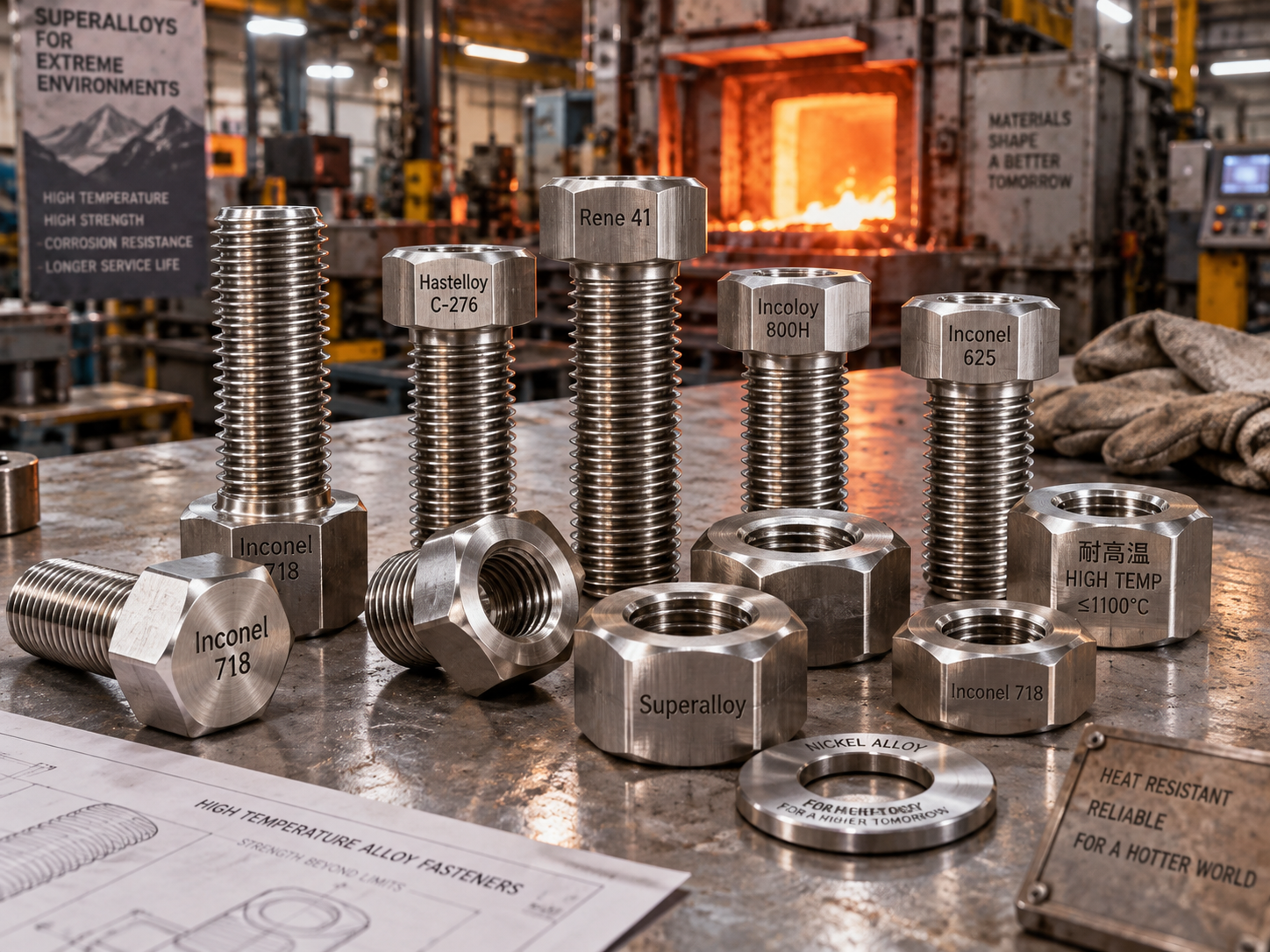
 High-Temperature Alloy Fasteners: Complete Material Guide, Chemistry, Performance Comparison | RAYCHIN LIMITED
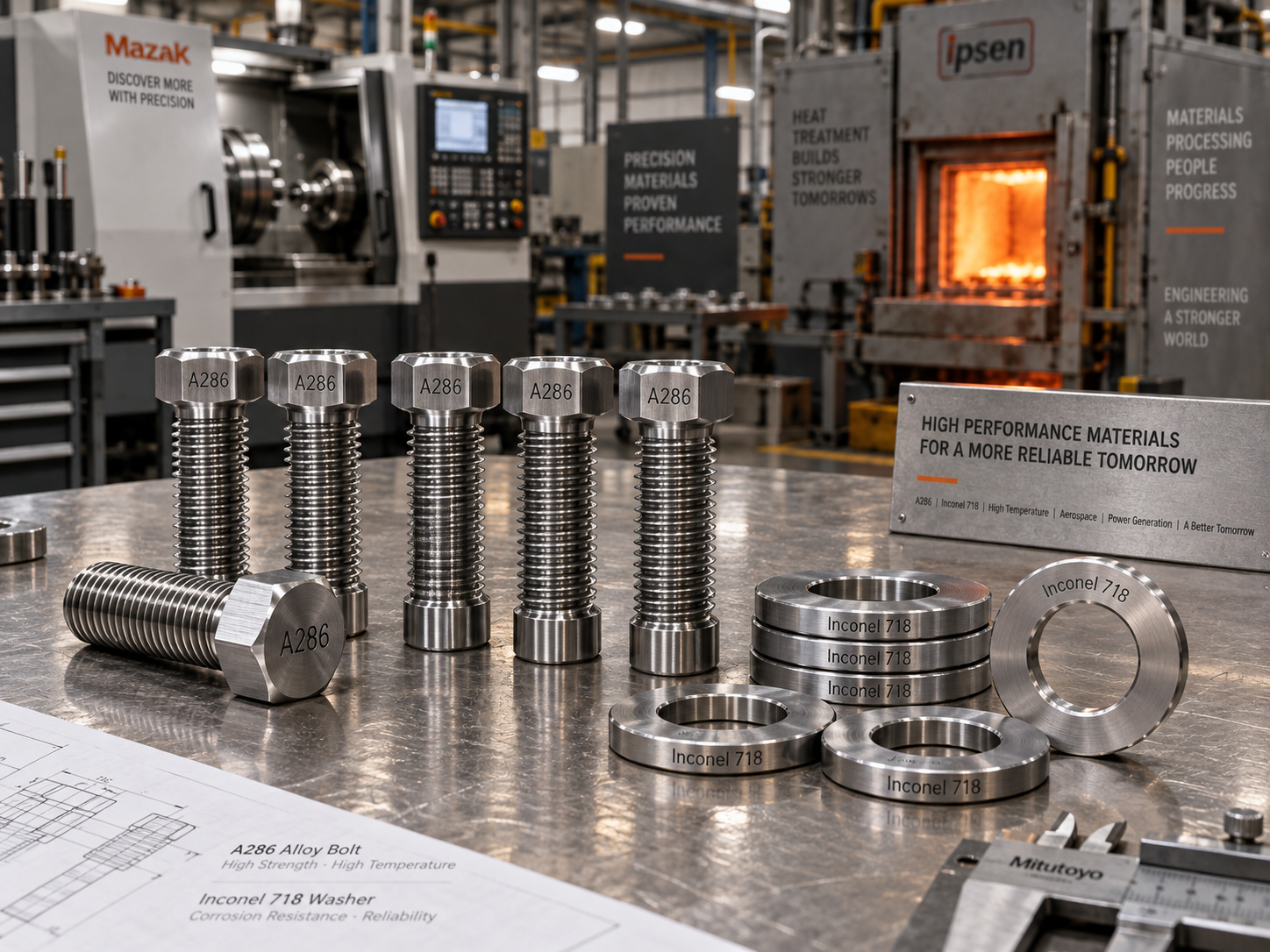
 High-Temperature Fastener Material Selection Guide | A286, Inconel 718, Nimonic 80A, Waspaloy – RAYCHIN LIMITED
Engineering Excellence with Dual-Phase Microstructure
In applications demanding exceptional strength combined with superior corrosion resistance, duplex stainless steel fasteners—including bolts, nuts, screws, and washers—represent the engineered solution of choice. As specialists in high-performance stainless steel fasteners, RAYCHIN manufactures precision duplex stainless steel fastening components that deliver unparalleled performance in marine, chemical processing, oil & gas, and offshore applications. This comprehensive guide addresses critical technical questions while providing detailed engineering data for informed material selection in demanding environments.
Part 1: Scientific Foundation of Duplex Stainless Steels
1.1 Chemical Composition: Balanced Engineering for Dual-Phase Structure
Duplex stainless steels are iron-chromium-nickel alloys with a balanced microstructure of approximately 50% ferrite and 50% austenite, optimized for specific performance requirements:
Primary Duplex Grades for Fasteners:
Critical Performance Metrics:
PREN (Pitting Resistance Equivalent Number):
2205: PREN = %Cr + 3.3 × %Mo + 16 × %N = 35-40
2507: PREN = 40-45
Zeron 100: PREN = 40-45 (with W enhancement)
Phase Balance: 40-60% ferrite, 40-60% austenite
Critical Pitting Temperature (CPT): >68°F (20°C) for 2507 in ASTM G48
RAYCHIN Quality Assurance: Our certified duplex stainless steel fasteners are manufactured from controlled composition material with full traceability, ensuring optimal phase balance and corrosion resistance properties.
1.2 Mechanical Properties: Exceptional Strength with Good Toughness
Duplex stainless steels offer outstanding mechanical properties that combine high strength with excellent ductility:
Standard Mechanical Properties:
Elevated Temperature Performance:
Specialized Performance Characteristics:
Fatigue Strength: 50-60 ksi (345-414 MPa) at 10⁷ cycles (2205, R=-1)
Stress Corrosion Cracking Resistance: Excellent in chloride environments
Thermal Expansion: 6.5 × 10⁻⁶/°F (11.7 × 10⁻⁶/°C) from 70-600°F
Thermal Conductivity: 9.0 BTU·in/(hr·ft²·°F) at 70°F (15.6 W/m·K)
Magnetic Permeability: Slightly magnetic due to ferrite phase
Heat Treatment Requirements:
Solution Annealing: 1900-2050°F (1038-1121°C) followed by rapid quenching
Phase Balance Control: Critical to maintain 40-60% ferrite/austenite ratio
Avoid Prolonged Exposure: 570-1470°F (300-800°C) to prevent embrittlement
Part 2: Critical Technical Questions & Expert Answers
2.1 What makes duplex stainless steels superior to conventional austenitic stainless steels?
Duplex stainless steels offer several key advantages over standard austenitic grades:
RAYCHIN Engineering Insight: "Duplex stainless steel fasteners provide approximately twice the yield strength of standard austenitic stainless steels with equal or better corrosion resistance in many environments, making them the optimal choice for weight-sensitive and high-stress applications."
2.2 How do I choose between different duplex stainless steel grades?
Understanding the performance differences between duplex grades is crucial for proper selection:
Critical Distinction: 2507 super duplex offers PREN values comparable to 6% Mo super-austenitic stainless steels but with approximately 50% higher yield strength, making it particularly suitable for high-stress applications in corrosive environments.
2.3 What are the temperature limitations and phase stability concerns?
Temperature Performance Profile:
Phase Stability Issues:
475°C Embrittlement: Occurs at 750-900°F (400-480°C), causes chromium-rich α' phase precipitation
Sigma Phase Formation: At 1200-1800°F (650-980°C), creates brittle intermetallic phases
Chi Phase: At intermediate temperatures, affects toughness
Secondary Austenite: Can form during improper cooling, affecting corrosion resistance
High-Temperature Comparison with Competing Materials:
Percentage values indicate yield strength retention relative to room temperature strength
RAYCHIN Recommendation: For continuous service above 600°F (316°C), consider nickel-based alloys or austenitic stainless steels. Duplex alloys excel in moderate temperature applications where their strength advantages are most beneficial.
Part 3: Industry-Specific Applications & Solutions
3.1 Oil & Gas Industry: Reliability in Sour and Offshore Environments
Primary Applications:
Offshore Platform Fasteners: Bolts for topside and subsea components
Downhole Tools: Fasteners for drilling and completion equipment
Pipeline Systems: Bolts for flowlines and gathering systems
Processing Equipment: Fasteners for separators, scrubbers, and heat exchangers
Performance Advantages:
Excellent resistance to chloride stress corrosion cracking
Good performance in sour service (H₂S environments)
High strength for high-pressure applications
Good erosion-corrosion resistance in flowing media
3.2 Marine & Offshore Engineering
Critical Applications:
Shipbuilding Components: Fasteners for hulls, decks, and seawater systems
Desalination Plants: Bolts for high-pressure RO systems and evaporators
Subsea Equipment: Fasteners for Christmas trees, manifolds, and connectors
Marine Construction: Bolts for piers, docks, and coastal structures
Technical Benefits:
Superior resistance to seawater pitting and crevice corrosion
High strength-to-weight ratio for structural applications
Good fatigue resistance in dynamic marine environments
Long-term reliability in saltwater immersion
3.3 Chemical & Process Industries
Essential Applications:
Chemical Reactors: Fasteners for pressure vessels and reaction systems
Heat Exchangers: Bolts for shell-and-tube and plate heat exchangers
Storage Tanks: Fasteners for chemical storage and processing tanks
Piping Systems: Bolts for process piping and utility systems
Operational Advantages:
Excellent resistance to chloride stress corrosion cracking
Good performance in acidic and alkaline environments
High strength for high-pressure and high-temperature applications
Reduced maintenance compared to lower-grade materials
3.4 Pulp & Paper Industry
Specialized Applications:
Digester Systems: Fasteners for pulp digesters and bleaching equipment
Paper Machine Components: Bolts for paper machines and processing equipment
Chemical Recovery: Fasteners for black liquor evaporators and recovery boilers
Effluent Treatment: Bolts for wastewater treatment systems
Compliance & Reliability:
Resistance to chloride and chemical corrosion
Good performance in high-temperature process streams
Long service life in continuous operation
Reduced risk of stress corrosion cracking
Part 4: Comprehensive Material Comparison
4.1 Direct Performance Comparison Table
4.2 High-Temperature Performance Comparison
4.3 Corrosion Performance Comparison
4.4 Selection Decision Matrix
Choose Duplex Stainless Steel Fasteners When:
High strength combined with good corrosion resistance is required
Chloride stress corrosion cracking is a concern
Weight reduction is important (higher strength allows smaller sections)
Cost-effective alternative to nickel alloys is needed
Good erosion-corrosion resistance in flowing media is required
Operating temperatures remain below 600°F (316°C)
Consider Alternatives When:
Maximum corrosion resistance is the primary requirement (consider nickel alloys)
Non-magnetic properties are essential (choose austenitic grades)
Operating temperatures exceed 600°F (316°C) continuously
Severe reducing acid environments are present (choose nickel alloys)
Maximum pitting resistance in stagnant seawater is needed (consider titanium)
Budget constraints require lowest cost (choose 316L or coated carbon steel)
Part 5: The RAYCHIN Engineering Advantage for Duplex Stainless Steel Fasteners
5.1 Specialized Manufacturing Capabilities
Phase Balance Control: Precise heat treatment to maintain optimal ferrite/austenite ratio
Advanced Thread Rolling: Produces superior fatigue-resistant threads for high-strength applications
Surface Finishing: Specialized treatments for enhanced corrosion resistance
Quality Verification: Comprehensive testing including corrosion testing and metallographic analysis
5.2 Technical Support Services
Material Selection Guidance: Helping choose the optimal duplex grade for specific applications
Phase Balance Analysis: Metallurgical services to ensure optimal microstructure
Failure Analysis: Laboratory services to investigate performance issues
Application Engineering: Custom fastener designs for unique requirements
5.3 Certification & Compliance
Material Standards: Full compliance with ASTM A182, ASTM A479, NORSOK M-630, and customer specifications
Testing Capabilities: Corrosion testing, mechanical testing, and microstructural analysis
Traceability: Complete documentation from melt to finished fastener
Industry Approvals: Oil & gas (NORSOK, NACE), marine, and chemical processing quality systems
Engineering Excellence with Duplex Stainless Steel Fasteners
Duplex stainless steel fasteners represent the optimal solution for applications demanding high strength combined with excellent corrosion resistance. With their unique dual-phase microstructure, they provide approximately twice the yield strength of conventional austenitic stainless steels while maintaining equal or superior corrosion resistance in many environments.
The RAYCHIN Commitment: We deliver more than just precision duplex stainless steel fasteners—we provide engineered solutions backed by metallurgical expertise and manufacturing excellence. Our comprehensive approach ensures that every duplex stainless steel bolt, nut, screw, and washer performs reliably in your most demanding applications.
Next Steps for Your Project:
Application Analysis: Contact our engineering team for specific recommendations
Grade Selection: Evaluate different duplex grades for your requirements
Sample Testing: Request test samples for your qualification process
Production Partnership: Leverage our manufacturing expertise for reliable supply
Contact RAYCHIN today to discuss how certified duplex stainless steel fasteners can enhance the performance, reliability, and cost-effectiveness of your oil & gas, marine, chemical processing, or industrial applications. Request our Duplex Stainless Steel Fastener Technical Guide or schedule a consultation with our engineering specialists.
SEO-Optimized Keywords: Duplex stainless steel fasteners, duplex 2205 bolts, super duplex 2507 fasteners, high-strength corrosion resistant fasteners, offshore platform bolts, seawater resistant fasteners, chloride stress corrosion resistant fasteners, UNS S32205 fasteners, UNS S32750 fasteners, PREN 40 fasteners, NORSOK M-630 fasteners, RAYCHIN duplex manufacturer, oil & gas fasteners, marine grade fasteners, chemical processing bolts, heat exchanger fasteners, high-strength stainless bolts, phase balance control, ferrite-austenite microstructure, duplex vs 316 stainless, duplex mechanical properties, duplex chemical composition.
Request A Quote! We'll respond as soon as possible(within 12 hours)
Get a Quote