
Categories List
Recent Posts
Introduction: The Critical Role of Fastener Selection in High-Temperature Environments
In high-temperature industrial applications—ranging from gas turbines and aerospace engines to petrochemical processing equipment and power generation systems—fasteners serve as the "steel joints" that hold critical assemblies together . These seemingly small components bear enormous responsibilities: a single aerospace bolt, barely more than a dozen millimeters in diameter, must withstand tensile loads exceeding 100 KN at temperatures of 600°C . When failure is not an option, material selection becomes paramount.
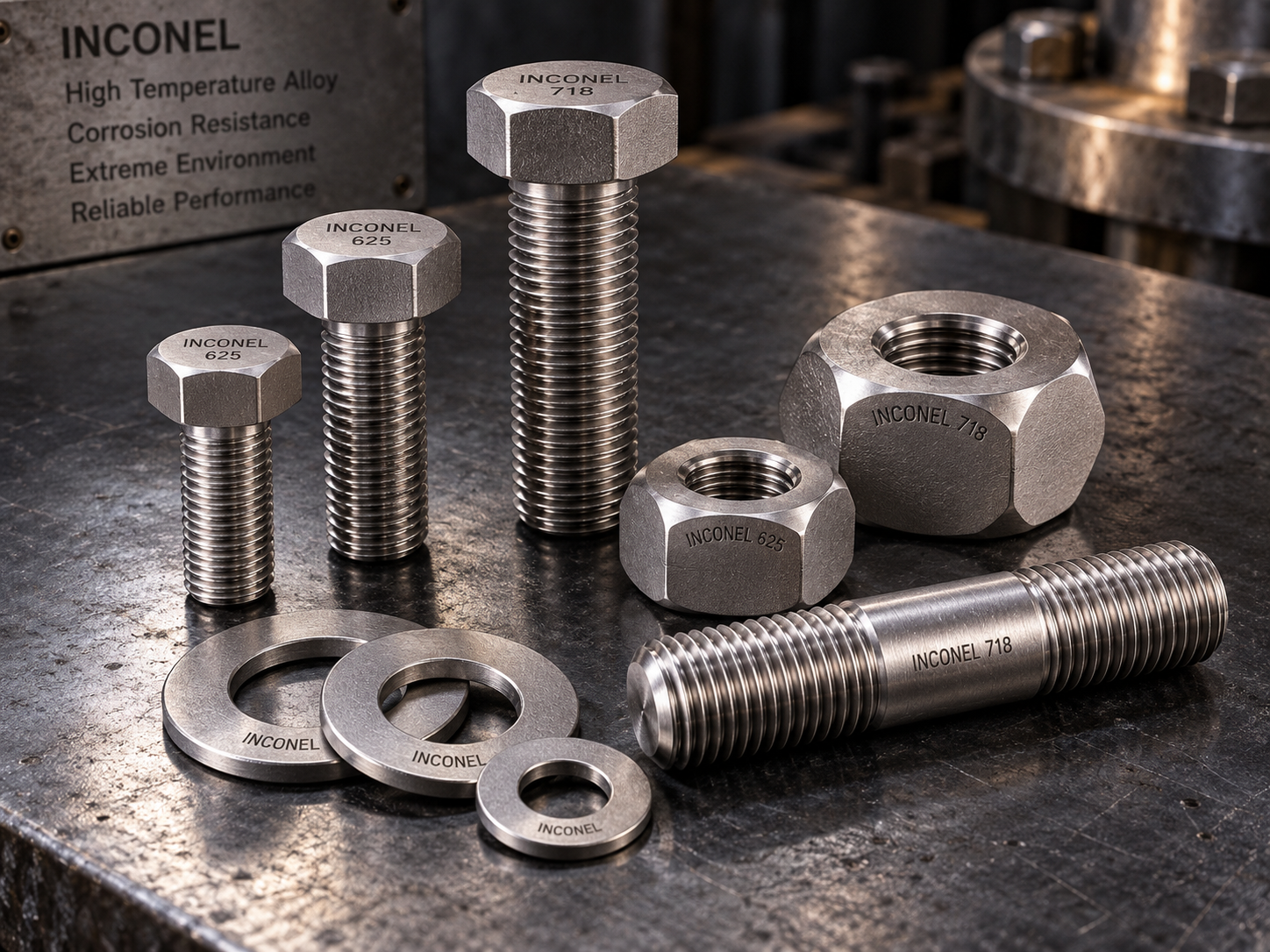
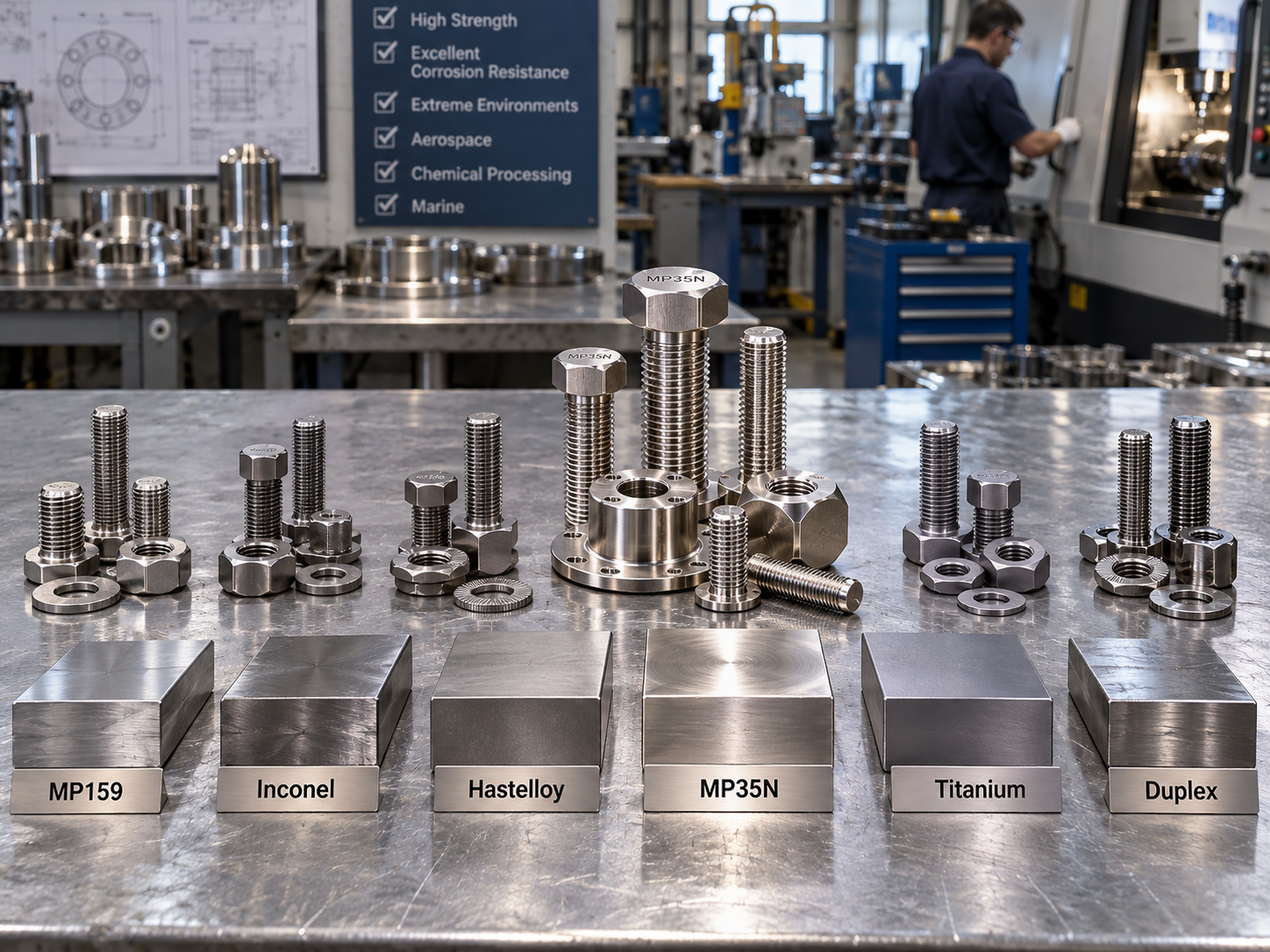
At RAYCHIN, we specialize in precision-engineered high-temperature fasteners—including bolts, nuts, washers, studs, and threaded rods—manufactured from advanced superalloys. This technical guide addresses the engineering community's most pressing questions about material selection for high-temperature service, providing comprehensive comparisons to support informed decision-making.
Understanding the High-Temperature Challenge
Before selecting materials, engineers must recognize the unique demands of high-temperature environments:
Key Degradation Mechanisms
Creep: Time-dependent plastic deformation under constant stress at elevated temperatures
Oxidation: Chemical reaction with oxygen forming oxide scales that can spall and reduce cross-sectional area
Stress Relaxation: Loss of clamping force over time due to microstructural changes
Thermal Fatigue: Cyclic stresses induced by temperature variations
Galling: Adhesive wear during installation, particularly problematic for nickel-based alloys
The selection of fastener materials must address all these mechanisms while maintaining mechanical integrity throughout the intended service life.
Material Categories for High-Temperature Fasteners
Based on operating temperature ranges and application requirements, high-temperature fastener materials fall into several distinct categories:
1. Martensitic Stainless Steels (ASTM A193 Grade B6)
Temperature Range: Up to 550°C (1022°F)
Characteristics:
Chromium content of 11.5-13.5% provides moderate oxidation resistance
Hardenable by heat treatment to achieve high strength
Relatively economical compared to nickel-based alternatives
Typical Applications:
Steam turbines
Valve stems and bonnet bolting
General petrochemical service at moderate temperatures
Limitations:
Limited strength above 550°C
Susceptible to temper embrittlement in certain temperature ranges
Reduced corrosion resistance compared to austenitic grades
2. Austenitic Stainless Steels (ASTM A193 Grades B8, B8M, B8T)
Temperature Range: Up to 800°C (1472°F) for oxidation resistance, though strength diminishes significantly above 600°C
Characteristics:
Excellent oxidation resistance due to high chromium (18-20%) and nickel (8-12%) content
Non-magnetic
Retains ductility at cryogenic temperatures
Grades B8M (molybdenum-bearing) offers improved pitting resistance
Typical Applications:
Furnace components
Heat exchangers
Exhaust systems
Limitations:
Relatively low strength at elevated temperatures (significant strength loss above 600°C)
Susceptible to sensitization and intergranular corrosion if improperly heat-treated
High coefficient of thermal expansion
3. Precipitation-Hardening Stainless Steels (e.g., 17-4 PH, A286)
Temperature Range: A286 up to 700°C (1292°F); 17-4 PH up to 400°C (752°F)
Characteristics:
A286 (ASTM A453 Grade 660) is an iron-nickel-chromium alloy strengthened by titanium and aluminum additions
Combines good high-temperature strength with excellent fabrication characteristics
Maintains useful strength up to 700°C, making it suitable for many aerospace and power generation applications
Typical Applications:
Gas turbine casings
Afterburner components
High-temperature bolting in critical rotating machinery
Technical Note on A286:
Research comparing domestic and imported A286 alloys reveals that while chemical compositions typically meet ASTM requirements, microstructural differences—including grain size, twin boundary density, and precipitate distribution—significantly influence high-temperature performance. Imported materials often exhibit more uniform precipitate distribution, contributing to superior 650°C stress-rupture properties . At RAYCHIN, we maintain stringent microstructural control to ensure consistent performance regardless of material origin.
4. Nickel-Based Superalloys (The Focus of This Guide)
Nickel-based superalloys represent the pinnacle of high-temperature fastener materials, designed for the most demanding applications where conventional materials cannot survive.
Comprehensive Comparison of Nickel-Based Superalloys for Fasteners
Nickel-based superalloys are the workhorses of extreme-temperature fastening. The two most prominent grades for fastener applications are GH4169 (Chinese designation) and its international equivalents N07718/Inconel 718, along with other specialized grades. Understanding their characteristics is essential for proper selection .
Inconel 718 (GH4169 / N07718)
Temperature Range: -253°C to 650°C (-423°F to 1202°F) for long-term service; short-term exposure possible to 800°C
Material Characteristics
Composition Base: Nickel-chromium-iron with significant additions of niobium, molybdenum, titanium, and aluminum
Strengthening Mechanism: Precipitation-hardened by gamma prime and gamma double-prime phases (Ni₃Nb)
Key Feature: Slow aging response allows for annealing and welding without spontaneous hardening
Mechanical Properties at Temperature
Advantages for Fastener Applications
Exceptional High-Temperature Strength: Retains approximately 80% of room-temperature strength at 650°C
Outstanding Oxidation Resistance: Forms a protective chromium oxide layer
Good Fatigue Resistance: Essential for cyclic loading applications
Stress Rupture Properties: Excellent resistance to creep failure under sustained load
Weldability: Better than many competing superalloys
Limitations
Galling Tendency: Requires careful installation with anti-seize compounds
Work Hardening: Rapid work hardening during machining requires specialized tooling
Upper Temperature Limit: Microstructural instability above 650°C limits long-term service
GH4169 vs. N07718: Practical Considerations
While GH4169 and N07718 share the same basic composition, subtle differences in trace element control and thermomechanical processing can influence performance . GH4169, as the domestic Chinese designation, has been extensively characterized for aerospace applications and is considered the highest-strength high-temperature alloy available in China for fastener applications . N07718, the UNS designation for Inconel 718, offers similar properties with slight variations in specification requirements.
Selection Guidance:
Choose N07718/Inconel 718 when international specifications and global supply chain compatibility are primary concerns
Choose GH4169 for applications specifically designed around domestic Chinese material systems, particularly in aerospace and defense applications
Inconel 625 (N06625)
Temperature Range: Up to 980°C (1800°F) for oxidation resistance; strength retention up to 800°C
Material Characteristics
Composition Base: Nickel-chromium-molybdenum with niobium stabilization
Strengthening Mechanism: Solid-solution hardened (no precipitation hardening)
Key Feature: Exceptional resistance to pitting and crevice corrosion
Comparison with Inconel 718
Best Applications for Inconel 625 Fasteners
Marine and offshore environments requiring both high-temperature capability and seawater corrosion resistance
Chemical processing equipment handling aggressive media at elevated temperatures
Applications where welding of fastener assemblies is required
Inconel 600 (N06600) and 601 (N06601)
Temperature Range: Up to 1150°C (2100°F) for oxidation resistance; structural strength limited above 900°C
Material Characteristics
Inconel 600: Nickel-chromium-iron base with good resistance to oxidation and carburization
Inconel 601: Enhanced aluminum content improves high-temperature oxidation and scaling resistance
Applications
Furnace components and heat-treating equipment
Radiant tubes and muffles
Applications requiring resistance to high-temperature corrosion without extreme mechanical loads
Waspaloy
Temperature Range: Up to 870°C (1600°F)
Material Characteristics
Composition Base: Nickel-cobalt-chromium with titanium and aluminum
Strengthening Mechanism: Precipitation-hardened (gamma prime)
Key Feature: Superior strength in the 650-870°C range
Comparison with Inconel 718
Applications
Advanced gas turbine disks and blades
High-temperature bolting for next-generation aerospace engines
Applications requiring strength beyond Inconel 718's capabilities
Comparative Analysis: Selecting the Right Material
Selection Matrix by Operating Temperature
Mechanical Property Comparison at 650°C
Corrosion Resistance Comparison
Advanced Considerations in High-Temperature Fastener Selection
1. Thermal Expansion Compatibility
A critical but often overlooked factor is the differential thermal expansion between fastener materials and flange or joint materials. Mismatched expansion coefficients can lead to:
Loss of clamp load during thermal cycling
Excessive stress at temperature extremes
Fatigue failure over multiple cycles
RAYCHIN Recommendation: For joints involving dissimilar materials, we provide thermal expansion data and can recommend appropriate preload calculations to maintain joint integrity throughout the operating temperature range.
2. Galling Prevention Strategies
Nickel-based alloys, particularly Inconel 718, are notorious for galling during installation . RAYCHIN addresses this through:
Controlled Thread Surface Finish: Precision thread rolling produces surface characteristics that reduce friction
Anti-Galling Coatings: Silver plating, copper plating, or specialized dry film lubricants
Thread Compound Recommendations: Selection of appropriate nickel-based anti-seize compounds
Installation Protocol Guidance: Optimal torque speeds and patterns to prevent localized heating and seizing
3. Microstructural Optimization
Recent advances in high-temperature fastener technology emphasize the critical importance of microstructure control. Research has demonstrated that "upstream control of precipitate phase content and carbide distribution in the raw material, combined with downstream optimization of hot working and heat treatment parameters," can dramatically improve fastener performance .
At RAYCHIN, we have implemented quality control protocols that address:
Grain Size Control: ASTM grain size optimization for creep resistance
Precipitate Distribution: Uniform distribution of strengthening phases
Carbide Morphology: Control of grain boundary carbides to prevent embrittlement
Inclusion Cleanliness: Minimization of non-metallic inclusions that serve as fatigue initiation sites
4. Stress Relaxation Behavior
Unlike creep (which involves plastic deformation under constant load), stress relaxation involves the gradual reduction of stress under constant strain—precisely the condition in bolted joints. Different alloys exhibit markedly different relaxation characteristics:
Austenitic Stainless Steels: Moderate relaxation, highly temperature-dependent
A286: Improved relaxation resistance through precipitation strengthening
Inconel 718: Excellent relaxation resistance up to 650°C due to stable precipitate structure
Design Implication: For applications requiring maintained clamp load at temperature, Inconel 718 significantly outperforms stainless steel alternatives.
RAYCHIN's High-Temperature Fastener Portfolio
At RAYCHIN, we manufacture a complete range of high-temperature fasteners engineered for extreme environments:
? High-Temperature Bolts
Hex bolts, stud bolts, and specialty configurations
Grades: Inconel 718, 625, 600; A286; 316/310 Stainless
Thread configurations: Unified (UNC/UNF), Metric (ISO), and specialty threads
Head markings and traceability per customer requirements
? High-Temperature Nuts
Hex, heavy hex, jam, and slotted configurations
Material matching to bolt grades with controlled hardness differential to prevent galling
Self-locking options with alloy locking elements for vibration resistance
? High-Temperature Washers
Flat washers, spring washers, and specialty designs
Critical for load distribution and preventing galling between fastener and flange
Manufactured from matching alloys to ensure thermal expansion compatibility
? Studs and Threaded Rods
Fully threaded or double-end studs
Continuous lengths or cut-to-length threaded rods
Precision straightness control essential for high-temperature applications
? Specialty Fasteners
Custom configurations for aerospace, power generation, and petrochemical applications
Compliance with ASTM, ASME, AMS, and customer-specific specifications
Full traceability and material certification
Quality Assurance: The RAYCHIN Difference
Selecting the right material is only the first step. Consistent quality in fastener manufacturing requires:
Material Verification
Positive Material Identification (PMI) on all incoming raw materials
Chemical composition verification per applicable standards
Mechanical property verification through tensile testing
Process Control
Precision forging and heading to maintain grain flow
Controlled heat treatment with furnace certification
Thread rolling (not cutting) to preserve fatigue life
Inspection and Testing
Dimensional inspection to Class 2A/2B or finer tolerances
Nondestructive examination (MPI, dye penetrant) as required
Mechanical testing at elevated temperatures when specified
Certification
Full material traceability from melt to finished product
Test reports certifying compliance with ASTM, ASME, or customer specifications
Third-party inspection when required
Case Studies: Real-World Applications
Case Study 1: Gas Turbine Exhaust Section Bolting
Challenge: An industrial gas turbine manufacturer experienced bolt failures in the exhaust diffuser section, operating at 550-600°C. Original 316 stainless steel bolts exhibited stress relaxation and loss of clamp load within 6 months.
RAYCHIN Solution: Redesigned with A286 stud bolts and Inconel 718 nuts (to prevent thread galling). The combination provided:
Maintained clamp load through 2-year inspection cycles
Elimination of galling during installation and removal
Cost-effective solution compared to full Inconel assembly
Case Study 2: Chemical Reactor Flange Bolting
Challenge: A chemical processing plant required flange bolting for a reactor operating at 650°C with intermittent exposure to chlorinated hydrocarbons.
RAYCHIN Solution: Supplied Inconel 625 stud bolts with matching nuts, featuring:
Superior resistance to chloride-induced stress corrosion cracking
Maintained strength at operating temperature
Anti-galling silver plating for reliable disassembly during maintenance
Case Study 3: Aerospace Engine Mount Fasteners
Challenge: An aerospace manufacturer needed fasteners for engine mount applications subject to 600°C operating temperatures and high vibrational loads.
RAYCHIN Solution: Precision-manufactured Inconel 718 bolts with:
Controlled thread form for fatigue resistance
Microstructural optimization through specialized heat treatment
100% inspection including fluorescent penetrant examination
Economic Considerations: Total Cost of Ownership
While nickel-based superalloys command higher initial prices than stainless steels—typically 3-5 times higher—the total cost of ownership analysis often favors the premium materials:
Cost Factors to Consider
Replacement Frequency: Inconel fasteners may last the entire equipment life; stainless may require periodic replacement
Downtime Costs: Unplanned shutdowns for fastener replacement can exceed material costs by orders of magnitude
Reliability Impact: Fastener failure in critical applications can lead to catastrophic equipment damage
Maintenance Access: Inaccessible locations justify premium materials to avoid future extraction costs
RAYCHIN's Approach: We work with customers to develop material specifications that balance initial cost with lifecycle value, recommending premium materials only where the operating environment justifies the investment.
Emerging Trends in High-Temperature Fastener Technology
1. Machine Learning in Material Optimization
Recent advances in materials science have introduced machine learning approaches to optimize the relationship between processing parameters, microstructure, and performance. Researchers have developed "process-microstructure-property" three-dimensional maps that enable precise control of high-temperature alloy microstructures . At RAYCHIN, we monitor these developments and incorporate validated advances into our manufacturing processes.
2. Ceramic and Composite Fasteners
For applications exceeding 1000°C, ceramic matrix composite (CMC) fasteners are emerging as a solution. While currently limited to specialized aerospace applications, these materials offer:
Exceptional high-temperature capability
Low density (significant weight savings)
Challenges in thread formation and brittle failure modes
3. Advanced Coatings
Thermal barrier coatings and diffusion coatings extend the capabilities of metallic fasteners:
MCrAlY coatings for oxidation resistance
Aluminide diffusion coatings for sulfidation protection
Ceramic thermal barrier coatings for temperature reduction
Selection Methodology: A Systematic Approach
RAYCHIN recommends the following systematic approach to high-temperature fastener selection:
Step 1: Define Operating Conditions
Maximum continuous operating temperature
Peak transient temperature (with duration)
Mechanical loads (steady-state and cyclic)
Environmental exposure (oxidation, sulfidation, chlorides)
Required service life
Step 2: Establish Critical Requirements
Is strength or corrosion resistance primary?
Must fasteners be removable?
Are weight constraints significant?
What are the consequences of failure?
Step 3: Preliminary Material Screening
Eliminate materials with insufficient temperature capability
Consider strength requirements
Evaluate corrosion resistance needs
Step 4: Detailed Analysis
Stress relaxation calculations
Thermal expansion compatibility
Fatigue life estimation
Galling risk assessment
Step 5: Prototype Testing (for critical applications)
Elevated temperature tensile verification
Stress rupture testing
Thermal cycle testing
Installation trials
Step 6: Specification and Procurement
Define material specification with grade and condition
Specify required testing and certification
Establish quality assurance requirements
Conclusion: Partnering with RAYCHIN for High-Temperature Fastening Solutions
Selecting the appropriate material for high-temperature fastener applications requires a thorough understanding of material properties, application requirements, and total cost considerations. From martensitic stainless steels for moderate temperatures to nickel-based superalloys for the most demanding environments, each material class offers distinct advantages and limitations.
At RAYCHIN, we bring decades of experience in high-temperature fastener manufacturing to every project. Our expertise encompasses:
Material Science Understanding: Deep knowledge of alloy characteristics, microstructural optimization, and failure mechanisms
Manufacturing Excellence: Precision forming, heat treatment, and quality control processes tailored to difficult-to-machine superalloys
Application Engineering: Collaborative support to match material properties with application requirements
Quality Assurance: Comprehensive testing and certification ensuring compliance with international standards
When failure is not an option, when temperatures exceed conventional material limits, and when reliability is paramount—RAYCHIN provides the fastening solutions that keep critical connections secure.
Contact RAYCHIN
For technical consultation, material selection assistance, or quotations for high-temperature fasteners—including bolts, nuts, washers, studs, and threaded rods in Inconel, A286, and other specialty alloys—contact our engineering team:
RAYCHIN
Engineering Reliability into Every Connection
Let our expertise guide your next high-temperature fastening solution.
Request A Quote! We'll respond as soon as possible(within 12 hours)
Get a Quote