
Categories List
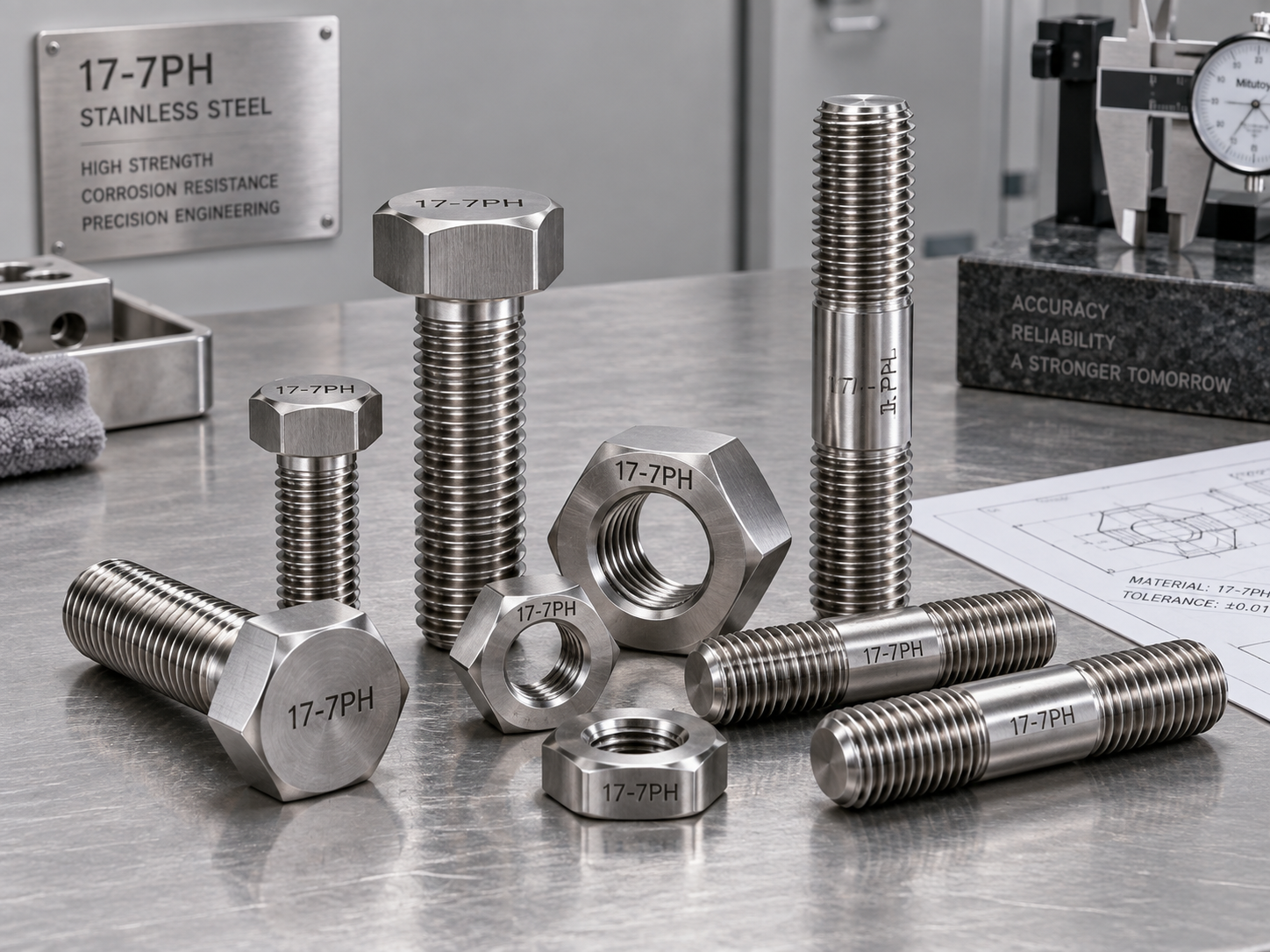
The Industry Standard for High-Strength Corrosion-Resistant Fastening
In applications demanding exceptional strength combined with good corrosion resistance, 17-4 PH fasteners (bolts, nuts, screws, washers) have established themselves as the industry benchmark. As specialists in high-performance precipitation-hardening fasteners, RAYCHIN manufactures precision 17-4 PH fastening components that deliver reliable performance across aerospace, chemical processing, marine, and energy applications. This comprehensive guide addresses critical technical questions while providing detailed engineering data for informed material selection.
Part 1: Scientific Foundation of 17-4 PH Stainless Steel
1.1 Chemical Composition: Precision Engineering for Controlled Aging
17-4 PH (UNS S17400, also known as AISI 630) is a martensitic, precipitation-hardening stainless steel with a carefully balanced composition optimized for strength and corrosion resistance:
Critical Phase Transformation:
17-4 PH undergoes a martensitic transformation upon cooling from solution treatment temperature, followed by coherent copper precipitation during aging, creating its exceptional strength properties.
RAYCHIN Quality Assurance: Our certified 17-4 PH fasteners are manufactured from vacuum-induction melted (VIM) or electroslag remelted (ESR) material batches that undergo rigorous chemical verification to ensure optimal composition for consistent aging response.
1.2 Mechanical Properties: Exceptional Strength Through Precipitation Hardening
The unique characteristic of 17-4 PH is its ability to achieve different mechanical property combinations through specific heat treatment conditions:
Standard Heat Treatment Conditions and Properties:
Elevated Temperature Properties (Condition H900):
Specialized Performance Characteristics:
Fatigue Strength: 70-80 ksi (483-552 MPa) at 10⁸ cycles (Condition H900, R=0)
Fracture Toughness: 35-50 ksi√in (38-55 MPa√m) in Condition H1150
Corrosion Resistance: Comparable to Type 304 stainless steel in mild environments
Thermal Expansion: 6.0 × 10⁻⁶/°F (10.8 × 10⁻⁶/°C) from 70-600°F
Thermal Conductivity: 9.6 BTU·in/(hr·ft²·°F) at 70°F (16.6 W/m·K)
Magnetic Response: Magnetic in all conditions due to martensitic structure
Heat Treatment Processes:
Solution Treatment (Condition A): 1900°F (1038°C) for 0.5-1 hour, air cool or faster
Conditioning Treatment: Optional for improved toughness
Aging Treatments:
H900: 900°F (482°C) for 1 hour, air cool
H1025: 1025°F (552°C) for 4 hours, air cool
H1150: 1150°F (621°C) for 4 hours, air cool
Part 2: Critical Technical Questions & Expert Answers
2.1 What are the advantages of 17-4 PH over conventional martensitic stainless steels?
17-4 PH offers several distinct advantages that make it superior for high-strength corrosion-resistant fasteners:
RAYCHIN Engineering Insight: "For applications requiring high-strength fasteners with good corrosion resistance and minimal heat treatment distortion, 17-4 PH provides an unmatched combination of properties among martensitic stainless steels."
2.2 How does 17-4 PH compare to other precipitation-hardening stainless steels?
This represents a common selection dilemma in aerospace and high-performance applications:
Key Distinction: 15-5 PH was developed to improve transverse ductility and toughness over 17-4 PH, making it preferable for highly stressed aerospace components.
2.3 What are the temperature limitations of 17-4 PH fasteners?
Short-Term Exposure Limits:
Condition H900: Maximum 600°F (316°C) continuous, 800°F (427°C) intermittent
Condition H1025: Maximum 800°F (427°C) continuous, 1000°F (538°C) intermittent
Condition H1150: Maximum 1000°F (538°C) continuous, 1200°F (649°C) intermittent
Long-Term Exposure Considerations:
Overaging: At temperatures above 900°F (482°C), copper precipitates coarsen, leading to strength reduction
Embrittlement: Prolonged exposure between 750-950°F (399-510°C) can cause 475°C embrittlement
Oxidation: Good oxidation resistance up to 1200°F (649°C) in intermittent service
High-Temperature Performance Comparison:
RAYCHIN Recommendation: For applications above 600°F (316°C), consider using Condition H1150 17-4 PH or transitioning to high-temperature alloys like A286 or Inconel 718 for better strength retention.
Part 3: Industry-Specific Applications & Solutions
3.1 Aerospace & Defense: Reliability in Demanding Environments
Primary Applications:
Aircraft Structural Fasteners: High-strength bolts for airframe components, landing gear
Missile Components: Fasteners for guidance systems and structural elements
Helicopter Components: Bolts for rotor systems and dynamic components
Jet Engine Components: Fasteners for compressor sections and external accessories
Performance Advantages:
High strength-to-weight ratio compared to many alloy steels
Good corrosion resistance reduces maintenance requirements
Consistent properties with minimal heat treatment distortion
Proven reliability in aerospace applications for decades
3.2 Oil & Gas Industry: Strength in Corrosive Environments
Critical Applications:
Downhole Tools: Fasteners for MWD/LWD equipment and completion tools
Wellhead Components: Bolts for Christmas trees and surface equipment
Valve Components: High-strength fasteners for critical flow control equipment
Pump Components: Bolts for high-pressure pumping equipment
Technical Benefits:
NACE MR0175/ISO 15156 compliance in H1150 condition for sour service
Good resistance to sulfide stress cracking
High strength for high-pressure applications
Long-term reliability in challenging environments
3.3 Chemical Processing: Durability in Moderate Corrosive Environments
Essential Applications:
Process Equipment Fasteners: Bolts for reactors, columns, and heat exchangers
Pump and Compressor Components: High-strength fasteners for rotating equipment
Valve and Fitting Assemblies: Bolts for critical process control equipment
Structural Components: Fasteners for platforms and support structures
Operational Advantages:
Resistance to many organic chemicals and mild acids
Good performance in moderate temperature chemical environments
High strength for high-pressure applications
Reduced maintenance compared to carbon steel alternatives
3.4 Marine & Coastal Applications: Strength in Salt-Air Environments
Specialized Applications:
Marine Hardware: High-strength fasteners for structural components and rigging
Coastal Infrastructure: Bolts for bridges, piers, and offshore structures
Shipbuilding Components: Fasteners for critical load-bearing structures
Desalination Equipment: Bolts for high-pressure RO systems
Compliance & Reliability:
Good resistance to marine atmospheres
High strength for critical load-bearing applications
Long-term reliability in coastal environments
Proven performance in marine applications worldwide
Part 4: Comprehensive Material Comparison
4.1 Direct Performance Comparison Table
4.2 High-Temperature Performance Comparison
Percentage values indicate yield strength retention relative to room temperature strength
4.3 Selection Decision Matrix
Choose 17-4 PH Fasteners When:
High strength (up to 210 ksi) with good corrosion resistance is required
Operating temperatures remain below 600°F (316°C) for Condition H900
Cost-effective solution compared to nickel-based superalloys
Magnetic properties are acceptable or required
Good fabricability and weldability are important
Consider Alternatives When:
Operating temperatures exceed 600°F (consider A286 or Inconel 718)
Maximum corrosion resistance is required (consider PH 13-8 Mo or nickel alloys)
Non-magnetic properties are essential (consider austenitic grades)
Maximum toughness is critical (consider 15-5 PH or managing steels)
Weight savings are primary concern (consider titanium alloys)
Part 5: The RAYCHIN Engineering Advantage for 17-4 PH Fasteners
5.1 Specialized Manufacturing Capabilities
Precision Heat Treatment: Controlled atmosphere furnaces for consistent aging response
Advanced Thread Rolling: Produces superior fatigue-resistant threads for high-performance 17-4 PH bolts
Surface Finishing: Passivation, electropolishing, and specialty coatings available
Quality Control: 100% dimensional inspection and lot traceability
5.2 Technical Support Services
Heat Treatment Optimization: Recommending the best condition for specific requirements
Material Selection Guidance: Helping determine if 17-4 PH is optimal for your application
Failure Analysis: Laboratory services to investigate and prevent fastener failures
Application Engineering: Custom designs for unique fastening challenges
5.3 Certification & Compliance
Material Standards: Full compliance with AMS 5643, ASTM A564, AMS 2759/3, and customer specifications
Testing Capabilities: Mechanical testing, corrosion testing, and metallurgical analysis
Traceability: Complete documentation from raw material to finished fastener
Industry Approvals: Aerospace (NADCAP), defense, and industrial quality systems
Engineering Excellence with 17-4 PH Fasteners
17-4 PH stainless steel fasteners represent the optimal balance of strength, corrosion resistance, and cost-effectiveness for a wide range of demanding applications. With their proven reliability across multiple industries and their ability to achieve different strength levels through controlled heat treatment, they offer engineers a versatile solution for challenging fastening requirements.
The RAYCHIN Commitment: We deliver more than just precision 17-4 PH fasteners—we provide engineered solutions backed by metallurgical expertise and manufacturing excellence. Our comprehensive approach ensures reliable performance in your most challenging applications.
Next Steps for Your Project:
Technical Consultation: Contact our engineering team for application-specific recommendations
Condition Selection: Discuss the optimal heat treatment condition for your performance requirements
Sample Evaluation: Request test samples for your qualification process
Production Partnership: Leverage our manufacturing capabilities for reliable supply
Contact RAYCHIN today to discuss how certified 17-4 PH fasteners can enhance the performance and reliability of your aerospace, oil & gas, chemical processing, or marine applications. Request our 17-4 PH Fastener Technical Guide or schedule a consultation with our engineering specialists.
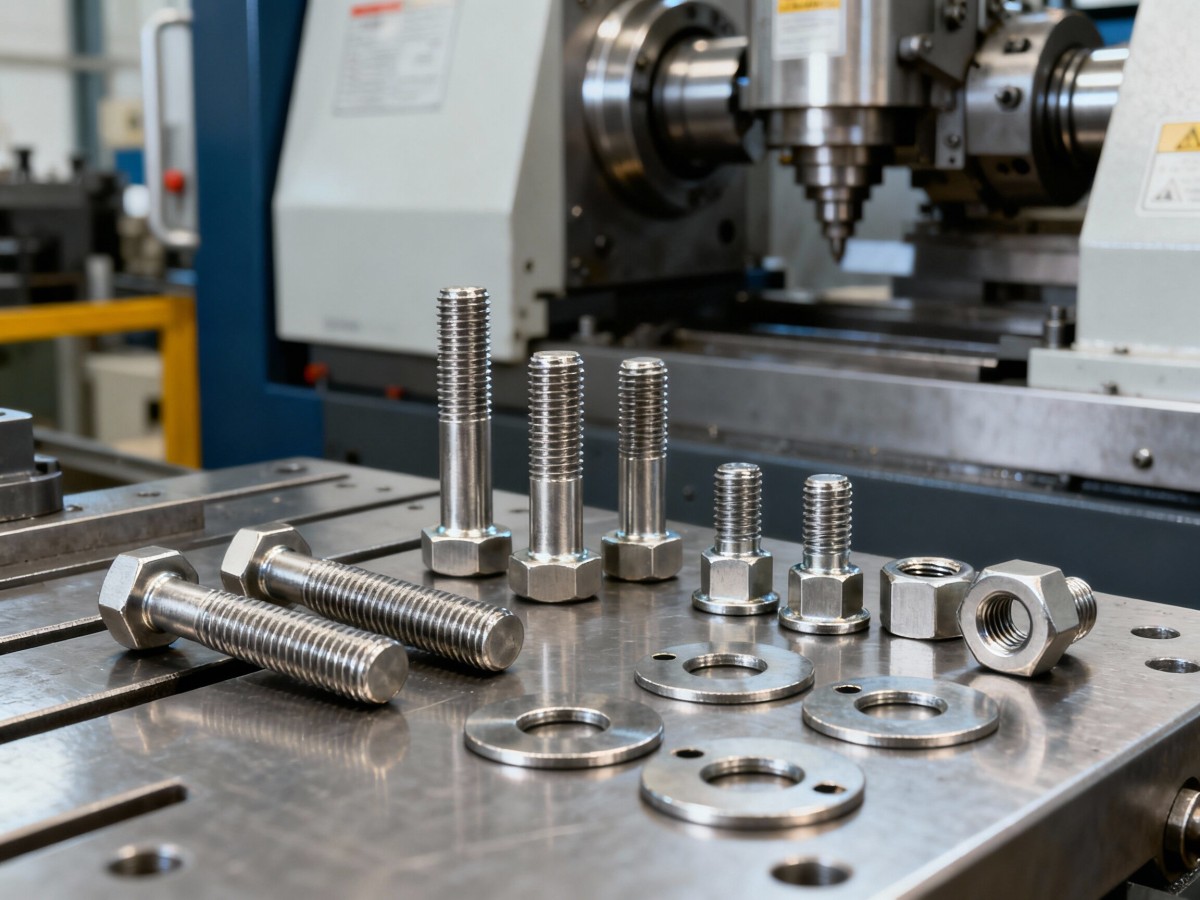
17-4 PH fasteners, 17-4 PH bolts, precipitation hardening stainless steel fasteners, UNS S17400 fasteners, high-strength stainless steel bolts, PH stainless fasteners, aerospace fasteners 17-4 PH, Condition H900 fasteners, corrosion resistant high-strength fasteners, 17-4 PH vs 15-5 PH, 17-4 PH mechanical properties, 17-4 PH chemical composition, RAYCHIN 17-4 PH manufacturer, AMS 5643 fasteners, NACE MR0175 fasteners, marine grade fasteners, heat treatable fasteners, aircraft structural bolts, oil & gas fasteners, high-temperature fasteners.
Request A Quote! We'll respond as soon as possible(within 12 hours)
Get a Quote