
Categories List
In the demanding world of industrial and aerospace applications, selecting the right fastener material is critical for safety, reliability, and longevity. Among the top contenders, Inconel alloys stand out, but how do they compare to other high-performance alternatives? This article provides a detailed comparison from material composition to cost.
1. Material Composition & Metallurgy
Inconel Fasteners (e.g., 718, 625, X-750): Primarily nickel-chromium-based superalloys. They contain significant iron and are strengthened by additions of niobium, molybdenum, and titanium. A key feature is the formation of a stable, adherent chromium oxide layer, providing exceptional corrosion resistance.
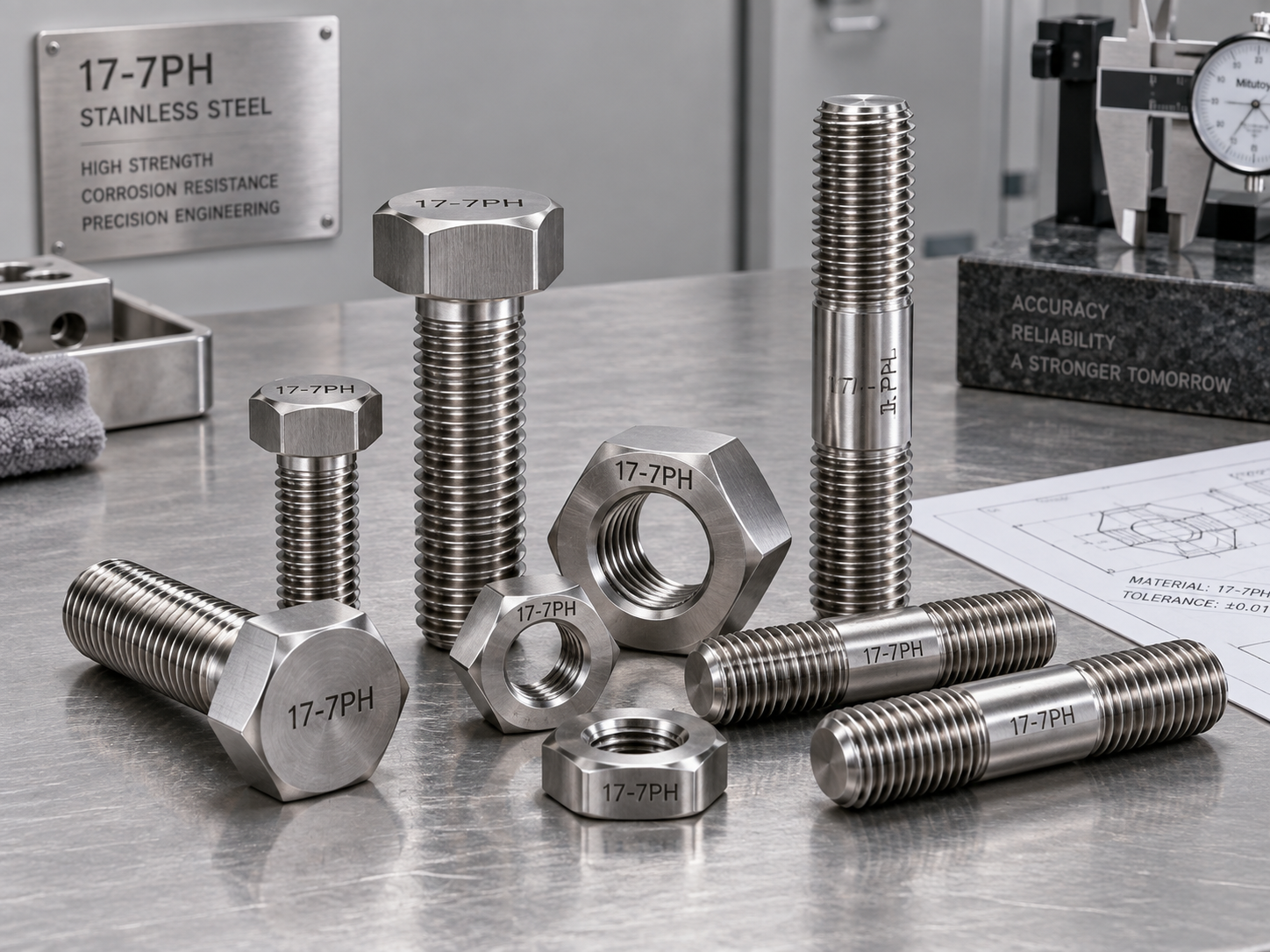
A286 / Stainless Steel Fasteners (e.g., A286, 17-4PH): These are iron-based alloys. A286 is an iron-nickel-chromium alloy with titanium and molybdenum. Common stainless steels like 304/316 are iron-chromium-nickel alloys. They rely on a chromium oxide layer for corrosion protection.
Titanium Alloy Fasteners (e.g., Grade 5, Ti-6Al-4V): Primarily titanium with aluminum and vanadium as main alloying elements. They derive strength from these additions and form a passive titanium oxide layer.
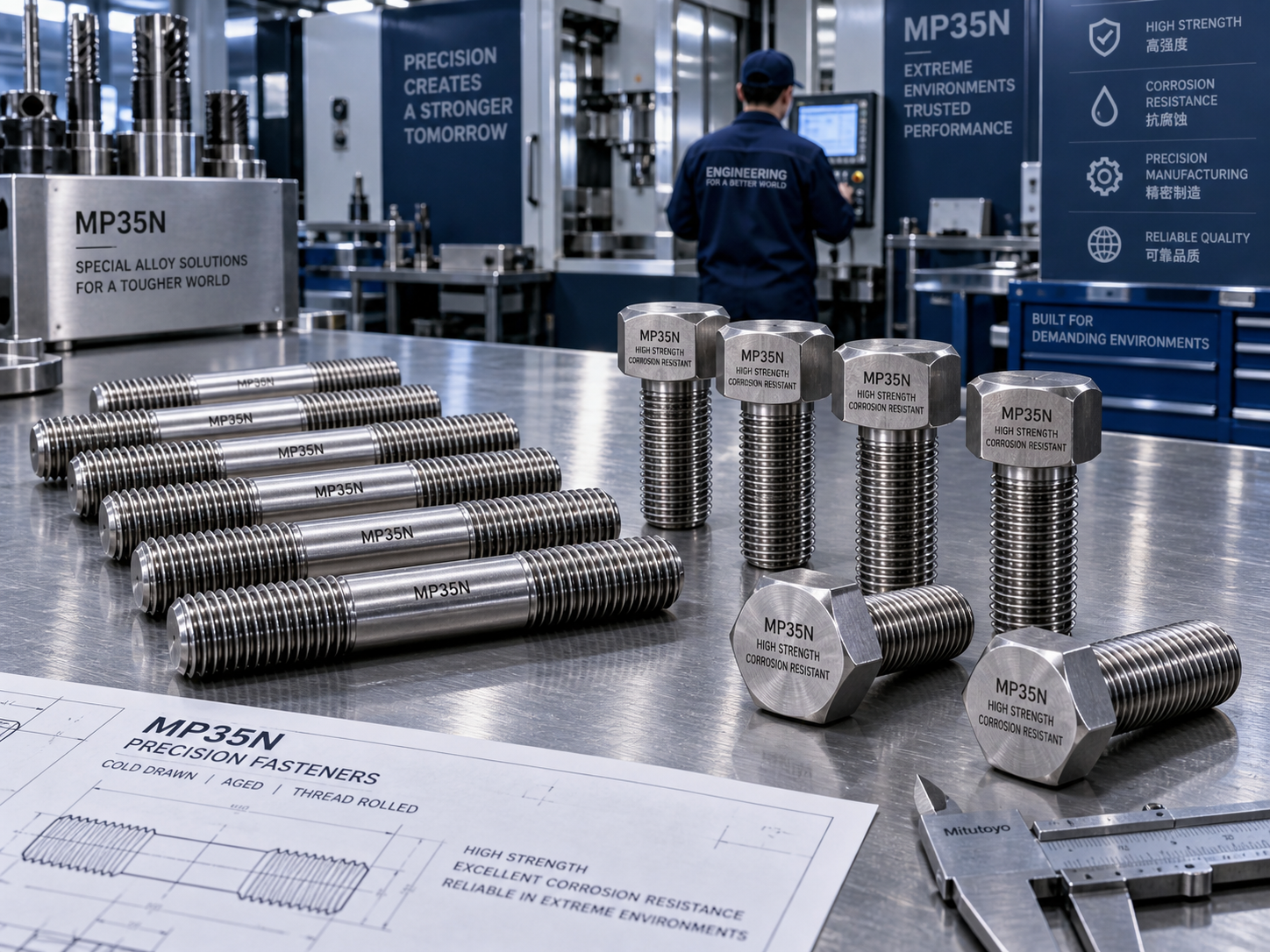
MP35N / Cobalt Alloy Fasteners: Nickel-cobalt-chromium-molybdenum alloys. They achieve ultra-high strength through a unique combination of cold working and age hardening.
2. Mechanical Properties
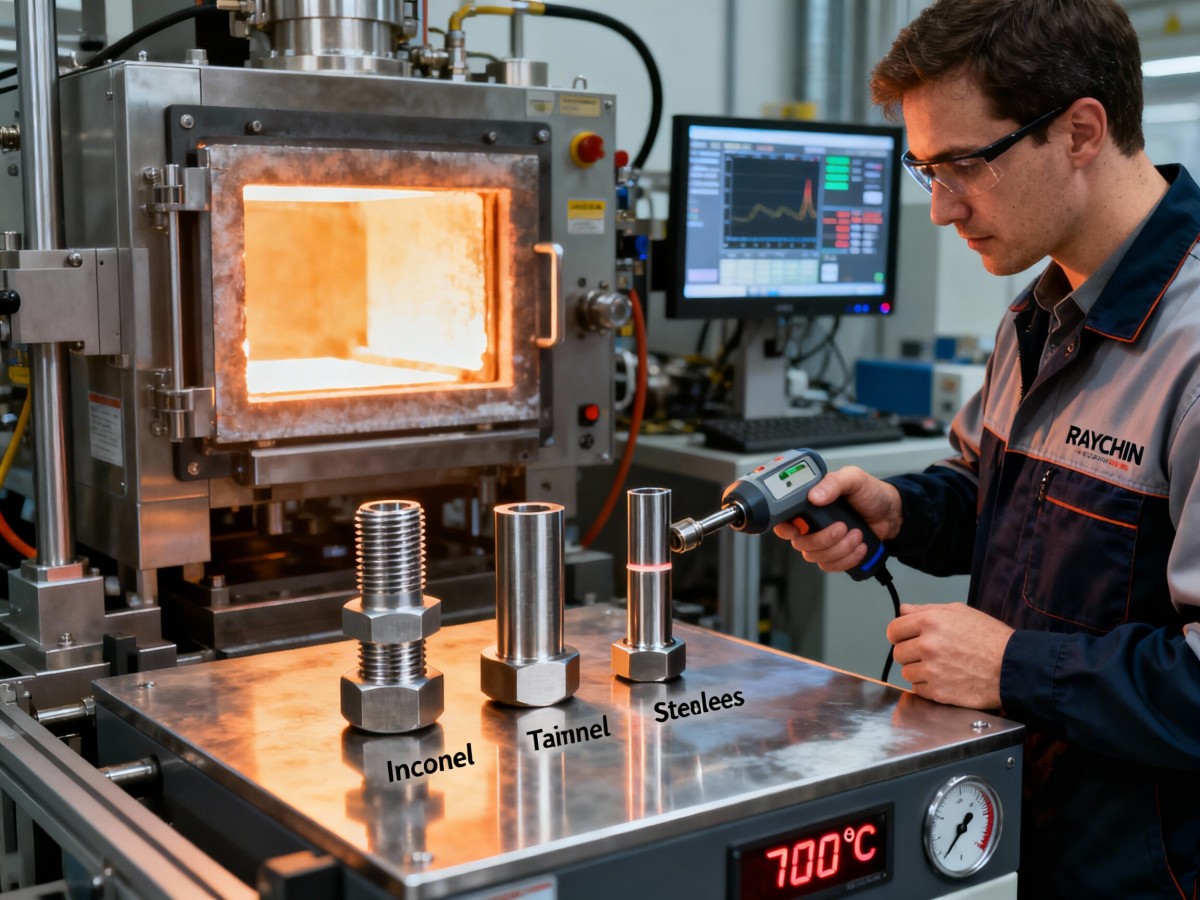
Strength at Elevated Temperatures: Inconel excels here, maintaining high tensile and creep strength up to 700°C (1300°F) and beyond. A286 performs well up to ~600°C, while titanium alloys lose significant strength above ~425°C. MP35N offers exceptional strength but at a lower maximum service temperature than Inconel.
Room Temperature Strength: MP35N and cold-worked Inconel 718 offer the highest ultimate tensile strengths. Titanium Grade 5 has an excellent strength-to-weight ratio. A286 and standard stainless steels provide good, moderate strength.
Toughness & Fatigue Resistance: Inconel alloys exhibit superb fatigue and fracture toughness, especially in high-temperature cyclic environments. Titanium also has excellent fatigue properties. MP35N is known for its very high fatigue strength and toughness.
3. Corrosion & Environmental Resistance
Oxidation & High-Temp Corrosion: Inconel is superior, offering outstanding resistance to oxidation, carburization, and sulfidation in extreme thermal environments.
Aqueous & Chemical Corrosion: Inconel and MP35N provide excellent resistance to a wide range of corrosive media, including chlorides, acids, and seawater—often outperforming standard stainless steels. Titanium is exceptional in chloride environments but vulnerable to reducing acids. Stainless steels are good for many applications but can suffer from pitting and stress corrosion cracking.
Galvanic Compatibility: Titanium requires careful isolation to prevent galvanic corrosion when coupled with other metals. Inconel is more cathodic and can accelerate corrosion of less noble materials in conductive environments.
4. Application Domains
Inconel Fasteners: The premier choice for jet engines, gas turbines, rocket engines, nuclear reactors, and high-temperature chemical processing equipment. Ideal where high heat, pressure, and corrosion coexist.
A286 / Stainless Steel Fasteners: Widely used in aerospace frames, automotive exhaust systems, general industrial, and marine applications where cost-effective, moderate high-temperature performance is needed.
Titanium Alloy Fasteners: Dominant in airframe structures, aerospace components, medical implants, and marine applications where maximum strength-to-weight ratio and seawater corrosion resistance are paramount.
MP35N / Cobalt Alloy Fasteners: Used in downhole oil & gas tools, medical devices, aerospace landing gear, and springs requiring the ultimate in strength, toughness, and corrosion resistance in non-extreme-temperature environments.
5. Cost Considerations
Cost generally increases in this order: Standard Stainless Steels < A286 < Titanium Grade 5 < Inconel 718 < MP35N.
Inconel is significantly more expensive than stainless steels due to its high nickel/cobalt content and complex processing. However, its longevity in extreme conditions often justifies the initial investment through reduced maintenance and downtime.
Titanium costs are driven by raw material expense and challenging machining.
MP35N is among the most expensive due to its cobalt content and specialized processing.
Conclusion
No single material is perfect for all applications. Stainless steels and A286 offer cost-effective solutions for many demanding but less extreme conditions. Titanium is unbeatable for weight-critical applications. MP35N provides peak strength and toughness for critical, non-elevated temperature uses.
However, for the most challenging environments combining intense heat, pressure, and severe corrosion, Inconel fasteners remain the industry benchmark. Their balanced portfolio of properties ensures reliability where failure is not an option.
Selecting the optimal fastener requires careful analysis of your specific operating environment, mechanical loads, and lifecycle cost targets.
For expert guidance tailored to your unique application requirements, consult with a RAYCHIN technical engineer today. Our specialists can help you navigate these material choices to ensure optimal performance, safety, and value for your project.
Request A Quote! We'll respond as soon as possible(within 12 hours)
Get a Quote