
Categories List
Recent Posts
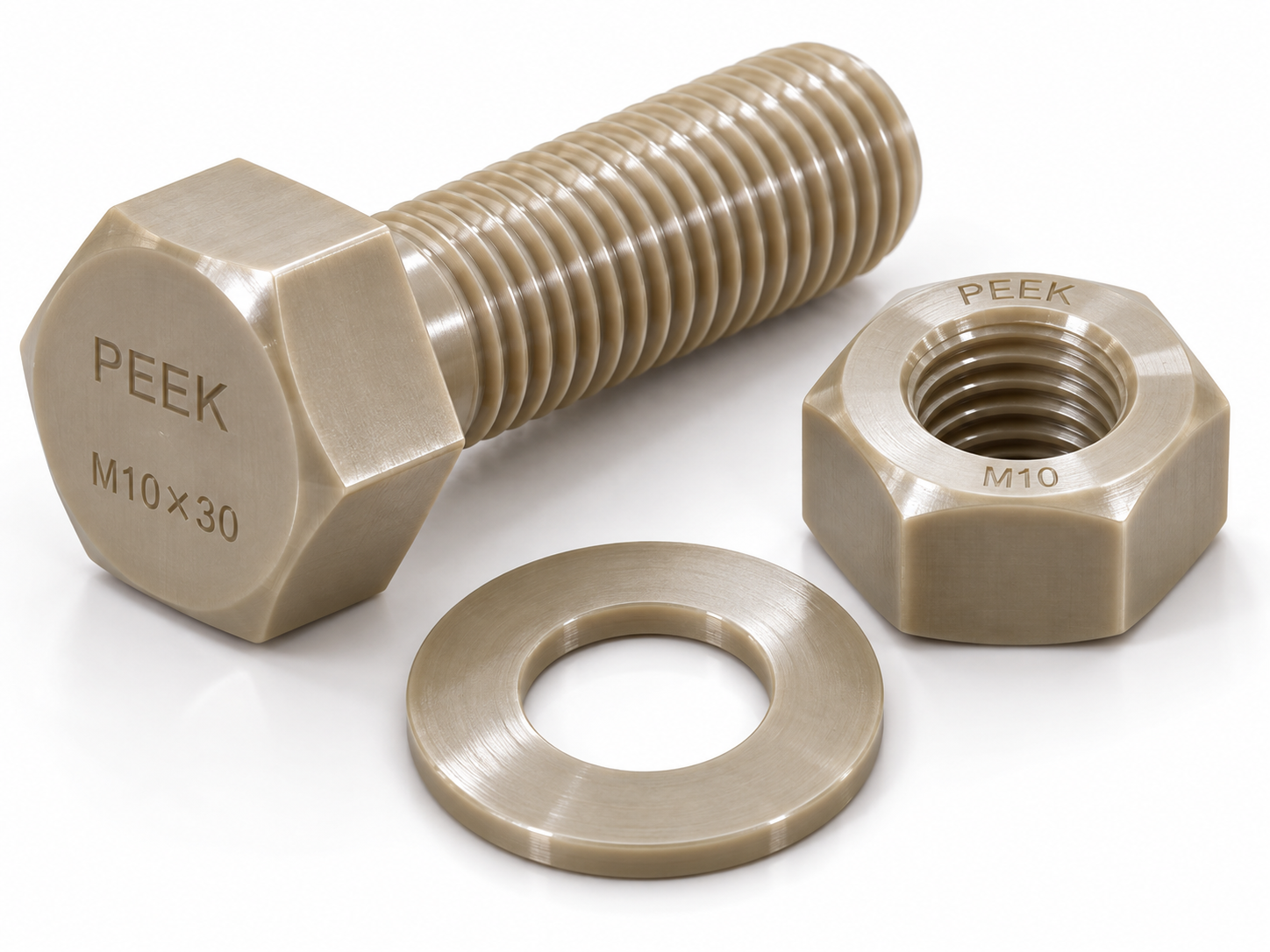
 PEEK Fasteners | Polyetheretherketone Bolts, Nuts, Screws – High-Performance Polymer | RAYCHIN LIMITED
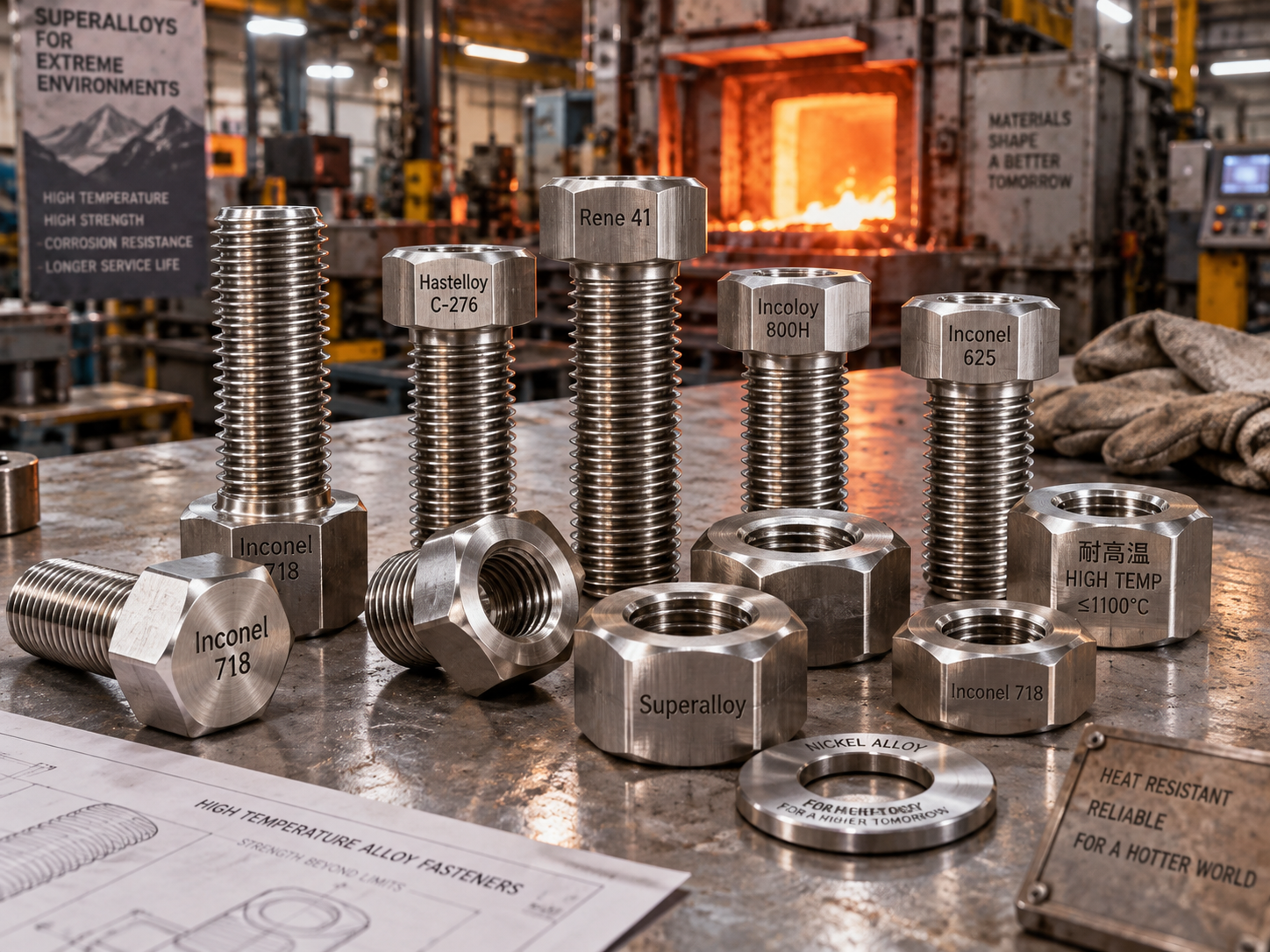
 High-Temperature Alloy Fasteners: Complete Material Guide, Chemistry, Performance Comparison | RAYCHIN LIMITED
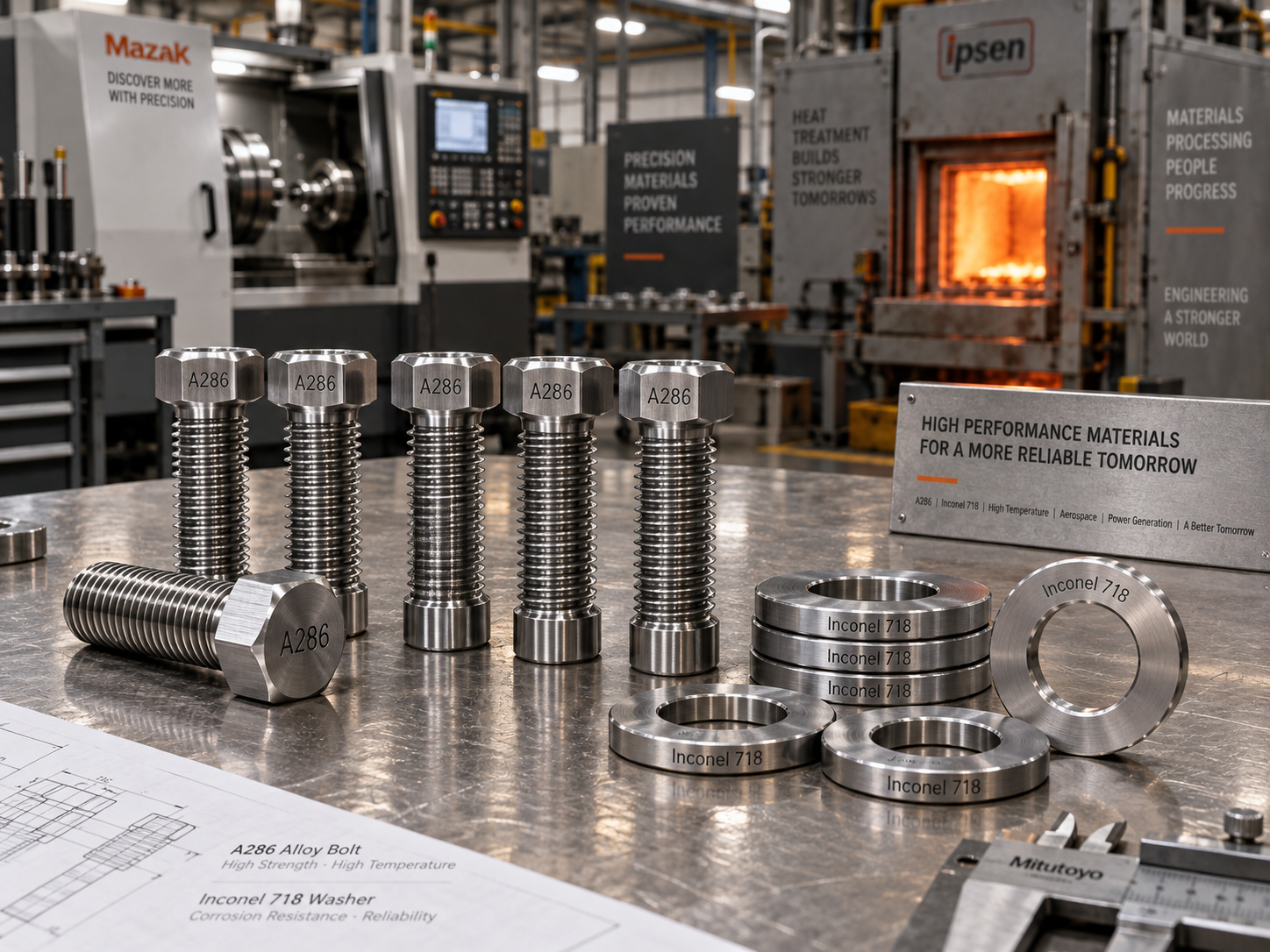
 High-Temperature Fastener Material Selection Guide | A286, Inconel 718, Nimonic 80A, Waspaloy – RAYCHIN LIMITED
The Pinnacle of Strength-to-Weight Engineering
In applications where every gram counts and reliability under extreme conditions is non-negotiable, titanium fasteners—including bolts, nuts, screws, and washers—represent the engineered solution of choice. As specialists in high-performance aerospace and industrial fasteners, RAYCHIN manufactures precision titanium fastening components that deliver unparalleled strength-to-weight ratios, exceptional corrosion resistance, and proven performance across the most demanding industries. This comprehensive guide addresses critical technical questions while providing detailed engineering data for informed material selection in aerospace, medical, marine, and high-performance applications.
Part 1: Scientific Foundation of Titanium Alloys for Fasteners
1.1 Chemical Composition: Engineering the Optimal Balance of Properties
Titanium fasteners are manufactured from both commercially pure titanium and titanium alloys, each formulated for specific performance requirements:
Primary Titanium Grades for Fasteners:
Critical Element Functions:
Aluminum (Al): Alpha phase stabilizer, increases strength and reduces density
Vanadium (V): Beta phase stabilizer, enhances ductility and heat treatment response
Palladium (Pd): Critical for corrosion resistance, extends passive film stability in reducing acids
Iron (Fe): Beta stabilizer, improves strength and hardenability
Oxygen (O), Nitrogen (N), Carbon (C): Interstitial strengtheners, controlled within precise ranges
Molybdenum (Mo), Chromium (Cr): Beta stabilizers in advanced alloys for enhanced strength
RAYCHIN Quality Assurance: Our certified titanium fasteners are manufactured from vacuum-melted material with full traceability, ensuring optimal composition for maximum performance in specific applications.
1.2 Mechanical Properties: Exceptional Strength at Minimum Weight
Titanium alloys offer outstanding mechanical properties that combine high strength with remarkable lightness:
Room Temperature Mechanical Properties:
Specific Strength Comparison (Strength-to-Weight Ratio):
Grade 5 Titanium: 130 ksi ÷ 0.160 lb/in³ = 812 ksi per lb/in³
High Tensile Steel (12.9): 180 ksi ÷ 0.284 lb/in³ = 634 ksi per lb/in³
Stainless Steel (316): 80 ksi ÷ 0.286 lb/in³ = 280 ksi per lb/in³
Aluminum 7075-T6: 83 ksi ÷ 0.101 lb/in³ = 822 ksi per lb/in³ (lower absolute strength)
Critical Distinction: Grade 5 titanium offers 45% weight reduction compared to steel at comparable strength levels, with superior corrosion resistance.
Elevated Temperature Performance:
Maximum Service Temperatures by Material :
Titanium (Grade 5): 600-800°F (315-427°C) continuous
Aluminum: 200-250°F (93-121°C)
Stainless Steel: 1500°F+ (816°C+)
Steel Alloy: 400-1100°F (204-593°C, grade dependent)
Specialized Performance Characteristics:
Fatigue Strength: 65-75 ksi (448-517 MPa) at 10⁷ cycles (Ti-6Al-4V, stress ratio R=0.1)
Fracture Toughness: 50-80 ksi√in (55-88 MPa√m) for Grade 5, higher for ELI grades
Thermal Expansion: 5.2 × 10⁻⁶/°F (9.4 × 10⁻⁶/°C) from 70-600°F
Thermal Conductivity: 4.2 BTU·in/(hr·ft²·°F) at 70°F (7.2 W/m·K)
Electrical Resistivity: 55.0 microhm-cm at 70°F
Magnetic Permeability: Non-magnetic (<1.00005 μ) - ideal for MRI and sensitive instrumentation
Heat Treatment Requirements:
Grade 5 (Ti-6Al-4V): Solution treat at 1675-1725°F (913-941°C), rapid cool, age at 900-1100°F (482-593°C) for 2-8 hours
Beta Alloys (Ti-5553): Complex solution + aging cycles for maximum strength
CP Grades (2, 7): Annealed only - not heat treatable
Part 2: Critical Technical Questions & Expert Answers
2.1 What makes titanium fasteners uniquely superior for aerospace and weight-critical applications?
Titanium's exceptional strength-to-weight ratio and corrosion resistance create unique advantages:
Standard Grade 5 (Ti-6Al-4V): 170 ksi UTS, 103 ksi double shear - current workhorse
Beta Titanium (Ti-5553): 190 ksi UTS, 113 ksi double shear - next generation high-strength
Comparison:
A286 Superalloy: 180 ksi UTS, 108 ksi double shear
Inconel 718: 220 ksi UTS, 120 ksi double shear
RAYCHIN Engineering Insight: "For every pound saved in airframe weight through titanium fasteners, an airline can save thousands of dollars in fuel costs annually. This economic reality drives the aerospace industry's continued adoption of advanced titanium fastening systems."
2.2 How do titanium fasteners compare to stainless steel and high tensile steel?
This is the most critical selection decision for engineers across industries:
Application-Specific Recommendations :
Critical Distinction: While 12.9 steel offers higher absolute tensile strength, titanium provides comparable or superior strength when normalized for weight, making it the preferred choice for aerospace, motorsport, and weight-sensitive applications .
2.3 What are the temperature limitations and high-temperature performance characteristics?
High-Temperature Performance Profile :
Oxidation Behavior:
Below 800°F (427°C): Stable, protective TiO₂ oxide layer
800-1200°F (427-649°C): Accelerated oxidation, oxygen embrittlement risk
Above 1200°F (649°C): Catastrophic oxidation, structural integrity compromised
High-Temperature Comparison with Competing Materials :
RAYCHIN Recommendation: For continuous service above 600°F (316°C), consider nickel-based superalloys or stainless steels. Titanium excels in moderate-temperature applications where its unique combination of lightness, strength, and corrosion resistance is most valuable.
2.4 How does titanium compare to tungsten alloy for specialized applications?
This comparison is relevant for nuclear, aerospace, and counterweight applications :
Critical Distinction: These materials serve fundamentally different purposes. Titanium fasteners are chosen for lightweight structural applications, while tungsten alloys are selected for high-density requirements such as radiation shielding or vibration damping .
Part 3: Industry-Specific Applications & Solutions
3.1 Aerospace & Defense: Mission-Critical Weight Savings
Airframe Structures: Fuselage fasteners, wing attachments, control surface hinges
Engine Components: Fan blade fasteners, compressor case bolts, nacelle hardware
Landing Gear: Structural fasteners, hydraulic system connections
Spacecraft: Satellite deployment mechanisms, launch vehicle components
Military Aircraft: High-performance fasteners for fighter jets and helicopters
Performance Advantages:
45% weight reduction compared to steel fasteners
Excellent fatigue resistance for cyclic loading
Compatibility with carbon fiber composites (galvanic compatibility)
Elimination of cadmium plating and associated hydrogen embrittlement risks
Proven reliability in critical flight applications
3.2 Medical & Biomedical: Biocompatible Excellence
Orthopedic Implants: Bone screws, spinal fixation systems, fracture plates
Dental Implants: Abutment screws, prosthetic attachments
Surgical Instruments: High-strength, corrosion-resistant tools
Prosthetic Devices: Attachment hardware for external and internal prostheses
Technical Benefits:
Full biocompatibility - osseointegration capability
Non-magnetic for MRI compatibility
Exceptional corrosion resistance in bodily fluids
Elastic modulus closer to bone than stainless steel or cobalt-chrome
ISO 5832-3 and ASTM F136 compliance for implantable devices
3.3 Marine & Offshore: Conquering Seawater Corrosion
Subsea Equipment: Connectors, ROV components, instrumentation housings
Shipbuilding: Hull fasteners, propeller attachments, seawater systems
Offshore Platforms: Splash zone and submerged component fasteners
Desalination Plants: High-pressure RO system bolting
Naval Vessels: Corrosion-critical applications
Operational Advantages:
Immunity to seawater pitting and crevice corrosion
No cathodic protection required
Resistance to microbiologically influenced corrosion (MIC)
Long-term reliability with zero maintenance
Proven 30+ year service life in seawater immersion
3.4 Motorsport & High-Performance Automotive
Racing Engine Components: Connecting rod bolts, cylinder head fasteners
Suspension Systems: Wishbone bolts, upright fasteners
Chassis Hardware: Structural attachment points
Exhaust Systems: High-temperature fastener applications
Cosmetic/Dress-up: Visible fasteners for premium appearance
Performance Benefits:
Significant unsprung weight reduction
Improved handling and acceleration through mass savings
Corrosion resistance for race vehicles exposed to elements
Premium aesthetic appeal with distinctive titanium appearance
3.5 Chemical Processing: Reliability in Aggressive Media
Heat Exchangers: Tube sheet fasteners, baffle bolts
Reactor Vessels: Agitator fasteners, manway bolting
Pump Components: Impeller fasteners, casing bolts
Valve Assemblies: Seat retention, stem connections
Compliance & Safety:
Excellent resistance to oxidizing acids (nitric, chromic)
Good performance in chloride-containing environments
Immunity to chloride stress corrosion cracking
Long service life in continuous chemical processes
Part 4: Comprehensive Material Comparison
4.1 Direct Performance Comparison Table
4.2 Corrosion Performance Comparison
Critical Application Note: Titanium is not recommended for hydrofluoric acid or strong reducing acid service, where nickel-based alloys or Monel are superior .
4.3 Selection Decision Matrix
Choose Titanium Fasteners When:
Weight reduction is critical (aerospace, motorsport, performance vehicles)
Maximum corrosion resistance is required without coatings
Non-magnetic properties are essential (MRI, sensitive instrumentation)
Biocompatibility is mandatory (medical implants, surgical instruments)
Long-term reliability in corrosive environments justifies premium cost
Galvanic compatibility with composites is required
Aesthetic premium appearance adds value
Consider Alternatives When:
Maximum absolute strength at lowest cost is required (choose 12.9 steel)
Extreme high temperatures (>800°F/427°C) are continuous (choose Inconel or A286)
Hydrofluoric acid is the primary corrosive (choose Monel or Hastelloy)
Budget constraints dominate and corrosion is mild (choose stainless or coated steel)
Large size ranges are required (titanium availability is limited)
Strong reducing acid environments exist (choose nickel-based alloys)
Part 5: The RAYCHIN Engineering Advantage for Titanium Fasteners
5.1 Specialized Manufacturing Capabilities
Precision Cold Heading: Optimized processes for titanium's unique flow characteristics
Controlled Heat Treatment: Vacuum furnaces for contamination-free processing of Ti-6Al-4V and beta alloys
Advanced Thread Rolling: Produces superior fatigue-resistant threads with optimized root radii
Surface Enhancement: Shot peening for improved fatigue life, anodizing for color coding and enhanced wear resistance
Quality Verification: 100% dimensional inspection, mechanical testing per ASTM E8/E8M, and metallurgical analysis
5.2 Technical Support Services
Application Engineering: Custom fastener designs optimized for titanium's specific properties
Material Selection Guidance: Helping choose between Grade 2, Grade 5, Grade 7, and advanced beta alloys
Failure Analysis: Laboratory services to investigate and prevent titanium fastener failures
Lifecycle Cost Analysis: Demonstrating total cost advantages over coated steel and stainless alternatives
5.3 Certification & Compliance
Material Standards: Full compliance with ASTM F468, ASTM F593, AMS 4965, AMS 4967, and customer specifications
Aerospace Certifications: Nadcap, AS9100D quality systems
Medical Certifications: ISO 13485, FDA compliance for implantable devices
Traceability: Complete documentation from melt to finished fastener, including material certifications and heat treatment records
Conclusion: Engineering Excellence with Titanium Fasteners
Titanium fasteners represent the ultimate solution for applications demanding the highest strength-to-weight ratio combined with exceptional corrosion resistance. With their unique ability to reduce weight by 45% compared to steel while maintaining comparable strength and offering immunity to seawater corrosion, they provide engineers with an unparalleled tool for performance optimization.
The RAYCHIN Commitment: We deliver more than just precision titanium fasteners—we provide lightweight engineering solutions backed by metallurgical expertise and manufacturing excellence. Our comprehensive approach ensures that every titanium bolt, nut, screw, and washer performs reliably in your most demanding applications.
Next Steps for Your Project:
Application Analysis: Contact our engineering team for specific recommendations on titanium grade selection
Weight Savings Calculation: Request a comparative analysis of titanium vs. your current fastener material
Sample Testing: Request qualification samples for your specific application requirements
Production Partnership: Leverage our manufacturing expertise for reliable supply of certified titanium fasteners
Contact RAYCHIN today to discuss how certified titanium fasteners can enhance the performance, reliability, and efficiency of your aerospace, medical, marine, or high-performance industrial applications. Request our Titanium Fastener Engineering Guide or schedule a consultation with our lightweight engineering specialists.
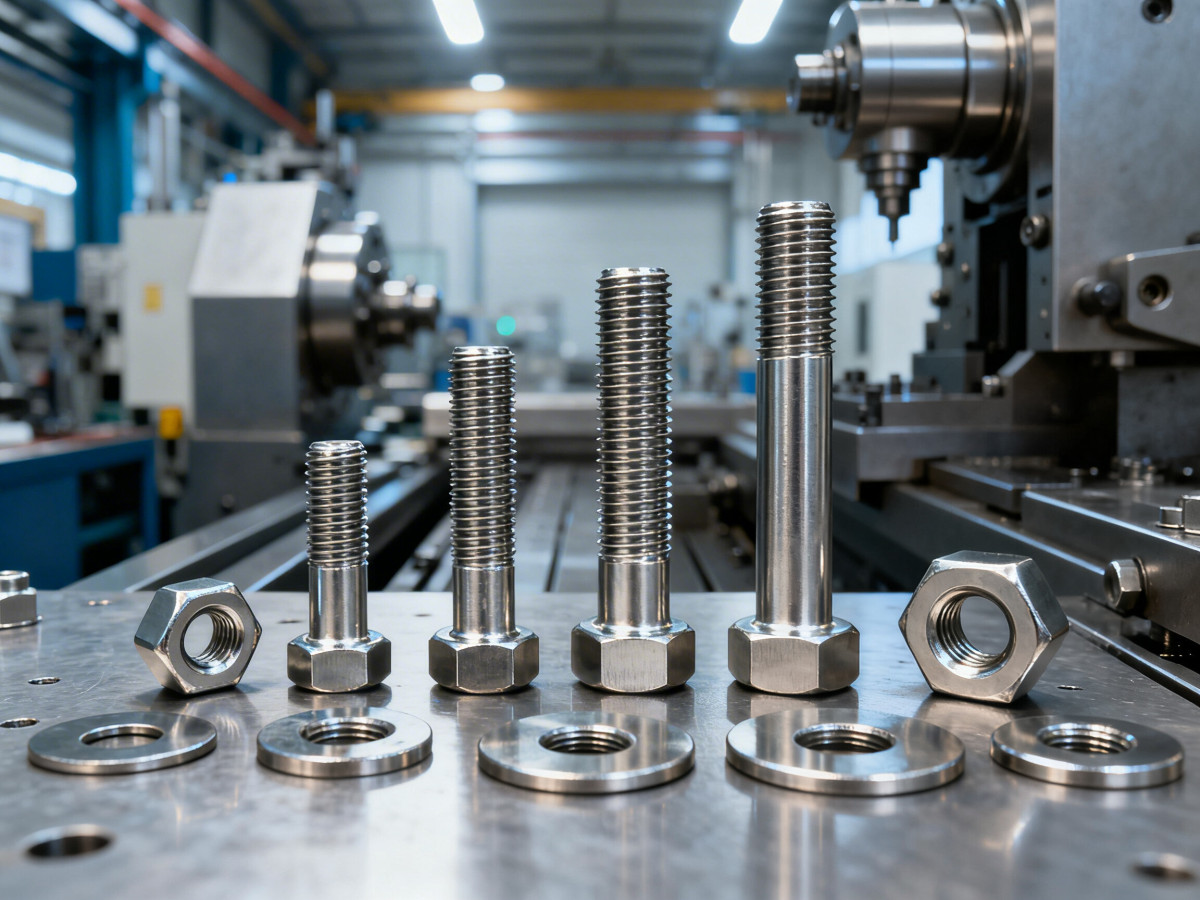
Titanium fasteners, Grade 5 titanium bolts, Ti-6Al-4V fasteners, aerospace titanium fasteners, lightweight high-strength bolts, corrosion resistant titanium screws, medical implant fasteners, marine titanium hardware, titanium vs stainless steel, titanium vs steel fasteners, titanium alloy properties, ASTM F468 titanium, RAYCHIN titanium manufacturer, Ti-5553 fasteners, Grade 7 titanium bolts, biocompatible fasteners, non-magnetic fasteners, high strength-to-weight ratio fasteners, titanium socket cap screws, titanium hex nuts.
Request A Quote! We'll respond as soon as possible(within 12 hours)
Get a Quote