
Categories List
Recent Posts
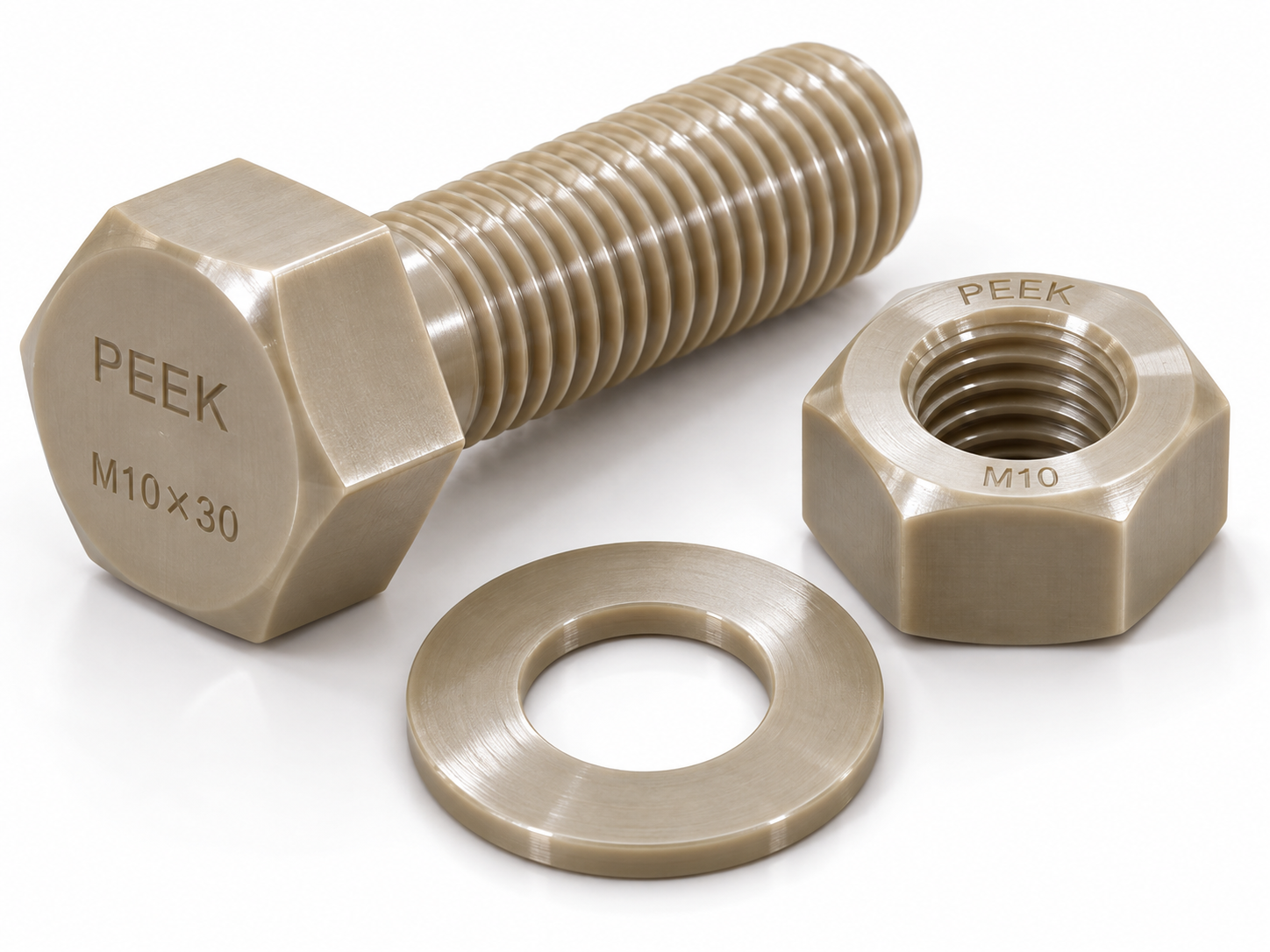
 PEEK Fasteners | Polyetheretherketone Bolts, Nuts, Screws – High-Performance Polymer | RAYCHIN LIMITED
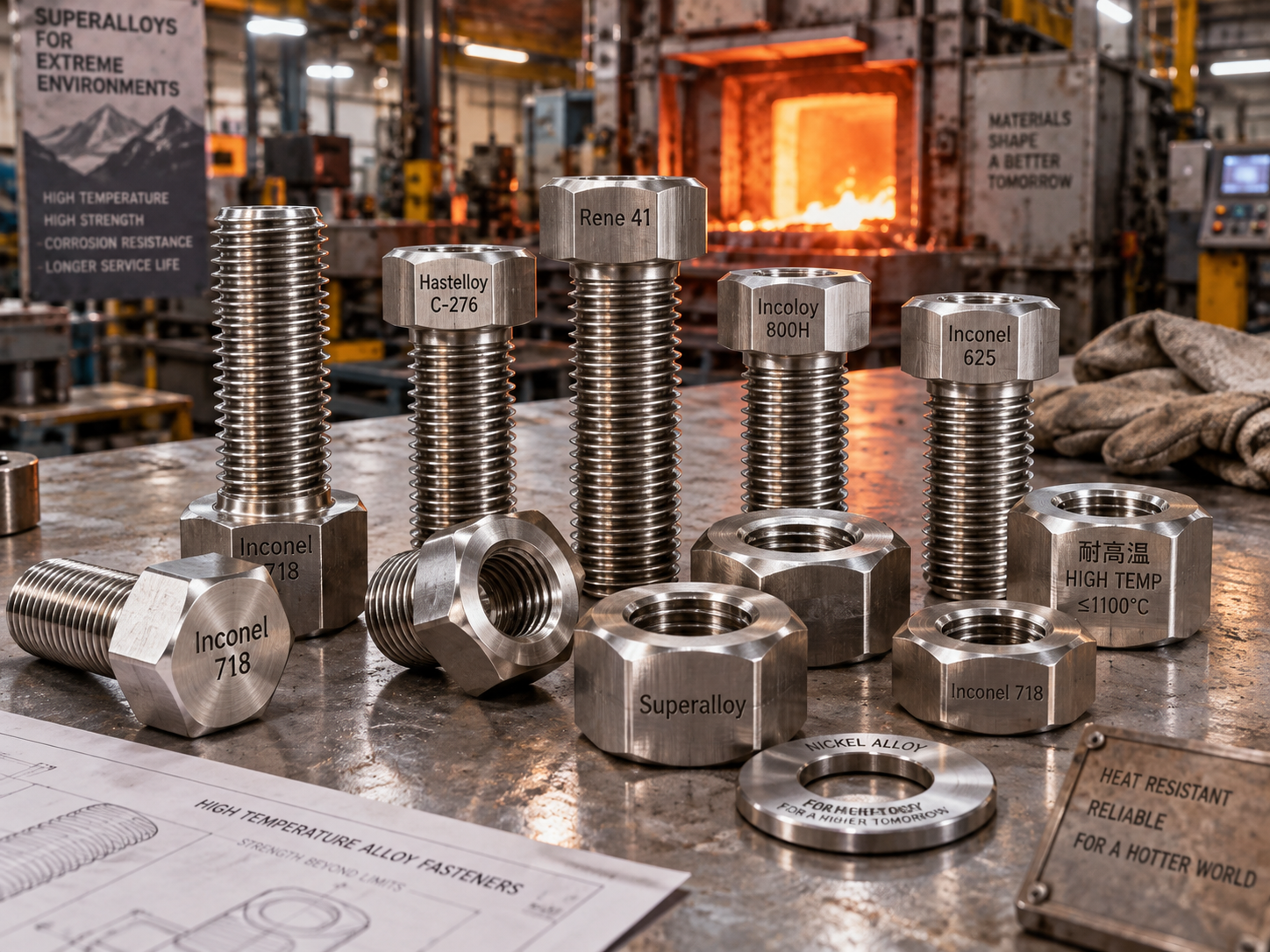
 High-Temperature Alloy Fasteners: Complete Material Guide, Chemistry, Performance Comparison | RAYCHIN LIMITED
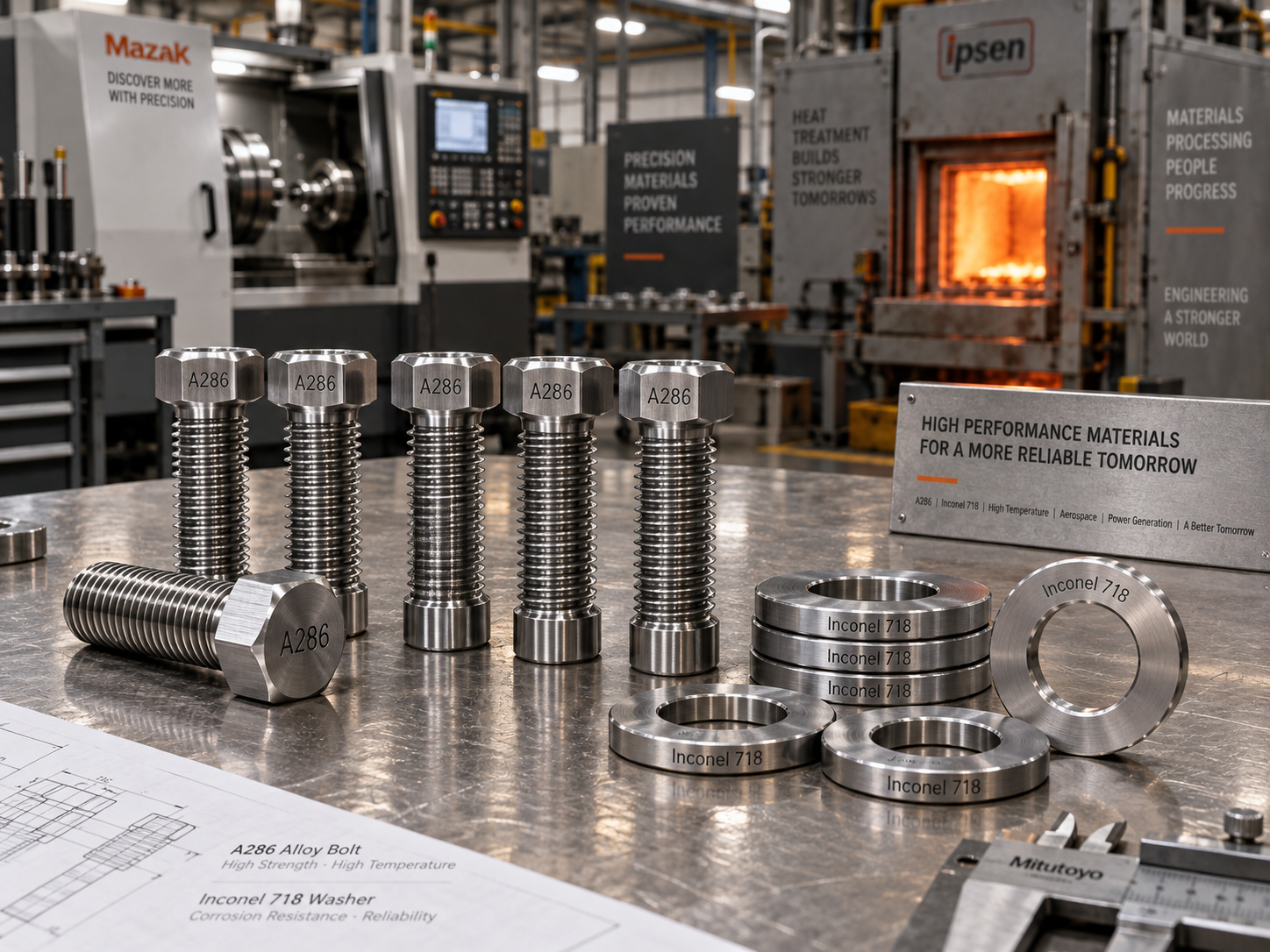
 High-Temperature Fastener Material Selection Guide | A286, Inconel 718, Nimonic 80A, Waspaloy – RAYCHIN LIMITED
The data focuses on recommended tightening torque for a standard ¼-20 UNC Grade 5 equivalent bolt (or similar high-strength condition) to provide a consistent baseline. Actual values depend on specific alloy condition, heat treatment, lubrication, and application standards (e.g., NASM, ASME).
Key Factors Influencing Torque:
Ultimate Tensile Strength (UTS): Primary driver for torque capacity.
Yield Strength: Determines clamp load before permanent deformation.
Material Ductility & Galling Tendency: Affects assembly behavior and may require lubricants or plating.
Modulus of Elasticity: Influences stiffness and load distribution.
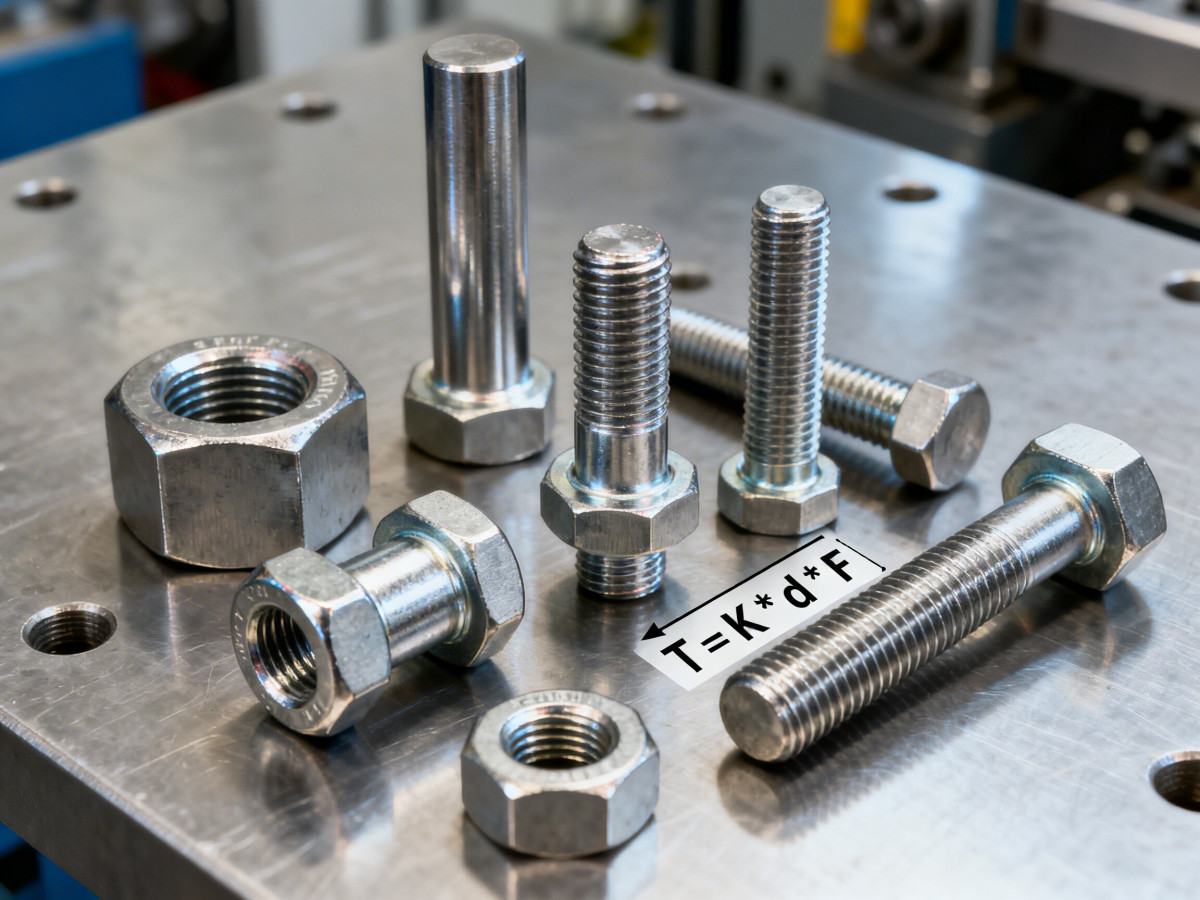
Torque Formula (Simplified):
T = K * d * FwhereT= Torque (lb-in or Nm),K= Torque coefficient (friction factor),d= Nominal diameter,F= Desired preload (clamp force).Fis typically~75% of proof loadfor critical joints.
Torque Data Comparison Table (Baseline: ¼-20 UNC Fastener)
Critical Considerations & Analysis
Strength vs. Torque: There is a direct correlation between material yield strength and achievable clamp load/torque. MP159, MP35N, and high-strength Ni/Co superalloys (Waspaloy, Inconel 718) allow the highest torque values, followed by PH steels (17-4, PH 13-8) and Titanium. Pure/soft metals (Nickel 200, Tantalum, Zirconium) have the lowest torque ratings.
Galling & Seizing (Critical for Assembly):
High Risk: Austenitic stainless steels (especially 300 series), Titanium, Aluminum, Nickel alloys, and Zirconium. These materials often require anti-gallant lubricants/coatings (e.g., molybdenum disulfide, copper-based, or proprietary dry films).
Lower Risk: Nitronic 60 is specifically designed for high galling resistance.
Lubrication (Factor K): The torque values above assume a "dry" (unlubricated) condition with a torque coefficient
K ~ 0.20. Using lubricant (e.g., oil, Molykote) can reduceKto ~0.14-0.16, reducing required torque by ~20-30% to achieve the same clamp load. Always follow specific fastener specifications.Temperature & Corrosion:
High-Temp Applications: Inconel, Incoloy, Nimonic, Waspaloy, Alloy 330, 310SS, and Molybdenum retain strength at elevated temperatures. Torque values drop at high temperature.
Corrosion Resistance: Hastelloy, Alloy 20, 254 SMO, AL-6XN, Tantalum, Zirconium are chosen for aggressive environments, not primarily for strength.
Practical Recommendation: For critical applications (aerospace, nuclear, subsea), do not rely solely on generic torque tables. Use:
Engineering Standards: Refer to specific material/fastener specs (e.g., SAE AS8879 for Ti, MIL-HDBK-60).
Torque-Tension Testing: Empirical testing for the exact fastener system (material, plating, lubricant, hole condition) is ideal.
Direct Tension Indicating Methods: Use load washers, ultrasonic measurement, or turn-of-nut method for precision.
Disclaimer: This data is for comparative and estimation purposes only. Always consult material certification data, RAYCHIN fastener manufacturer specifications, and applicable design codes for final torque values.
Request A Quote! We'll respond as soon as possible(within 12 hours)
Get a Quote