
Categories List
Recent Posts
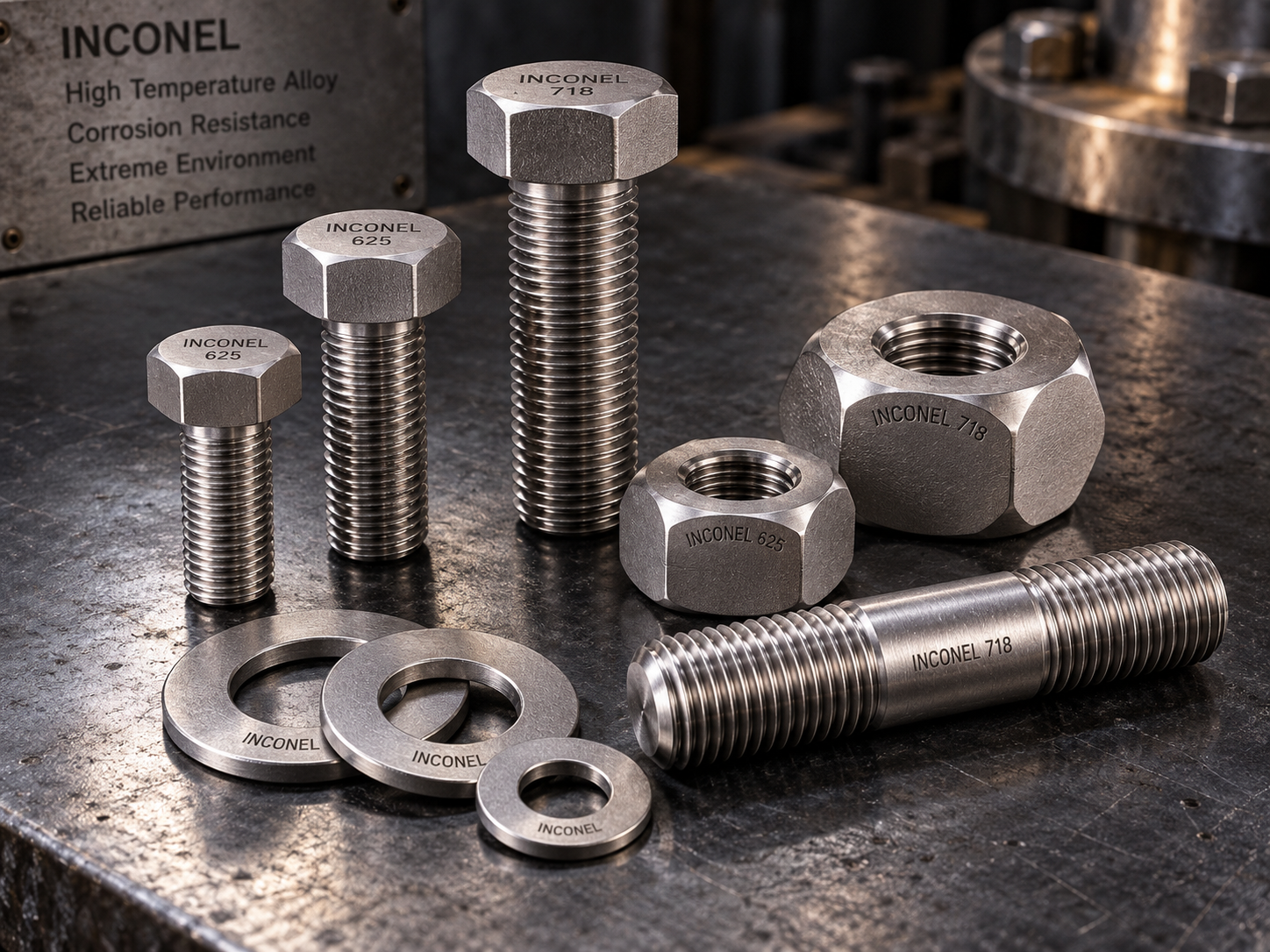
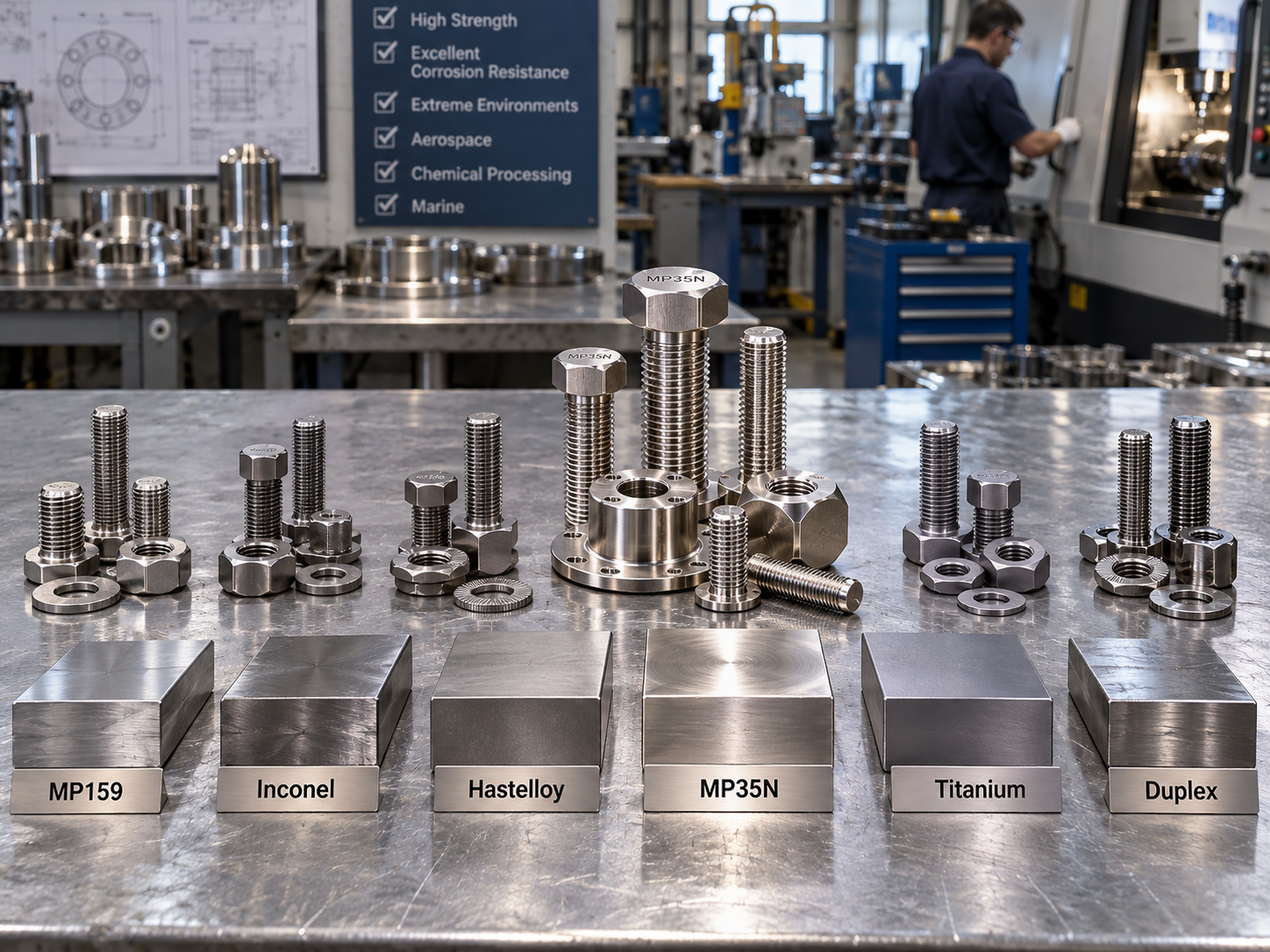
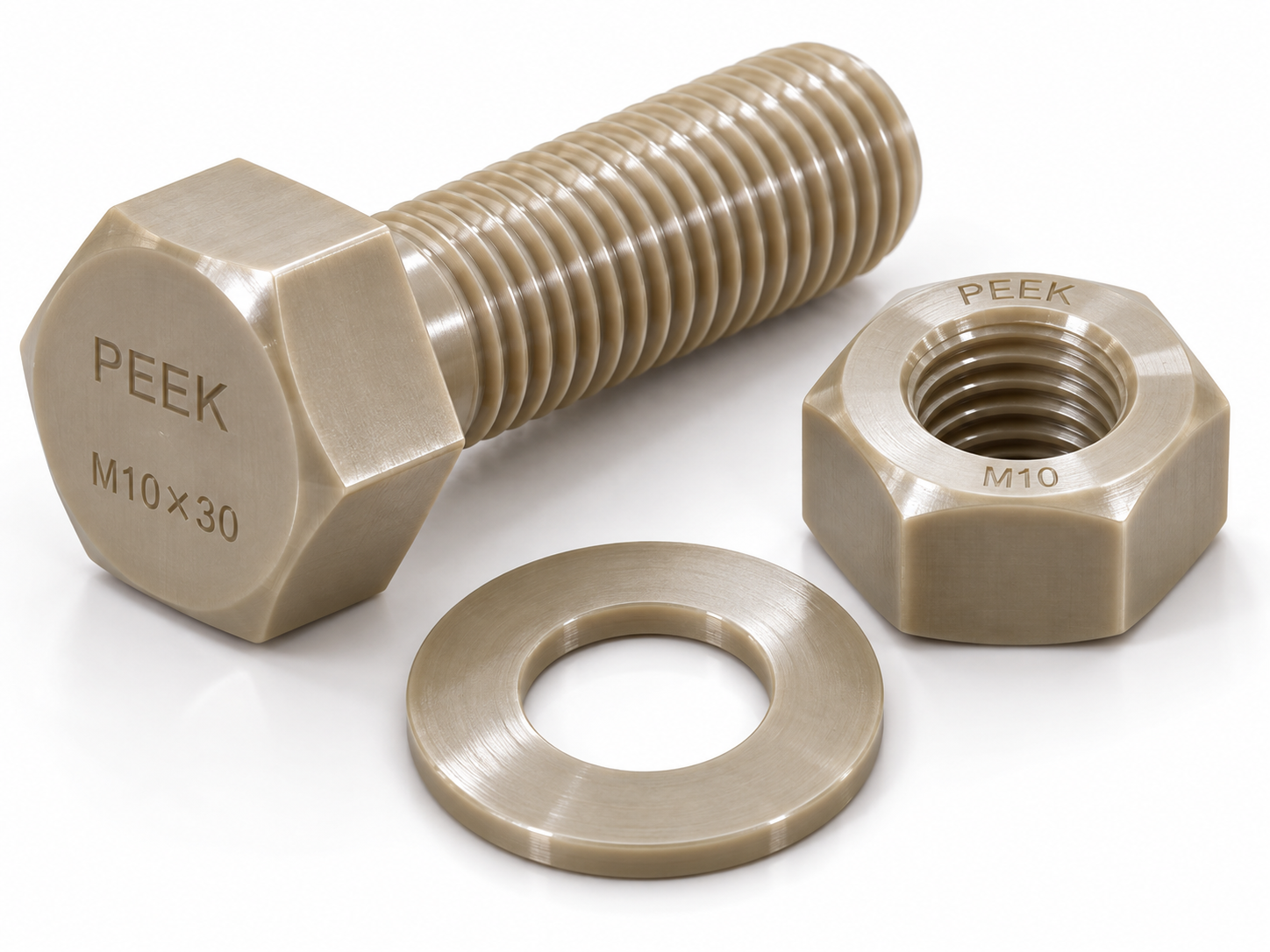
High-temperature alloy fasteners are critical components used in extreme environments where standard steels would fail. The primary material families are Nickel-based superalloys, Cobalt-based alloys, and specialty stainless steels, with Titanium alloys used in specific, lower-temperature ranges.
Major Material Families & Products
1. Nickel-Based Superalloys (The most common for the most severe conditions)
These are the workhorses for temperatures above ~650°C (1200°F). They derive strength from solid solution strengthening and precipitation of gamma prime (γ') or gamma double prime (γ'') phases.
Inconel 718: The most widely used superalloy for fasteners. Excellent strength up to ~700°C (1300°F), good weldability, and resistance to post-weld strain-age cracking due to its γ'' strengthening mechanism.
Waspaloy: Offers higher temperature capability than 718, usable up to ~815°C (1500°F). Used in high-stress turbine engine bolting. Strengthened by γ'.
Rene 41 / Inconel 740H: Very high strength and temperature resistance (~870-980°C / 1600-1800°F range), but more challenging to manufacture and heat treat. Used in the most demanding aerospace applications.
Hastelloy X & C-276: Exceptional oxidation and corrosion resistance (especially in chemical environments) at high temperatures. More often used for their environmental resistance than pure strength.
A-286 (Iron-Nickel based): A precipitation-hardening stainless steel often grouped with superalloys. Good strength up to ~700°C (1300°F) and more cost-effective than full nickel alloys.
2. Cobalt-Based Alloys
Known for superior hot hardness, wear resistance, and excellent resistance to sulfidation and thermal fatigue.
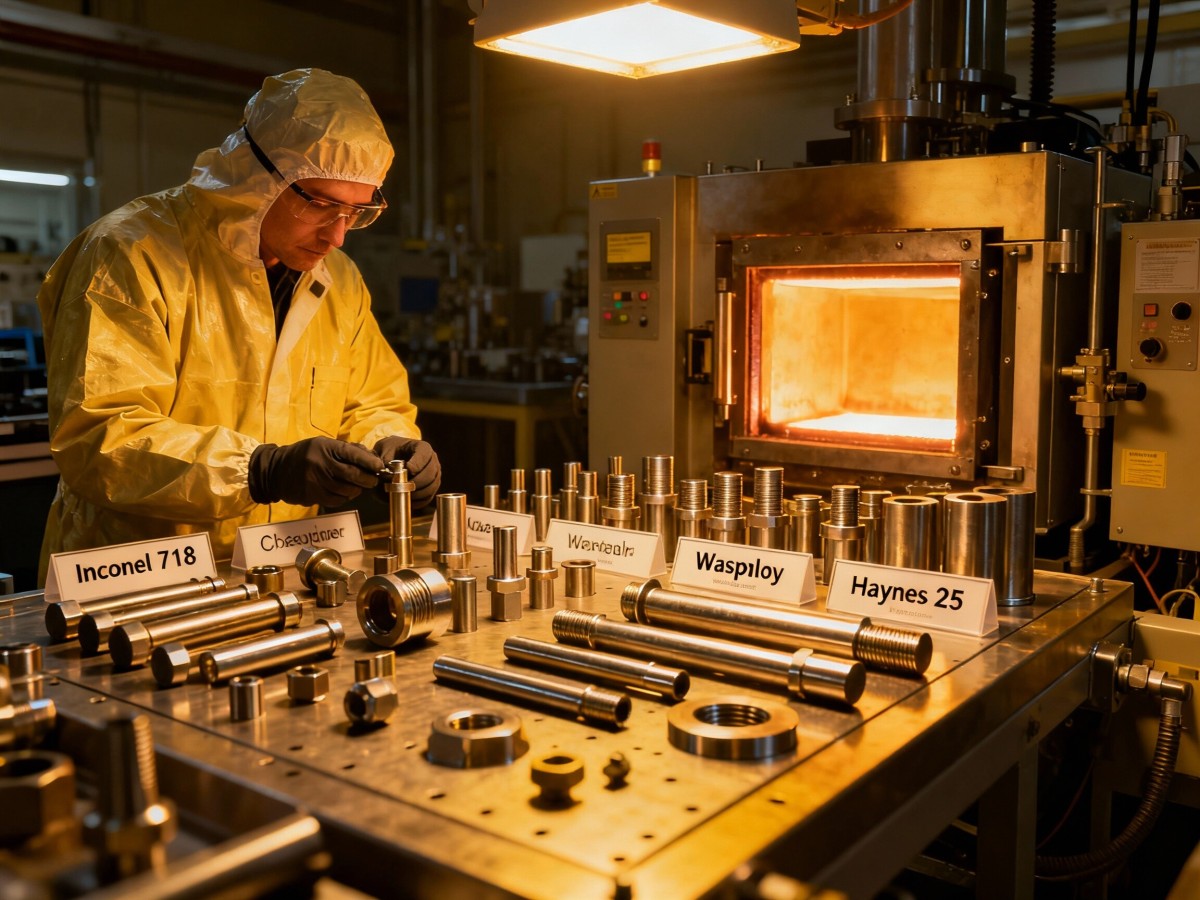
Haynes 25 (L-605), Haynes 188: Used in applications requiring high stress and severe wear at high temperatures, such as turbine case bolts and components in oxidizing/sulfidizing atmospheres. Generally used up to ~1100°C (2000°F).
3. Specialty High-Temperature Stainless Steels
Used for moderately high temperatures and where corrosion resistance is paramount.
17-4 PH (Precipitation Hardening): Good strength up to ~315°C (600°F). Common in aerospace and general industrial use.
PH 13-8 Mo, 15-5 PH: Similar range to 17-4 with improved toughness or directional properties.
AISI 310, 330: Austenitic stainless steels with excellent oxidation resistance up to ~1150°C (2100°F), but relatively low strength. Used for non-critical, high-temperature holding applications.
4. Titanium Alloys
Not for extreme heat, but important for high strength-to-weight ratio in elevated temperature aerospace applications.
Ti-6Al-4V (Grade 5): Standard aerospace alloy, usable up to ~315°C (600°F).
Ti-6Al-2Sn-4Zr-2Mo (Ti-6242): Better creep resistance than Ti-6-4, usable up to ~455°C (850°F).
High-Temperature Performance Comparison Chart
The chart below provides a general comparison of key fasteners alloys. Note: Exact values depend on specific heat treatment, cold work, and time-at-temperature.
Selection Guidance
For maximum strength up to 700°C: Inconel 718 is the default choice.
For temperatures between 700°C - 1000°C with high stress: Waspaloy or Haynes 25 (depending on need for wear resistance vs. creep strength).
For extreme temperatures (>1000°C) with lower stress but need for oxidation resistance: AISI 310/330 or specialized coatings on superalloys.
For best strength-to-weight ratio up to ~450°C: Ti-6242.
For highly corrosive (e.g., sulfur-containing) high-temperature environments: Hastelloy alloys.
Critical Note: Fastener performance is highly dependent on proper heat treatment, thread design (e.g., MJ threads for aerospace), and coatings/lubricants (e.g., silver, nickel, or diffused coatings) to prevent galling and seizing during installation at high clamp loads.
Request A Quote! We'll respond as soon as possible(within 12 hours)
Get a Quote