
Categories List
Recent Posts
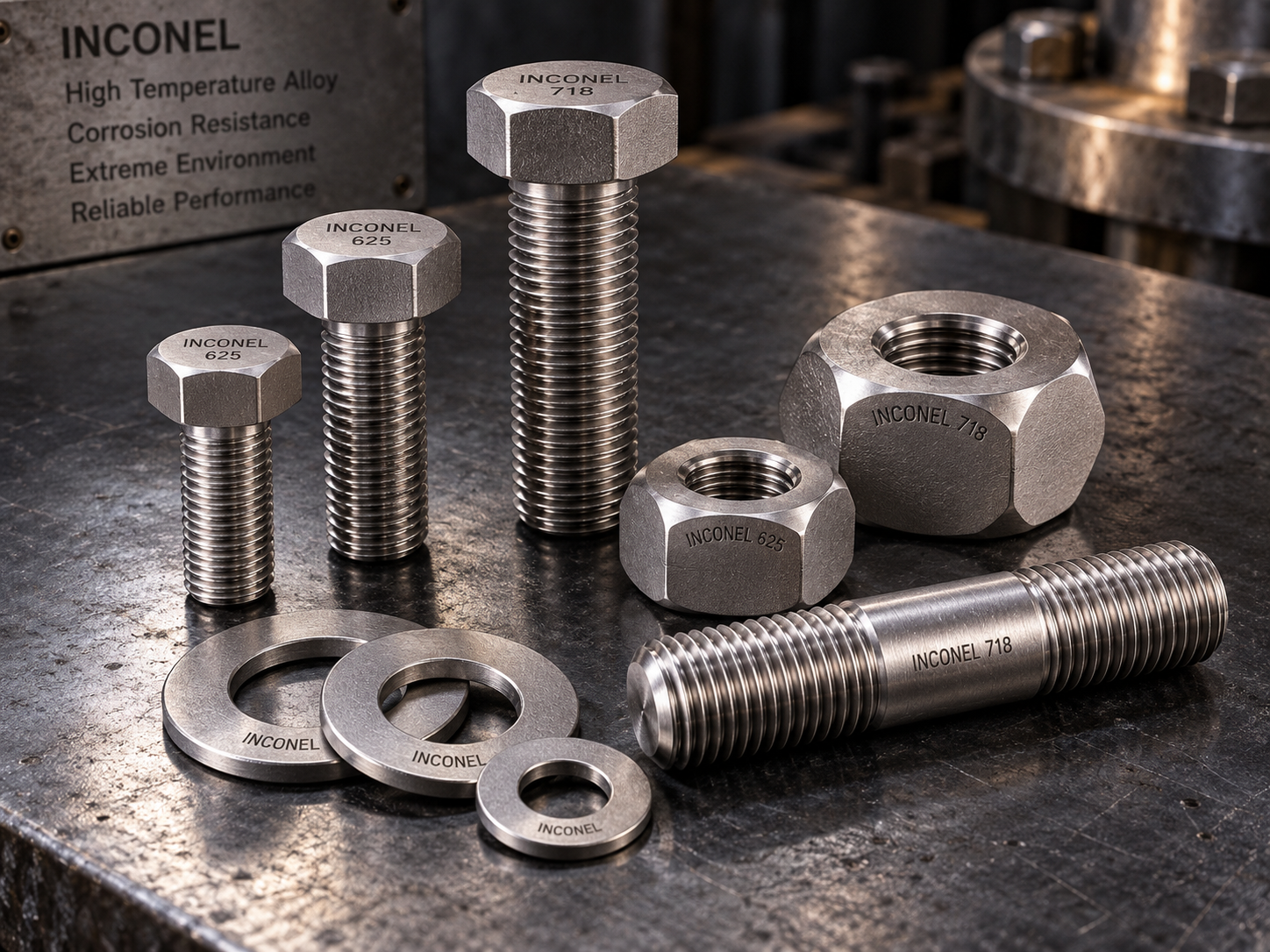
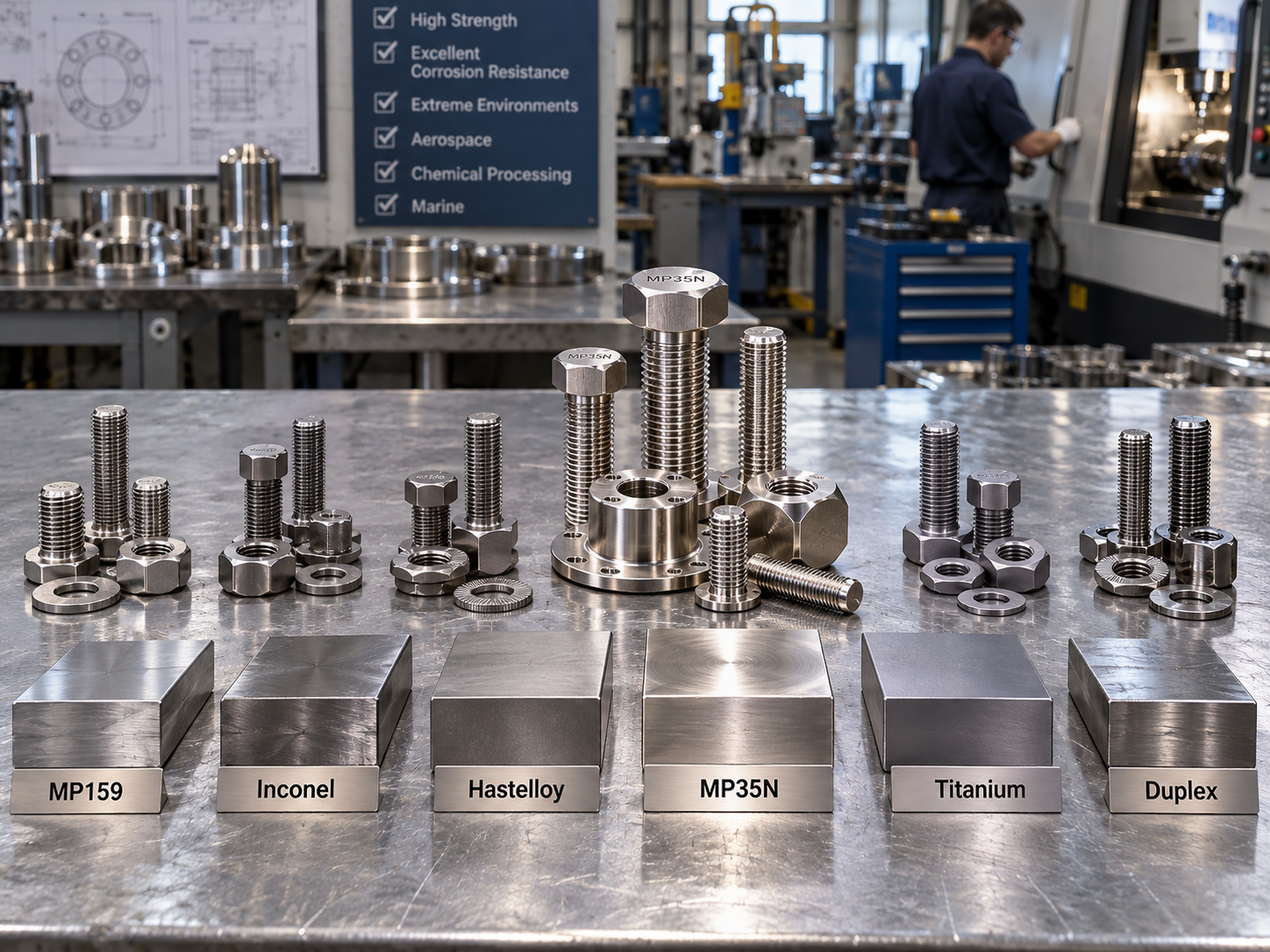
In the chemical industry, equipment and structures are frequently exposed to highly corrosive media, extreme temperatures, high pressures, and complex mechanical stresses. Special alloy fasteners are critical components that ensure the integrity, safety, and longevity of chemical processing plants, pipelines, reactors, valves, and storage systems. Their primary functions are to maintain leak-proof connections, provide structural stability, and resist degradation under harsh operating conditions.
Key Application Areas:
Reactors and Pressure Vessels: Fasteners for flanged connections, manways, and agitator assemblies must withstand internal pressure, cyclic loading, and corrosive reactants or products (e.g., acids, alkalis, chlorides).
Heat Exchangers and Condensers: Tube sheets, baffles, and gasketed flanges require fasteners resistant to both process-side corrosion (often from cooling water, brines, or process streams) and potential galvanic corrosion.
Piping Systems and Flanges: Bolting for critical pipe flanges, especially in sour service, acid lines, or high-purity chemical transport, must prevent leaks and resist stress corrosion cracking (SCC).
Pumps, Valves, and Compressors: Fasteners in these dynamic equipment types face erosion-corrosion, vibration, and exposure to sealed or leaked process fluids.
Storage Tanks and Tank Farms: Bolts for roof plates, nozzles, and structural elements in tanks storing corrosive chemicals (e.g., sulfuric acid, caustic soda, organic solvents).
Offshore and Subsea Chemical Injection Systems: Fasteners must resist seawater corrosion, high chloride-induced pitting/crevice corrosion, and hydrogen embrittlement.
Specific Special Alloy Fastener Materials and Their Properties
Here are the most commonly used special alloy materials for fasteners in the chemical industry, listed in approximate order of increasing corrosion resistance and cost.
1. ** Austenitic Stainless Steels (CRES)
* Common Grades: A2 (Type 304/304L), A4 (Type 316/316L), 317L, 904L (UNS N08904).
* Key Features: Good general corrosion resistance, excellent toughness, non-magnetic. Their performance relies on a passive chromium oxide layer.
* Specific Use-Case: Type 316/316L (A4) is the workhorse for chemical service. The addition of 2-3% Molybdenum significantly improves resistance to pitting and crevice corrosion in chloride-containing environments (e.g., brackish water, certain process streams) and weak organic acids. 904L offers superior resistance to sulfuric acid and chlorides, often used in more aggressive conditions than 316L can handle.
2. ** Precipitation-Hardening Stainless Steels
* Common Grades: 17-4 PH (ASTM A564 Grade 630, UNS S17400), 15-5 PH, A286 (UNS S66286).
* Key Features: Can be heat-treated to very high strength levels (e.g., 1300 MPa tensile) while maintaining good corrosion resistance, often comparable to Type 304. Useful where high mechanical strength and moderate corrosion resistance are simultaneously required.
* Specific Use-Case: 17-4 PH is used for high-strength bolts, studs, and pins in valve stems, pump shafts, and under high-pressure/vibration loads where standard austenitic bolts would be too weak or susceptible to galling.
3. ** Nickel-Copper Alloys
* Common Grade: Alloy 400 / Monel 400 (UNS N04400).
* Key Features: Excellent resistance to seawater, hydrofluoric acid (HF) across all concentrations (below aerated, oxidizing conditions), sulfuric and hydrochloric acids under reducing conditions, and alkalis. Good mechanical properties across a wide temperature range.
* Specific Use-Case: Fasteners for hydrofluoric acid (HF) service, seawater-cooled heat exchangers, and alkali processing equipment. A classic material for marine and severe chemical environments.
4. ** Nickel-Chromium-Molybdenum Alloys
* Common Grades: Alloy 600 (UNS N06600), Alloy 625 (UNS N06625), Alloy C-276 (UNS N10276), Alloy 718 (UNS N07718).
* Key Features: This family offers the highest level of corrosion resistance for the most severe conditions.
* Alloy 600: Good resistance to high-temperature oxidation and chlorination, and to caustic alkalis. Often used in thermal processing.
* Alloy 625 & 718: Exceptional strength and corrosion resistance. Alloy 625 is renowned for its outstanding pitting, crevice, and chloride stress corrosion cracking (Cl-SCC) resistance, as well as oxidation resistance. Alloy 718 is a precipitation-hardenable version with ultra-high strength for demanding aerospace and oil & gas applications, also used in chemical high-pressure systems.
* Alloy C-276 (Hastelloy C-276): The benchmark for resistance to the widest range of severe corrodents: hot contaminated mineral acids, chlorine, wet chlorine gas, hypochlorite, and sulfurous acid. Virtually immune to Cl-SCC.
* Specific Use-Case: Alloy 625 studs and bolts for offshore platform splash zones, flue gas desulfurization (FGD) systems, and severe sour gas service. Alloy C-276 fasteners for the most aggressive reactor internals, bleach plants, and waste incineration systems.
5. ** Super Austenitic & Hyper-Duplex Stainless Steels
* Common Grades: 254 SMO (UNS S31254), AL-6XN (UNS N08367), Zeron 100 (UNS S32760).
* Key Features: Bridge the gap between standard stainless steels and nickel alloys.
* 254 SMO/AL-6XN: Super austenitics with very high Molybdenum (6-7%) and Nitrogen content, providing phenomenal resistance to pitting/crevice corrosion (very high Pitting Resistance Equivalent Number - PREN >40).
* Zeron 100: A hyper-duplex stainless steel with a mixed austenite-ferrite microstructure, offering extremely high strength (approx. double 316L) and a PREN >40, with excellent resistance to SCC.
* Specific Use-Case: Fasteners for seawater cooling systems, brine concentrators, and pulp & bleach plants where chloride levels are too high for 316L but a full nickel alloy is not warranted. They are cost-effective solutions for severe chloride environments.
6. ** Titanium Alloys
* Common Grades: Commercially Pure Titanium (Grades 2 & 3), Ti-6Al-4V (Grade 5).
* Key Features: Outstanding resistance to chlorides (seawater, wet chlorine), excellent pitting and SCC resistance, and very high strength-to-weight ratio. Forms a highly stable, protective oxide film.
* Specific Use-Case: Fasteners for seawater and brine handling equipment, chlorine processing, and oxidizing acid environments (e.g., nitric acid). Essential in CPI for its immunity to chloride-induced failures. Grade 5 (Ti-6Al-4V) is used for high-strength requirements.
7. ** Duplex Stainless Steels
* Common Grades: 2205 (UNS S31803/S32205), 2507 (UNS S32750).
* Key Features: Mixed microstructure provides yield strength about twice that of 316L, good toughness, and excellent resistance to chloride stress corrosion cracking (SCC) and pitting/crevice corrosion (PREN ~34-40).
* Specific Use-Case: Ideal for fastener applications in sour service (H2S-containing) oil & gas production, chemical tankers, and seawater systems. They offer a great balance of strength and corrosion resistance, often replacing 316L for weight savings or improved reliability.
Selection Considerations
The choice of fastener material depends on a rigorous assessment of:
Process Environment: Specific chemicals, concentrations, pH, temperature, and presence of chlorides or H2S.
Failure Mode Risks: Prioritizing resistance to general corrosion, pitting, crevice corrosion, stress corrosion cracking, or hydrogen embrittlement.
Mechanical Requirements: Required strength (ASTM grade), fatigue resistance, and galvanic compatibility with the mating materials.
Total Lifecycle Cost: Balancing higher initial material cost against reduced maintenance downtime, leakage risks, and replacement frequency.
Using the correct special alloy fastener, specified to relevant standards (e.g., ASTM, ASME, ISO), is a fundamental engineering decision for safety and reliability in the chemical industry.

Request A Quote! We'll respond as soon as possible(within 12 hours)
Get a Quote