
Categories List
Recent Posts
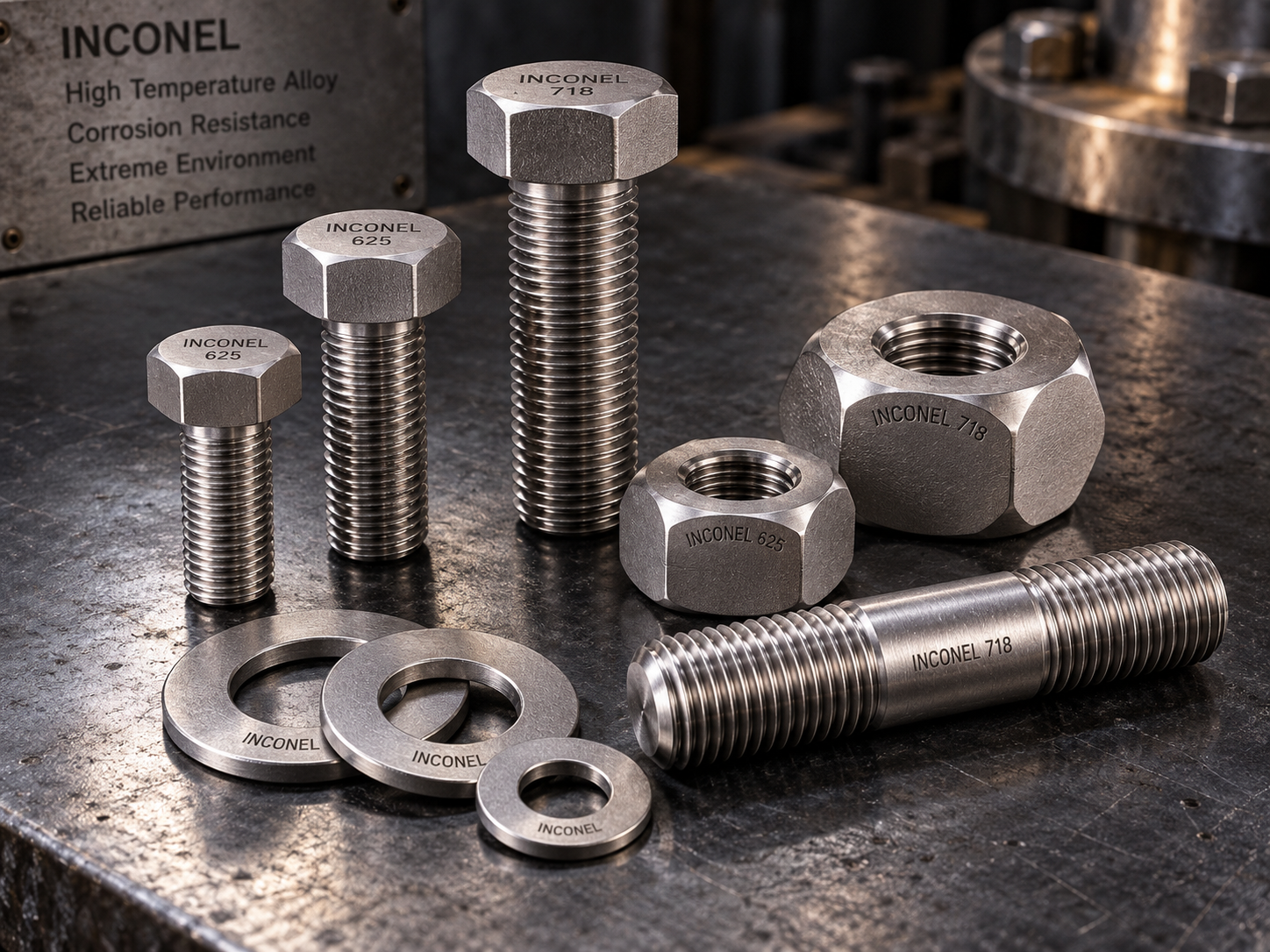
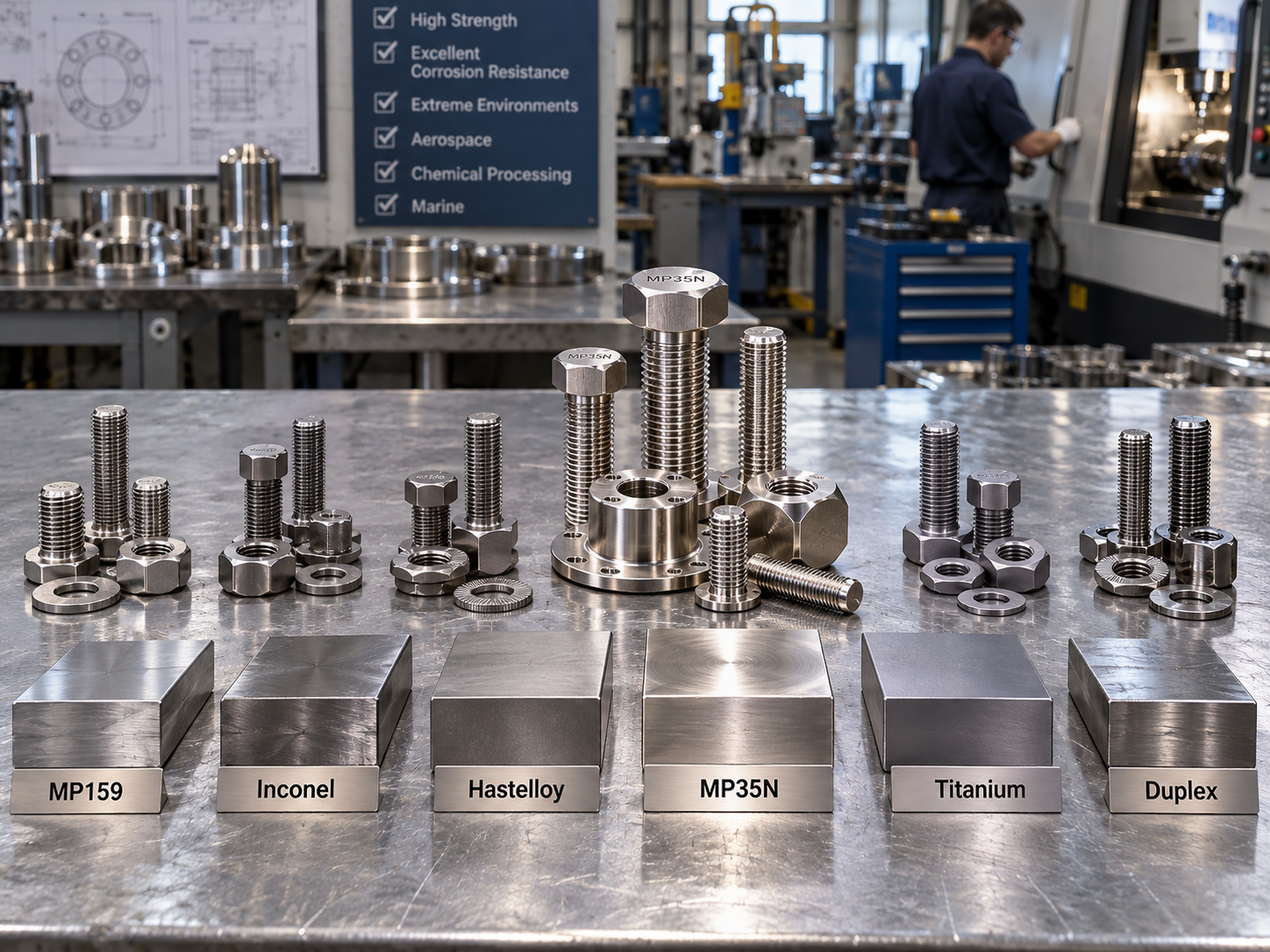
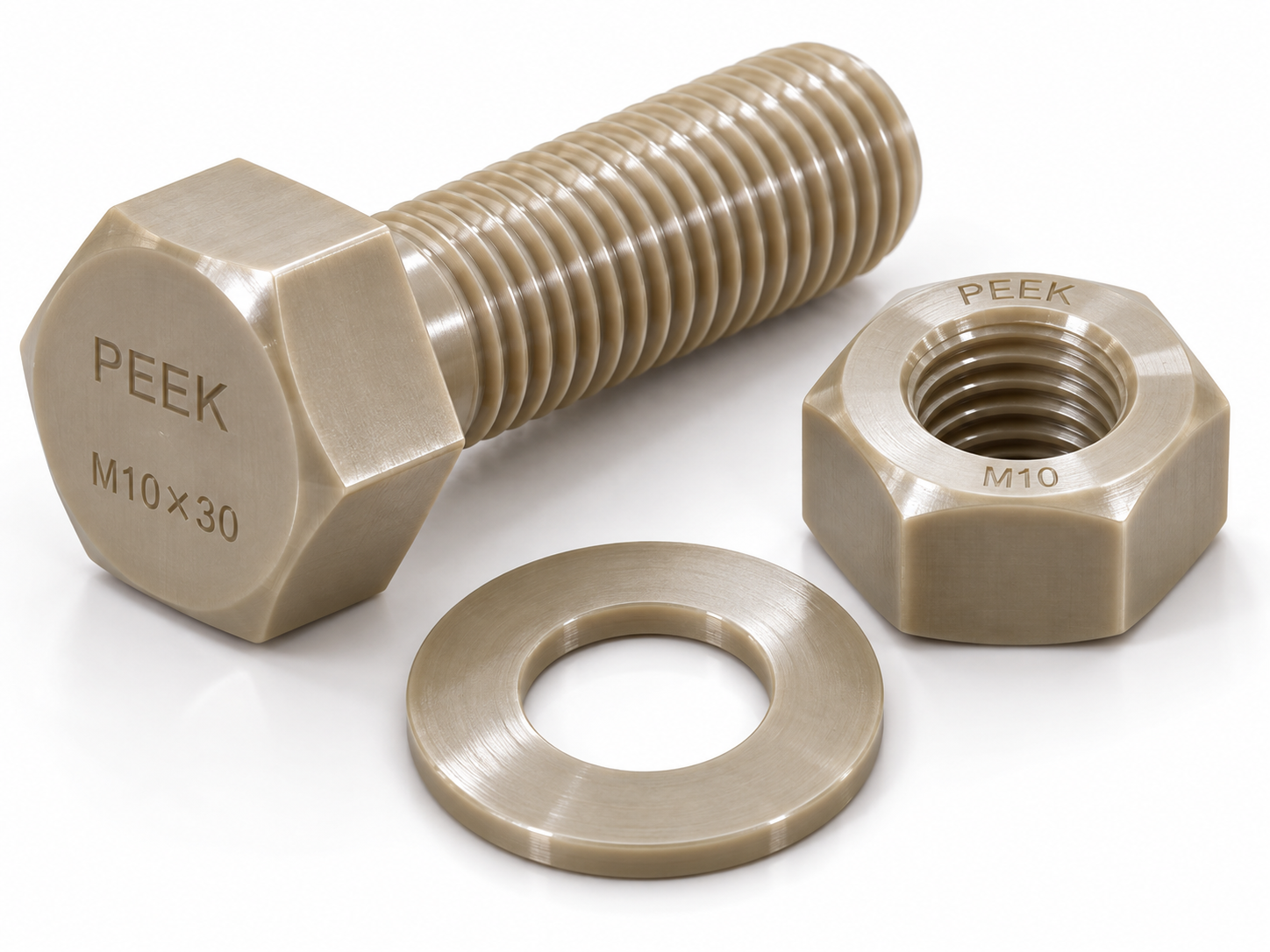
The oil and gas industry presents some of the most corrosive, high-pressure, and extreme-temperature environments for engineered components. Special alloy fasteners are critical for ensuring safety, integrity, and reliability in upstream (exploration, drilling, production), midstream (transportation), and downstream (refining, petrochemical) operations. The material selection is driven by specific failure modes prevalent in the industry.
I. Core Industry Drivers & Failure Modes
Fastener materials are chosen primarily to combat:
Sulfide Stress Cracking (SSC): Brittle fracture of high-strength materials under tensile stress in the presence of water and hydrogen sulfide (H₂S). Governed by NACE MR0175 / ISO 15156.
Stress Corrosion Cracking (SCC): Cracking from combined tensile stress and a corrosive environment (e.g., chlorides, caustics).
Chloride-Induced Pitting & Crevice Corrosion: Highly localized attack, especially problematic for stainless steels.
Hydrogen Embrittlement (HE): Loss of ductility due to absorption of atomic hydrogen, often a byproduct of corrosion or cathodic protection.
High-Temperature Creep & Oxidation: In refining/petrochemical furnaces and high-pressure/high-temperature (HPHT) wells.
Galvanic Corrosion: From coupling dissimilar metals in an electrolyte (seawater, produced water).
II. Comprehensive List of Materials & Their Applications
1. MARTENSITIC & LOW-ALLOY STEELS (Plated/Coated)
Used for high strength where the environment is isolated by coating, or in controlled, non-sour services.
AISI 4140 / 4142 / 4340: General high-strength bolting for structural applications, christmas trees (non-sour), and machinery. Always coated (Zn-Ni, epoxy, Dacromet®) for corrosion protection.
AISI 8740: Similar to 4140, common in API flange studs.
ASTM A193 Grade B7 / L7: The universal standard for alloy steel studs/bolts in refineries and pressure vessels. B7 is quenched and tempered Cr-Mo steel for general service up to ~450°C (850°F). L7 is a variant with enhanced impact properties.
2. MARTENSITIC STAINLESS STEELS (Precipitation-Hardening)
Offer a good balance of strength and corrosion resistance for moderately aggressive environments.
17-4 PH (UNS S17400 / ASTM A564 Grade 630): The most common PH SS in oil & gas. Used for valve stems, trim bolts, and fasteners in offshore atmospheric and mildly sour service. Requires proper H1150 double-age treatment for SSC resistance.
15-5 PH (UNS S15500): Similar to 17-4 with better directional mechanical properties.
PH 13-8 Mo (UNS S13800): Superior combination of strength, toughness, and SSC resistance compared to 17-4PH. Used in critical, high-stress components for sour service.
Custom 450 (UNS S45000) & Custom 455 (UNS S45500): Offer good general corrosion and SSC resistance with high strength.
3. AUSTENITIC STAINLESS STEELS
Used for excellent general corrosion resistance, but with limitations regarding SCC and SSC.
Type 316 / 316L (UNS S31600 / S31603): Standard for corrosion resistance in chloride-free or low-chloride refining, chemical, and offshore splash zone applications. Prone to chloride stress corrosion cracking (ClSCC).
Alloy 20 (Carpenter 20 / UNS N08020): Superior to 316L in resisting sulfuric acid and chloride pitting. Used in acid environments in refineries and chemical plants.
254 SMO® (UNS S31254) / AL-6XN® (UNS N08367): Super-Austenitic Stainless Steels. High Mo content (~6%) provides exceptional pitting/crevice corrosion resistance (high PREN >40). Used in seawater cooling systems, FGD scrubbers, and highly corrosive offshore environments.
4. DUPLEX & SUPER DUPLEX STAINLESS STEELS
The workhorses for offshore and aggressive chloride environments. Offer double the yield strength of austenitics with excellent corrosion resistance.
22Cr Duplex (UNS S31803 / S32205): Standard duplex. Excellent resistance to chloride SCC and pitting. Used for offshore platform fittings, subsea manifold bolts, and process equipment.
25Cr Super Duplex (UNS S32750 / S32760 - Zeron 100®): Higher strength and corrosion resistance (PREN >40). Used for critical subsea components, Christmas tree bolts, and in high-chloride, sour environments.
Hyper-Duplex (e.g., UNS S32707, S33207): The highest grade, for the most aggressive HPHT wells and subsea environments.
5. NICKEL-BASED ALLOYS
Essential for severe sour service (high H₂S, chlorides), high temperatures, and the most corrosive conditions.
6. COBALT-BASED ALLOYS
For extreme wear, galling, and high-temperature applications.
Haynes 25 (L-605) / Haynes 188: Used in valve trim where galling resistance is critical, and in high-temperature furnace parts in refineries.
7. TITANIUM ALLOYS
For seawater and oxidizing acid service where weight is a factor.
Grade 5 (Ti-6Al-4V): Used in offshore riser bolts, seawater pump components, and equipment handling chlorinated organics or oxidizing acids (e.g., nitric acid). Subject to hydrogen uptake in cathodically protected systems.
Grade 29 (Ti-6Al-4V-Ru): Similar to Grade 5 with a small Ruthenium addition for enhanced crevice corrosion resistance in hot brines.
8. COPPER-BASED ALLOYS
Limited to specific non-critical, marine atmospheric applications.
Naval Brass, Aluminum Bronze: Occasionally used for non-structural marine hardware on offshore installations. Not for pressure-containing or critical sour service.
III. APPLICATION-SPECIFIC MATERIAL SELECTION SUMMARY
IV. Critical Quality & Specification Considerations
NACE MR0175 / ISO 15156 Compliance: Mandatory for any material used in sour (H₂S-containing) service. This standard specifies maximum hardness, heat treatment, and material grades allowed.
Heat Treatment & Hardness Control: The single most important process control. Maximum hardness is strictly enforced (e.g., HRC 22 for 718 in sour service, HRC 33 for L7).
Traceability & Certification: Full material traceability (heat number, mill certs) and Material Test Reports (MTRs) with chemical and mechanical properties are required. NACE Testing Certificates are often needed.
Threading & Coating: Threads are often rolled (not cut) for superior fatigue resistance. Coatings like PTFE-based (Xylan®, Everlube®) or phosphate/oil are used for lubrication and anti-galling, but must be compatible with the service (e.g., no cadmium in sour service).
Conclusion: The selection of special alloy fasteners in oil and gas is a rigorous, risk-based engineering decision centered on environmental resistance—particularly to SSC and pitting—at the required mechanical strength. The progression typically moves from coated alloy steels to stainless steels, then to duplex grades, and finally to nickel-based alloys as the environment becomes more severe in terms of H₂S, chlorides, temperature, and pressure.
Request A Quote! We'll respond as soon as possible(within 12 hours)
Get a Quote