
Categories List
Recent Posts
Why Aircraft Fasteners Are Mission-Critical
In aerospace engineering, a fastener is never "just a bolt." It is a precision-engineered, safety-critical component that holds the entire structure together under extreme and dynamic loads. Failure of a single fastener can lead to catastrophic consequences, making their selection, specification, and reliability paramount to every project's success.
Part 1: Common Challenges Faced by Aerospace Clients
Clients in aviation and aerospace projects frequently encounter these critical challenges when specifying and using fasteners:
Weight vs. Strength Optimization: Every gram saved translates to significant fuel savings and increased payload or range over an aircraft's lifetime. The constant challenge is selecting fasteners that offer the highest possible strength-to-weight ratio without compromising integrity.
Extreme Environmental Durability: Fasteners must withstand:
Wide Temperature Fluctuations: From -55°C at high altitude to over 150°C near engines.
Corrosion: Exposure to humidity, salt spray, jet fuels, hydraulic fluids, and cleaning agents.
Vibration & Fatigue: Cyclical stresses from take-off, turbulence, and landing that can cause loosening or material fatigue failure.
Galvanic Corrosion: Using dissimilar metals (e.g., an aluminum airframe with a steel fastener) creates an electrochemical cell, leading to rapid corrosion. Material pairing and coatings are critical.
Stress Corrosion Cracking (SCC): A sudden, brittle failure of a normally ductile material under tensile stress in a corrosive environment. High-strength alloys are particularly susceptible if not properly specified and treated.
Fit, Tolerance, and Installation Precision: Aviation assembly requires perfect fit. Issues like improper grip length, thread fit, or torque during installation can create stress concentrations, leading to premature failure.
Traceability and Certification: Every fastener in an aircraft must be fully traceable back to its raw material melt. Lack of proper certification (e.g., mill certs, test reports) halts production and grounds aircraft.
Cost of Lifecycle Management: The total cost includes not just procurement, but also inventory, inspection, maintenance, and replacement over decades of service.
Part 2: Classification of Aircraft Fasteners
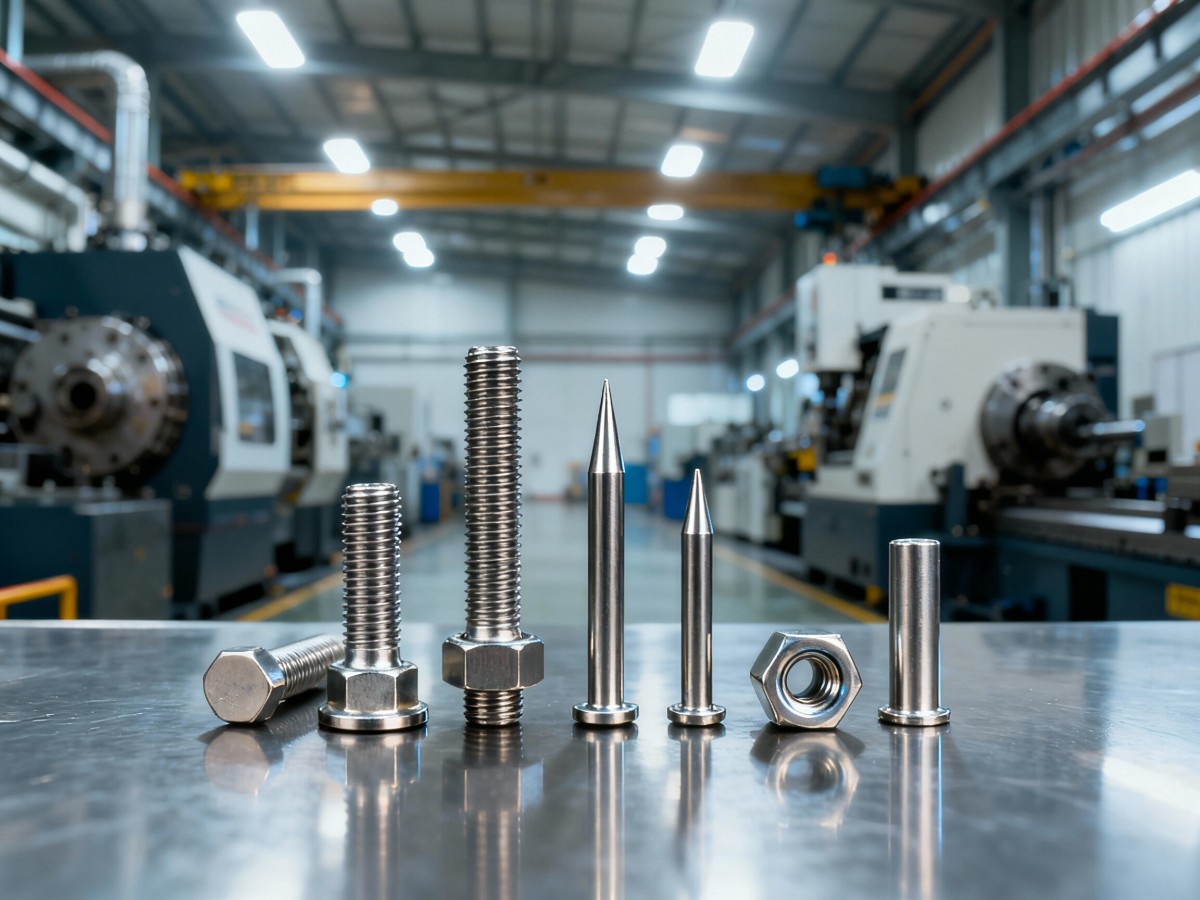
Aircraft fasteners are systematically classified by their function and locking mechanism:
A. Threaded Fasteners
AN/MS/NAS Bolts & Screws: Standardized military (AN, MS) and aerospace (NAS) specifications defining head styles, materials, and strength.
Types: Hex head, clevis bolts, internal wrenching (12-point), close tolerance bolts.
Hi-Lok & Lockbolts: Two-piece fastener systems (pin and collar) that provide a consistent, high-clamp force and vibration resistance. The collar swages onto the pin's locking grooves.
Rivets (Non-threaded, but essential):
Solid Rivets: The classic aircraft rivet, driven with a bucking bar. Requires high skill.
Blind Rivets: Used where only one side is accessible (e.g., Pop® rivets, CherryMAX®). Include a break-mandrel style for certified applications.
Specialty Rivets: Hi-Shear® rivets for high shear loads.
B. Specialty & Engine Fasteners
Studs: Threaded rods used in engines and high-temperature areas.
Self-Locking Nuts: Feature nylon inserts, deformed threads, or metal locking elements (e.g., ESNA, MS, all-metal locknuts) to prevent loosening.
Washers: Used for load distribution, corrosion isolation, and locking (e.g., star washers).
Turnlock Fasteners (Dzus, etc.): Quick-release fasteners for panels and access doors.
Part 3: Material Selection for Aircraft Fasteners
Material choice is dictated by the specific application's requirements for strength, weight, temperature, and corrosion resistance.
Primary Aerospace Fastener Materials:
Alloy Steels:
Grades: 8740, 4130, 4340, and specially treated variants like A286 (an iron-nickel superalloy).
Properties: High strength, good toughness, cost-effective.
Applications: General airframe structures, landing gear components (often cadmium-plated for corrosion protection).
Challenge: Prone to corrosion without proper plating; A286 is used for higher temperatures up to 700°C.
Corrosion-Resistant Steel (CRES) / Stainless Steel:
Grades: 304 (general purpose), 316 (improved corrosion resistance), and most importantly, the precipitation-hardening (PH) grades.
Key PH Grades:
17-4PH (S17400): Excellent combination of strength (up to 1300 MPa UTS), corrosion resistance, and toughness. Widely used for fittings, bolts, and engine components.
15-5PH (S15500): Similar to 17-4PH with better transverse toughness.
13-8Mo (S13800): Superior toughness and stress corrosion cracking resistance at high strength levels.
Custom 450 & 455: High-strength alternatives.
Applications: Where corrosion resistance is critical—external skins, control surfaces, fittings in corrosive environments.
Aluminum Alloys:
Grades: 2024-T4/Alclad (high shear strength), 2117-T4 (universal rivet), 7050-T73, 7075-T6 (very high strength).
Properties: Excellent strength-to-weight ratio, good workability.
Applications: Primarily for rivets and low-stress fasteners in non-critical, low-temperature areas of the airframe.
Challenge: Lower strength compared to steel/Ti; susceptible to galvanic corrosion.
Titanium Alloys (The Gold Standard for Performance):
Grades: CP Grade 2 (commercially pure), Ti-6Al-4V (Grade 5), Ti-6Al-6V-2Sn, Beta-C.
Properties: The best strength-to-weight ratio of any fastener material, excellent corrosion resistance, compatible with carbon composites (no galvanic issue).
Applications: Critical structures, firewalls, landing gear, engine components, and throughout modern composite airframes (Boeing 787, Airbus A350).
Challenge: Higher cost, requires careful handling to avoid galling (often requires lubrication or special coatings like MoS2 or anodizing).
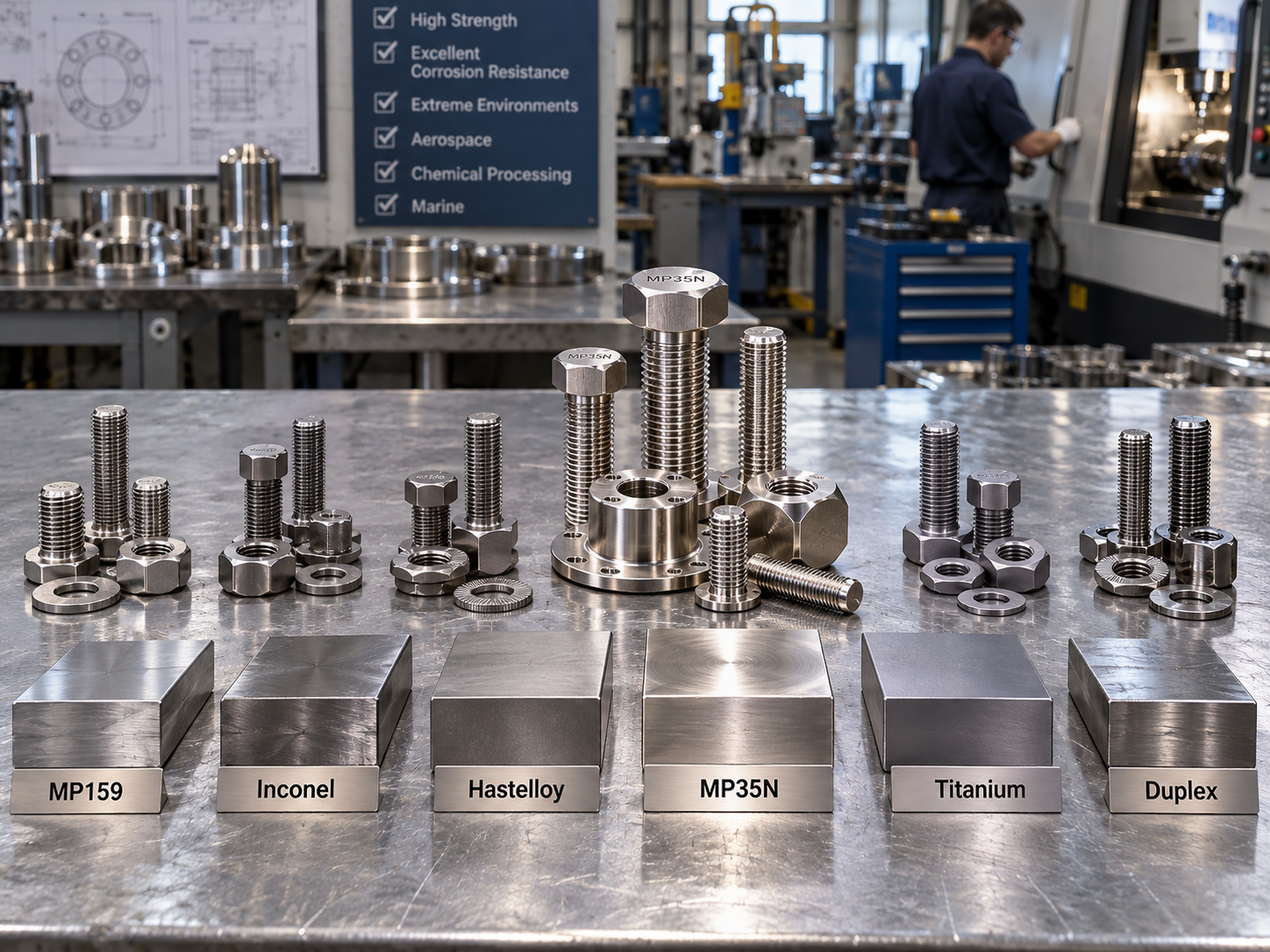
Nickel-Based Superalloys (For Extreme Environments):
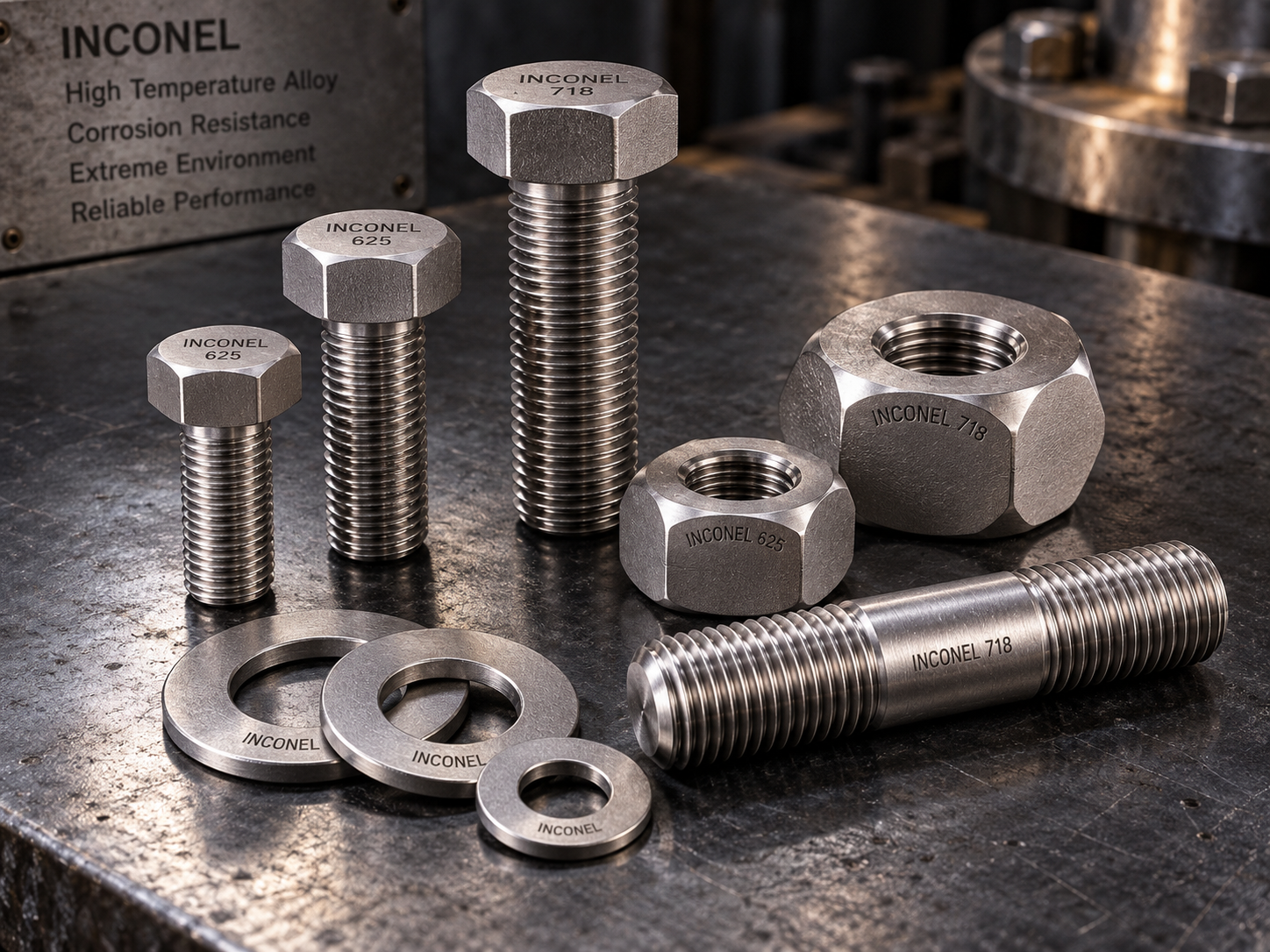
Grades: Inconel 718 (most common superalloy fastener), Inconel 625, Monel 400/K500, Waspaloy.
Properties: Exceptional high-temperature strength (retaining properties above 650°C), superb oxidation and corrosion resistance.
Applications: Jet engines (turbine discs, blades, casings), exhaust systems, areas adjacent to high-heat sources.
Challenge: Very high cost, difficult to machine.
Partnering for Success
Addressing aerospace fastener challenges requires a partner who understands this intricate matrix of problem → classification → material → certification.
RAYCHIN LIMITED navigates this complexity daily. We provide more than fasteners; we deliver certified, traceable, and application-engineered solutions in alloy steels, PH stainless steels, titanium, and superalloys. We help you optimize for weight, conquer corrosion, and ensure absolute compliance, mitigating the risks inherent in your most demanding projects.
Let us be the critical link in your next aerospace project's success.
Request A Quote! We'll respond as soon as possible(within 12 hours)
Get a Quote