
Categories List
Recent Posts
 Hastelloy C276 Fasteners: Bolts, Nuts, Screws, Studs & Washers for the World's Most Aggressive Corrosive Environments
 Inconel Fasteners: Bolts, Nuts, Washers, Studs – Complete Technical Guide | RAYCHIN LIMITED
 MP35N vs Inconel, Titanium, C276, Complete Material Comparison Guide for Fasteners | RAYCHIN LIMITED
Understanding A286 bolt strength is essential before choosing components for high-temperature, high-stress applications. Whether you are comparing A286 bolts, A286 fasteners, or A286 stainless steel fasteners, knowing their grade, mechanical properties, and service limits helps ensure safety, performance, and cost efficiency. This guide explains what buyers, engineers, and project teams should evaluate before selecting the right A286 solution.
Why does A286 bolt strength matter so much in metal processing equipment?
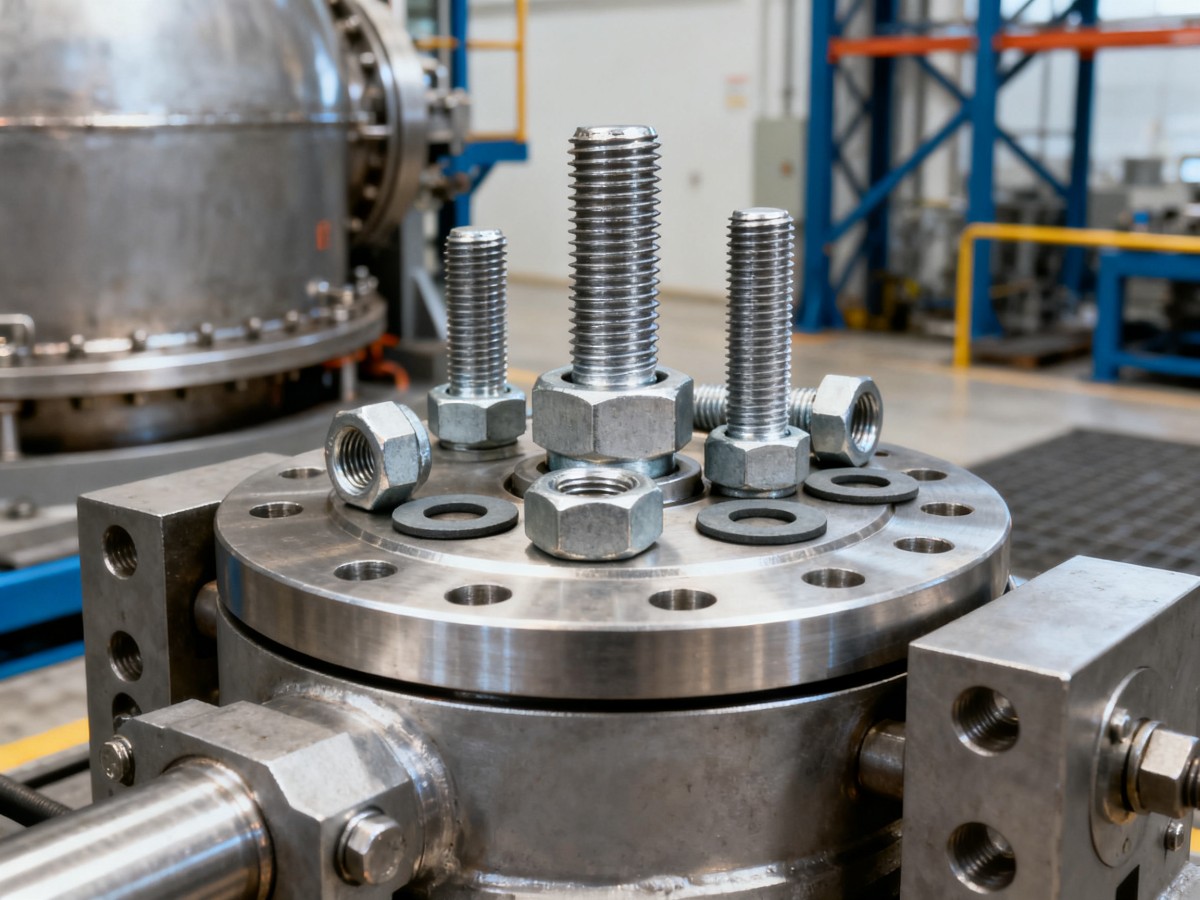
In metal processing equipment, fasteners are not passive accessories. They hold together heat zones, shielding assemblies, furnace structures, tooling fixtures, high-load brackets, and vibration-prone mechanical interfaces. When temperature rises into the 400°C–700°C working range common in thermal sections of industrial equipment, ordinary stainless bolts may lose too much preload, deform, or suffer accelerated oxidation. That is why A286 bolt strength becomes a practical engineering decision, not just a catalog specification.
A286 is an iron-nickel-chromium based precipitation-hardenable alloy widely selected where elevated temperature strength, corrosion resistance, and dimensional stability must be balanced. For buyers and technical evaluators, the real issue is not only whether a bolt is “strong,” but whether it can keep clamp load after thermal cycling, startup-stop conditions, and continuous service over hundreds or thousands of hours. In metal processing lines, joint failure often creates downtime far more expensive than the fastener itself.
Selection errors usually come from three assumptions. First, some teams compare only room-temperature tensile strength. Second, some treat all stainless fasteners as interchangeable. Third, some focus on unit price instead of total ownership cost across maintenance cycles of 6 months, 12 months, or 24 months. A286 changes this discussion because its value appears most clearly under heat, stress, and service-life pressure.
For procurement teams, project managers, and quality personnel, the core question is simple: can the chosen fastener grade survive the actual operating envelope? That envelope should include installation torque, joint geometry, ambient corrosion, thermal expansion mismatch, inspection interval, and expected replacement cycle. In many industrial projects, reviewing these 5–7 factors early prevents costly redesign later.
What users usually mean by “strength grade”
When people search for A286 bolt strength grade, they may actually be asking about several different items at once: minimum tensile strength, yield strength, hardness, stress rupture capability, creep resistance, or the specific fastener standard used for manufacturing and testing. In practical sourcing, “grade” should never be interpreted as a single number without the related heat treatment condition and applicable standard.
This matters because A286 fasteners can be supplied in different conditions, and mechanical values vary with diameter, processing route, and specification. A buyer comparing quotations from 3 suppliers should confirm whether each offer refers to the same condition, the same thread form, and the same testing basis. Otherwise, the comparison becomes misleading even if all suppliers use the same alloy name.
Typical risks if the grade is misunderstood
- Bolts may meet room-temperature strength but fail to retain preload after repeated thermal cycles.
- Thread galling, relaxation, or distortion may appear when mating materials and lubrication are not reviewed together.
- Quality teams may receive non-equivalent products because certificates do not identify the same testing condition.
- Maintenance teams may face shorter replacement intervals than the planned 12–18 month shutdown schedule.
For that reason, strength grade should be tied to application temperature, joint design, and documentation quality. This is where technical guidance from a specialty fastener supplier becomes useful, especially for projects using custom dimensions or non-standard assemblies.
How should engineers and buyers evaluate A286 mechanical properties before selection?
A286 bolt selection should begin with the service profile rather than the catalog line item. Engineers should map the operating temperature band, expected load type, and exposure duration. A joint seeing static clamp load at 500°C is different from one exposed to vibration, periodic shock, and oxidation at 650°C. These details influence whether A286 is suitable as supplied or whether another specialty alloy, different thread engagement, or a redesigned joint is needed.
Most technical reviews focus on four primary properties: tensile strength, yield strength, elongation, and hardness. In elevated-temperature equipment, two more should be added: stress relaxation resistance and long-duration stability. For procurement teams, this means the material data sheet alone is not enough. The purchase review should also ask how the bolt was heat treated, whether lot traceability is available, and which test records can be provided with shipment.
The following table summarizes the most important evaluation dimensions for metal processing equipment projects. It is not a substitute for engineering validation, but it helps align technical, quality, and commercial teams before RFQ release.
This table highlights a common reality in industrial fastening: strength grade should be reviewed as part of an operating system, not as an isolated property. If temperature, load, and environment are reviewed together during the first 1–2 engineering meetings, the final procurement decision is usually faster and more defensible.
Which property checks are most useful during technical assessment?
For technical evaluators, a practical review sequence often works better than an abstract materials discussion. Start with the maximum continuous temperature, then identify whether the bolt is required mainly for structural holding, sealing preload, or alignment retention. Next, compare available mechanical property ranges against the actual duty cycle. Finally, check manufacturability and document requirements. This 4-step process keeps the review connected to field use.
It is also wise to review thread size and cross section. A high-strength material does not automatically solve an undersized design. In compact metal processing assemblies, a small-diameter bolt under combined heat and vibration may still underperform if thread engagement, washer selection, or tightening procedure are not optimized. Design margin should be discussed together with installation control.
A practical assessment checklist
- Define the operating envelope, including normal temperature, peak temperature, and number of thermal cycles per week or month.
- Confirm the joint function: structural load, clamp retention, sealing support, or wear-part attachment.
- Review mating materials, lubrication practice, and thread condition to reduce galling and preload scatter.
- Request traceable documentation covering material, heat treatment, inspection scope, and dimensional verification.
- Align replacement interval with maintenance shutdown planning, such as every 6 months or every annual overhaul.
When these points are handled early, A286 bolt strength can be translated into a procurement-ready specification instead of a vague preference. That is especially important when the project includes global sourcing, multiple subcontractors, or aftermarket replacement parts.
A286 vs common stainless and heat-resistant fasteners: what should you compare?
Many buyers compare A286 with general stainless grades because both are called stainless in commercial conversations. However, that comparison can become inaccurate if the service environment includes sustained heat, cyclic loading, or demanding preload retention. In metal processing equipment, the difference is less about simple corrosion resistance and more about how the fastener behaves after 100, 500, or 1,000 hours of elevated-temperature exposure.
A286 is often considered when standard austenitic stainless fasteners no longer provide enough high-temperature strength, yet a nickel alloy solution may be more costly than necessary. It can occupy an important middle position in performance-to-cost planning. That is why engineering and sourcing teams often evaluate it alongside stainless grades used for corrosion resistance and higher-alloy options used for more severe thermal duty.
The table below is a decision aid for project teams. It does not replace material approval, but it helps distinguish where A286 is typically considered stronger from a service-life perspective and where another option may be more appropriate.
The comparison shows why many commercial teams hesitate at first: A286 may not be the lowest-cost fastener, but it can reduce lifecycle risk when standard stainless becomes marginal. The right decision often depends on whether the application runs continuously, intermittently, or under frequent thermal shock. A plant with 24/7 production and costly downtime may justify the upgrade more easily than a batch process with lower duty severity.
When does A286 become the rational choice?
A286 usually becomes a rational choice when the joint must survive temperatures beyond the comfortable range of common stainless fasteners, but the application still requires a manageable balance of availability, machinability, and cost. It is especially relevant in hot-section metal processing equipment where replacement access is difficult, shutdown cost is high, or preload retention directly affects alignment and safety.
If the joint is easy to access and replacement every few months is acceptable, the business case may differ. But where shutdown windows are limited to 8–24 hours and maintenance labor is expensive, choosing a more suitable alloy at the initial sourcing stage often reduces total intervention frequency over the life of the equipment.
Questions that improve comparison accuracy
- Is the joint exposed to continuous heat, cyclic heat, or localized hot spots?
- What is the planned maintenance interval: quarterly, semiannual, or annual?
- Would a failure stop the line, reduce product quality, or create a safety risk?
- Does the project need standard items only, or custom fasteners with specific dimensions and traceability?
These questions are often more useful than asking only which alloy is “better.” In industrial procurement, the best fastener is the one that meets the actual operating requirement with acceptable lifecycle cost and supply reliability.
Which application scenarios in metal processing equipment benefit most from A286 fasteners?
A286 is particularly relevant in equipment where heat and mechanical load combine over time. In metal processing operations, this can include furnace-related assemblies, heat-treatment fixtures, thermal shielding supports, burner-adjacent brackets, high-temperature conveyor hardware, and heavy-duty enclosures near heated sections. In these areas, bolt performance affects not only structural retention but also process consistency, maintenance scheduling, and operator safety.
Application suitability also depends on how the equipment is used. A machine operating 2 shifts per day with regular cooldown cycles imposes a different fatigue profile than a continuously operating line. The same A286 bolt may perform very differently in these two situations. That is why project teams should review duty class, service hours, and thermal variation rather than relying only on equipment nameplate conditions.
Where sourcing teams need a starting point, the following scenario table helps identify where A286 bolt strength commonly offers practical value in industrial metal processing systems.
These examples are typical rather than universal. Final selection should still consider atmosphere, contamination, and assembly method. However, the table helps non-metallurgical stakeholders quickly understand where A286 is often introduced into the design conversation and why it matters to maintenance and uptime planning.
How different stakeholders judge suitability
Operators usually care about looseness, repeat stoppages, and whether replacement is straightforward during maintenance. Quality and safety teams focus on traceability, failure risk, and whether the joint can maintain integrity during sustained use. Procurement teams want to know if the premium over standard fasteners is justified. Senior decision-makers look at production continuity, project risk, and overall lifecycle cost.
Because these priorities differ, fastener selection should not be handled as a single-department task. The most efficient projects often bring together engineering, purchasing, and maintenance for one short review cycle of 30–60 minutes before RFQ finalization. This reduces later rework, especially for custom dimensions and mixed-material assemblies.
Scenario signs that justify a deeper A286 review
- The equipment sees frequent hot-cold cycles and standard bolts require repeated re-tightening.
- Fastener access is difficult, making every replacement labor-intensive or hazardous.
- Joint failure can affect alignment, sealing, shielding integrity, or product quality.
- The project needs non-standard geometry, controlled documentation, or small-to-medium custom lots.
In such cases, working with a supplier experienced in specialty metals can save time at both the engineering review stage and the commercial implementation stage.
What should procurement, QA, and project teams check before placing an order?
The best procurement outcomes come from a structured specification package. For A286 bolts, the RFQ should clearly define dimensions, thread form, quantity, heat treatment condition if known, operating temperature, documentation needs, and whether the application is OEM production, spares, or retrofit. Without this information, suppliers may quote different assumptions, making commercial comparison difficult and increasing the chance of receiving technically non-equivalent offers.
Quality assurance teams should also define the minimum document set before purchase order release. Depending on the project, this may include material certificates, dimensional inspection reports, heat treatment records, hardness results, or lot traceability. Not every project needs the same depth, but critical joints in metal processing equipment usually require more than a simple packing list and generic statement of conformity.
For buyers comparing suppliers, the table below provides a practical selection framework that combines technical and commercial dimensions. It can be used during supplier screening, bid clarification, or internal approval.
A structured procurement matrix reduces two common problems: disputes over assumed specifications and delays caused by incomplete approval workflows. It also gives business evaluators a clearer basis for balancing price, risk, and delivery commitment.
How to avoid common sourcing mistakes
One common mistake is to specify only “A286 bolts” without thread details, mechanical expectations, or service conditions. Another is to request the full certification package only after manufacturing is complete, which can delay shipment. A third is to approve a supplier on price alone without checking whether the source can consistently support future repeat orders, technical questions, or drawing-based customization.
RAYCHIN LIMITED supports this stage by combining specialty metals fastener development, manufacturing, and global supply coordination. For teams handling difficult applications, that matters because sourcing success is not only about the product itself. It is also about whether the supplier can help interpret service conditions, suggest suitable material paths, and support standard or customized orders within practical project timelines.
A 6-point pre-order checklist
- Confirm operating temperature and whether peaks exceed normal process conditions.
- Define bolt size, thread standard, length tolerance, and mating material.
- Specify document requirements before quotation comparison.
- Check whether stock supply or custom production is needed.
- Align required delivery window with shutdown or project installation date.
- Review sample need, especially for new designs or distribution channels.
This checklist is especially useful for distributors, OEM purchasers, and project managers working across multiple sites or international supply chains.
What standards, compliance points, and documentation should be reviewed?
In industrial fastening, documentation quality often determines whether a part can move smoothly from quotation to approval, then from receipt to installation. For A286 fasteners, teams should review the relevant material and fastener standards applicable to their project, along with internal quality requirements. Because industrial procurement can involve OEM drawings, end-user specifications, and site acceptance procedures, document alignment should happen before order release rather than during shipment preparation.
Standards review does not mean requesting every possible certificate. It means identifying which documents are necessary for the application risk level. A non-critical external cover bolt may need only basic material traceability and dimensional conformity. A safety-relevant or heat-zone fastening point may need broader records covering heat treatment, hardness, and lot identification. The correct level depends on risk, maintenance access, and customer approval rules.
The summary table below helps project and quality teams define a practical documentation package according to application criticality.
For technical and commercial teams alike, the goal is clarity. Over-specifying documents can increase lead time and cost. Under-specifying them can create approval delays, receiving disputes, or maintenance concerns later. A balanced documentation plan is usually the best route.
How compliance affects delivery and project execution
Compliance requirements influence more than paperwork. They can affect raw material reservation, manufacturing route, inspection time, and export documentation preparation. In practical terms, a project needing only standard dimensional checks may move faster than one requiring custom drawing review, sample approval, and extended records. This is why buyers should state document expectations at the quotation stage, not after PO issuance.
For globally distributed industrial projects, supplier communication is equally important. RAYCHIN LIMITED’s focus on specialty metals fasteners and technical support can help customers reduce interpretation gaps between engineering intent and delivered product. Where the application requires a clearer material path, teams can review A286 Fasteners as part of a broader specialty fastener sourcing strategy.
Useful compliance planning questions
- Which documents are mandatory for site acceptance, and which are only preferred?
- Does the order need first-article review, sample approval, or lot-based traceability?
- Will custom drawings, special packaging, or multi-site shipment split the delivery schedule?
- Can the maintenance team install the part with current procedures, tools, and torque controls?
Questions like these create a smoother path from technical selection to commercial execution and final field use.
Common misconceptions, FAQ, and final selection advice
Even experienced project teams can make incorrect assumptions about A286 bolt strength. The most frequent misconception is that a higher-grade material always solves a joint problem without design review. Another is that alloy name alone guarantees the same performance from every source. In reality, service life depends on condition, dimensions, installation control, and documentation as much as the base alloy.
The second misconception is purely commercial: that specialty fasteners automatically create unnecessary cost. In some cases that is true, especially if the application does not need elevated-temperature capability. But in hot-zone assemblies with expensive downtime, the difference between a lower initial purchase price and a lower lifecycle cost can become visible within one maintenance cycle. That is why a structured review is more useful than a price-only comparison.
The FAQ below addresses the questions most often raised by engineers, buyers, maintenance teams, and distributors during selection and sourcing discussions.
How do I know whether A286 is necessary or over-specified?
Start with the real operating profile. If the joint works at moderate temperature, is easy to replace, and failure has limited impact, a general stainless option may be sufficient. If the joint sees sustained elevated temperature, limited maintenance access, or preload-critical duty, A286 deserves serious consideration. A quick review of 3 core factors—temperature, replacement difficulty, and downtime cost—often clarifies the decision.
What should buyers ask suppliers before approving an order?
Ask about supplied condition, applicable standards, lot traceability, available inspection records, lead time, and customization capability. Also confirm whether the quotation reflects standard production or drawing-based manufacture. For urgent projects, ask whether delivery can fit a 7–15 day emergency window or whether a 2–4 week schedule is more realistic. This prevents planning conflicts with installation and shutdown dates.
Are all A286 fasteners effectively the same?
No. Even when the alloy designation is the same, there can be meaningful differences in processing condition, dimensions, tolerances, thread quality, inspection scope, and documentation level. For critical applications, teams should compare like-for-like offers and avoid assuming equivalence from product naming alone. This is especially important when switching suppliers or qualifying a distributor channel.
What if the project needs custom sizes or special support?
That is common in metal processing equipment. Many projects require non-standard lengths, special heads, controlled threads, or documentation tailored to OEM and end-user approval. In such cases, a supplier with technical support and specialty metals experience can shorten the clarification cycle. If your team is evaluating custom or standard A286 Fasteners, early discussion of drawings, quantities, and document scope usually saves time later.
Why choose us for A286 fastener selection support?
RAYCHIN LIMITED focuses on the development, manufacturing, and global distribution of standard and customized specialty metals fasteners. For customers in metal processing equipment, this means support can go beyond quotation. Technical teams can discuss operating conditions, material suitability, dimensional feasibility, and documentation requirements before production begins. That is especially useful when the application is exposed to heat, stress, corrosion, or maintenance constraints.
If you are planning a new project, replacement order, distributor inquiry, or OEM qualification, you can consult on practical topics such as parameter confirmation, product selection, delivery schedule, customization options, certification and document requirements, sample support, and quotation planning. A focused review at the start often reduces specification gaps, delivery surprises, and avoidable lifecycle cost.
For the best outcome, prepare 4 items before contact: application temperature range, drawing or size list, expected quantity, and required documents. With those basics, project teams can move faster from evaluation to a workable A286 fastener solution.
Request A Quote! We'll respond as soon as possible(within 12 hours)
Get a Quote