
Tungsten Fasteners
Tungsten fasteners are usually made from tungsten alloys per ASTM B777, and range from 90% to 97% pure tungsten, alloyed with nickel and copper or nickel and iron. Fasteners can also be made from Commercially Pure (CP) Tungsten.
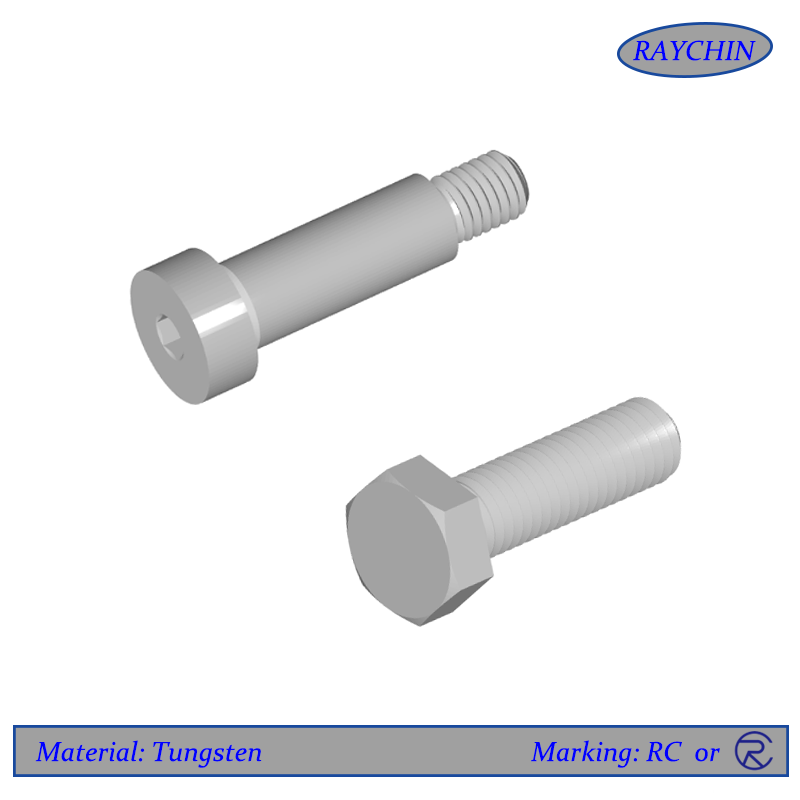
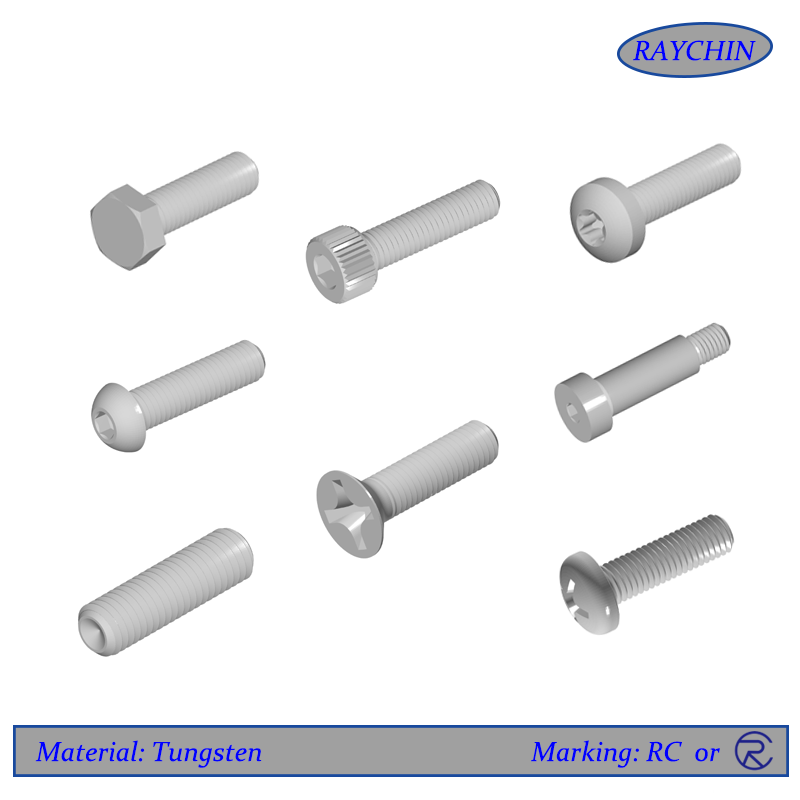
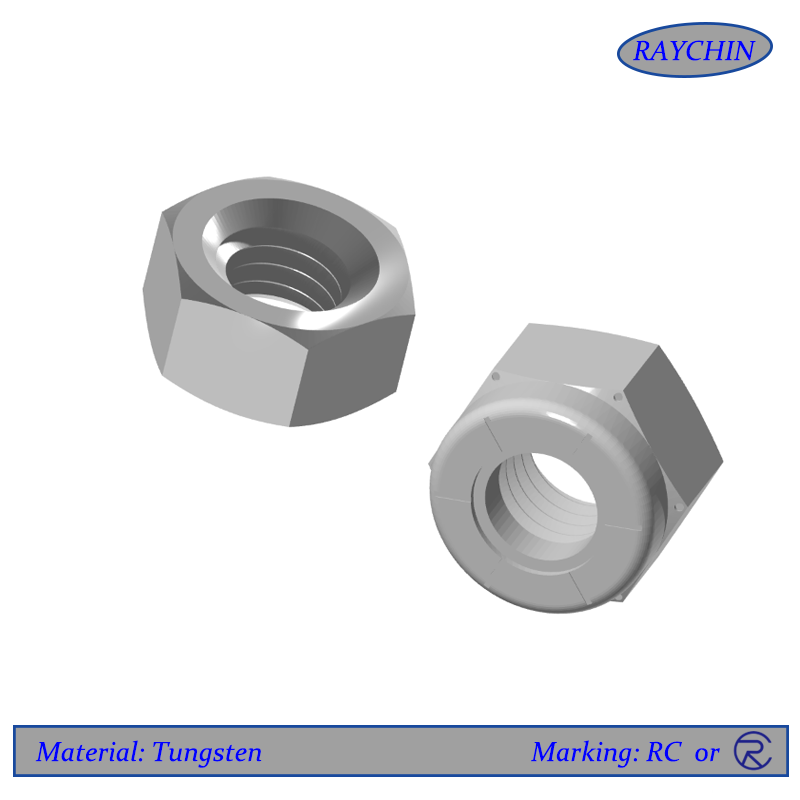
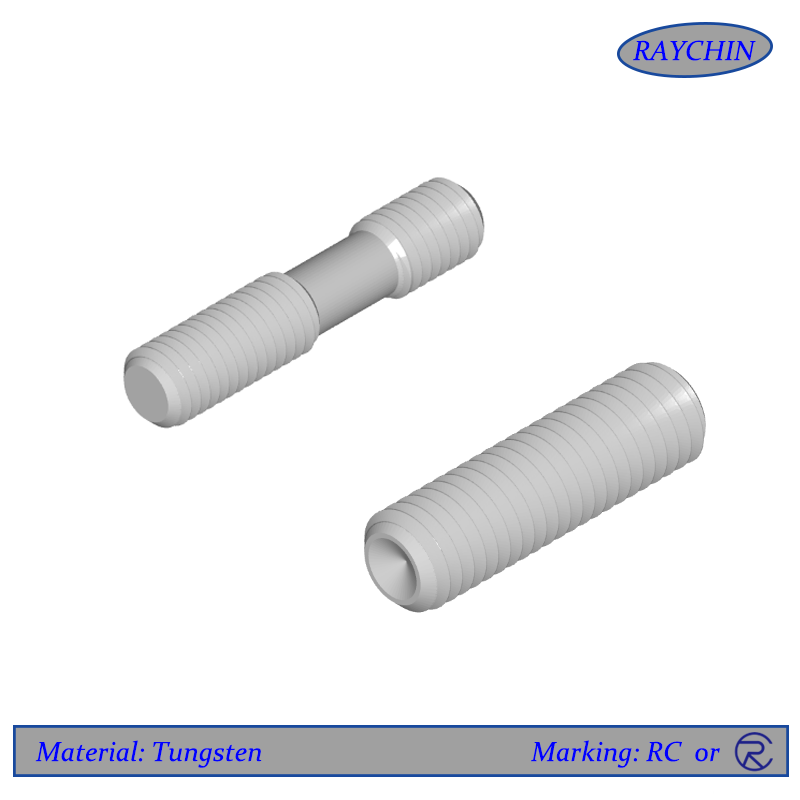
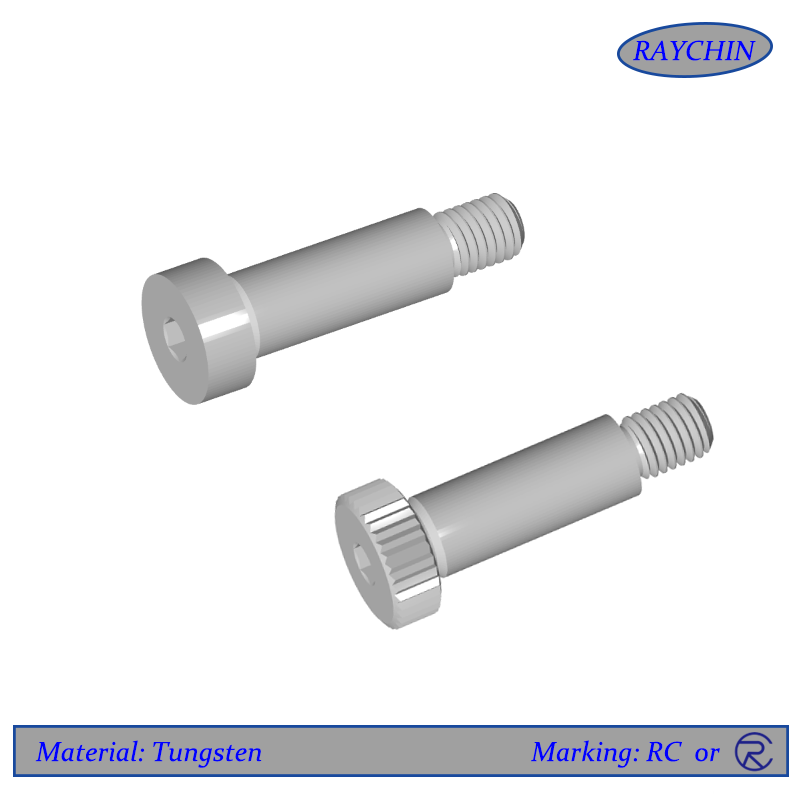
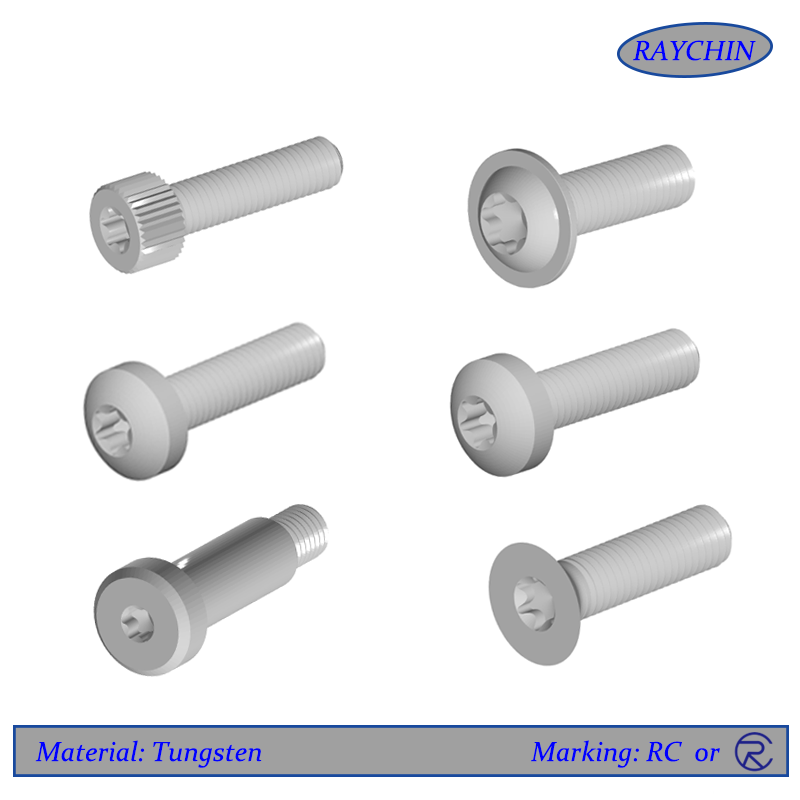
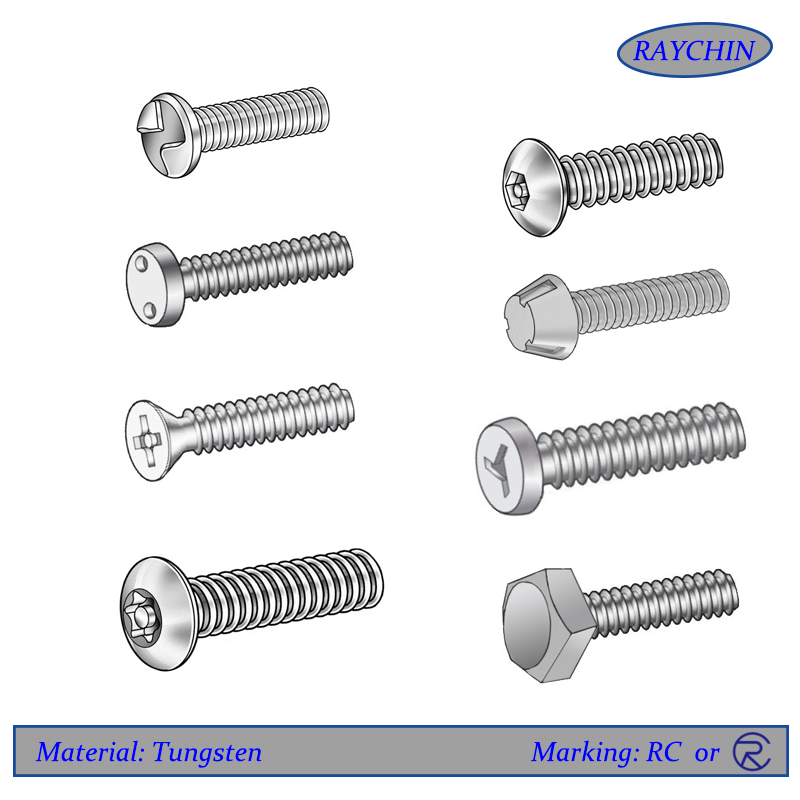
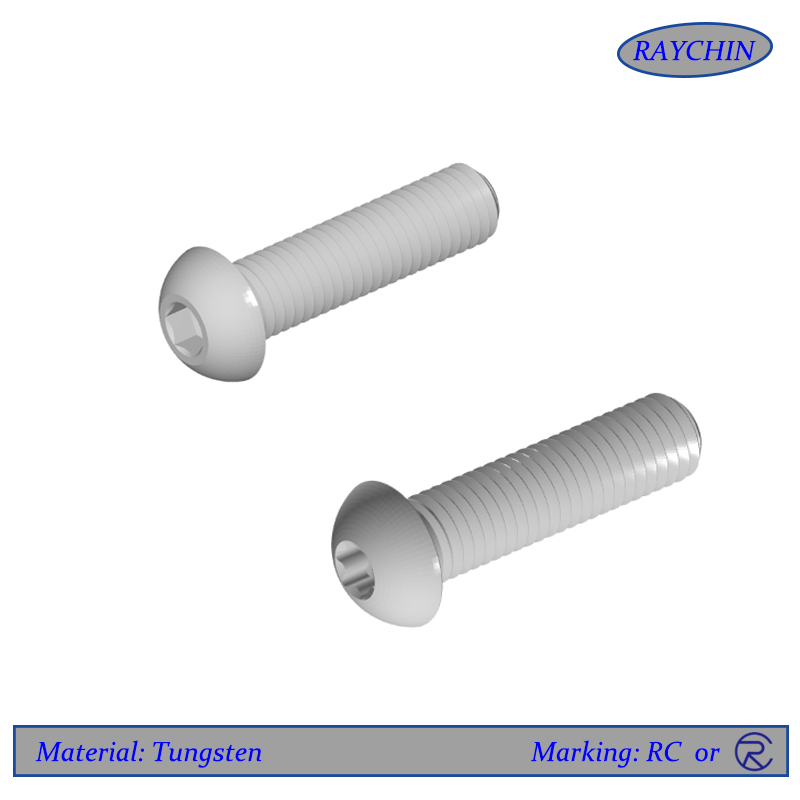
RAYCHIN SPECIALTY METALS FASTENERS: BOLTS, NUTS, SCREWS, WASHERS, STUDS, THREADED RODS, U-BOLT, J-BOLTS
STANDARD AND CUSTOMIZED, SMALL BATCH AND LARGE BATCH, IMPERIAL AND METRIC
Ultra-high density & high temperature / strength stability
Very high density of 19.3 gm/cc
Radiopaque to x-rays and other radiation
High strength at extreme high temperatures (vacuum)
Excellent corrosion resistance
Request a Quote from RAYCHIN
We're here to help!
RAYCHIN LIMITED
Tungsten Fasteners · Bolts · Nuts · Screws · Washers · Stud Bolts · Threaded Rods · Pure W & Heavy AlloysTungsten Fasteners: High-Density High-Temperature Bolts, Nuts, Screws, Washers, Studs & Threaded Rods
RAYCHIN LIMITED is a leading manufacturer of Tungsten Fasteners – a comprehensive range of precision fasteners produced from refractory tungsten metal and tungsten heavy alloys, delivering exceptional high-temperature strength, highest density (up to 19.3 g/cm³), and reliable performance in the most demanding aerospace, nuclear, defense, and high-temperature processing applications. Our product line encompasses all major fastener types including tungsten bolts, tungsten nuts, tungsten screws, tungsten washers, tungsten stud bolts, and tungsten threaded rods – all manufactured to the highest precision standards. Tungsten is a refractory metal with the highest melting point of all metals (3422°C) and exceptional mechanical properties at extreme temperatures. Tungsten heavy alloys (W-NiFe, W-NiCu) offer enhanced machinability while maintaining high density (16.85-18.85 g/cm³) and strength. Our portfolio includes all standard and custom configurations manufactured to NAS, AN, MS, ANSI, ASTM, ASME, SAE, API, NACE, ISO, DIN and KS standards, including ASTM B777, AMS-T-21014, MIL-T-21014, and AMS 7725. Whether you require tungsten fasteners for rocket engine components, nuclear reactor assemblies, or high-temperature vacuum furnaces, RAYCHIN delivers precision, quality, and full traceability. All mechanical properties are presented in MPa and ksi (kilopound per square inch).
Tungsten Fasteners – Comprehensive Product Range
Tungsten Bolts
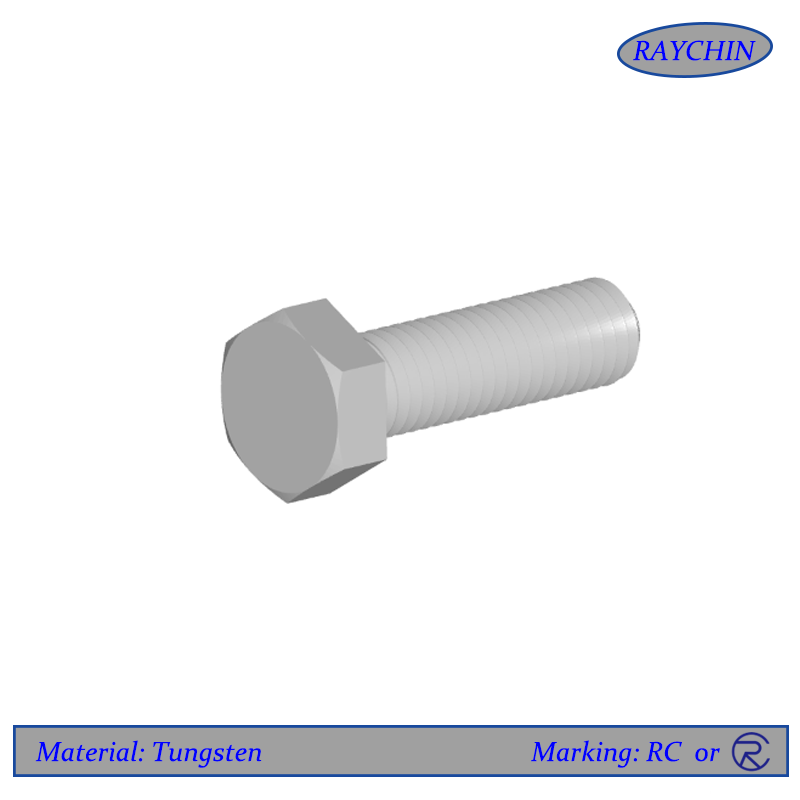
Tungsten bolts are available in various head styles including hex head, socket head, and 12-point configurations. Manufactured to ASME B18.2.1 (inch series) and ISO 4014 / DIN 931 (metric series). Diameters from M3 to M24 (#0 to 1"). Ideal for high-temperature furnace components, rocket engine assemblies, and radiation shielding applications where exceptional density and temperature resistance are required.
Tungsten Nuts
Tungsten nuts include hex nuts, heavy hex nuts, and jam nuts. Available in inch series per ASME B18.2.2 and metric series per ISO 4032 / DIN 934. Diameters from M3 to M24 (#0 to 1"). Tungsten nuts are almost always used in conjunction with tungsten bolts to match thermal expansion and avoid galvanic corrosion. Used in high-temperature furnaces, metallurgical equipment, and wind power generation.
Tungsten Screws
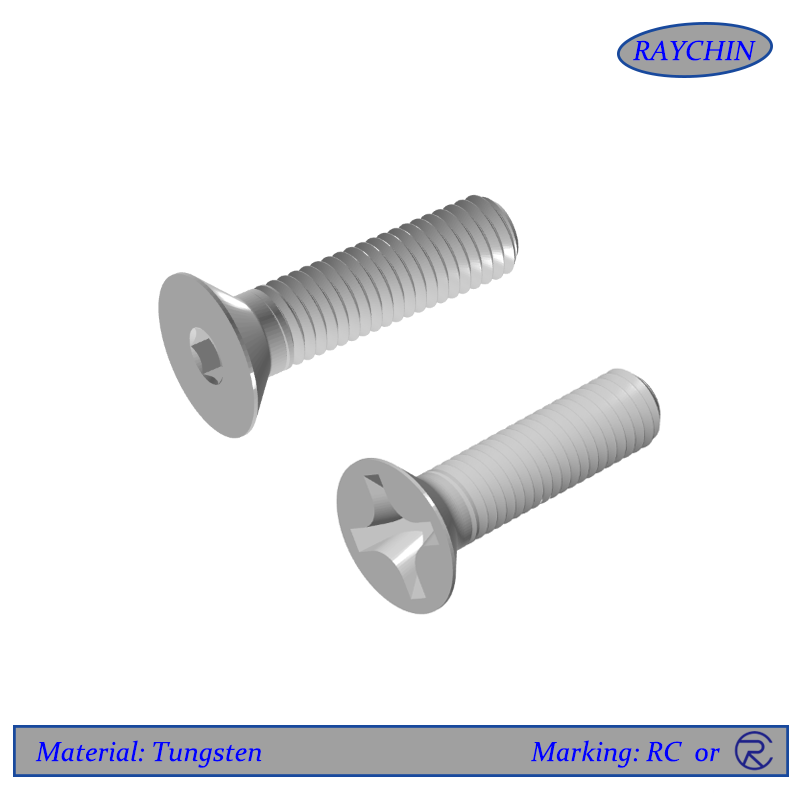
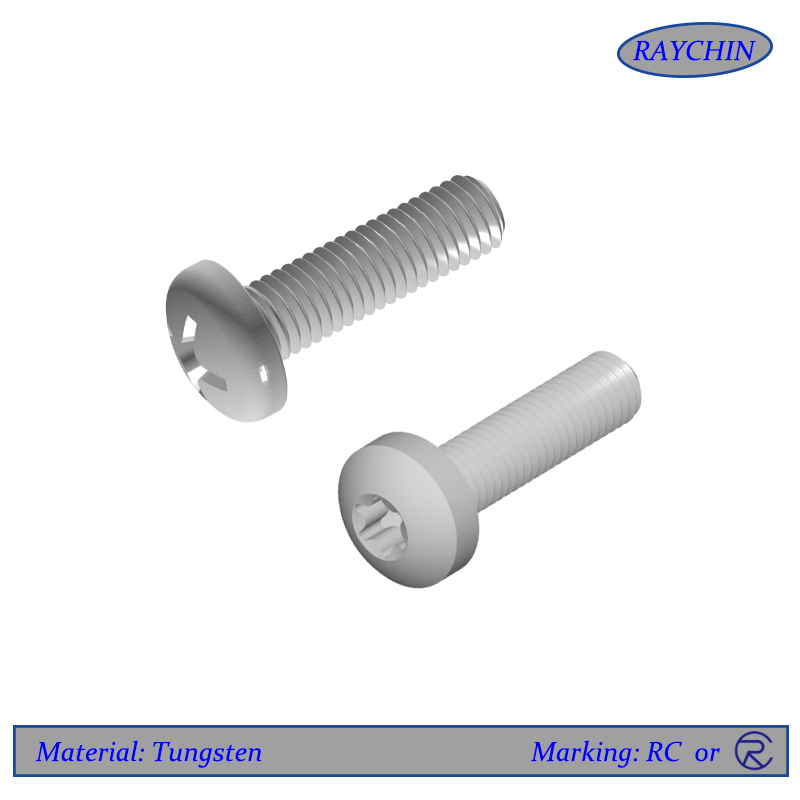
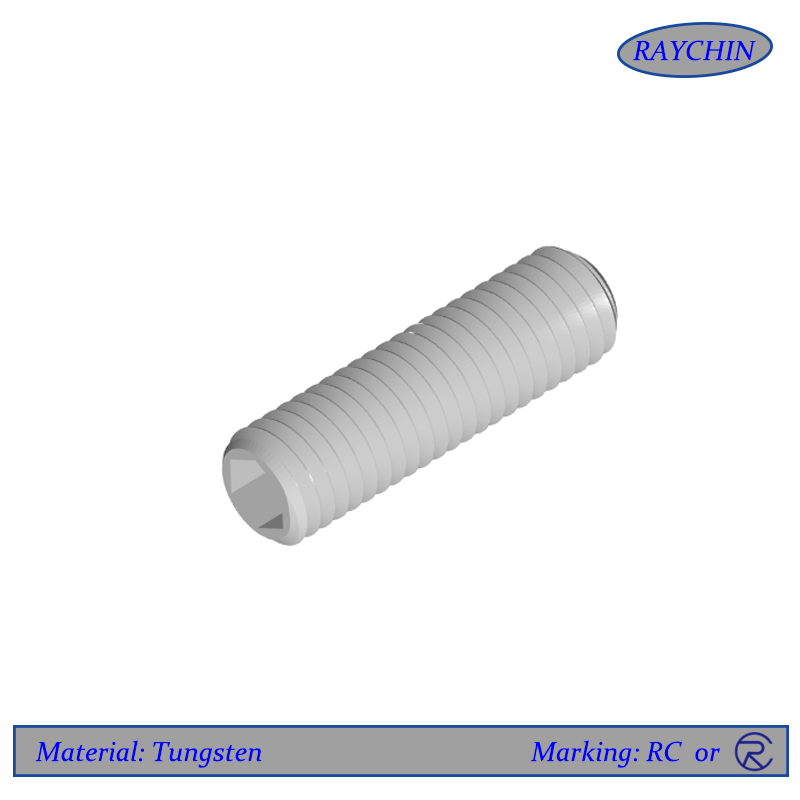
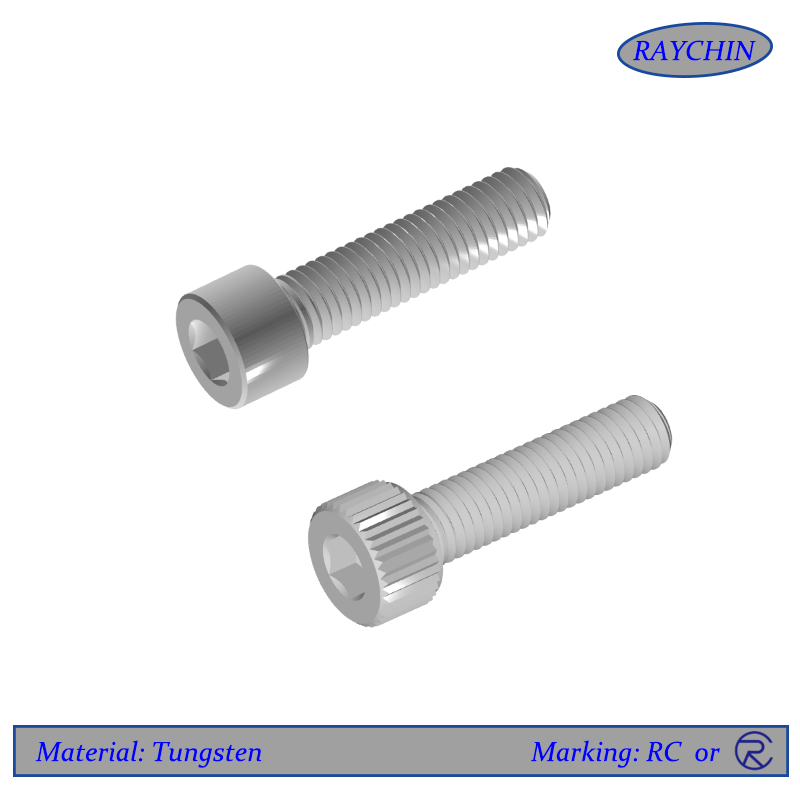
Tungsten screws encompass socket head cap screws, set screws, and specialty screws for balancing rotating components. Precision machined from tungsten heavy alloys with density up to 18.6 g/cm³ – more than twice that of steel. Used in gyroscope balancing screws, turbine blade-specific screws, and spacecraft structural bolts where high density and precision balance are critical.
Tungsten Washers
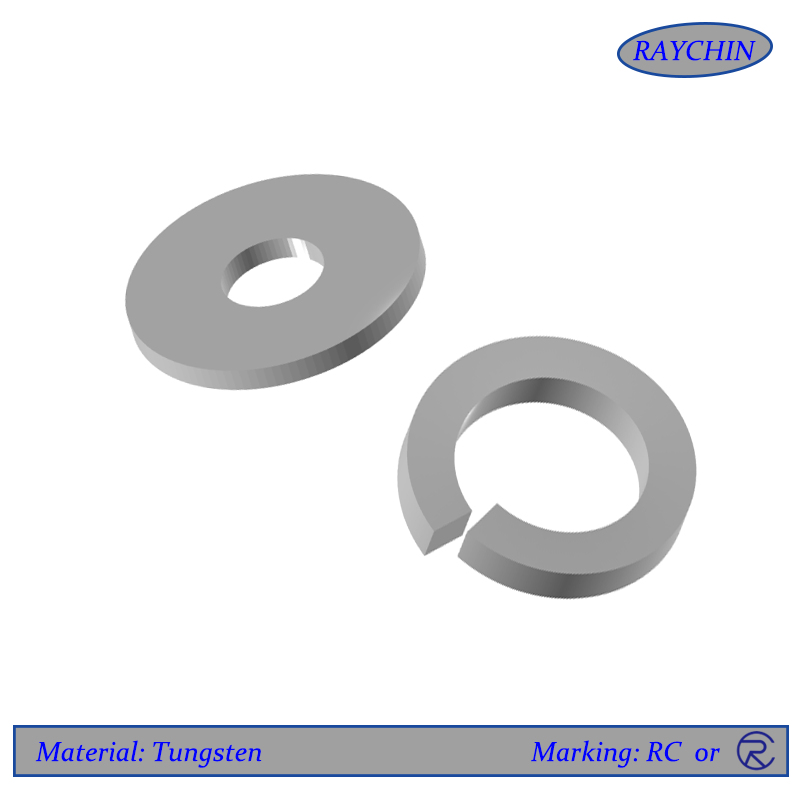
Tungsten washers provide load distribution and bearing surfaces in high-temperature assemblies. Available in flat washers, thrust washers, and precision shims. Manufactured to ASME B18.22.1 (inch series) and ISO 7089 / DIN 125 (metric series). Essential for maintaining clamping force under extreme thermal cycling in furnace components and nuclear applications.
Tungsten Stud Bolts
Tungsten stud bolts (double-end studs) feature threads on both ends with an unthreaded center section. Available in tap-end studs for permanent installation and flange-end studs for nut-and-nut applications. Manufactured to ASME B16.5 and API 6A specifications. Used in nuclear reactor pressure vessel flanges and high-temperature processing equipment requiring radiation resistance and high strength.
Tungsten Threaded Rods
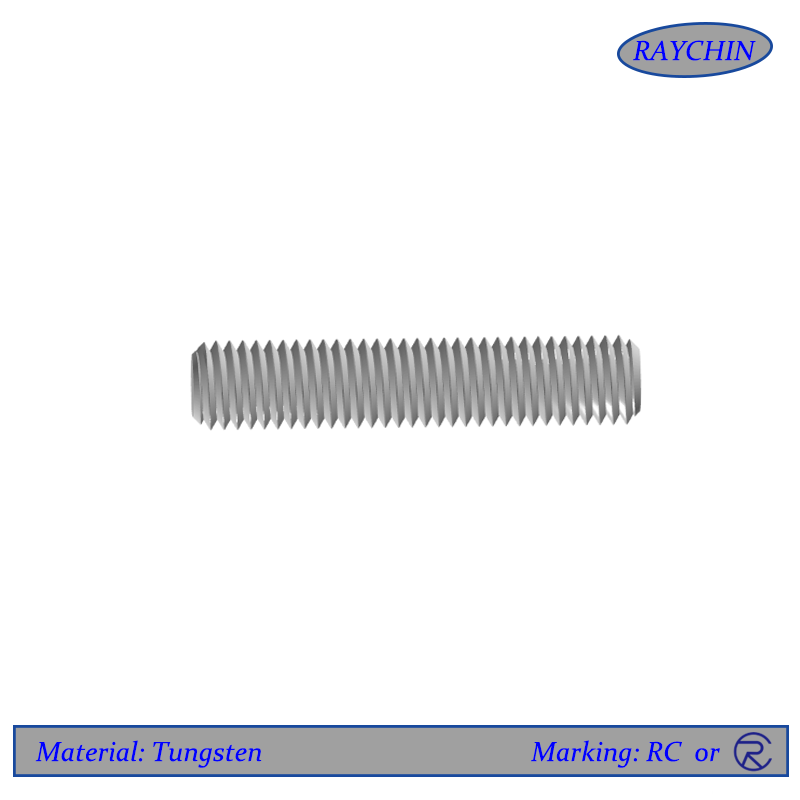
Tungsten threaded rods (continuous thread bars) are fully threaded along the entire length, providing maximum flexibility for cut-to-length applications. Available in standard lengths of 1m, 2m, and custom lengths up to 3m. Precision rolled threads for uniform strength. Used in high-temperature furnace assemblies, heat treatment fixtures, and radiation shielding structures.
Manufacturing Standards for Tungsten Fasteners
RAYCHIN LIMITED manufactures Tungsten fasteners to the following national and international standards, ensuring full compliance for projects worldwide. Both standard and non-standard custom configurations are available.
International Standards & Global Designations – Tungsten Fasteners
RAYCHIN LIMITED manufactures tungsten fasteners from vacuum arc melted (VAR) or powder metallurgy processed material conforming to the most widely used national and international specifications. All material is traceable to the mill with complete certifications.
Chemical Composition (Weight %) – Tungsten & Tungsten Alloys
Our tungsten fasteners are produced from vacuum arc melted (VAR) or powder metallurgy processed material conforming to the limits of applicable ASTM and AMS specifications.
Pure Tungsten (ASTM B760)
Tungsten Heavy Alloys (ASTM B777)
Composition per ASTM B777-19 specification.
Metallurgical note: Tungsten is a refractory metal with the highest melting point of all metals (3422°C). It exhibits exceptional high-temperature strength and dimensional stability in vacuum or inert atmospheres. Pure tungsten has high density (19.3 g/cm³) but is difficult to machine due to its brittleness. Tungsten heavy alloys (W-NiFe, W-NiCu) are produced by powder metallurgy, offering improved machinability while maintaining high density (16.85-18.85 g/cm³). The addition of nickel and iron (or copper) creates a matrix that binds tungsten particles, allowing for conventional machining. These alloys are classified by tungsten content (Class 1-4 per ASTM B777) with higher tungsten content providing higher density and strength. Tungsten-rhenium alloys offer improved ductility and low-temperature brittleness. Tungsten-lanthanum oxide (W-La2O3) provides enhanced high-temperature creep resistance and electron emission properties. All tungsten alloys are susceptible to oxidation above 500°C and require protective atmospheres or coatings for high-temperature service in air.
Complete Mechanical & Physical Properties – Tungsten Alloys (MPa / ksi)
Tungsten fasteners are supplied in sintered, annealed, or stress-relieved condition per applicable ASTM specifications. Data represent typical values based on industry standards.
Pure Tungsten – Mechanical Properties (ASTM B760)
Tungsten Heavy Alloys (ASTM B777) – Mechanical Properties
Values per ASTM B777-19 specification. W-NiCu alloys typically have 10-15% lower strength than W-NiFe alloys.
High-Temperature Mechanical Properties – Class 3 (95% W)
High-temperature testing in vacuum or inert atmosphere. Mechanical properties degrade above 800°C due to microstructural changes.
Physical Properties – Tungsten Alloys
High‑Temperature Performance of Tungsten Fasteners
Tungsten is a refractory metal with exceptional high-temperature strength and stability in vacuum or inert atmospheres. It maintains useful mechanical properties up to 3000°C (5432°F) in non-oxidizing environments, making it suitable for extreme temperature applications in rocket engines, plasma facing components, and high-temperature furnaces. Tungsten's melting point of 3422°C (6192°F) is the highest of all metals, and it exhibits the lowest vapor pressure and the highest tensile strength at temperatures above 1650°C. The recrystallization temperature of tungsten is approximately 1200-1400°C, depending on purity and prior cold work. In oxidizing atmospheres, tungsten forms volatile tungsten trioxide (WO₃) above 500°C, leading to rapid oxidation and catastrophic failure. Therefore, tungsten fasteners must be used in vacuum, inert gas, or reducing atmospheres, or protected with oxidation-resistant coatings (such as MoSi₂, SiC, or Ir). Tungsten heavy alloys have lower maximum service temperatures (typically 800-1000°C) due to the presence of lower-melting binder phases (Ni-Fe, Ni-Cu). Tungsten-rhenium alloys offer improved high-temperature strength and ductility, with rhenium additions increasing recrystallization temperature and reducing brittleness.
Elevated Temperature Capabilities
Corrosion Resistance of Tungsten Fasteners
Tungsten has limited corrosion resistance in most environments due to its susceptibility to oxidation and reaction with many chemicals. However, in certain specific conditions, tungsten offers unique advantages.
Oxidation Behavior
Tungsten begins to oxidize rapidly at temperatures above 500°C in air, forming volatile WO₃. This leads to rapid material loss and catastrophic failure. Therefore, tungsten fasteners are not suitable for high-temperature applications in air without protective coatings. Tungsten heavy alloys also suffer from oxidation of the binder phase at elevated temperatures.
Chemical Resistance
Tungsten is resistant to attack by many molten metals and has low solubility in liquid metals such as lithium, sodium, potassium, magnesium, zinc, and silver. This makes it valuable for handling liquid metals in nuclear and metallurgical applications. Tungsten is also resistant to hydrogen up to very high temperatures and is used in hydrogen furnaces. However, it reacts with nitrogen above 1500°C to form nitrides, leading to embrittlement. Tungsten is rapidly attacked by oxidizing acids and hydrogen peroxide.
Manufacturing Standards – Tungsten Fasteners
All tungsten fasteners are manufactured and tested to meet the following standards:
We offer surface finishes: as-sintered, ground, polished, or coated with oxidation-resistant coatings (MoSi₂, SiC, Ir) for high-temperature air service. Controlled sintering and heat treatment processes per ASTM specifications ensure consistent mechanical properties. Specialized CNC grinding and machining for accurate fastener geometry – tungsten alloys require diamond tooling and specialized techniques due to their extreme hardness and brittleness. Class 2A/3A/6g thread fit (where machinable). 100% inspection available including dimensional inspection, density testing, and non-destructive examination. Full traceability and material test reports (MTR) with mill certifications available. AS9100 and ISO 9001:2015 certified quality management. ISO 13485 certified for medical applications with cleanroom packaging available. Build-to-print specials to customer specifications are available.
Why RAYCHIN LIMITED – The Tungsten Fastener Authority
Contact the tungsten fastener experts
Request a quotation for tungsten fasteners, bolts, nuts, screws, washers, stud bolts, threaded rods – any standard (ASTM, AMS, ISO, DIN) – any grade (Pure W, W-NiFe, W-NiCu, W-La2O3, W-Re) – any condition (sintered, stress-relieved), any quantity. Global delivery. Mechanical and high-temperature data in MPa/ksi available for all products. Custom oxidation-resistant coatings available for air service.
sales@ray-chin.com | +86 534 2166 566Our team provides technical support in English, German, Mandarin, Japanese. Request a quote, sample requests, and material evaluation available.
Request A Quote! We'll respond as soon as possible(within 12 hours)
 Tungsten Fasteners
 Tungsten Hex Bolts
 Tungsten Shoulder Bolts
 Tungsten Hex Nuts
 Tungsten Lock Nuts
 Tungsten Flat Head Screws
 Tungsten Hex Cap Screws
 Tungsten Pan Head Screws
 Tungsten Set Screws
 Tungsten Socket Head Cap Screws
 Tungsten Torx Screws
 Tungsten Button Head Cap Screws
 Tungsten Threaded Rods
 Tungsten Studs
 Tungsten Washers
 Tungsten Screws
 Tungsten Nuts
 Tungsten Bolts
Get a Quote