
Categories List
Recent Posts
310 vs 304, 316, 321, 330, Inconel, 253MA & More: The High‑Temperature Fastener Showdown
Choosing the right fastener for high‑temperature service—furnaces, heat exchangers, exhaust systems, and power generation equipment—requires navigating a long list of candidate alloys. 310 stainless steel, with its 25% chromium and 20% nickel content, stands out as the most widely available oxidation‑resistant grade for temperatures up to 1100°C. But how does it compare against 304, 316, 321, 330, Inconel 600/601, 253MA, and A286? RAYCHIN LIMITED, a specialist global manufacturer and supplier of high‑temperature alloy fasteners with decades of in‑house experience, presents this definitive comparison to help you make the right choice.
1. 310 vs 304 Stainless Steel Fasteners
310 vs 304 stainless steel fasteners centers on temperature capability. 304 (UNS S30400) is an 18% Cr, 8% Ni austenitic alloy with a practical upper limit of about 800°C under light load and only 600°C under significant stress. Its yield strength at room temperature is approximately 205 MPa (30 ksi)—similar to 310—but it loses strength rapidly above 500°C, and its oxidation resistance is far inferior. 310, with 25% Cr and 20% Ni, resists scaling to 1100°C and retains better creep strength. When to use 310 instead of 304: any application where the service temperature exceeds 600°C under load, or where oxidation and scaling are the primary failure concerns—furnace hardware, heat exchangers, exhaust ducting, and kiln fixtures. 304 is adequate for food processing, architectural, and general industrial service, but it should never be used as a high‑temperature substitute for 310.
2. 310 vs 316 Bolts at High Temperature
310 vs 316 bolts high temperature involves a trade‑off between oxidation resistance and aqueous corrosion performance. 316 contains 16–18% Cr, 10–14% Ni, and 2–3% Mo, giving it excellent pitting resistance in chloride‑containing environments at moderate temperatures. However, its molybdenum content reduces its scaling temperature to about 870°C, significantly lower than 310's 1100°C. For seawater piping or chemical process equipment operating below 400°C, 316 is preferred. For furnace and exhaust applications above 800°C, 310 is required.
3. 310 vs 321 Stainless Steel
310 vs 321 stainless steel for high‑temperature service is a comparison between oxidation resistance (310) and intermediate‑temperature strength (321). 321 (UNS S32100) is stabilized with titanium to prevent intergranular corrosion in the 430–850°C range, making it ideal for welded assemblies and pressure vessels. However, its oxidation resistance is similar to 304—limited to about 800°C. 310 offers a much higher temperature ceiling, making it suitable for furnace components and combustion hardware where 321 would rapidly scale.
4. 310 vs 330 Stainless Steel
310 vs 330 stainless steel is a higher‑level comparison. 330 (UNS N08330) contains 35% Ni and 18% Cr, giving it outstanding carburization resistance and better creep strength at 900–1000°C. It is widely used in carburizing furnace fixtures and radiant tubes. 310, with its higher chromium content, provides superior oxidation resistance but may carburize more readily in highly reducing atmospheres. For general oxidation‑resistant bolting, 310 is more economical; for severe carburizing conditions, 330 is often specified.
5. 310 vs Inconel 600 and Inconel 601 Fasteners
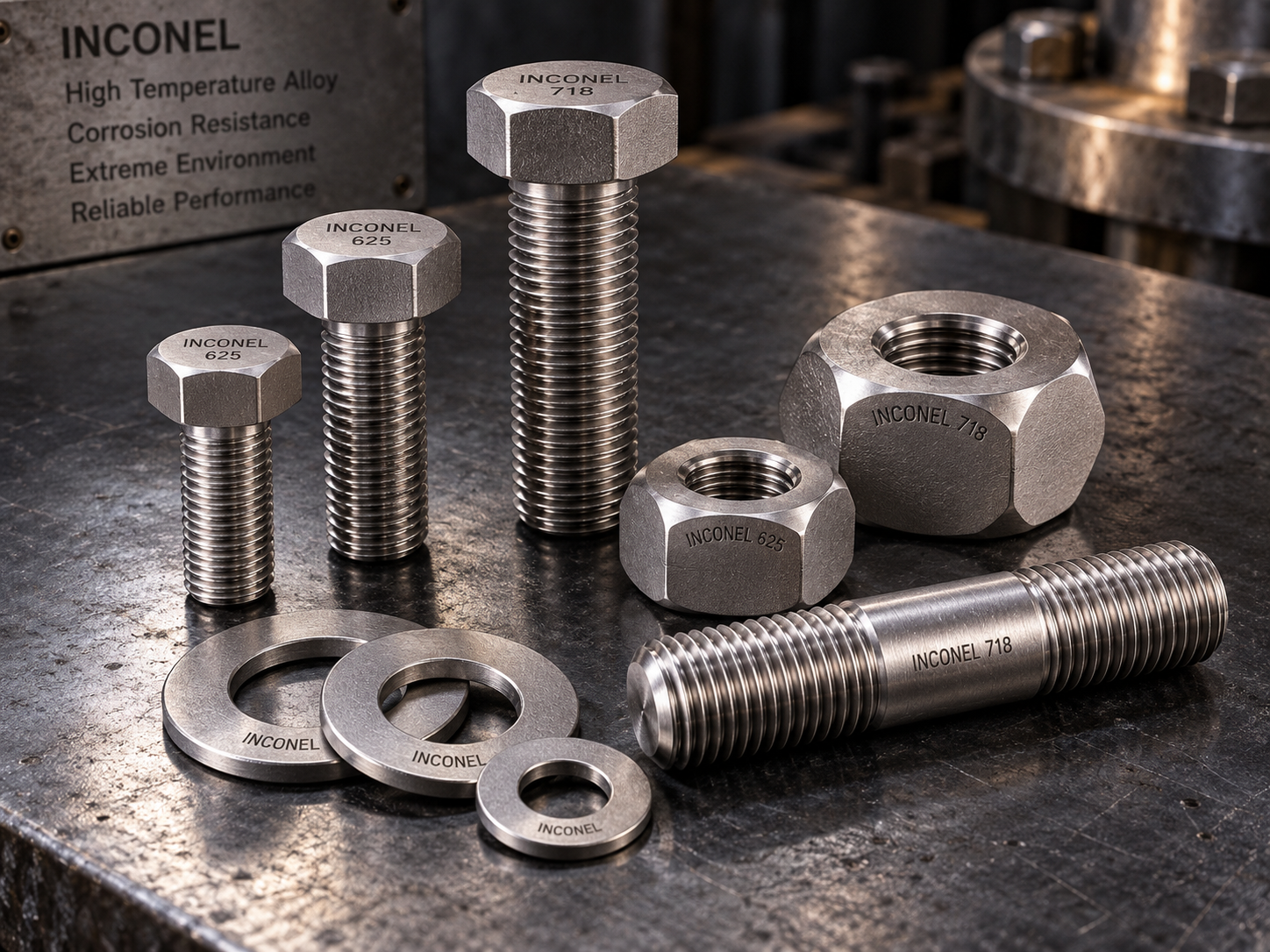
310 vs Inconel 600 fasteners: Inconel 600 (UNS N06600) is a nickel‑chromium alloy (72% Ni, 15% Cr) that provides better carburization and chloride SCC resistance than 310, but at a much higher cost. Its maximum service temperature is about 1150°C, slightly higher than 310, but its strength is similar at high temperatures. Inconel 600 is selected for the most demanding carburizing and chloride environments; 310 is the cost‑effective choice for oxidizing atmospheres.
310 vs Inconel 601 bolts: Inconel 601 (UNS N06601) contains 1.4% aluminum, forming a tenacious alumina scale that provides superior oxidation resistance up to 1260°C, well above 310's limit. For the hottest furnace and heat‑treat applications, Inconel 601 is specified; for typical furnace bolting up to 1100°C, 310 is sufficient at a fraction of the cost.
6. 310 vs 253MA Fasteners
310 vs 253MA fasteners: 253MA (UNS S30815) is a lean austenitic stainless steel with 21% Cr, 11% Ni, and small additions of nitrogen and cerium. It provides oxidation resistance similar to 310 but at a lower nickel content, making it more economical. It retains good creep‑rupture strength up to about 1100°C. In many furnace applications, 253MA can replace 310 at a lower cost, but 310 offers better resistance to carburization and thermal cycling. RAYCHIN stocks both alloys and can advise on the optimal choice based on your specific atmosphere and temperature profile.
7. 310 vs Nickel Alloy Bolts (General)
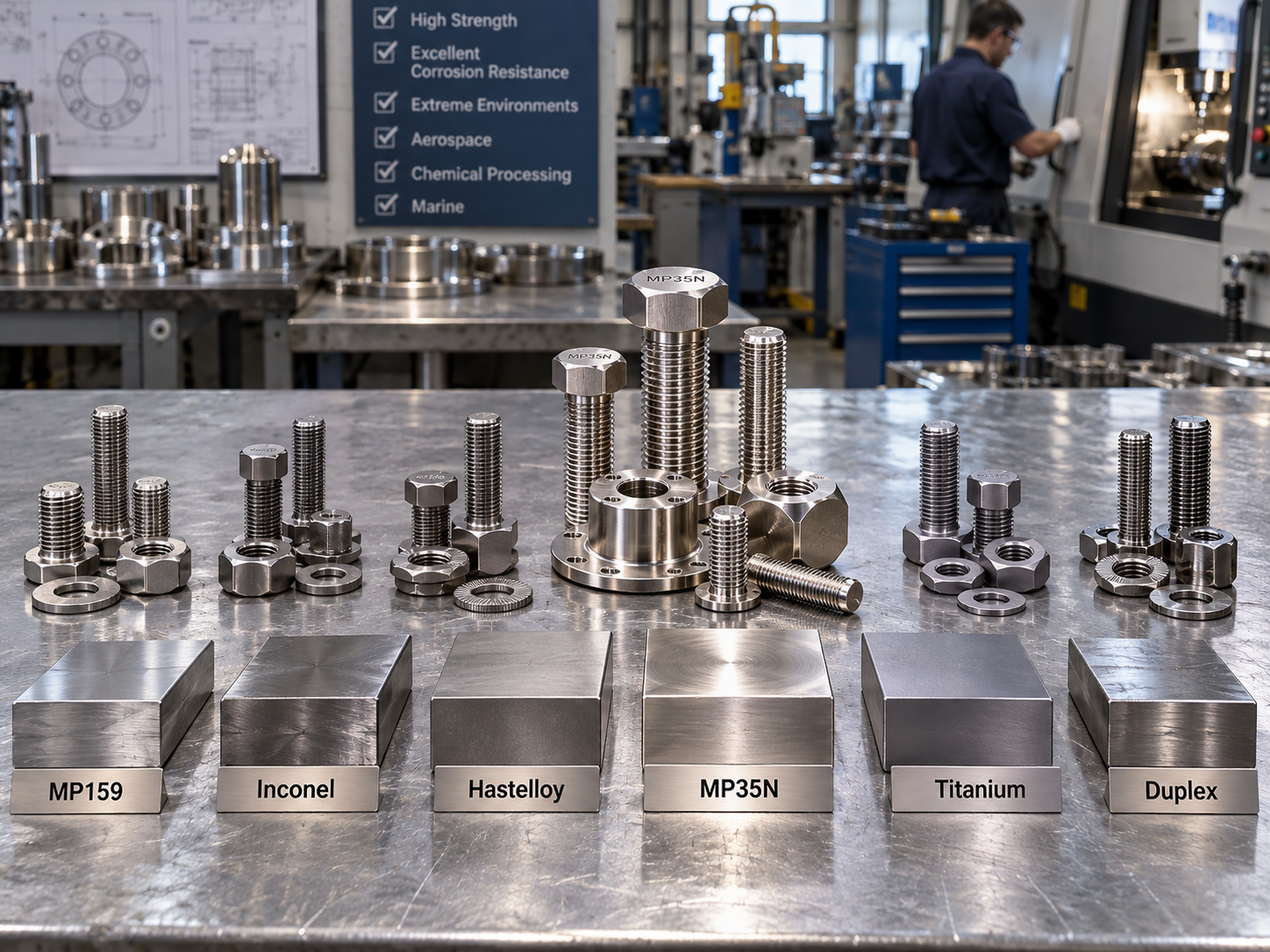
310 vs nickel alloy bolts: Nickel‑base alloys (Inconel, Hastelloy, Nimonic) provide superior high‑temperature strength, corrosion resistance, and creep‑rupture life compared to 310, but cost 3–10 times more. For structural bolting at temperatures above 800°C where creep is a concern, nickel alloys such as Inconel 718 or Nimonic 80A are required. For lower‑stress, oxidation‑dominated applications up to 1100°C, 310 offers the best balance of performance and cost.
8. 310 vs 309 Fasteners
310 vs 309 fasteners: Alloy 309 (UNS S30900) contains 22–24% Cr and 12–15% Ni, making it a step up from 304 but below 310. Its oxidation resistance is suitable to about 1000°C, slightly less than 310. It is often used for furnace components and welding wire. 310 is the upgrade when maximum scaling resistance is needed, while 309 may be a cost‑effective intermediate solution.
9. 310 vs A286 Bolts
310 vs A286 bolts: A286 (UNS S66286) is an iron‑based precipitation‑hardening superalloy with a yield strength of 585 MPa (85 ksi) in Class D condition, far higher than 310's 205 MPa. A286 retains high strength to 650°C and is widely used for turbocharger and exhaust manifold fasteners. However, it cannot match 310's oxidation resistance above 900°C. For high‑strength bolting at moderate temperatures (up to 650°C), A286 is required; for oxidation‑resistant bolting at 800–1100°C, 310 is the better choice.
10. Best Material for High Temperature Bolts — Decision Matrix
11. RAYCHIN's Multi‑Alloy Expertise
RAYCHIN LIMITED manufactures fasteners in all the alloys discussed in this comparison. Our in‑house machining, heat treatment, and complete mechanical testing ensure that whichever material you select, the delivered fasteners will match their certificates. Our application engineers are ready to assist with alloy selection, torque tables, and anti‑galling solutions.
Send your operating temperature, atmosphere, and load requirements to our technical team. We'll provide an unbiased alloy recommendation and competitive quotation within 24 hours.
✉️ sales@ray-chin.com? www.ray-chin.com | 310 · 316 · 330 · Inconel · A286 · Global Supply
Request A Quote! We'll respond as soon as possible(within 12 hours)
Get a Quote