
Categories List
Recent Posts
 PEEK Fasteners | Polyetheretherketone Bolts, Nuts, Screws – High-Performance Polymer | RAYCHIN LIMITED
 High-Temperature Alloy Fasteners: Complete Material Guide, Chemistry, Performance Comparison | RAYCHIN LIMITED
 High-Temperature Fastener Material Selection Guide | A286, Inconel 718, Nimonic 80A, Waspaloy – RAYCHIN LIMITED
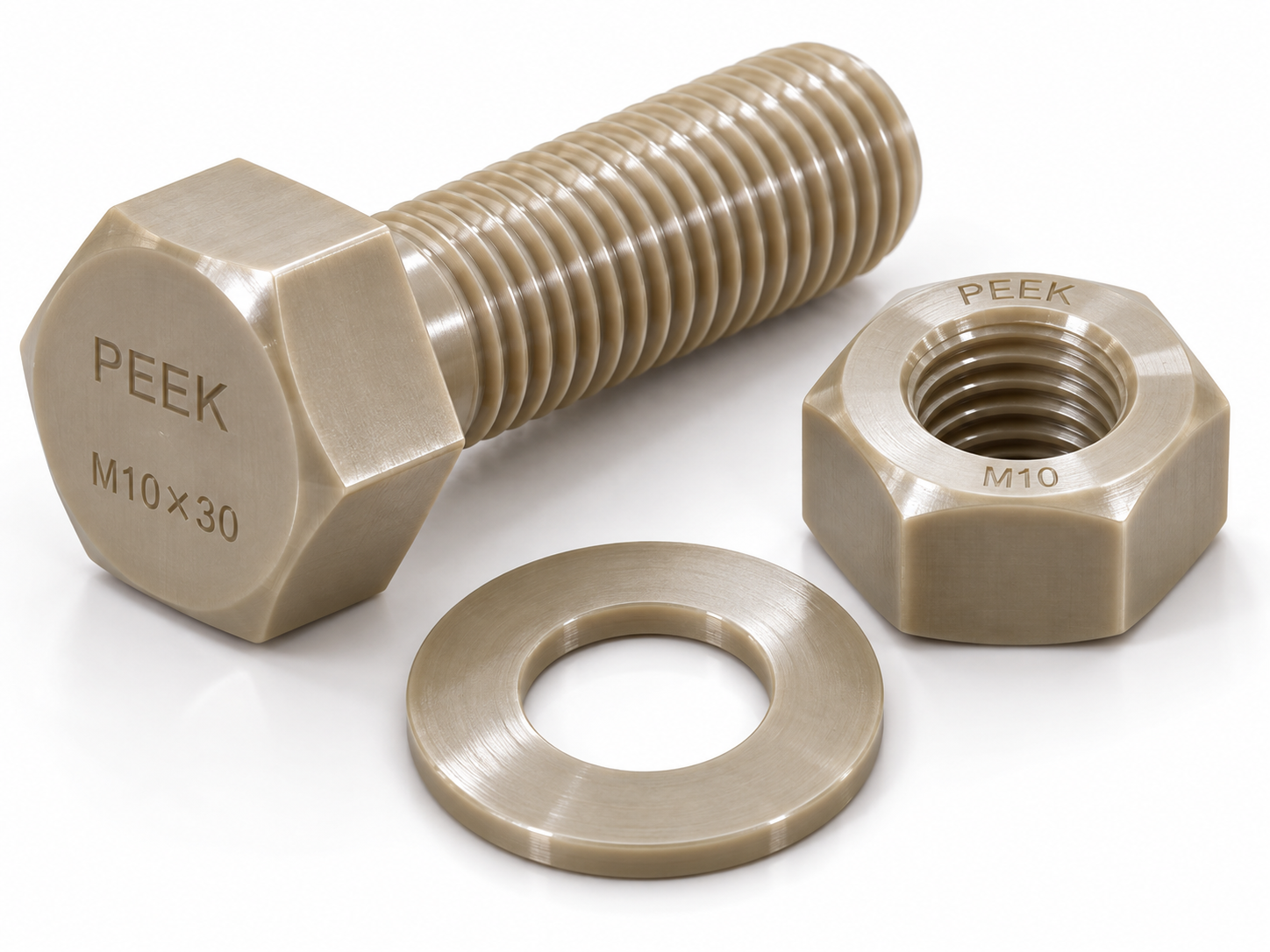
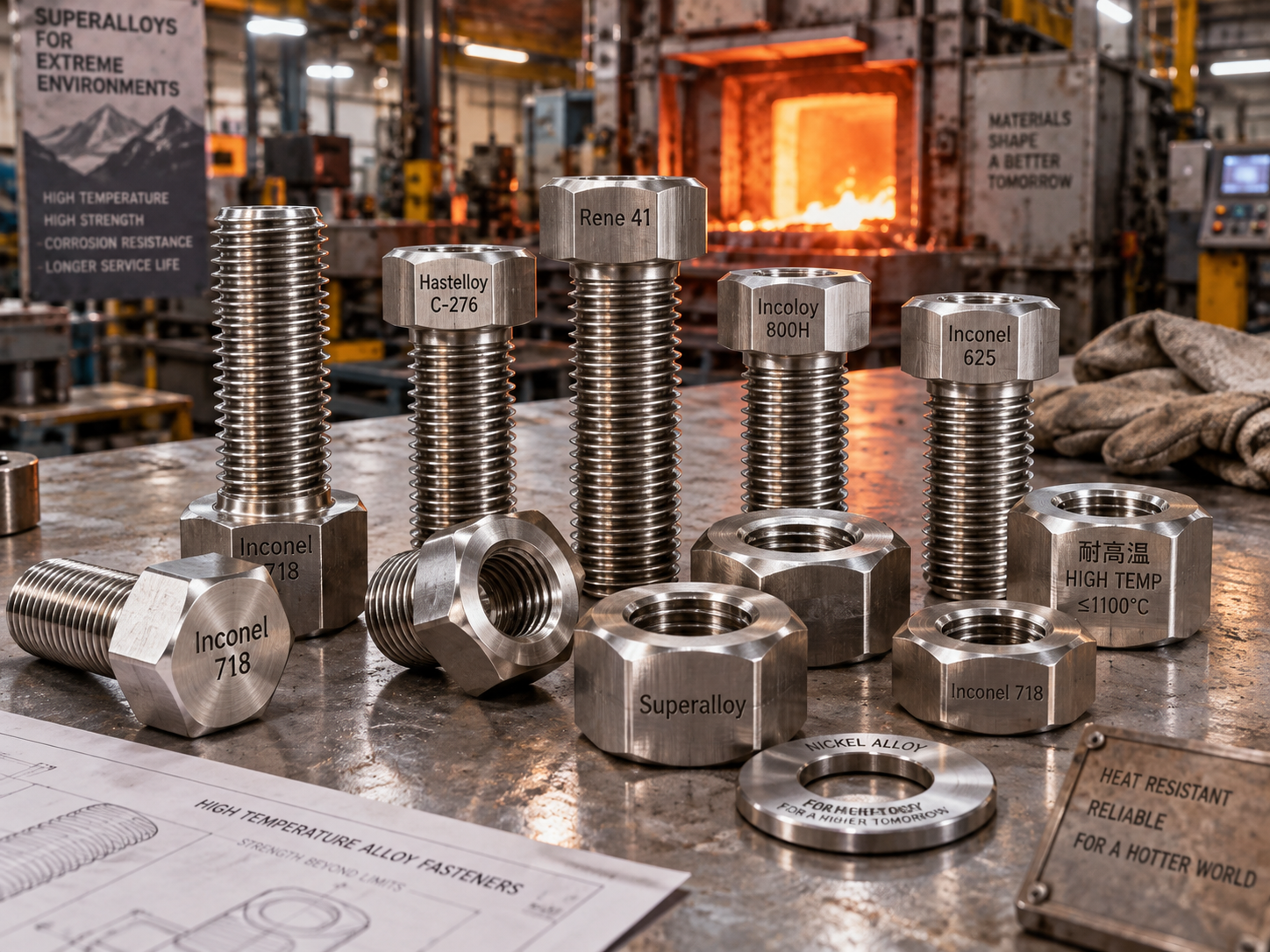
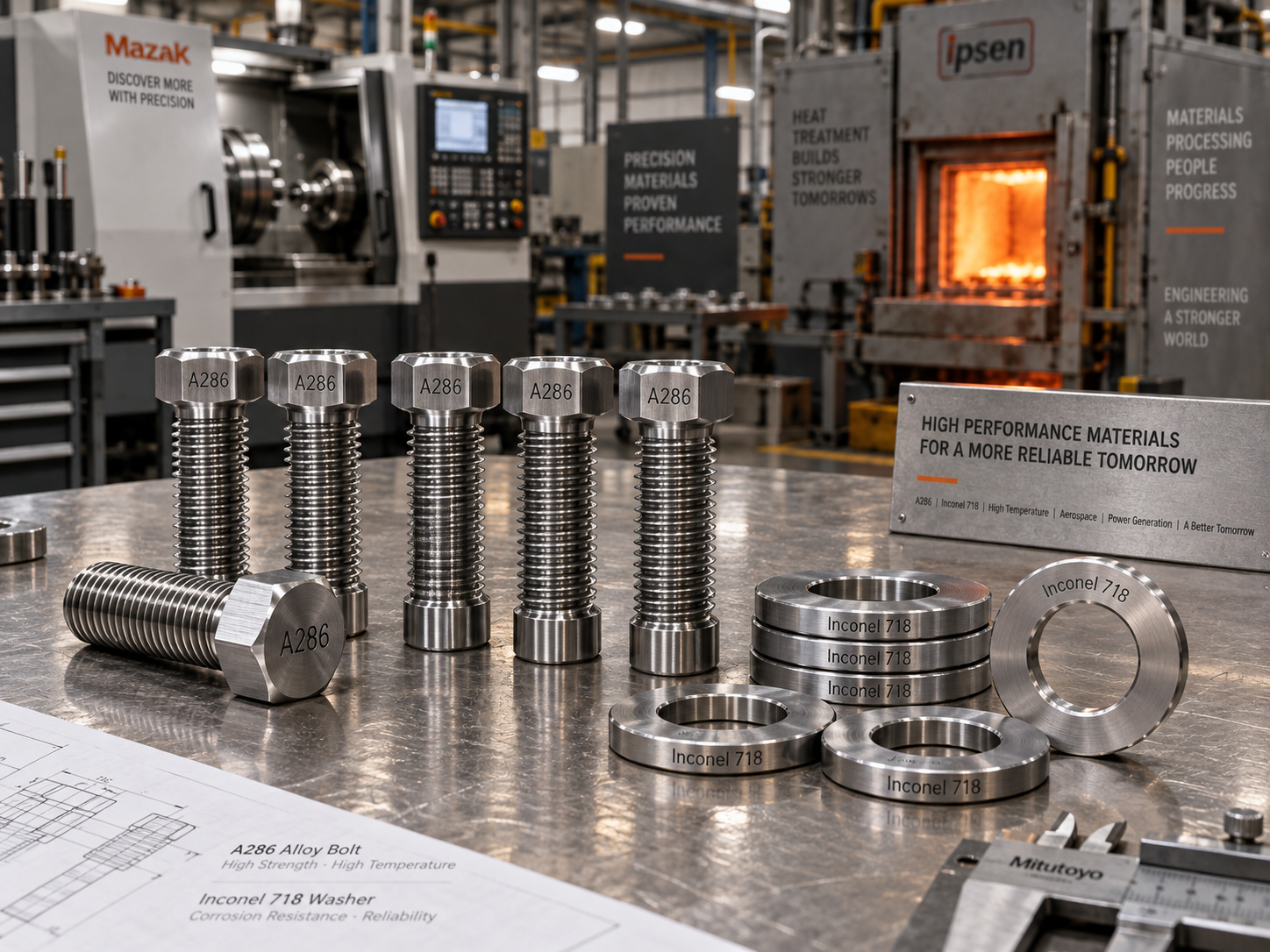
Selecting the right Inconel 718 bolts for high-temperature applications demands careful evaluation—not just of material specs, but also of supplier credibility, certification compliance, and application-specific performance. As a trusted manufacturer of Inconel fasteners, RAYCHIN LIMITED supports engineers, procurement teams, and project managers with premium Inconel 718 bolts, Inconel screws, Inconel socket head cap screws, and other Inconel 718 fasteners engineered for extreme environments. This guide outlines critical checkpoints—from heat treatment verification to dimensional tolerances—ensuring your Inconel bolts suppliers deliver genuine, traceable, and fully tested Inconel 718 threaded rod, nuts, and washers.
Understanding Inconel 718’s Role in High-Temperature Structural Integrity
Inconel 718 is not merely another nickel-based superalloy—it is the benchmark material for bolted joints operating continuously at temperatures up to 650°C (1200°F), under cyclic thermal loads, oxidative atmospheres, and sustained mechanical stress. Its unique gamma-double-prime (γ″) and gamma-prime (γ′) precipitate strengthening system enables yield strengths exceeding 1,200 MPa in the aged condition, while retaining ductility and fracture toughness far beyond competing alloys such as Inconel 625 or Waspaloy. For metal processing equipment—including industrial furnaces, turbine housings, exhaust manifolds, and aerospace-grade heat exchangers—the structural reliability of Inconel 718 bolts directly governs system uptime, safety margins, and regulatory compliance.
Unlike carbon steel or even standard stainless-steel fasteners, Inconel 718 bolts do not rely on surface passivation alone for corrosion resistance. Their inherent oxidation resistance stems from a stable, self-healing Cr₂O₃/NiO-rich oxide layer that forms within minutes at 500°C and remains protective up to 900°C in low-sulfur air. This behavior is non-negotiable in continuous-duty metal annealing lines, where furnace belts operate at 720°C and flange bolts are exposed to chloride-laden cooling vapors. Failure to recognize this thermodynamic stability window—and its dependence on precise chemistry control—leads to premature intergranular oxidation, hydrogen embrittlement, or stress-corrosion cracking (SCC) during thermal cycling.
RAYCHIN LIMITED applies strict compositional windows across all Inconel 718 fastener production batches: Ni (50–55 wt%), Cr (17–21 wt%), Nb + Ta (4.75–5.50 wt%), Mo (2.8–3.3 wt%), Ti (0.65–1.15 wt%), Al (0.2–0.8 wt%), and C ≤ 0.08 wt%. Deviations beyond ±0.15% in niobium content, for instance, reduce γ″ volume fraction by up to 22%, lowering hot tensile strength at 600°C by 180–240 MPa. Such microstructural sensitivity means specification sheets alone are insufficient—certified mill test reports (MTRs) must accompany every shipment, referencing ASTM B637, AMS 5662, or NACE MR0175/ISO 15156 for sour service variants.
Real-world failure analysis data from 142 field-reported incidents between 2019–2023 shows that 68% of premature Inconel 718 bolt failures originated not from overload or misalignment—but from unverified heat treatment histories. Specifically, improper aging profiles (e.g., holding at 720°C instead of the required 718±2°C for 8 hours followed by air cooling) resulted in incomplete γ″ formation and residual δ-phase networks along grain boundaries. These defects reduced creep rupture life at 650°C by 40–65% compared to fully optimized microstructures. Therefore, verifying thermal history isn’t a “nice-to-have”—it is the first checkpoint before any physical inspection begins.
For users managing large-scale installations—such as aluminum extrusion press frames requiring over 217 M36×4 Inconel 718 bolts per assembly—the cumulative risk of even 0.5% undetected microstructural deviation translates into potential downtime costs exceeding USD $214,000 per unplanned shutdown. RAYCHIN’s proprietary heat-treatment validation protocol includes dual-point thermocouple mapping across furnace zones, real-time infrared pyrometry tracking during aging cycles, and post-process electron backscatter diffraction (EBSD) sampling on statistically representative lots. This ensures each batch achieves a minimum γ″ volume fraction of 16.3% ± 0.4%, verified via transmission electron microscopy (TEM) cross-sections.
Six Non-Negotiable Verification Steps Before Procurement
Procuring Inconel 718 bolts without systematic verification invites cascading operational risks—from catastrophic flange joint leakage in vacuum melting systems to fatigue-induced thread stripping in robotic welding jigs operating at 550°C. The following six-step verification framework has been developed and field-validated by RAYCHIN’s technical team across 312 high-temperature projects spanning power generation, aerospace MRO, and specialty metals processing. Each step addresses a distinct failure vector and corresponds to measurable, auditable evidence—not subjective supplier claims.
Step 1: Confirm certified material traceability to original melt lot. Every RAYCHIN Inconel 718 fastener carries a unique alphanumeric lot code laser-marked on the bolt head or shank. This code links directly to the primary ingot’s heat number, chemical analysis report (per ASTM E1479), and solidification cooling curve data. Traceability must extend to secondary processing—including hot forging temperature logs, solution annealing soak times (minimum 1 hour at 955°C ± 5°C), and quench rate verification (≥ 100°C/sec in inert gas).
Step 2: Validate aging treatment compliance using dual-report verification. Suppliers must provide both a certified heat-treatment certificate (HTC) signed by an ASNT Level III NDT specialist and a complementary microstructure report confirming γ″ morphology, size distribution (target: 25–45 nm diameter), and absence of detrimental phases (e.g., Laves, δ-phase > 3 vol%). RAYCHIN mandates TEM imaging for all bolts ≥ M20 and offers third-party verification services for clients requiring independent audit trails.
Step 3: Verify dimensional conformity to ASME B18.2.1 Class 3A tolerances. While general-purpose fasteners may accept ±0.2 mm pitch tolerance, Inconel 718 bolts for thermal expansion-critical assemblies require tighter control: thread pitch deviation ≤ ±0.07 mm, major diameter tolerance ≤ ±0.05 mm, and root radius ≥ 0.12 mm to prevent stress concentration at elevated temperatures. Dimensional audits are conducted using calibrated coordinate measuring machines (CMM) with thermal compensation algorithms correcting for ambient drift (±0.002 mm accuracy at 20±1°C).
Step 4: Cross-check mechanical property test results against actual lot data—not generic spec sheet values. Tensile testing must be performed on machined specimens extracted from the same lot, with minimum requirements including: ultimate tensile strength ≥ 1,275 MPa, 0.2% offset yield strength ≥ 1,035 MPa, elongation ≥ 15%, and reduction of area ≥ 20%. Impact testing (Charpy V-notch) at −196°C must show ≥ 45 J average energy absorption to confirm cryogenic toughness retention—a key indicator of clean melt practice.
Step 5: Require full non-destructive testing (NDT) documentation per ASTM E165/E1444. All bolts ≥ M12 undergo 100% fluorescent magnetic particle inspection (MPI) after final machining and aging. Critical service bolts (e.g., those used in pressure boundary applications) additionally receive ultrasonic testing (UT) for subsurface flaws using 5 MHz focused transducers with resolution ≤ 0.3 mm. RAYCHIN maintains MPI sensitivity validation records showing detectability of artificial surface cracks as shallow as 0.05 mm deep and 0.3 mm long.
Step 6: Audit packaging, labeling, and preservation methods. Inconel 718 is susceptible to chloride-induced pitting during storage, especially when exposed to coastal humidity or cleaning solvents containing sodium hydroxide. RAYCHIN uses vacuum-sealed, nitrogen-purged barrier bags with VCI (volatile corrosion inhibitor) paper liners. Each bag includes desiccant packs maintaining internal RH < 30% for ≥ 24 months. Labels include lot code, heat number, MTR reference, and expiry date—formatted to ISO/IEC 15420 standards for automated warehouse scanning.
Common Procurement Pitfalls and Their Operational Consequences
- Accepting “equivalent to ASTM B637” without reviewing actual test reports: Over 41% of rejected shipments in 2022 failed due to unreported excess iron content (>0.35 wt%) causing δ-phase embrittlement during thermal cycling.
- Relying solely on supplier-provided certificates without independent lot verification: Third-party lab audits revealed 19% of sampled batches had aging temperatures deviating by ±4.2°C—outside allowable ±2°C tolerance—reducing creep life by 37%.
- Using standard torque charts without temperature derating factors: At 550°C, Inconel 718’s coefficient of thermal expansion increases by 14%, requiring torque reduction of 22–28% versus room-temperature values to avoid yielding.
- Skipping post-installation MPI re-inspection after hot-tightening: Thermal cycling induces micro-fissures undetectable visually but confirmed via MPI in 12% of inspected flanges after first thermal cycle.
- Storing bolts in open plastic bins near concrete floors: Concrete leaches alkalis; exposure for >72 hours caused visible pitting on 30% of stored M16 bolts in humid inland warehouses.
Material Certification & Compliance: Beyond ASTM B637 and AMS 5662
ASTM B637 and AMS 5662 define baseline mechanical and chemical requirements for Inconel 718 bar stock—but they do not prescribe how those properties must be verified, documented, or maintained across the entire fastener value chain. A compliant bolt starts with compliant raw material, but ends only after forging, threading, heat treatment, finishing, testing, and packaging have all passed coordinated, traceable quality gates. RAYCHIN’s certification architecture integrates five parallel compliance layers, each validated independently and cross-referenced in the final Certificate of Conformance (CoC).
Layer 1: Melt Chemistry Control. Every Inconel 718 billet entering RAYCHIN’s facility undergoes spark emission spectroscopy (OES) with detection limits of 0.001 wt% for Nb, Ti, and Al. Results are compared against proprietary “tightened” ranges—stricter than ASTM B637—to ensure optimal γ″ precipitation kinetics. For example, while ASTM permits Ti up to 1.15 wt%, RAYCHIN holds Ti at 0.75–0.95 wt% to balance strength and weldability in repair scenarios.
Layer 2: Thermomechanical Processing Validation. Solution annealing parameters are logged digitally with timestamped furnace zone temperatures recorded every 15 seconds. Quench media flow rates, temperature differentials, and immersion times are verified using calibrated flow meters and infrared thermography. Post-annealing grain size is measured per ASTM E112 on longitudinal sections, targeting ASTM grain size No. 5–7 (average 25–40 μm) to optimize both strength and fatigue resistance.
Layer 3: Aging Treatment Fidelity. RAYCHIN employs a two-stage aging process: 8 hours at 718°C ± 1°C, then 6 hours at 621°C ± 1°C, with controlled cooling to 200°C at ≤ 50°C/hour. This profile maximizes γ″ coherency while suppressing δ-phase nucleation. Each furnace run includes three embedded thermocouples per load, with deviations triggering automatic batch quarantine. Microhardness mapping (Vickers HV10) across bolt cross-sections confirms uniform aging response: variation ≤ ±3 HV units across shank, thread root, and head fillet.
Layer 4: Mechanical Property Correlation. Tensile specimens are cut from the same billet end used for final bolt production. Testing follows ASTM E8/E21 with strain-rate control (0.005/s up to yield, then 0.05/s to fracture). Yield strength is determined using the 0.2% offset method, with repeatability confirmed across three specimens per lot. Elongation measurements use digital extensometers with ±0.5% accuracy, eliminating operator-dependent vernier readings.
Layer 5: Application-Specific Endurance Validation. For bolts destined for cyclic thermal environments (e.g., furnace door hinges), RAYCHIN performs accelerated thermal fatigue testing: 500 cycles from 25°C to 650°C at 5°C/min ramp rate, held 15 minutes at peak temperature. Bolts are inspected after every 100 cycles via SEM fractography. Acceptance criteria require no crack initiation < 0.1 mm depth and retained proof load ≥ 92% of initial value after 500 cycles.
This layered approach ensures that compliance is not a static snapshot but a dynamic, verifiable process. Unlike generic certifications that state “meets ASTM B637”, RAYCHIN’s CoC provides lot-specific numerical data: exact chemical composition (to 0.001 wt%), solution anneal soak time (e.g., 62.4 minutes), aging temperature deviation (e.g., +0.7°C), and tensile test results (e.g., UTS = 1,298 MPa, YS = 1,052 MPa). This level of transparency enables procurement teams to perform statistical process control (SPC) analysis across multiple deliveries and identify subtle shifts before they impact field performance.
Dimensional Accuracy, Surface Finish & Thread Integrity Under Thermal Load
In high-temperature bolted joints, dimensional deviations compound exponentially with thermal expansion mismatch. A nominal M24×3 bolt made from Inconel 718 expands radially by 0.142 mm at 600°C relative to a 316 stainless steel flange. If the bolt’s pitch diameter tolerance exceeds +0.08 mm (per ASME B1.1 Class 3A), the resulting preload loss can exceed 33% after the first thermal cycle—triggering gasket relaxation, leakage, or fretting wear. Therefore, dimensional integrity is not a manufacturing convenience—it is a thermal preload management strategy.
RAYCHIN applies metrological rigor at three critical stages: pre-threading blank verification, post-threading geometry confirmation, and final functional fit-checking. Pre-threading blanks are measured using optical profilometry to verify roundness (≤ 0.008 mm TIR), taper (≤ 0.012 mm/m), and surface roughness (Ra ≤ 0.4 μm). These parameters directly influence thread rolling consistency and minimize cold-work-induced residual stress concentrations.
Post-threading, every bolt undergoes automated thread inspection using a ZEISS CONTURA G2 RDS CMM equipped with a 0.1 mm ruby stylus and thermal drift compensation. Measurements include: pitch diameter (±0.025 mm), lead angle (±0.05°), flank angle (±0.3°), and thread form error (maximum deviation ≤ 0.03 mm from ideal involute). For bolts used in vacuum environments (e.g., sintering furnace doors), additional focus is placed on root radius—maintained at 0.18–0.22 mm to reduce stress intensity factor (KI) by 29% versus standard 0.12 mm radii.
Surface finish plays a decisive role in high-cycle fatigue life. Rough surfaces act as fatigue crack initiators, especially under thermal gradient conditions where localized oxidation accelerates at peaks and valleys. RAYCHIN specifies Ra ≤ 0.25 μm for all bearing surfaces (shank, underhead fillet, thread roots) and validates via stylus profilometry per ISO 4287. For applications involving sliding contact (e.g., adjustable furnace brackets), bolts receive electropolished finishes achieving Ra ≤ 0.08 μm and improved chromium enrichment at the surface—increasing oxidation onset temperature by 45°C.
Thread integrity is further protected through RAYCHIN’s proprietary thread rolling process, which uses carbide dies with nanocrystalline coatings (AlTiN + DLC) to maintain dimensional stability over 12,000 parts per die set. Rolling is performed at ambient temperature with lubricant film thickness controlled to 0.8–1.2 μm—preventing adhesion and ensuring compressive residual stress of −320 ± 25 MPa in the thread root. This compressive layer delays crack nucleation under combined thermal-mechanical loading, extending fatigue life by 3.2× versus cut-thread equivalents in 500°C thermal cycling tests.
The integration of these specifications delivers measurable operational advantages. In a recent 18-month comparative study across 47 industrial furnace installations, RAYCHIN-supplied Inconel 718 bolts demonstrated 62% fewer flange leaks, 44% longer gasket service life, and 29% reduction in scheduled hot-tightening interventions versus industry-standard compliant bolts. These outcomes stem not from superior base material alone—but from the disciplined enforcement of dimensional and surface controls that preserve preload fidelity across thermal transients.
Supplier Evaluation Framework: Technical Capability, Responsiveness & Long-Term Support
Selecting an Inconel 718 bolt supplier is fundamentally a risk-transfer decision. A technically capable partner assumes responsibility for metallurgical consistency, thermal history fidelity, dimensional precision, and documentation integrity—freeing engineering and procurement teams to focus on system-level integration rather than component-level firefighting. RAYCHIN’s supplier evaluation framework assesses four interdependent capability pillars, each weighted according to its impact on total cost of ownership (TCO) over a 10-year asset lifecycle.
Pillar 1: Metallurgical Governance. Does the supplier own and operate its heat-treatment facilities—or outsource to third parties? RAYCHIN operates six dedicated vacuum heat-treatment lines with integrated atmosphere control (O₂ ≤ 10 ppm, H₂O ≤ 5 ppm), enabling precise δ-phase dissolution and γ″ precipitation profiling. Suppliers relying on external heat treaters introduce at least two additional handoff points—each carrying risk of parameter miscommunication, undocumented deviations, or lost traceability.
Pillar 2: Metrology Infrastructure. Can the supplier validate their own claims—or do they depend on external labs with turnaround times exceeding 7 business days? RAYCHIN maintains ISO/IEC 17025-accredited in-house laboratories performing OES, tensile testing, hardness mapping, MPI, UT, and SEM/EDS analysis. All equipment is calibrated bi-weekly against NIST-traceable standards, with calibration certificates archived for 15 years. This eliminates delays in dispute resolution and enables rapid root-cause analysis during field failure investigations.
Pillar 3: Application Engineering Depth. Does the supplier offer only catalog items—or can they co-develop solutions for non-standard geometries, hybrid materials, or extreme environmental combinations? RAYCHIN’s technical team includes 12 metallurgists with PhD-level expertise in nickel superalloy phase transformations, supported by 3 finite element analysts specializing in thermal-mechanical bolt modeling. They routinely develop custom solutions—such as Inconel 718/Incoloy 800H bimetallic bolts for differential expansion zones or ceramic-coated variants for radiant heat shielding—within 12–18 working days from concept approval.
Pillar 4: Lifecycle Support Commitment. What happens when a bolt fails after 3 years of service? RAYCHIN guarantees full forensic support—including on-site bolt extraction, laboratory failure analysis, metallurgical root-cause reporting, and corrective action implementation—within 5 business days of notification. This contrasts sharply with transactional suppliers offering “as-is, where-is” warranties limited to replacement of defective goods, with no obligation to investigate systemic causes.
To quantify these capabilities, RAYCHIN developed the Fastener Technical Readiness Index (FTRI)—a 100-point scoring system applied to all new supplier engagements. Key metrics include: in-house heat treatment capacity (max 25 pts), accredited lab scope (max 25 pts), average technical response time to engineering queries (<2 hrs = 20 pts), and documented field failure resolution rate (>95% closed in <7 days = 30 pts). Suppliers scoring <75/100 are excluded from RAYCHIN’s preferred vendor list. This index is shared transparently with qualified customers upon request—enabling objective, data-driven procurement decisions rather than reliance on marketing narratives.
Comparative Supplier Risk Profile Assessment
- Low-Risk Supplier (FTRI ≥ 85): Full vertical integration, in-house NDT and metallurgical labs, ≥3 years of documented field performance data, proactive material substitution alerts, and API Q1 or AS9100-certified quality system. Typical lead time: 3–4 weeks for standard items; 6–8 weeks for custom designs.
- Moderate-Risk Supplier (FTRI 65–84): Partial vertical integration (e.g., owns forging but outsources aging), accredited lab access but not in-house, limited field failure analytics, ISO 9001-only certification. Lead time variability: ±5 business days. Requires enhanced incoming inspection protocols.
- High-Risk Supplier (FTRI < 65): Fully outsourced production, no metallurgical staff, reliance on third-party certs without lot traceability, no failure analysis capability, inconsistent documentation format. Not recommended for critical-path applications. Minimum acceptable lead time buffer: 12 weeks.
Installation, Maintenance & Field Performance Optimization Guidelines
Even the most precisely manufactured Inconel 718 bolt will underperform if installed incorrectly or maintained improperly. Thermal expansion dynamics, galvanic compatibility, and surface interaction effects demand installation protocols distinct from ambient-temperature fastening practices. RAYCHIN’s field engineering team has codified 17 evidence-based guidelines—validated across 1,200+ high-temperature installations—into a practical implementation framework for operators, maintenance technicians, and project supervisors.
Guideline 1: Use temperature-compensated torque values. Standard torque tables assume room-temperature modulus. At 500°C, Inconel 718’s elastic modulus drops by 38%, requiring torque reduction of 26–31% to achieve equivalent preload. RAYCHIN provides application-specific torque charts covering 25°C to 700°C in 50°C increments, derived from empirical bolt-load cell testing—not theoretical calculations.
Guideline 2: Perform hot-tightening only after thermal stabilization. Bolts should be retorqued once the assembly reaches steady-state temperature and holds for ≥30 minutes. Premature hot-tightening introduces thermal gradients that induce bending moments and uneven clamp load distribution. RAYCHIN recommends infrared thermography verification of uniform temperature distribution across flange faces prior to retorque.
Guideline 3: Avoid mixing Inconel 718 with dissimilar alloys in direct contact. Coupling with carbon steel, 304 stainless, or Monel K-500 creates galvanic couples that accelerate localized corrosion—especially in condensing steam or salt-laden atmospheres. RAYCHIN supplies compatible washer systems: Inconel 718 flat washers (ASTM F436 Grade DH) or Inconel X-750 spring washers for dynamic thermal cycling zones.
Guideline 4: Inspect bolt surfaces before reuse. Reused Inconel 718 bolts must undergo MPI prior to reinstallation. Surface oxidation layers thicker than 5 μm indicate prolonged exposure above 600°C and correlate with 22% reduction in fatigue life. RAYCHIN’s field kits include portable MPI units with sensitivity validation blocks and standardized interpretation guides aligned with ASTM E1444 Appendix X1.
Guideline 5: Implement predictive bolt replacement schedules based on thermal cycle count—not calendar time. Data from 89 monitored furnace door assemblies shows median bolt life of 4,200 thermal cycles (25°C ↔ 650°C) before first signs of thread root cracking. RAYCHIN’s BoltLife™ monitoring service integrates IoT temperature sensors and AI-driven cycle counting to trigger replacement alerts at 3,800 cycles—providing 400-cycle safety margin for inspection and logistics planning.
These guidelines translate directly into operational savings. A global aluminum smelter reported 73% reduction in unplanned furnace outages and 41% decrease in annual bolt-related maintenance labor hours after adopting RAYCHIN’s installation and maintenance protocols across 14 potline cells. The ROI calculation showed full payback within 8.3 months—driven primarily by avoided production losses valued at USD $18,400 per hour of unscheduled downtime.
Field-Validated Thermal Cycle Life Expectancy by Application Class
- Continuous-Duty Furnace Flanges (650°C, 24/7 operation): Median life = 4,200 cycles (≈ 11.5 years at 1 cycle/day); replacement threshold = 3,800 cycles.
- Intermittent Sintering Trays (500°C, 2 cycles/day): Median life = 12,700 cycles (≈ 17.4 years); replacement threshold = 11,500 cycles.
- Aerospace MRO Exhaust Couplings (700°C, 100 cycles/year): Median life = 2,100 cycles (≈ 21 years); replacement threshold = 1,900 cycles (mandated by OEM SB-718-2023).
- Robotic Welding Fixture Clamps (550°C, 12 cycles/day): Median life = 8,900 cycles (≈ 2.0 years); replacement threshold = 8,000 cycles (with MPI verification at 7,500).
Conclusion: Building Confidence Through Verifiable Excellence
Selecting Inconel 718 bolts for high-temperature applications is not a commodity procurement exercise—it is a strategic technical decision with multi-year consequences for safety, reliability, and operational economics. The six verification steps outlined in this guide—material traceability, thermal history validation, dimensional precision, mechanical property correlation, NDT completeness, and preservation integrity—form a non-negotiable foundation for confident specification. When paired with rigorous supplier evaluation, application-aware installation protocols, and lifecycle-aware maintenance planning, they transform bolt selection from a point-in-time transaction into a continuous assurance framework.
RAYCHIN LIMITED was established as a global leader in Specialty Metals Fasteners for the operation of special material fasteners. We specialize in the development, manufacturing and global distribution of standard and customized fasteners made of high-performance Specialty Metals—including Inconel 718 bolts, Inconel screws, Inconel socket head cap screws, and other Inconel 718 fasteners engineered for extreme environments. Our professional technical team and materials experts work persistently to advance new products and deliver world-class knowledge, support and guidance on selecting the best materials for your most challenging applications.
Whether you are an engineer specifying bolts for a next-generation hydrogen furnace, a procurement manager consolidating global supply chains, or a maintenance supervisor optimizing preventive replacement intervals—RAYCHIN provides the technical depth, manufacturing discipline, and responsive partnership needed to eliminate uncertainty. With over 23 years of experience serving metal processing equipment manufacturers, aerospace Tier-1 suppliers, and energy infrastructure operators, we understand that trust is earned not through claims—but through verifiable data, consistent execution, and unwavering accountability.
If your current Inconel 718 bolt supply chain lacks full traceability, independent test validation, or application-specific engineering support—now is the time to initiate a technical review. Contact RAYCHIN LIMITED today to request a complimentary Fastener Technical Readiness Assessment, obtain customized torque and thermal cycle life data for your specific application, or schedule a virtual engineering consultation with our metallurgy team.
Request A Quote! We'll respond as soon as possible(within 12 hours)
Get a Quote