
Categories List
Recent Posts
 PEEK Fasteners | Polyetheretherketone Bolts, Nuts, Screws – High-Performance Polymer | RAYCHIN LIMITED
 High-Temperature Alloy Fasteners: Complete Material Guide, Chemistry, Performance Comparison | RAYCHIN LIMITED
 High-Temperature Fastener Material Selection Guide | A286, Inconel 718, Nimonic 80A, Waspaloy – RAYCHIN LIMITED
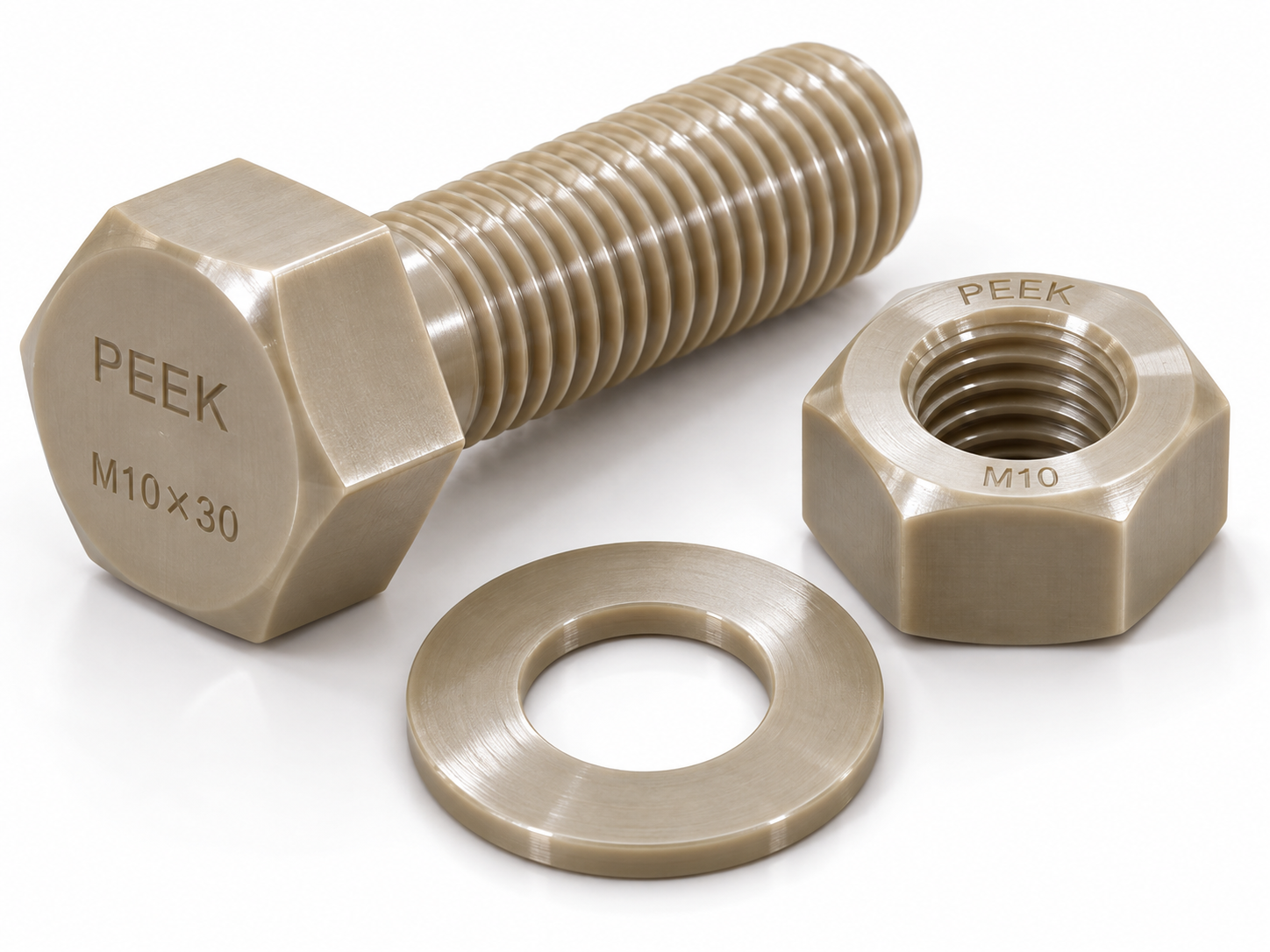
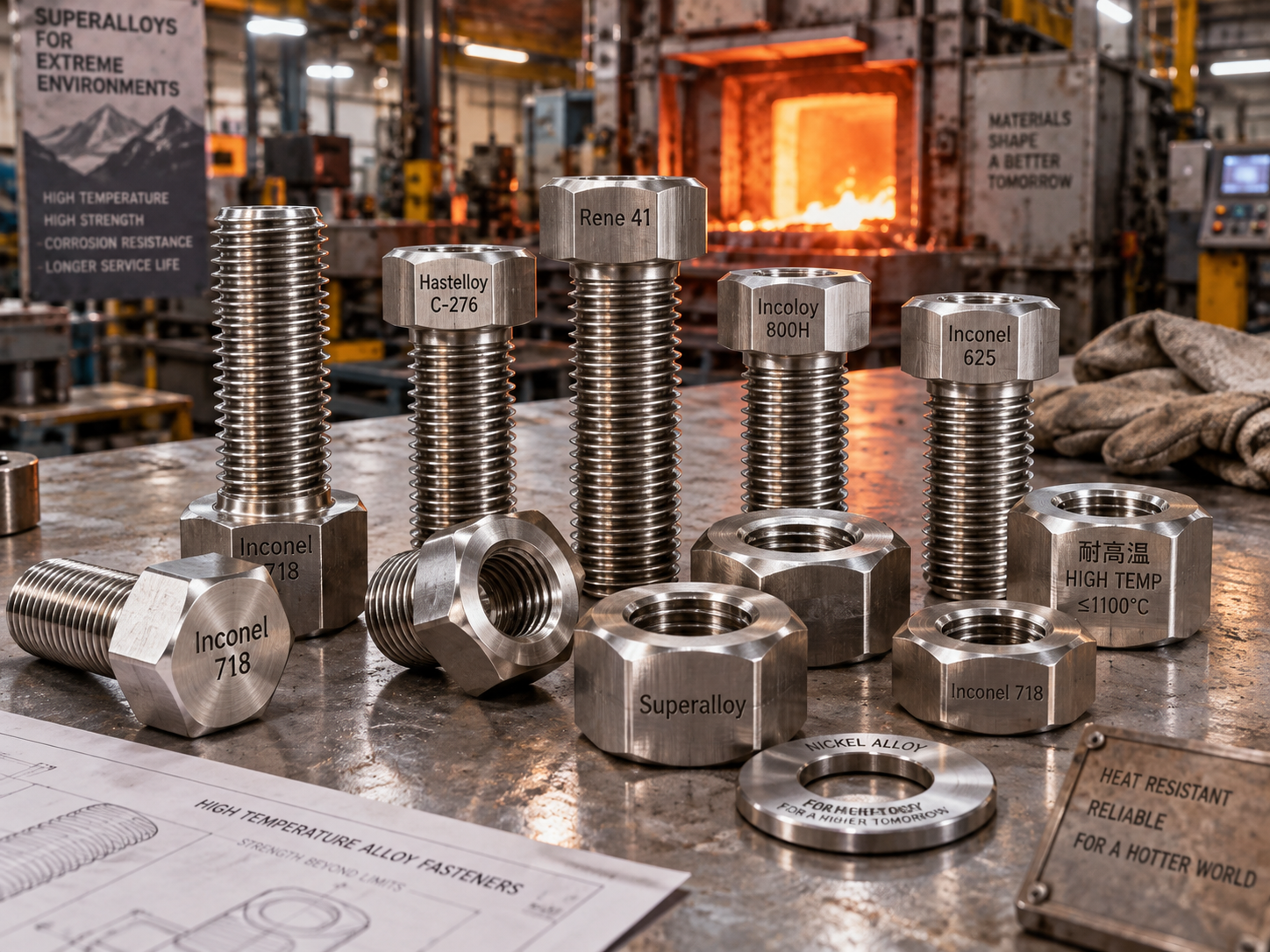
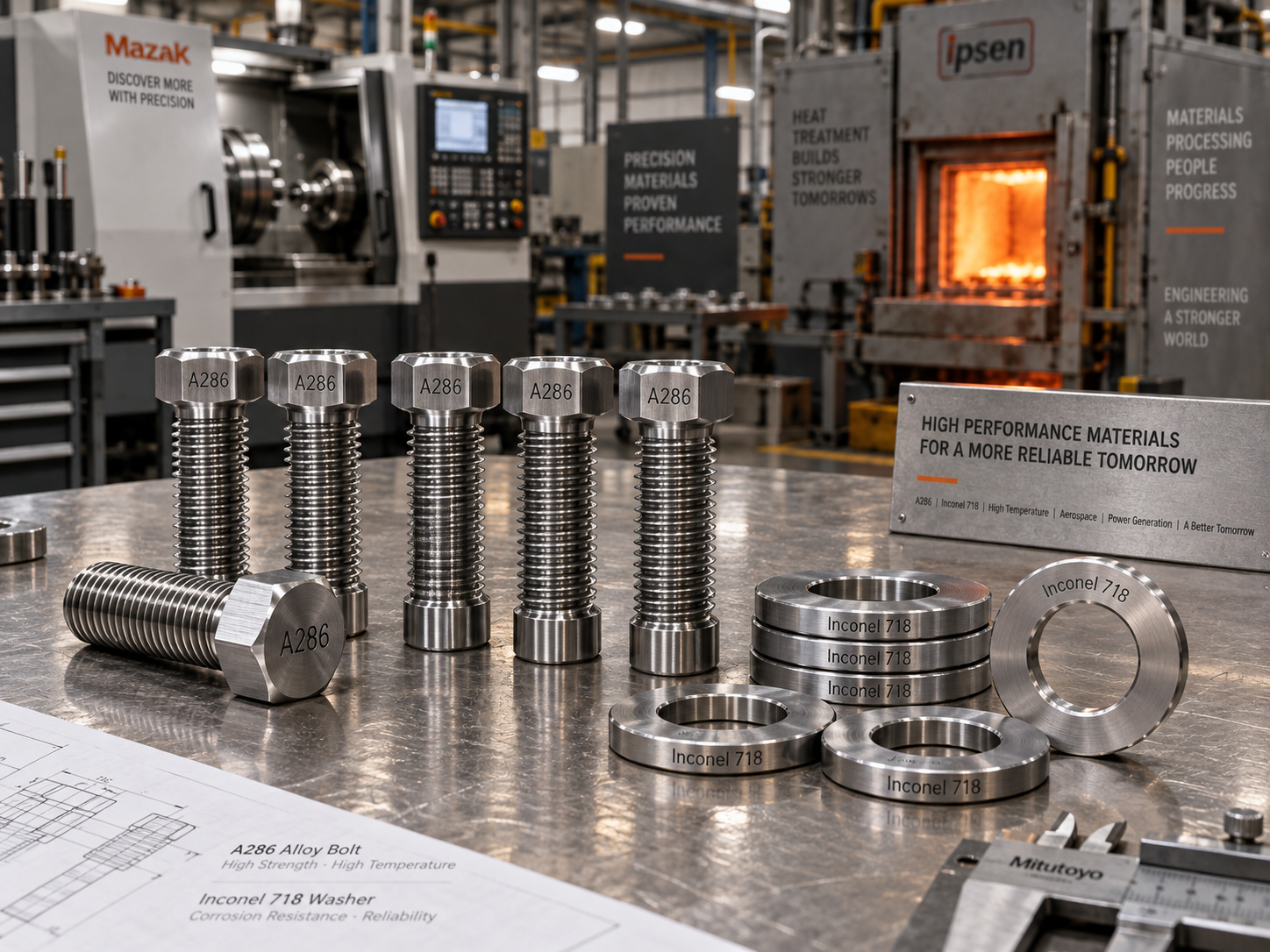
In the aerospace sector, the performance and reliability of fastening materials play a pivotal role in mission success. Comparing A 286 fasteners, including A286 bolts, A286 socket head cap screws, and A286 threaded rods, with Inconel alternatives reveals key differences in strength, corrosion resistance, and temperature performance. At RAYCHIN LIMITED, our expertise in specialty metals and A286 stainless steel fasteners helps engineers, procurement teams, and decision-makers select the optimal solutions for critical aerospace applications.
1. Understanding the Role of Specialty Fasteners in Aerospace
Aerospace structures demand fasteners that can endure extreme temperatures ranging from -200°C to +650°C, aggressive corrosion environments, and continuous vibration. The function of A 286 and Inconel fasteners goes beyond simple mechanical joining; they maintain the integrity of engines, turbines, and structural assemblies under complex thermal cycles and dynamic loads.
A 286, known as a precipitation-hardened iron-nickel-chromium alloy, offers balanced mechanical properties up to approximately 704°C. Its common applications include jet engine components, superchargers, and exhaust systems. In contrast, Inconel alloys, such as 718 and 625, extend usability beyond 980°C due to their high nickel content and superior oxidation-resistance behavior.
A typical aerospace fastener undergoes up to 1 × 10⁶ load cycles during its service life. Therefore, the fatigue strength and creep resistance of the material determine not only operational safety but also lifecycle cost and maintenance scheduling. Data suggests that A 286 fasteners exhibit tensile strengths between 1000–1300 MPa, while Inconel 718 fasteners typically achieve 1250–1450 MPa depending on heat treatment.
From an operational perspective, engineers often balance tensile strength, temperature resistance, and machinability when deciding between A 286 and Inconel. A 286 provides cost advantages and manufacturability, while Inconel leads in extreme temperature endurance and corrosion resistance, particularly in salt-laden atmospheres.
To facilitate understanding, the following table highlights basic comparative mechanical attributes relevant to aerospace developers and quality inspectors evaluating material substitution feasibility.
From this comparison, it is clear that while Inconel is stronger and more heat resistant, A 286 offers a favorable density-to-performance ratio and excellent machinability. For aerospace designs below 700°C operational thresholds, A 286 provides a highly reliable and economical solution.
2. Performance Comparison: Strength, Corrosion, and Creep Behavior
Evaluating fastener materials must account for three major factors—tensile strength, corrosion propensity, and creep resistance under long-term stress. A 286 fasteners show remarkable performance in moderately oxidizing environments, retaining over 85% of their room-temperature strength even after 500 hours of exposure to 650°C. In aerospace engine sections where sulfuric or chloride presence is minimal, this characteristic ensures stability and predictable fatigue behavior.
Inconel alloys extend this capability further by forming stable Cr₂O₃ and Al₂O₃ oxide layers, dramatically reducing mass loss even in aggressive NaCl testing up to 1000 hours. This translates into approximately 20–30% longer component lifespans compared to precipitation-hardened stainless steels under similar cyclic conditions.
Creep properties are also crucial for load-bearing joints that sustain constant tension at elevated temperatures. At 650°C and under a stress of 275 MPa, A 286 fasteners show less than 1% strain after 1000 hours, whereas Inconel 718 maintains <0.5% strain under identical conditions. For aerospace turbine casings or combustion chambers, this difference can influence maintenance intervals by 5–8% over the engine’s operational schedule.
RAYCHIN LIMITED offers clients precise heat-treatment control using solution annealing at 982–1010°C followed by age hardening. This guarantees uniform precipitation, improved yield strength, and enhanced metallurgical stability. Our manufacturing line maintains a ±2°C temperature tolerance in heat-treatment furnaces to ensure microstructural consistency across bulk batches exceeding 10,000 fasteners per order.
From a design standpoint, engineers must weigh not only thermal capability but also the complexity of component geometry and fastener installation torque, which typically ranges from 25 Nm to 90 Nm for M10–M18 dimensions in A 286, slightly lower than Inconel’s comparable sizes due to its higher hardness.
3. Machinability and Production Considerations in Metalworking
From the standpoint of metal processing equipment, the machinability of A 286 versus Inconel influences manufacturing cost, tool wear, and lead time. A 286 offers approximately 25% better machinability compared to Inconel 718 under identical cutting conditions with carbide tools at 50–60 m/min. This directly affects production throughput in screw machining, thread rolling, and precision turning.
Metal processing lines using CNC lathes and automatic threading machines must consider cutting-force coefficients and cooling efficiency. A 286’s forging and machining energy inputs typically remain 10–15% lower than for Inconel equivalents, enabling faster prototype cycles and shorter delivery windows—often within 14–21 days, depending on order volume.
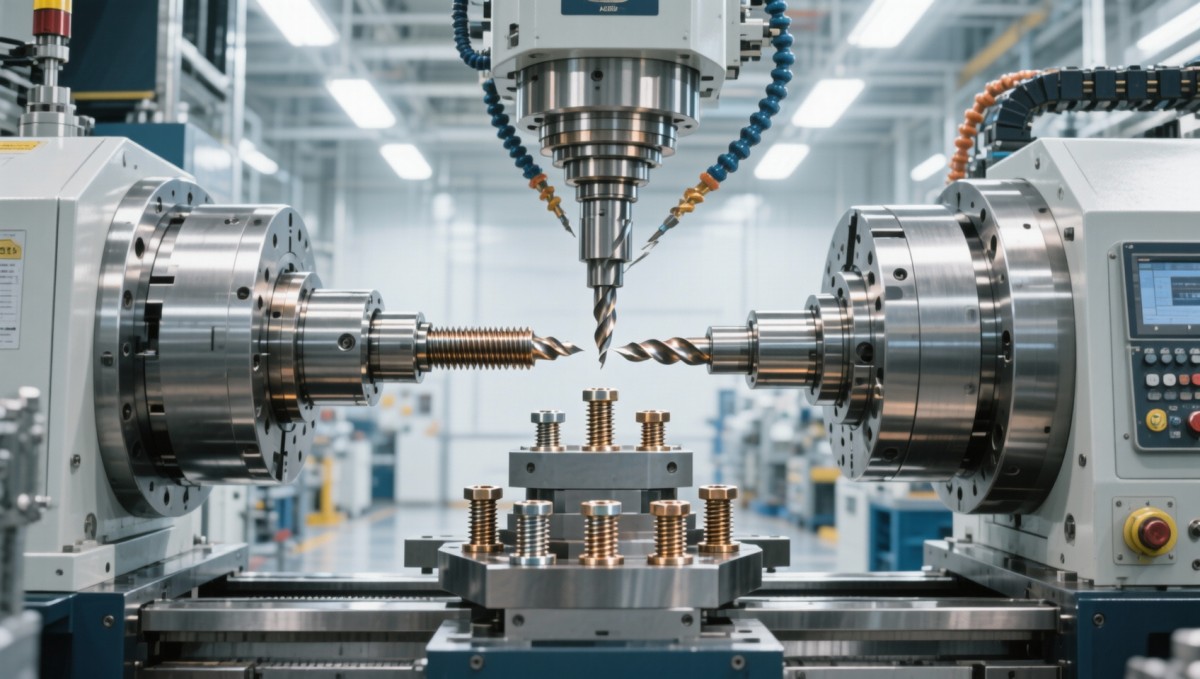
RAYCHIN LIMITED employs multi-axis metalworking equipment equipped with intelligent monitoring systems that track torque and vibration levels within ±0.05 Nm and ±0.02 mm tool deflection. This ensures precision thread geometry for aerospace-grade fasteners meeting ASME B18.3 and NASM21250 specifications. For customers requiring custom designs, the company accommodates dimensional tolerance demands as tight as ±0.01 mm and Ra 0.8 µm surface roughness.
For clarity, the table below summarizes comparative production attributes relevant to CNC metal fabrication teams evaluating cutting strategy and optimization based on material selection.
This machinability advantage makes A 286 particularly suitable for larger production volumes or fast-track aerospace programs where prototyping and testing cycles must be compressed by up to 30% to meet tight development deadlines.
4. Application Scenarios and Selection Criteria
Aerospace applications are segmented by operating conditions that dictate optimal fastener materials. A 286 fasteners dominate in sub-700°C assemblies such as nacelle mounts, actuator housings, and engine brackets, whereas Inconel fasteners perform better in combustion zones and turbine hot sections exceeding 850°C.
For design engineers, four primary selection factors guide material choice: temperature limit, stress requirements, corrosion exposure, and lifecycle cost. Weight is also key—A 286’s slightly lower density can reduce total assembly mass by 3–5% compared with Inconel, directly benefiting fuel efficiency in airborne systems.
Procurement managers often evaluate lifecycle cost by factoring in installation ease, part standardization, and maintenance intervals. Over 60% of aerospace OEMs adopt a hybrid approach, combining A 286 fasteners with Inconel counterparts across different zones of an engine casing to optimize both performance and cost efficiency.
To help decision-makers, RAYCHIN LIMITED advices customers using a five-step evaluation model: (1) Define functional temperature, (2) Identify mechanical load range, (3) Determine environmental corrosivity, (4) Quantify replacement cycles, (5) Evaluate total cost per operating hour. This process can reduce misselection-related maintenance costs by up to 20% annually.
Below is a summarizing list illustrating recommended scenarios for A 286 and Inconel fasteners in metallic component integration workflows:
- A 286: Fan blade housings, compressor mounts, exhaust ducts, thrust reverser systems.
- Inconel: Combustor liners, turbine nozzles, afterburner assemblies, exhaust flame holders.
- Hybrid Use: Mixed environments around 700–800°C with intermittent thermal peaks up to 850°C.
5. Maintenance, Quality Control, and Lifecycle Management
In operation, aerospace fasteners are subject to rigorous inspection cycles. RAYCHIN LIMITED employs nondestructive testing including ultrasonic scanning and dye penetrant inspection to detect subsurface cracks as small as 0.1 mm. This ensures batch reliability over life cycles exceeding 40,000 flight hours for A 286 assemblies.
Maintenance intervals differ slightly between A 286 and Inconel. A 286 fasteners generally undergo inspection every 2,000–3,000 operating hours, while Inconel-assembled components may extend intervals up to 4,000–5,000 hours due to superior oxidation resistance. However, both require torque revalidation checks after any high-temperature exposure exceeding 700°C to ensure preload integrity.
For quality managers, understanding inspection protocols is vital. Each batch manufactured by RAYCHIN undergoes dimensional verification on 100% of critical parameters—thread pitch, head geometry, hardness (measured at 36–45 HRC), and coating adhesion after salt-spray testing for 96–120 hours per ASTM B117 standards. Traceability is maintained through serialized QR tracking throughout the supply chain.
When managing long-term inventory, storage conditions must maintain relative humidity below 60% and ambient temperatures of 15–25°C to minimize oxidation risk, particularly for passivated or coated A 286 parts. This preventive approach extends storage life by up to 3 years without degradation in assembly torque performance.
Lifecycle management of fasteners benefits greatly from predictive analytics. By integrating torque trace data and exposure logging, maintenance teams can predict failure onset within ±5% accuracy, optimizing both safety and cost efficiency across fleet-level maintenance regimes.
6. Frequently Asked Questions (FAQ)
Q1: What are key standards for aerospace-grade A 286 fasteners?
They are commonly produced to standards such as ASTM A453 Grade 660, AMS 5731, and AMS 5737. Dimensional standards follow ASME or NAS specifications, ensuring compatibility with aerospace assemblies built under AS9100 quality frameworks.
Q2: Can A 286 replace Inconel 718 in all engine sections?
No. A 286 can reliably operate up to about 704°C. For zones exceeding that temperature, particularly combustion or turbine regions, Inconel remains the recommended material due to its superior creep and oxidation resistance above 900°C.
Q3: What is the average delivery period for custom A 286 fasteners from RAYCHIN?
Typical lead time ranges from 2–3 weeks for small-batch orders and 3–5 weeks for bulk production exceeding 50,000 pieces, depending on treatment processes such as passivation or coating.
Q4: Are there special torque specifications for A 286 assembly?
Yes. Torque varies with fastener size and lubrication conditions. For instance, M12 bolts are tightened at 45–60 Nm (dry) or 35–50 Nm (lubricated). Excessive torque can compromise thread integrity and galling resistance.
Q5: How does RAYCHIN ensure batch consistency?
Through integrated quality control—using statistical process control (SPC) methods, material certificates per EN 10204 3.1, and automated inspection systems ensuring less than 0.3% deviation across batches.
Conclusion and Call to Action
Comparing A 286 with Inconel alternatives underscores that both materials hold unique advantages. A 286 provides balanced cost, machinability, and reliable performance below 700°C, while Inconel fasteners excel in aggressive, high-temperature conditions exceeding 900°C. The correct choice depends on each project’s operational limits, environmental exposure, and lifecycle cost objectives.
RAYCHIN LIMITED combines decades of metallurgical expertise, advanced metalworking equipment, and specialized material research to support clients across aerospace, energy, and high-performance manufacturing sectors. From in-depth material selection consulting to precision engineering and global distribution, our commitment lies in delivering assured reliability for mission-critical fasteners.
For engineering teams, procurement specialists, and decision-makers seeking robust, traceable, and globally compliant A 286 and Inconel fastener solutions, contact RAYCHIN LIMITED today to discuss specifications or request a tailored quotation. Let our experts help you achieve optimal performance and cost efficiency for your next aerospace application.
Request A Quote! We'll respond as soon as possible(within 12 hours)
Get a Quote