
Categories List
Recent Posts
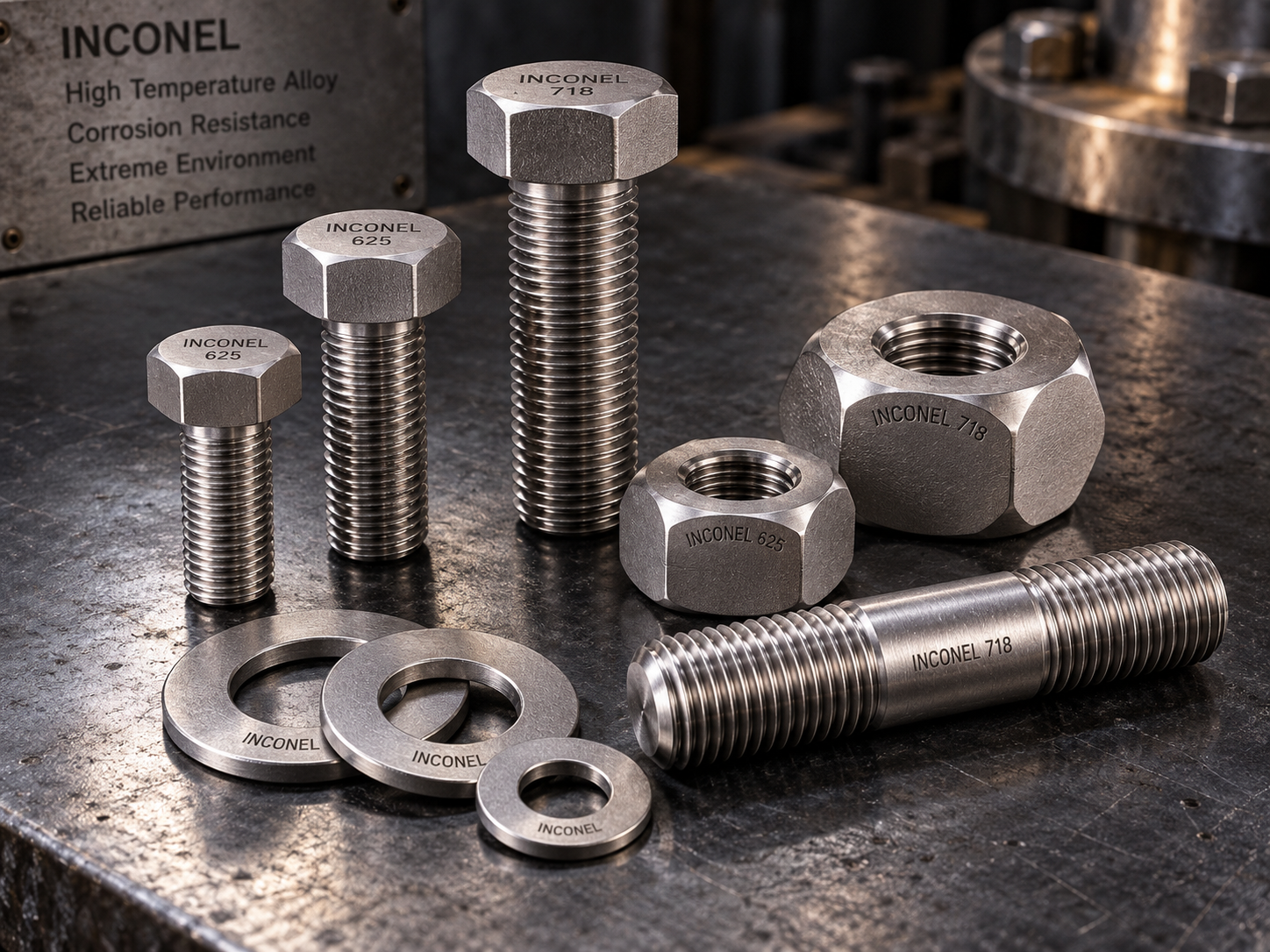
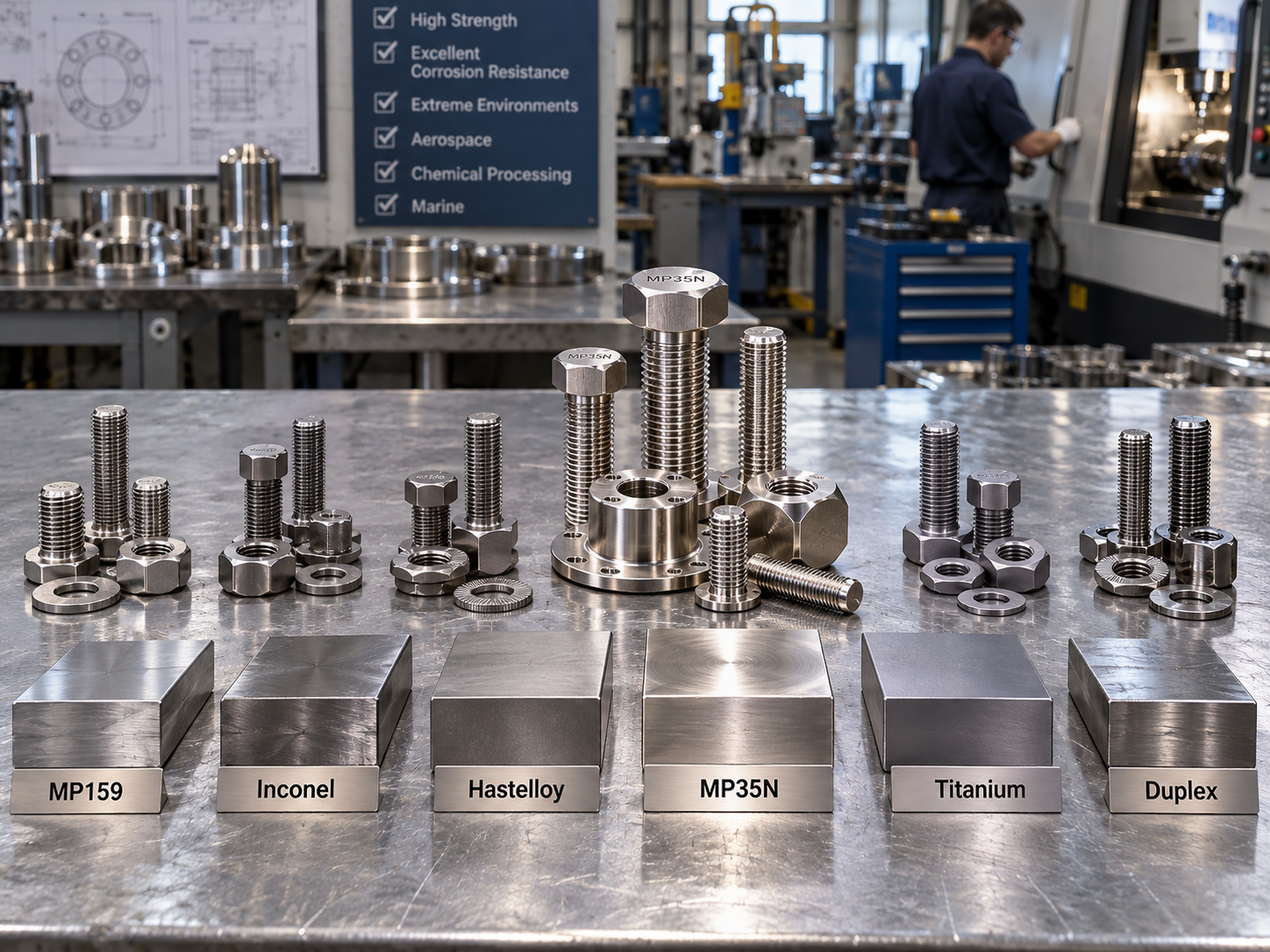
Selecting the right A286 fasteners for high-temperature service requires more than checking basic specifications. From a286 bolts and a286 screws to a286 threaded rod and a286 socket head cap screw, performance depends on strength retention, corrosion resistance, and application fit. This guide explains how to evaluate a286 stainless steel fasteners with confidence, helping engineers, buyers, and project teams make safer, more cost-effective decisions.
What should you evaluate first in high-temperature A286 fasteners?
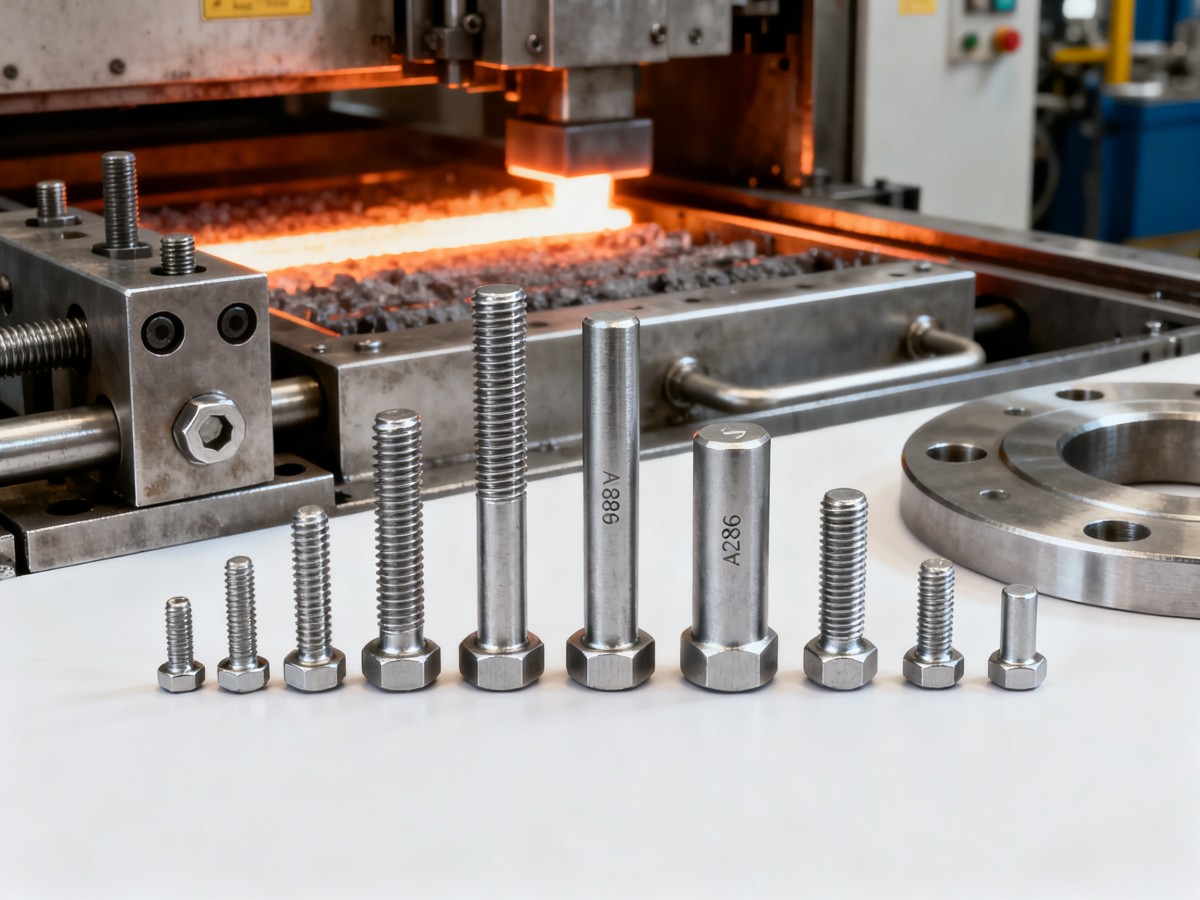
In metal processing equipment, fasteners often work near heat sources, pressure zones, vibration points, and maintenance access locations. That means initial evaluation should begin with the real service environment rather than the catalog description alone. A286 is widely selected because it is a precipitation-hardening iron-based alloy with useful high-temperature strength and good oxidation resistance, but its value depends on whether the fastening system matches the actual load, temperature range, and assembly method.
For most technical teams, the first 3 core checks are service temperature, mechanical loading mode, and exposure condition. A fastener used at 400°C to 650°C in a furnace accessory frame faces very different risks than one installed around a heated bearing housing with frequent shutdown cycles. In both cases, the buyer may ask for “A286 fasteners,” but the engineering review must go further into preload stability, thermal expansion effects, and potential galling during installation.
A286 fasteners are often considered when standard stainless steel grades lose too much strength at elevated temperature or when corrosion resistance is needed alongside heat resistance. In metal processing lines, this can include heat treatment fixtures, burner-adjacent supports, insulation retention assemblies, exhaust systems, die-area hardware, and equipment panels exposed to cyclic heat. If the fastener is part of a safety-critical retention point, qualification should be stricter and should include both material review and process review.
At the first screening stage, quality and procurement teams should avoid one common mistake: evaluating only nominal alloy name and thread size. A286 bolts, A286 screws, and threaded products can vary by manufacturing route, heat treatment condition, dimensional tolerance, and surface finish. Those differences affect clamp load consistency, installation torque behavior, and service life, especially where disassembly happens every 3–6 months during scheduled maintenance.
A practical first-pass checklist
Before requesting quotation or samples, teams can use a short evaluation sequence to reduce mismatch risk and shorten sourcing cycles by 1–2 rounds of clarification. This is especially useful for project managers, maintenance supervisors, and sourcing specialists working under shutdown deadlines.
- Confirm the normal and peak service temperature range, such as intermittent 500°C exposure or continuous operation near 650°C.
- Identify whether the fastener sees tensile load, shear load, vibration, thermal cycling, or combined conditions.
- Check whether the assembly is frequently removed, because repeated installation raises the risk of thread wear and galling.
- Review surrounding media, including humid air, scale, combustion byproducts, process chemicals, or cleaning agents.
- Verify dimensional constraints, such as head style, socket access, required thread engagement, and mating material compatibility.
This first-pass approach helps separate suitable A286 applications from cases where another alloy or another fastening design may be more economical or safer. It also gives distributors and technical sales teams a clearer basis for recommending standardized or customized parts.
How do temperature, strength retention, and corrosion resistance affect selection?
When evaluating a286 stainless steel fasteners, elevated-temperature performance is the central issue. Room-temperature strength data alone is not enough. In high-temperature metal processing equipment, the key question is how much clamp force and structural reliability remain after repeated heating, hold time, and cooldown. Practical selection usually compares expected service behavior across 3 dimensions: strength retention, oxidation or corrosion resistance, and resistance to relaxation under load.
A286 is commonly selected for applications where both heat and moderate corrosive exposure exist. It generally performs better than many standard stainless grades in elevated-temperature strength retention, making it useful for bolting near thermal zones, covers, housings, heat shields, and support brackets. However, no alloy should be treated as universally suitable. If chloride-rich environments, severe sulfidation, or highly aggressive chemical conditions are involved, engineering teams should reassess material compatibility before final approval.
Another important factor is thermal cycling frequency. A fastener in equipment that starts and stops once per week behaves differently from one exposed to daily cycles or multiple heat-up and cooldown sequences per shift. In repeated cycles, preload loss can become more important than simple tensile rating. That is why project teams should review not only alloy selection but also joint design, washer use, lubrication method, and torque procedure.
For buyers and commercial evaluators, this means specification sheets should be read with context. The real question is not “Is A286 high temperature resistant?” but “Will this A286 fastener maintain function within the actual operating window, installation method, and maintenance plan?” That shift in thinking reduces costly replacement, line stoppage, and repeated procurement caused by under-specified hardware.
Key performance dimensions to review
The table below summarizes the main evaluation dimensions that engineers, QC teams, and sourcing personnel should examine when comparing A286 fastening solutions for metal processing equipment.
This comparison framework is useful because it connects alloy choice with operational reality. It also helps distributors and procurement teams communicate clearly with end users instead of comparing offers on price alone.
Why heat resistance alone is not enough
A286 fasteners may be technically suitable for many hot-zone assemblies, but the fastening joint can still fail if the design ignores thread engagement length, seating surface condition, or mismatched thermal expansion between the fastener and the connected components. In some systems, a high-temperature capable alloy is installed into a joint geometry that cannot hold preload through repeated expansion and contraction. The result is loosening, leakage, noise, or misalignment.
That is why experienced suppliers such as RAYCHIN LIMITED focus not only on material supply but also on technical guidance. For customers selecting specialty metal fasteners for demanding applications, support on material choice, part form, and customization can be as important as the part itself. In practical purchasing terms, this reduces rework, improves fit with application demands, and shortens approval time for technical assessment teams.
Which A286 fastener form fits different equipment applications?
Different product forms solve different assembly problems. In metal processing equipment, engineers may choose a286 bolts for flange connections and bracket mounting, a286 screws for covers and compact machine elements, a286 threaded rod for long clamping spans or adjustable assemblies, and a286 socket head cap screw where higher clamp load and limited tool access matter. Selection should reflect both function and maintenance reality, not just inventory convenience.
For example, a threaded rod may be suitable in furnace frames, insulation retention systems, or equipment where long through-assembly is needed. However, it may create installation complications in tight spaces. Socket head cap screws may be ideal where side clearance is limited, but if maintenance crews work in high-scale or contaminated environments, internal drive recess cleanliness should be considered. In practical terms, the best fastener form is often the one that balances load, access, service interval, and replacement ease.
This is where application-specific review becomes valuable. A fastener installed once during equipment manufacture can be optimized differently than one removed every 2–3 months during line inspection. Similarly, hardware exposed to direct radiant heat will be evaluated differently from fasteners mounted on external guarding near moderate process heat.
If your project requires both standard and custom geometries, A286 Fasteners can be evaluated not only by nominal type but also by dimensions, thread details, head design, and production consistency. This matters for OEM builders, retrofit contractors, and maintenance departments managing mixed equipment generations.
Application-based selection table
The following table gives a practical way to match common A286 fastener forms with typical conditions found in metal processing equipment.
This selection logic helps technical evaluators avoid over-specifying one form for every location. It also supports purchasing teams when they need to split orders between stock sizes and project-specific custom parts.
How to narrow down the right form in 4 steps
- Map the fastening point by access direction, available tool clearance, and removal frequency.
- Confirm whether the joint requires high preload, positional adjustment, or simple retention.
- Review whether heat exposure is continuous, intermittent, or concentrated on one side of the joint.
- Decide whether standard parts are acceptable or whether custom dimensions will reduce installation risk and downtime.
For complex machinery, this 4-step review often prevents two common sourcing errors: choosing a part only because it is available quickly, or copying an old bill of materials without validating the current process temperature and maintenance conditions.
What should buyers, engineers, and QC teams verify before purchase approval?
A strong purchase decision for A286 fasteners should combine technical review, quality review, and supply review. For many organizations, the real cost of a fastener problem is not the unit price. It is the downtime, reassembly labor, missed production window, and secondary damage caused by loosening or replacement difficulty. That is why approval should be based on at least 5 checks: material suitability, manufacturing consistency, dimensional tolerance, documentation clarity, and delivery fit.
Technical teams should begin by confirming whether the fastener is a standard item or a custom part. Standard parts may be faster to source in common sizes, while custom items are often necessary when head dimensions, thread length, or geometry must fit specialized metal processing equipment. Procurement teams should then align this with lead-time expectations, because custom manufacturing may require a longer cycle than stock supply, especially for small-batch specialty metals orders.
Quality control personnel should also review traceability expectations before order release. Even where full project documentation is not mandatory, basic material identification, dimensional inspection requirements, and agreed acceptance criteria should be defined clearly. This reduces disputes after delivery and supports safer installation during shutdown windows that may last only 24–72 hours.
Commercial evaluators often focus on price breaks and shipping terms, but a more useful comparison includes technical support capability. RAYCHIN LIMITED specializes in development, manufacturing, and global distribution of standard and customized specialty metal fasteners, supported by a professional technical team. For buyers facing difficult service conditions, guidance on material and product matching can directly improve procurement accuracy and lower lifecycle cost.
Pre-purchase verification matrix
The matrix below can be used by engineering, sourcing, and QA teams as a shared review tool before final approval of A286 fasteners.
Using a shared matrix like this improves cross-functional decision quality. It also helps prevent situations where procurement buys a part that appears equivalent on paper but creates problems during assembly or long-term operation.
Common approval risks to catch early
- Assuming all A286 fasteners behave the same regardless of manufacturing route or finished form.
- Approving by drawing dimension only without reviewing service temperature and maintenance interval.
- Missing the need for custom length, partial thread, or special head geometry in compact equipment assemblies.
- Comparing quotes without checking what inspection, documentation, or technical clarification is included.
- Underestimating delivery risk when shutdown schedules allow only a narrow receiving and installation window.
Each of these risks can lead to avoidable cost. In high-temperature equipment, small specification gaps often become major maintenance issues after only one operating cycle.
How do standards, installation practices, and maintenance affect service life?
Material selection is only one part of a reliable fastening system. Installation practice and maintenance discipline play a major role in the service life of A286 fasteners. Even a suitable alloy can underperform if torque control is inconsistent, thread engagement is too short, or mating surfaces are distorted. In metal processing equipment, where vibration, thermal cycling, and contamination are common, assembly quality often determines whether the joint remains stable for 6 months or requires intervention after the first production run.
Standards and specifications should therefore be interpreted as baseline references rather than complete application validation. Teams should review applicable dimensional standards, material requirements, drawing notes, and any internal customer acceptance criteria. If the equipment is exported or used in regulated industrial sectors, document consistency becomes even more important for project handover, distributor support, and after-sales maintenance.
Installation planning should also consider thread lubrication, anti-seize use where appropriate, tightening sequence, and retorque policy if required by the joint design. A maintenance team working under a 12-hour shutdown cannot afford unclear assembly instructions. The more demanding the thermal environment, the more valuable it is to standardize installation steps and receiving inspection before the parts reach the field.
For long-term reliability, service reviews should be scheduled according to exposure severity. A low-disturbance external cover may only need review during annual maintenance, while hardware near burners, high-vibration fans, or access doors may deserve inspection every quarter. These are practical, application-led decisions rather than one-size-fits-all rules.
Installation and maintenance priorities
The following 6-point list is a useful baseline for operating teams, field technicians, and project supervisors managing high-temperature fastening points.
- Inspect threads before installation to confirm there is no damage, contamination, or dimensional mismatch.
- Use a controlled tightening method and keep the tool condition consistent across the assembly batch.
- Confirm seating surfaces are clean and flat enough to support stable preload transfer.
- Record installation date and location for critical joints that will be reviewed during future shutdowns.
- Inspect high-risk locations at planned intervals, such as every 3 months or every major process campaign.
- Replace hardware showing thread damage, severe oxidation, or preload-related loosening instead of forcing reuse.
These actions may seem basic, but in high-temperature service they are often the difference between stable uptime and recurring maintenance. They also help after-sales teams and distributors support customers with clearer replacement planning.
When custom support becomes important
Custom support is especially valuable when the equipment uses non-standard dimensions, limited-access fastening points, or mixed-material assemblies. In such cases, a supplier with specialty metal expertise can help review material fit, dimensions, and manufacturing options before production begins. That is relevant not only for OEMs but also for retrofit and maintenance projects where original documentation may be incomplete.
Because RAYCHIN LIMITED focuses on high-performance specialty metal fasteners and supports both standard and customized products, customers can discuss application details earlier in the sourcing cycle. That can include parameter confirmation, dimensional review, product form selection, and guidance for challenging service environments instead of waiting until a field problem appears.
FAQ and next-step guidance for sourcing A286 fasteners
Many searchers looking for a286 bolts, a286 screws, or a286 threaded rod are not just comparing alloy names. They are trying to reduce uncertainty before committing to an order, a drawing revision, or a maintenance plan. The questions below address the issues that most often affect project timing, procurement confidence, and long-term performance in metal processing equipment.
How do I know whether A286 is suitable for my operating temperature?
Start by defining the actual service range, not just the heater setpoint or furnace rating. Record normal temperature, peak temperature, exposure duration, and cycling frequency. A fastener seeing short peaks is evaluated differently from one holding load continuously in the same range. If your assembly operates in a typical elevated range such as 400°C–650°C, A286 may be a practical candidate, but final suitability still depends on load, atmosphere, and joint design.
What matters more during procurement: price, lead time, or technical fit?
For non-critical hardware, price and lead time may dominate. For high-temperature metal processing equipment, technical fit usually has the highest long-term value. A lower-priced part that creates one unplanned shutdown can cost far more than the initial savings. A balanced decision reviews at least 3 factors together: service suitability, delivery schedule, and inspection or documentation needs.
Can standard parts work, or should I request custom A286 fasteners?
Standard parts are often effective when dimensions, tool access, and joint geometry are conventional. Custom parts become more important when thread length, head style, or overall geometry must match compact equipment, legacy machines, or high-risk maintenance points. If your team has already modified washers, spacers, or installation methods to make stock parts fit, that is often a sign that a custom review would improve reliability and assembly efficiency.
What should I prepare before asking for quotation?
Prepare 5 items whenever possible: drawing or dimensions, service temperature range, application description, required quantity, and delivery target. If available, include maintenance frequency and mating material information. This gives the supplier enough context to recommend a practical option, whether the need is stock supply or a tailored solution involving A286 Fasteners.
Why choose a specialist supplier for high-temperature fasteners?
Because difficult applications rarely fail for one simple reason. They fail when alloy choice, geometry, manufacturing, and installation assumptions do not align. Working with a supplier experienced in specialty metals helps buyers, engineers, and project teams evaluate these factors together. That is particularly useful when project deadlines are short, equipment conditions are harsh, or standard catalog choices do not fully solve the problem.
Why work with RAYCHIN LIMITED on A286 fastener selection?
RAYCHIN LIMITED focuses on the development, manufacturing, and global distribution of high-performance specialty metal fasteners for challenging industrial applications. For customers in metal processing equipment, that means support can go beyond basic supply. You can discuss material selection, standard versus custom product choice, dimensional confirmation, typical delivery planning, and application-specific concerns before placing the order.
If you are comparing options for a286 bolts, a286 screws, threaded rod, or socket head cap screws, the most useful next step is a technical-commercial review. Share your drawing, operating temperature range, quantity, and expected delivery window. You can also ask about sample support, customization possibilities, inspection expectations, and quote planning for small, medium, or project-scale batches. This makes the sourcing process faster, clearer, and more aligned with actual service demands.
Request A Quote! We'll respond as soon as possible(within 12 hours)
Get a Quote