
Categories List
Recent Posts
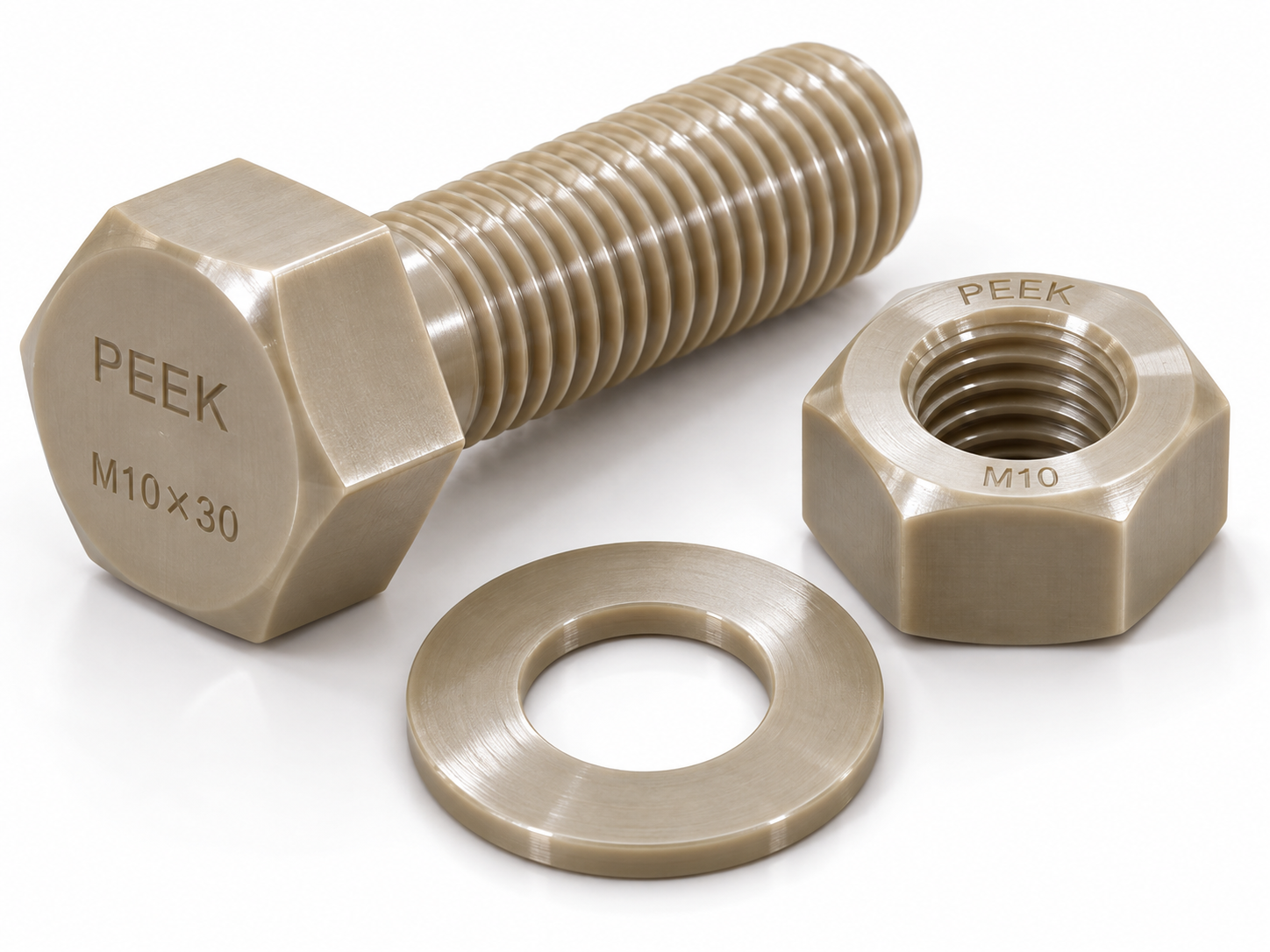
 PEEK Fasteners | Polyetheretherketone Bolts, Nuts, Screws – High-Performance Polymer | RAYCHIN LIMITED
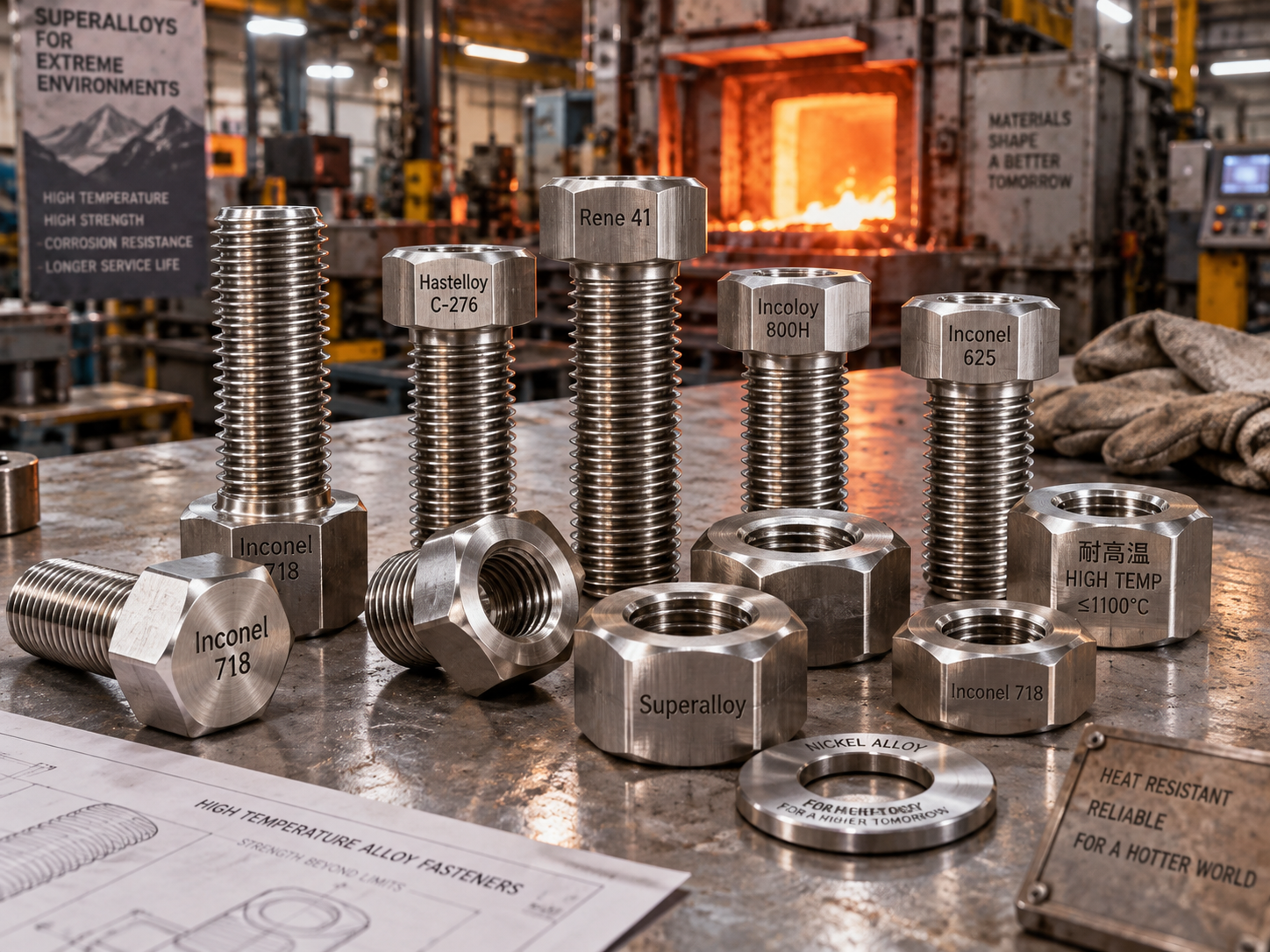
 High-Temperature Alloy Fasteners: Complete Material Guide, Chemistry, Performance Comparison | RAYCHIN LIMITED
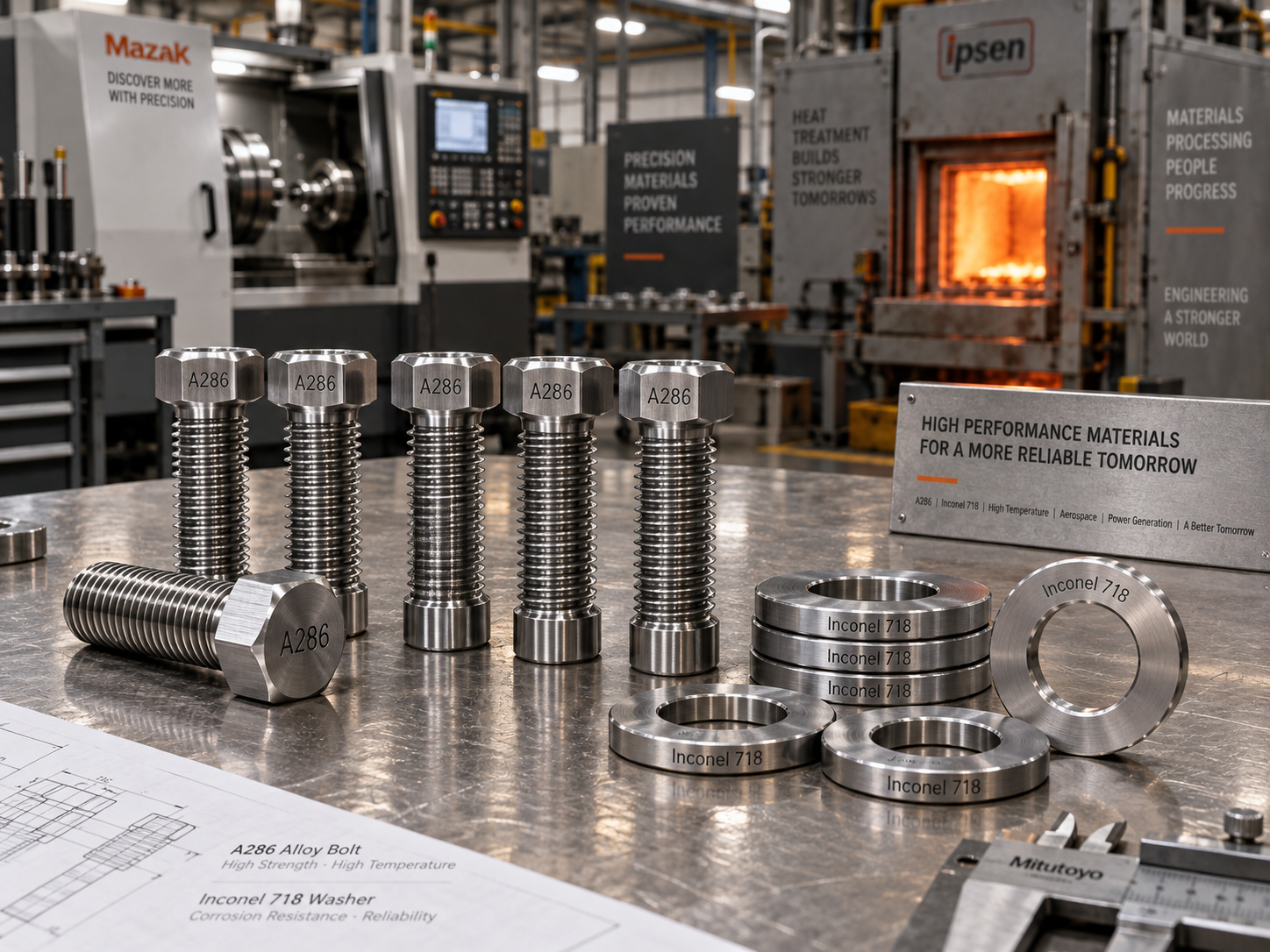
 High-Temperature Fastener Material Selection Guide | A286, Inconel 718, Nimonic 80A, Waspaloy – RAYCHIN LIMITED
17 4 PH Bolts in High Load Joints: What Often Gets Missed
In high-load joints, selecting 17 4 ph bolts involves more than checking ultimate tensile strength.
Critical joints in metal processing equipment fail for quieter reasons.
Preload loss, embedding, galling, stress corrosion limits, and temperature effects often decide service life.
Those issues become sharper in mills, forming lines, furnaces, presses, and vibration-heavy assemblies.
That is why 17 4 ph bolts should be evaluated by joint behavior, not by material label alone.
For demanding metal processing equipment, reliability depends on matching strength, hardness, fit, finish, and installation control.
RAYCHIN LIMITED supports this approach through specialty metal fastener development, manufacturing, and application guidance for severe operating conditions.
The following guide focuses on what often gets missed when 17 4 ph bolts are specified for high-load joints.
Why high-load joints in metal processing equipment demand more than nominal strength
Many joints in metal processing equipment carry static and dynamic loads at the same time.
Examples include rolling stands, shears, forging manipulators, feed systems, gearbox housings, and die clamping structures.
In such assemblies, 17 4 ph bolts may appear ideal because they combine high strength with useful corrosion resistance.
Yet the joint itself determines whether those advantages are fully used.
A strong fastener in a poorly designed joint still loosens, frets, and cracks.
A lower stress fastener in a better controlled joint can last much longer.
This is the first missed point.
The decision is not “Are 17 4 ph bolts strong enough?”
The real decision is “Will the full joint system preserve clamp load, alignment, and surface integrity?”
That system includes nut material, lubrication, washer hardness, surface condition, hole tolerance, thread engagement, and assembly method.
When any one of these variables is uncontrolled, installed preload spreads widely.
Wide preload scatter creates overloaded bolts beside underloaded bolts.
That uneven sharing is a common source of field failures.
Where hidden joint problems usually begin
The hidden problems often start before the machine ever runs.
Joint face flatness may be insufficient.
Thread class may be too loose.
Cut threads may reduce fatigue performance compared with rolled threads.
Mating parts may seat unevenly under the bolt head.
The specified tightening method may not reflect real friction values.
Even a small mismatch between assumed and actual friction changes preload dramatically.
This matters because 17 4 ph bolts are often selected for premium applications.
Premium materials deserve premium joint control.
Why strength alone can mislead
Design teams sometimes compare fasteners using tensile strength tables only.
That approach ignores the service path of real equipment.
High-load joints in metal processing lines see thermal cycling, scale contamination, shock loading, washdown, and intermittent maintenance access.
The selected fastener must survive all of those influences together.
A material with excellent strength may still underperform if hardness is too high for the corrosion environment.
Likewise, a corrosion-resistant fastener may still loosen if joint stiffness is poor.
This is why 17 4 ph bolts require application-level judgment.
Scenario one: rolling mill stands and heavy frames with fluctuating clamping demand
Rolling mill structures place fasteners under severe combined loading.
The frame stretches, vibrates, and sees repeated force reversals.
Joint slip is especially dangerous because alignment affects product quality and bearing life.
In this scenario, 17 4 ph bolts can perform well, but only when preload retention is tightly managed.
A common missed issue is embedding at rough interfaces.
Surface asperities flatten after startup, reducing clamp load.
That reduction can happen even when initial torque looked correct.
Another overlooked factor is joint stiffness ratio.
If connected members are relatively soft or slender, the bolt carries more load fluctuation.
Fatigue risk rises fast.
Core judgment points for rolling structures
- Check whether the joint is slip-critical or bearing-type.
- Confirm actual friction coefficients for threads and bearing surfaces.
- Evaluate surface flattening during first thermal and mechanical cycles.
- Review bolt spacing and edge distance for load sharing.
- Assess whether preload verification is possible after commissioning.
When rolling frames run continuously, downtime costs far exceed fastener cost.
That makes controlled installation and traceable heat treatment essential, not optional.
Scenario two: furnace-adjacent assemblies where heat shifts fastener behavior
Heat near soaking furnaces, transfer tables, and thermal enclosures changes the rules.
Many teams choose 17 4 ph bolts for corrosion resistance and strength, then overlook temperature exposure profiles.
Peak temperature matters, but time at temperature matters too.
So does the frequency of thermal cycling.
Precipitation-hardening stainless steels can experience property shifts when service temperatures overlap aging-related ranges.
That may influence hardness, toughness, and relaxation behavior.
In practical terms, a joint may lose preload gradually without visible damage.
Operators may then blame vibration when thermal relaxation was the real cause.
What often gets missed near heat sources
The first missed detail is local temperature difference across the joint.
Bolts may run cooler or hotter than the clamped parts.
Different thermal expansion creates preload drift.
The second missed detail is scale and oxidation product contamination.
Those particles can crush under load and reduce clamp force.
The third missed detail is maintenance timing.
Retightening during a hot condition may produce a very different preload after cooldown.
Any specification for 17 4 ph bolts in furnace zones should define installation temperature and inspection intervals.
Scenario three: wet and chemically exposed processing lines where corrosion is selective
Pickling support equipment, coolant lines, washing stations, and mist-prone enclosures create mixed corrosion conditions.
In these areas, 17 4 ph bolts are often chosen as a balanced option.
The mistake is assuming all stainless performance is equivalent.
Localized corrosion can form in crevices beneath heads, washers, and trapped deposits.
Joint geometry often controls corrosion severity more than open-surface appearance.
A fastener may look acceptable externally while the interface degrades internally.
Another overlooked issue is galvanic interaction with nearby alloys, coatings, or conductive fluids.
The result may be attack concentrated at the most stressed zones.
Key corrosion judgment points
- Identify chlorides, acids, cleaning chemicals, and concentration cycles.
- Review whether deposits remain trapped after washdown.
- Check if the joint creates oxygen-starved crevices.
- Confirm compatibility with mating metals and coatings.
- Balance hardness condition against cracking sensitivity in the real environment.
Corrosion selection should therefore be environment-specific, not just alloy-specific.
That is especially true when 17 4 ph bolts are loaded near a significant fraction of their yield strength.
Scenario four: precision tooling, clamps, and guide structures where fit matters most
Tooling fixtures and guide assemblies often prioritize location accuracy as much as clamping force.
In those cases, 17 4 ph bolts may support both repeatable assembly and corrosion resistance.
However, positional repeatability can be harmed by simple tolerance stack-up.
Loose clearance holes allow movement before friction is mobilized.
Burred holes tilt washers and distort preload distribution.
Under-head bearing stress may exceed the local support capability of the fixture material.
As a result, alignment drifts over repeated setups.
The bolt is blamed, but the interface was the problem.
Fit-related checks that improve reliability
Assess perpendicularity between the bolt axis and the clamped face.
Specify hardened washers where substrate indentation is possible.
Use locating features for shear transfer when positional accuracy is critical.
Do not let the bolt shank perform dowel-pin duty unless the design truly supports it.
Where assembly cycles are frequent, thread wear and lubrication stability deserve regular review.
Scenario five: shock-loaded presses and impact zones where toughness becomes decisive
Presses, crop shears, impact trim units, and stop blocks produce short, intense load spikes.
Here the attractive strength of 17 4 ph bolts can create false confidence.
High hardness conditions may not provide the best margin against impact-driven cracking.
The selected heat treatment condition matters greatly.
So does notch sensitivity near thread roots and under-head transitions.
If the engaged thread starts inside a shear plane or bending zone, local stress rises sharply.
An impact joint therefore demands geometry review, not just material review.
Practical judgment points for impact applications
- Select a heat treatment condition suited to toughness and service stress.
- Minimize stress concentrations at first engaged threads.
- Prefer rolled threads where fatigue and root quality matter.
- Review whether direct metal impact reaches the clamped interface.
- Consider preload monitoring after initial impact cycles.
When these controls are ignored, even high-quality 17 4 ph bolts may fail unexpectedly.
The heat treatment condition of 17 4 ph bolts is often the real specification
One of the most overlooked issues is that 17-4 PH performance is condition-dependent.
The alloy name alone does not define service behavior.
Aging condition affects strength, hardness, ductility, dimensional response, and cracking susceptibility.
For high-load joints, this means the exact condition should be tied to the operating scenario.
A harder condition may maximize static strength.
A less aggressive condition may improve toughness or reduce certain environment-related risks.
That tradeoff must be discussed before purchase, not after failure analysis.
When documentation only states “17 4 ph bolts,” the specification remains incomplete.
Questions that should accompany the material callout
- What aging condition is required?
- What minimum and maximum hardness range is acceptable?
- Is the joint governed by fatigue, impact, corrosion, or preload retention?
- Will service temperature alter the intended condition?
- Are testing and certification aligned with the application risk?
In many critical assemblies, the answer to these questions determines success more than headline strength values.
Preload loss: the most common hidden problem with 17 4 ph bolts in service
Preload is the working foundation of bolted joints.
Without stable preload, joint separation, slip, fretting, and bending become much more likely.
For 17 4 ph bolts, preload loss often comes from factors outside the alloy itself.
Those factors include embedding, surface roughness, thermal mismatch, coating collapse, gasket creep, and thread seating effects.
Installation friction variation is another major source of trouble.
If torque is applied with inconsistent lubrication, actual bolt tension may differ widely from target values.
That scatter can remain invisible until the machine starts cycling under load.
Typical preload loss mechanisms
The practical lesson is simple.
If preload matters, the installation method must be validated for the actual joint stack.
Why galling, lubrication, and surface finish deserve early attention
Thread galling is a frequent source of assembly damage in stainless fastener systems.
Although 17 4 ph bolts differ from austenitic stainless grades, surface interaction still matters greatly.
Poor lubrication, high installation speed, reused nuts, and contaminated threads raise seizure risk.
Once galling starts, torque rises sharply while useful preload may not.
This can produce false confidence during assembly and hidden damage afterward.
Surface finish under the head also affects bearing friction and clamp consistency.
A rough seat may consume torque unpredictably.
A soft seat may indent and relax.
Controls that reduce assembly risk
- Use approved lubrication with known friction behavior.
- Keep threads clean and protected before installation.
- Avoid excessive tightening speed.
- Pair nuts and washers with compatible hardness and finish.
- Do not mix lubricated and dry hardware in the same preload-controlled joint.
These steps are inexpensive compared with the cost of seized hardware inside critical equipment.
How thread engagement and grip length change the real performance of 17 4 ph bolts
Another often missed issue is geometry beyond diameter and length.
Thread engagement, unthreaded grip, and shank position strongly affect fatigue and load distribution.
If the thread runout lies in the shear plane, local stress rises.
If the grip is too short, the joint may rely on threaded sections across clamped parts.
That can reduce stiffness and worsen fretting.
If engagement is too shallow in weaker mating material, thread stripping can govern before bolt strength does.
In heavy equipment, that failure mode is especially dangerous because it can occur suddenly under shock.
Geometry checks worth making
Place the smooth shank across the main shear interface when possible.
Avoid first engaged threads in peak bending regions.
Match engagement length to nut or base material strength.
Verify that washers support full bearing area and do not bridge chamfers improperly.
These details often decide whether 17 4 ph bolts reach their expected life.
Different application scenarios create different fastener priorities
Not all high-load joints value the same properties in the same order.
A press frame, furnace bracket, washdown enclosure, and precision clamp may all specify 17 4 ph bolts.
Still, the decision logic should differ.
This scenario-based view helps keep 17 4 ph bolts aligned with real service conditions.
How to judge whether 17 4 ph bolts are the right choice for a specific joint
A practical decision path reduces misapplication.
Instead of asking one broad material question, break the joint into performance drivers.
- Define the dominant load mode: tension, shear, vibration, impact, or mixed.
- Map the environment: dry, wet, chloride-bearing, chemical, thermal, or cyclic.
- Determine whether preload retention is critical to alignment or sealing.
- Select the heat treatment condition based on service priorities.
- Specify nut, washer, lubrication, and installation method as part of the system.
- Review geometry, grip length, and engagement before releasing drawings.
- Plan inspection points after first operation cycles.
This process prevents many failures falsely attributed to material quality.
It also improves consistency when sourcing standard and custom hardware for critical equipment.
Common misjudgments when engineers specify 17 4 ph bolts
Several recurring mistakes appear across metal processing equipment projects.
Each one looks minor during design review.
Each one can create major service problems later.
Misjudgment one: treating alloy name as a complete fastener specification
This ignores condition, hardness, thread form, finish, and inspection requirements.
A purchase line that only says 17 4 ph bolts leaves too much uncontrolled.
Misjudgment two: relying on torque values copied from unrelated hardware
Torque depends heavily on friction.
Different lubricants, finishes, and nut conditions change the resulting preload significantly.
Misjudgment three: ignoring interface hardness and washer selection
A high-strength bolt bearing on a soft seat loses preload through indentation.
The fastener may remain intact while the joint degrades.
Misjudgment four: assuming corrosion resistance is uniform across all operating residues
Crevices, deposits, and concentration cells often create more severe conditions than open exposure tests suggest.
Misjudgment five: placing threads in the wrong load zone
When threads sit in shear or bending interfaces, fatigue strength is reduced.
A better grip arrangement may solve the issue without changing alloy.
Practical specification checklist for 17 4 ph bolts in demanding equipment
A strong specification turns a material choice into a reliable joint solution.
For high-load applications, the following checklist is useful.
- Material grade and exact heat treatment condition
- Mechanical property range, including hardness limits
- Thread standard, class, and manufacturing method
- Required surface finish and lubrication condition
- Nut and washer material compatibility
- Grip length and engagement requirements
- Installation method, torque, or tension target
- Inspection, certification, and traceability needs
- Environmental limits, including temperature and chemicals
- Post-installation verification plan
This level of control is especially valuable for custom hardware and safety-critical assemblies.
Installation practices that help 17 4 ph bolts deliver their designed performance
Even the best fastener fails when installation discipline is weak.
In high-load joints, preparation often matters as much as torque value.
Joint surfaces should be clean, flat, and free from burrs, scale, and trapped coatings.
Threads should be inspected before assembly.
Lubrication should be applied consistently.
Tightening sequence should be defined for multi-bolt patterns.
For highly loaded structures, tension-based methods or calibrated torque procedures reduce variability.
After initial operation, a planned inspection can catch settling-related preload loss before damage starts.
Helpful installation actions
- Clean and inspect all mating surfaces.
- Verify thread condition with the intended mating hardware.
- Apply the specified lubricant uniformly.
- Use a controlled tightening pattern for flange or frame joints.
- Record actual installation data for critical locations.
- Inspect after first heat cycle, shock cycle, or production run.
When standard hardware is not enough for the joint
Some applications demand more than catalog dimensions.
High-load joints may need special grip lengths, controlled shank tolerances, custom heads, or specific finish combinations.
That is where engineered specialty fasteners become important.
A custom solution can move the thread out of a critical plane.
It can increase bearing support.
It can align mechanical properties with the service environment more precisely.
For applications needing tailored options, 17-4 PH Fasteners can be evaluated as part of a broader joint optimization effort.
The important point is to define the joint problem clearly before selecting the final hardware form.
How supplier support affects outcomes in critical bolted joints
In specialty materials, supplier capability influences application reliability.
Traceability, heat treatment control, material expertise, and technical guidance all matter.
This is particularly true when specifying 17 4 ph bolts for heavy equipment, corrosive service, or mixed thermal conditions.
RAYCHIN LIMITED focuses on standard and customized specialty metal fasteners with technical support for challenging applications.
That support is useful when the project requires more than a simple stock substitution.
Questions about material condition, joint fit, and environment compatibility are best answered before production begins.
Early collaboration can reduce redesign cycles and unexpected maintenance events.
Actionable recommendations for selecting 17 4 ph bolts in high-load joints
The safest path is to treat the fastener as one part of the joint system.
Use the following actions to improve performance and reduce risk.
- Define the actual load path and identify whether slip must be prevented.
- Specify the exact 17-4 PH condition, not only the alloy family.
- Control nuts, washers, lubrication, and tightening method together.
- Check thermal exposure and chemical residues around the joint.
- Review grip length, engagement, and thread position in the assembly.
- Plan first-cycle inspection for preload loss or interface settling.
- Use custom geometry when standard hardware creates avoidable stress concentrations.
These actions make 17 4 ph bolts far more reliable in demanding metal processing equipment.
Final takeaway: what often gets missed is the joint, not just the bolt
17 4 ph bolts are a strong option for many high-load joints.
They offer an attractive combination of strength, corrosion resistance, and application flexibility.
Still, the most common failures come from overlooked system details.
Heat treatment condition, preload control, surface finish, thermal mismatch, corrosion geometry, and thread placement all matter.
When those factors are addressed early, 17 4 ph bolts can deliver stable and durable performance in critical equipment.
When they are ignored, even premium fasteners may underperform.
If the application includes unusual loads, harsh media, or nonstandard joint geometry, reviewing engineered options such as 17-4 PH Fasteners can help turn a material selection into a dependable fastening solution.
Request A Quote! We'll respond as soon as possible(within 12 hours)
Get a Quote