
Tantalum Studs
Tantalum Studs are also extremely stable at high temperatures, since tantalum has a melting point around 3000°C. High temperature applications require vaccum or inert gas since tantalum may embrittle when used in oxygen rich environments above 250°C. Tantalum Studs are also one of the most bio-compatible metals available and is also radio-opaque due to its high density (16.68 g/cm3).
All tantalum Studs are available in commercially pure tantalum and tantalum 2.5% tungsten (Ta-2.5%W).
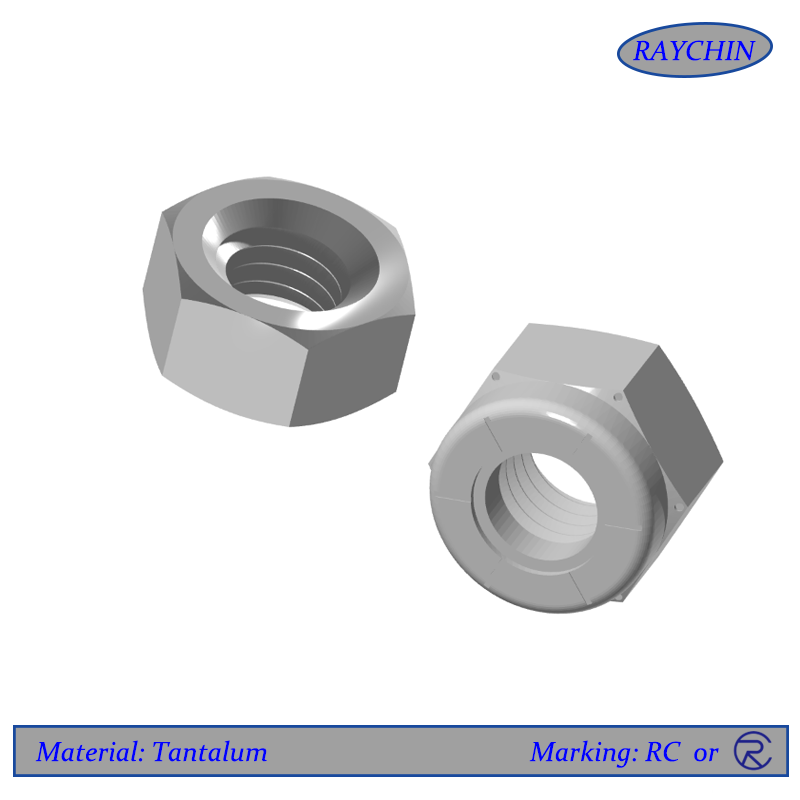
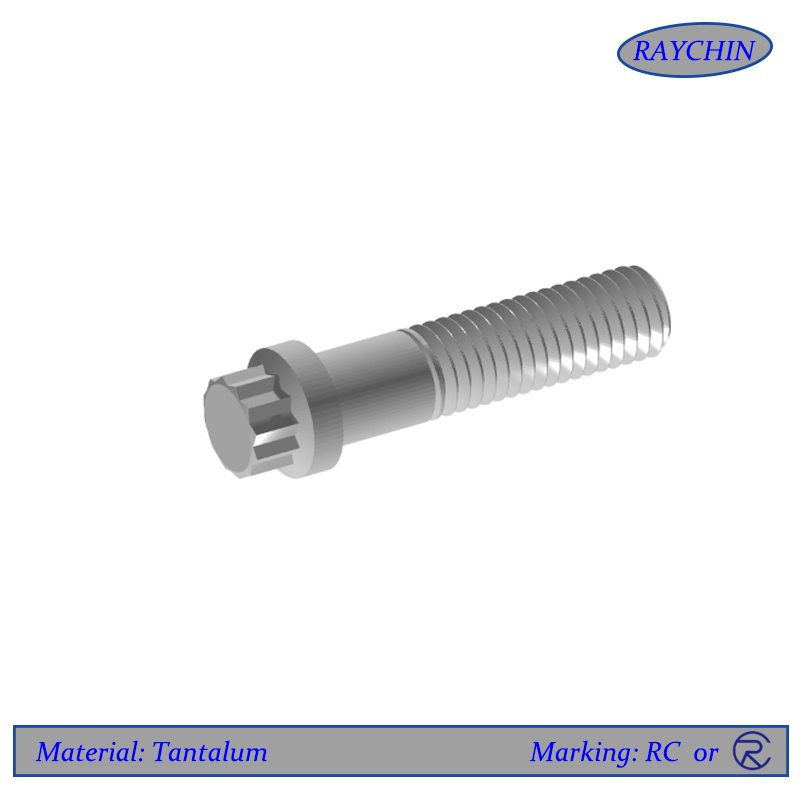
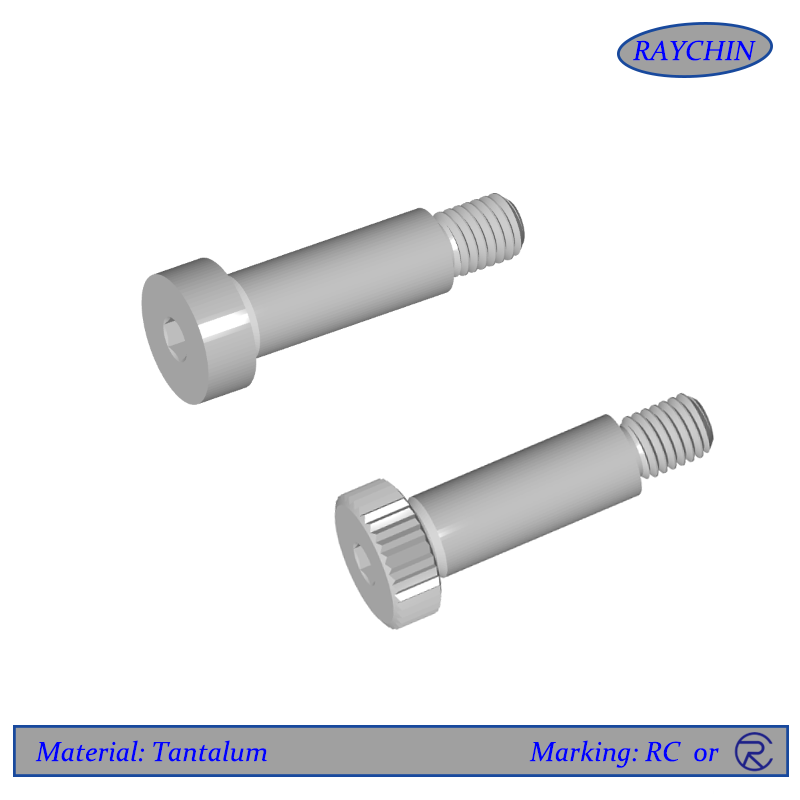
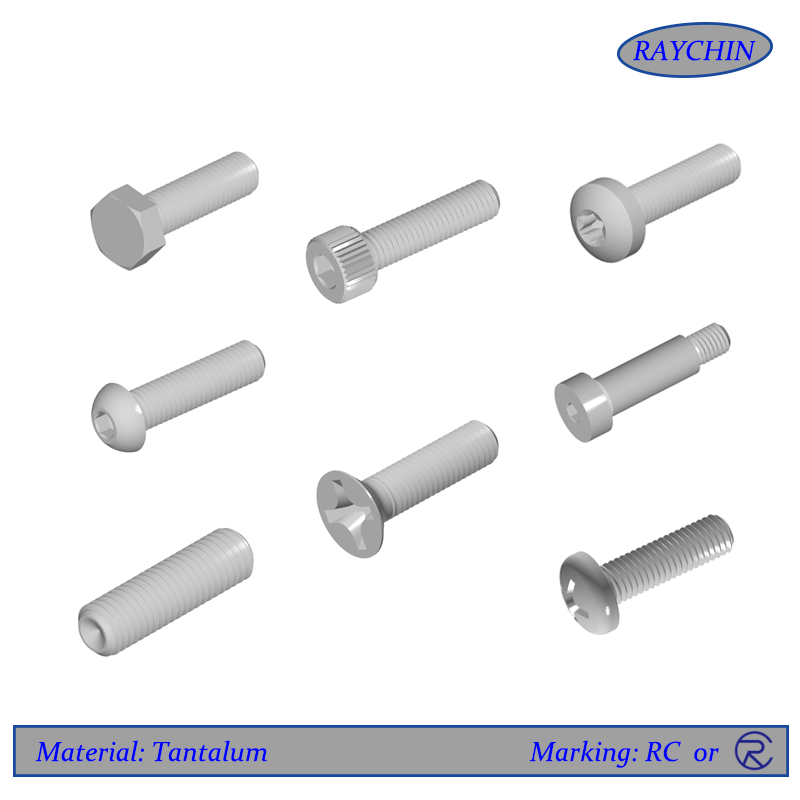
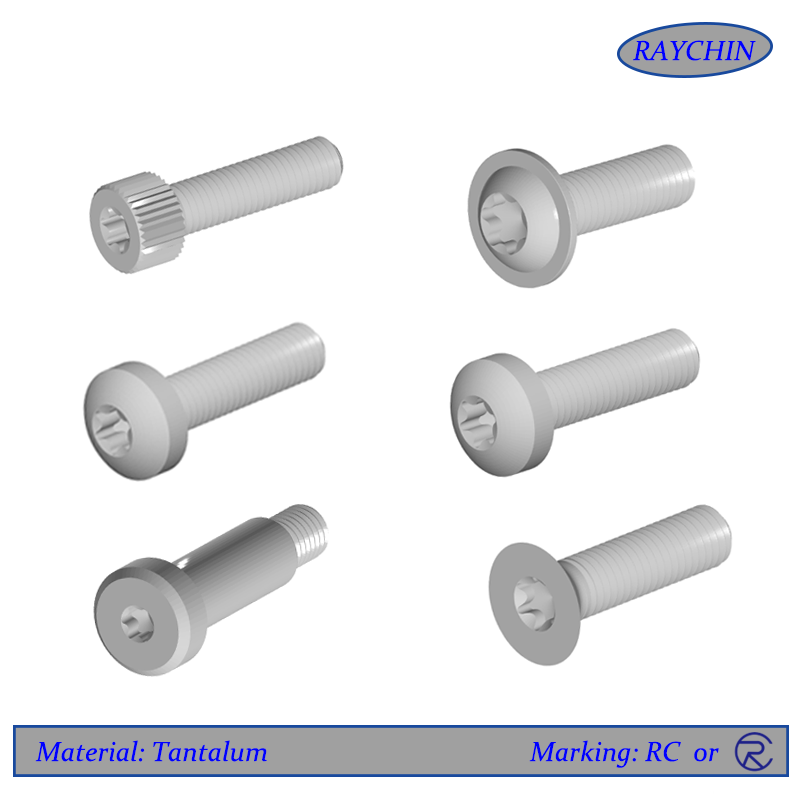
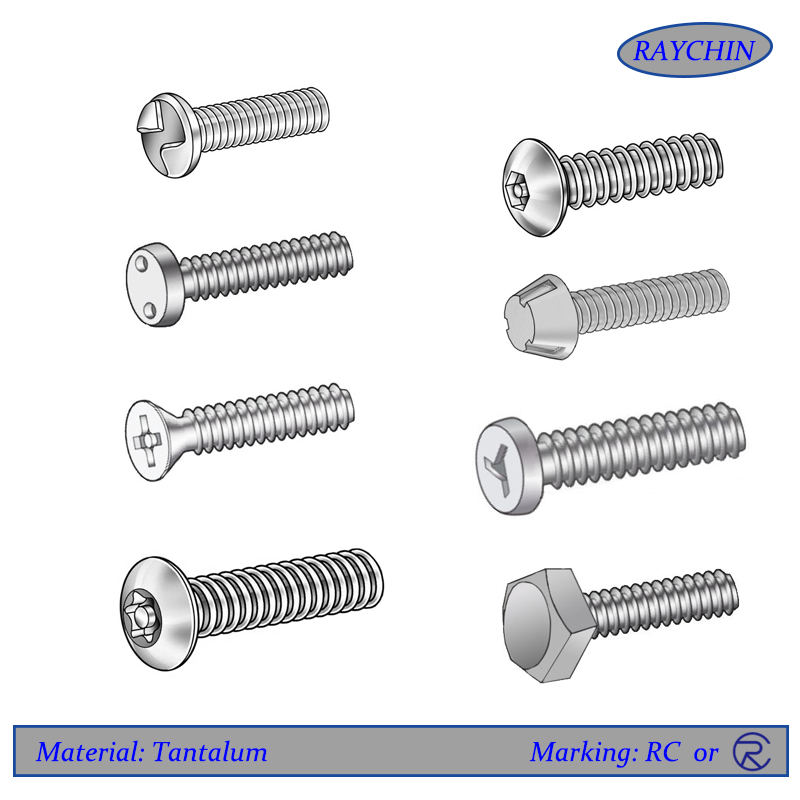
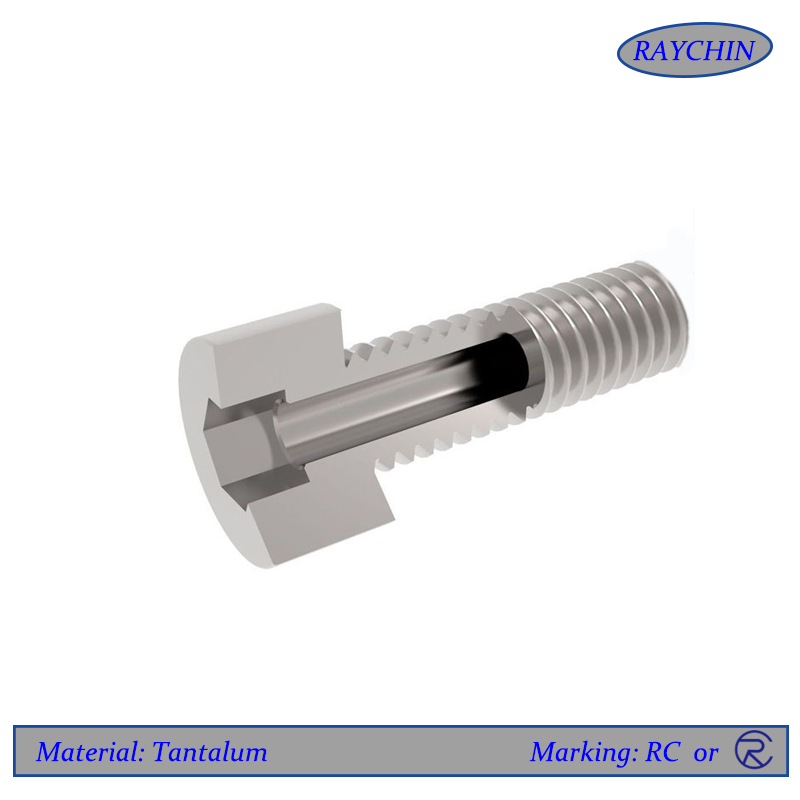
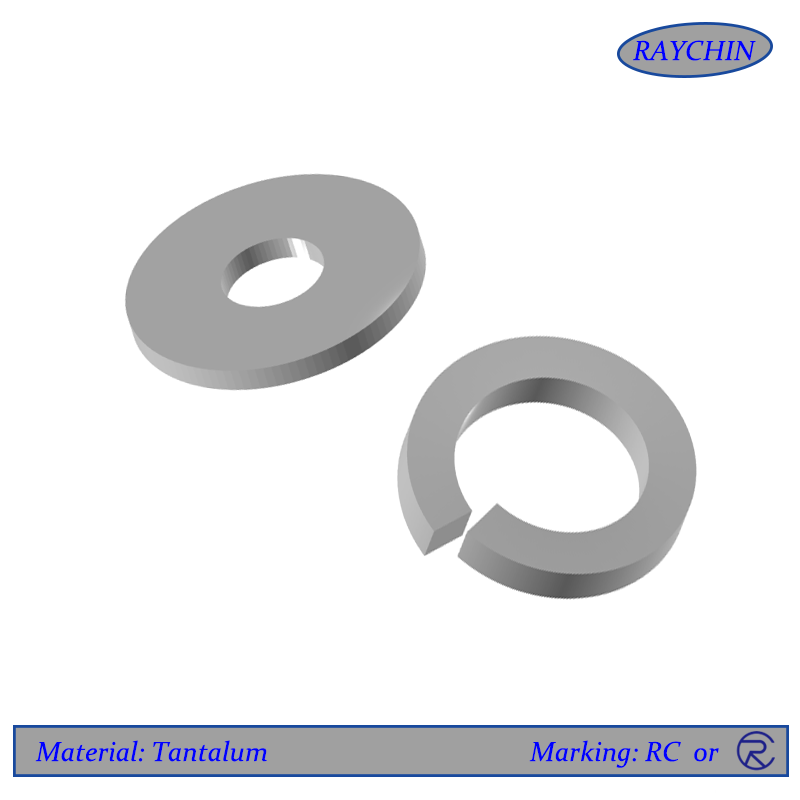
RAYCHIN SPECIALTY METALS FASTENERS: BOLTS, NUTS, SCREWS, WASHERS, STUDS, THREADED RODS, U-BOLT, J-BOLTS
STANDARD AND CUSTOMIZED, SMALL BATCH AND LARGE BATCH, IMPERIAL AND METRIC
Immune to numerous acids and chemicals
Better corrosion resistance than nickel alloys, titanium or zirconium
High strength and stiffness in vacuum and inert gas up to 2000°C (3600°F)
Can become brittle when used in oxygen above 300°C
High purity and biocompatibilty
Request a Quote from RAYCHIN
We're here to help!
RAYCHIN LIMITED
Tantalum Studs · Stud Bolts · Double-End Studs · Tap-End Studs · Fully Threaded Studs · Inch & Metric · UNS R05200 / R05252Tantalum Studs: Extreme Corrosion Resistant Fasteners for Chemical, Medical & Aerospace Applications
RAYCHIN LIMITED is a leading manufacturer of Tantalum Studs – precision stud bolts and continuous thread bars produced from refractory tantalum metal, delivering unmatched corrosion resistance, biocompatibility, and reliable performance in the most demanding chemical processing, medical, and semiconductor applications. Studs are headless fasteners available in double-end, tap-end, and fully threaded configurations, designed for permanent installation in tapped holes or use with nuts on both ends. Tantalum is a refractory metal with a melting point of 2996°C (5425°F) and corrosion resistance similar to glass – immune to virtually all acids and chemicals except hydrofluoric acid and hot concentrated alkalis. Our product line includes commercially pure tantalum studs and tantalum 2.5% tungsten alloy studs – all manufactured to the highest precision standards. Tantalum grades conform to UNS R05200 (electron-beam or vacuum-arc melted unalloyed tantalum) and UNS R05252 (tantalum 2.5% tungsten alloy) per ASTM B708 and ASTM B521 specifications. Our portfolio includes all standard and custom configurations manufactured to NAS, AN, MS, ANSI, ASTM, ASME, SAE, API, NACE, ISO, DIN and KS standards. Whether you require tantalum studs for chemical reactor linings, medical implants, or high-temperature vacuum furnaces, RAYCHIN delivers precision, quality, and full traceability. All mechanical properties are presented in MPa and ksi (kilopound per square inch).
Tantalum Studs – Comprehensive Product Range
Double-End Studs
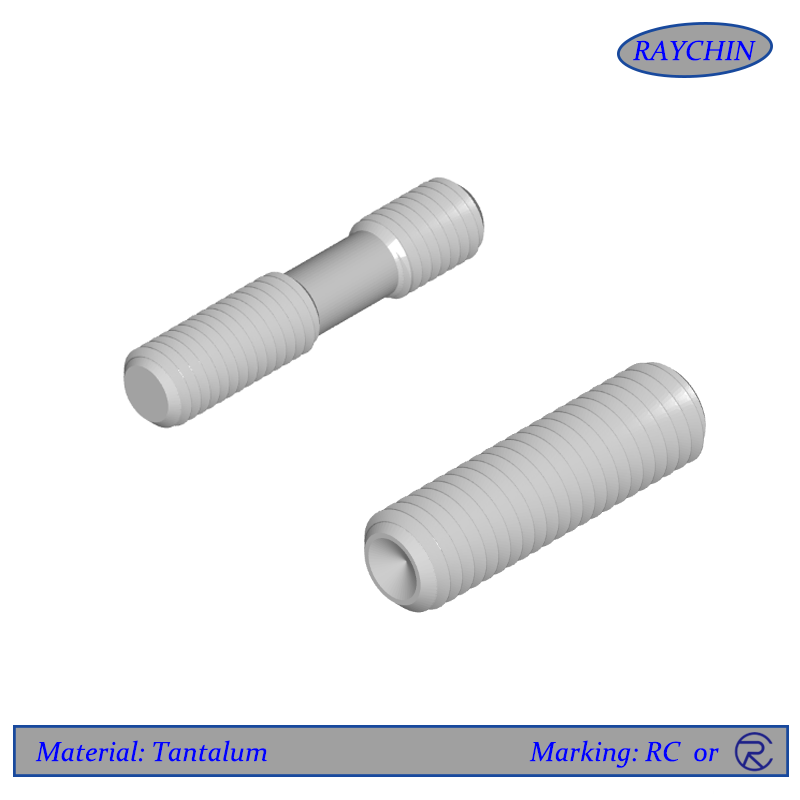
Tantalum double-end studs feature threads on both ends with an unthreaded center section. Available in standard configurations including tap-end studs (shorter thread engagement for permanent installation) and flange-end studs (equal thread lengths for nut-and-nut applications). Manufactured to ASME B16.5, API 6A, and custom specifications. Diameters from M6 to M48 (1/4" to 2"). Essential for high-pressure flange connections in chemical processing and pharmaceutical reactors where corrosion resistance is critical.
Tap-End Studs
Tantalum tap-end studs are designed for permanent installation in tapped holes, with one end having a shorter thread engagement for the tapped component and the other end for nut installation. Ideal for chemical reactor linings, heat exchanger tube sheets, and valve assemblies where reliable clamping force must be maintained in highly corrosive environments. Available with precision rolled threads for superior fatigue resistance.
Fully Threaded Studs
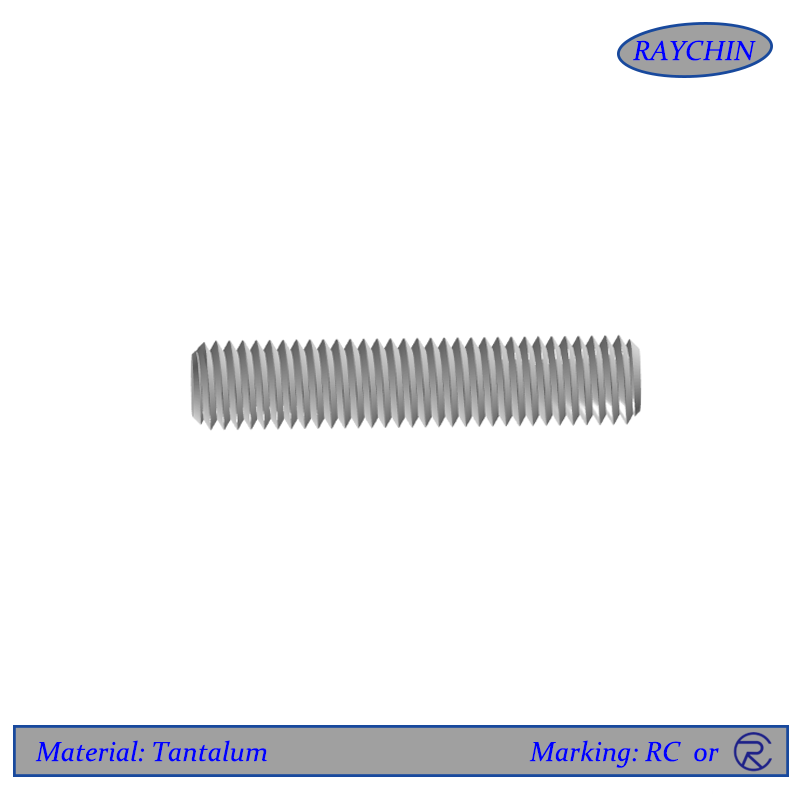
Tantalum fully threaded studs (continuous thread studs) are threaded along the entire length, providing maximum flexibility for cut-to-length applications. Available in standard lengths of 1m, 2m, 3m, and custom lengths up to 6m. Precision rolled threads for uniform strength and thread engagement. Used in heat exchanger assemblies, furnace components, and custom fixturing applications requiring corrosion resistance and high-temperature capability in vacuum/inert atmospheres.
Commercially Pure Tantalum (R05200)
Commercially pure tantalum studs are produced from UNS R05200 material, meeting ASTM B708 and ASTM B521 specifications. Purity exceeds 99.95% tantalum with minimal interstitial elements. This grade offers exceptional corrosion resistance – virtually immune to attack by most acids including hydrochloric, nitric, sulfuric (up to 175°C), and aqua regia. Used in chemical processing equipment, pharmaceutical reactors, and medical implants requiring maximum biocompatibility.
Tantalum 2.5% Tungsten (R05252)
Tantalum 2.5% tungsten alloy studs provide enhanced strength while maintaining tantalum's exceptional corrosion resistance. The addition of tungsten (2.5%) increases tensile and yield strength by approximately 30% compared to pure tantalum, making these studs ideal for applications requiring higher mechanical loads in corrosive environments. Conforms to UNS R05252, ASTM B708, and ASTM B521 specifications. Preferred for chemical processing and aerospace applications.
Custom & Non-Standard Studs
Need special thread forms, reduced shank designs, non‑standard lengths, or unique end configurations? RAYCHIN engineers design and produce custom tantalum studs to your exact specifications – any condition (annealed, stress-relieved), with full material traceability. Prototype to production volumes supported. Cleanroom wash and packaging available for medical and semiconductor applications.
Critical Applications of Tantalum Studs
Chemical Processing
Tantalum studs are extensively used in chemical processing equipment including reactor linings, heat exchangers, distillation columns, and piping systems handling corrosive media. Tantalum exhibits virtually zero corrosion rate in most acids including hydrochloric, nitric, sulfuric (up to 175°C), phosphoric, and organic acids. Used in pharmaceutical manufacturing, fine chemical production, and specialty chemical processing where material purity must be maintained.
Medical & Implantable Devices
Tantalum studs are qualified for medical implant applications due to tantalum's exceptional biocompatibility, corrosion resistance in body fluids, and radio-opacity. Tantalum is used for X-ray markers in polyethylene components, orthopedic implants, surgical instruments, and dental devices. The material is non-toxic and does not elicit adverse tissue reactions, making it ideal for long-term implantation. Meets ASTM F560 requirements for surgical implant applications.
Semiconductor Manufacturing
Tantalum studs in semiconductor processing equipment including wafer handling systems, CVD reactors, and etch chambers. Tantalum's resistance to halogenated gases and plasma environments, combined with high purity (low interstitial elements), prevents contamination of sensitive semiconductor materials. Used in chamber hardware, gas distribution systems, and wafer fixturing where corrosion resistance and purity are critical.
Aerospace & Defense
Tantalum studs in aerospace applications including rocket engine components, high-temperature fasteners, and radiation shielding. Tantalum maintains useful mechanical properties in vacuum and inert gas up to 2000°C (3632°F), making it suitable for extreme temperature applications. Used in propulsion systems, nozzle assemblies, and heat shields where high melting point and oxidation resistance (in non-oxidizing environments) are essential.
Pharmaceutical & Bioprocessing
Tantalum studs in pharmaceutical manufacturing equipment including bioreactors, fermenters, and purification systems. Tantalum's corrosion resistance ensures no metal contamination of sensitive pharmaceutical products. The material's smooth surface finish and cleanability meet cGMP requirements for pharmaceutical processing equipment. Used in vessel internals, agitator assemblies, and sampling ports.
High-Temperature Vacuum Furnaces
Tantalum studs in vacuum furnace hot zones, heating elements, and heat shields. Tantalum maintains strength at elevated temperatures in vacuum or inert gas atmospheres, with recrystallization temperature above 1200°C. Used in sintering furnaces, heat treating equipment, and crystal growing furnaces requiring refractory metal fasteners that maintain integrity at extreme temperatures.
International Standards & Global Designations – Tantalum Studs
RAYCHIN LIMITED manufactures tantalum studs from electron-beam melted or vacuum-arc melted material conforming to the most widely used national and international specifications. All material is traceable to the mill.
Chemical Composition (Weight %) – Tantalum Grades
Our tantalum studs are produced from electron-beam melted (EB) or vacuum-arc remelted (VAR) material conforming to the limits of applicable ASTM specifications.
Commercially Pure Tantalum – UNS R05200
Tantalum 2.5% Tungsten – UNS R05252
Metallurgical note: Tantalum is a refractory metal with a body-centered cubic (BCC) crystal structure. It exhibits exceptional corrosion resistance due to the formation of a stable, adherent oxide layer (Ta₂O₅) that protects the base metal from chemical attack. This oxide layer is self-healing in oxidizing environments and provides immunity to virtually all acids and chemicals except hydrofluoric acid, hot concentrated alkalis, and fuming sulfuric acid (oleum). Tantalum's high melting point (2996°C) makes it suitable for high-temperature applications in vacuum or inert atmospheres, though it may embrittle when exposed to oxygen above 300°C. The addition of 2.5% tungsten provides solid solution strengthening, increasing tensile and yield strength while maintaining excellent corrosion resistance. Tantalum is fully biocompatible, non-toxic, and radio-opaque, making it ideal for medical implant applications.
Complete Mechanical & Physical Properties – Tantalum (MPa / ksi)
Tantalum studs are supplied in annealed condition per applicable ASTM specifications. Strain-hardened (cold worked) conditions available upon request. Data represent typical values based on industry standards.
Mechanical Properties – Tantalum (Annealed Condition)
Physical Properties – Tantalum
High-Temperature Mechanical Properties – Tantalum
Note: High-temperature testing in vacuum or inert atmosphere. Tantalum may embrittle in oxygen above 300°C.
High‑Temperature Performance of Tantalum Studs
Tantalum is a refractory metal with exceptional high-temperature strength and stability in vacuum or inert atmospheres. The material maintains useful mechanical properties up to 2000°C (3632°F) in non-oxidizing environments, making it suitable for extreme temperature applications in vacuum furnaces, rocket engines, and aerospace propulsion systems. Tantalum's melting point of 2996°C (5425°F) is among the highest of all metals, exceeded only by tungsten and rhenium. The recrystallization temperature of tantalum is approximately 1200-1400°C, depending on purity and prior cold work. In oxidizing atmospheres, tantalum forms a protective oxide layer (Ta₂O₅) at moderate temperatures but may embrittle above 300°C due to oxygen diffusion. Therefore, tantalum fasteners are typically specified for high-temperature applications in vacuum, inert gas, or reducing atmospheres. Ta-2.5W alloy offers improved high-temperature strength compared to pure tantalum while maintaining similar oxidation behavior.
Elevated Temperature Capabilities
Exceptional Corrosion Resistance of Tantalum Studs
Tantalum is renowned for its outstanding corrosion resistance, often described as similar to glass but with the mechanical properties of a metal. The material forms a stable, adherent, and self-healing oxide layer (Ta₂O₅) that provides protection against virtually all acids and chemicals except hydrofluoric acid, hot concentrated alkalis, and fuming sulfuric acid (oleum). Tantalum exhibits zero or near-zero corrosion rates in most aggressive media, making it the material of choice for critical chemical processing applications where other materials fail.
Corrosion Resistance to Common Media
The following list represents media to which tantalum exhibits nil or negligible corrosion (rates <0.05 mm/year) at temperatures up to at least 150°C (302°F):
- Acetic acid
- Acetic anhydride
- Acetone
- Alcohols
- Aluminum chloride
- Aluminum sulfate
- Ammonium chloride
- Ammonium nitrate
- Ammonium phosphate
- Ammonium sulfate
- Aqua regia
- Barium chloride
- Benzoic acid
- Body fluids
- Boric acid
- Bromine (dry, <300°C)
- Butyric acid
- Calcium chloride
- Calcium hydroxide
- Carbolic acid
- Carbon dioxide
- Chloric acid
- Chlorinated brine
- Chlorine (dry, <250°C)
- Chlorine (wet, <350°C)
- Chloroacetic acid
- Chromic acid
- Citric acid
- Copper salts
- Fatty acids
- Ferric chloride
- Ferric sulfate
- Food stuffs
- Formaldehyde
- Formic acid
- Glycerine
- Hydrobromic acid
- Hydrocarbons
- Hydrochloric acid
- Hydrogen bromide (<400°C)
- Hydrogen chloride (<350°C)
- Hydrogen peroxide
- Hydrogen sulfide
- Lactic acid
- Magnesium chloride
- Magnesium sulfate
- Maleic acid
- Mercuric chloride
- Methyl alcohol
- Milk
- Mineral oils
- Mixed acids (sulfuric-nitric)
- Nickel salts
- Nitric acid
- Nitric acid (fuming)
- Nitric oxides
- Nitrogen (<300°C)
- Nitrous acid
- Organic acids
- Oxalic acid
- Oxygen (<300°C)
- Petroleum products
- Phenol
- Phosphoric acid (<4ppm F, <180°C)
- Pickling acids (except HNO3-HF)
- Potassium bromide
- Potassium chloride
- Potassium dichromate
- Potassium nitrate
- Potassium permanganate
- Potassium sulfate
- Propionic acid
- Refrigerants
- Sea water
- Silver nitrate
- Sodium acetate
- Sodium bisulfate (solution)
- Sodium bromide
- Sodium chlorate
- Sodium chloride
- Sodium cyanide
- Sodium dichromate
- Sodium hypochlorite
- Sodium nitrate
- Sodium nitrite
- Sodium phosphate
- Sodium silicate
- Sodium sulfate
- Sodium sulfide
- Sodium sulfite
- Sodium thiosulfate
- Stearic acid
- Succinic acid
- Sugar
- Sulfamic acid
- Sulfur (<500°C)
- Sulfur dioxide
- Sulfuric acid (<175°C)
- Sulfurous acid
- Tannic acid
- Tartaric acid
- Zinc chloride
- Zinc sulfate
Media to Avoid with Tantalum Fasteners
- Hydrofluoric acid (HF) – any concentration, any temperature
- Hot concentrated alkalis – sodium hydroxide (NaOH), potassium hydroxide (KOH) above 50°C
- Fuming sulfuric acid (oleum) – limited resistance
- Ammonium hydroxide – limited resistance
- Fluoride salts – may cause attack
- Hydrogen >300°C – may cause embrittlement
- Oxygen >300°C – may cause embrittlement
Manufacturing Standards – Tantalum Studs
All tantalum studs are manufactured and tested to meet the following standards:
We offer surface finishes: plain (as-machined), chemically cleaned, passivated, or electropolished for medical applications. Controlled annealing processes per ASTM specifications ensure consistent mechanical properties. Specialized CNC machining and thread rolling for accurate stud geometry per ASME B1.1 and ISO 261 standards. Class 2A/3A/6g thread fit. 100% inspection available including dimensional inspection, thread verification, and non-destructive examination. Full traceability and material test reports (MTR) with mill certifications available. AS9100 and ISO 9001:2015 certified quality management. ISO 13485 certified for medical applications with cleanroom packaging available. Build-to-print specials to customer specifications are available.
Why RAYCHIN LIMITED – The Tantalum Fastener Authority
Contact the tantalum fastener experts
Request a quotation for tantalum studs, stud bolts, double-end studs, tap-end studs, fully threaded studs – any standard (ASME, ISO, DIN) – any condition (annealed, stress-relieved), any quantity. Global delivery. Mechanical and corrosion data in MPa/ksi available for all products. Medical-grade tantalum per ASTM F560 available.
sales@ray-chin.com | +86 534 2166 566Our team provides technical support in English, German, Mandarin, Japanese. Request a quote, sample requests, and material evaluation available.
Request A Quote! We'll respond as soon as possible(within 12 hours)
 Tantalum Fasteners
 Tantalum Button Head Cap Screws
 Tantalum Threaded Rods
 Tantalum Studs
 Tantalum Washers
 Tantalum Screws
 Tantalum Nuts
 Tantalum Bolts
 Tantalum Shoulder Bolts
 Tantalum Hex Bolts
 Tantalum Hex Cap Screws
 Tantalum Socket Head Cap Screws
 Tantalum Set Screws
 Tantalum Pan Head Screws
 Tantalum Flat Head Screws
 Tantalum Lock Nuts
Get a Quote