
Categories List
Recent Posts
A286 vs 17-4PH, 304, 316, Inconel 718, Monel, Titanium & More: The Ultimate Fastener Material Showdown
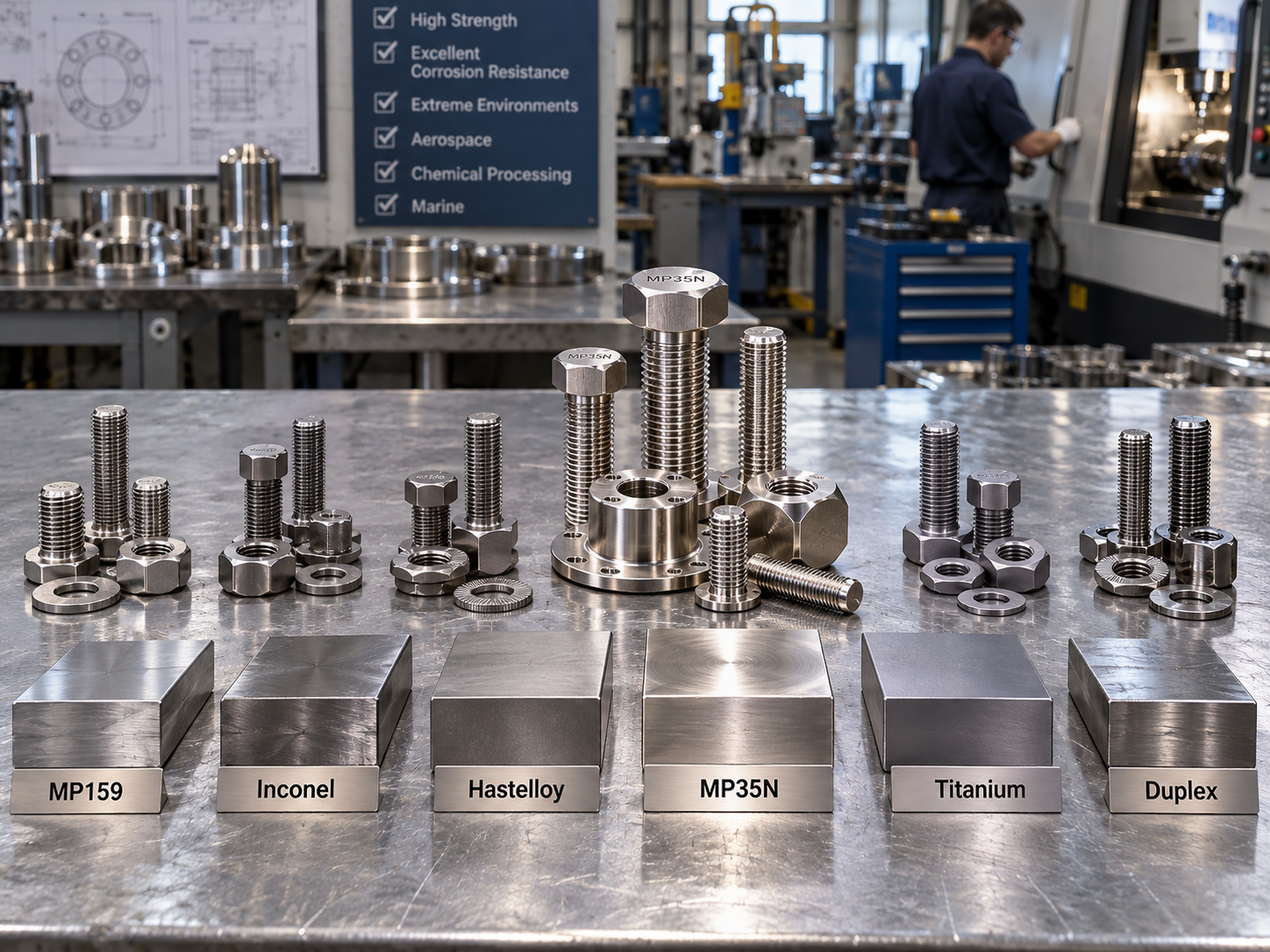
When specifying fasteners for high temperature, corrosion resistance, or high strength, choosing the right alloy can be the difference between a reliable product and a field failure. A286 has carved out a unique niche—offering temperature resistance and strength far beyond standard stainless steels, yet at a fraction of the cost of exotic nickel‑base superalloys. But how does it truly stack up against its competitors? RAYCHIN LIMITED, a global specialist manufacturer of all the alloys compared below, provides this exhaustive technical comparison to help you make an informed, cost‑effective decision.
1. A286 vs 17-4PH Fasteners
A286 vs 17-4PH fasteners is the most common selection dilemma for moderately high‑temperature applications. Both are precipitation‑hardenable, but the temperature wall is decisive:
- 17-4PH (UNS S17400) offers higher room‑temperature strength (up to 175 ksi UTS / 150 ksi YS) but its copper‑rich precipitates over‑age rapidly above 315°C (600°F). At 500°C, its yield strength collapses to under 300 MPa, making it unusable for exhaust or turbine service.
- A286 retains 130 ksi tensile / 85 ksi yield strength min up to 650°C. It is the clear choice whenever the service temperature exceeds 315°C.
When to use A286 instead of 17-4PH: Any application where bolts see sustained temperatures above 315°C—turbochargers, exhaust manifolds, EGR systems, gas turbine accessories.
2. A286 vs 304 and 316 Stainless Steel Bolts
A286 vs 304 stainless steel bolts and A286 vs 316 stainless steel bolts are straightforward comparisons. 304 and 316 derive their strength only from solid‑solution strengthening and cold work, with yield strengths of approximately 30–40 ksi (205–275 MPa). At elevated temperatures, they lose strength rapidly and suffer from chloride stress corrosion cracking. A286, by contrast, offers double to triple the yield strength at room temperature and maintains that margin to 650°C. For any high‑temperature or high‑strength application, A286 is a massive upgrade.
3. A286 vs Inconel 718 Fasteners
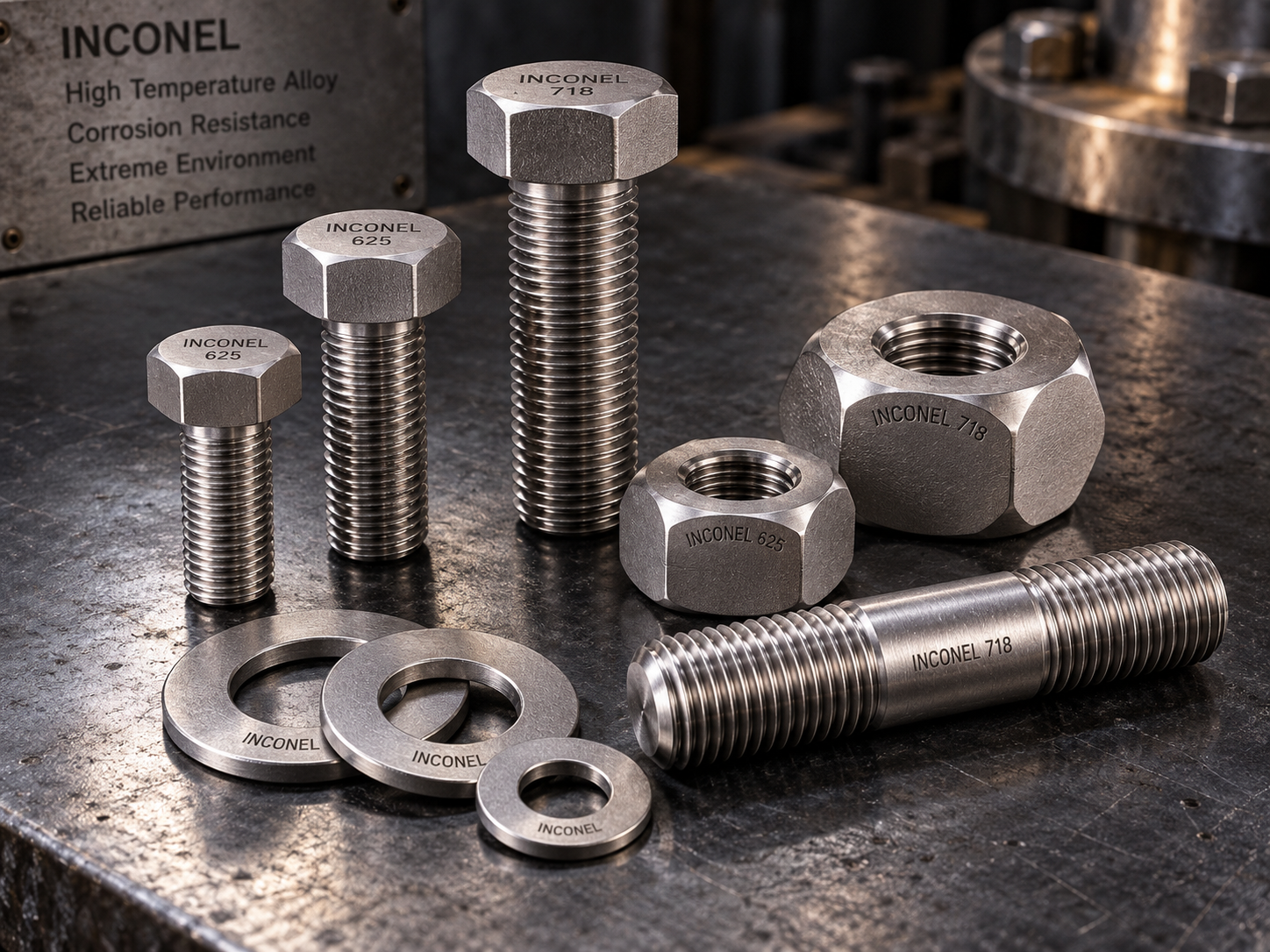
A286 vs Inconel 718 fasteners represents the frontier of cost versus performance. Inconel 718 provides higher yield strength (150 ksi / 1034 MPa min) and operates to 704°C (1300°F), but costs 4–5 times more than A286. For applications below 650°C with mild to moderate corrosion, A286 delivers sufficient performance at a fraction of the cost. Above 650°C, or when resistance to hot chloride pitting is critical, Inconel 718 becomes necessary.
4. A286 vs Monel K500 Bolts
A286 vs Monel K500 bolts: Monel K500 excels in seawater and hydrofluoric acid, and is non‑magnetic, but its yield strength is limited to ~100 ksi (690 MPa) and its maximum service temperature is about 300°C. A286 offers higher strength and vastly superior temperature capability, but cannot match K500's seawater corrosion resistance. For subsea equipment without high temperature, K500 may be preferred; for hot exhaust or turbine hardware, A286 wins.
5. A286 vs Titanium Fasteners
A286 vs titanium fasteners: Titanium Grade 5 (Ti‑6Al‑4V) has an exceptional strength‑to‑weight ratio (yield ~120 ksi / 828 MPa) and is immune to seawater, but its strength degrades above 400°C and it is attacked by reducing acids. A286 is nearly twice as dense but operates to 650°C and resists a wider chemical spectrum. For aerospace weight‑critical airframe applications, titanium is ideal; for engine hot‑section bolts, A286 is required. In terms of A286 vs Grade 5 titanium cost, A286 is generally 20–40% less expensive than titanium fasteners of equivalent size.
6. A286 vs Bumax 109 / 129 (High‑Strength Stainless)
Bumax 109 (UNS S20910, Nitronic 50) and Bumax 129 are high‑strength austenitic stainless steels with excellent corrosion resistance and yield strengths up to 100–120 ksi through cold work. However, they cannot be precipitation‑hardened, and their high‑temperature strength falls off dramatically above 200°C. A286's precipitation‑hardened structure maintains strength to 650°C, making it the superior choice for any elevated‑temperature bolting.
7. A286 vs 8.8 / 10.9 / 12.9 Grade Steel Bolts
Carbon and alloy steel bolts (8.8, 10.9, 12.9) offer high room‑temperature strength at low cost, but they lose temper and strength rapidly above 200–300°C. They also have no inherent corrosion resistance and require platings that introduce hydrogen embrittlement risk. A286's stainless composition provides corrosion resistance without coatings, and its precipitation‑hardened microstructure retains strength to 650°C. For any elevated‑temperature or corrosive environment, A286 is required.
8. A286 vs Nimonic 90
Nimonic 90 is a nickel‑chromium‑cobalt alloy capable of operating above 800°C, used in turbine blades and very‑high‑temperature fasteners. Its room‑temperature yield strength is around 600 MPa, similar to A286, but it maintains that strength far beyond 650°C. However, Nimonic 90 is significantly more expensive and difficult to machine. For applications below 650°C, A286 is far more cost‑effective. Above 700°C, Nimonic 90, Waspaloy, or Inconel 718 should be considered.
9. Best Material for High Temperature Exhaust Bolts – Summary
The best material for high temperature exhaust bolts depends on the exact temperature and corrosion exposure:
For the vast majority of turbocharger, exhaust manifold, and EGR fasteners operating between 400°C and 650°C, A286 is the optimal balance of performance and cost.
10. The RAYCHIN Advantage: One Source for All Alloys
RAYCHIN LIMITED is not aligned with a single alloy—we manufacture across the entire spectrum, allowing us to provide genuine, unbiased material selection guidance. Our in‑house vacuum aging, thread rolling, and full mechanical testing ensure that whichever alloy you choose, the fasteners we deliver will match the certificate, every time.
Send your operating temperature, environment, and strength requirements to our engineering team. We'll return a detailed alloy recommendation and competitive quotation within 24 hours.
✉️ sales@ray-chin.com? www.ray-chin.com | Multi‑Alloy Fastener Expert · Unbiased Selection · Global Supply
Request A Quote! We'll respond as soon as possible(within 12 hours)
Get a Quote