
Categories List
Recent Posts
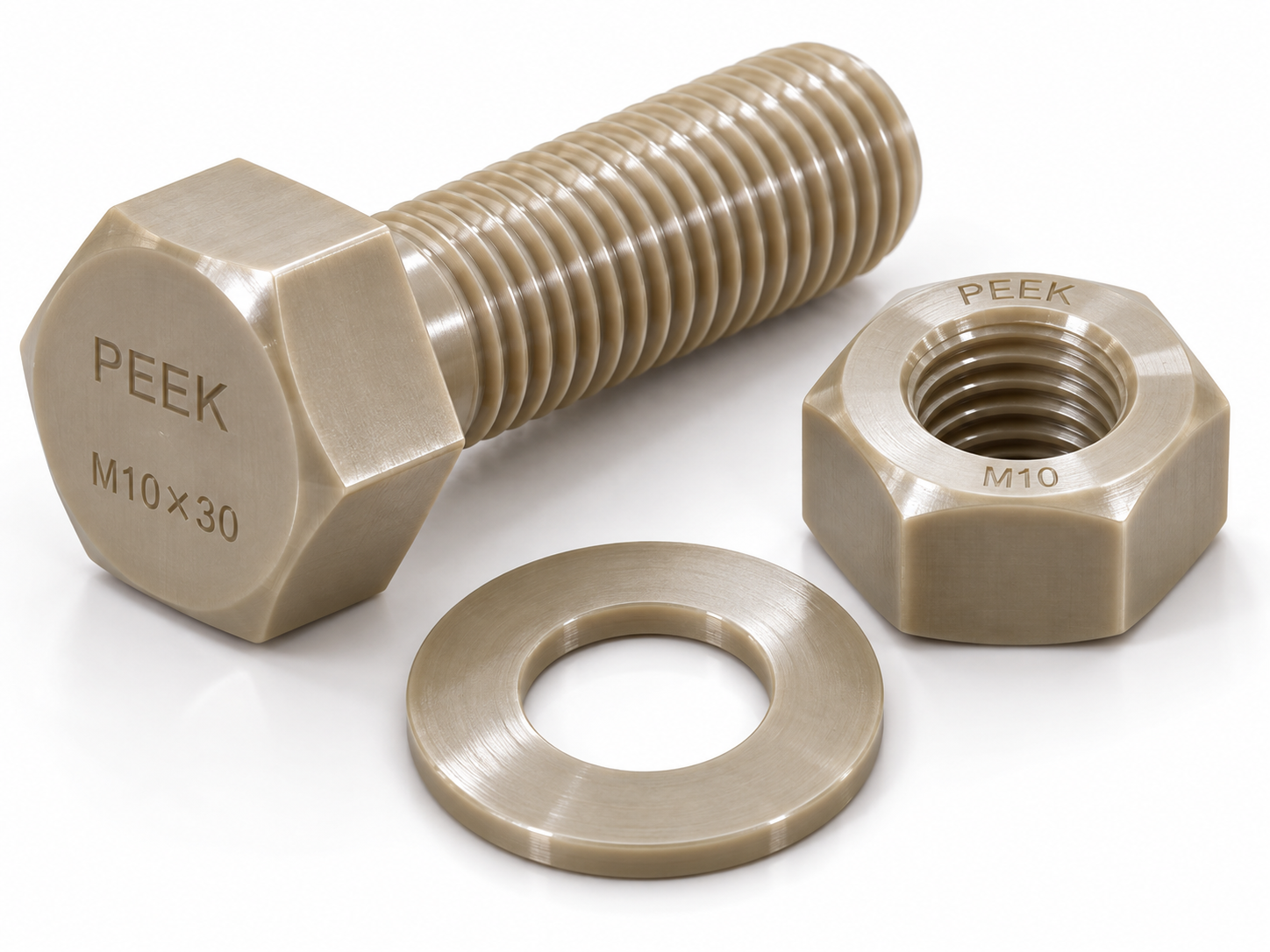
 PEEK Fasteners | Polyetheretherketone Bolts, Nuts, Screws – High-Performance Polymer | RAYCHIN LIMITED
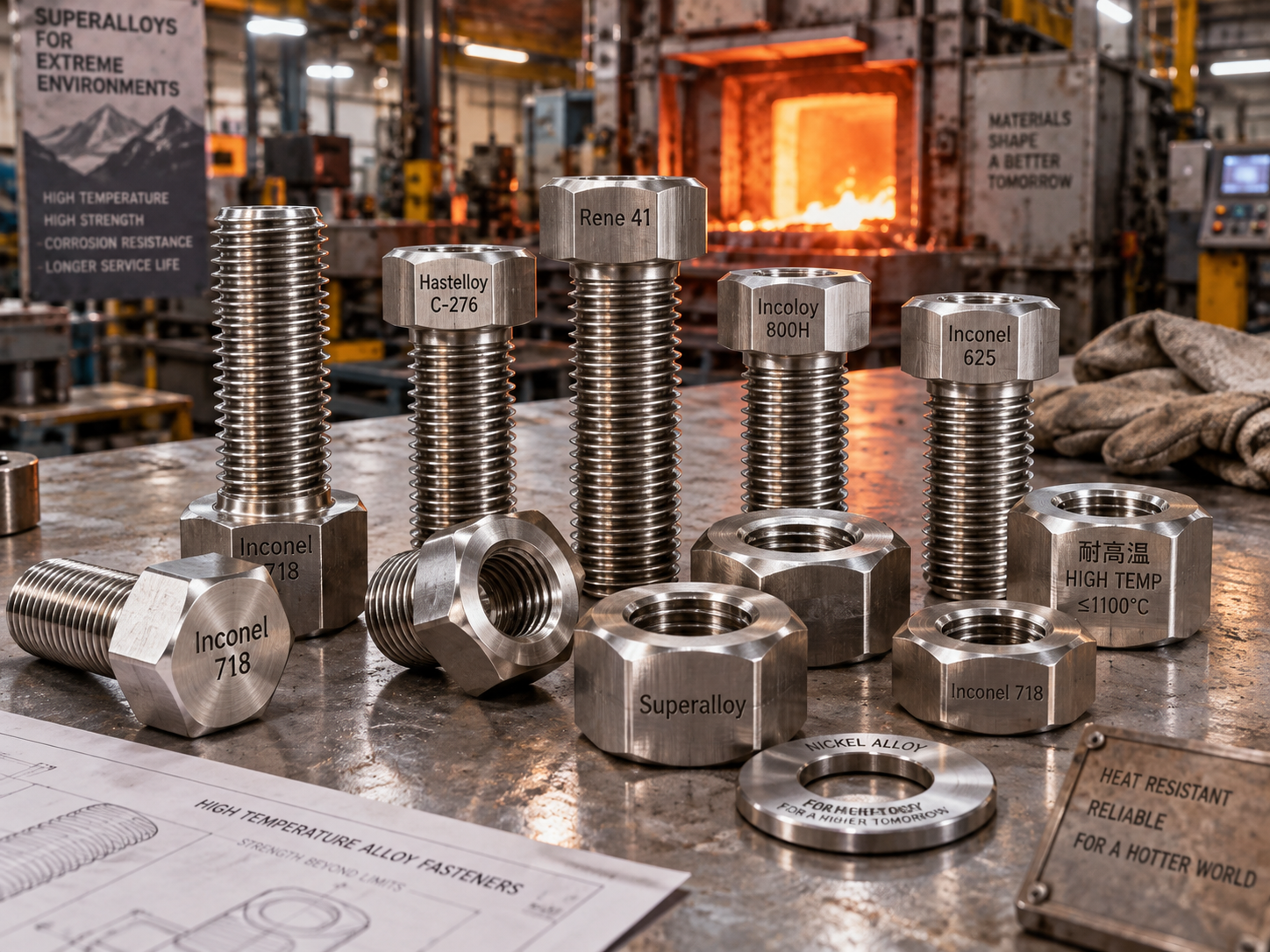
 High-Temperature Alloy Fasteners: Complete Material Guide, Chemistry, Performance Comparison | RAYCHIN LIMITED
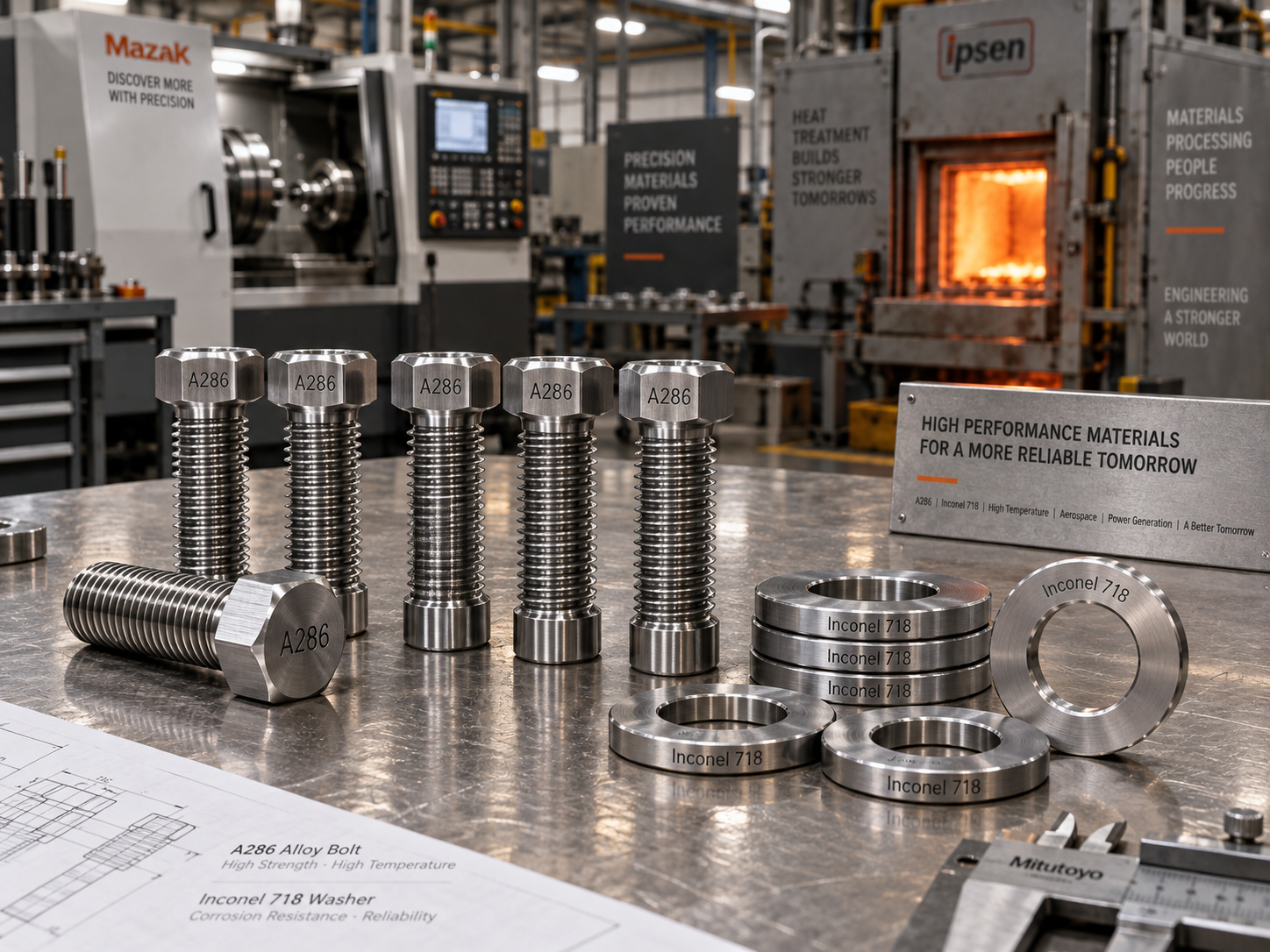
 High-Temperature Fastener Material Selection Guide | A286, Inconel 718, Nimonic 80A, Waspaloy – RAYCHIN LIMITED
Why A286 Fasteners Excel in Turbocharger, Exhaust Manifold and EGR Systems
Nowhere is the challenge for a threaded fastener more concentrated than in the hot end of a modern powertrain. Exhaust gas temperatures that routinely spike to 950°C in the manifold, aggressive thermal cycling from cold start to full load, high‑frequency vibration, and corrosive road salts create a perfect storm that destroys ordinary bolts. Alloy A286 (ASTM A453 Grade 660) has become the definitive material for turbocharger, exhaust manifold, and EGR fasteners, and RAYCHIN LIMITED, a specialist global manufacturer, supplies this proven alloy to Tier‑1 automotive suppliers and OEMs with the precision and consistency that high‑volume production demands.
1. The Extreme Environment of Automotive Hot Ends
Turbochargers, exhaust manifolds, and EGR valves operate at the edge of material capability. Engineers must contend with:
- Sustained high temperatures: Exhaust manifold studs see metal temperatures of 550–650°C in gasoline engines, and up to 850°C in heavy‑duty diesel applications. Turbocharger turbine housing bolts can be even hotter.
- Thermal cycling and shock: Rapid temperature changes—from a cold‑start at -20°C to full‑load exhaust gas at over 900°C in seconds—create extreme differential expansion between the bolt and the flange, driving stress relaxation and preload loss.
- High‑frequency vibration: Engine‑order vibrations and turbocharger rotor dynamics subject bolted joints to millions of fatigue cycles over a vehicle lifetime.
- Corrosive attack: Winter road de‑icing salts, acidic exhaust condensates, and sulfur compounds from fuel combustion promote pitting and stress‑corrosion cracking in standard alloys.
2. A286's Unmatched Advantages in Exhaust Service
A286's iron‑nickel‑chromium base strengthened by gamma‑prime precipitates is uniquely suited to this environment:
- Exceptional hot strength: At 600°C, A286 retains a tensile strength exceeding 900 MPa (130 ksi) and a yield strength of approximately 480 MPa (70 ksi)—far above the capacity of austenitic stainless steels like A2‑70 (304) or even martensitic 10.9 grade alloy steels, which lose temper and strength rapidly above 300°C.
- Superior stress relaxation resistance: A286 fasteners maintain preload far better than carbon steel or standard stainless steel bolts when subjected to sustained high temperature. This prevents exhaust manifold gasket leaks and turbocharger flange blow‑out over the vehicle's service life.
- High‑temperature oxidation resistance: The chromium‑rich oxide scale formed on A286 resists scaling and metal loss, preserving the fastener cross‑section and thread integrity even after years of exposure to hot exhaust gases.
- Galling resistance with proper coating: When combined with an appropriate high‑temperature anti‑seize (such as molybdenum disulfide or boron nitride), A286 fasteners can be reliably assembled and disassembled even after prolonged exposure to exhaust heat—a critical requirement for service and repair.
3. Specific Application Points in the Exhaust System
RAYCHIN's A286 fasteners are deployed across the hot end of the vehicle:
- Turbocharger housing and turbine flange connections: Studs and bolts securing the turbocharger to the exhaust manifold. These see the highest temperatures and must maintain clamp load to prevent gas leakage and turbine housing distortion.
- Exhaust manifold to cylinder head studs: Long‑length studs that must accommodate differential expansion between the cast iron or stainless steel manifold and the aluminum cylinder head, while resisting vibration loosening.
- EGR valve and cooler mounting fasteners: Exposed to a mix of hot exhaust gas, acidic condensate, and soot. A286's corrosion resistance prevents pitting and thread degradation that could lead to emission leaks.
- Oxygen sensor and thermocouple mounting studs: Small‑diameter fasteners that must remain dimensionally stable and corrosion‑free in the exhaust stream to ensure accurate sensor positioning.
4. Recommended Product Forms and Surface Treatments
From thousands of successful production programs, RAYCHIN recommends the following for automotive exhaust applications:
- Roll‑threaded studs and reduced‑shank bolts: Rolled threads after aging provide a fatigue‑resistant, galling‑resistant surface. Reduced‑shank designs accommodate thermal expansion strains without over‑stressing the threaded section.
- High‑temperature anti‑seize coatings: RAYCHIN pre‑applies molybdenum disulfide (MoS₂), boron nitride (BN), or ceramet‑based solid film lubricants. These coatings maintain a consistent friction coefficient through repeated heat cycles and prevent galling during initial assembly and subsequent service disassembly.
- No electrolytic zinc plating: Standard zinc platings are not only ineffective at exhaust temperatures but can introduce liquid‑metal embrittlement and hydrogen‑related failure risks. RAYCHIN uses only dry‑film, physical coatings that are hydrogen‑free and thermally stable to 650°C.
5. Proven in Service: A Case in Point
A global automotive manufacturer experienced repeated exhaust manifold gasket failures due to bolt relaxation on a new turbocharged engine. Standard 10.9 grade studs lost over 50% of their initial preload within the first 3,000 kilometers of operation, leading to exhaust leaks and warranty claims. After switching to RAYCHIN‑supplied A286 studs with precision rolled threads and MoS₂ anti‑seize, preload retention exceeded 85% after equivalent thermal cycling, and the exhaust leaks were eliminated. The engine program not only met its durability targets but also achieved a significant reduction in field repair costs.
6. The RAYCHIN Production Edge for Automotive Fasteners
RAYCHIN LIMITED understands the automotive industry's demands for zero‑defect quality, fast turnaround, and cost‑effectiveness. Our manufacturing process for A286 exhaust fasteners includes:
- In‑house aging and thread rolling under strict process control, with 100% hardness verification and statistical tensile testing per production lot.
- Pre‑applied, batch‑tested anti‑seize coatings with documented torque‑tension characteristics, delivered ready for line‑side assembly.
- Full material traceability with EN 10204 Type 3.1 certification as standard, and dual certification to ASTM A453 Class D and AMS 5737 when required for high‑performance variants.
- Global logistics and kanban supply to support high‑volume, just‑in‑time production schedules at automotive plants worldwide.
Send your specifications or request a torque‑tension test report from our application engineers. We'll provide a competitive quotation and delivery schedule within 24 hours.
✉️ sales@ray-chin.com? www.ray-chin.com | A286 Exhaust Fasteners · High Temperature · Galling‑Free Assembly
Request A Quote! We'll respond as soon as possible(within 12 hours)
Get a Quote