
Categories List
Recent Posts
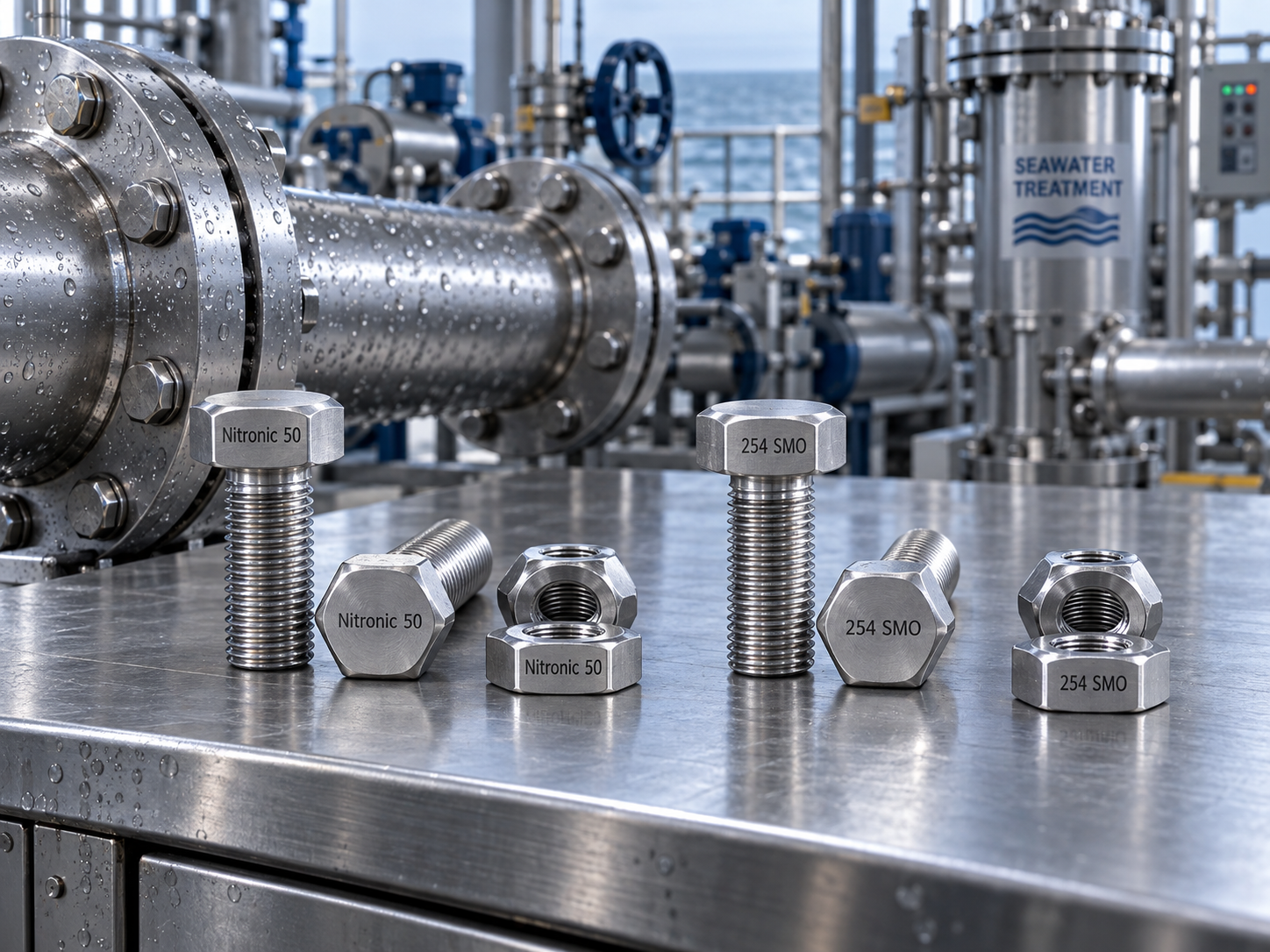
 Nitronic 50 vs. 254 SMO Fasteners: Strength or Seawater Immunity? A Complete Selection Guide
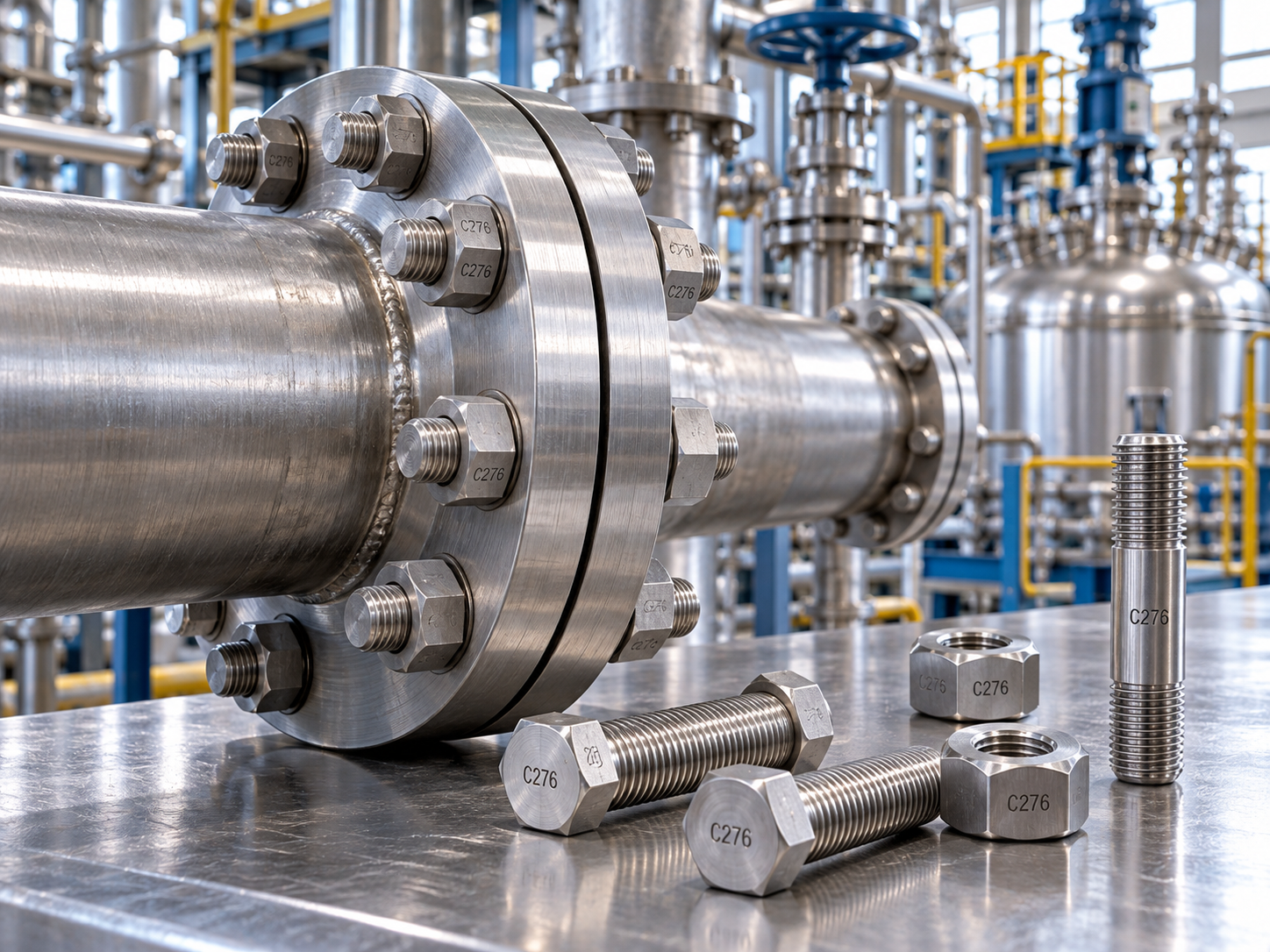
 Hastelloy C276 Fasteners: Bolts, Nuts, Screws, Studs & Washers for the World's Most Aggressive Corrosive Environments
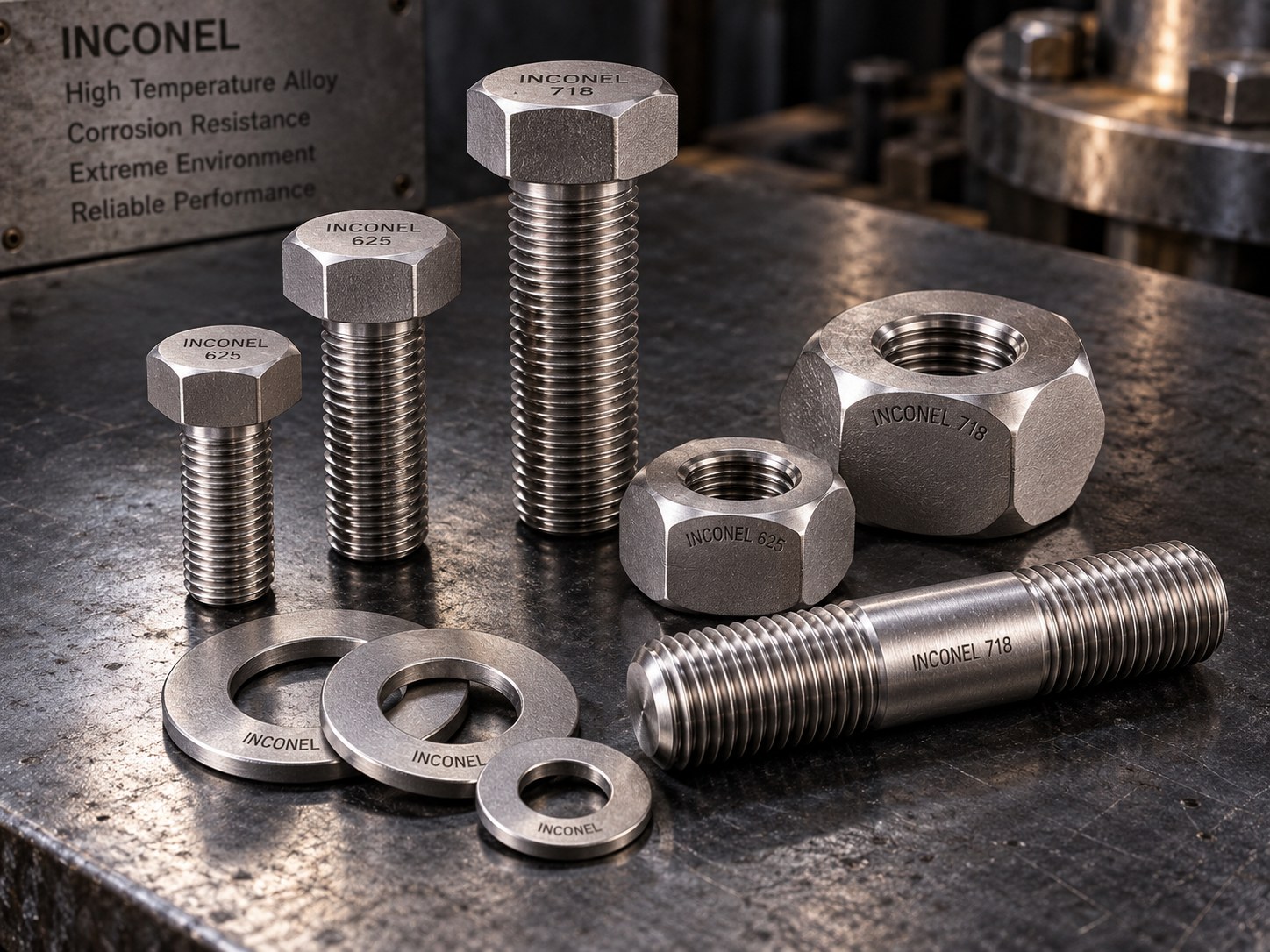
 Inconel Fasteners: Bolts, Nuts, Washers, Studs – Complete Technical Guide | RAYCHIN LIMITED
C3‑80 Fasteners: Applications, Selection, and Comprehensive Comparison with A2‑70, A4‑80 & More
When an application demands the highest tensile strength available within the stainless steel fastener family, C3‑80 martensitic bolts often come into sharp focus. They fill a critical gap between common austenitic stainless fasteners and high‑strength alloy steels. But understanding exactly where they excel—in pumps, valves, motors, automotive components, and general engineering—and how they stack up against alternatives like A2‑70, A4‑80, 8.8 grade, 10.9 grade, 410, and duplex is essential for specification. RAYCHIN LIMITED, a specialist global manufacturer and supplier of stainless steel and special alloy fasteners with decades of experience, provides this comprehensive guide.
1. Industry Applications for C3‑80 Fasteners
C3‑80 fasteners are designed for applications where high tensile strength is the primary requirement and the environment is only mildly corrosive. They are magnetic and can be hardened by heat treatment, which sets them apart from the more common austenitic grades.
⚙️ Pumps & Valves
C3‑80 fasteners for pumps and C3‑80 bolts for valves are widely used for casing studs, bonnet bolts, and flange connections in water, steam, and oil service. Their high tensile strength ensures reliable gasket seating in high‑pressure pump casings and valve bodies, while their moderate corrosion resistance is adequate for fresh water, steam, and light hydrocarbon environments.
? Electric Motors
C3‑80 fasteners for electric motors secure end bells, stator housings, and terminal boxes. Because C3‑80 is strongly magnetic, it may be used where magnetic fasteners are acceptable or even preferred—for example, where magnetic pickup during automated assembly is used. The high strength reduces the bolt count and flange size in compact motor designs.
? General Engineering
C3‑80 fasteners for general engineering are found in machine tools, presses, structural fabrications, and heavy equipment where a strong, moderately corrosion‑resistant bolt is needed. They are frequently selected for their combination of 800 MPa strength and low cost compared to A4‑80 or duplex alternatives.
? Automotive & Heavy Equipment
C3‑80 fasteners for automotive are used in engine brackets, chassis connections, and suspension components exposed to road spray and salt. Their high strength meets the demands of dynamic loading, but they require periodic inspection or coating in chloride‑exposed environments.
2. Special Applications: Marine, Food Industry, and Mild Corrosive Environments
C3‑80 fasteners for marine applications are generally not recommended for continuous seawater immersion or salt‑spray exposure, as the alloy lacks the pitting resistance of 316 or duplex grades. However, they may be used in limited above‑deck, non‑critical applications where regular maintenance is possible.
C3‑80 fasteners for the food industry are suitable for non‑contact environments—equipment frames, dry‑goods handling, and packaging machinery—where chlorinated sanitizers are not used. For direct food contact or wash‑down zones with chlorinated cleaners, A2 or A4 fasteners are required.
C3‑80 fasteners for mild corrosive environments—fresh water, steam, atmospheric exposure, and light chemicals—represent the ideal service window. Their high strength and corrosion resistance provide an economical solution.
3. C3‑80 vs A2‑70, A4‑80, and A2‑80 — The Stainless Family
When to use C3‑80 instead of A2‑70: Choose C3‑80 when you need higher tensile strength (800 vs 700 MPa) and can accept the lower corrosion resistance and magnetic nature. C3‑80 vs A4‑80: A4‑80 provides the same strength but with far superior chloride resistance—it is the choice for marine and chemical environments. C3‑80 wins on cost. C3‑80 vs A2‑80: A2‑80 achieves its strength through cold working, can be non‑magnetic, and offers better corrosion resistance, but typically at a higher price. C3‑80 is the more economical option for mild environments.
4. C3‑80 vs 8.8, 10.9 Grade Steel Bolts, and 410 Stainless
C3‑80 vs 8.8 grade steel bolts: 8.8 bolts provide an 800 MPa tensile strength level, similar to C3‑80, at a lower cost. However, they require protective coatings (zinc, zinc‑nickel) which can introduce hydrogen embrittlement risk and degrade over time. C3‑80 is inherently stainless without the need for electroplating, eliminating the hydrogen embrittlement concern.
C3‑80 vs 10.9 grade bolts: 10.9 bolts are stronger (1040 MPa) but are highly susceptible to hydrogen embrittlement, particularly when plated. C3‑80 may be preferred in applications where hydrogen embrittlement from plating or from service conditions is a risk and strength beyond 800 MPa is not required.
C3‑80 vs 410 stainless steel bolts: 410 is the basic 12% Cr martensitic stainless steel. C3‑80 (typically 1.4021) is closely related but has a controlled carbon content and is specifically processed to meet the 800 MPa strength with adequate toughness. The two are similar in corrosion resistance; C3‑80 is the defined property class that guarantees the tensile strength level.
C3‑80 vs 316 stainless steel: 316 offers far superior chloride corrosion resistance but a much lower yield strength (~30 ksi). For structural applications in fresh water or mild environments, C3‑80 provides the strength; 316 is for corrosive service.
C3‑80 vs duplex fasteners: Duplex 2205 provides both high strength (450+ MPa yield) and excellent corrosion resistance, but at a higher cost. For applications where moderate corrosion exposure is acceptable, C3‑80 is more economical; for seawater or chemical service, duplex is required.
5. Martensitic vs Austenitic Stainless Steel Bolts — And Magnetism
Martensitic vs austenitic stainless steel bolts: Martensitic grades (C3) can be hardened by heat treatment and are magnetic. Austenitic grades (A2, A4) rely on cold work for strengthening and are non‑magnetic. This fundamental difference dictates the alloy choice: if the application demands high strength in mild environments at low cost, martensitic C3‑80 is the answer. If non‑magnetic properties and corrosion resistance matter more, austenitic is the choice.
Are C3‑80 bolts magnetic? Yes, C3‑80 bolts are strongly ferromagnetic. This can be an advantage—for magnetic pick‑up during automated assembly—or a limitation where sensitive electronic equipment requires non‑magnetic fasteners.
Send your application requirements, drawings, or part numbers to our technical team. We'll provide a detailed compliance assessment and competitive quotation within 24 hours.
✉️ sales@ray-chin.com? www.ray-chin.com | C3‑80 · A2‑70 · A4‑80 · Duplex · Global Supply
Request A Quote! We'll respond as soon as possible(within 12 hours)
Get a Quote