
Categories List

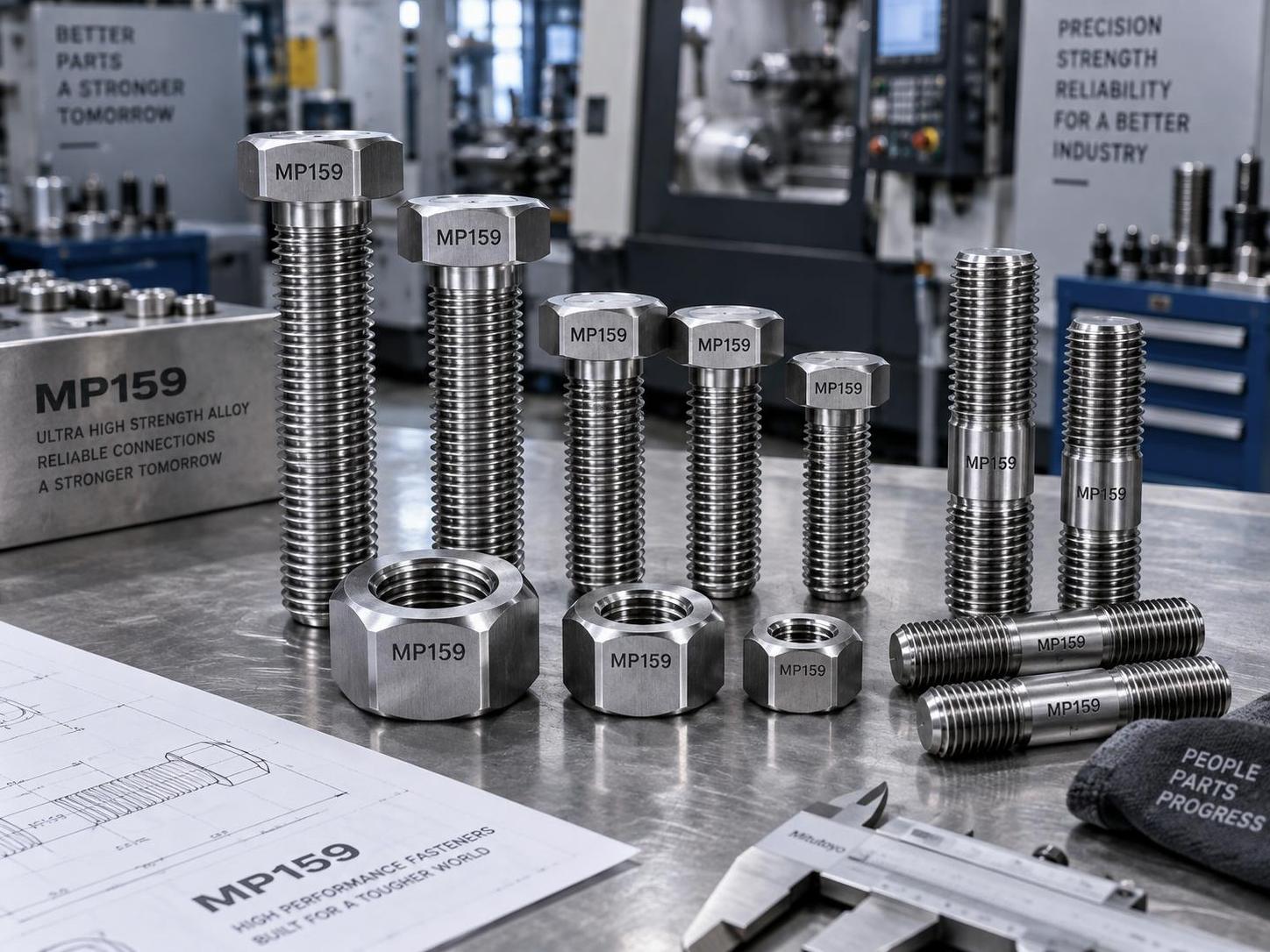
Inconel Fasteners: Your Complete Guide to Grades 718, 625, 600, 601, 725, X-750 & 825
RAYCHIN LIMITED is the global specialist manufacturer of Inconel fasteners, delivering engineered bolting solutions across the entire nickel‑alloy spectrum. Whether you need Inconel 718 bolts for a gas turbine, Inconel 625 nuts for a subsea manifold, or Inconel 600 washers for furnace hardware, we manufacture every component in‑house with full traceability and certified quality. This guide consolidates our metallurgical knowledge to help you understand every major Inconel fastener grade, their key differences, and where each performs best.
1. Inconel Fastener Grade Overview
Each Inconel alloy is engineered for a specific balance of strength, temperature resistance, and corrosion resistance. The table below summarizes the grades we manufacture regularly.
2. Inconel 718 Fasteners: Chemical Composition & AMS Standards
Inconel 718 chemical composition is tightly controlled to ensure precipitation hardening. The nominal chemistry is Ni 50‑55%, Cr 17‑21%, Fe balance, Nb 4.75‑5.5%, Mo 2.8‑3.3%, Ti 0.65‑1.15%, Al 0.2‑0.8%. We manufacture Inconel 718 fasteners to two principal aerospace material specifications:
- AMS 5662 – bar, forging, and ring stock; typically solution‑treated and aged to achieve minimum tensile 185 ksi (1275 MPa).
- AMS 5663 – similar but often specifies tighter grain size and additional testing; commonly used for rotating parts and critical fasteners.
RAYCHIN supplies Inconel 718 studs, bolts, and nuts conforming to both standards, with full certification. Our solution‑annealing and age‑hardening cycles are digitally recorded, and we verify hardness (36‑44 HRC) and microstructure on every lot.
3. Inconel 625 vs 718 Fasteners: A Critical Comparison
Inconel 625 vs 718 fasteners is perhaps the most common material selection dilemma. The table below highlights the decisive factors.
Choose 718 when high tensile strength and creep resistance at elevated temperatures are paramount. Choose 625 when the environment is highly corrosive (seawater, wet chlorine) and strength requirements are moderate.
4. Inconel 600 vs 625: Understanding the Difference
Difference between Inconel 600 and 625 lies primarily in molybdenum content and strength. Inconel 600 has no molybdenum, making it less resistant to pitting and crevice corrosion than 625. However, 600 offers excellent oxidation resistance at high temperatures and resists chloride stress‑corrosion cracking. It is commonly used for furnace hardware, chemical evaporators, and food processing. Inconel 625 is the choice when chlorides and acids are present; Inconel 600 is selected for dry, high‑temperature oxidation resistance at a lower cost.
5. Inconel 718 vs Inconel 725: Strength and Sour Service
Inconel 718 vs Inconel 725 concerns sour oil & gas applications. Inconel 725 (UNS N07725) is essentially a modified 718 with slightly lower strength but significantly improved resistance to sulfide stress cracking and hydrogen embrittlement in H₂S environments. It is age‑hardenable, with yield strength typically above 120 ksi (827 MPa), and is preferred for wellhead components and downhole fasteners in NACE MR0175 sour service where 718 may be less predictable. RAYCHIN manufactures both grades, and our engineers assist clients in selecting the appropriate one based on NACE compliance requirements.
6. Additional Inconel Fastener Grades from RAYCHIN
Our expertise extends to less common but equally important alloys:
- Inconel 601 fasteners – aluminum‑treated to form a tenacious oxide layer, ideal for radiant tubes and incinerators.
- Inconel X-750 fasteners – precipitation‑hardened, excellent for springs and high‑temperature studs where relaxation resistance matters.
- Inconel 825 fasteners – provides good resistance to sulfuric and phosphoric acids at a lower cost; often used in chemical process piping and acid regeneration plants.
7. Dimensional Range & Product Forms
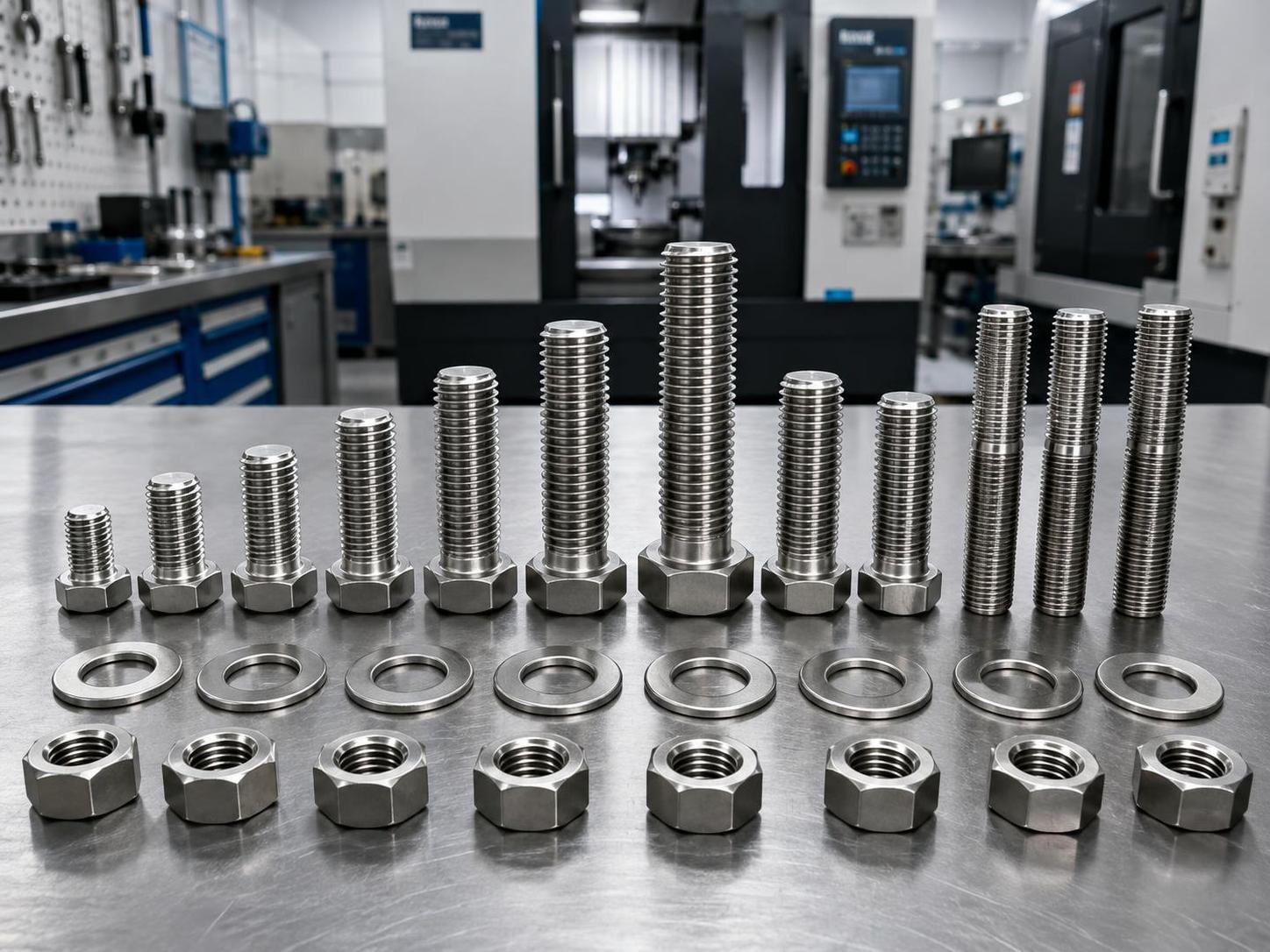
RAYCHIN produces Inconel fasteners in all standard configurations:
- Hex bolts (ASME B18.2.1, DIN 931) from M6 to M64 / 1/4″ to 2.5″
- Heavy hex nuts (ASME B18.2.2, DIN 934)
- Stud bolts – fully threaded, double‑end, and tap‑end per ASME B16.5 and customer drawings
- Socket head cap screws (ASME B18.3)
- 12‑point flange bolts for high‑pressure compact flanges
- Washers – flat, spring lock, and custom
8. Quality Assurance & Certifications
Every Inconel fastener batch is tested in our in‑house laboratory:
- Optical Emission Spectrometer for full chemical analysis (PMI)
- Universal tensile tester with elevated‑temperature capability
- Charpy impact tester for cryogenic and toughness verification
- Hardness testers (Rockwell and Brinell)
- Dimensional inspection with CMM and optical comparator
Standard certifications: ISO 9001, PED 2014/68/EU Annex 1 Section 4.3, EN 10204 Type 3.1 (3.2 available with third‑party witness), and NORSOK M‑650 upon request.
9. Why RAYCHIN is the Trusted Source for Inconel Fasteners
With decades of experience serving the oil & gas, aerospace, chemical, and power generation industries, RAYCHIN LIMITED understands that nickel alloy fasteners are critical‑safety components. We provide:
- Factory‑direct manufacturing — no middlemen, full control over quality and lead time.
- Extensive inventory of Inconel bar stock for fast turnaround on standard and custom parts.
- Free technical support — our metallurgists help with alloy selection, torque tables, anti‑galling strategies, and failure analysis.
- Global logistics — we deliver to your project site or warehouse anywhere in the world.
Send your specifications, drawings, or inquiries to our technical sales team. We provide alloy recommendations, pricing, and delivery timelines within 24 hours.
✉️ sales@ray-chin.com? www.ray-chin.com | Inconel Fastener Specialist · Certified · Global Supply
Request A Quote! We'll respond as soon as possible(within 12 hours)
Get a Quote