
Categories List
Recent Posts
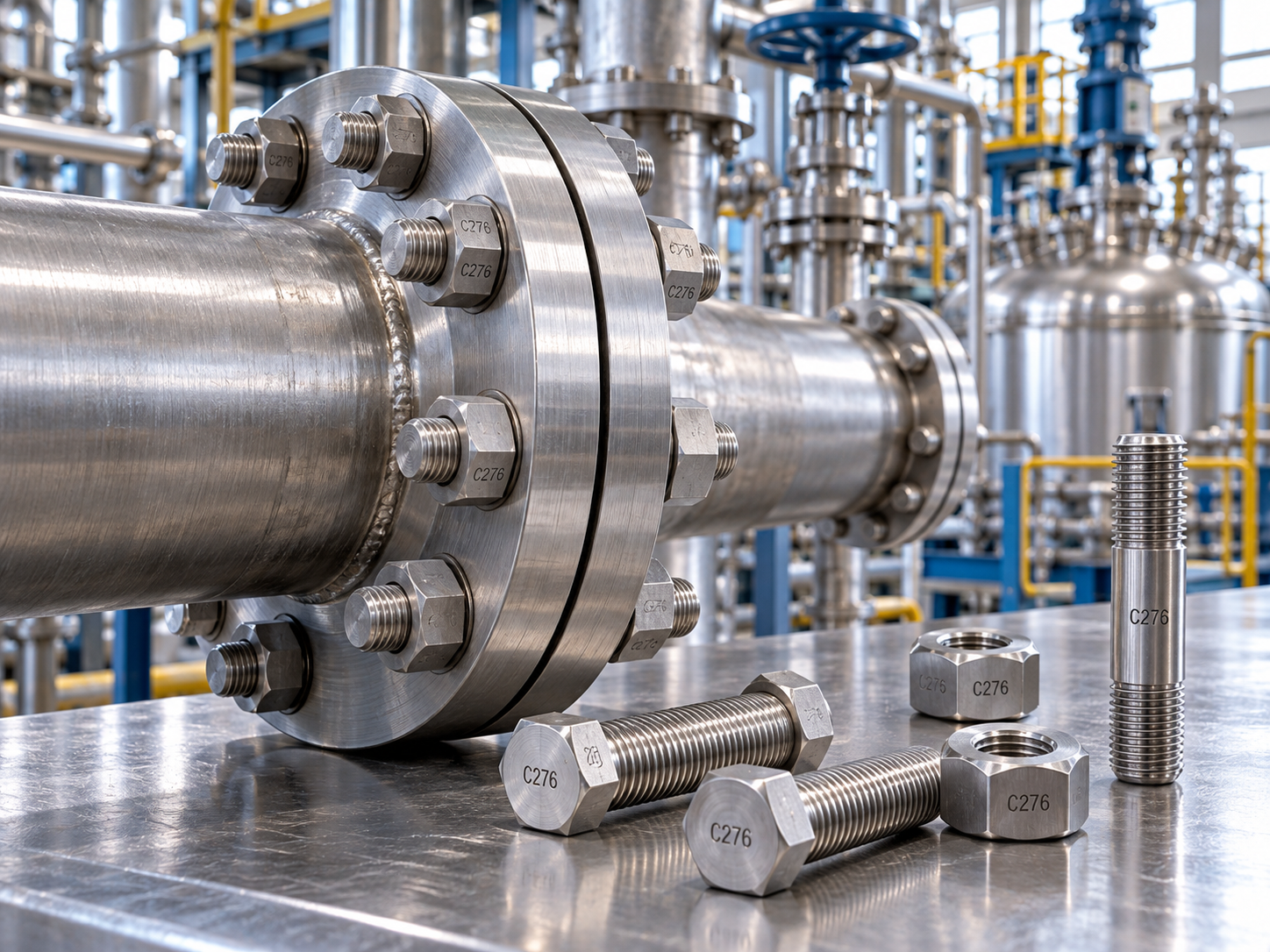
 Hastelloy C276 Fasteners: Bolts, Nuts, Screws, Studs & Washers for the World's Most Aggressive Corrosive Environments
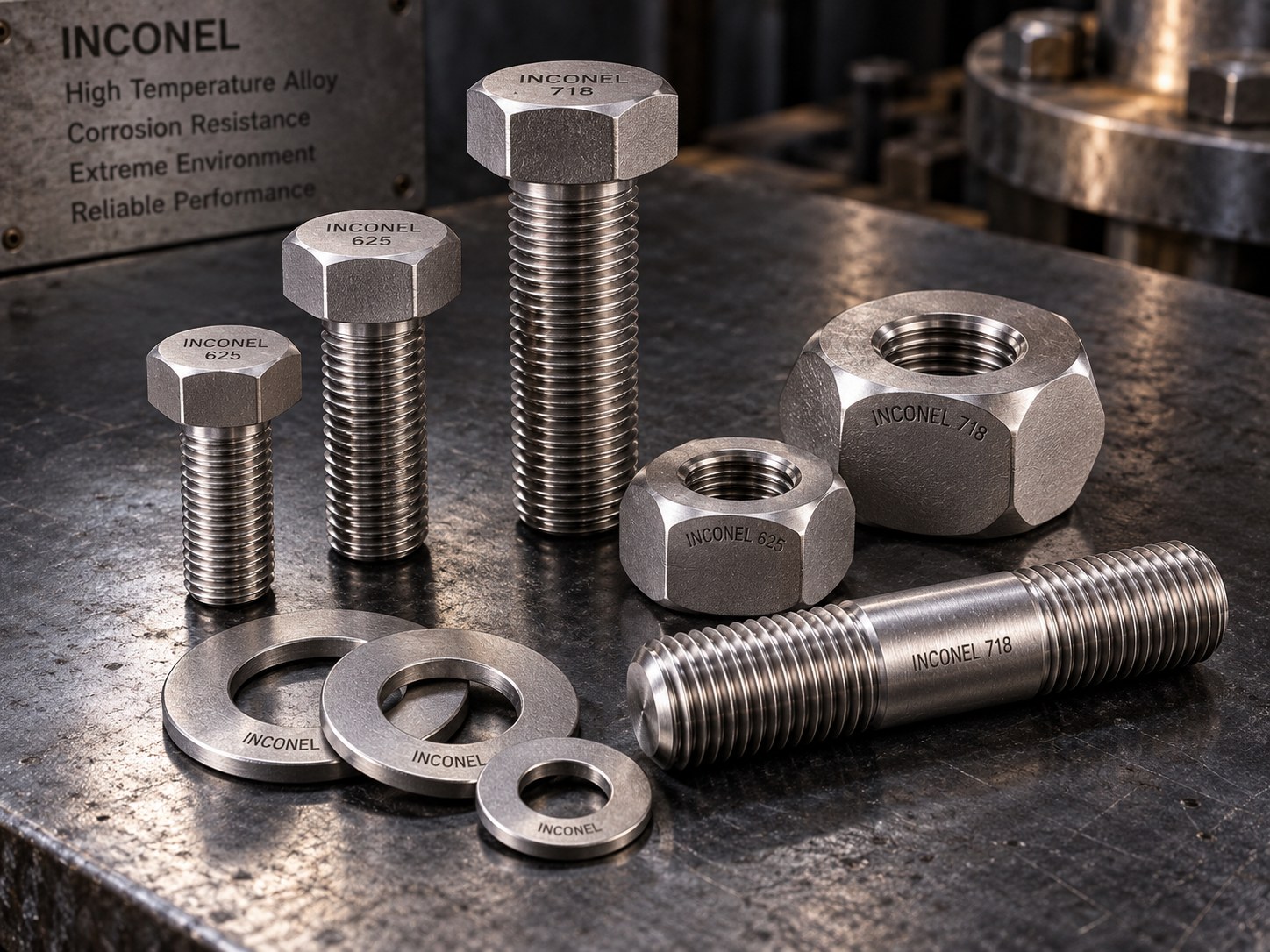
 Inconel Fasteners: Bolts, Nuts, Washers, Studs – Complete Technical Guide | RAYCHIN LIMITED
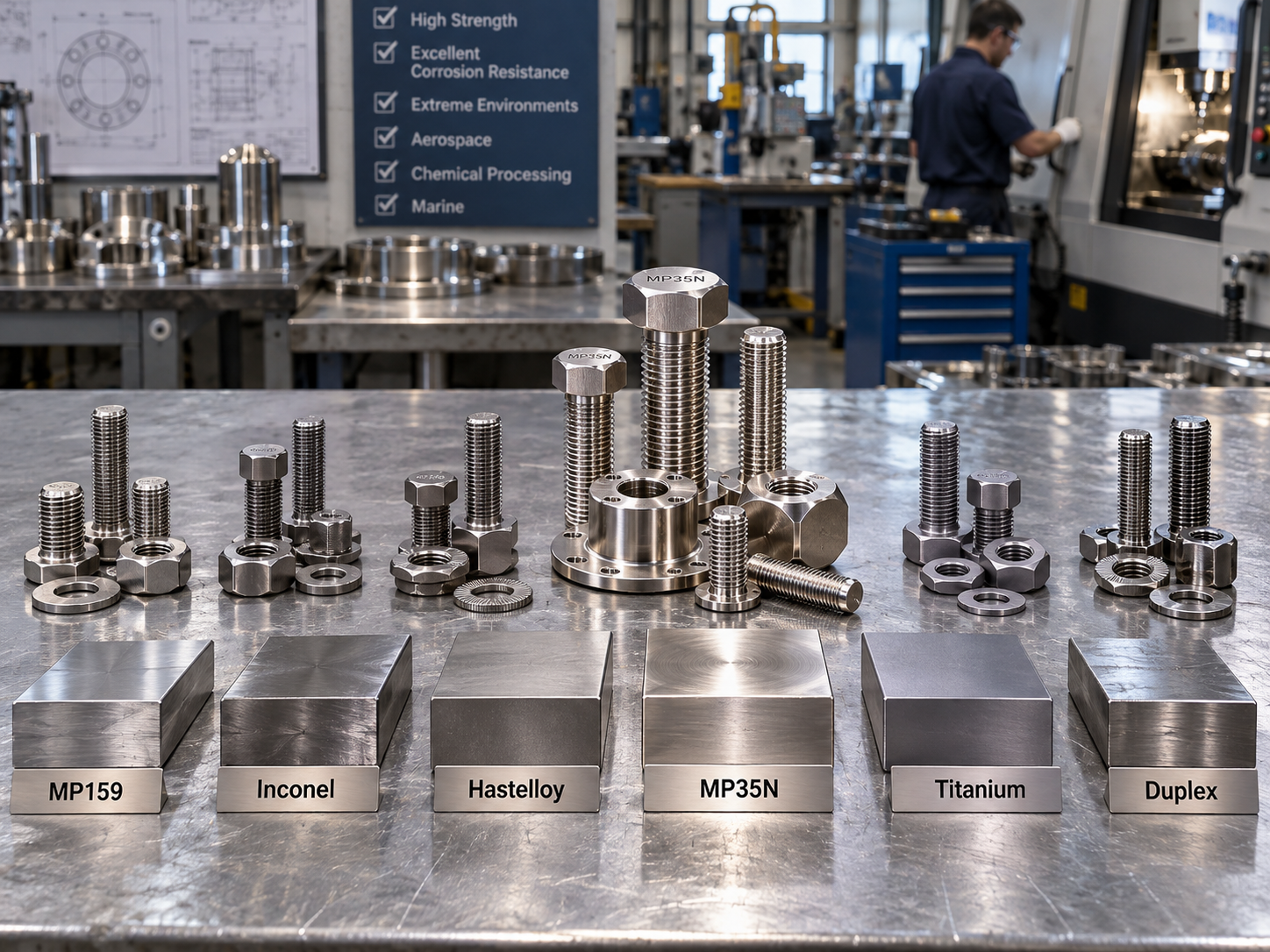
 MP35N vs Inconel, Titanium, C276, Complete Material Comparison Guide for Fasteners | RAYCHIN LIMITED
17‑4 PH Fasteners in Aerospace and High‑Performance Industry: Strength, Finish and Traceability
In the unforgiving world of aerospace structures, landing gear assemblies, and high‑performance industrial systems, a fastener is never “just a bolt.” It is a precisely engineered component that must combine high tensile strength with corrosion resistance, fatigue life, and absolute material traceability. 17‑4 PH stainless steel—in its properly heat‑treated, passivated, and certified condition—has become a cornerstone material for these applications. RAYCHIN LIMITED, a specialist global manufacturer of aerospace‑grade 17‑4 PH fasteners, explains why this alloy excels and how our AS9100‑aligned quality system ensures every part is airworthy and audit‑ready.
1. The Unique Demands of Aerospace and High‑Performance Fasteners
Aerospace fasteners operate under conditions that allow zero tolerance for failure. The critical expectations that set aerospace‑grade 17‑4 PH apart from its commercial counterpart include:
- Highest strength‑to‑weight ratio: Every gram matters. 17‑4 PH in the H1025 or H1075 condition provides yield strengths of 1000–1135 MPa (145–165 ksi) with the corrosion resistance of stainless steel, eliminating the weight penalty of heavy protective coatings required for alloy steels.
- Stress corrosion cracking (SCC) resistance: Unlike low‑alloy steels such as 4340 or 8740, 17‑4 PH does not require cadmium plating for corrosion protection—a significant advantage, as cadmium is both a toxic substance facing increasing regulatory restriction and a potential source of hydrogen embrittlement.
- Absolute traceability: Every aerospace fastener must be traceable back to the original mill heat lot, with a complete record of every manufacturing and inspection step. This traceability is not optional; it is mandated by 14 CFR Part 21 and AS9100.
- First Article Inspection (FAIR): Before any new part number can be shipped, a representative sample must undergo full dimensional and metallurgical verification, documented per AS9102, to prove the manufacturing process is capable.
2. Aerospace‑Grade 17‑4 PH: What Makes It Different
Not all 17‑4 PH is suitable for aerospace. The aerospace variant is governed by AMS 5643, which imposes tighter controls than ASTM A564 or ASTM A693:
- Strict limits on oxygen, nitrogen, and hydrogen: These interstitial elements are controlled to parts‑per‑million levels to ensure maximum ductility, fracture toughness, and freedom from micro‑porosity in the final product.
- Vacuum‑arc remelting (VAR) or electroslag remelting (ESR): Aerospace 17‑4 PH is typically double‑melted to achieve the highest cleanliness and microstructural uniformity, reducing the inclusion count that can initiate fatigue cracks.
- Heat treatment to H1025 or H1075: While commercial applications often use H900 for maximum strength, aerospace fasteners are typically aged at higher temperatures (H1025 at 552°C, or H1075 at 580°C) to provide an optimal balance of strength and toughness. This prevents brittle fracture under impact loads—such as those encountered during landing gear deployment or bird strikes.
Typical Mechanical Properties for Aerospace 17‑4 PH
3. Surface Finish: Passivation and Hydrogen Embrittlement Prevention
Surface finish for aerospace 17‑4 PH fasteners is not an afterthought—it is a critical process that directly affects corrosion resistance and structural integrity. RAYCHIN applies the following standards:
- Passivation per AMS 2700: This chemical treatment removes free iron and other surface contaminants from machining, enriching the surface chromium oxide layer and maximizing resistance to pitting and atmospheric corrosion. Passivation is the standard finish for 17‑4 PH aerospace fasteners.
- No electrolytic plating: Cadmium and zinc‑nickel platings, common on alloy steel fasteners, are intentionally avoided. These processes can introduce atomic hydrogen into the high‑strength martensitic matrix, creating a risk of hydrogen‑assisted delayed fracture. 17‑4 PH's inherent corrosion resistance makes such platings unnecessary.
- Optional dry film lubricants: For applications requiring controlled torque‑tension behavior, we can apply cermet‑based or molybdenum disulfide solid film lubricants that are thermally stable and hydrogen‑free.
4. Typical Aerospace and High‑Performance Applications
✈️ Landing Gear and Actuation
Trunnion attachment bolts, actuator rod ends, and linkage fasteners subjected to shock loads during take‑off and landing. The H1025 condition provides the necessary toughness to prevent brittle fracture at low temperatures and under high strain rates.
?️ Airframe Structural Joints
High‑lock bolts and Hi‑Lite fasteners securing fuselage frames and wing attachment fittings. 17‑4 PH provides the fatigue strength needed to endure pressurization cycles and aerodynamic buffet over the aircraft's service life.
⚙️ Hydraulic Manifolds and Accumulators
Fasteners exposed to phosphate‑ester hydraulic fluids (Skydrol) at pressures up to 5,000 psi. 17‑4 PH resists both the chemical attack of the fluid and the pulsating pressure loads that drive fatigue crack growth.
? Engine Accessory Gearbox Mounts
Bolts securing the accessory gearbox to the engine core, where vibration and moderate temperatures require a combination of strength and relaxation resistance.
5. Quality Assurance and Documentation: The RAYCHIN Standard
The documentation that accompanies an aerospace fastener is as important as the fastener itself. RAYCHIN's aerospace manufacturing processes are structured around the core requirements of AS9100, and every shipment includes:
- NADCAP‑accredited Non‑Destructive Testing (NDT): Depending on the part geometry and customer specification, fluorescent penetrant inspection (FPI) or magnetic particle inspection (MPI) is performed on 100% of aerospace fasteners to detect surface discontinuities that are invisible to the naked eye.
- First Article Inspection Report (FAIR) per AS9102: A complete dimensional and metallurgical verification of the first production sample, providing documented proof that our manufacturing process produces conforming parts. This is essential for OEM part qualification.
- Full process approvals: Our heat treatment (NADCAP), passivation, NDT, and any sub‑contracted coating processes are all approved and documented, forming a complete chain of custody from raw material to finished product.
- EN 10204 Type 3.2 certification: With independent third‑party witness inspection, providing an additional layer of validation for critical safety parts.
- Digital material passport: Every heat lot is traceable through our ERP system, linking the original mill certification to the final inspection report, so your quality audit can be completed in minutes rather than days.
6. The RAYCHIN Difference: Beyond the Fastener
RAYCHIN LIMITED is not a general distributor picking parts from a warehouse shelf. We control the entire manufacturing sequence—from AMS 5643 certified bar stock through CNC machining, NADCAP heat treatment, passivation, and final inspection. This vertical integration gives our aerospace customers three decisive advantages:
- Process control: No gaps in the manufacturing chain that could introduce quality escapes.
- Faster response: In‑house processes eliminate the delays of coordinating multiple subcontractors.
- True technical partnership: Our application engineers can work with your design team to optimize fastener geometry, thread form, and surface treatment for your specific loading and environment.
Whether you are an aerospace OEM qualifying a new part number, or an MRO facility requiring certified replacement fasteners for a legacy platform, RAYCHIN delivers the same level of product integrity and documentation support that you expect from a Tier‑1 supplier.
Send your part specifications or request a sample FAIR package from our engineering team. We'll respond within 24 hours with a compliance assessment and competitive quotation.
✉️ sales@ray-chin.com? www.ray-chin.com | AMS 5643 · NADCAP · FAIR AS9102 · Aerospace Fasteners
Request A Quote! We'll respond as soon as possible(within 12 hours)
Get a Quote