
Categories List
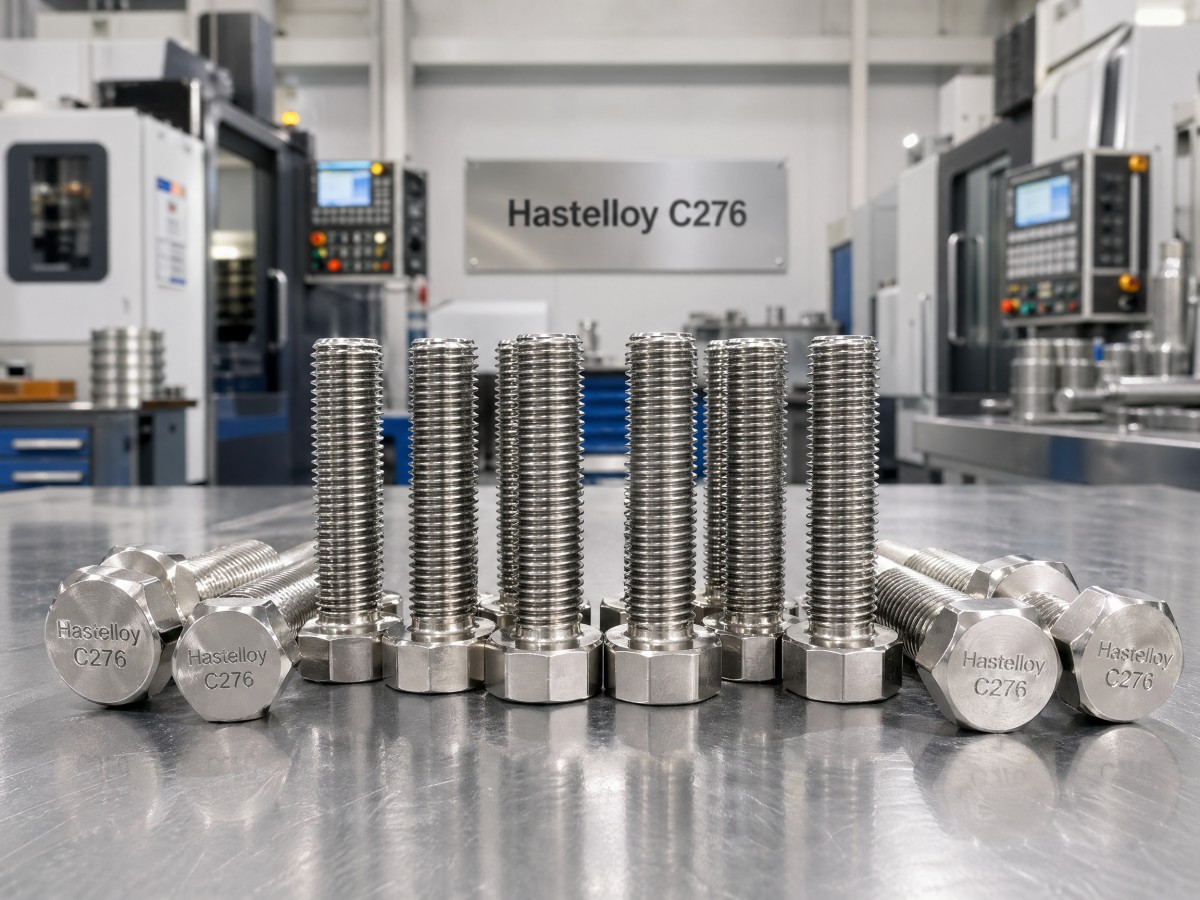
When corrosive chemicals, seawater, or extreme process conditions threaten standard fasteners, Hastelloy C276 bolts can justify their higher upfront cost. For engineers, buyers, and project decision-makers comparing hastelloy fasteners, hastelloy bolts, and c276 fasteners, the real question is not price alone, but lifecycle value, reliability, and reduced maintenance risk in demanding metal processing equipment applications.
In metal processing equipment, bolt failure is rarely an isolated hardware issue. It can stop a pickling line, compromise a heat exchanger skid, delay shutdown maintenance, contaminate product streams, or trigger expensive safety inspections. That is why material selection for bolting must be tied to service chemistry, temperature, pressure cycling, washdown conditions, and maintenance accessibility rather than unit price alone.
For technical evaluators, operators, procurement teams, project managers, and quality personnel, the central decision is simple: where does the extra cost of Hastelloy C276 bolts produce measurable operational value? The answer depends on corrosion severity, consequence of failure, replacement frequency, and whether the fastener is located in a critical joint that is difficult or risky to service.
RAYCHIN LIMITED focuses on the development, manufacturing, and global supply of standard and custom fasteners in high-performance specialty metals. In challenging metal processing environments, that kind of material guidance matters because the correct bolt alloy can reduce unplanned intervention, extend maintenance intervals from months to years, and improve confidence in equipment integrity over the full service life.
Why fastener material matters more in metal processing equipment than many buyers expect
In many capital projects, bolts are treated as low-cost accessories. In reality, they are part of the pressure boundary, structural support system, sealing assembly, or removable maintenance interface. A reactor cover bolt, scrubber flange stud, pump casing bolt, or filter press tie fastener may represent less than 1% of equipment value, yet its failure can affect 100% of system availability at that location.
Metal processing equipment often combines multiple corrosion drivers at the same time. Common examples include chloride-bearing washdown media, mixed acids, oxidizing contaminants, wet-dry cycling, crevice conditions under washers, and temperatures from ambient up to 200°C or higher in localized zones. Under such combined exposure, standard stainless fasteners may lose preload, pit, seize, or become unsafe to remove during maintenance.
The cost impact is usually nonlinear. Replacing a failed bolt set may seem inexpensive, but if access requires line isolation, scaffold, gas testing, hot work controls, or off-shift labor, a small fastener problem quickly becomes a major maintenance event. In plants with continuous or semi-continuous throughput, even a 4-hour interruption can outweigh the original difference between stainless and Hastelloy C276 bolts many times over.
For equipment exposed to aggressive chloride media, bleach-related oxidizers, acidic condensate, or marine atmosphere, c276 fasteners are often evaluated because they offer strong resistance to pitting, crevice corrosion, and a broad range of chemical attack. They are not necessary everywhere, but in the wrong service, under-specifying bolts creates recurring hidden costs that procurement spreadsheets may miss.
Another factor is maintenance behavior. Operators and service teams prefer bolted joints that can be removed after 12, 24, or 36 months without severe galling, frozen threads, or visible cross-section loss. In practical terms, a higher-grade fastener can save labor hours, reduce extraction damage to flanges and housings, and lower the risk of emergency repairs during planned shutdown windows.
Typical high-risk locations in metal processing systems
Not every bolted joint requires Hastelloy C276. The priority is to identify locations where both exposure severity and failure consequence are high. These tend to be wet zones, splash zones, chemical injection points, cover plates with frequent opening cycles, and assemblies where trapped crevices retain corrosive residue between cleaning intervals.
- Pickling, acid treatment, or chemical dosing skids handling mixed acids or chloride-bearing solutions.
- Scrubbers, exhaust treatment units, and duct accessories where condensate chemistry fluctuates during startup and shutdown.
- Seawater-cooled modules, offshore processing equipment, and coastal installations with salt deposition and humidity above typical indoor conditions.
- Filter presses, valve covers, pumps, and heat transfer equipment requiring periodic disassembly every 6–18 months.
- Safety-critical joints where leakage, dropped parts, or preload loss could affect personnel or environmental compliance.
When these conditions overlap, the fastener selection decision becomes less about commodity pricing and more about preventing repeated intervention. That is the context in which hastelloy bolts become financially rational.
When Hastelloy C276 bolts are worth the premium
The premium for Hastelloy C276 bolts is justified when the service environment exposes fasteners to corrosion mechanisms that common stainless grades cannot reliably withstand for the required design interval. In metal processing equipment, those conditions often include wet chlorides, reducing acids, oxidizing contaminants in low to moderate concentrations, and stagnant crevices under bolt heads, nuts, and washers.
One practical rule is to compare the expected maintenance cycle with the fastener survival window. If stainless bolts show visible attack or seizure within 6–12 months, but the equipment is designed for 24–48 month service intervals, the labor and downtime mismatch alone can justify upgrading to c276 fasteners. This is especially true when replacement requires system drainage, confined access, or production interruption.
Another trigger is failure consequence. A corroded external guard bolt may be inconvenient, but a corroded pressure-retaining flange stud, agitator assembly bolt, or corrosive media enclosure fastener can create a significant safety and quality risk. In those cases, buyers should evaluate not just replacement cost, but the cost of leakage, contamination, audit findings, and emergency intervention.
The premium also makes sense when fastener accessibility is poor. If a bolt location requires 2 technicians, 1 permit process, 1 line shutdown, and 3–6 hours of maintenance time, upgrading the material becomes a preventive strategy. Equipment uptime economics often favor premium alloys at inaccessible joints even if nearby noncritical joints remain in lower-cost materials.
A final point is lifecycle consistency. Mixed-material repair practices can create uneven service life across a single machine. Using Hastelloy C276 bolts in the most aggressive zones can synchronize maintenance, reduce partial failures, and simplify spare planning for critical assemblies.
Decision signals that indicate an upgrade is warranted
The following comparison helps teams decide whether the extra cost of hastelloy fasteners is likely to produce operational value in metal processing equipment rather than just increase initial BOM cost.
If a joint falls into the right-hand column for 2 or more categories, the case for Hastelloy C276 bolts becomes stronger. If it scores high in all 4 categories, the premium is usually easier to justify in lifecycle terms than in purchase-price terms.
Situations where the premium may not be necessary
There are many locations where hastelloy bolts would be technically acceptable but commercially excessive. Indoor dry areas, non-corrosive utility skids, lightly loaded panels, and frequently replaced maintenance covers may perform adequately with stainless or other suitable alloys. Good selection means using C276 where it solves a defined problem, not using it universally.
- Low-corrosion service with quarterly inspection and low replacement labor.
- Noncritical enclosures where cosmetic staining does not affect function.
- Temporary equipment or short-duration projects with a design horizon below 12 months.
- Assemblies where the surrounding components would fail before the fastener material becomes the limiting factor.
This balanced approach improves budget discipline while keeping high-risk equipment protected where it matters most.
How Hastelloy C276 compares with other fastener materials in real equipment service
Most buying decisions are comparative, not absolute. Engineers and procurement teams are usually selecting between C276, 316/316L stainless, duplex stainless, alloy 20, or other nickel-based materials depending on the equipment package. The right choice depends on the actual corrosion regime, mechanical loading, fabrication needs, and total maintenance cost over the service period.
Hastelloy C276 is valued because it offers broad corrosion resistance across a wide range of reducing and oxidizing media, particularly where chloride-related localized corrosion is a concern. In metal processing equipment, this can be advantageous when one skid or assembly sees changing chemistry during cleaning, startup, upset conditions, or seasonal feed variation. Broad compatibility can reduce the risk of selecting a fastener material that performs well in one phase but degrades in another.
By contrast, 316 stainless may be cost-effective in mild environments, but in chloride-bearing wet service it can become vulnerable to pitting and crevice attack, especially when deposits, stagnant liquid, or thermal cycling are involved. Duplex materials can provide improved resistance in some cases, but not all plants want multiple specialty grades in the same spare system. Alloy 20 may fit certain acidic services, yet broad mixed-chemistry exposure can still push teams toward c276 fasteners.
Comparisons should also include maintenance behavior. A bolt that remains removable after 24 months may deliver more practical value than one with acceptable nominal corrosion resistance but frequent galling or seizure. Fastener performance is therefore both a corrosion question and a serviceability question.
Material comparison for metal processing equipment bolting
The table below summarizes a practical comparison for common fastener material options used around corrosive metal processing lines, treatment modules, and auxiliary systems.
The key lesson is that Hastelloy C276 bolts are most valuable where uncertainty, variability, and consequence are high. Where the environment is controlled and mild, lower-cost materials may remain the better commercial fit.
Three practical comparison questions before final material approval
- Will the bolt see trapped liquid, deposits, or crevice geometry for more than 30–60 days between service opportunities?
- Would one failure trigger line shutdown, leakage control, or replacement of adjacent components within the same maintenance event?
- Does the equipment experience more than 2 distinct chemical states, such as process service, cleaning cycle, and idle condensate exposure?
If the answer is yes to all three, a premium alloy fastener often provides a more resilient design basis for long-term operation.
How to evaluate lifecycle cost instead of unit price alone
A common purchasing mistake is to compare fastener materials only by piece price. For capital equipment, the more useful model is lifecycle cost per joint over the planned maintenance horizon. This means including not just the initial price of hastelloy bolts, but inspection labor, replacement frequency, downtime exposure, extraction difficulty, safety controls, and potential collateral damage to mating parts.
For example, a bolt set that costs 3 to 8 times more initially may still be cheaper over 24–60 months if the alternative requires 2 replacement cycles, 1 emergency intervention, or repeated anti-seize and thread cleanup during each shutdown. This is particularly relevant for corrosive metal processing equipment where maintenance labor can exceed hardware value by a factor of 10 or more for difficult-access locations.
Lifecycle evaluation should also consider planning reliability. A predictable fastener replacement interval supports better shutdown scheduling and spare control. An unreliable fastener material forces plants to carry extra inventory, issue urgent work orders, and accept uncertain restart schedules. Those indirect costs rarely appear in the purchase order but strongly affect total operating expense.
For project managers and commercial evaluators, the decision framework works best when expressed through a short list of measurable inputs rather than broad assumptions. Even a simple 5-factor model can clarify where c276 fasteners deliver return and where they do not.
A practical 5-factor lifecycle cost model
Teams can use the following factors to assess whether premium fasteners are justified at a specific joint or equipment module. Each factor can be scored from 1 to 5, where 1 means low impact and 5 means severe impact.
- Corrosion severity: dry indoor exposure versus continuous wet chemical service.
- Access burden: open access versus shutdown, scaffolding, or confined entry.
- Failure consequence: cosmetic issue versus containment or safety risk.
- Maintenance interval target: less than 6 months versus more than 24 months.
- Thread serviceability: easy removal versus seizure, galling, or destructive extraction risk.
If the total score is 18 or higher out of 25, many plants find that a premium fastener alloy deserves serious consideration. Scores below 10 often point toward more economical materials, provided the chemistry is well understood and controlled.
Illustrative lifecycle comparison
The next table shows a simplified comparison for a corrosive equipment cover assembly requiring 16 bolts. The numbers are not universal market prices; they are a decision example that highlights cost structure over a 36-month operating period.
The financial outcome depends heavily on maintenance context. In low-labor, low-risk service, the cheaper option may remain economical. In critical, difficult-access, corrosive service, the C276 option often lowers total cost despite the higher purchase price.
Selection criteria, specifications, and procurement checks for C276 fasteners
Once the decision shifts toward Hastelloy C276 bolts, the next challenge is specifying them correctly. Material alone is not enough. Buyers should confirm bolt form, thread standard, mating hardware, surface condition, dimensional tolerance, documentation needs, and whether the application requires standard or customized geometry. In specialty metal fasteners, detail quality at the specification stage often determines whether field installation is smooth or problematic.
For metal processing equipment, a fastener specification typically needs at least 6 checkpoints: alloy grade, size and thread, bolt or stud configuration, nut and washer compatibility, operating temperature range, and service chemistry notes. If the equipment is exposed to vibration, thermal cycling, or repeated teardown, preload retention and anti-seize compatibility should also be reviewed before ordering.
Procurement teams should also identify whether the project needs standard parts or custom machining. Standard hex bolts may suit many external assemblies, but skids, reactor covers, manifolds, and compact equipment frames sometimes need custom shank length, special head form, double-end studs, reduced clearance geometry, or matched nut sets. Early clarification can avoid 2–4 weeks of preventable redesign or resupply time.
This is where a specialist supplier becomes valuable. RAYCHIN LIMITED focuses on standard and custom specialty metal fasteners and supports customers with material selection guidance for demanding applications. For projects where chemical exposure and service conditions are not straightforward, technical discussion before purchase is often more valuable than choosing solely by catalog description.
Key specification items to confirm before ordering
- Fastener type: hex bolt, stud bolt, socket fastener, anchor, or custom-machined part.
- Dimensions: diameter, length, thread pitch, engagement length, and required tolerances.
- Assembly components: whether nuts, washers, spacers, or sleeves must be supplied in matching material.
- Service conditions: process media, pH trend, chlorides, moisture retention, and operating temperature band.
- Inspection and documentation: material traceability, dimensional checks, and any project-specific quality records.
- Delivery planning: prototype quantity, batch quantity, and expected lead time such as 2–6 weeks depending on geometry.
These details help prevent a common mistake: buying the right alloy in the wrong configuration. A mismatched thread or incomplete nut-and-washer set can delay installation as much as a material error.
Common procurement mistakes to avoid
Several sourcing errors appear repeatedly in corrosive equipment projects. First, some buyers upgrade only the bolt while leaving nuts or washers in a less resistant material, creating galvanic or crevice-related weak points. Second, some teams specify the alloy correctly but omit the actual service notes, so the supplier cannot flag thread fit or geometry issues relevant to maintenance access.
A third mistake is assuming all c276 fasteners are interchangeable regardless of machining quality, dimensional control, and packaging for traceability. In shutdown-driven environments, receiving mixed lengths, incomplete sets, or poorly identified batches can create costly site delays. Finally, some projects switch materials late without checking torque procedure, lubrication practice, and assembly training, which can affect installation consistency.
Implementation, maintenance, and risk control after installation
Choosing Hastelloy C276 bolts is only the first step. Long service life also depends on correct installation, compatible mating parts, proper torque practice, and realistic inspection intervals. Even premium alloys can deliver disappointing results if thread damage, contamination, overtightening, or poor joint design introduces avoidable stress and crevice conditions.
For metal processing equipment, installation planning should address at least 4 factors: cleanliness of threads, lubricant or anti-seize compatibility, preload consistency, and post-startup reinspection timing. In many assemblies, a simple 24-hour or first-cycle inspection can confirm that thermal settling and gasket compression have not reduced clamp performance. This matters because joint integrity depends on preload retention, not alloy selection alone.
Maintenance teams should also avoid treating C276 as “install and forget” hardware. In aggressive service, visual checks at 6-month or 12-month intervals remain useful, especially at splash zones, under insulation interfaces, or areas exposed to retained residues after washdown. Early detection of deposits, seal leakage, or mechanical damage helps preserve the benefit of the premium material.
Risk control should extend beyond the bolt. If the surrounding flange, bracket, or enclosure material corrodes faster than the fastener, the joint can still fail as a system. That is why technical review should consider the full assembly: bolt, nut, washer, mating surface, coating strategy if any, and the actual service profile over startup, production, cleaning, and idle periods.
Recommended field practice checklist
- Confirm correct material and dimensions before installation, especially in mixed-alloy maintenance stores.
- Clean threads and seating surfaces to remove debris, scale, and residual chemical deposits.
- Apply approved assembly practice consistently across the bolt set rather than varying installation method by technician.
- Document installation date and service location to support future inspection intervals of 6, 12, or 24 months.
- During shutdown, inspect for discoloration, deposit buildup, preload loss, thread seizure tendency, and crevice retention zones.
These are straightforward controls, but they materially improve the value realized from specialty alloy fasteners.
FAQ: common questions from engineers, buyers, and maintenance teams
The following questions reflect the most common evaluation issues raised when selecting hastelloy fasteners for metal processing equipment.
Are Hastelloy C276 bolts always better than stainless bolts?
No. They are better in defined corrosive conditions where localized corrosion, mixed chemistry, or long maintenance intervals create real risk. In dry indoor utility areas or low-consequence assemblies, stainless may be more economical and fully adequate. The right question is not “Which alloy is best?” but “Which alloy best fits this exact joint over the required service interval?”
What service interval typically justifies an upgrade to C276 fasteners?
A common trigger is when the design target exceeds 24 months in corrosive wet service and previous bolts show attack, seizure, or preload issues within 6–12 months. That gap often indicates that lower-grade fasteners are driving maintenance frequency rather than supporting the planned equipment strategy.
Should nuts and washers be upgraded too?
In most critical applications, yes. A premium bolt paired with less resistant mating hardware can create performance inconsistency, crevice corrosion points, or assembly problems. The fastener system should be reviewed as a set rather than as a single component.
What lead time should buyers expect for standard versus custom C276 bolts?
Lead time varies by size, quantity, and machining complexity. Standard items may move faster, while custom specialty metal fasteners often require additional production planning. In many project environments, a practical expectation is 2–6 weeks, with more time needed for unusual geometry, project documentation, or large batch scheduling.
How can buyers reduce over-specification risk?
Segment the equipment by exposure and consequence. Use Hastelloy C276 bolts in the 20–30% of locations with the highest corrosion severity or hardest maintenance access, and use more economical materials where service is mild and replacement is simple. This targeted strategy usually produces better value than all-or-nothing material selection.
Hastelloy C276 bolts are worth the extra cost when they solve a real corrosion, maintenance, or reliability problem in metal processing equipment. The strongest justification appears in wet chemical service, chloride exposure, difficult-access assemblies, long maintenance intervals, and safety-relevant joints where failure consequence is high. In those environments, lifecycle savings often come from fewer interventions, easier maintenance, and more stable equipment uptime rather than from hardware price alone.
For engineers, purchasers, and project teams evaluating hastelloy bolts, hastelloy fasteners, or c276 fasteners, the most effective approach is to assess each joint by exposure severity, service interval, access burden, and consequence of failure. RAYCHIN LIMITED supports customers with standard and customized specialty metal fasteners along with practical guidance on selecting materials for demanding applications. If you are reviewing a corrosive equipment project or replacing underperforming fasteners, contact us to discuss your operating conditions, request a tailored fastener solution, or learn more about the right specialty metal option for your equipment.
Request A Quote! We'll respond as soon as possible(within 12 hours)
Get a Quote