
Categories List
Recent Posts
 PEEK Fasteners | Polyetheretherketone Bolts, Nuts, Screws – High-Performance Polymer | RAYCHIN LIMITED
 High-Temperature Alloy Fasteners: Complete Material Guide, Chemistry, Performance Comparison | RAYCHIN LIMITED
 High-Temperature Fastener Material Selection Guide | A286, Inconel 718, Nimonic 80A, Waspaloy – RAYCHIN LIMITED
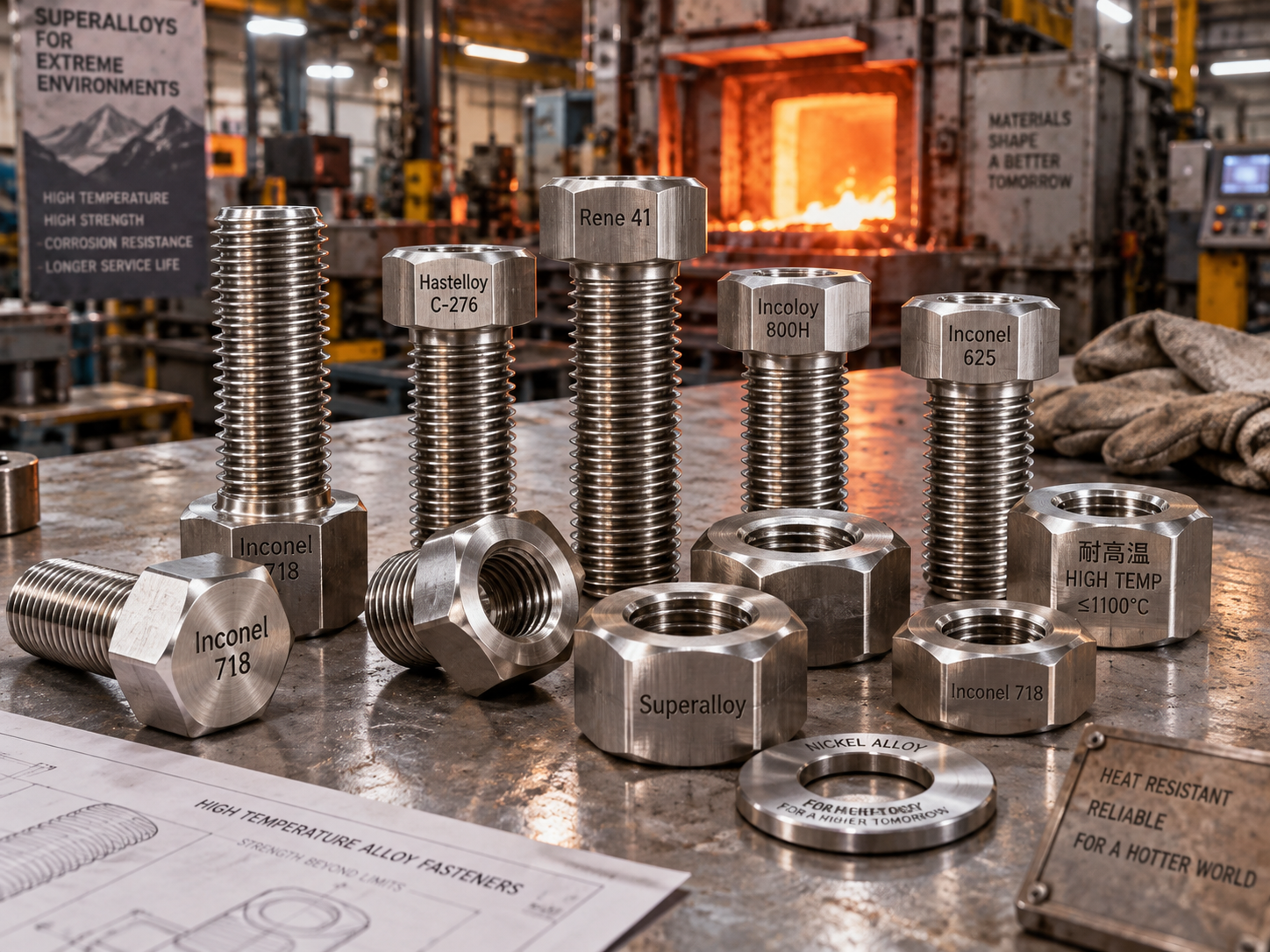
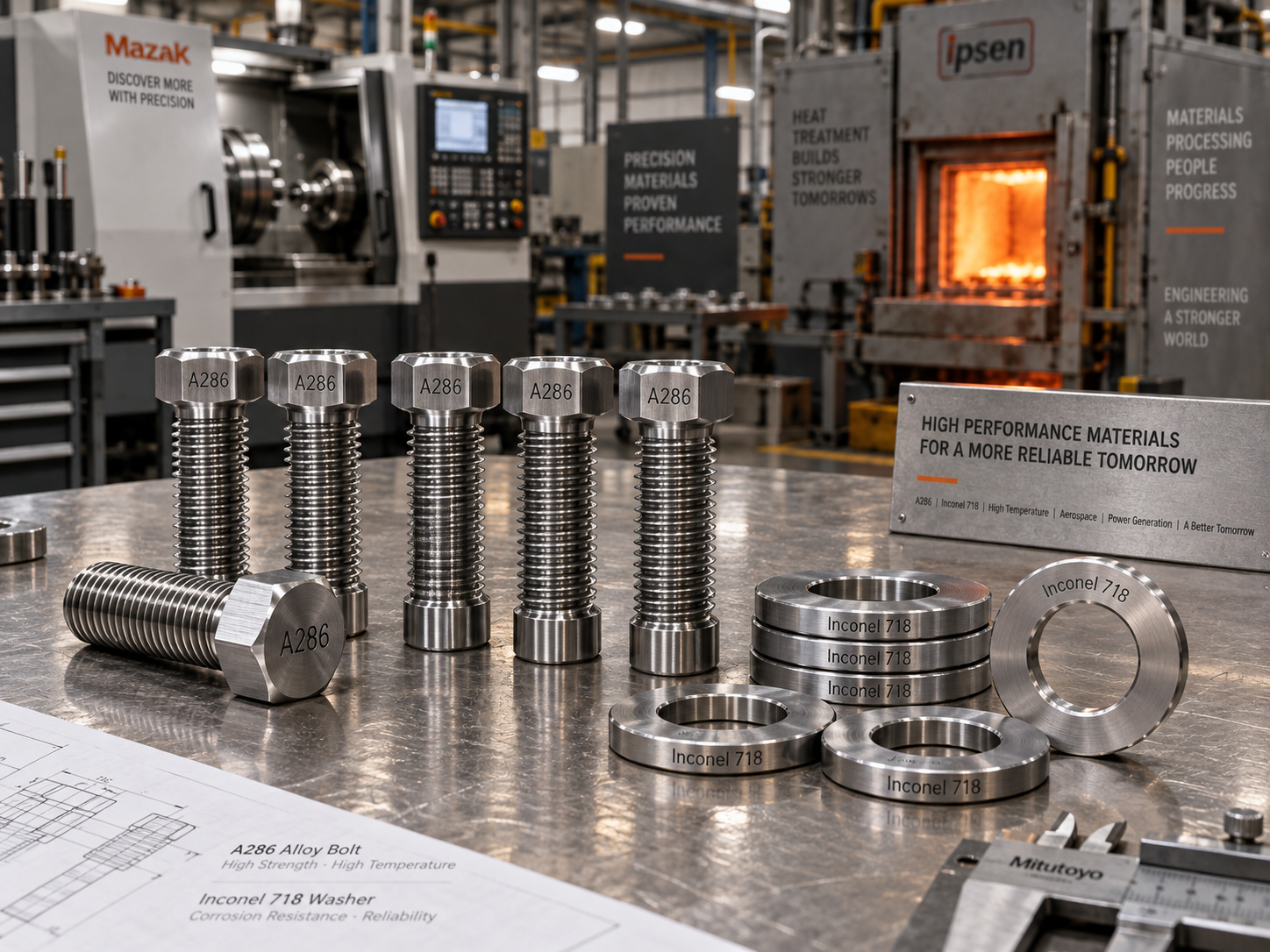
In industries constantly battling corrosion, the choice of fasteners can determine long-term performance and safety. Inconel bolt solutions are often praised for their extraordinary resistance and durability, but are they always the ultimate answer for every corrosive environment? In this article, RAYCHIN LIMITED explores the strengths and limitations of Inconel bolts, guiding engineers, procurement specialists, and decision-makers toward making the most informed material choices for high-performance applications.
Understanding Inconel and Its Role in Corrosive Environments
Inconel is a family of nickel-chromium-based superalloys known for their superior resistance to oxidation and corrosion. Common grades such as Inconel 600, 625, and 718 maintain mechanical integrity even at temperatures up to 1000°C. Their exceptional ability to withstand chloride-induced stress cracking makes them the go-to choice in marine, chemical, and aerospace applications. However, not every corrosive environment warrants the use of Inconel bolts, both from technical and economic viewpoints.
For instance, in saltwater applications, Inconel’s high nickel content provides roughly 25% greater resistance to pitting compared to standard stainless steel. In chemical processing, Inconel bolts can exhibit service life extensions of 2–3 times compared to 316 stainless steel fasteners under acid exposure. Yet, in low-level corrosive scenarios or at moderate temperatures below 300°C, alternative alloys may offer similar durability at a lower cost.
The key lies in matching the material’s electrochemical stability to environmental aggressiveness. Parameters such as chloride ion concentration (typically 50–2000 ppm in industrial systems), operating temperature, and exposure time must be considered. RAYCHIN LIMITED’s materials engineering team often recommends detailed corrosion potential mapping to assess where Inconel provides genuine value.
Typical Inconel Grades and Key Properties
To support material selection, the following table summarizes key Inconel grades and their most relevant mechanical and chemical properties widely used in fastener manufacturing:
The relative index helps procurement and design engineers compare potential corrosion resistance quickly during the material screening phase. In high-chloride streams above 500 ppm or in pH levels below 3, Inconel 625 emerges as an optimal selection, while 600 may suffice for neutral environments.
Evaluating When Inconel Bolts Are Most Effective
Inconel’s unique chromium-oxide film regenerates rapidly when exposed to air, ensuring passive protection even after mechanical wear. This property contributes to longevity in environments where surface scratches or microcracks are common during assembly. However, the decision to use Inconel bolts depends on four critical parameters: temperature range, chemical composition of the environment, load requirement, and lifecycle cost expectations.
In continuous high-temperature service between 600–900°C, Inconel’s mechanical strength maintains above 70% of its room-temperature yield stress, compared to just 40% for stainless steel 304. In such conditions, long-term creep resistance becomes a decisive factor. Without appropriate alloy selection, engineers face frequent bolt relaxation or premature failure leading to up to 25% of equipment downtime in severe cases.
Inconel bolts excel in oxidizing and mildly reducing atmospheres. However, in strongly reducing acids such as hydrochloric or hydrofluoric acid, even Inconel alloys can fail through localized attack. In such conditions, materials like Hastelloy C-276 or titanium grades may perform more consistently. Therefore, understanding the electrolyte environment is not optional—it is fundamental to reliability-based design.
Performance Comparison under Specific Conditions
The table below compares Inconel bolts with other specialty metal fasteners under typical industrial corrosive conditions to assist decision-makers in optimizing their selection:
This comparison highlights that Inconel’s high purchase cost is justified primarily when expected service life extends beyond 20 years or where downtime costs exceed 15% of total operating expense annually.
Alternative Fasteners and Material Selection Strategy
While Inconel bolts dominate discussions of corrosion resistance, various other alloys offer targeted advantages under specific conditions. Duplex stainless steels (2205, 2507) provide a balance between cost and strength, with about 80–90% of Inconel’s corrosion protection at roughly 60% of the cost. Titanium bolts, on the other hand, excel in chloride-rich solutions where potential galvanic corrosion risks are mitigated. Nickel-aluminum bronze, Monel, and even coated carbon steel bolts remain options when conductivity or magnetic neutrality is critical.
RAYCHIN LIMITED’s technical advisory team employs a five-stage evaluation framework to support customers in choosing appropriate materials:
- Define the chemical composition and pH levels of the working medium.
- Determine average and peak operating temperatures (±10°C tolerance).
- Evaluate the mechanical loading spectrum and fatigue cycles per year.
- Estimate lifetime cost including maintenance, replacement, and downtime.
- Compare total lifecycle value based on performance-cost ratio.
For example, in oil and gas facilities where CO₂ and H₂S coexist, Super Duplex steels may match Inconel’s resistance at one-third of the initial material expense, given that chloride concentration remains below 300 ppm. When environmental aggressiveness crosses the threshold, however, switching to Inconel or Hastelloy becomes essential to avoid catastrophic cracking.
Maintenance, Inspection, and Lifecycle Considerations
Material selection impacts not only initial assembly performance but also inspection intervals and MRO (maintenance, repair, overhaul) scheduling. Inconel bolts typically allow inspection intervals to be extended from 12 to 36 months in marine hardware, saving roughly 20–30% in annual maintenance costs. This reduction stems from its ability to resist surface pitting and oxidation even after thousands of thermal cycles.
Yet, to maintain peak performance, controlled torqueing and lubrication standards must be followed. Over-tightening beyond recommended torque (±10%) can compromise protective oxide layers. Many customers of RAYCHIN LIMITED integrate fastener torque auditing into semiannual safety reviews to achieve consistent sealing and prevent galling.
From a procurement perspective, the typical supply lead time for Inconel fasteners ranges from 6–8 weeks, depending on thread specification (UNC, UNF, metric fine) and surface treatment. For high-volume OEM orders exceeding 10,000 pieces, strategic inventory programs enable stable delivery cycles below 4 weeks. Understanding these logistical timelines helps project managers align procurement planning with construction schedules.
Common Misconceptions and Practical Recommendations
A frequent misconception is that Inconel bolts are universally superior. In reality, their exceptional performance must be balanced against cost, machinability, and installation conditions. Machining Inconel requires tooling of higher hardness (above 60 HRC) and slower feed rates, often reducing throughput by 30–40%. This is why RAYCHIN LIMITED provides pre-fabricated, precision-threaded bolts designed to minimize on-site processing time.
Additionally, improper pairing of dissimilar metals can lead to galvanic coupling. For instance, pairing Inconel bolts with aluminum components in marine structures can generate a potential difference above 0.45 V, accelerating corrosion. Applying dielectric isolation sleeves or washers effectively mitigates this effect, maintaining integrity over 10,000+ operating hours in salt-spray conditions.
Ultimately, material selection should follow a quantified approach involving corrosion potential, mechanical loading, and lifecycle cost per operating hour. By integrating these parameters, engineers can determine when Inconel’s value proposition truly outweighs alternatives.
FAQ: Practical Insights for Engineers and Procurement Teams
How do I decide between Inconel 625 and 718 for heat-resistant bolts?
Choose Inconel 625 when superior corrosion resistance at temperatures up to 800–1000°C is required, such as in flue gas systems. Inconel 718, with higher tensile strength up to 1240 MPa and service limit around 700°C, is more suitable for mechanical strength-critical aerospace and turbine fasteners.
Can Inconel bolts be reused during maintenance?
Yes, if torque-loading history is within safe limits (<10% plastic deformation) and threads show no oxide disruption. RAYCHIN LIMITED recommends non-destructive testing every third maintenance cycle, using dye penetrant or eddy current inspection to detect subsurface damage.
What are typical coating or surface finishing options for Inconel bolts?
Common treatments include silver plating (to reduce galling and friction), chromium aluminide coatings for high-heat resistance, and dry film lubricants when exposed to vacuum environments. Coating thickness typically ranges 3–10 µm, depending on bolt size and mechanical fit requirements.
How does RAYCHIN LIMITED support customized fastener design?
RAYCHIN provides integrated design-to-delivery services including material selection consulting, finite element validation, and corrosion testing. Typical project turnaround time ranges from 3–5 weeks for custom Inconel or Specialty Metal fasteners, enabling optimized integration into special processing equipment and assemblies.
Conclusion and Next Steps
Inconel bolts represent one of the most robust solutions for combating corrosion and sustaining structural integrity in harsh industrial settings. However, they are not universally optimal. By analyzing application conditions, mechanical demands, and lifecycle economics, companies can balance reliability and cost effectively. RAYCHIN LIMITED’s expertise in Specialty Metals Fasteners ensures that each client—from project engineers to procurement directors—can identify the precise alloy that delivers maximum operational value.
To explore suitable material options or discuss custom fastener designs for your next project, contact RAYCHIN LIMITED’s technical support team today. Gain professional guidance on corrosion-resistant fasteners crafted for longevity, safety, and sustainability in every corrosive environment.
Request A Quote! We'll respond as soon as possible(within 12 hours)
Get a Quote