
Categories List
Recent Posts
 Hastelloy C276 Fasteners: Bolts, Nuts, Screws, Studs & Washers for the World's Most Aggressive Corrosive Environments
 Inconel Fasteners: Bolts, Nuts, Washers, Studs – Complete Technical Guide | RAYCHIN LIMITED
 MP35N vs Inconel, Titanium, C276, Complete Material Comparison Guide for Fasteners | RAYCHIN LIMITED
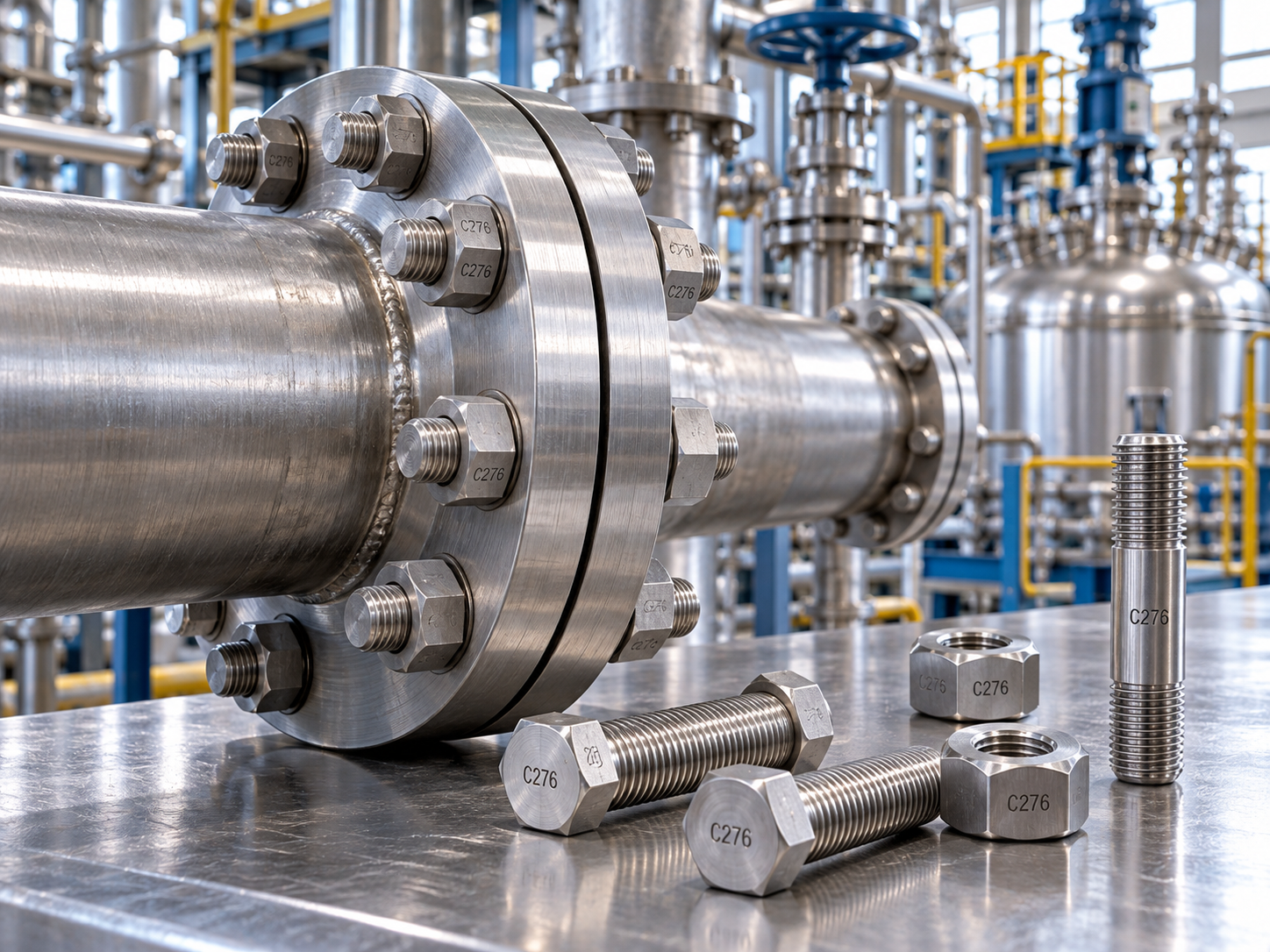
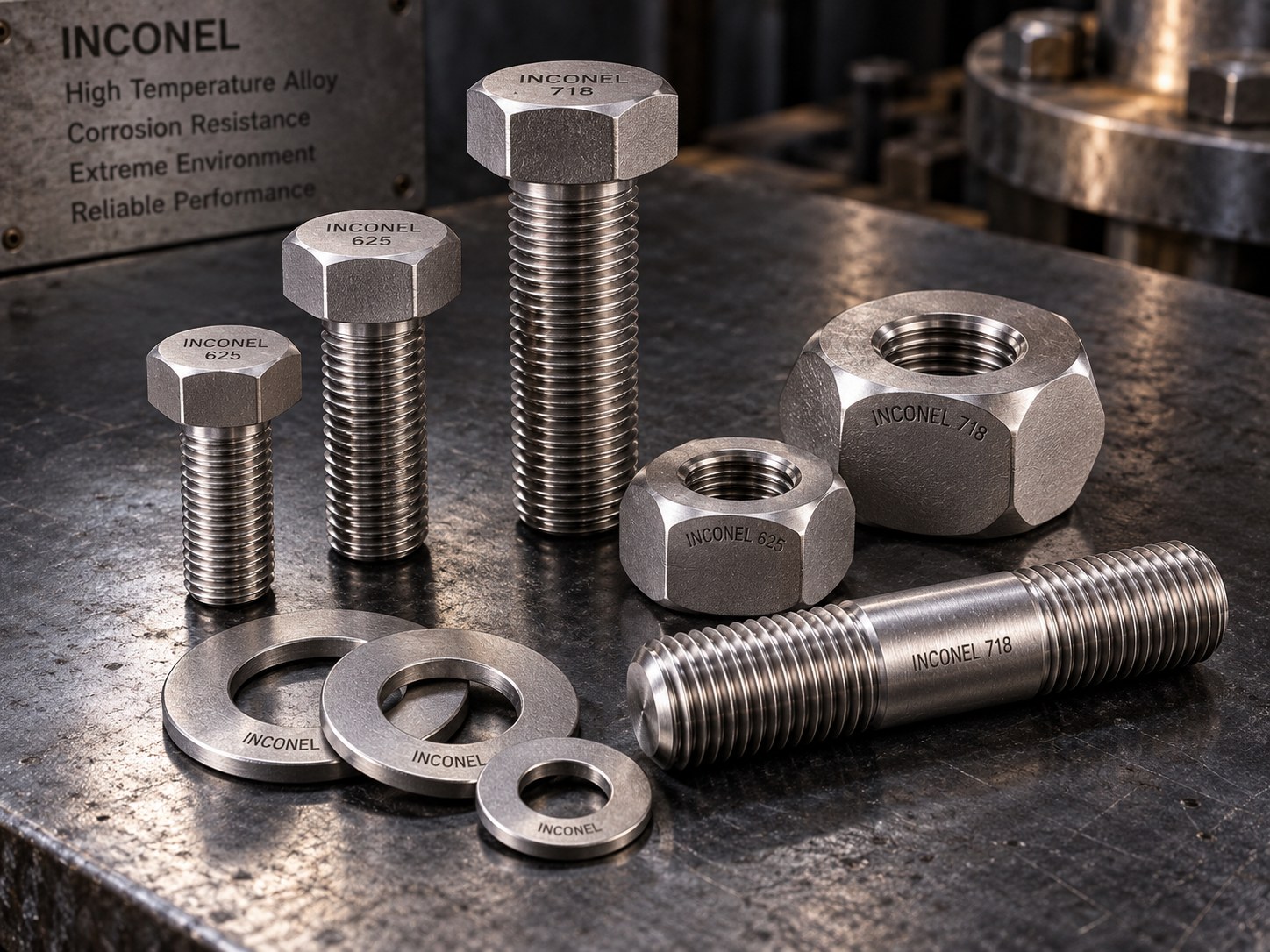
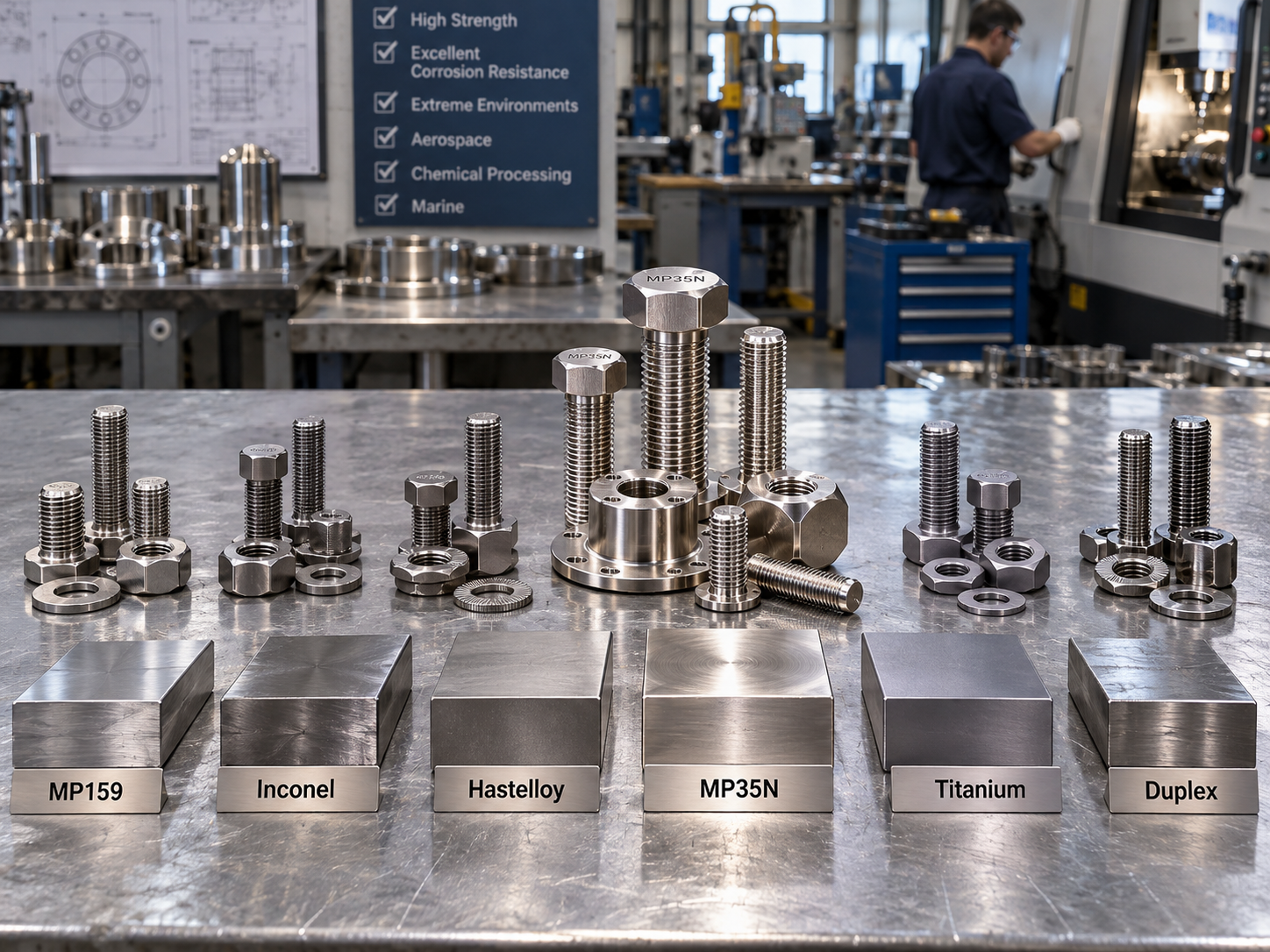
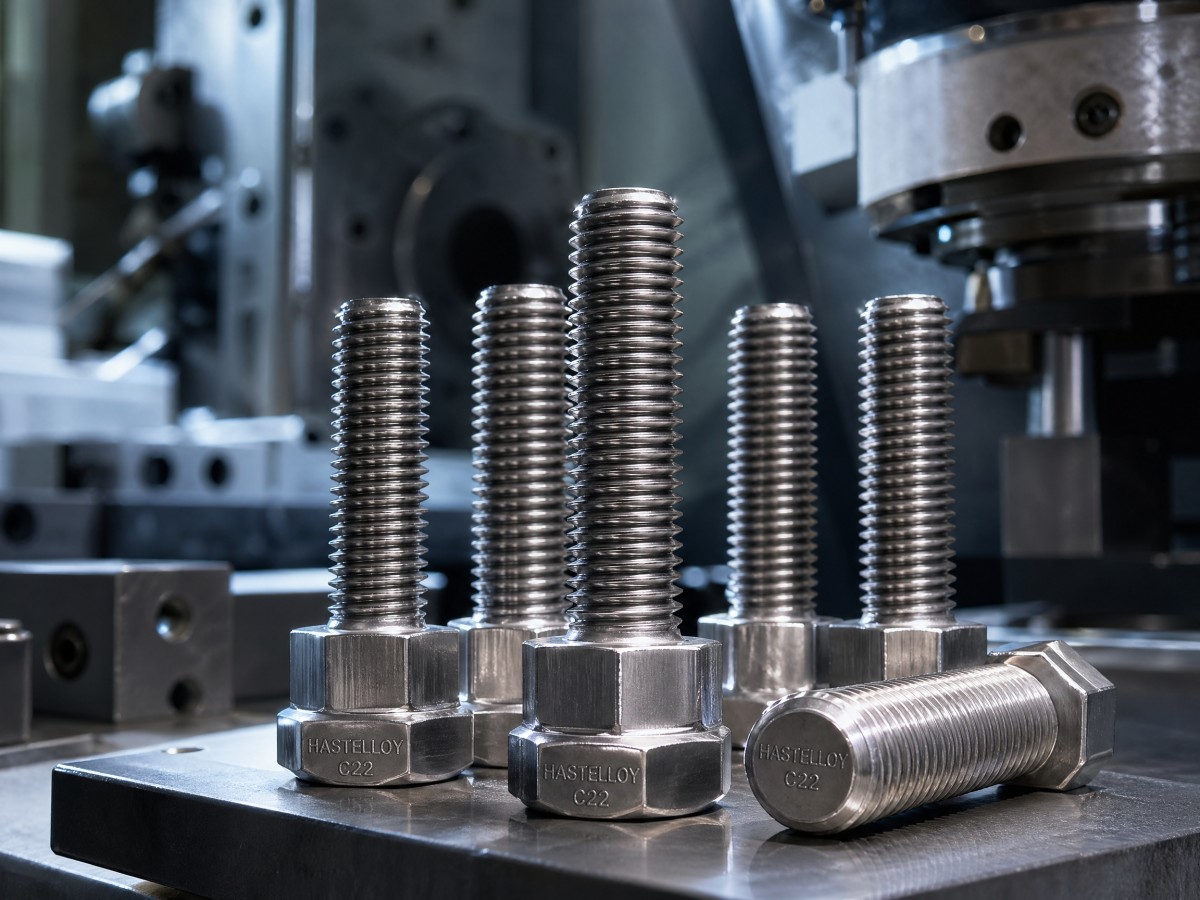
In aggressive chemical and high-temperature environments, choosing the right fastening material can directly affect safety, service life, and maintenance costs. Among many options, hastelloy c22 fasteners stand out for their exceptional corrosion resistance and long-term reliability. Whether you are comparing hastelloy fasteners, hastelloy bolts, or specialized c276 fasteners, understanding why C22 performs so well helps engineers, buyers, and project teams make safer, more cost-effective decisions.
For metal processing equipment, the fastener is never a minor accessory. In mixers, reactors, filtration skids, pickling lines, heat exchangers, dosing units, and emission-control assemblies, one failed bolt can trigger leakage, unplanned shutdowns, contamination, or personnel risk. That is why material selection often moves beyond standard stainless grades and into high-performance nickel-based alloys when the operating environment includes chlorides, oxidizing acids, wet chlorine, thermal cycling, or mixed chemical media.
Hastelloy C22 fasteners are widely considered a safer choice because they combine broad corrosion resistance with stable mechanical behavior across a demanding service window. For technical evaluators, that means lower uncertainty when process chemistry changes. For procurement teams, it means fewer replacement cycles and better lifecycle cost control. For operators and maintenance teams, it often means less seizure, fewer emergency interventions, and more predictable inspection intervals.
As a company focused on the development, manufacturing, and global distribution of standard and customized fasteners made from high-performance specialty metals, RAYCHIN LIMITED supports customers who must balance safety, durability, lead time, and fit-for-purpose material selection. With technical guidance and application-oriented support, the company helps engineering and sourcing teams identify the right fastener grade for demanding industrial equipment where standard solutions may not be enough.
Why Safety Starts with the Right Fastener Material
In metal processing equipment, safety is often discussed in terms of vessel design, piping integrity, pressure control, and operator procedures. Yet fasteners directly influence all four. A flange, enclosure, access cover, agitator assembly, or heater support is only as reliable as the bolts, nuts, washers, and studs that hold it under load. If the fastener loses section due to corrosion, stress relaxation, or galling, the entire assembly can move out of tolerance long before a larger component shows visible damage.
The risk is especially high in chemical handling and thermal processing systems that see temperatures from 80°C to over 400°C, frequent washdowns, intermittent shutdowns, and mixed media exposure. In these environments, corrosion is rarely uniform. Crevice attack, pitting, stress-assisted cracking, and localized metal loss often begin at threaded areas, under bolt heads, or at flange contact points. These are exactly the areas where dimensional stability matters most.
A safer fastener material reduces both the probability of failure and the speed at which small defects turn into serious incidents. That is where hastelloy c22 fasteners distinguish themselves. Their chemistry is designed to perform in both oxidizing and reducing conditions, unlike some materials that perform well in one environment but degrade quickly in another. This broad resistance profile is highly valuable for systems where process fluids, cleaning agents, or ambient contamination can vary over time.
From a project management perspective, choosing the right fastener at the design stage can prevent recurring costs across 3 major areas: replacement labor, downtime, and secondary damage. A fastener that lasts 2 to 4 times longer than a lower-grade alternative may initially cost more, but the avoided shutdown hours, re-torquing work, and leakage risks often justify the decision quickly in high-value process lines.
For quality and safety teams, fastener selection also affects inspection planning. Materials that resist aggressive corrosion more effectively allow longer and more predictable review intervals, provided installation torque, thread condition, and mating materials are correct. In practice, this can support maintenance windows of 6 months, 12 months, or longer depending on service conditions, instead of frequent unscheduled intervention.
Where Fastener Failures Usually Begin
Most failures do not start as dramatic breakage. They begin as small changes in thread geometry, corrosion product buildup, clamp load loss, or seizure during maintenance removal. In metal processing equipment, these issues often appear first in four zones: splash-exposed external joints, crevice-prone flange edges, heated sections with thermal cycling, and parts exposed to acid fumes or chloride-bearing condensate.
- Thread roots, where stress concentration and corrosive residue can combine.
- Under-head contact surfaces, where trapped solution creates crevice conditions.
- Bolted joints near heaters or hot ducts, where repeated expansion and contraction affects preload.
- Maintenance-access covers opened every 30 to 90 days, where galling risk becomes a practical service issue.
When these risk points are present, material choice must be based on more than nominal strength. Corrosion resistance, anti-galling behavior, compatibility with mating components, and stability under service temperature all become part of the safety equation.
Why Broad Corrosion Resistance Matters More Than One-Dimensional Strength
Some buyers focus first on tensile values, but in aggressive process systems, a fastener rarely fails because the original strength rating was too low. More often, it fails because corrosion reduced the effective cross-section, or because thread damage prevented correct preload from being applied during installation or reassembly. In such cases, a corrosion-resistant alloy with suitable mechanical performance is safer than a stronger alloy that degrades faster in service.
Hastelloy C22 is often selected precisely because it protects the joint against unpredictable chemistry. In metal processing lines that shift between acids, rinse water, oxidizing cleaning media, and warm humid idle conditions, that versatility can be more valuable than chasing peak strength on paper.
What Gives Hastelloy C22 Fasteners Their Safer Performance Profile
Hastelloy C22 belongs to the nickel-chromium-molybdenum alloy family and is recognized for resistance to pitting, crevice corrosion, and stress-related attack in a wide range of aggressive environments. Its balanced alloy composition is a major reason it performs so well in process equipment exposed to oxidizing chlorides, wet chlorine, ferric and cupric salts, contaminated acids, and mixed waste streams. This broad resistance window is one of the strongest safety arguments in favor of hastelloy c22 fasteners.
In practical equipment design, fasteners are often the smallest exposed metallic elements, but they may face the harshest micro-environments. Residual chemicals collect around threads. Moisture stays trapped beneath washers. Insulation jackets create hidden hot spots. Cleaning chemicals splash irregularly. A material that can tolerate only narrow conditions may look acceptable in a specification sheet but still fail in real service. C22 offers a more forgiving margin in these complex situations.
Another important point is fabricability and availability in common fastener forms. Engineers need not only bolts, but also studs, hex nuts, socket products, threaded rods, washers, and custom-machined fastening components. For capital equipment manufacturers and maintenance teams, a safer material is also one that can be supplied in the correct geometry, with consistent chemistry and controlled manufacturing quality.
Compared with general stainless steel grades, the benefit of C22 becomes clearer when chloride contamination, acidic residues, or thermal fluctuation are part of the process environment. In some installations, even low chloride carryover combined with stagnant moisture can trigger localized attack on stainless components within months. By contrast, nickel-based alloys such as C22 are often chosen to extend service life from short replacement cycles into multi-year operation, subject to torque control, media concentration, and temperature range.
Key Safety-Related Material Attributes
The following comparison highlights why C22 is frequently considered for high-risk bolted joints in metal processing equipment. The values below are expressed as application-oriented characteristics rather than exact product specifications, because final suitability depends on dimensions, heat treatment route, and service conditions.
The key takeaway is that C22 does not deliver safety through a single outstanding feature alone. Its value comes from a combination of chemical versatility, localized corrosion resistance, and service stability. In equipment where the exact corrosive mechanism may change over time, that combination is often more useful than a narrow best-case performance advantage.
How C22 Compares with Other Common Options
Many sourcing teams compare hastelloy c22 fasteners with stainless steel, duplex grades, titanium, and c276 fasteners. The right answer depends on media, temperature, availability, and budget. Still, there are clear selection patterns. Stainless may be suitable for moderate conditions. C276 may be preferred for some specific highly reducing or severe services. C22 often becomes the practical choice when engineers need strong all-round resistance and want to reduce the risk of selecting a material that performs well in only one part of the process envelope.
Typical Comparison Points
- Against 316 or 904L stainless: C22 generally offers far stronger protection in chloride-contaminated acidic conditions.
- Against duplex grades: C22 may provide better confidence where mixed oxidizing media and crevice risk dominate.
- Against c276 fasteners: C22 is frequently selected when broad oxidizing resistance is a priority and process chemistry is variable.
- Against lower-cost nickel alloys: C22 often reduces lifecycle uncertainty even if initial purchasing cost is higher by 20% to 60% in some project scenarios.
For OEMs and retrofit contractors, this means C22 can simplify material standardization across multiple equipment modules, especially when one skid or line section includes tanks, pumps, ducting, and access panels exposed to different but overlapping corrosive conditions.
Where Hastelloy C22 Fasteners Improve Safety in Metal Processing Equipment
The strongest case for hastelloy c22 fasteners appears in applications where failure consequences are higher than the fastener cost difference. In metal processing equipment, this often includes acid circulation systems, high-temperature treatment assemblies, fume handling units, descaling and pickling lines, electrochemical processing equipment, scrubber modules, and precision enclosures that must maintain alignment and sealing integrity over long operating cycles.
These environments are demanding because the fastener may be exposed to liquid chemicals, vapor-phase corrosion, thermal expansion mismatch, cleaning chemicals, and vibration at the same time. A corrosion-resistant plate or vessel body alone is not enough if the joining hardware remains vulnerable. The joint is only as safe as its weakest metallic component, which is why experienced design teams evaluate fasteners as part of a complete corrosion system rather than a separate commodity purchase.
For operators and maintenance teams, safer fasteners also improve serviceability. Bolts that remain removable after 6, 12, or 24 months reduce the chance of drilling, cutting, flange damage, and extended downtime. This matters in plants that schedule shutdowns tightly, often allowing only 8 to 24 hours for a section changeout, cleaning cycle, or gasket replacement. A seized or heavily corroded bolt can turn a short maintenance window into a cascading delay.
Below is a practical application view showing where C22 tends to provide the highest value. These are not absolute rules, but they reflect common selection logic in metal processing and related chemical-handling equipment.
The table shows that C22 adds value not only in fully immersed service, but also in the more common mixed-exposure conditions found around industrial equipment. In many real plants, bolts fail fastest where vapor, condensation, heat, and intermittent chemical contact overlap. Those are exactly the situations where broad corrosion resistance improves safety margins.
High-Value Use Cases for Different Stakeholders
Different decision-makers evaluate fasteners in different ways. Engineers focus on compatibility and failure mode prevention. Operators care about safe, stable running. Buyers look at lead time, traceability, and total cost. Safety and quality personnel need predictable inspection outcomes. C22 becomes especially attractive when all these concerns must be satisfied at once.
- For engineering teams: useful where one material must perform across 2 to 3 related chemical environments in a single skid.
- For maintenance teams: valuable where bolts are reopened regularly and thread condition affects turnaround time.
- For procurement: suitable where extended service life can justify a higher initial unit cost.
- For project managers: helpful where avoiding a single delay event is worth more than material price savings.
This is why hastelloy c22 fasteners are often selected not just for “corrosion resistance” in a general sense, but for overall operating confidence in mission-critical equipment.
How to Evaluate C22 Against C276 and Other Hastelloy Fasteners
A frequent sourcing question is whether hastelloy c22 fasteners or c276 fasteners are the better choice. The answer depends on the exact media profile, service temperature, fabrication route, and failure history of the equipment. Both are premium nickel-based options used in severe environments, but they are not interchangeable in every case. Choosing the safer option requires application-specific thinking rather than defaulting to the more familiar grade.
C22 is often favored for broad resistance in oxidizing and mixed corrosive conditions. C276 also has strong corrosion resistance and may be selected for harsh reducing media or legacy specifications already standardized in an existing plant. For technical evaluation teams, the real issue is not which alloy is “better” in the abstract, but which alloy gives a more reliable safety margin for the precise combination of chemistry, temperature, crevice geometry, and maintenance practice present in the equipment.
In many projects, the comparison should include more than corrosion charts. Joint design, availability in required fastener dimensions, machining quality, surface condition, lead time, and documentation package all affect the final decision. A theoretically suitable material that cannot be supplied in the needed thread form, within the needed 2 to 6 week project window, may not be the practical choice.
The matrix below offers a practical comparison framework for evaluators selecting between hastelloy fasteners for demanding metal processing equipment.
This comparison does not replace corrosion testing or engineering review, but it helps clarify one central point: the safer choice is the alloy that preserves joint integrity under real operating conditions, not the one that looks strongest in a narrow comparison.
Four Questions Before Final Material Selection
Before confirming C22, C276, or another specialty alloy, it is useful to align internal stakeholders around a short list of technical questions. These questions often prevent costly over-specification on one hand and risky under-specification on the other.
- What are the normal and upset-condition temperature ranges, for example 60°C steady operation but 180°C during cleaning or purge?
- Is the fastener in immersed, splash, vapor, insulated, or cyclic-wet service?
- How often is disassembly expected: quarterly, annually, or only during major shutdown every 24 months?
- Are the mating materials and lubricants selected to minimize galling and galvanic mismatch?
When these questions are answered early, material selection becomes more defensible for both technical and commercial review teams.
Procurement, Quality Control, and Installation Factors That Affect Safety
Even the best alloy cannot guarantee safe service if the fastener is poorly manufactured, incorrectly specified, or badly installed. For this reason, safety depends on the full procurement-to-installation chain. In specialty alloy supply, buyers should verify material identity, dimensional accuracy, thread quality, heat traceability where required, and surface condition. These details are especially important for hastelloy bolts and custom studs used in critical sealing joints.
In metal processing equipment, fasteners are often purchased under time pressure during shutdowns, retrofits, or repair projects. That creates risk. Teams may substitute a “close enough” grade, mix washers from a dissimilar alloy, or reuse hardware exposed to corrosive residue. Each shortcut can reduce the safety margin. A practical control approach is to define 5 basic incoming checks: grade confirmation, dimensional verification, thread inspection, surface cleanliness, and packaging traceability.
Installation practice is equally important. Excessive torque can damage threads or create stress concentration. Insufficient torque reduces clamp load and increases leakage risk. In corrosive service, lubrication or anti-seize selection should also be evaluated for compatibility with temperature and media. For assemblies reopened every 3 to 12 months, thread condition and removal behavior are not minor maintenance issues; they are part of the original safety design.
RAYCHIN LIMITED supports customers not only with product supply, but also with material selection guidance for standard and custom specialty metal fasteners. This is particularly valuable when the project involves unusual sizes, non-standard thread forms, or combined requirements such as corrosion resistance, temperature tolerance, and fit with existing imported equipment.
Practical Procurement Checklist
The table below summarizes a straightforward decision framework that procurement teams, quality staff, and project leaders can use when sourcing hastelloy c22 fasteners for industrial equipment.
A disciplined procurement process reduces hidden risk. Many field failures are not caused by choosing an advanced alloy, but by losing control over dimensions, mating parts, or installation conditions after the material decision has already been made.
Installation and Maintenance Recommendations
For operators and after-sales maintenance teams, the following measures help preserve the safety benefits of C22 in service:
- Verify joint cleanliness before assembly, especially on sealing faces and thread roots.
- Use a controlled torque procedure and tighten in sequence for flanged joints or cover plates.
- Evaluate suitable lubricants or anti-seize compounds for the expected temperature range, such as ambient to 300°C service.
- Inspect bolts during shutdown for discoloration, pitting, thread damage, and preload loss indicators.
- Replace suspect hardware as a set when the joint is safety-critical, rather than mixing aged and new fasteners.
These steps do not add much time to a maintenance task, but they can significantly improve repeatability and reduce rework across multiple service cycles.
Common Questions, Selection Mistakes, and Final Guidance
Teams evaluating hastelloy c22 fasteners often ask whether they are always necessary, how to justify the cost, and whether they can be mixed with other materials. The practical answer is that C22 is not the automatic choice for every joint. It is the safer choice when the cost of corrosion-related failure is high and when the service environment includes enough uncertainty or severity that standard alloys no longer provide comfortable margin.
One common mistake is selecting a premium alloy for the vessel but using lower-grade fasteners to save money. Another is specifying C22 for the bolt but ignoring washer, nut, lubrication, or galvanic pairing issues. A third is comparing only purchase price rather than total ownership cost. In aggressive service, a shutdown delay of even 6 to 12 hours can outweigh the price difference of the fasteners installed on a critical assembly.
A more effective approach is to evaluate the joint as a lifecycle asset. Ask how long the fastener should last, how often it will be removed, what failure mode is most likely, and what the downstream consequence would be. When these questions are answered clearly, the business case for C22 often becomes easier to justify to both engineering and commercial decision-makers.
For companies managing new equipment projects, retrofits, or recurring maintenance demand, working with a supplier that understands specialty metals and custom fastener requirements can shorten evaluation time and reduce mismatch between specification and real operating need. That is especially important when the project includes both standard and customized fasteners across several equipment modules.
FAQ: Practical Buying and Application Questions
How do I know if hastelloy c22 fasteners are justified instead of stainless steel?
If the joint sees chloride contamination, acid fumes, mixed cleaning chemicals, or elevated temperatures beyond ordinary plant conditions, C22 should be evaluated. It is especially justified where failure could cause leakage, contamination, or downtime in a high-value process area. If maintenance history shows repeated fastener corrosion within 6 to 18 months, moving to a higher alloy may be more economical than continuing replacement cycles.
Are c276 fasteners better than C22?
Not in every case. C276 fasteners are also used in severe corrosive environments, but the better option depends on the exact service chemistry and operating history. C22 is often chosen for broad oxidizing and mixed-environment resistance. A technical review should compare actual media, temperature, exposure type, and maintenance frequency before standardizing one grade.
What delivery factors matter for project planning?
For standard sizes, sourcing time may be shorter than for custom studs, special thread forms, or non-standard washer sets. In practice, project teams should confirm three timing points early: quotation turnaround, production or stock availability, and shipping window. For shutdown-driven demand, even a 7 to 15 day timing difference can affect whether the original material choice is maintained or replaced by a compromise.
Can C22 fasteners reduce maintenance cost even if unit price is higher?
Yes, especially when service removal is difficult, access is restricted, or downtime is expensive. A higher initial unit cost may be offset by longer replacement intervals, easier disassembly, fewer seized threads, and lower leakage risk. Total value is strongest where labor, shutdown exposure, or process loss is greater than raw hardware cost.
Final Decision Framework
If you are selecting fasteners for metal processing equipment, think in terms of 4 final criteria: environment severity, joint criticality, maintenance frequency, and cost of failure. When at least 2 or 3 of these criteria are high, hastelloy c22 fasteners often become the safer and more commercially rational choice. They are not just corrosion-resistant hardware; they are risk-control components built into the integrity of the equipment itself.
RAYCHIN LIMITED provides specialty metal fasteners for standard and customized requirements, supported by technical knowledge and practical guidance on material selection for challenging industrial applications. If you are comparing hastelloy fasteners, hastelloy bolts, or c276 fasteners for a new build, retrofit, or maintenance program, now is the right time to review the operating conditions in detail.
To reduce corrosion risk, improve service reliability, and make a more confident sourcing decision, contact us for product details, application support, or a customized fastener solution matched to your equipment, process media, and project schedule.
Request A Quote! We'll respond as soon as possible(within 12 hours)
Get a Quote