
Categories List
Recent Posts
When high loads, elevated temperatures, and corrosion resistance all matter, choosing the right fastening solution becomes critical. A286 threaded rod is widely valued alongside a286 fasteners, a286 bolts, and a286 stainless steel fasteners for demanding industrial applications. This article explores how A286 performs under high stress, helping engineers, buyers, and project teams evaluate strength, reliability, and material selection with greater confidence.
Why does A286 threaded rod matter in high-stress metal processing equipment?
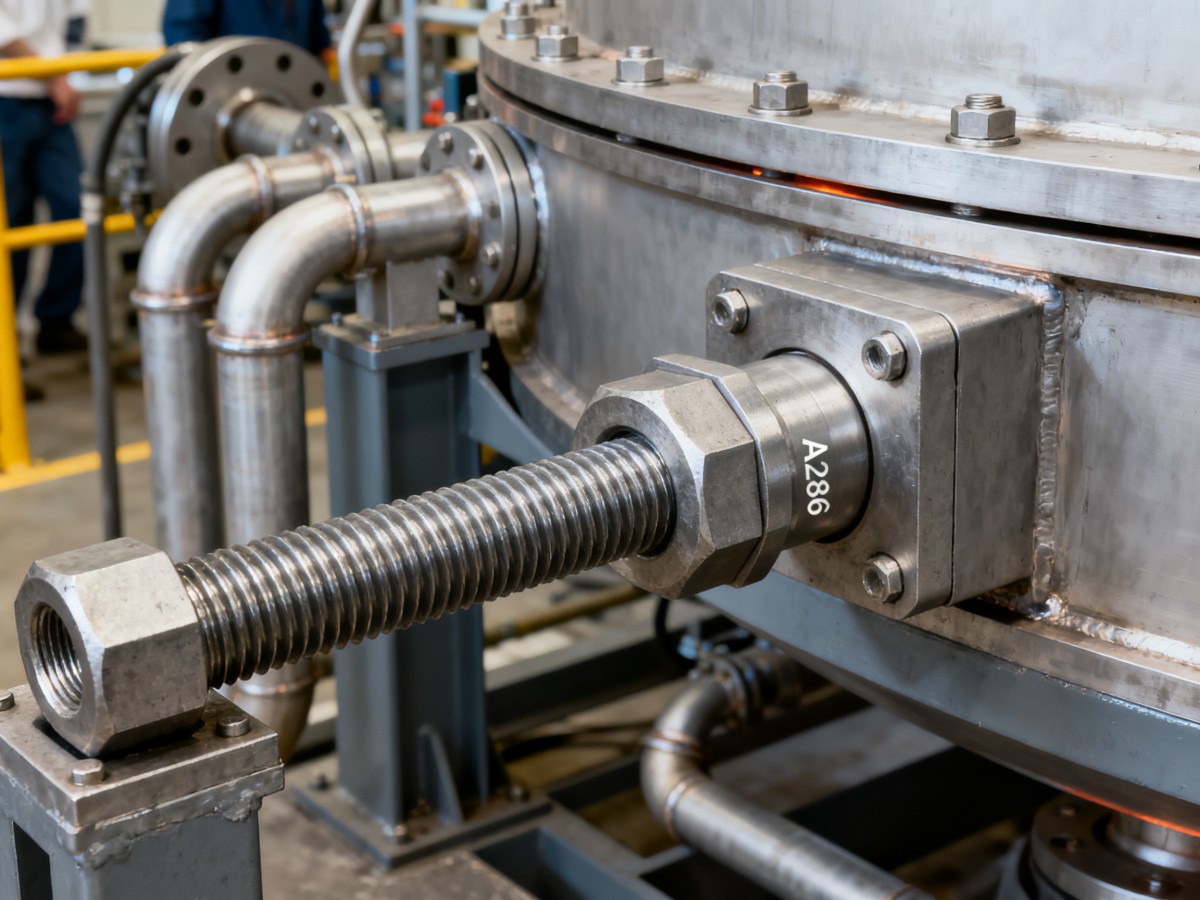
In metal processing equipment, fastening components often work under combined stress rather than a single simple load. A threaded rod may face tensile force, vibration, thermal cycling, flange relaxation, and corrosive media at the same time. In these conditions, material choice directly affects service stability, shutdown risk, and maintenance frequency. That is why A286 threaded rod is often evaluated for ovens, heat-treatment systems, industrial fixtures, processing lines, and structural assemblies exposed to elevated operating temperatures.
A286 is known as an iron-nickel-chromium based precipitation-hardenable alloy with useful strength retention at elevated temperature and good oxidation and corrosion resistance in many industrial environments. For operators and maintenance teams, this means fewer concerns about fastener distortion during repeated start-stop cycles. For technical evaluators and project managers, it means a more predictable balance between mechanical strength and environmental resistance across a practical service window that often extends from room temperature to around 540°C–650°C depending on design assumptions and application specifics.
The importance becomes clearer when equipment is expected to run continuously for 8–24 hours per day or in batch processes with repeated weekly thermal exposure. Common carbon steel threaded rod may provide low initial cost, but it typically loses strength faster at higher temperature and may suffer oxidation or corrosion in wet, chemical, or salt-bearing conditions. A286 is often selected when the cost of one unplanned stop, one damaged flange, or one failed support connection is significantly higher than the material premium.
For buyers and business decision-makers, the practical question is not simply whether A286 is strong. The better question is whether its performance profile reduces lifecycle risk in a defined application. RAYCHIN LIMITED supports this evaluation by combining specialty metals fastener development, manufacturing, and technical guidance, helping customers compare standard and custom fastening solutions for demanding industrial conditions rather than relying on generic material substitution.
What high-stress conditions are most relevant?
In real production environments, fasteners rarely fail because of one textbook load case. Failure usually develops from a mix of conditions that gradually reduce preload or create cracking risk. Technical teams should therefore define the operating profile before selecting rod diameter, thread form, heat treatment, and inspection level.
- High tensile loading from structural clamping, suspended equipment sections, or pressure-bound assemblies.
- Thermal cycling across ambient temperature and elevated ranges such as 300°C, 500°C, or higher intermittent exposure.
- Vibration and dynamic load from rotating equipment, conveyors, processing lines, and motor-driven systems.
- Corrosive attack from moisture, cleaning agents, process chemicals, or marine-adjacent atmospheres.
- Relaxation and creep concerns when joints must hold preload over long service periods.
If two or more of these conditions are present together, the value of A286 threaded rod becomes easier to justify. In metal processing equipment, that combination is common rather than exceptional.
How does A286 perform under load, heat, and corrosion in real applications?
Performance assessment should start with three linked questions: how much load must the rod carry, how much temperature will it see, and how stable must the joint remain over time. A286 threaded rod is used because it provides a useful mix of high-temperature strength, reasonable corrosion resistance, and dimensional stability compared with many conventional stainless grades. This is especially important where metal processing equipment cannot tolerate frequent retightening or replacement intervals every few weeks or months.
At ambient temperature, A286 can deliver strong mechanical properties after proper heat treatment, making it suitable for high-load clamping or structural fastening. At elevated temperature, its strength retention is one of the main reasons engineers specify it instead of standard austenitic stainless materials. In many procurement reviews, the key benefit is not only peak strength but reduced loss of preload during sustained exposure in hot service zones.
Corrosion behavior also matters because oxidation, galling, and surface deterioration can increase maintenance difficulty. In industrial equipment with moisture, intermittent washdown, or mildly aggressive chemicals, A286 often performs better than lower-grade options. However, application review is still essential because not every corrosive medium affects metals in the same way. Chloride-rich exposure, acid cleaning cycles, and contamination from dissimilar metals all require engineering review before final selection.
The table below summarizes how decision-makers often assess A286 threaded rod in high-stress metal processing use. These are selection-oriented considerations rather than universal guarantees, and they should be verified against the actual operating profile, drawing requirements, and installation method.
This comparison framework is useful for both engineering review and purchasing approval. A material that looks expensive at order stage may prove economical when maintenance windows are every 6–12 months instead of every 4–8 weeks in harsh service conditions.
Where does A286 threaded rod fit best?
The best fit is usually equipment that combines heat, load, and exposure rather than systems with only one demanding factor. In metal processing facilities, this includes furnace hardware, burner assemblies, thermal insulation supports, process ducting, heated fixtures, and high-temperature structural brackets. It can also suit retrofit projects where an existing joint repeatedly loosens or corrodes and a stronger specialty metal solution is needed.
Typical service scenarios
- Batch or continuous thermal equipment operating in the 400°C–650°C range.
- Machine assemblies with vibration plus moderate corrosion exposure.
- Plant installations where inspection access is limited and long service life is preferred.
- Projects requiring custom rod length, thread engagement, or matched fastener sets.
For such applications, RAYCHIN LIMITED can support material selection and supply alignment between drawing needs, operating conditions, and manufacturing practicality, especially where standard catalog parts are not sufficient.
A286 vs common alternatives: what should engineers and buyers compare?
A286 is not the default choice for every fastening job. It is a targeted solution where service conditions justify a specialty alloy. For procurement teams, meaningful comparison should go beyond price per piece. The better method is to compare temperature capability, mechanical retention, corrosion behavior, replacement frequency, and installation risk. This is especially important when the fastener is a small-cost item protecting a high-value piece of metal processing equipment.
Common alternatives may include carbon steel, 304 stainless steel, 316 stainless steel, and higher nickel alloys depending on the plant environment. Carbon steel usually offers the lowest initial purchase cost, but it often loses performance in heat or corrosion. 304 and 316 may improve corrosion resistance in some conditions, yet they generally do not match A286 in elevated-temperature strength retention. Higher nickel alloys may exceed A286 in extreme environments, but they can raise cost and sourcing complexity significantly.
Because project teams often need an efficient pre-screening tool, the table below highlights common decision logic rather than absolute rankings. Final choice should still consider drawing tolerances, thread specification, mechanical requirement, and plant-specific exposure.
This comparison shows why A286 often sits in the middle-to-high performance band. It is not the least expensive material, but it can be a practical answer when plant reliability, hot-zone performance, and service interval matter more than simple purchase price.
Three decision filters that prevent wrong substitution
Before changing from A286 to a cheaper alternative, technical and purchasing teams should apply at least 3 filters. First, confirm the actual temperature range and duration, such as intermittent 500°C spikes or continuous 450°C duty. Second, review whether failure would stop production or create safety risk. Third, calculate maintenance impact over a 12–24 month period, not only at order date.
If the fastener sits in a non-critical ambient location, substitution may be reasonable. If it supports heated components, moving assemblies, or difficult-access maintenance zones, the short-term saving may create a higher total cost later.
What should procurement and technical teams check before ordering?
Buying A286 threaded rod for metal processing equipment requires more than naming the material. Many field problems come from incomplete specification: wrong thread standard, wrong heat-treatment condition, insufficient thread engagement, mismatched nuts, or no anti-galling plan during installation. For quality managers and project owners, a disciplined pre-order checklist reduces risk and shortens communication cycles from the start.
A practical review usually covers 5 key checkpoints: material grade confirmation, dimensions and tolerances, operating temperature, environmental exposure, and required documentation. In custom projects, teams may also need to define cut length, full-thread or partial-thread configuration, end finish, marking, packaging, and lot traceability. These details are particularly important when installation windows are tight, such as shutdown periods of 3–7 days.
The following selection table helps organize the order process for buyers, engineers, distributors, and maintenance departments. It is especially useful when comparing standard stock items against made-to-order specialty metal fasteners.
Using a structured checklist like this can cut avoidable clarification rounds and reduce delivery delays. For many industrial projects, the difference between a smooth order and a difficult one is not supplier responsiveness alone, but whether the specification is complete on day one.
A 4-step evaluation path for purchasing teams
- Define the operating profile: temperature, load, vibration, and corrosion exposure.
- Match the joint requirement: diameter, thread type, rod length, and mating hardware.
- Check quality and documentation: material certification, inspection method, lot control.
- Confirm project logistics: sample need, production lead time, batch size, and packaging for site handling.
This 4-step method is especially useful for distributors and project buyers who must align technical approval with commercial timing. Where drawings are incomplete or service conditions are changing, supplier-side technical support becomes a real purchasing advantage rather than a general sales claim.
Product sourcing for standard and custom requirements
When the application requires coordinated supply of rods, bolts, nuts, and washers in the same specialty alloy family, teams often prefer a source that understands both materials and fastener manufacturing. For buyers evaluating related solutions, A286 Fasteners can be relevant where compatibility, custom dimensions, and high-performance material support are needed in one procurement path.
RAYCHIN LIMITED focuses on standard and customized specialty metal fasteners, supported by technical expertise in material development and application guidance. This matters when the project involves special lengths, non-standard combinations, or application review across several fastening components instead of a single threaded rod line item.
What installation risks, quality issues, and misconceptions should be managed?
Even the right alloy can underperform if installation practice is weak. In high-stress assemblies, failures are often linked to preload error, thread damage, galling, contamination, or mismatch between rod and mating hardware. For operators and maintenance personnel, proper assembly procedure can be just as important as material selection. For quality teams, incoming inspection and traceability protect against hidden substitution risk.
One common misconception is that a high-performance alloy eliminates all maintenance concerns. In reality, A286 threaded rod still requires correct torque strategy, suitable lubrication where applicable, proper nut pairing, and inspection intervals based on service severity. Another misconception is that any stainless-looking fastener can replace it. Visual similarity does not ensure comparable hot-strength behavior, especially above 400°C in loaded joints.
A practical field plan often includes 3 inspection stages: receiving inspection, installation verification, and periodic service review. Depending on duty level, periodic checks may be scheduled monthly, quarterly, or during planned shutdowns. In facilities with frequent thermal cycling, retorque or preload verification after initial startup may also be advisable if the joint design requires it.
For complex or high-consequence projects, technical support during selection is not a luxury. It reduces the chance of choosing the correct material but the wrong configuration. This is where a specialty fastener manufacturer with application knowledge can add value to both engineering and procurement workflows.
Frequent risk points in plant use
- Assuming room-temperature strength equals high-temperature performance without checking the service profile.
- Ignoring galling risk during assembly, especially in repeated tightening operations.
- Mixing incompatible mating components that alter corrosion behavior or reduce thread reliability.
- Using incomplete specifications that omit tolerance, finish, or required documentation.
- Evaluating only unit price instead of total cost across a 6–24 month service window.
FAQ for engineers, buyers, and maintenance teams
Is A286 threaded rod suitable for continuous hot service?
It is often selected for elevated-temperature applications because of its useful strength retention and oxidation resistance compared with many general-purpose materials. However, suitability depends on actual temperature, load duration, joint design, and environment. Continuous service at one temperature and short intermittent peaks are different design cases. A complete review should include the operating range, such as 400°C–650°C, plus the expected time at temperature and maintenance interval.
What do buyers need to specify to avoid ordering errors?
At minimum, specify rod diameter, thread standard, length, material grade, service temperature, and expected environment. If the project is critical, also define certification needs, inspection expectations, quantity by lot, and whether matched nuts or washers are required. In many industrial orders, incomplete thread or length information causes the longest delay.
How long is the typical lead-time discussion for specialty fasteners?
Lead time varies by stock status, customization depth, quantity, and inspection requirements. Buyers should discuss whether the need is a standard item, a cut-to-length configuration, or a fully custom production run. In project planning, it is practical to separate urgent replacement demand from scheduled procurement and build in enough time for technical confirmation, sample review if needed, and shipping coordination.
Does a higher material price always mean higher total cost?
Not necessarily. In metal processing equipment, the fastener itself may be a small portion of system value. If a lower-cost rod requires more frequent replacement, creates extra shutdown labor, or increases failure risk in hot service, the total ownership cost can become higher. This is why many commercial and technical teams compare over at least one maintenance cycle rather than only per-piece price.
Why choose a specialty fastener partner for A286 projects?
In demanding metal processing equipment, the challenge is rarely just finding a metal name on paper. The real task is selecting the right fastener form, confirming it fits the service environment, and ensuring supply consistency from quotation to delivery. That is where a specialty fastener partner adds value. RAYCHIN LIMITED focuses on the development, manufacturing, and global distribution of standard and customized fasteners made from high-performance specialty metals, supporting projects that need more than commodity sourcing.
For engineering teams, this means support in reviewing application conditions and matching them to suitable specialty metal fastening options. For buyers and project managers, it means clearer communication on dimensions, quantity, documentation, and supply feasibility. For distributors and end users, it means a practical path for both standard and non-standard requirements without losing focus on material performance in real operating conditions.
If you are evaluating hot-zone threaded rod, replacing a repeatedly failing fastener, or comparing lifecycle cost between standard stainless and specialty alloy options, a technical-commercial review can save time and reduce project risk. You can discuss 6 core items before ordering: application temperature, load condition, corrosion environment, required dimensions, certification needs, and target delivery window. That information helps narrow the right specification faster.
For projects involving complete matching sets, custom dimensions, or broader alloy fastening needs, you can also review A286 Fasteners as part of a coordinated solution. Contact RAYCHIN LIMITED to discuss parameter confirmation, product selection, sample support, custom manufacturing, delivery planning, inspection documentation, and quotation details for your specific metal processing equipment application.
Request A Quote! We'll respond as soon as possible(within 12 hours)
Get a Quote