
Categories List
Recent Posts
 PEEK Fasteners | Polyetheretherketone Bolts, Nuts, Screws – High-Performance Polymer | RAYCHIN LIMITED
 High-Temperature Alloy Fasteners: Complete Material Guide, Chemistry, Performance Comparison | RAYCHIN LIMITED
 High-Temperature Fastener Material Selection Guide | A286, Inconel 718, Nimonic 80A, Waspaloy – RAYCHIN LIMITED
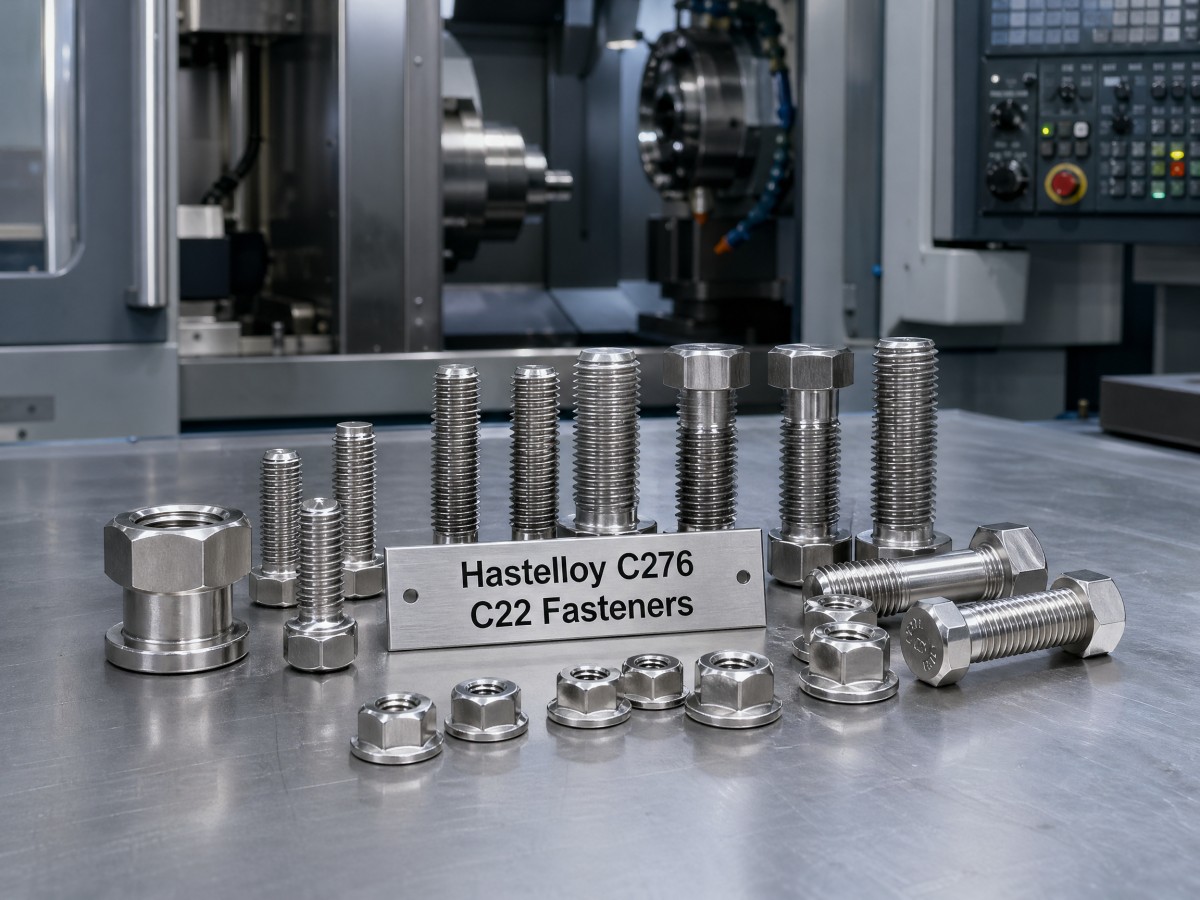
Choosing the right Hastelloy fasteners for corrosive service means balancing chemical resistance, strength, temperature performance, and cost. From hastelloy bolts and hastelloy screws to hastelloy c276 bolts, hastelloy c22 fasteners, and hastelloy threaded rod, each alloy suits different media and operating conditions. This guide helps engineers, buyers, and project teams evaluate key options, compare performance, and make reliable, cost-effective selections for demanding industrial applications.
How do corrosive service conditions affect Hastelloy fastener selection?
In metal processing equipment, fasteners often work in environments where acids, chlorides, wet gases, cleaning chemicals, and elevated temperatures act together rather than separately. That is why choosing Hastelloy fasteners is rarely a simple matter of asking for a corrosion-resistant bolt. A reliable selection must match alloy, load, temperature, medium concentration, exposure cycle, and maintenance access within the real operating envelope.
For information researchers and technical evaluators, the first practical rule is to define service conditions in at least 4 dimensions: chemical composition, operating temperature range, pressure or mechanical load, and exposure pattern. Continuous immersion, splash zone exposure, vapor-phase corrosion, and cyclic shutdown cleaning can produce very different attack mechanisms even when the same chemical is involved.
For operators and maintenance teams, the visible symptom is often not sudden bolt failure but progressive seizure, loss of preload, thread galling, staining around joints, or difficult disassembly after 6–24 months of service. In corrosive equipment, the total fastening problem includes both corrosion resistance and serviceability over repeated inspection and maintenance intervals.
For buyers and project managers, the challenge is balancing material performance with availability and lead time. Standard alloy choices may ship faster in common sizes, while special diameters, long hastelloy threaded rod, or nonstandard coatings and lubricants may extend delivery from a typical stock window of several days to a custom production cycle of 2–6 weeks, depending on specification depth and quantity.
What usually damages fasteners in corrosive process equipment?
Corrosion failure in fasteners is often more localized than in plates or pipes because threads create crevices, stress concentrations, and retention points for process residue. In metal processing equipment, this can accelerate pitting, crevice corrosion, stress-assisted attack, or under-deposit corrosion, especially around flange joints, pump casings, reactors, scrubbers, pickling systems, and chemical transfer skids.
Another common issue is mixed-material assembly. Even when a hastelloy bolt is specified correctly, pairing it with a dissimilar nut, washer, or mating flange material can introduce galvanic concerns or inconsistent thermal expansion. At temperatures above typical ambient service, repeated heating and cooling can reduce preload stability, which matters in systems with vibration or pressure cycling.
The practical selection task therefore involves at least 5 checkpoints: alloy suitability, thread form, preload method, mating material compatibility, and expected maintenance interval. If one of these is ignored, even premium hastelloy screws may underperform in real service despite having excellent corrosion resistance on paper.
Core operating variables that should be confirmed before ordering
- Chemical medium and concentration, including whether exposure is to wet chlorine, oxidizing acid, reducing acid, or mixed chloride-bearing solution.
- Temperature range in startup, steady-state, and shutdown cleaning, such as ambient to 80°C, 80°C–200°C, or intermittent higher spikes.
- Mechanical loading mode, including static flange retention, cyclic vibration, or thermal expansion-driven joint movement.
- Assembly and maintenance conditions, such as dry installation, anti-seize use, torque control, and expected disassembly frequency every quarter, every year, or only during major shutdowns.
When these inputs are clear early, the selection process becomes faster and more accurate. This is especially important for procurement teams trying to avoid over-specification that inflates cost, or under-specification that results in replacement shutdowns, leakage events, or unexpected spare-parts demand.
Which Hastelloy grades and fastener forms are commonly compared?
In corrosive service, the most frequently requested options are hastelloy c276 bolts, hastelloy c22 fasteners, general Hastelloy bolts, Hastelloy screws, and hastelloy threaded rod. While users often start with a grade name, the better approach is to evaluate the combination of alloy family and part geometry. A bolt, screw, stud, nut, and threaded rod do not face identical stress and corrosion patterns in operation.
Hastelloy C-276 is commonly considered for broad chemical resistance across oxidizing and reducing media, with strong practical value in aggressive chloride-containing and mixed-acid applications. Hastelloy C-22 is often reviewed when wider resistance against localized attack is important, particularly in systems where oxidizing contaminants or process upsets may occur. Final selection still depends on detailed medium and temperature review.
In metal processing equipment, geometry matters because long studs and threaded rods expose more surface area and more thread crevice volume than compact socket screws. Fasteners used in flanged joints may also require stricter preload consistency than general enclosure screws. As a result, part form should be chosen together with alloy, not after alloy selection.
The table below gives a practical comparison for project teams evaluating common Hastelloy fastener choices in corrosive service. It is not a substitute for corrosion testing or design review, but it helps narrow options during specification, budgeting, and vendor discussion.
A useful takeaway is that hastelloy c276 bolts often become the default shortlist item because of their broad applicability, but that does not mean they are automatically the most economical or best-controlled choice for every joint. In some assemblies, the right answer is to use a targeted mix of grades, sizes, and fastener forms based on risk ranking across the equipment package.
When to prefer bolts, screws, or threaded rod
Bolts are usually preferred for detachable structural joints and flange assemblies where controlled clamping force is required. Screws fit compact equipment sections, light covers, and instrument-related components. Threaded rod is useful when custom length, field adjustment, or full-thread engagement across long spans is needed. The service difference becomes important when the assembly must survive both corrosion and periodic maintenance.
As a practical guide, project teams often separate fasteners into 3 classes: primary pressure-retaining joints, secondary structural joints, and general access-panel or accessory joints. This simple classification makes it easier to allocate the right Hastelloy grade without applying the highest-cost option to every position in the bill of materials.
What technical and procurement criteria should buyers compare first?
A strong purchasing decision for Hastelloy fasteners should combine technical fit and commercial control. In many projects, the wrong decision does not come from choosing a weak alloy; it comes from failing to define thread standard, dimensional tolerance, surface condition, lot traceability, document package, and delivery expectation at the quotation stage. This creates costly clarification loops later in the order process.
For technical assessors, 6 checkpoints usually deserve priority: alloy grade, mechanical property requirements, dimensional standard, corrosion scenario, operating temperature, and assembly method. For procurement teams, another 5 checkpoints matter just as much: available sizes, minimum order quantity, production lead time, inspection scope, and packaging for export or site storage.
In metal processing equipment projects, many failures begin with incomplete data exchange between engineering and purchasing. For example, asking only for “Hastelloy bolts” may not define whether the need is for full-thread studs, hex head bolts, machine screws, or nonstandard machining. It also leaves open important details such as matching nuts and washers, anti-galling treatment, and whether material certificates are needed for owner review.
The following selection table helps buyers and engineers align around the most useful evaluation points before requesting a formal quotation for hastelloy bolts, hastelloy screws, or hastelloy threaded rod.
For commercial review, this table highlights an important truth: unit price alone does not represent total cost. A lower-priced fastener that causes delayed commissioning, torque inconsistency, or missing documentation can become more expensive than a properly specified component with a slightly higher piece cost but smoother execution.
A practical 4-step selection workflow
- Define the service profile: medium, concentration, temperature band, and whether exposure is continuous, intermittent, or cleaning-cycle related.
- Classify the joint: pressure-retaining, structural, access-related, or instrumentation-related, then assign the required mechanical and maintenance level.
- Confirm the product form: bolts, screws, studs, nuts, washers, or hastelloy threaded rod, along with size range and applicable standard.
- Request supply details: certification package, inspection scope, packaging method, and expected delivery window such as stock, 2–4 weeks, or longer custom lead time.
This workflow works well for engineering teams, purchasing departments, distributors, and project leaders because it brings technical and commercial information together early. It also makes quotation comparisons more meaningful when multiple suppliers are under review.
Common specification details that should not be omitted
At RFQ stage, include at least these details whenever possible: quantity, alloy, size, thread type, part form, matching hardware, standard reference, certificate needs, and application description. For shutdown repairs or urgent spares, indicate whether substitution review is acceptable. For new-build projects, indicate whether first-article confirmation or sample approval is required before full production.
This level of clarity is where a technically experienced supplier becomes valuable. RAYCHIN LIMITED supports customers not only with standard and customized Specialty Metals fasteners, but also with guidance on matching material choice to challenging application conditions. That is especially relevant when the buyer is not only purchasing parts, but also reducing decision risk across the full equipment life cycle.
How should project teams balance cost, alternatives, and lifecycle value?
Cost control in corrosive service should focus on lifecycle value rather than piece price. Hastelloy fasteners often cost more than stainless or standard nickel alloy alternatives, but that premium may be justified if the equipment faces strong acids, mixed chemical streams, chloride contamination, or difficult shutdown access. In these cases, one unplanned intervention can outweigh the initial savings from a lower-cost material.
Still, not every joint requires the same alloy level. Good project practice is to rank fastening positions by corrosion risk, safety impact, and replacement difficulty. This creates 3 useful purchase categories: critical joints that need top corrosion margin, important but serviceable joints where targeted alternatives may work, and noncritical external joints where a different material strategy may be acceptable after design review.
For procurement and business evaluators, the most useful cost questions are these: How long is the intended service interval? What is the cost of access and downtime? How difficult is replacement after commissioning? Is the fastener installed in a pressure boundary, hot zone, splash zone, or maintenance-sensitive location? These answers usually drive better decisions than unit price comparisons alone.
In many metal processing equipment projects, lifecycle cost is influenced by 4 hidden factors: anti-galling consumables, spare stock planning, maintenance labor hours, and the need to preserve sealing integrity after repeated opening and closing. A fastener that resists seizure and corrosion for 12–36 months under service conditions can reduce overhaul uncertainty in a measurable way.
Where cost savings are reasonable and where they are risky
- Reasonable savings: non-pressure covers, secondary supports, or dry external assemblies where corrosion severity is clearly lower and maintenance access is easy.
- Higher-risk savings: wetted process joints, chemically cleaned equipment, chloride splash zones, vapor condensate areas, or assemblies that are difficult to dismantle after thermal cycling.
- Do not simplify blindly: replacing hastelloy c22 fasteners or hastelloy c276 bolts with lower-cost materials without reviewing medium and operating history can transfer cost from procurement to maintenance and safety exposure.
For distributors and agents, this is also a commercial advantage. Customers increasingly want material guidance, not just a catalog offer. When supply partners can explain where Hastelloy is necessary, where a mixed strategy is possible, and what documentation supports the decision, quotation quality improves and price-only comparison becomes less dominant.
Typical lead-time and stocking considerations
Stocked standard sizes may be available quickly, but customized lengths, special threads, nonstandard head forms, and large-diameter hastelloy threaded rod can extend lead time. In practical sourcing, teams should separate demand into 2 buckets: emergency spares and project builds. Emergency spares need quick availability and clear interchangeability rules, while project builds can allow 2–6 weeks or longer for customized production planning.
RAYCHIN LIMITED’s focus on both standard and customized high-performance Specialty Metals fasteners is useful here because corrosive-service projects rarely stay within a narrow stock-size range. Buyers often need support on material selection, dimensional adaptation, and global delivery coordination rather than only a standard list price.
What quality, compliance, and service details reduce project risk?
In corrosive applications, quality risk is not limited to the alloy itself. Thread quality, dimensional consistency, material traceability, and packaging protection all affect whether Hastelloy fasteners perform well from warehouse to site installation. This matters especially for project managers and QA personnel who must verify that the delivered parts match the engineering intent before equipment assembly starts.
A practical compliance review often includes 4 layers: material identification, dimensional conformity, document consistency, and application suitability. Depending on project type, buyers may request common industry references such as ASTM-based material or dimensional standards, heat or lot traceability, and inspection records. The key is to ask for what the project truly requires, not to overload the order with unnecessary paperwork.
For safety managers and quality teams, a useful discipline is to define acceptance points before shipment and before installation. Pre-shipment checks usually focus on count, dimensions, marking, condition, and documents. Pre-installation checks may add mating compatibility, thread cleanliness, lubrication practice, and storage condition. These steps are especially important when fasteners are destined for shutdown-critical or export projects.
RAYCHIN LIMITED supports customers with both product supply and application guidance. That support becomes important when a project includes custom fasteners, multiple alloy options, or difficult media where the risk of misapplication is high. A technically engaged supplier can help shorten the cycle between specification review, quotation refinement, production confirmation, and final delivery planning.
A useful incoming inspection checklist for Hastelloy fasteners
- Verify part form and dimensions against the purchase order, including diameter, length, thread pitch, and head type.
- Check that the delivered alloy designation matches the ordered Hastelloy grade, such as C-276 or C-22.
- Review certificates and lot references for consistency with labels and packing records.
- Inspect thread condition, cleanliness, and shipping protection, especially for long studs and threaded rod.
- Confirm matching nuts and washers if they are part of the assembly scope, since mixed hardware can undermine corrosion and preload performance.
This 5-point checklist is simple enough for warehouse teams yet valuable enough for technical reviewers. It reduces the chance that project problems are discovered only after installation has started, when schedule pressure makes correction more expensive.
Installation details that affect service life
Even well-made hastelloy bolts can underperform if installed poorly. Thread galling risk should be considered during tightening, particularly in stainless and nickel alloy assemblies. Controlled lubrication or anti-seize practice, clean threads, and appropriate torque procedures help preserve both assembly quality and future disassembly. In maintenance-heavy plants, this may be as important as alloy choice itself.
Where assemblies are exposed to vibration, thermal cycling, or regular washdown, teams should also review locking method and reinspection interval. A quarterly visual check may be sufficient for external service hardware, while pressure-related or chemical-zone joints may need more formal shutdown inspection based on plant practice and equipment criticality.
FAQ: what do engineers, buyers, and maintenance teams ask most often?
The questions below reflect common search intent around Hastelloy fasteners in corrosive service. They also address the concerns most often raised during sourcing, technical review, installation, and replacement planning in metal processing equipment projects.
How do I choose between hastelloy c276 bolts and hastelloy c22 fasteners?
Start with the process medium, contamination profile, and temperature range. Hastelloy C-276 is widely selected for broad corrosive service and is often the practical first shortlist item. Hastelloy C-22 is frequently considered where localized corrosion resistance in oxidizing or variable conditions is a key concern. If the equipment sees process upsets, mixed chemicals, or uncertain cleaning chemistry, the comparison should be reviewed carefully rather than decided by habit.
A good field rule is to compare the alloys in the exact joint environment, not just by plant-wide media name. The same line may have immersion zones, vapor zones, and cleaning exposure, each with different risk. If replacement access is difficult or shutdown cost is high, the more conservative option may provide better lifecycle value.
Are Hastelloy screws suitable for all corrosive equipment positions?
Not always. Hastelloy screws are suitable where geometry, access, and load level match screw-type fastening, such as compact covers, housings, and lighter assemblies. For pressure-retaining flanges, long clamp spans, or joints requiring higher preload control, bolts, studs, or hastelloy threaded rod may be more appropriate. Part form should match both the corrosion profile and the mechanical function.
The practical question is not whether a screw is corrosion resistant, but whether it can maintain joint integrity over the full maintenance cycle. In some applications, easier access and smaller size support screw use. In others, screw heads or drive recesses become weak points for serviceability.
What should I check before ordering hastelloy threaded rod?
Confirm 5 points first: alloy grade, diameter, full length, thread form, and straightness requirement. Then review where the rod will be used, whether it needs matching nuts and washers, and how it will be shipped. Long threaded rod can be vulnerable to handling damage, thread nicks, and storage contamination, so packaging and transit protection matter more than many buyers expect.
Also confirm whether the rod is for structural support, adjustable tensioning, or clamping. Different uses may change the acceptable tolerance, length strategy, and need for field cutting or custom fabrication. In shutdown work, it is wise to order a small spare margin to avoid schedule disruption if installation conditions differ from drawings.
What are the most common purchasing mistakes with Hastelloy fasteners?
The most common mistakes are incomplete service description, ordering by alloy name alone, ignoring mating hardware compatibility, and focusing only on piece price. Another frequent issue is failing to define documentation or inspection needs before quotation. These gaps lead to rework, delayed approval, or site-level mismatch when the shipment arrives.
A simple preventive measure is to issue a technical purchase checklist with 6 items: service medium, temperature range, part form, dimensions, matching hardware, and document requirement. This small step helps purchasing staff, distributors, and project engineers compare supplier responses on a common basis.
Why choose a specialist partner for Hastelloy fasteners, and what should you ask next?
When corrosive service is involved, the best supplier is not simply the one that can name a Hastelloy grade. The better partner is the one that can help connect alloy choice, fastener form, joint function, documentation, and delivery plan. That is especially important in metal processing equipment, where one project may include standard bolts, custom studs, hastelloy screws, and special-length hastelloy threaded rod within the same package.
RAYCHIN LIMITED focuses on the development, manufacturing, and global distribution of standard and customized fasteners made from high-performance Specialty Metals. With a professional technical team and ongoing work on new materials and products, RAYCHIN supports customers not only with supply, but with guidance on selecting materials for demanding corrosive applications and complex operating conditions.
For engineers and technical evaluators, the next step may be to confirm alloy suitability, dimensions, mating hardware, and any required certificates. For buyers and business reviewers, the next step may be to compare stock versus custom delivery, evaluate total order scope, and review packaging and shipment planning. For maintenance teams, it may be to request replacement equivalents or sample support before a planned shutdown window of 1–3 weeks.
If you are reviewing hastelloy c276 bolts, hastelloy c22 fasteners, general Hastelloy bolts, Hastelloy screws, or hastelloy threaded rod for corrosive service, contact RAYCHIN LIMITED with your application details. Useful topics to discuss include parameter confirmation, product selection, custom dimensions, delivery cycle, documentation needs, sample support, and quotation planning for both project orders and urgent spare demand.
Request A Quote! We'll respond as soon as possible(within 12 hours)
Get a Quote