
Categories List
Recent Posts
 PEEK Fasteners | Polyetheretherketone Bolts, Nuts, Screws – High-Performance Polymer | RAYCHIN LIMITED
 High-Temperature Alloy Fasteners: Complete Material Guide, Chemistry, Performance Comparison | RAYCHIN LIMITED
 High-Temperature Fastener Material Selection Guide | A286, Inconel 718, Nimonic 80A, Waspaloy – RAYCHIN LIMITED
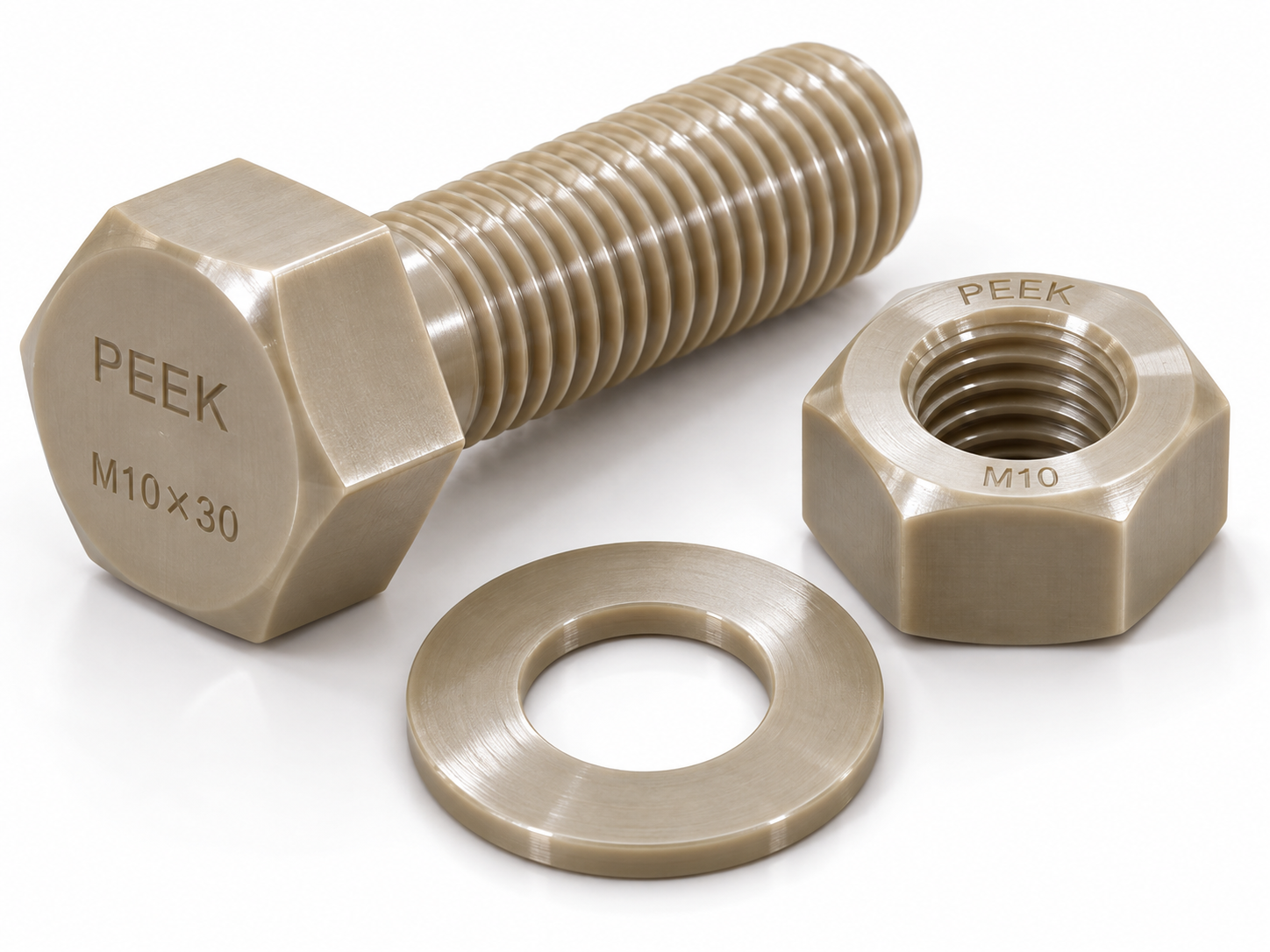
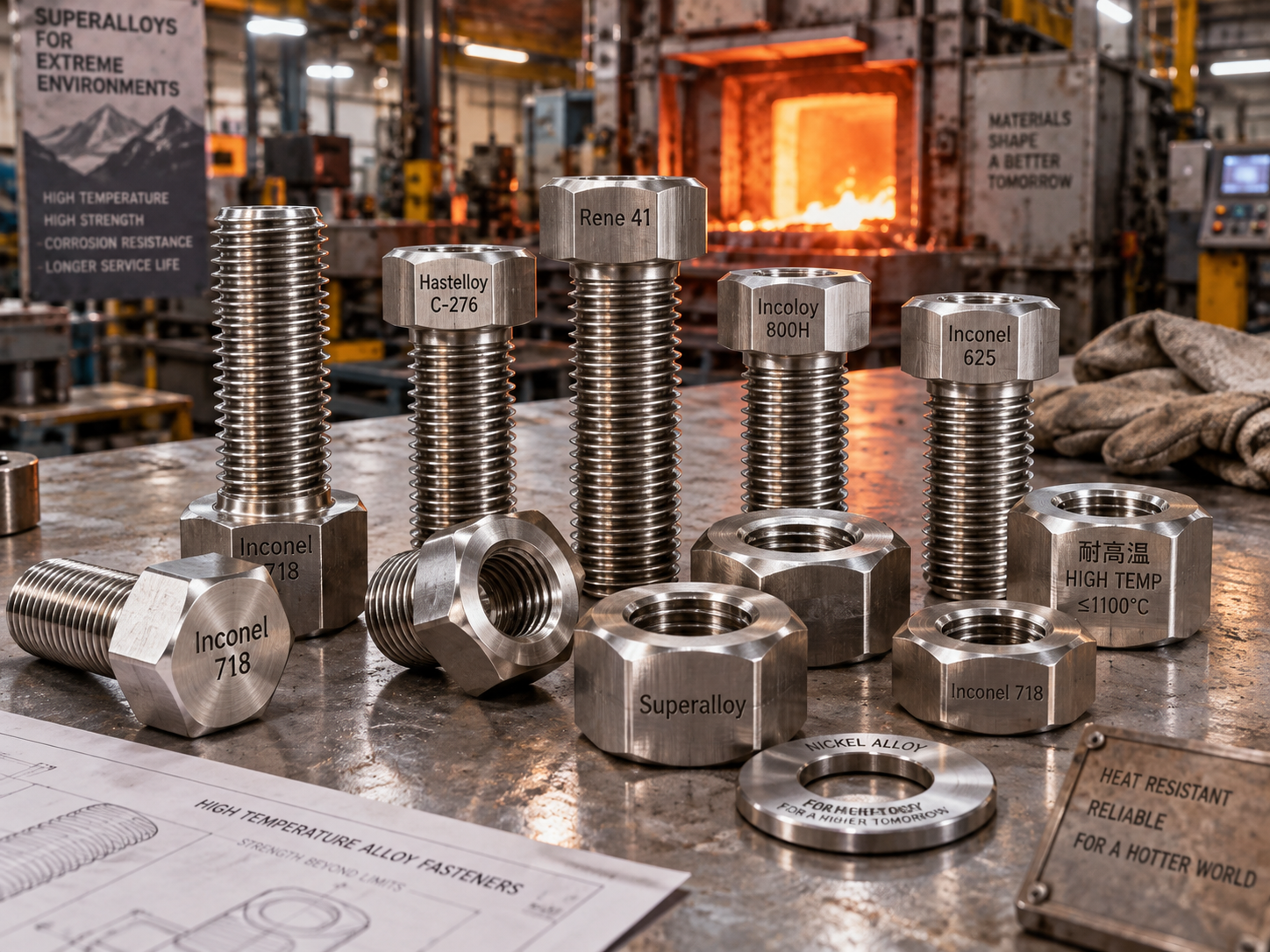
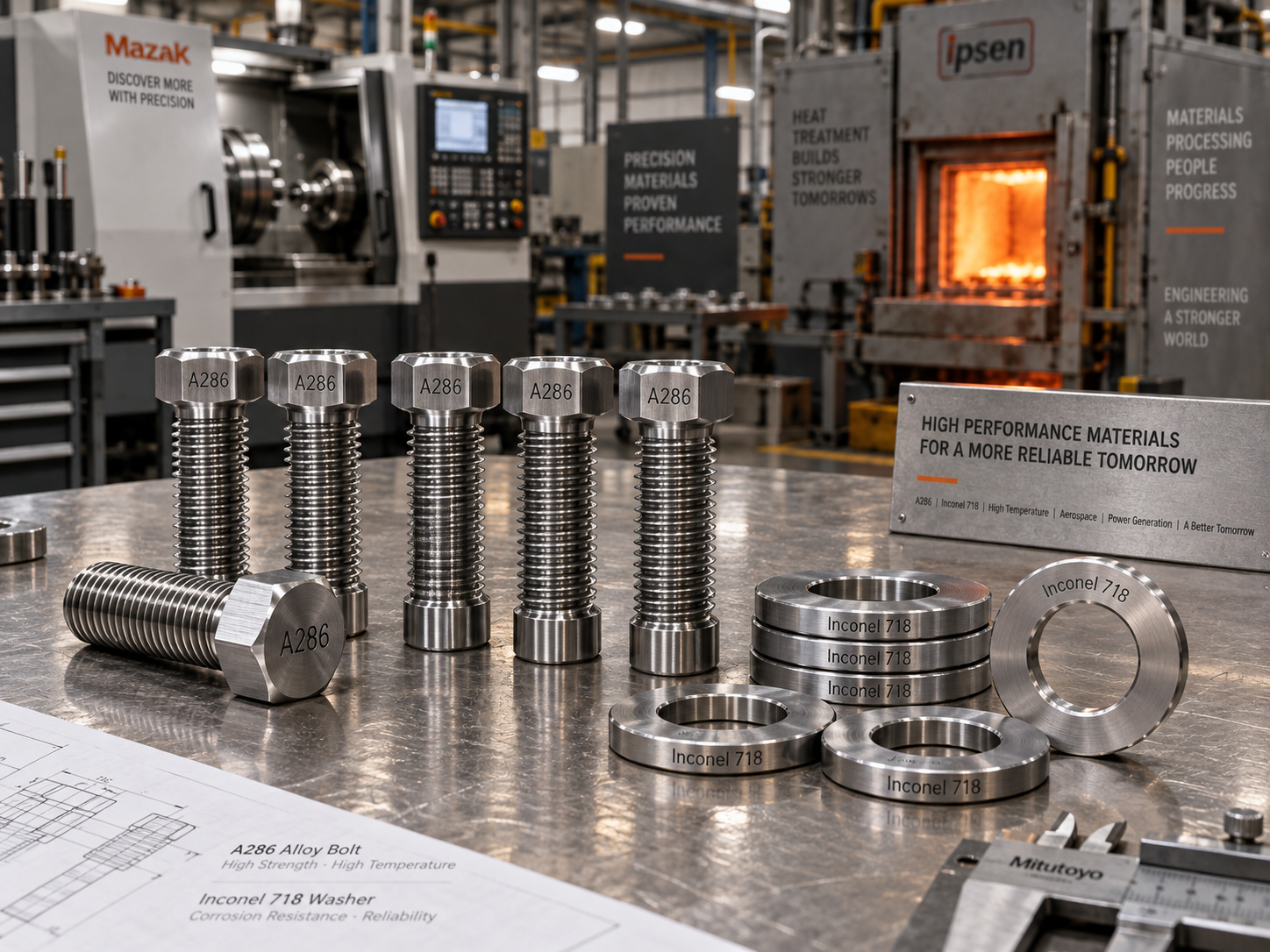
A286 fasteners are renowned for their exceptional performance in extreme environments where heat, pressure, and corrosion resistance are critical. Engineered from high-strength alloy materials, A286 bolts, screws, socket head cap screws, threaded rods, and stainless steel fasteners deliver reliable performance across demanding industrial sectors. At RAYCHIN LIMITED, we specialize in developing and supplying A286 metric fasteners designed to maintain structural integrity at elevated temperatures, making them a preferred choice for engineers, procurement teams, and quality control professionals seeking durable fastening solutions.
1. Understanding the Properties of A286 Alloy
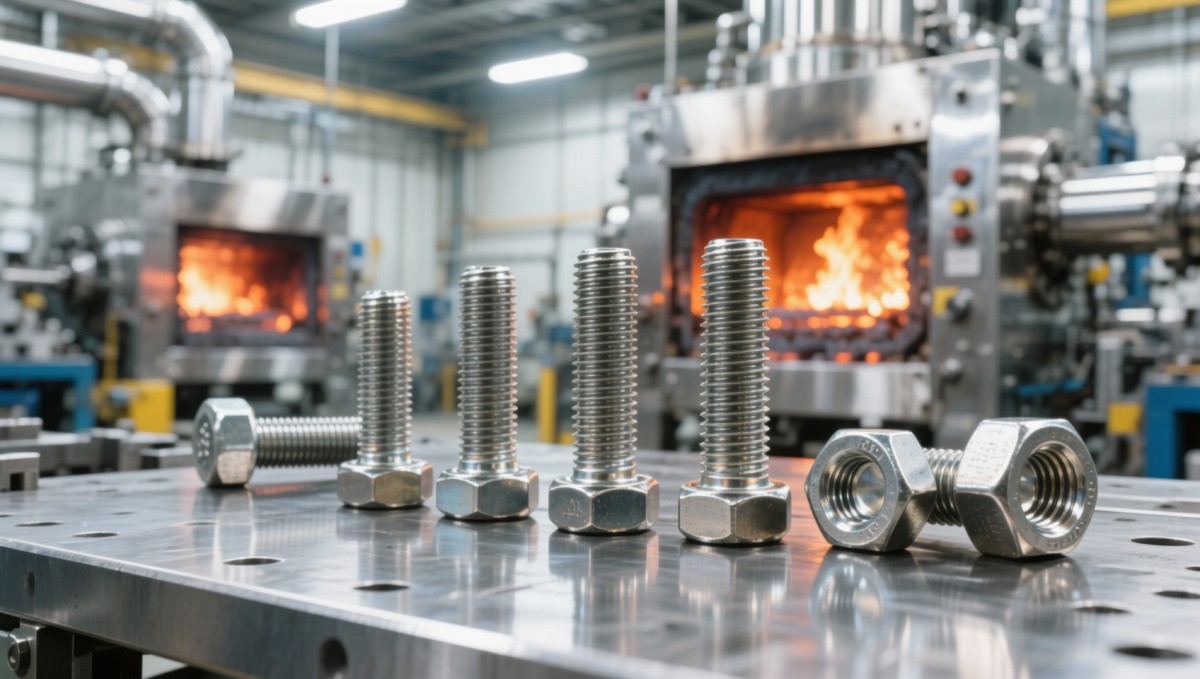
A286, known as Alloy A286 or UNS S66286, is a precipitation-hardenable iron-nickel-chromium superalloy. It is specifically formulated to deliver high mechanical strength and oxidation resistance in temperatures that can exceed 700°C (1290°F). The core reason A286 fasteners perform so well lies in their balanced chemical composition and controlled heat treatment process.
The composition typically includes approximately 25% nickel, 15% chromium, 1.25% molybdenum, and small but vital additions of titanium and vanadium. This precise metallurgical structure promotes stable austenite retention and excellent creep resistance, both essential for demanding metalworking equipment environments that operate under cyclical thermal loads.
When compared to standard stainless steels like 304 or 316, tests have shown that A286 fasteners maintain over 90% of their yield strength at 650°C, whereas conventional stainless steels drop below 40%. This property alone explains its widespread adoption in aerospace, energy, and chemical processing sectors.
Another remarkable characteristic is its low thermal expansion coefficient, around 14.5 µm/m·K between 20–400°C. This consistency is particularly beneficial for rotating assemblies and pressure vessels, as it minimizes distortion or thread loosening during prolonged exposure to temperature fluctuations.
Below is a simplified comparison table highlighting the compositional and thermal properties that make A286 advantageous over typical stainless steels used in fastener manufacturing.
From the data above, it becomes evident that A286 provides a superior balance between strength and oxidation resistance, translating into longer service life and lower maintenance frequency for high-temperature operations.
2. Industrial Environments That Rely on A286 Fasteners
In the metalworking equipment sector, A286 fasteners find their most valuable applications in processes that involve consistent thermal cycling, mechanical stress, and chemical exposure. These include furnaces, gas turbine assemblies, pressure containment systems, and exhaust manifolds. Each setup imposes stresses that can reach as much as 20–60 MPa under repeated cycles.
When used in industrial furnaces, especially those operating at over 650°C for long durations, A286 bolts demonstrate creep rupture lives exceeding 10,000 hours, outperforming lower-grade stainless solutions. This ensures sustained joint integrity even after prolonged exposure to oxidation-prone atmospheres.
In high-speed rotating machinery, such as turbine rotors or compressor housings, the fasteners must maintain torque without relaxation under fluctuating vibration frequencies between 200–600 Hz. A286’s excellent fatigue strength makes it an essential choice, reducing costly production downtimes.
Additionally, petrochemical plants often deploy A286 socket head cap screws in pipeline joints and catalytic reactors where the environment contains aggressive gases and temperatures up to 700°C. The alloy’s resistance to carburization and sulfidation ensures that sealing performance and bolt preload stability remain uncompromised.
Key Engineering Advantages
- Retention of tensile strength above 700 MPa even after 1000-hour exposure at 650°C.
- Corrosion resistance in oxidizing and nitriding atmospheres up to 850°C surface exposure.
- Reliable thermal expansion match with nickel-based alloys in multi-material assemblies.
- Reduced maintenance cycles—typically extending overhaul intervals by 20–30%.
3. Performance Standards and Quality Assurance
A286 fasteners are manufactured in compliance with multiple international standards, including ASTM A453 Grade 660 and AMS 5737 specifications. These standards ensure uniform mechanical testing, heat treatment accuracy, and metallographic control across production batches.
At RAYCHIN LIMITED, quality control begins with raw material verification using spectrometric analysis to confirm alloy content tolerances within ±0.05%. Dimensional checks follow ISO 898-1 bolt accuracy requirements, ensuring thread pitch and concentricity deviations remain under 0.02 mm for M8–M24 bolts.
We apply solution annealing at 980°C ±10°C and age hardening at 720°C ±5°C for 16 hours to obtain optimal precipitation phases. Mechanical tests confirm proof stress from 620–720 MPa and ultimate tensile strength between 880–1000 MPa, depending on fastener size and design.
The following table summarizes our testing framework applied to ensure long-term reliability of A286 fasteners before packaging and shipment:
Such rigorous tests are particularly valuable for technical evaluators and quality inspectors aiming to validate batch uniformity and predict long-term service outcomes. Procurement officers can rely on these specifications to align with operational safety codes and dosing schedules.
4. Selection Criteria for A286 Fasteners in Metal Processing Equipment
Choosing the right A286 fastener depends on various factors, including operating temperature, chemical exposure, clamping load requirements, and maintenance access. Decision-makers must balance long-term durability with procurement cost efficiency.
Key considerations include material grade (A, B, C classifications per ASTM A453), metric size tolerance (ISO 965-2 compliance), and surface finish options such as plain, passivated, or silver-plated depending on friction requirements. These parameters ensure consistent preload torque, which can range from 18 Nm to 250 Nm for M6–M24 sizes.
Additionally, engineers must evaluate environmental exposure. For instance, furnaces with humidity above 60% and residual acids require protective coatings to offset potential pitting. Conversely, in vacuum or inert atmosphere furnaces, bare A286 fasteners excel due to their natural oxide film stability.
Procurement specialists benefit by considering total lifecycle cost—when compared over five years, A286 fasteners can reduce downtime costs by as much as 25% relative to standard Inconel-plated bolts, owing to fewer replacements and torque retightening intervals.
Recommended Evaluation Steps
- Assess operational thermal range and identify maximum cyclic load patterns.
- Specify required tensile class and thread engagement length based on system stress models.
- Request traceable mill certificates confirming compliance to A453/A453M specifications.
- Ensure surface finishing and coating compatibility with lubrication and assembly methods.
- Validate torque calibration methodology prior to final installation.
5. Maintenance and Lifecycle Optimization
Maintenance teams dealing with thermal machinery and metalworking units must understand the reusability and reliability factors of A286 fasteners. With proper lubrication control and torque management, these fasteners can achieve reuse cycles of 5–7 times before needing replacement, a notable advantage over conventional stainless grades that allow only 2–3 cycles.
Best practices include monitoring preload loss using ultrasonic elongation analysis at periodic intervals—typically every 1000 hours of operation in continuous service. Oxidation films should be cleaned using non-abrasive media to prevent surface galling during reassembly.
RAYCHIN LIMITED provides technical guidance programs that support customers in setting up predictive maintenance schedules. Our experts recommend adopting a three-stage inspection method: visual, dimensional, and metallurgical testing after every 5,000-hour cycle, reducing instance-based failures by nearly 40%.
Moreover, proper torque control remains vital. Studies have shown that improper tightening contributes to 30% of fastener failures in high-temperature assemblies. Implementing digital torque wrenches with ±3% accuracy ensures consistent fastening reliability across maintenance periods.
6. Frequently Asked Questions (FAQ)
How does A286 compare with Inconel 718 in performance and value?
While Inconel 718 offers slightly higher temperature capability (up to 760°C), A286 provides a better cost-performance ratio for applications under 700°C. For procurement planning, A286 fasteners cost approximately 30–40% less while maintaining over 90% mechanical equivalence below the 700°C threshold.
What is the typical lead time for A286 fastener production?
For standard configurations, lead times range between 3–4 weeks. Customized dimensions, coatings, or batch testing services may extend delivery by an additional 1–2 weeks depending on order volume and specification complexity.
Are A286 fasteners magnetic?
A286 is technically an austenitic alloy but becomes slightly magnetic after precipitation hardening due to partial transformation to martensite. The magnetic permeability typically remains below 1.02, which is acceptable for most non-magnetic assembly requirements in sensitive instrumentation housings.
What maintenance interval should be observed in furnace assemblies?
Under continuous cycles near 650°C, it is advisable to recheck torque and thread lubrication every 2,000 hours. Reconditioning or replacement intervals may extend to 10,000 hours or 18 months depending on operational load factors and environment purity.
Conclusion and Next Steps
A286 fasteners combine metallurgical sophistication with cost-efficient performance, delivering outstanding stability under high temperature and pressure. Their superior yield strength retention, corrosion endurance, and dimensional reliability make them indispensable in advanced metal processing equipment, aerospace, petrochemical, and power generation applications.
RAYCHIN LIMITED leverages extensive expertise and innovation capacity to produce both standard and custom A286 fasteners tailored to specific industrial needs. We ensure that each component meets stringent global standards, offering engineers and procurement specialists complete confidence in their choice of fastening solutions.
For optimized equipment performance and reduced lifecycle cost, consider integrating RAYCHIN’s A286 fasteners into your next high-temperature assembly project. Contact us today to discuss technical specifications, receive tailored recommendations, or request a quotation package designed around your operational requirements.
Request A Quote! We'll respond as soon as possible(within 12 hours)
Get a Quote