
Categories List
Recent Posts
Nitronic vs 17‑4PH, 316, Duplex, Monel, Inconel & More: The Ultimate Fastener Material Showdown
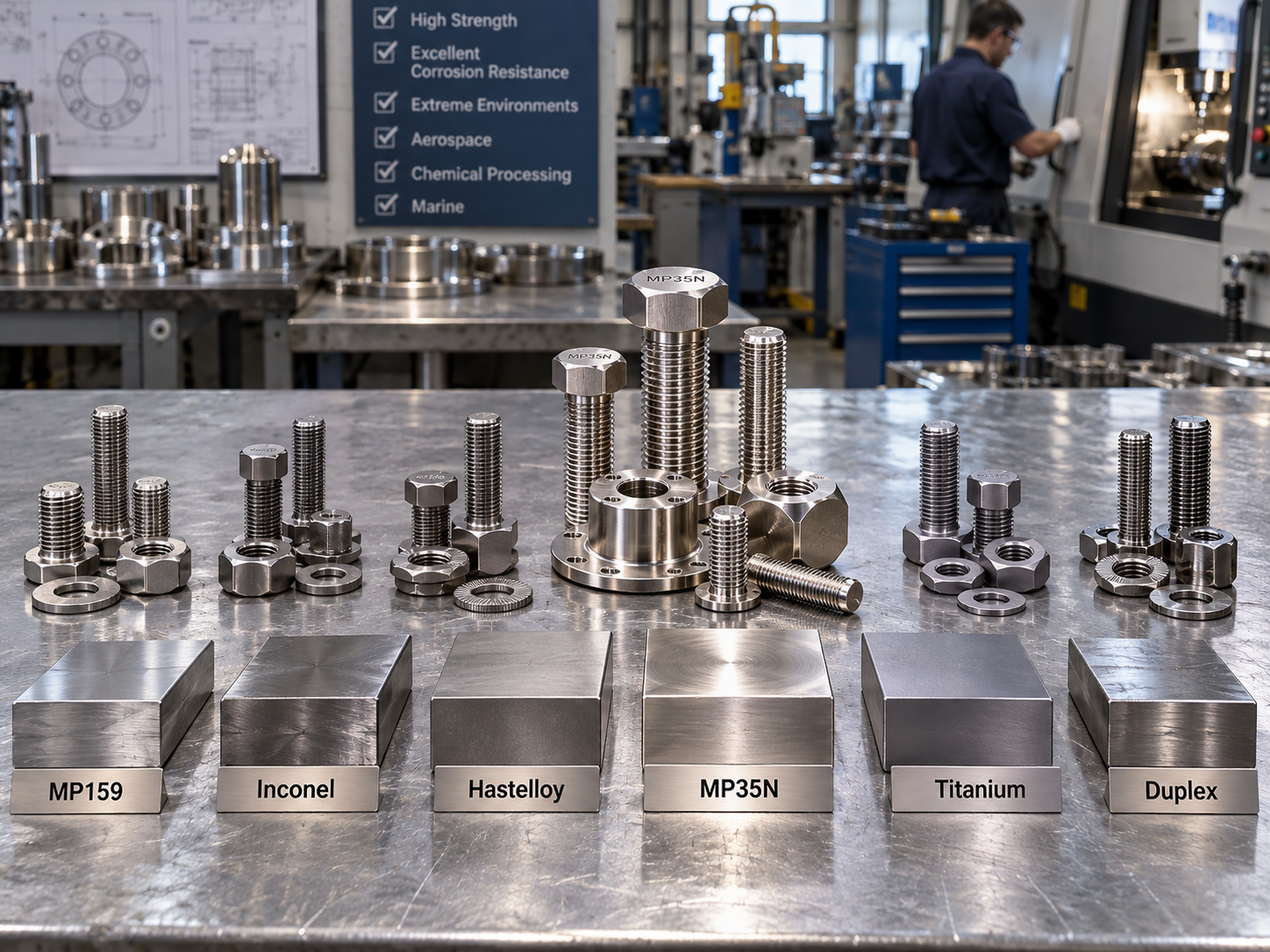
Selecting the optimal fastener alloy often means choosing between two excellent options: the high‑strength, corrosion‑resistant Nitronic 50, the galling‑immune Nitronic 60, or competing materials like 17‑4PH, 316 stainless, duplex, Monel K500, Inconel 718, and A286. Each alloy excels in a specific domain—strength, corrosion resistance, anti‑galling behavior, or high‑temperature capability—and the wrong choice can lead to premature failure or unnecessary cost. RAYCHIN LIMITED, a specialist global manufacturer of all these alloys, draws on decades of in‑house experience to provide this comprehensive, data‑driven comparison.
1. Nitronic 50 vs 17‑4PH Fasteners
Nitronic 50 vs 17‑4PH fasteners is a frequent comparison for high‑strength, corrosion‑resistant bolting. 17‑4PH (H900) offers a higher room‑temperature yield strength (170 ksi / 1170 MPa) but is limited to about 315°C and is magnetic. Nitronic 50, while lower in strength (up to 145 ksi cold‑drawn), remains non‑magnetic, provides superior chloride SCC resistance, and operates reliably to approximately 500°C. Choose Nitronic 50 when non‑magnetic properties and corrosion resistance are paramount; choose 17‑4PH when maximum strength and hardness are required in a non‑marine environment.
2. Nitronic 50 vs 316 Stainless Steel Bolts
Nitronic 50 vs 316 stainless steel bolts: Nitronic 50 provides roughly twice the yield strength of 316 (55 ksi annealed vs 30 ksi for 316). Its pitting resistance (PREN ~34) is superior, and it resists chloride SCC even in warm, concentrated brines. When to use Nitronic 50 instead of 316: whenever higher strength, better corrosion resistance, or non‑magnetic stability after cold work is required—such as in marine hardware, chemical process bolting, and cryogenic service.
3. Nitronic 50 vs Duplex 2205 and Super Duplex Fasteners
Nitronic 50 vs duplex 2205 bolts: Duplex 2205 offers higher yield strength (450 MPa / 65 ksi) than annealed Nitronic 50, but Nitronic 50 can be cold‑drawn to exceed it. Duplex 2205 has a temperature limit of about 300°C and is magnetic, while Nitronic 50 remains non‑magnetic and can operate to 500°C. Nitronic 50 vs super duplex fasteners: Super duplex (2507) provides excellent pitting resistance (PREN ≥40) and high strength, but is magnetic and has a lower temperature ceiling. Nitronic 50 is preferred for non‑magnetic, higher‑temperature, or cryogenic applications.
4. Nitronic 50 vs Monel K500
Nitronic 50 vs Monel K500: Monel K500 provides superior resistance to seawater and hydrofluoric acid, and is age‑hardenable to 100 ksi yield. Nitronic 50 offers higher strength potential (up to 145 ksi cold‑drawn) and is non‑magnetic. For pure seawater bolting without high loads, Monel K500 may be preferred; for high‑strength, non‑magnetic, and wider chemical resistance, Nitronic 50 is an excellent alternative at lower cost.
5. Nitronic 60 vs 304 and 316 Bolts
Nitronic 60 vs 304 stainless steel bolts and Nitronic 60 vs 316 bolts center on galling resistance. While 304 and 316 are general‑purpose austenitic grades, they are highly prone to galling under high contact stress—threads seize rapidly during assembly. Nitronic 60's silicon‑manganese chemistry provides galling resistance that is an order of magnitude better, making it the material of choice for valve stems, bridge bearings, and any application where threads must survive repeated make‑up and breakout without damage.
6. Nitronic 60 vs Nitronic 50 Fasteners
The Nitronic 60 vs Nitronic 50 fasteners decision is straightforward: Nitronic 50 for high strength and corrosion resistance, Nitronic 60 for anti‑galling and wear performance. RAYCHIN frequently supplies Nitronic 50 bolts with Nitronic 60 nuts—a pairing that delivers the high strength of the bolt with the galling‑free assembly of the nut. This mixed‑alloy strategy is one of the most effective anti‑galling solutions available.
7. Nitronic 60 vs Gall‑Tough Fasteners
Nitronic 60 vs gall‑tough fasteners: Gall‑Tough (a trade name for a high‑silicon stainless) is specifically designed for galling resistance, similar to Nitronic 60. Both alloys perform comparably; however, Nitronic 60 is more widely available and is the established standard in many OEM specifications. RAYCHIN stocks Nitronic 60 bar for rapid delivery of anti‑galling fasteners in sizes up to 2 inches.
8. Best Anti‑Galling Fastener Material
Based on decades of field experience and ASTM G98 galling test data, Nitronic 60 is widely considered the best anti‑galling fastener material among commercially available stainless steels. Its unique silicon‑rich oxide layer prevents the cold welding that destroys threads on 304 and 316 fasteners, making it the definitive choice for critical threaded assemblies.
9. Nitronic 50 vs Inconel 718 and A286 Fasteners
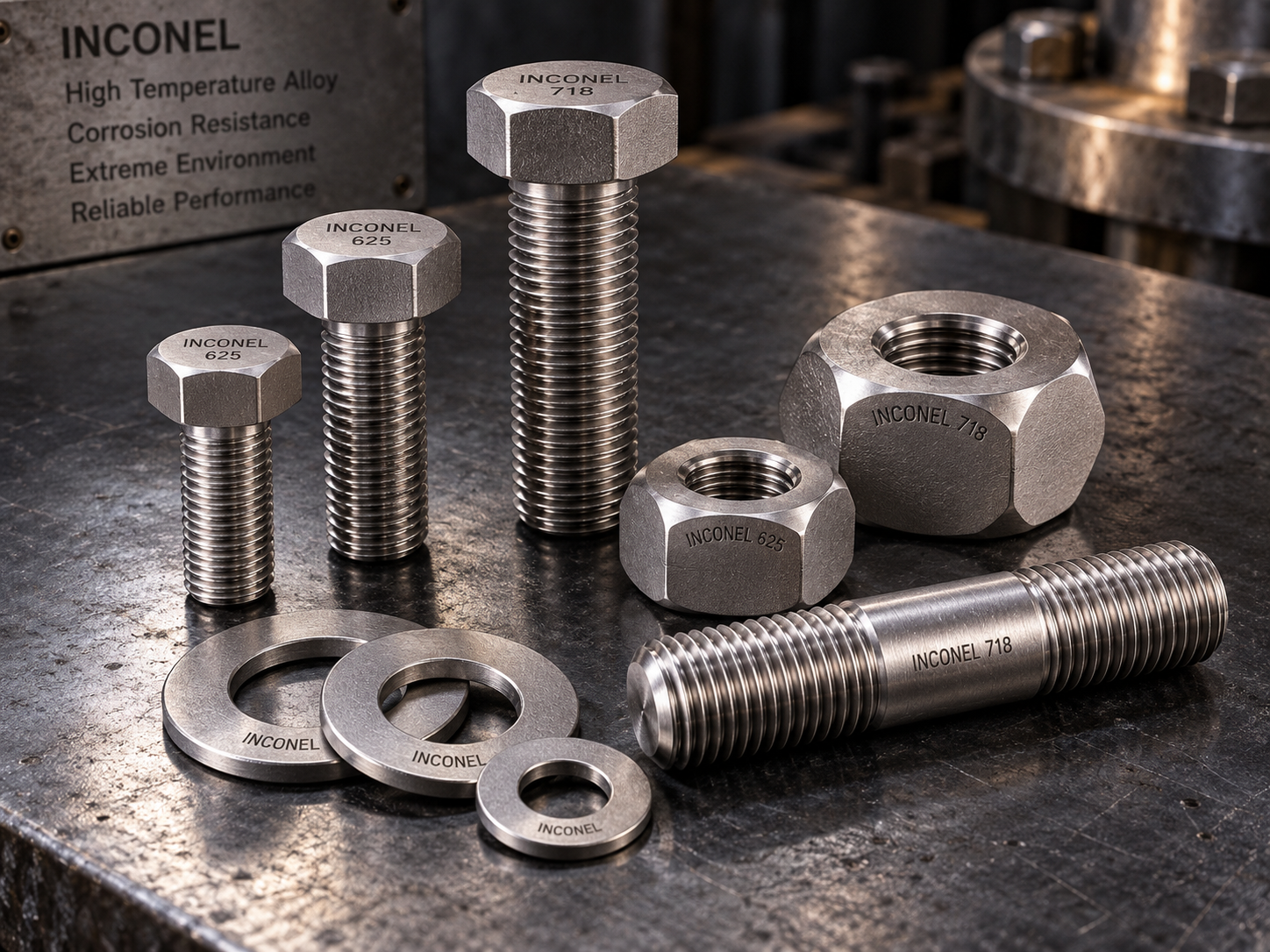
Nitronic 50 vs Inconel 718: Inconel 718 provides far higher yield strength (150 ksi) and operates to 704°C, but costs 4–5 times more than Nitronic 50. Nitronic 50 is suitable only up to 500°C. For high‑temperature turbine bolting, Inconel 718 is required; for marine, chemical, and cryogenic applications below 500°C, Nitronic 50 is a cost‑effective, high‑strength solution.
Nitronic 50 vs A286 fasteners: A286 is an iron‑base superalloy that retains strength to 650°C, far beyond Nitronic 50's limit. However, Nitronic 50 is non‑magnetic, offers superior chloride corrosion resistance, and is cheaper than A286. Choose A286 for high‑temperature exhaust bolting; choose Nitronic 50 for non‑magnetic, high‑strength, corrosive environments.
10. Comparative Material Properties at a Glance
11. RAYCHIN's Multi‑Alloy Manufacturing Support
RAYCHIN LIMITED is not aligned with a single alloy—we produce certified fasteners across the entire spectrum. This allows us to provide genuine, unbiased material selection guidance. Our in‑house manufacturing, vacuum heat treatment, and full mechanical testing ensure that whichever alloy you choose, the fasteners we deliver will match the certificate every time.
Send your operating conditions, required properties, and specifications to our technical team. We'll provide an unbiased alloy recommendation and competitive quotation within 24 hours.
✉️ sales@ray-chin.com? www.ray-chin.com | Nitronic 50 · Nitronic 60 · Multi‑Alloy Expert · Global Supply
Request A Quote! We'll respond as soon as possible(within 12 hours)
Get a Quote