
Categories List
Recent Posts
Alloy 330 vs 310, Inconel 600, Incoloy 800H, 253MA & More: The High‑Temperature Fastener Showdown
When designing bolted connections for extreme high‑temperature environments—furnaces, radiant tubes, carburizing atmospheres, and petrochemical crackers—the material selection must account for oxidation resistance, carburization resistance, creep strength, and cost. Alloy 330 (RA330, UNS N08330) is specifically engineered for these conditions, but how does it compare against 310 stainless steel, Inconel 600, Incoloy 800H/HT, 253MA, Inconel 601, A286, and other nickel alloys? The answer depends on the specific temperature, atmosphere, and mechanical loads of your application. RAYCHIN LIMITED, a specialist global manufacturer of all these high‑temperature alloys, presents this definitive comparison to guide you to the optimal material choice.
1. Alloy 330 vs 310 Stainless Steel Fasteners
Alloy 330 vs 310 stainless steel fasteners is the most fundamental comparison for high‑temperature furnace bolting. Both alloys are fully austenitic and offer excellent oxidation resistance. The critical difference lies in nickel content: 310 contains approximately 20% nickel, while Alloy 330 contains 35% nickel. This higher nickel content provides dramatically superior carburization resistance—the ability to resist carbon diffusion into the metal that causes embrittlement. In carburizing atmospheres (endothermic gas, case‑hardening, petrochemical cracking), 310 fasteners can become brittle within months; Alloy 330 fasteners remain ductile for years. Both alloys have a similar maximum oxidation temperature of approximately 1100–1150°C, but when to use Alloy 330 instead of 310 is clear: choose Alloy 330 whenever the atmosphere is carburizing, or when thermal cycling is severe and the higher nickel content provides better structural stability.
2. Alloy 330 vs 330 Stainless Steel — Clarifying the Terminology
A common point of confusion: Alloy 330 vs 330 stainless steel. There is no standard "330 stainless steel" grade. Alloy 330 is a high‑nickel alloy (35% Ni, 19% Cr) covered by UNS N08330. It is not a stainless steel in the traditional sense (like 304 or 316), but a nickel‑chromium‑iron alloy. The term "330 stainless" is sometimes incorrectly used, but the correct designation is Alloy 330 or RA330. When you specify RAYCHIN's Alloy 330 fasteners, you are receiving the genuine UNS N08330 material with the full 35% nickel content that provides its unique carburization resistance.
3. Alloy 330 vs Inconel 600 Bolts
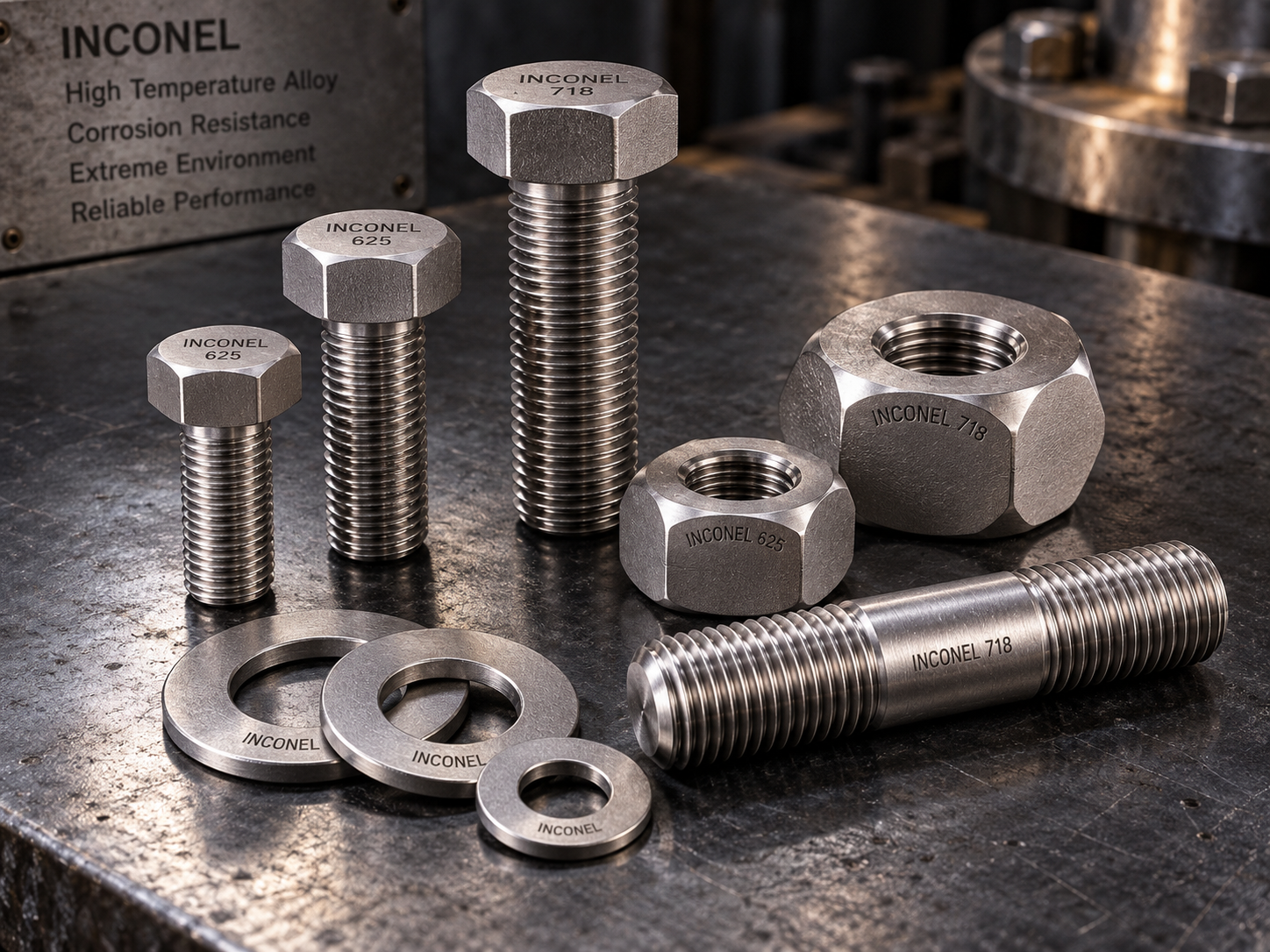
Inconel 600 (UNS N06600) contains approximately 72% nickel and 15% chromium. It offers excellent carburization and chloride stress corrosion cracking resistance, and can operate to slightly higher temperatures than Alloy 330 (up to about 1150°C). However, Inconel 600 is significantly more expensive (2–3 times the cost of Alloy 330). Alloy 330 vs Inconel 600 bolts: for most furnace and heat‑treat applications up to 1100°C, Alloy 330 provides sufficient performance at a more economical price. Inconel 600 is required for the most severe carburizing conditions, where additional safety margin is needed, or where the higher chloride SCC resistance is required.
4. Alloy 330 vs Incoloy 800H/HT Fasteners
Incoloy 800H (UNS N08810) and 800HT (UNS N08811) are nickel‑iron‑chromium alloys with approximately 32% nickel and 21% chromium. They provide excellent high‑temperature strength and creep resistance, particularly in the 600–900°C range, due to their controlled carbon content and solution annealing. Alloy 330 vs Incoloy 800H/HT fasteners: Incoloy 800H/HT is often selected for pressure vessel bolting and steam methane reformer applications where creep strength is critical. Alloy 330 provides better carburization resistance at a similar cost. The choice depends on whether the primary threat is creep (choose 800H/HT) or carburization (choose Alloy 330).
5. Alloy 330 vs 253MA Fasteners
253MA (UNS S30815) is a lean austenitic stainless steel with 21% chromium, 11% nickel, and small additions of nitrogen and cerium. It provides oxidation resistance similar to 310 at a lower cost, but its lower nickel content means carburization resistance is far inferior to Alloy 330. Alloy 330 vs 253MA fasteners: 253MA is a cost‑effective choice for purely oxidizing environments up to 1100°C where no carbon‑rich atmosphere is present. In any carburizing or nitriding environment, Alloy 330 is the necessary upgrade.
6. Alloy 330 vs Inconel 601 Bolts
Inconel 601 (UNS N06601) contains 1.4% aluminum in addition to its 60% nickel and 23% chromium content, forming a tenacious alumina scale that provides outstanding oxidation resistance up to 1260°C—well above Alloy 330's limit. Alloy 330 vs Inconel 601 bolts: Inconel 601 is specified for the absolute hottest furnace applications, afterburner components, and thermal oxidizers exceeding 1150°C. For carburizing environments below 1150°C, Alloy 330 provides equivalent or better carburization resistance at a lower cost. For the most extreme oxidation resistance above 1150°C, Inconel 601 is required.
7. Alloy 330 vs RA330
Alloy 330 vs RA330: RA330 is simply the trademarked name used by Rolled Alloys for Alloy 330 (UNS N08330). The materials are chemically and mechanically identical. RAYCHIN manufactures our fasteners from certified UNS N08330 bar and certifies them to ASTM B511, regardless of the trade name used on the purchase order.
8. Alloy 330 vs 304/316 at High Temperature
Alloy 330 vs 304/316 high temperature is not a close comparison. 304 and 316 are limited to about 800°C for continuous service, have essentially no carburization resistance, and suffer from sigma‑phase embrittlement at intermediate temperatures. Alloy 330 operates to 1150°C with outstanding carburization resistance. For any furnace or heat‑treat application above 800°C, 304/316 are not suitable and must be upgraded to at least 310, with Alloy 330 being the preferred choice when carburization is present.
9. Alloy 330 vs A286 Bolts
A286 (UNS S66286) is a precipitation‑hardening iron‑base superalloy with high yield strength (585 MPa min) and a practical temperature limit of about 650°C under load. It is not designed for extreme oxidation or carburization resistance. Alloy 330 vs A286 bolts: A286 is selected for high‑strength bolting at moderate high temperatures (500–650°C), such as in turbochargers and exhaust manifolds. Alloy 330 is selected for oxidation and carburization resistance at 900–1150°C, where its strength is lower but its environmental resistance is vastly superior. These alloys serve fundamentally different applications and are not interchangeable.
10. Best Alloy for High Temperature Oxidation Fasteners — Decision Matrix
11. RAYCHIN's Multi‑Alloy Manufacturing and Expert Guidance
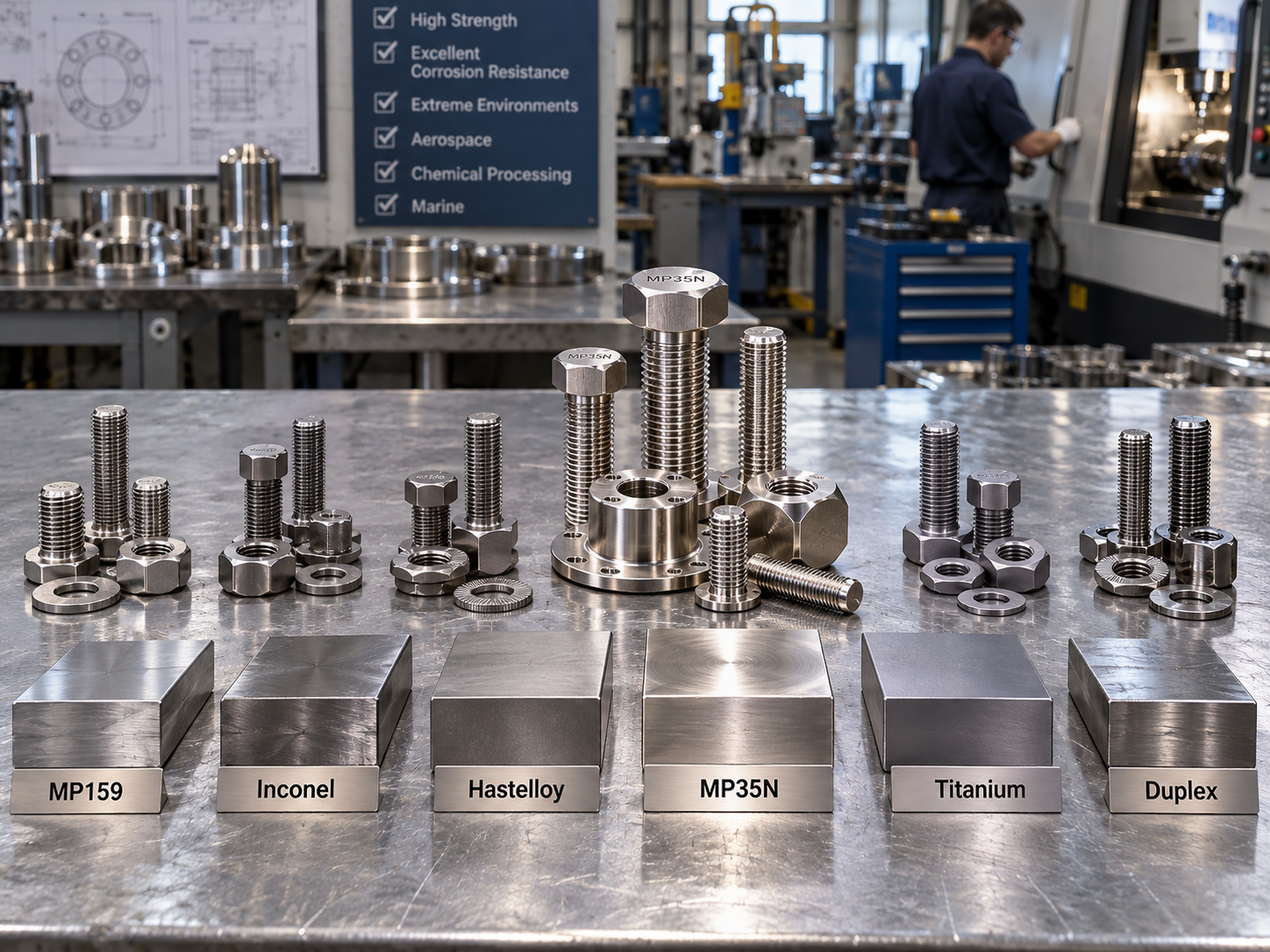
RAYCHIN LIMITED is uniquely positioned to provide unbiased material selection guidance and certified fasteners across the entire high‑temperature alloy spectrum. Our in‑house manufacturing, vacuum solution annealing, and complete mechanical testing ensure that every fastener we deliver meets the exact properties required for your most demanding thermal applications.
Send your operating temperature, atmosphere composition, and mechanical load requirements to our technical team. We'll provide an unbiased alloy recommendation and competitive quotation within 24 hours.
✉️ sales@ray-chin.com? www.ray-chin.com | Alloy 330 · 310 · Inconel · Incoloy · High‑Temperature Expert
Request A Quote! We'll respond as soon as possible(within 12 hours)
Get a Quote