
Categories List
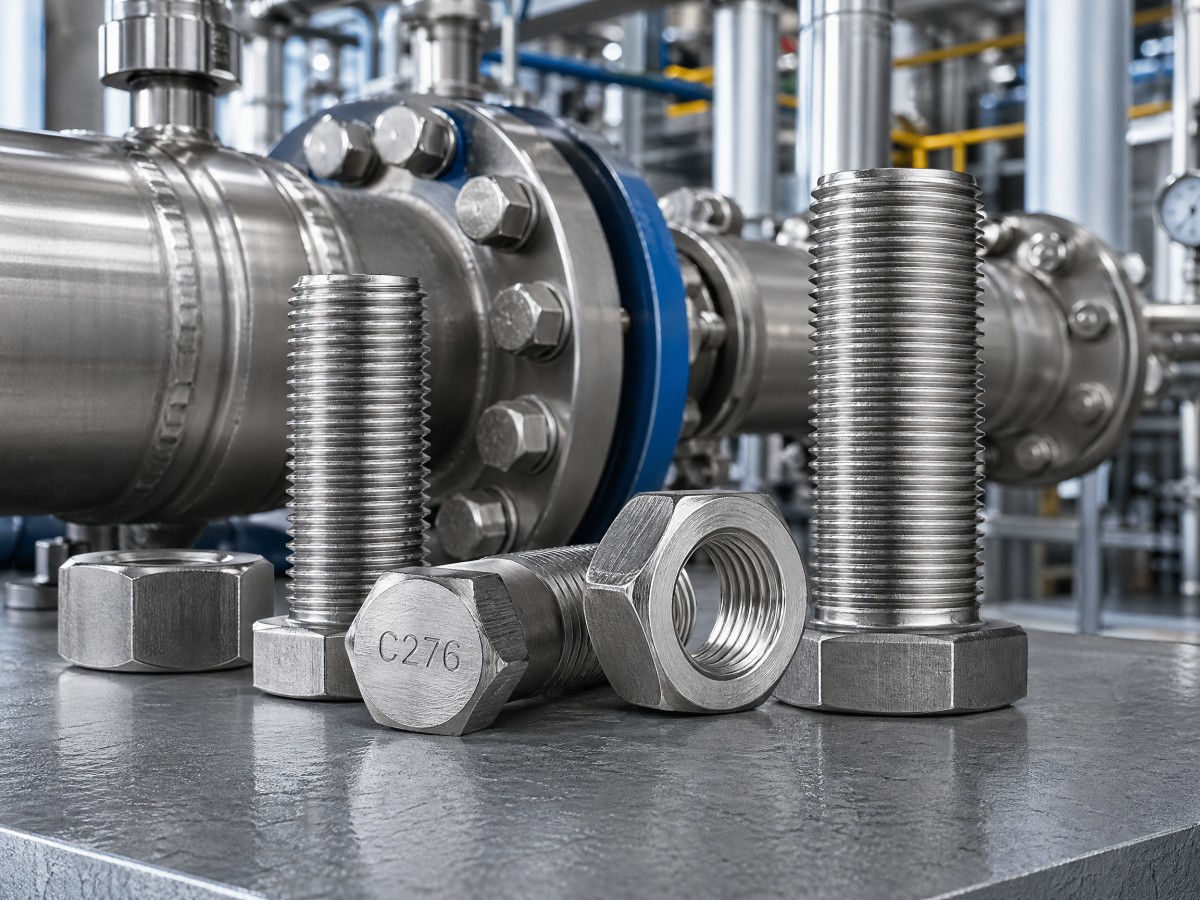
In chemical equipment, even premium hastelloy screws can fail when corrosion mechanisms, installation stress, temperature shifts, and media incompatibility are overlooked. From hastelloy fasteners and hastelloy bolts to hastelloy c276 bolts, understanding why failures occur is critical for safe, cost-effective operation. This article explores the root causes, warning signs, and material-selection insights engineers, buyers, and maintenance teams need to reduce downtime and improve reliability.
For metal processing equipment, reactors, scrubbers, heat exchangers, dosing systems, pumps, and flange-connected assemblies, a failed screw is rarely a small event. A single seized thread, cracked head, or corroded shank can trigger media leakage, unplanned shutdowns, contamination, and difficult maintenance work. That is why fastener failure analysis matters not only to design engineers, but also to purchasing teams, QA personnel, safety managers, and project owners.
In many facilities, Hastelloy is selected with the expectation that “high corrosion resistance” automatically means “no fastener problems.” In practice, service life depends on at least 4 interacting variables: alloy grade, process medium, mechanical load, and installation quality. If one of these variables is mismatched, even a high-value fastener can fail much earlier than expected.
For buyers and technical evaluators, the real question is not whether Hastelloy is good, but which Hastelloy fasteners are suitable for a specific duty range such as 40°C to 180°C, chloride-bearing media, oxidizing acids, or cyclic maintenance opening every 3 to 6 months. Material selection has to be tied to operating conditions, not assumptions.
RAYCHIN LIMITED focuses on the development, manufacturing, and global supply of standard and customized specialty metal fasteners for demanding industrial applications. In chemical equipment projects, that means supporting customers with practical guidance on alloy choice, dimensional control, processing consistency, and service-condition matching, especially where standard carbon steel or common stainless bolts do not provide enough reliability.
Failure in Chemical Equipment Usually Starts with a Mismatch, Not the Screw Alone
When engineers investigate failed hastelloy screws, the first discovery is often that the fastener did not fail in isolation. It failed as part of a bolted system that included flange design, gasket compression, tightening method, process chemistry, and thermal cycling. In other words, the root cause is commonly a mismatch between service conditions and system design rather than a simple material defect.
Chemical equipment creates one of the most aggressive operating environments for threaded components. Fasteners may be exposed to mixed acids, wet chlorine, reducing media, vapors, crevice-prone joints, and repeated washdown cycles. A bolt that performs well in one vessel can fail in another vessel only 20 meters away if pH, temperature, chloride level, and cleaning procedure are different.
This is especially true for hastelloy c276 bolts, which are widely selected because of their broad resistance profile. However, “broad resistance” does not mean unlimited immunity. If the joint traps corrosive residues, sees frequent torque loss, or operates under thermal fluctuation from ambient to 150°C several times per week, localized attack can develop much faster than expected.
In metal processing equipment and chemical skid systems, screws are also vulnerable because they are often the smallest parts in a large capital assembly. They may receive less engineering attention than vessels or pumps, yet they carry sealing force, absorb vibration, and experience direct splash exposure. In many shutdown reviews, the cost of replacing one failed fastener is low, but the cost of production interruption can be 100 to 1,000 times higher.
Why the operating environment changes fastener behavior
A Hastelloy screw inside a dry enclosure behaves very differently from one mounted externally on a pump casing where condensate, insulation contamination, and cleaning chemicals collect around the head. Geometry matters. Crevices under washers, blind tapped holes, and partially wetted threads are common sites for early corrosion initiation even when the alloy itself has strong bulk corrosion resistance.
Another variable is load path. If a joint is designed for 70% to 75% of proof load but is tightened manually without lubrication control, actual preload may vary by more than 25%. One bolt can become overloaded while another remains loose. That imbalance creates gasket leakage, vibration, and accelerated corrosion around specific fasteners rather than uniform wear across the assembly.
The most common mismatch categories
- Material-to-media mismatch, such as using a suitable alloy in the wrong concentration, temperature band, or oxidizing/reducing environment.
- Mechanical mismatch, including undersized diameter, insufficient engagement length, poor washer support, or incorrect torque procedure.
- Manufacturing mismatch, such as rough thread roots, residual contamination, excessive cold work, or inadequate surface cleaning after machining.
- Maintenance mismatch, where re-used fasteners are placed back into service after thread damage, galling, or hidden pitting.
For procurement and project teams, these mismatch categories are useful because they show why fastener failure should be evaluated as a lifecycle issue. A low-cost sourcing decision can become expensive if the part reaches site with the wrong heat condition, poor dimensional tolerance, or no documentation for material traceability.
Corrosion Mechanisms That Cause Hastelloy Fasteners to Fail
The term “corrosion failure” is often used too broadly. In reality, hastelloy fasteners can fail through several distinct mechanisms, and each one leaves different visual and mechanical clues. Correct identification matters because a pitting problem is solved differently from stress corrosion cracking, galvanic attack, or crevice corrosion under a washer face.
In chemical equipment, the most dangerous forms are localized. Uniform corrosion is easier to predict because section loss is relatively even. Localized corrosion is harder to detect and far more likely to cause sudden loss of preload or fracture at one small point. A screw can look acceptable from the head side and still be severely attacked at the first engaged thread.
Temperature is a critical multiplier. A medium that causes limited corrosion at 25°C may become highly aggressive at 80°C to 120°C, especially when chlorides, oxidizing contaminants, or stagnant zones are present. For this reason, chemical fastener evaluation should always include normal operation, upset conditions, cleaning cycles, and startup/shutdown transitions.
The table below summarizes the most frequent failure mechanisms for hastelloy bolts and screws in chemical equipment service and the practical warning signs that maintenance teams should watch for during inspections.
The key conclusion is that localized conditions often decide the fate of the fastener. For this reason, a chemical plant should inspect not only exposed surfaces but also hidden zones such as washer seats, nut-bearing faces, and the first 2 to 4 engaged threads where corrosion and stress are frequently concentrated.
Crevice corrosion is one of the most underestimated causes
Many users assume that if the bulk medium is within the accepted resistance range of a Hastelloy grade, the screw is safe. But crevice corrosion develops because the chemistry inside a narrow gap can become very different from the chemistry in the bulk fluid. Oxygen depletion, concentration changes, and acidic residue buildup can occur in a space smaller than 0.1 mm.
This is why hastelloy c276 bolts may still suffer attack under washers or in flange crevices even when the same alloy performs well on open surfaces. Good joint design, correct washer choice, controlled surface finish, and regular disassembly inspection are often just as important as alloy selection.
Galvanic corrosion becomes more severe in mixed-metal assemblies
In metal processing equipment, it is common to combine a specialty metal fastener with a stainless steel flange, carbon steel support bracket, or plated washer. If moisture or process condensate bridges these metals, galvanic action may accelerate corrosion at the less noble component or create unexpected attack patterns around the joint.
The risk is higher when the cathode-to-anode area ratio is unfavorable. For example, a small active area coupled to a large noble area can produce high current density and faster damage. Practical countermeasures include material pairing review, isolation washers where appropriate, better drainage, and avoiding mixed hardware in splash zones.
Mechanical and Installation Factors Behind Early Screw Failure
Not every failed hastelloy screw is a corrosion casualty. A significant share of problems originate in installation. Over-torque, under-torque, thread galling, poor alignment, insufficient engagement, and re-use of damaged hardware can all shorten service life. In many shutdown inspections, the fracture surface tells a combined story of mechanical overload plus corrosion rather than one cause alone.
Threaded fasteners in chemical equipment are often installed in difficult field conditions. Operators may work in protective gear, at height, or in tight spaces around insulated pipelines and hot vessels. Under those conditions, manual tightening consistency decreases. A target torque can easily vary by ±20% if lubrication, tool calibration, and thread condition are not controlled.
Galling is another important issue for high-alloy fasteners. Because Hastelloy and other nickel-based materials can have strong adhesive wear tendencies under load, threads may seize during tightening, especially if installation is fast, dry, or contaminated. Once micro-welding begins at the thread interface, disassembly may damage the nut or bolt long before the target preload is reached.
For users, this means that the best corrosion-resistant alloy still needs a disciplined installation procedure. Material performance and assembly practice must be treated as one system. A fastener with excellent chemical resistance but poor preload control will not provide reliable sealing or fatigue resistance.
Typical installation mistakes in plant environments
- Dry installation without a suitable anti-seize or controlled lubrication, increasing galling risk during the final 25% of tightening.
- Using impact tools for final preload, which can produce uneven clamp force and surface damage at the head or nut face.
- Reusing bolts after one or more thermal cycles, even when thread flanks already show pickup, deformation, or local pitting.
- Insufficient thread engagement in tapped holes, especially where engagement depth is below 1 to 1.5 times nominal diameter.
- Combining mismatched nuts, washers, and bolts from different material batches without checking hardness and thread fit.
How thermal expansion and vibration accelerate damage
Chemical equipment often sees more movement than expected. A line carrying hot acid may move a few millimeters during startup, and a pump base can transmit vibration continuously for 8,000 hours per year. If a screw is carrying fluctuating tensile load while also exposed to corrosion, fatigue cracks can begin at the thread root where stress concentration is highest.
Thermal expansion mismatch between the fastener and clamped members can also change preload. A joint tightened at ambient temperature may lose or gain clamp force when operating at 120°C or 200°C. If the design does not account for this, a once-tight assembly can loosen, leak, or overstress the fastener during repeated cycles.
Field controls that reduce mechanical failure risk
- Use calibrated torque tools and define a torque window rather than a single uncontrolled value.
- Apply compatible anti-seize or lubrication according to the selected alloy and service media.
- Inspect threads visually before installation and reject parts with burrs, pickup, flattening, or contamination.
- Use cross-pattern tightening for flanged assemblies in at least 3 passes: snug, intermediate, and final.
- Record re-tightening rules after first heat-up when the application involves high-temperature startup cycles.
For procurement teams, these field controls affect specification content. It is often better to source complete hastelloy fasteners with matched nuts and washers, plus installation guidance, than to buy loose items from multiple channels and create avoidable assembly inconsistency.
How to Select the Right Hastelloy Grade, Fastener Design, and Supply Quality
Material selection is the most visible decision, but it should not stop at naming one alloy. Buyers and technical teams need to define the grade, product form, dimensional standard, thread type, heat condition, and inspection requirements. In chemical service, specifying “Hastelloy bolts” alone is often too vague for a reliable purchase.
Among commonly requested options, hastelloy c276 bolts are selected for broad corrosion resistance across many oxidizing and reducing environments. Yet there are applications where another nickel alloy or a customized fastening solution may be more suitable because of temperature, strength requirement, fabrication method, or mating component design. Selection should always be tied to actual process data, not generic catalog language.
A sound selection process usually includes at least 6 checkpoints: process medium, concentration range, operating temperature, pressure and preload requirement, cleaning chemistry, and maintenance interval. If even one of these checkpoints is unknown, the project team should treat the fastener choice as provisional and confirm conditions before volume purchasing.
The following comparison table provides a practical framework for evaluating fastener options in chemical equipment projects where corrosion resistance, service life, and sourcing consistency all matter.
This table shows why material name alone is not enough. A reliable chemical fastener package combines alloy suitability with manufacturing quality, dimensional consistency, and supply documentation. For many projects, especially skids, reactors, or export systems, these supply details decide whether the joint performs consistently across 50, 200, or 2,000 installed pieces.
Questions buyers should ask before ordering
- What is the full operating envelope, including upset temperature, cleaning cycles, and shutdown exposure?
- Is the order for standard dimensions only, or are non-standard shank lengths, head forms, or washer combinations needed?
- Will the fasteners contact dissimilar metals, insulation contaminants, or marine atmosphere during storage and operation?
- Are installation instructions, lot control, and incoming inspection criteria defined before shipment?
Why customized fasteners can reduce long-term risk
In chemical equipment, standard hardware does not always fit the real joint design. A custom shoulder length, non-standard thread runout, or matched washer set may reduce crevice formation and improve load distribution. These design adjustments can be more valuable than simply upgrading alloy grade, because they address the mechanical and geometric causes of early failure.
RAYCHIN LIMITED supports both standard and customized specialty metal fasteners, which is important for users dealing with corrosive media, confined installation spaces, or special equipment exported to different operating environments. A technical review before production can help avoid costly redesign after commissioning.
Inspection, Troubleshooting, and Replacement Strategy for Maintenance Teams
Once a hastelloy screw has entered service, regular inspection becomes the difference between planned maintenance and emergency shutdown. In chemical equipment, a failed fastener is often preceded by subtle warning signs: discoloration at the head-seat area, torque loss, minor leakage, thread drag during removal, or recurring gasket relaxation in the same joint position.
A practical maintenance strategy should define inspection frequency by duty severity. For example, bolted joints in mild external atmosphere may be checked every 12 months, while splash-zone or hot-corrosive service may justify checks every 3 to 6 months. Equipment that is opened during CIP, cleaning, or catalyst changeout should include fastener inspection as a standard work step, not an optional one.
Importantly, maintenance teams should not rely only on visual appearance. Some bolts lose preload because of hidden corrosion in the first engaged thread or because of slight thread deformation from galling during prior assembly. Torque audit, removal condition, and comparative replacement history often reveal failure trends earlier than visual inspection alone.
The following checklist helps operators, QA teams, and service contractors decide whether a fastener can remain in service, should be monitored more closely, or needs immediate replacement.
The main lesson is that replacement should be condition-based and risk-based. In a non-critical cover joint, minor surface staining may only require monitoring. In a pressure boundary or hazardous chemical service, even small pits or thread drag can justify immediate changeout because the consequence of leakage is much higher.
A 5-step troubleshooting path after failure
- Document exact location, service medium, temperature range, and time in service before removing all evidence.
- Check whether failure is isolated to 1 or 2 positions or repeated across the whole bolt circle.
- Examine fracture location, thread condition, washer seat, and signs of crevice deposits or galling.
- Review installation history, torque method, lubricant use, and whether the fastener was reused.
- Compare alloy and hardware combination against actual process chemistry, including cleaning chemicals and upset events.
This structured approach helps distinguish between chemistry-driven failure and installation-driven failure. In many plants, both contribute. A bolt may first lose preload because of torque inconsistency, then corrode faster because the loosened joint traps aggressive liquid.
When replacement strategy should be upgraded
If the same fastener location fails more than twice within a 12-month period, the issue is probably systemic. Replacing like-for-like without redesign may only repeat the problem. At that point, teams should review joint geometry, fastener grade, washer selection, tightening method, and whether a custom hastelloy fastener set would provide better seating and corrosion control.
For distributors and project managers, this is where supplier support becomes important. A fastener manufacturer with specialty metal expertise can help assess whether the failure trend points to material mismatch, thread design, surface condition, or a broader bolted-joint problem.
Procurement, Project Planning, and Long-Term Reliability Considerations
For purchasing teams and decision-makers, the challenge is balancing material cost with operational risk. Hastelloy screws are more expensive than common stainless options, but the relevant comparison is not purchase price alone. The real cost model includes installation labor, shutdown risk, maintenance interval, spare inventory complexity, and consequence of leakage in corrosive service.
A useful procurement method is to classify fasteners into 3 levels: non-critical external duty, process-adjacent corrosive duty, and pressure-boundary or high-consequence duty. This helps teams avoid both under-specification and over-specification. Not every location needs the same alloy, but every location should be evaluated against actual consequence and service severity.
Lead time planning also matters. Specialty metal fasteners, especially customized hastelloy bolts, may require more coordination than catalog stainless hardware. If a project waits until final assembly to confirm dimensions, coating compatibility, or nut-and-washer matching, delays can affect commissioning. Early technical confirmation usually reduces total project risk even if the procurement cycle is slightly longer at the beginning.
For global projects, buyers should also review packaging, identification, and batch segregation. In corrosive environments or marine transport routes, poor storage can damage threads before installation. Receiving inspection should therefore check not only quantity but also thread condition, marking consistency, and whether lots remain traceable after shipment.
A practical procurement checklist
- Define service medium, normal temperature, upset temperature, and maintenance opening frequency before RFQ release.
- Specify whether the order includes bolts only or a complete set of nuts, washers, and related installation accessories.
- Request dimensional tolerance control and clear documentation for material identification and inspection.
- Confirm whether anti-galling handling, surface cleanliness, and packaging protection are needed for site conditions.
- Review replacement policy for critical joints so spare quantity can cover at least one planned shutdown cycle.
Why supplier capability influences failure outcomes
In specialty metal fasteners, supply capability is not just about making parts to drawing. It includes understanding how alloy, machining, threading, inspection, and application support affect field reliability. For example, a supplier that understands corrosive service can flag a risky crevice geometry or suggest a more appropriate fastener set before parts are produced.
RAYCHIN LIMITED works in the development, manufacturing, and global distribution of standard and customized fasteners made from high-performance specialty metals. For chemical equipment users, that kind of focus matters because purchasing decisions often need technical backing, not just part availability. Where applications are challenging, guidance on material choice and product configuration can prevent expensive installation and maintenance problems later.
FAQ for engineers, buyers, and maintenance teams
How do I know whether the failure was corrosion or over-torque?
Look at both the fracture and the joint history. Over-torque often leaves necking, thread deformation, or immediate assembly problems. Corrosion-driven failure usually shows pits, crevice deposits, or attack at hidden surfaces. In many real cases, both occur together: excessive torque creates high stress, and corrosion then accelerates cracking at the thread root.
Are hastelloy c276 bolts always the safest choice?
They are a common and versatile choice, but not automatically the best in every duty. The right answer depends on medium composition, temperature, stress level, joint design, and maintenance pattern. For some conditions, geometry improvement, isolation from dissimilar metals, or a different specialty alloy may be equally important.
Should chemical equipment fasteners be reused after maintenance?
Reuse depends on criticality and condition. For non-critical joints, carefully inspected reuse may be possible. For hazardous media, pressure sealing joints, or any fastener showing galling, pitting, or seat damage, replacement is usually the safer decision. A simple rule is that damaged threads or uncertain preload history should not be carried into the next service cycle.
What is the most overlooked cause of hastelloy screw failure?
Crevice conditions are often the most overlooked. Teams focus on the tank or pipe chemistry but ignore trapped liquid under washers, blind holes, and flange gaps. These local zones can become much more aggressive than the bulk process fluid and initiate attack even when the alloy selection looked reasonable on paper.
Hastelloy screw failure in chemical equipment is rarely caused by one factor alone. In most cases, corrosion mechanism, installation quality, joint design, temperature variation, and service-medium compatibility interact over time. That is why effective prevention requires both the right specialty metal fastener and the right application strategy.
For engineers, buyers, and maintenance teams, the best results come from defining service conditions clearly, selecting suitable hastelloy fasteners or hastelloy c276 bolts based on actual duty, controlling installation practice, and inspecting critical joints before small signs become shutdown events. Reliable performance starts with informed specification and disciplined execution.
If you need support on standard or customized specialty metal fasteners for chemical equipment, RAYCHIN LIMITED can help assess application demands, material options, and supply details for more dependable bolted joints. Contact us to discuss your project, request a tailored fastener solution, or learn more about suitable materials for challenging corrosive environments.
Request A Quote! We'll respond as soon as possible(within 12 hours)
Get a Quote