
Categories List
Recent Posts
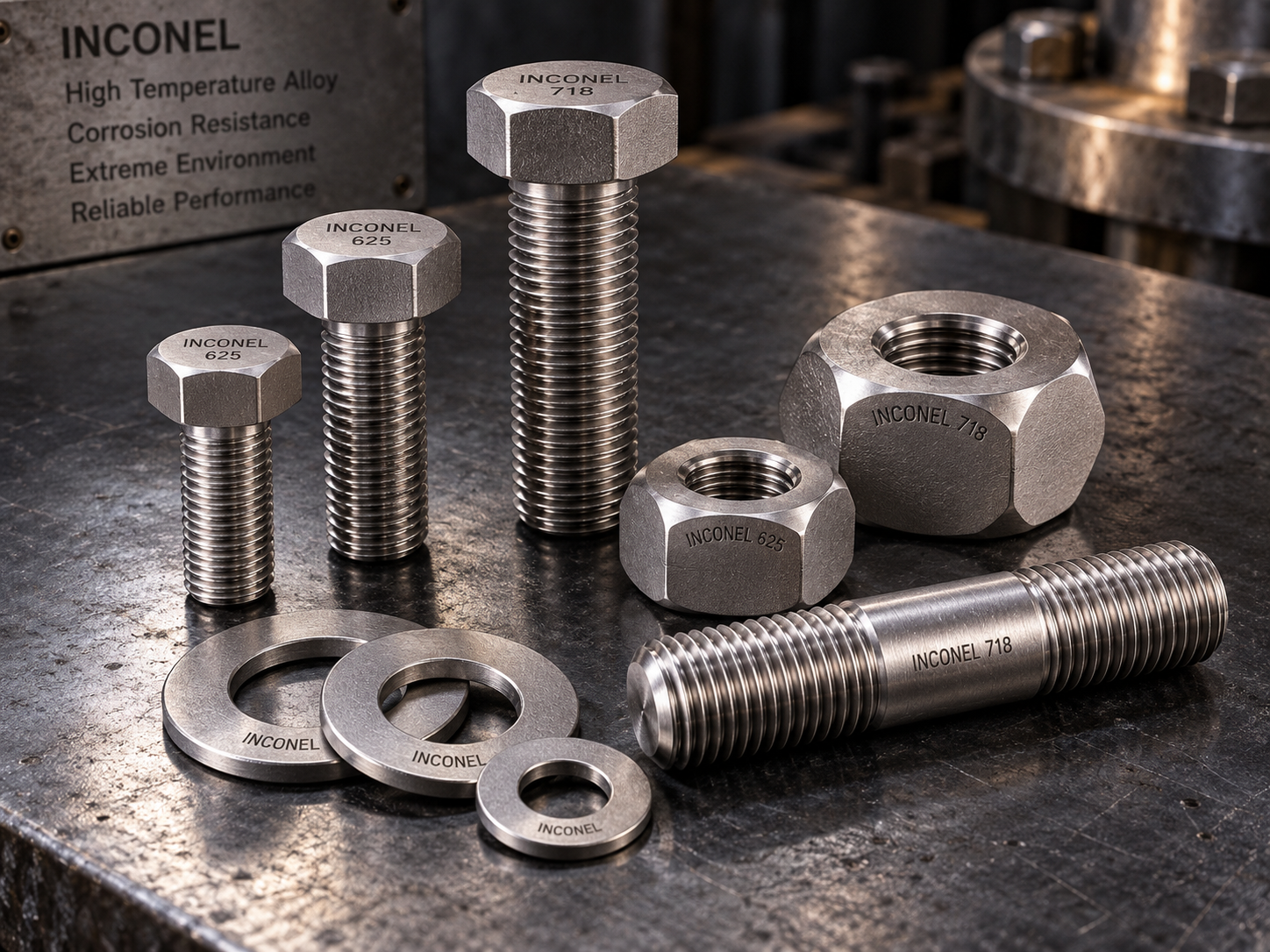
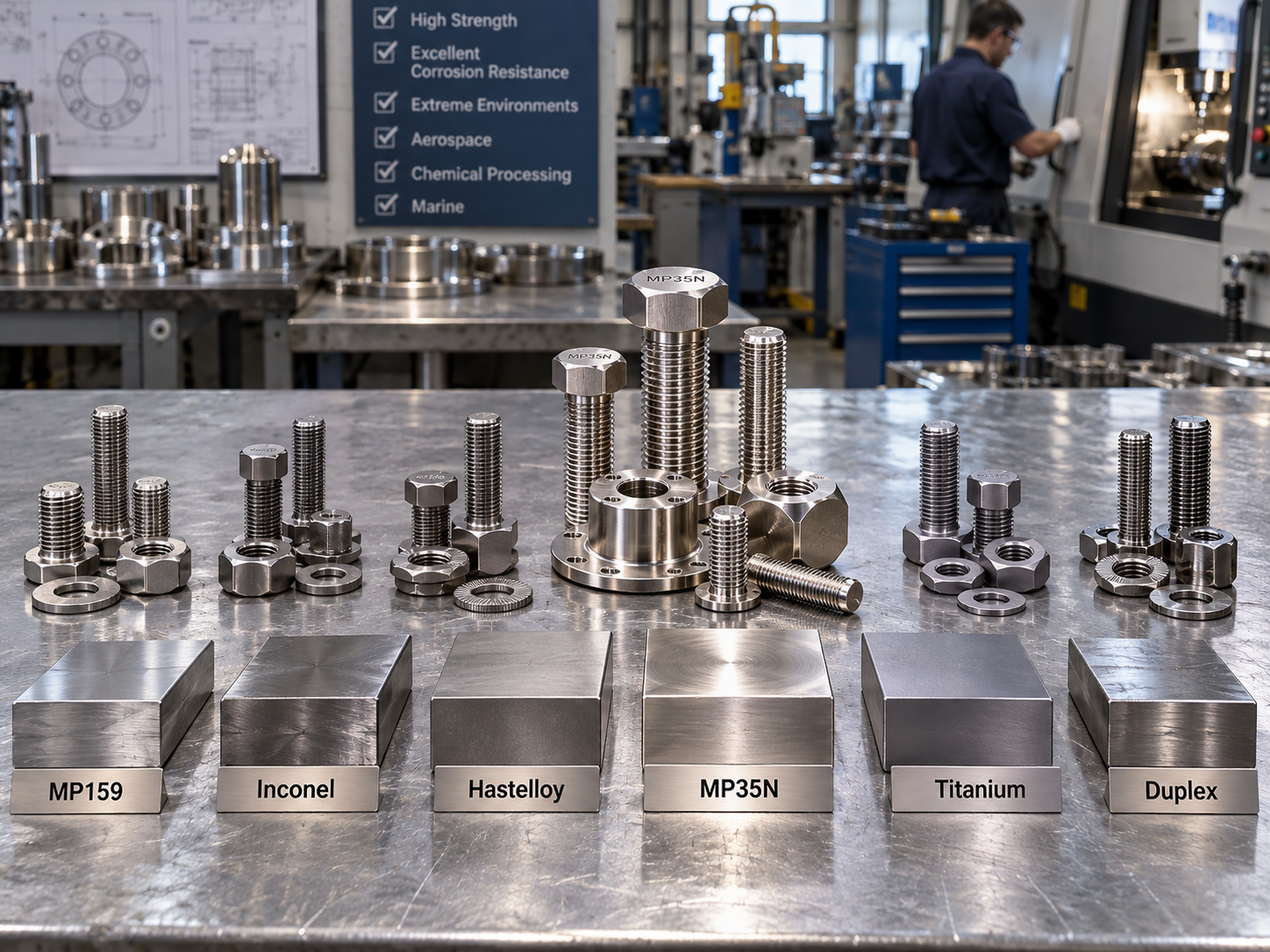
Choosing between A286 bolts and standard stainless bolts affects strength, heat resistance, service life, and total cost. For buyers, engineers, and maintenance teams comparing a286 fasteners, a286 stainless steel bolts, and general stainless options, this guide explains real performance differences, a286 bolt strength, and where premium materials deliver long-term value in demanding metal processing equipment applications.
Why does bolt material choice matter so much in metal processing equipment?
In metal processing equipment, a bolt is rarely just a low-cost commodity. It supports structural load, clamp force retention, vibration resistance, thermal cycling stability, and service safety across furnaces, heat-treatment fixtures, rolling lines, casting support systems, and corrosion-prone washdown zones. When teams compare A286 bolts vs standard stainless bolts, the real question is not just purchase price. It is whether the fastener can survive 2 to 5 years of demanding duty without preload loss, galling, oxidation damage, or unexpected shutdown risk.
Standard stainless bolts are widely selected because they are familiar, available, and lower in upfront cost. In many low-temperature and non-critical assemblies, grades such as common austenitic stainless can perform adequately. However, once working temperatures move into elevated ranges, or where cyclic stress, long service intervals, and safety-critical joints are involved, standard stainless may no longer deliver the required strength margin. This is where A286 bolt strength becomes an engineering and procurement issue rather than a simple material preference.
A286 is a precipitation-hardenable iron-nickel-chromium alloy used for fasteners that must retain mechanical properties at elevated temperature. In metal processing equipment, this matters for components exposed to repeated heating and cooling, localized hot zones, surface scale, and oxidation environments. Buyers evaluating lifecycle value often find that a higher initial part cost can reduce unplanned stoppages, maintenance labor, secondary damage, and replacement frequency over 12 to 36 months of operation.
For global projects, the decision also affects lead time, specification clarity, and quality assurance. Procurement teams need to verify dimensions, thread class, heat treatment condition, traceability, and material consistency. RAYCHIN LIMITED supports this process through specialty metals fastener development, manufacturing, and global supply, helping customers match demanding applications with practical material recommendations instead of overbuying or under-specifying.
Three common decision triggers seen in industrial projects
- Operating temperature rises from ambient service into the 300°C to 700°C range, where preload stability and oxidation resistance become more important than basic corrosion resistance alone.
- Maintenance intervals are extended from monthly checks to quarterly or semiannual shutdowns, requiring longer clamp-force retention and lower risk of seizure during removal.
- Equipment owners shift from part-price comparison to total cost analysis, especially when one failed fastener can stop a line, damage adjacent components, or create a safety review event.
What A286 usually signals in procurement language
When a drawing, BOM, or maintenance request specifies A286, it usually indicates one of four needs: elevated-temperature strength retention, improved creep resistance versus general stainless, better service reliability under vibration and thermal cycling, or reduced replacement frequency in critical joints. It does not automatically mean every bolt on the machine should be upgraded. It means the joint deserves closer engineering review.
That review should consider load path, flange behavior, installation torque, lubrication practice, thermal expansion mismatch, and service accessibility. A technically correct material can still fail if thread engagement is poor or if torque control is inconsistent. For this reason, material comparison should always be linked to joint design, installation practice, and maintenance reality.
A practical rule for screening applications
If the joint sits in a non-heated enclosure, sees only light mechanical loading, and is easy to replace within a 7 to 15 day maintenance window, standard stainless may remain a rational choice. If the joint is exposed to recurring hot cycles, carries meaningful structural load, or is expensive to access during a shutdown, A286 deserves early review by engineering and sourcing teams.
A286 bolts vs standard stainless bolts: what are the real technical differences?
The biggest misunderstanding in the market is assuming all stainless bolts behave similarly because they share a stainless appearance. In reality, A286 bolts and standard stainless bolts differ in strengthening mechanism, high-temperature capability, and long-term mechanical stability. Standard stainless grades used in fasteners are often chosen for corrosion resistance and general service, while A286 is selected where strength retention under heat is a central requirement.
For engineers and quality teams, the most useful comparison is not marketing language but service behavior across five dimensions: room-temperature strength, elevated-temperature strength retention, resistance to relaxation or creep, oxidation performance, and maintenance impact during removal and reassembly. These factors directly affect uptime, spare strategy, and whether the fastener remains fit for duty after repeated thermal cycles.
The table below gives a practical comparison framework for metal processing equipment. Values are qualitative and application-oriented because actual performance depends on size, heat treatment condition, design stress, and operating environment. It should be used for technical screening, not as a substitute for project-specific verification.
The main takeaway is simple. If the joint is cool, accessible, and non-critical, standard stainless can be sufficient. If the joint must keep its clamping force in hotter and more mechanically demanding conditions, A286 often justifies its premium. The decision should be based on service severity, not on appearance or generic stainless assumptions.
How A286 bolt strength changes the decision
A286 bolt strength is valuable because it is not limited to a single installation moment. In metal processing equipment, the bolt must continue doing its job after 100, 500, or even 1,000 heating and cooling events. Loss of preload can lead to flange leakage, misalignment, loosening, wear at interfaces, and accelerated fatigue in nearby parts. These secondary failures often cost more than the fastener itself.
This is why technical evaluators should review more than nominal tensile capability. They should ask whether the bolt will still support the joint after repeated thermal exposure, whether disassembly after 6 to 18 months is manageable, and whether the assembly environment promotes galling or oxidation scale. A stronger material on paper only matters if it reduces operational risk in practice.
Where standard stainless still makes sense
Standard stainless bolts remain a valid option in many projects. They can be cost-effective for low-heat panels, access covers, utility sections, conveyors outside hot zones, and components inspected every month or every quarter. In these cases, the equipment owner may prefer broader availability, faster replenishment, and lower unit price, especially where the consequence of a fastener issue is limited.
The risk appears when procurement generalizes that logic across the whole machine. A mixed-material strategy is often the more intelligent approach: use standard stainless where service is mild and reserve A286 for the 10% to 20% of joints that drive the majority of thermal and maintenance risk.
A short screening checklist for engineering teams
- Map the joint location: hot zone, splash zone, or ambient zone.
- Estimate service access: easy daily access, planned quarterly shutdown, or major annual outage only.
- Review failure consequence: nuisance repair, quality risk, safety concern, or line stoppage.
- Compare the total replacement burden, not only the unit bolt price.
Which applications favor A286 fasteners in metal processing equipment?
Not every fastener in metal processing equipment needs a premium alloy, but several application categories repeatedly justify A286. These include high-temperature enclosures, burner-adjacent assemblies, thermal oxidizer hardware, heat-treatment fixtures, exhaust sections, and support joints near ovens or furnaces. In these areas, thermal exposure and long service intervals create a stronger business case for higher-grade fasteners.
Maintenance teams also favor A286 where access is difficult. If a bolt sits behind guarding, insulation, ducting, or process modules that require 4 to 6 labor hours to reach, replacing a failed bolt is no longer a minor task. When downtime costs are added, the economics shift quickly toward longer-life fasteners. This is why many project managers evaluate premium fasteners based on intervention reduction rather than raw material cost.
A286 can also support equipment reliability in environments where thermal cycling combines with vibration. Rotating process equipment, drive-adjacent hot structures, and modular frames near heated sections may experience load fluctuations that accelerate joint relaxation. In these conditions, material choice should be paired with proper installation torque, thread condition control, and review of washers or locking strategy.
For buyers looking at commercial options, it is often useful to source from suppliers experienced in specialty metals rather than treating the part as a generic catalog item. A project may require custom lengths, non-standard head styles, material traceability, or specific surface and heat-treatment considerations. In such cases, A286 Fasteners can fit applications where both performance and documentation matter.
Application mapping by service severity
The table below helps technical and sourcing teams align bolt material with service severity. It is especially useful during design review, retrofit planning, and maintenance standardization across multiple machine platforms.
This mapping shows that the right answer is often zone-based rather than machine-wide. A selective upgrade strategy allows procurement teams to manage budget while protecting the joints that most influence uptime, safety, and maintenance effort.
Signs a joint should be reviewed for upgrade
- The bolt is replaced more than once per year under normal service.
- Thermal exposure is repetitive and the joint loosens between planned shutdowns.
- Removal damage, seizure, or oxidation buildup increases service time beyond 30 to 60 minutes per fastener set.
- The joint is linked to alignment, sealing, guarding, or operational safety.
Why distributors and OEMs also care
Distributors, agents, and OEM platforms benefit from clearer application boundaries because they can standardize stocking logic. Instead of carrying premium alloy across all SKUs, they can reserve it for hot-zone kits, retrofit packs, or customer-specific BOM lines. This reduces inventory waste while improving field performance where it matters most.
For global supply programs, specialist partners like RAYCHIN LIMITED add value by supporting custom and standard specialty metal fasteners, helping teams balance material performance, manufacturability, and project delivery constraints across different regions and end-user expectations.
How should buyers compare strength, cost, and lifecycle value?
A common procurement mistake is comparing A286 bolts and standard stainless bolts on unit price alone. In reality, cost analysis should include at least five dimensions: part price, installation labor, replacement frequency, downtime exposure, and failure consequence. A bolt that costs more at purchase may still be the lower-cost choice over a 12-month or 24-month operating period if it prevents one unplanned shutdown or reduces repeated maintenance.
For metal processing equipment, the most realistic cost model is scenario-based. Ask what happens if the bolt remains stable for the planned maintenance interval versus what happens if it loses preload, seizes, or requires early replacement. This approach is useful for purchasing managers, project leaders, and business evaluators because it connects fastener choice to plant economics, not just component sourcing.
The table below shows how lifecycle thinking can change the decision. The numbers are expressed as cost drivers rather than specific currency values because actual labor rates, line value, and outage costs vary by region and plant type. It still provides a strong framework for internal justification.
The commercial insight is straightforward. Premium fasteners are usually justified where labor, outage, and risk costs dominate. Commodity fasteners remain sensible where replacement is quick and the service environment is moderate. Smart procurement separates these two cases instead of forcing a single rule across all assemblies.
A four-step procurement method
- Classify each joint by temperature, accessibility, and consequence level.
- Estimate maintenance interval targets, such as monthly, quarterly, or annual intervention.
- Compare total cost over 12 to 24 months, including labor and outage impact.
- Confirm technical details before ordering: size, thread, condition, documentation, and lead time.
Lead time and sourcing reality
Common stainless bolts may be available from local stock in short timeframes, while specialty alloy fasteners can involve production cycles of 2 to 6 weeks depending on size, quantity, and customization. This makes forward planning important. If a plant waits until shutdown week to confirm a hot-zone fastener upgrade, the right material may not arrive in time for the outage window.
That is why technical procurement should begin with a joint list, not a last-minute reorder. RAYCHIN LIMITED works with customers needing standard and customized specialty metals fasteners, helping them define material fit, order scope, and supply timing for demanding applications rather than reactive spot purchases.
When a premium material is usually not necessary
If the assembly is low-load, cool-running, frequently inspected, and served by simple local replacement, the cost premium of A286 may not be justified. Procurement discipline matters both ways: avoid under-specification in hot critical joints, but also avoid blanket upgrading where standard stainless already meets the real duty cycle.
What should engineers and quality teams verify before ordering?
Selecting the right alloy is only part of successful fastener performance. Before issuing a purchase order, engineering, quality, and maintenance teams should verify the joint requirements in a structured way. At minimum, this includes service temperature range, expected load condition, installation method, thread engagement, mating materials, inspection frequency, and any documentation or traceability needs. In high-consequence equipment, small specification gaps can cause expensive field problems.
A useful review model is based on five checkpoints. First, confirm where the bolt sits relative to heat sources. Second, determine whether the joint is static or vibration-prone. Third, review maintenance access and removal difficulty. Fourth, check whether installation torque can be controlled consistently. Fifth, decide if standard stock dimensions are sufficient or if a custom configuration is required. This prevents the common mistake of ordering the right alloy in the wrong form.
For teams comparing supply options, documentation quality also matters. Material designation, dimensional compliance, heat treatment condition where applicable, and batch traceability should match the project’s internal control level. This is especially important for OEMs, distributors, and export programs where consistency across shipments is more valuable than one-time spot pricing.
In projects requiring a deeper review of specialty alloy fasteners, buyers often request support for material confirmation, drawing review, sample planning, and delivery scheduling. Depending on the application, A286 Fasteners may be considered for both standard and customized requirements where operating conditions exceed typical stainless expectations.
Five critical checks before purchase
- Temperature profile: ambient service, intermittent heat, or sustained elevated exposure across a 24-hour production cycle.
- Joint criticality: whether failure affects safety guarding, alignment, sealing, or process continuity.
- Maintenance access: whether inspection occurs monthly, quarterly, or only during an annual shutdown.
- Installation control: torque practice, lubrication consistency, and mating part condition.
- Supply fit: standard dimensions, custom lengths, minimum order considerations, and delivery window.
Common selection mistakes
Mistake 1: treating all stainless bolts as equal
This leads to underestimating differences in high-temperature strength retention and long-term preload behavior. The result is usually premature maintenance rather than immediate catastrophic failure, which makes the problem harder to spot in early purchasing reviews.
Mistake 2: focusing only on unit cost
A lower-priced fastener can become the more expensive option if it causes one extra shutdown, one difficult removal procedure, or repeated quarterly replacement in a high-heat location. Total cost must be tied to service interval and access difficulty.
Mistake 3: upgrading every location without screening
Over-specification increases cost and can complicate supply planning. A joint-based review often shows that only a limited number of hot, critical, or inaccessible positions actually need A286, while many other positions remain suitable for standard stainless.
FAQ and final buying guidance for A286 bolts vs standard stainless bolts
Because search intent around a286 stainless steel bolts often includes technical comparison, sourcing concerns, and maintenance planning, the questions below address the issues most frequently raised by engineers, buyers, and project stakeholders in metal processing equipment environments.
How do I know if A286 bolts are necessary for my equipment?
Start with three filters: temperature exposure, maintenance access, and failure consequence. If the joint operates near heat sources, is difficult to access, or affects uptime and safety, A286 deserves review. If the joint is cool, easy to inspect every 1 to 3 months, and low consequence, standard stainless may be enough. A zone-by-zone assessment usually gives the clearest answer.
Are A286 bolts always more cost-effective in the long run?
No. They are usually more cost-effective only when the service environment can use their strengths. In hot, critical, or hard-to-reach joints, the premium often pays back through fewer replacements and lower downtime risk. In general ambient applications, standard stainless often remains the better commercial choice.
What should be included in a quote request?
A practical RFQ should include bolt size, thread type, required quantity, operating environment, installation location, drawing or sketch if available, expected delivery window, and whether standard or custom configuration is needed. If the joint is in a hot section, mention the approximate temperature range and inspection interval. That information helps suppliers recommend the correct material and supply route faster.
What is a realistic sourcing timeline?
For common stainless, local supply may be relatively fast. For specialty alloy fasteners, a typical planning window can range from 2 to 6 weeks depending on size, quantity, and customization. Large projects or non-standard dimensions may require earlier scheduling. If the parts are needed for a fixed shutdown, procurement should begin well before the outage date.
Why work with a specialty metals fastener supplier?
Because the decision is rarely just about buying a bolt. It involves material fit, technical review, manufacturability, supply planning, and support for challenging applications. RAYCHIN LIMITED focuses on the development, manufacturing, and global distribution of standard and customized fasteners made from high-performance specialty metals, supported by a professional technical team that helps customers evaluate the best material options for demanding operating conditions.
Why choose us for A286 and other specialty fastener requirements?
If your team is comparing A286 bolts vs standard stainless bolts for metal processing equipment, the most valuable support is not generic sales language but application-based guidance. We can help you review service conditions, identify which joints truly need higher-temperature performance, compare standard and custom options, and align the order with delivery timing and documentation needs. This is especially useful when projects involve 3 to 5 critical fastener positions that drive most of the operational risk.
You can contact us for parameter confirmation, product selection, lead time planning, customized fastener solutions, sample support, documentation expectations, and quotation discussion. Whether you are an engineer validating a hot-zone joint, a buyer managing budget pressure, or a distributor building a specialty inventory program, a focused technical review can prevent costly over-specification and even more costly under-specification.
Request A Quote! We'll respond as soon as possible(within 12 hours)
Get a Quote