
Categories List
Recent Posts
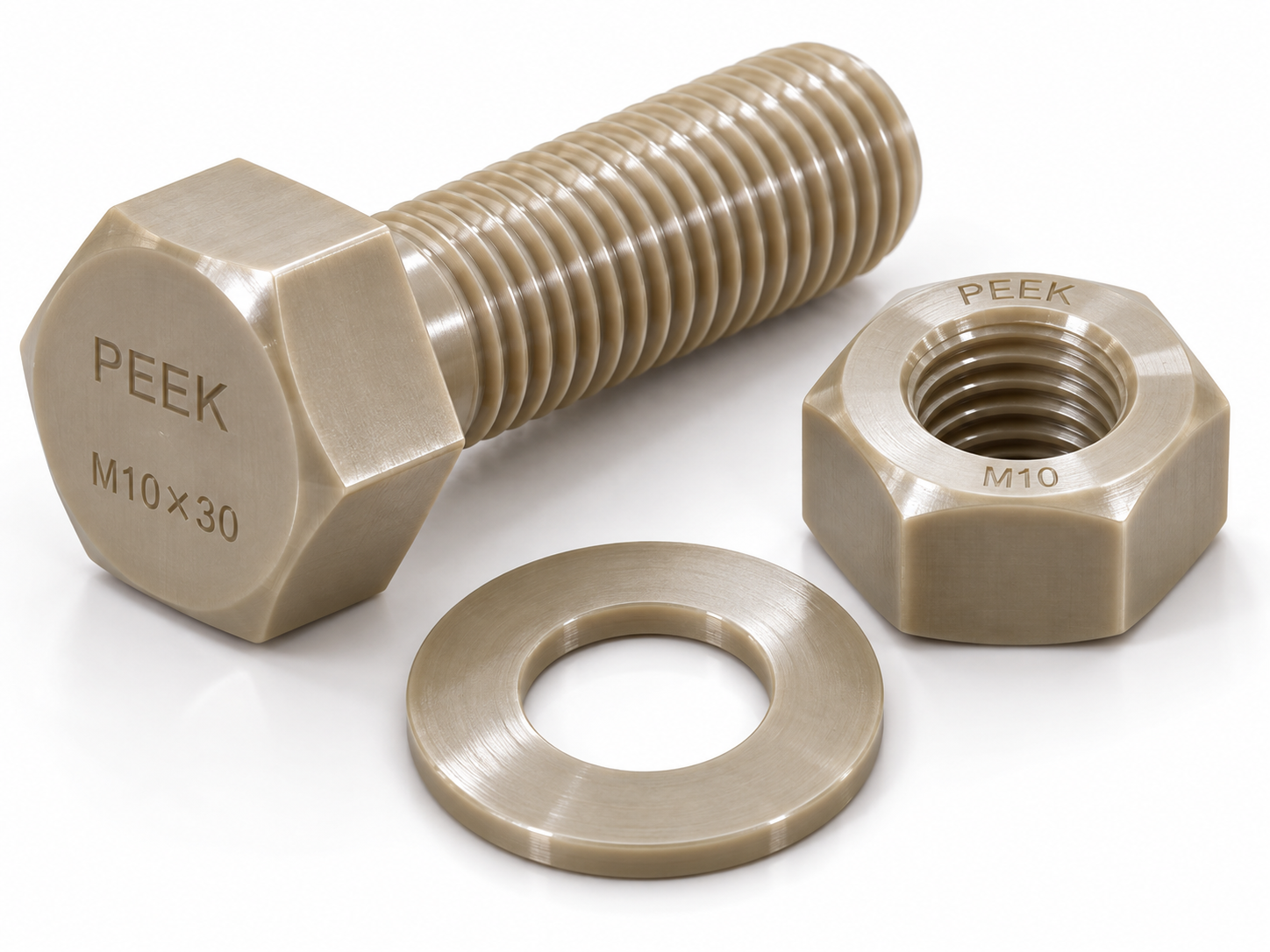
 PEEK Fasteners | Polyetheretherketone Bolts, Nuts, Screws – High-Performance Polymer | RAYCHIN LIMITED
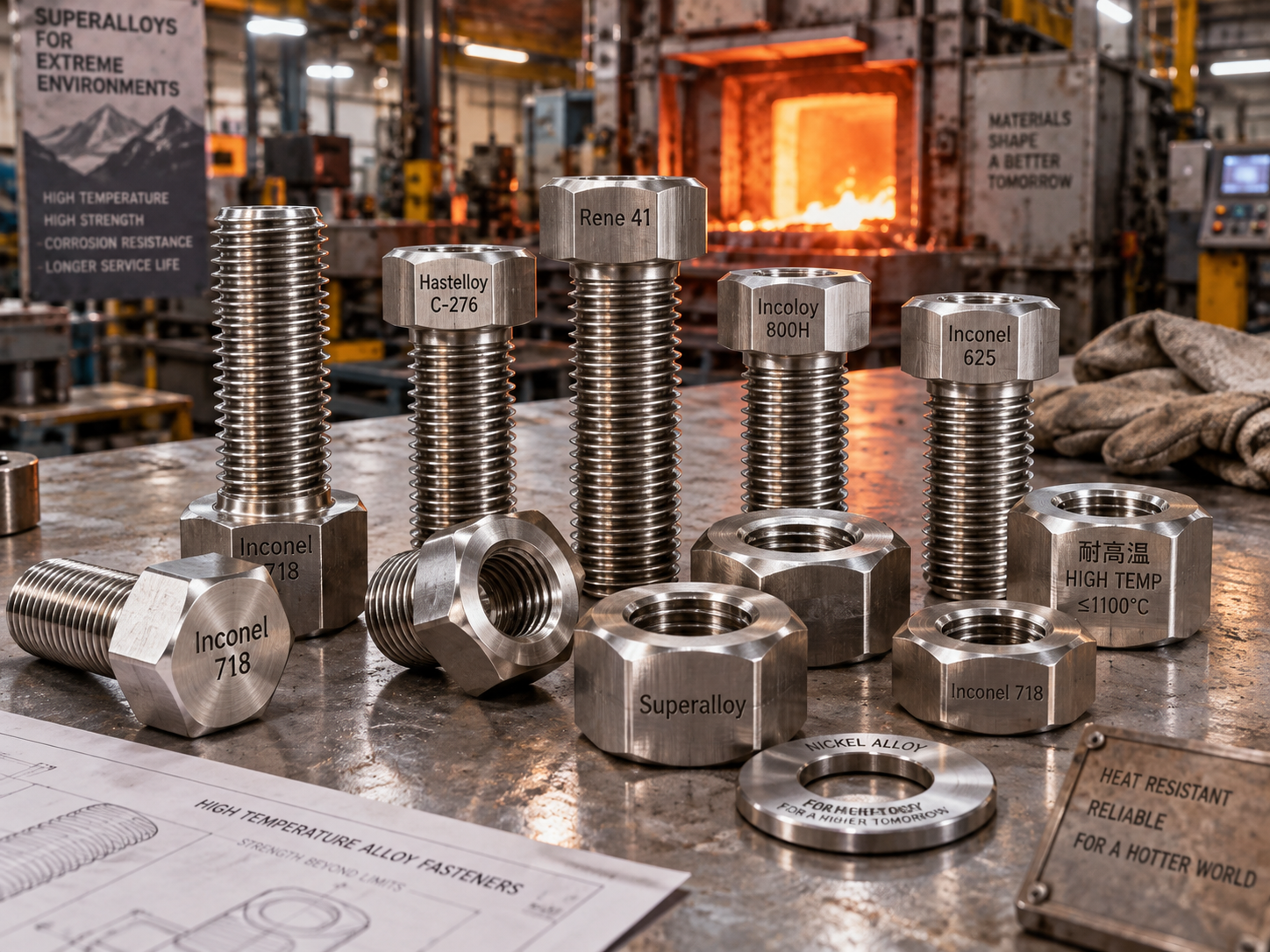
 High-Temperature Alloy Fasteners: Complete Material Guide, Chemistry, Performance Comparison | RAYCHIN LIMITED
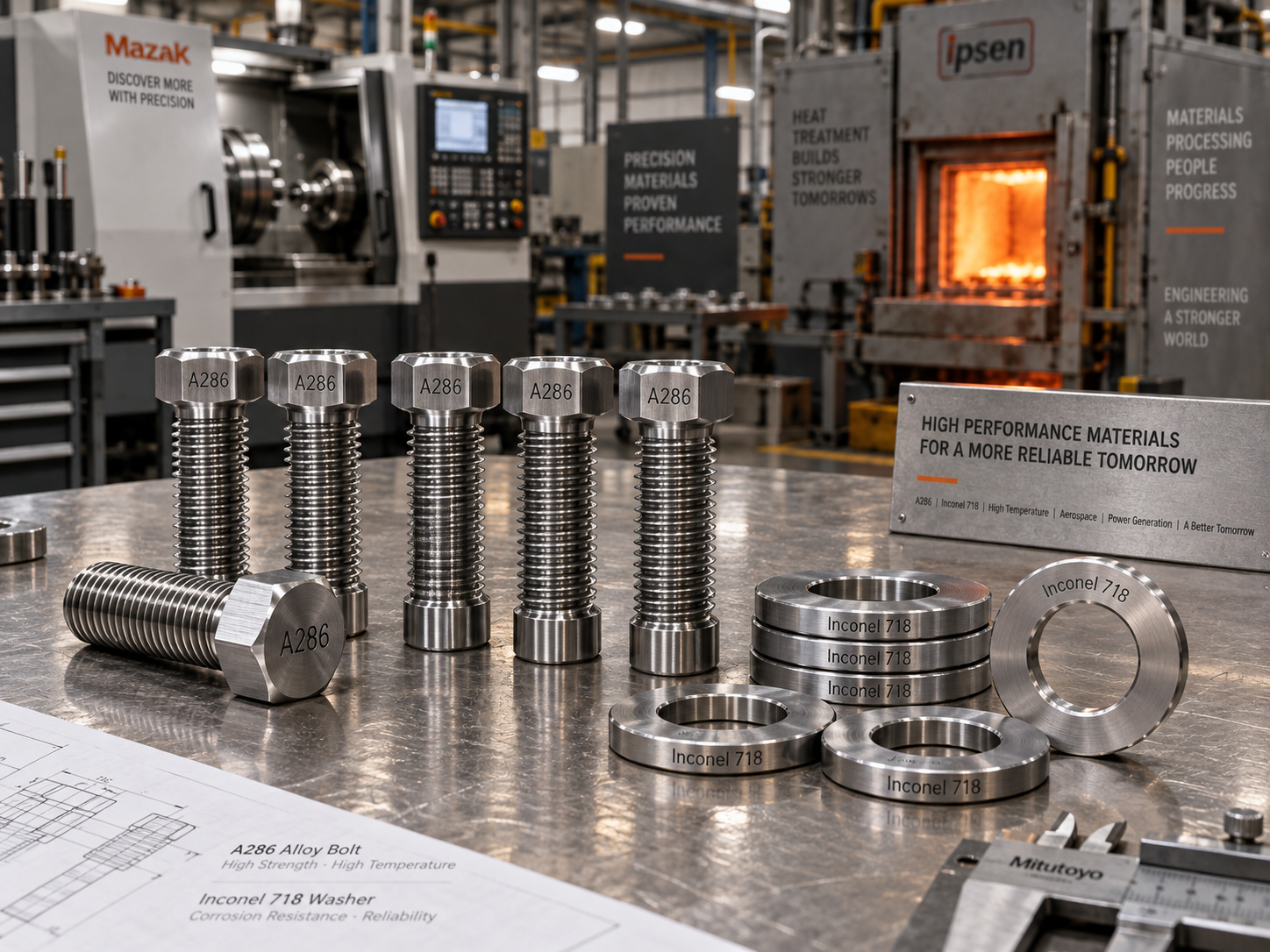
 High-Temperature Fastener Material Selection Guide | A286, Inconel 718, Nimonic 80A, Waspaloy – RAYCHIN LIMITED
In the demanding environment of chemical plants, where corrosion resistance and mechanical strength define system reliability, Monel threaded rods have become indispensable. As part of RAYCHIN LIMITED’s advanced portfolio of specialty fasteners—including Monel bolts, Monel nuts, and Monel 400 fasteners—these components deliver exceptional performance under high stress and aggressive chemical exposure. Understanding what makes Monel fasteners so critical helps engineers, project managers, and procurement specialists ensure safer, longer-lasting installations.
Definition and Material Characteristics of Monel Threaded Rods
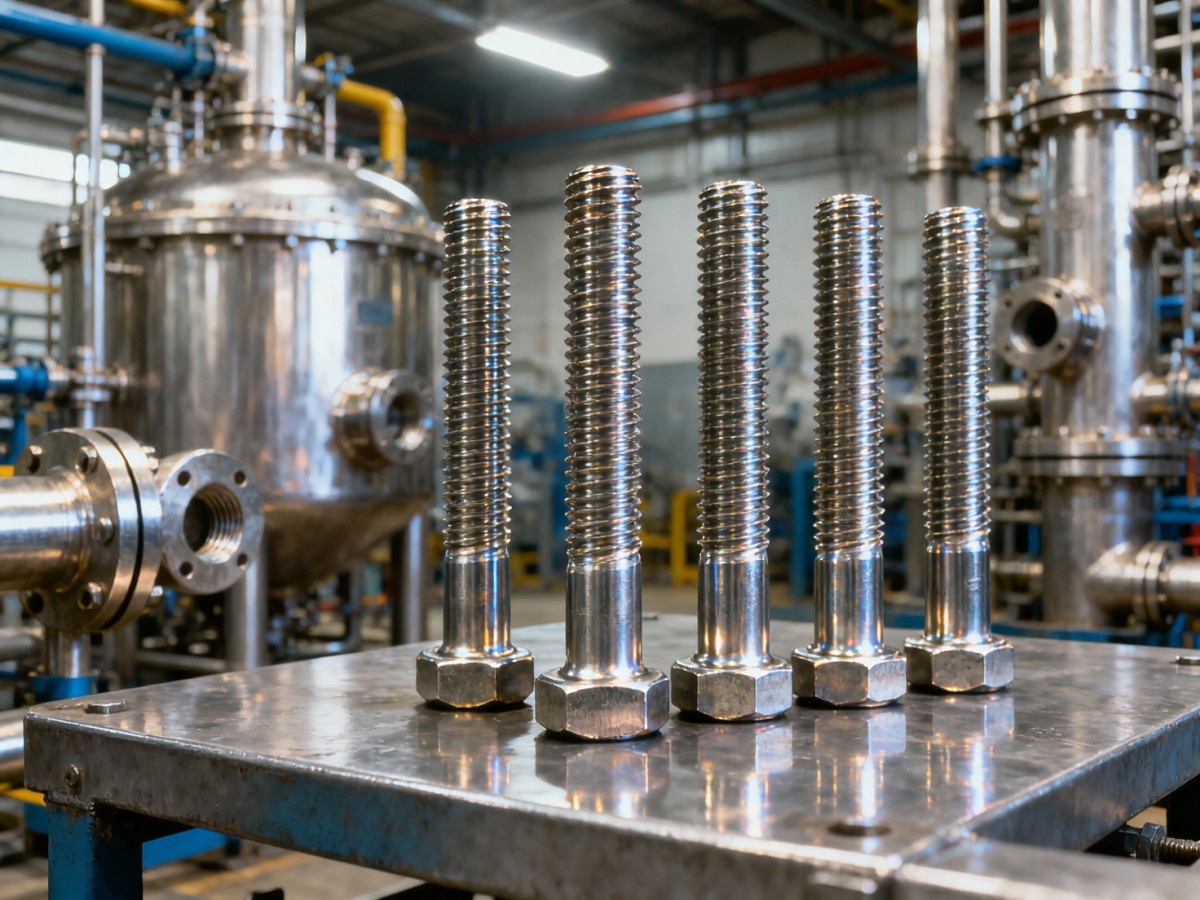
Monel threaded rods are fastening components manufactured from Monel alloys, primarily nickel-copper mixtures with small quantities of iron, manganese, carbon, and silicon. The two most commonly used grades, Monel 400 and Monel K500, are recognized for their outstanding resistance to seawater, hydrofluoric acid, and caustic alkalis—qualities that directly correlate with their critical role in chemical processing plants. Typical tensile strengths for these alloys range between 480–620 MPa for Monel 400 and 760–965 MPa for Monel K500, depending on heat treatment.
From a metallurgical standpoint, Monel’s microstructure remains stable up to approximately 480°C, providing durability under cyclical thermal stress. In chemical plants operating within a temperature band of –20°C to 300°C, such thermal stability makes Monel threaded rods superior to austenitic stainless steel alternatives that may suffer stress corrosion cracking beyond 250°C.
The anti-galling property is another key mechanical advantage. Monel alloys naturally prevent seizure when tightened under high-torque conditions, enabling reliable assembly even in flange joints or heat-exposed reactor vessels where torque-retention integrity is essential. For plant operators undertaking quarterly maintenance checks, this reduced galling risk directly translates into lower downtime and extended service intervals.
RAYCHIN LIMITED integrates precise thread tolerance control within ±0.02 mm, ensuring dimensional stability across lot batches. Combined with proprietary surface passivation techniques, these threaded rods maintain consistent friction coefficients between 0.10–0.14, optimizing torque accuracy during installation in complex piping systems.
Applications and Stress Conditions in Chemical Plant Installations
Monel threaded rods are deployed in environments that combine aggressive chemical media with mechanical vibration or high tensile loads. In chemical production lines handling chlorine, sodium hydroxide, or sulfuric acid, Monel fasteners are often used to secure reaction vessels, heat exchangers, agitation systems, and pressure containment structures. The alloy’s 60% minimum nickel content ensures outstanding resistance against rapidly oxidizing mediums—crucial in plants where pH levels can fluctuate from 1–12 during continuous processing cycles.
A typical chemical plant installation may experience cyclic stress amplitudes in the order of 30–40% of the fastener’s yield strength. Under such fatigue-induced conditions, Monel threaded rods maintain structural integrity over service lifespans exceeding 10 years, compared to 5–7 years for standard stainless fasteners. The difference is particularly evident in offshore or coastal refineries, where atmospheric chlorides accelerate metal degradation by up to 1.5 mm/y in poorly protected materials.
Below is a table summarizing common application conditions and performance ranges for Monel threaded rods used in chemical plants:
The data indicate that Monel threaded rods outperform carbon and stainless steels by 30–50% in terms of corrosion rate reduction. This reliability underpins their selection by project managers aiming for 24/7 production continuity, where even one unplanned shutdown may cost USD 50,000–100,000 in chemical yield losses.
RAYCHIN LIMITED supports engineering teams by offering fastener sets pre-certified for hydrostatic testing pressures up to 20 bar, ensuring compatibility with high-pressure chemical reactors. Each batch undergoes visual and ultrasonic inspection, helping operators maintain strict ISO 9001 and ASTM B164 compliance across the supply chain.
Comparison to Other Specialty Metal Fasteners
When evaluating fasteners for chemical or marine-environment installations, procurement engineers often compare Monel alloys with stainless steels such as 316L, Inconel 625, and titanium grade 2. Key decision parameters include corrosion resistance index, yield strength, and cost efficiency measured in lifecycle value per operating hour.
The table below outlines a comparative perspective based on industry-recognized metrics for threaded rod selection:
Compared to stainless steel, Monel threaded rods enhance chemical longevity by approximately 40% while retaining a manageable cost ratio. They offer 15–20% higher tensile strength than 316L while imposing less hardness-related brittleness than Inconel. This balance makes Monel suitable for mid- to high-pressure systems that cannot justify titanium-level cost structures but demand enhanced corrosion control.
Procurement professionals evaluating options for long-term plant retrofits often adopt a three-stage evaluation: mechanical testing, corrosion simulation, and total cost of ownership over a 10–15 year cycle. RAYCHIN LIMITED provides structured testing recommendations for each evaluation step, helping decision-makers substantiate technical justification for Monel adoption.
Through continuous R&D, RAYCHIN maintains material traceability and batch documentation for audit reporting under the ASME Section II and ASTM B164/B165 frameworks—reassuring QA professionals of material uniformity and specification compliance.
Procurement Guidance and Standard Compliance
Purchasing Monel threaded rods for chemical plant projects requires balancing key parameters: performance grade, thread specification, and certification scope. Most suppliers offer M6–M72 thread sizes, with standard lengths varying between 100 mm and 2000 mm. For plants applying flange-based couplings, thread fit tolerance 6g/6H ensures mechanical compatibility under hydrostatic conditions up to 25 bar.
To streamline procurement evaluation, RAYCHIN LIMITED advises comparing five essential attributes before confirming purchase orders:
- Material grade verification through chemical composition certificates
- Mechanical testing reports including tensile, yield, and elongation data
- Dimensional accuracy validated within +0.1/–0.05 mm
- Corrosion test data under 3.5% NaCl exposure for at least 240 hours
- Conformance with international standards such as ASTM B164, B865, and DIN 975
For project engineers, proper documentation and pre-delivery inspection can reduce on-site assembly delays by 15–20%. RAYCHIN offers pre-configured supply packages tailored to plant startup schedules, accommodating regular delivery windows of 7–14 days depending on batch scale and logistical constraints.
In compliance-sensitive projects, fasteners often require dual marking—identifying both heat number and specification class. This traceability practice facilitates root cause analysis should component failure occur during the maintenance cycle, emphasizing the importance of working with suppliers who understand lifecycle accountability.
RAYCHIN LIMITED continuously integrates non-destructive testing (NDT) such as liquid penetrant or ultrasonic scanning across production batches. These test verifications, aligned with ISO/IEC 17025-accredited lab protocols, allow for batch release without compromising project timelines.
Frequently Asked Questions: Monel Fasteners in Practice
What are the main advantages of Monel threaded rods over stainless steel in chemical plants?
Monel rods exhibit notably higher corrosion resistance in mixed chemical environments containing hydrofluoric and hydrochloric acids, with up to 50% lower corrosion rate than 316L stainless steel. They also retain mechanical performance at higher temperatures and under cyclic stress, reducing the frequency of torque re-tightening operations during annual maintenance rounds.
Are Monel threaded rods suitable for offshore petrochemical or desalination installations?
Yes. Due to their nickel-rich composition, Monel fasteners demonstrate minimal impact from chloride ion attack and pitting even in continuous seawater exposure. Offshore desalination systems working under ambient temperatures between 20–60°C often select Monel 400 rods to guarantee operational reliability exceeding 10 years.
How can procurement teams validate genuine Monel products?
Verification involves cross-checking mill certificates, confirming alloy composition (minimum 63% Ni and 27–33% Cu), and ensuring supplier compliance with ASTM B164 or B865 documentation. RAYCHIN LIMITED provides per-heat chemical analysis reports and mechanical testing summaries for every dispatched lot, helping QA personnel verify authenticity rapidly during inbound inspections.
What is the usual delivery lead time for custom Monel rods?
Typically, lead times range from 2–4 weeks for regular dimensions, while specialized thread pitches or coatings may extend to 5–7 weeks. RAYCHIN supports expedited production lines capable of delivering standard Monel 400 fasteners within 10 working days for urgent replacement or shutdown operations.
Why Choose RAYCHIN LIMITED for Monel Threaded Rods
RAYCHIN LIMITED stands out as a trusted partner in the specialty metal fastener segment by combining engineering excellence, global logistics reach, and rigorous material science. The company’s integrated operations—from alloy development to precision manufacturing—ensure consistent product reliability for high-stress industrial use.
Engineers and procurement managers benefit from our three-tier service model that covers material consultation, technical validation, and post-installation support. Whether you are evaluating Monel 400 for reactor sealing bolts or K500 for agitator shaft assemblies, RAYCHIN ensures optimal cost-to-performance alignment backed by expert advice.
We encourage project decision-makers, safety officers, and maintenance coordinators to contact RAYCHIN LIMITED for:
- Customized fastener design based on temperature and pressure profiles
- Assistance in selecting the right alloy for corrosive chemical compatibility
- Detailed cost estimation and delivery schedules aligned with plant turnaround plans
- Material certification requirements and documentation integration
- Sample testing and technical data support prior to project specification approval
Contact RAYCHIN LIMITED to explore how specialty Monel threaded rods can enhance system integrity and lower lifecycle maintenance costs in your chemical installations. Our expert team provides comprehensive guidance from material selection to final on-site assembly, helping ensure your next project performs reliably under any chemical or environmental condition.
Request A Quote! We'll respond as soon as possible(within 12 hours)
Get a Quote