
Categories List
Recent Posts
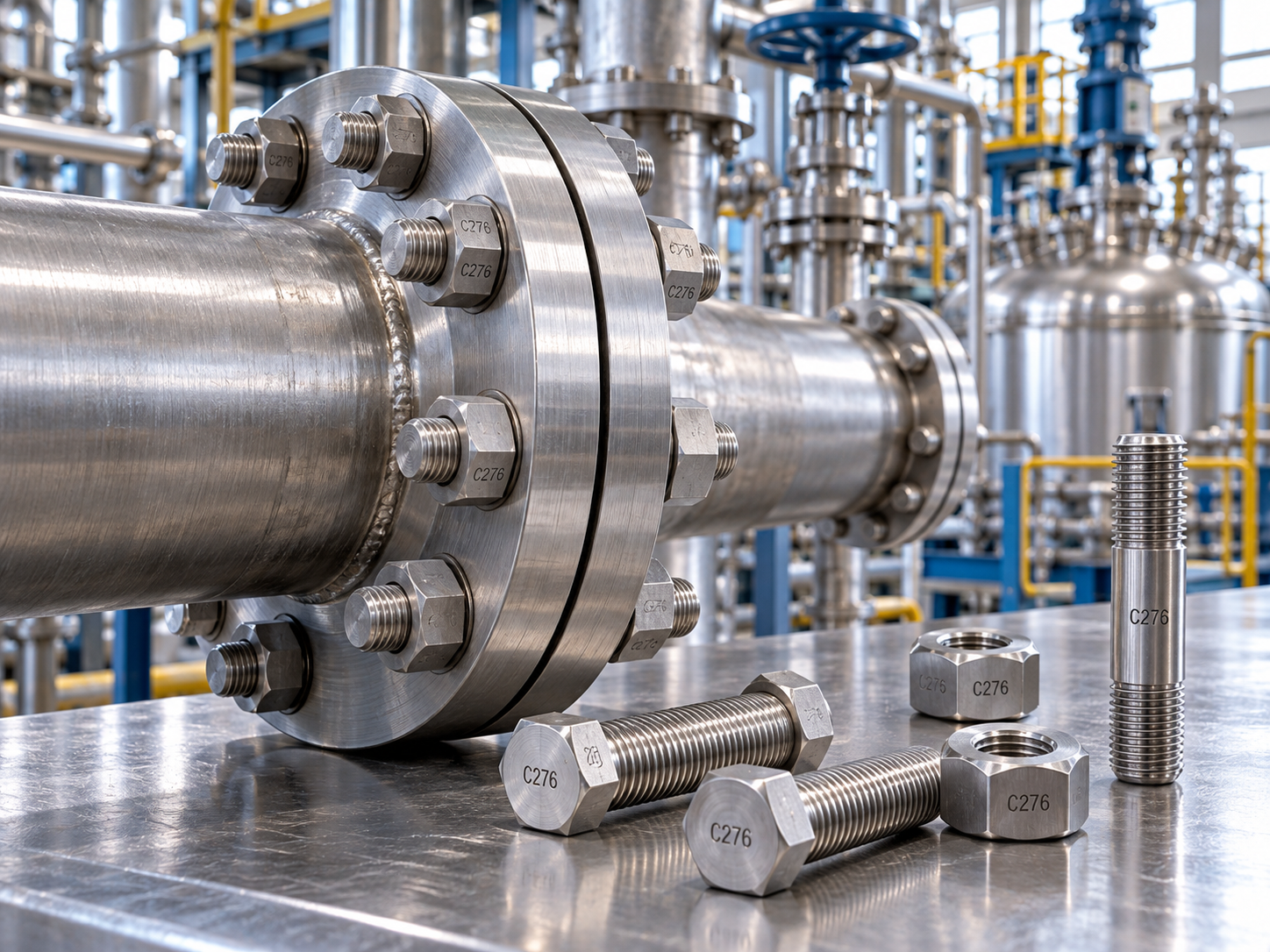
 Hastelloy C276 Fasteners: Bolts, Nuts, Screws, Studs & Washers for the World's Most Aggressive Corrosive Environments
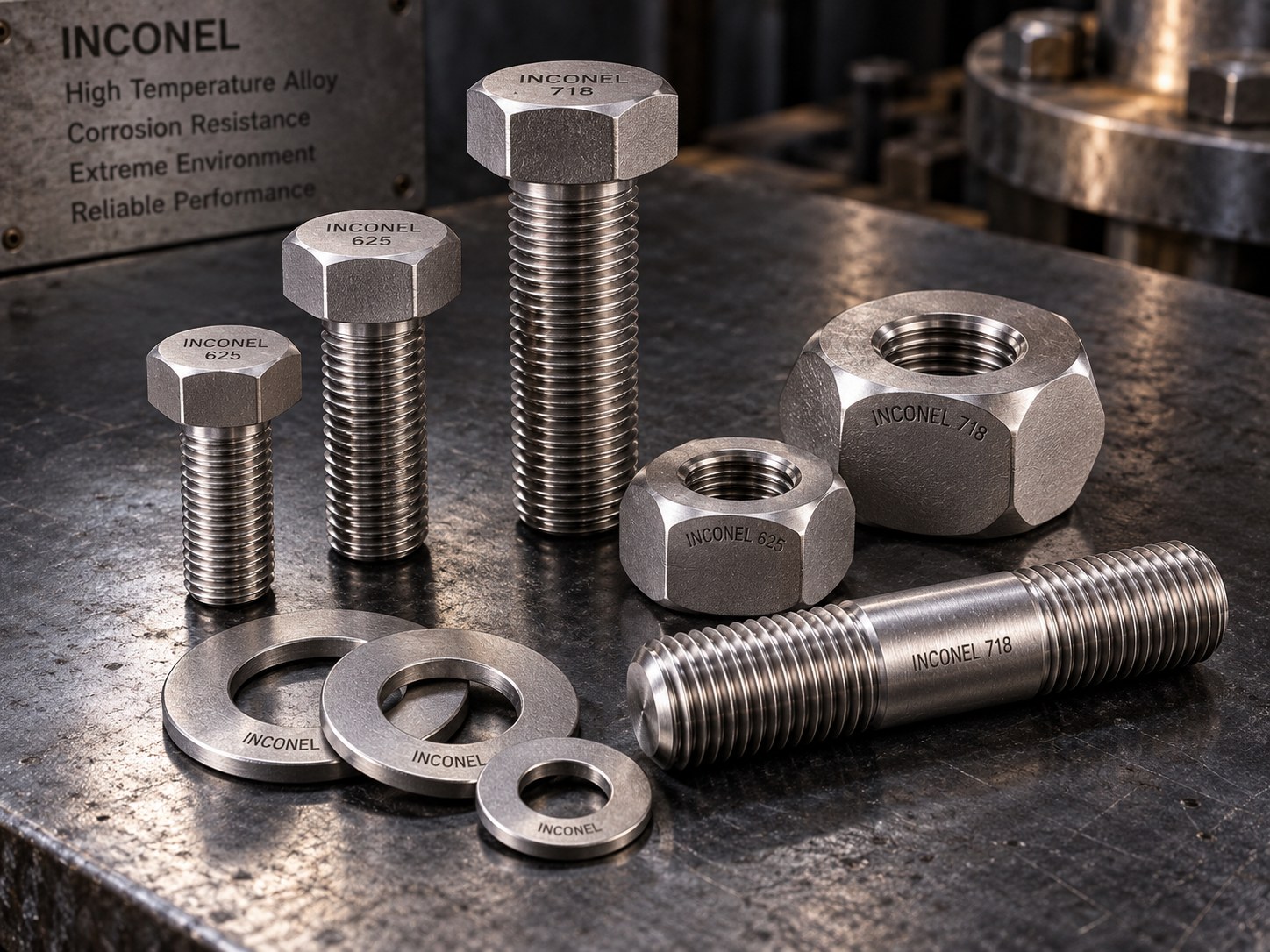
 Inconel Fasteners: Bolts, Nuts, Washers, Studs – Complete Technical Guide | RAYCHIN LIMITED
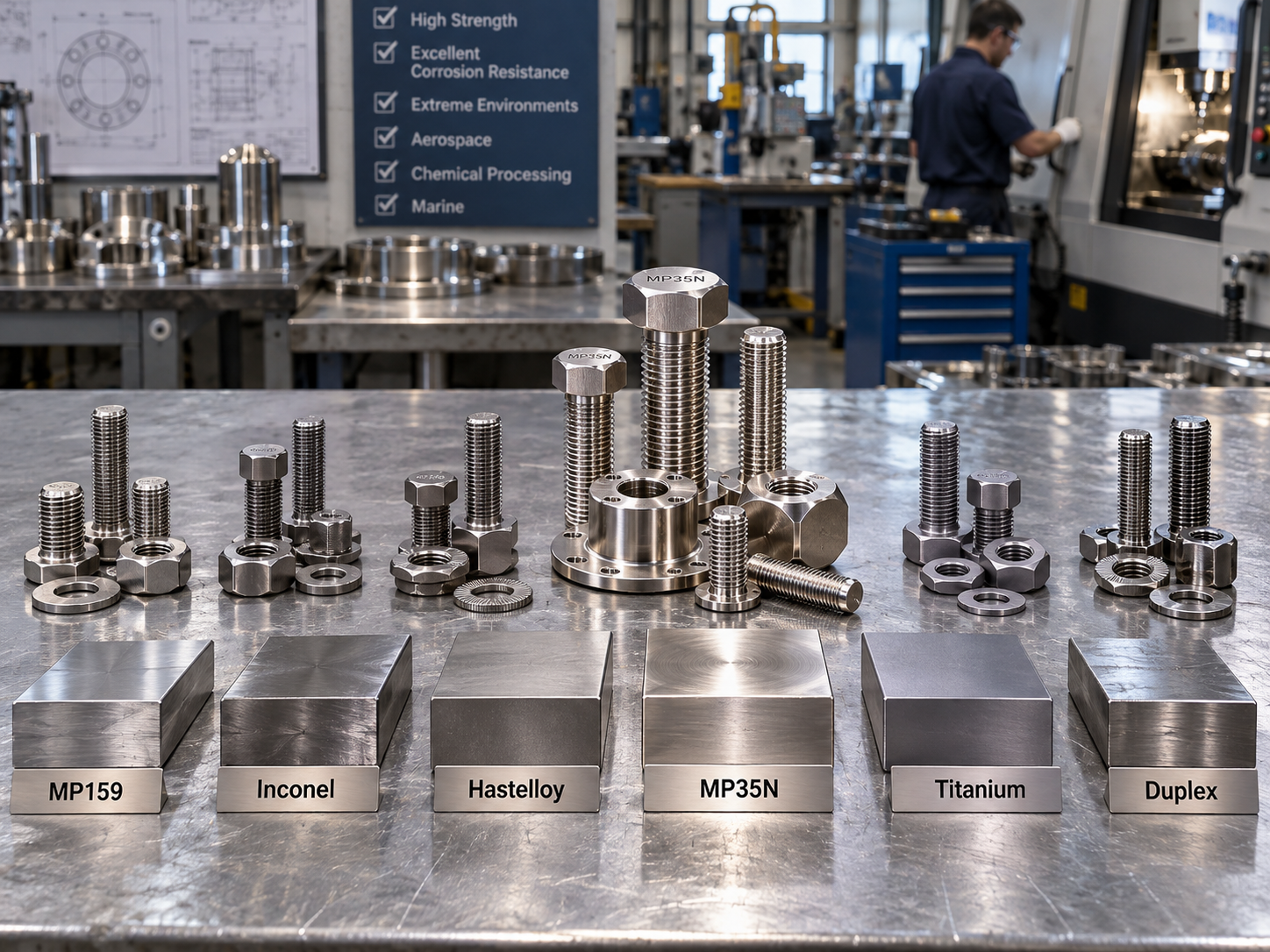
 MP35N vs Inconel, Titanium, C276, Complete Material Comparison Guide for Fasteners | RAYCHIN LIMITED
Hastelloy vs Inconel, Monel, Duplex & Titanium: The Ultimate Fastener Material Comparison
When specifying corrosion‑resistant fasteners, engineers face a maze of high‑performance alloys. RAYCHIN LIMITED—a global specialist manufacturer of Hastelloy, Inconel, Monel, duplex, and titanium bolting—presents this definitive comparison to help you choose the right material for your environment. We draw on decades of manufacturing experience to give you the facts, not just datasheet numbers.
1. Hastelloy vs Inconel Fasteners: What's the Difference?
Both Hastelloy and Inconel are nickel‑based superalloys, but their chemistries and performance profiles differ significantly. Hastelloy alloys (e.g., C276, C22) prioritize corrosion resistance across a wide range of aggressive chemicals. Inconel alloys (e.g., 625, 718) often focus on high‑temperature strength and oxidation resistance, with good corrosion resistance as a secondary benefit.
2. Hastelloy C276 vs Inconel 625 Bolts: A Head‑to‑Head
Hastelloy C276 vs Inconel 625 bolts is a classic debate. C276 excels in reducing acids and wet chlorine, while Inconel 625 offers higher strength and better performance in high‑temperature oxidizing environments. For FGD scrubbers and chemical reactors handling hydrochloric/sulfuric mixtures, C276 is the benchmark. For subsea trees, wellhead components, and aerospace exhaust, 625 is often chosen. RAYCHIN manufactures both grades; our engineers help clients balance corrosion resistance, strength, and cost.
3. Hastelloy vs Monel for Seawater Fasteners
Hastelloy vs Monel for seawater fasteners: Monel K500 is the classic marine alloy—high strength, non‑magnetic, and immune to chloride stress corrosion cracking. Hastelloy C276 and C22 offer even broader chemical resistance, which matters when seawater is contaminated with H₂S or oxidizing biocides. For pure seawater, Monel K500 is often sufficient and more cost‑effective. For offshore oil & gas where sour conditions exist, Hastelloy C276 provides an extra safety margin. RAYCHIN stocks both Monel K500 and Hastelloy C276 for fast turnaround.
4. Hastelloy vs Duplex Stainless Steel Bolts
Hastelloy vs duplex stainless steel bolts comes down to pitting resistance and temperature limits. Super duplex (UNS S32760) offers high strength (550 MPa yield) and good chloride resistance, but its performance drops above 80°C in seawater due to pitting risk. Hastelloy C276 resists pitting and crevice corrosion at much higher temperatures and in low‑pH environments. In warm, acidic, or oxidizing chloride streams, Hastelloy is the safer choice despite a higher initial cost. RAYCHIN helps clients evaluate lifecycle economics—often, a Hastelloy upgrade pays for itself by eliminating premature replacements.
5. Hastelloy C22 vs C276 Chemical Resistance
Hastelloy C22 vs C276 chemical resistance is a frequent decision point. C22's higher chromium (≥20%) gives it superior performance in strongly oxidizing acids like nitric acid and in mixed oxidizer‑chloride environments. C276's higher molybdenum and tungsten make it better in reducing acids (hot sulfuric, hydrochloric). If your process stream contains ferric ions, dissolved oxygen, or other oxidizing species, C22 may be the better choice. RAYCHIN's metallurgists can review your specific process chemistry to recommend the optimal grade.
6. Super Duplex vs Hastelloy Fasteners Cost
Super duplex vs Hastelloy fasteners cost is a critical factor in project budgets. Super duplex bolts typically cost 30‑50% less than Hastelloy C276 equivalents. However, in aggressive FGD or chemical environments where super duplex may pit within months, the total cost of ownership (including replacement labor, downtime, and potential leakage) overwhelmingly favors Hastelloy. RAYCHIN provides honest, data‑backed comparisons to support your value‑engineering decisions.
7. Titanium vs Hastelloy Bolts: Weight and Strength
Titanium vs Hastelloy bolts weight and strength: Titanium Grade 5 (Ti‑6Al‑4V) offers yield strength ~828 MPa at roughly half the density of Hastelloy. It is immune to seawater corrosion and ideal for weight‑sensitive applications (aerospace, deep‑submergence). Hastelloy, however, resists a broader spectrum of chemicals (including reducing acids and wet chlorine) where titanium can be attacked (e.g., traces of fluoride or hot HCl). RAYCHIN manufactures both alloys and can advise when lightweight titanium is worth the premium.
8. When to Use Hastelloy Instead of Stainless Steel
When to use Hastelloy instead of stainless steel is a question of risk. Standard 316L fasteners fail quickly in wet chlorine, hot acids, and high‑chloride, low‑pH environments. If your service involves any of the following, Hastelloy is likely required:
- Sulfuric, hydrochloric, or hydrofluoric acid above ambient temperature
- Chlorine dioxide or hypochlorite bleaching
- FGD scrubber slurry with pH < 3 and chlorides > 10,000 ppm
- Pharmaceutical reactors using aggressive oxidizing solvents
- Nuclear fuel reprocessing with nitric‑hydrofluoric mixtures
RAYCHIN's engineering team can perform a material review of your process conditions and provide a formal recommendation, ensuring you never pay for unnecessary alloy upgrades—but also never risk a catastrophic fastener failure.
9. The RAYCHIN Advantage in High‑Alloy Fastener Supply
As a manufacturer, not a mere distributor, RAYCHIN LIMITED controls every step of production:
- Full alloy range – Hastelloy (C276, C22, B2, B3, X, G30), Inconel (625, 718, 825), Monel (400, K500), Duplex (F51, F53, F55), Titanium (Gr.2, Gr.5).
- Custom manufacturing – M6 to M100, 1/4″ to 4″, including special threads, reduced shanks, and captive washers.
- Testing & certification – PMI, tensile, hardness, Charpy, corrosion (ASTM G28), EN 10204 3.2 with third‑party witness.
- Global stock & logistics – strategic inventory in key sizes for urgent MRO and project demand.
Send your process conditions or RFQ to our technical team. We'll respond with a detailed material comparison and a competitive quotation within 24 hours.
✉️ sales@ray-chin.com? www.ray-chin.com | Factory‑Direct Expertise · Global Delivery
Request A Quote! We'll respond as soon as possible(within 12 hours)
Get a Quote