
Categories List
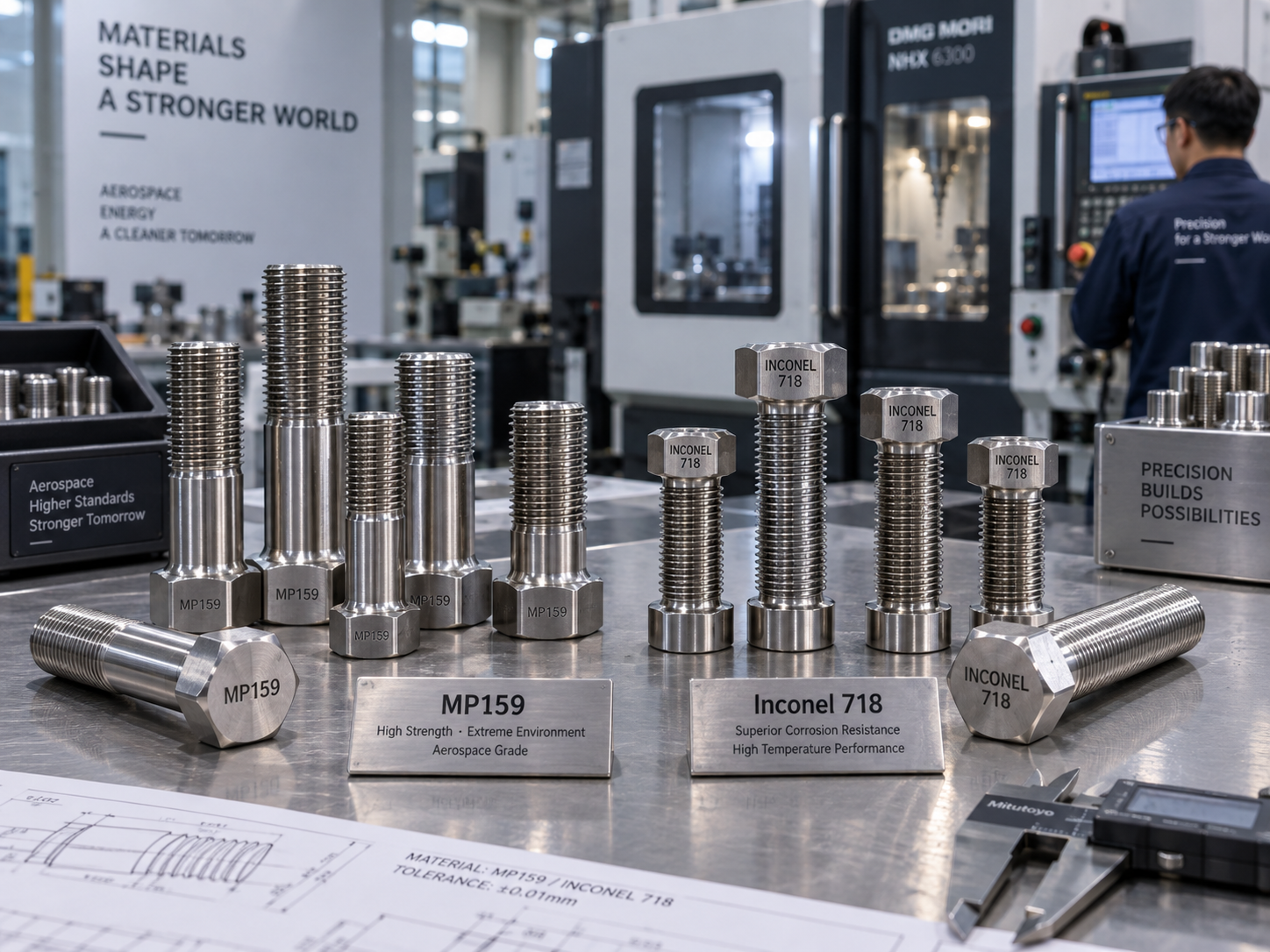
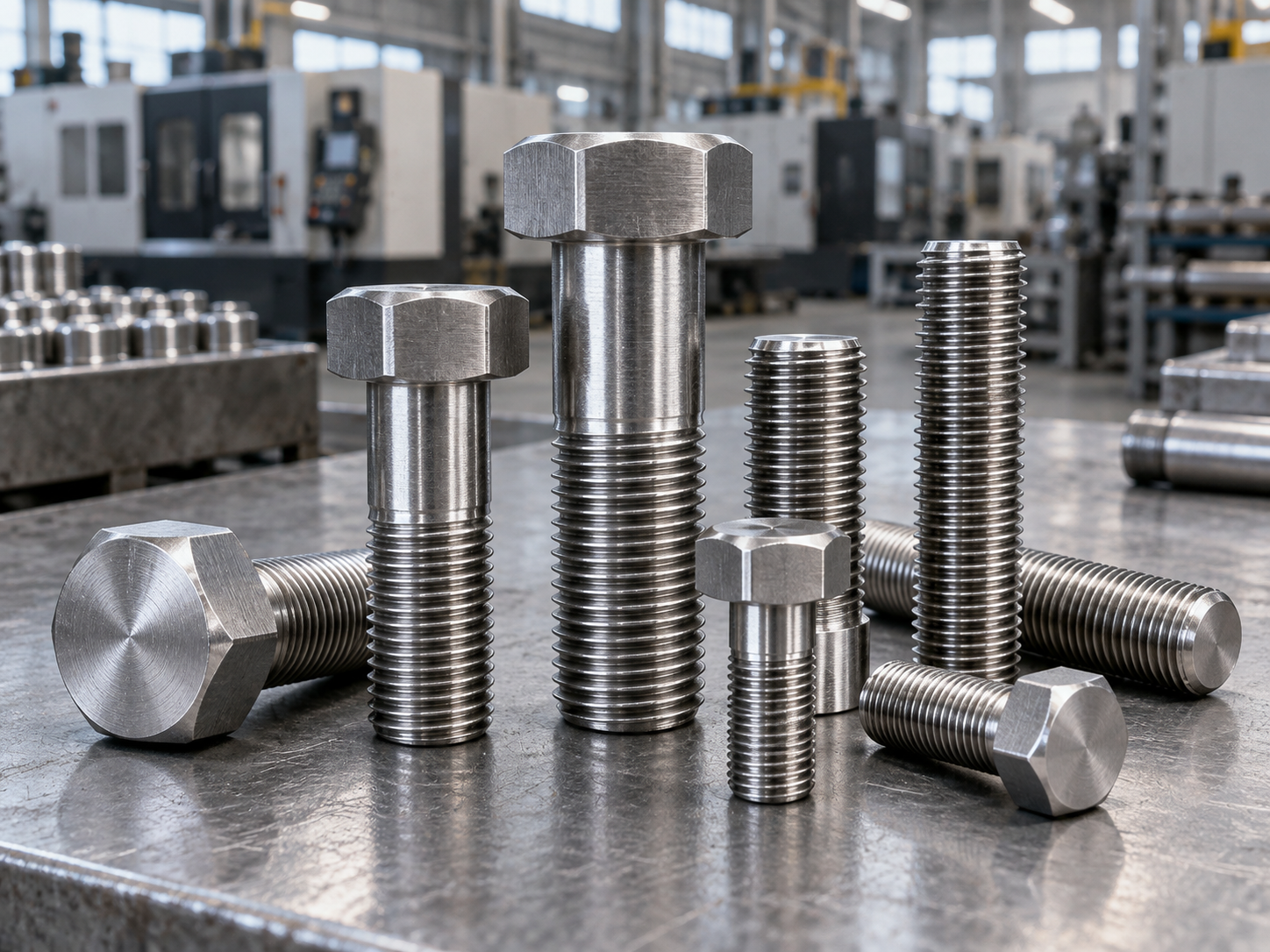

Waspaloy vs Inconel 718, 625, MP159, A286 & More: The Ultimate High-Temperature Fastener Showdown
When designing fasteners for the hottest sections of a gas turbine, a high‑performance automotive turbocharger, or a next‑generation nuclear reactor, the material decision quickly narrows to a handful of nickel‑base and cobalt‑nickel superalloys. Waspaloy is one of the most capable—offering exceptional creep‑rupture strength up to 870°C and excellent oxidation resistance. But how does it compare to Inconel 718, Inconel 625, MP159, A286, and other high‑temperature contenders? RAYCHIN LIMITED, a specialist global manufacturer of all these alloys, presents this exhaustive comparison to guide your selection with confidence.
1. Waspaloy vs Inconel 718 Fasteners
Waspaloy vs Inconel 718 fasteners is the most frequent comparison in high‑temperature bolting. Both are precipitation‑hardened nickel‑base superalloys, but their temperature capabilities diverge significantly.
- Inconel 718 offers a higher room‑temperature yield strength (150 ksi / 1034 MPa min) and is the workhorse for aerospace engine bolting up to 704°C (1300°F). However, its gamma‑double‑prime strengthening phase over‑ages and dissolves above 650°C, causing a rapid strength drop.
- Waspaloy (UNS N07001) has a lower typical room‑temperature yield strength (105–115 ksi / 725–795 MPa) but retains its strength to much higher temperatures—up to 870°C (1600°F)—owing to its stable gamma‑prime precipitates. Its creep‑rupture life at 700–800°C far exceeds that of 718.
When to use Waspaloy instead of Inconel 718: Choose Waspaloy when the fastener service temperature consistently exceeds 650°C, or when creep and stress‑rupture resistance are the primary design drivers (e.g., turbine disc bolts, hot‑section casing studs). For applications below 650°C with high tensile demands, 718 remains the more cost‑effective choice.
2. Waspaloy vs Inconel 625 Bolts
Inconel 625 is solid‑solution strengthened and cannot match the high‑temperature strength of Waspaloy. While 625 offers outstanding corrosion resistance and oxidation resistance up to 982°C, its yield strength is only 414–690 MPa (60–100 ksi), falling dramatically above 650°C. Waspaloy provides roughly double the strength at elevated temperature, making it the structural choice when both heat and load are present. Use 625 when corrosion dominates and loads are moderate; use Waspaloy when the fastener must carry high stress at high temperature.
3. Waspaloy vs MP159 Fasteners
MP159 (UNS R30159) is a cobalt‑nickel multiphase alloy that achieves ultra‑high tensile strengths (up to 260 ksi UTS) through cold work and aging. It retains exceptional strength to 600°C and has superior resistance to sulfide stress cracking and chloride pitting. However, above 700°C, MP159's strength falls off more steeply than Waspaloy's. Waspaloy was designed for sustained creep‑rupture life above 700°C, making it the preferred choice for gas turbine hot‑section bolting where thermal exposure is prolonged. MP159 is often selected for HPHT sour wellhead fasteners where high strength and NACE compliance at lower temperatures are paramount.
4. Waspaloy vs A286 Bolts
A286 is an iron‑based superalloy with a practical temperature limit of about 650°C. Its yield strength is 585 MPa (85 ksi) in Class D condition, which is lower than Waspaloy's. Waspaloy vs A286 bolts: A286 is a cost‑effective solution for exhaust systems, turbochargers, and industrial furnaces up to 650°C. For higher temperatures, Waspaloy is required. RAYCHIN often sees A286 specified for automotive hot ends, while Waspaloy is reserved for aerospace and industrial gas turbine hot sections.
5. Waspaloy vs Incoloy 909
Incoloy 909 is a low‑expansion superalloy designed to maintain tight clearances in gas turbine seal rings and casings. Its strength is lower than Waspaloy, and its maximum temperature is about 650°C. Waspaloy provides superior high‑temperature strength and creep resistance. Choose Incoloy 909 only when controlled thermal expansion is the primary requirement; choose Waspaloy when structural load capacity at high temperature matters most.
6. Waspaloy vs Nimonic 90
Nimonic 90 is a close cousin of Waspaloy, also nickel‑based and gamma‑prime‑strengthened. It can operate at similar temperatures (up to 850°C) and has comparable creep resistance. In fastener applications, the two are often interchangeable, but Waspaloy is more commonly specified in US‑origin turbine designs, while Nimonic 90 may appear in European programs. RAYCHIN can manufacture both; our engineers will advise based on your OEM specification.
7. Waspaloy vs Rene 41 Bolts
Rene 41 is a high‑strength nickel‑base superalloy capable of operation up to 980°C. It offers higher tensile and yield strength than Waspaloy at extreme temperatures but is significantly more difficult to forge, machine, and weld. For the highest‑temperature fasteners in afterburner components and rocket engines, Rene 41 may be specified. However, for most gas turbine bolting applications below 870°C, Waspaloy provides an optimal balance of performance and manufacturability at a lower cost.
8. Waspaloy vs Titanium Fasteners
Titanium Grade 5 offers excellent strength‑to‑weight ratio but is limited to about 400°C. Waspaloy operates at more than double that temperature and resists oxidation far better. In aerospace, titanium is chosen for weight‑sensitive airframe and compressor components; Waspaloy is required for hot‑section engine bolts. There is no overlap in application: weight reduction or high temperature—you cannot have both.
9. Best Nickel Alloy for High Temperature Fasteners — Decision Summary
For the vast majority of gas turbine hot‑section bolting between 650°C and 870°C, Waspaloy remains the benchmark.
10. RAYCHIN's Expertise Across the Superalloy Spectrum
RAYCHIN LIMITED manufactures fasteners in every alloy discussed in this comparison. Our dedicated high‑temperature fastener cell includes vacuum solution annealing and aging, precision CNC thread rolling, and complete mechanical testing—including elevated‑temperature tensile and stress‑rupture tests. Whether you need a single prototype stud in Rene 41 or a production run of Waspaloy turbine bolts, we deliver certified quality with full traceability.
Send your operating temperature, stress, and environmental requirements to our technical team. We'll provide an unbiased material recommendation and competitive quotation within 24 hours.
✉️ sales@ray-chin.com? www.ray-chin.com | Waspaloy · Inconel 718 · MP159 · Rene 41 · Expert Supply
Request A Quote! We'll respond as soon as possible(within 12 hours)
Get a Quote