
Categories List
Recent Posts
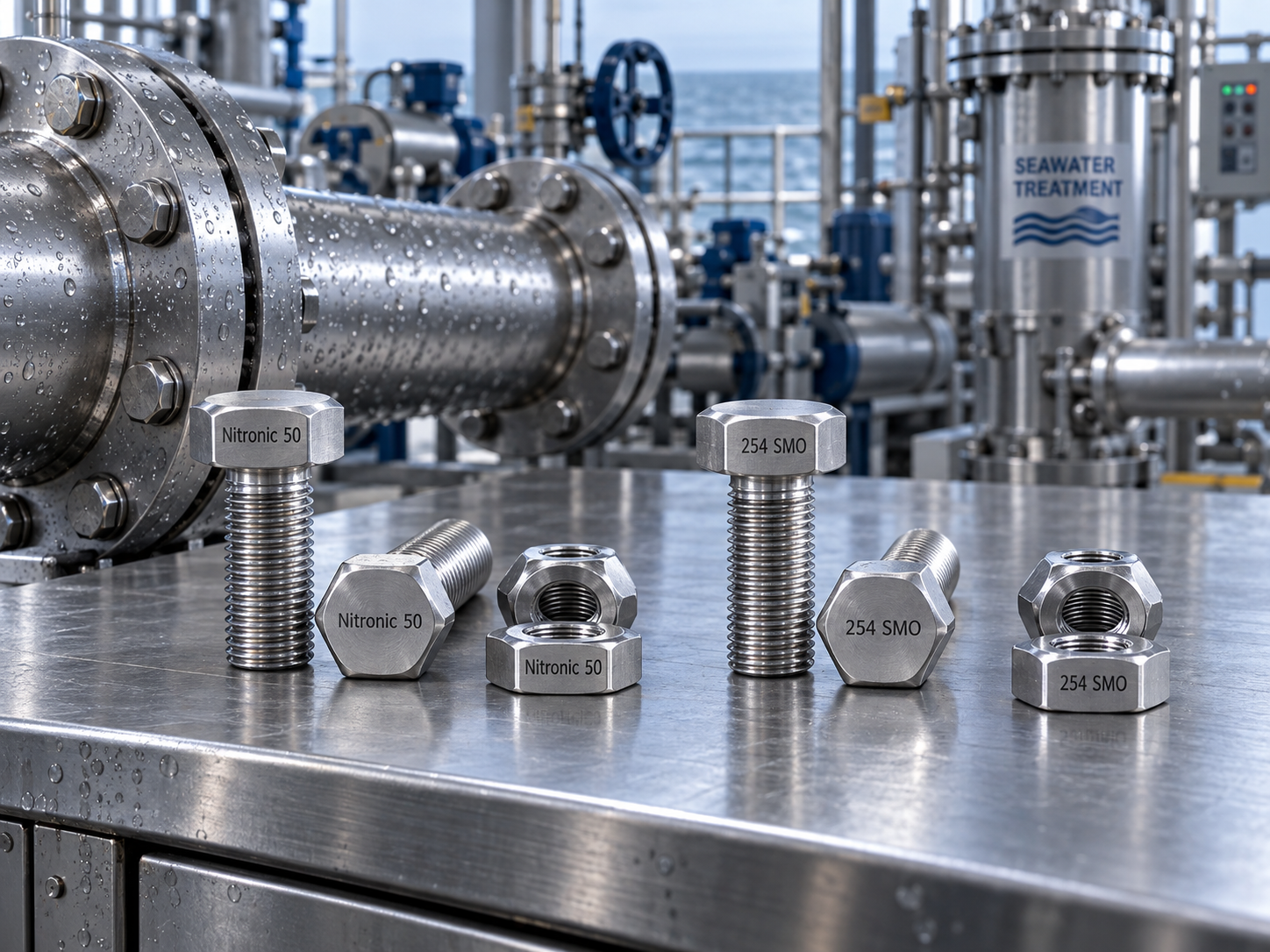
 Nitronic 50 vs. 254 SMO Fasteners: Strength or Seawater Immunity? A Complete Selection Guide
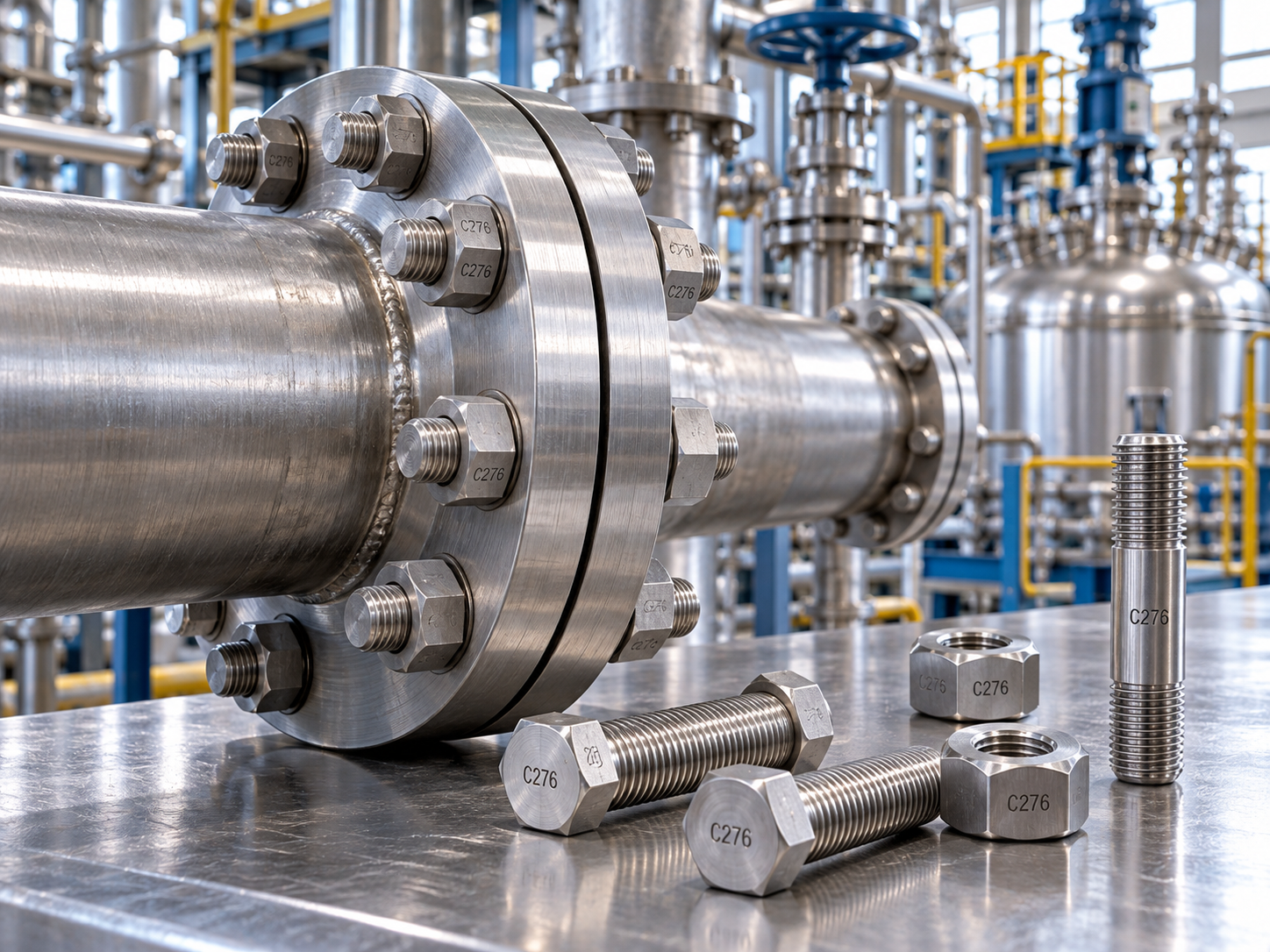
 Hastelloy C276 Fasteners: Bolts, Nuts, Screws, Studs & Washers for the World's Most Aggressive Corrosive Environments
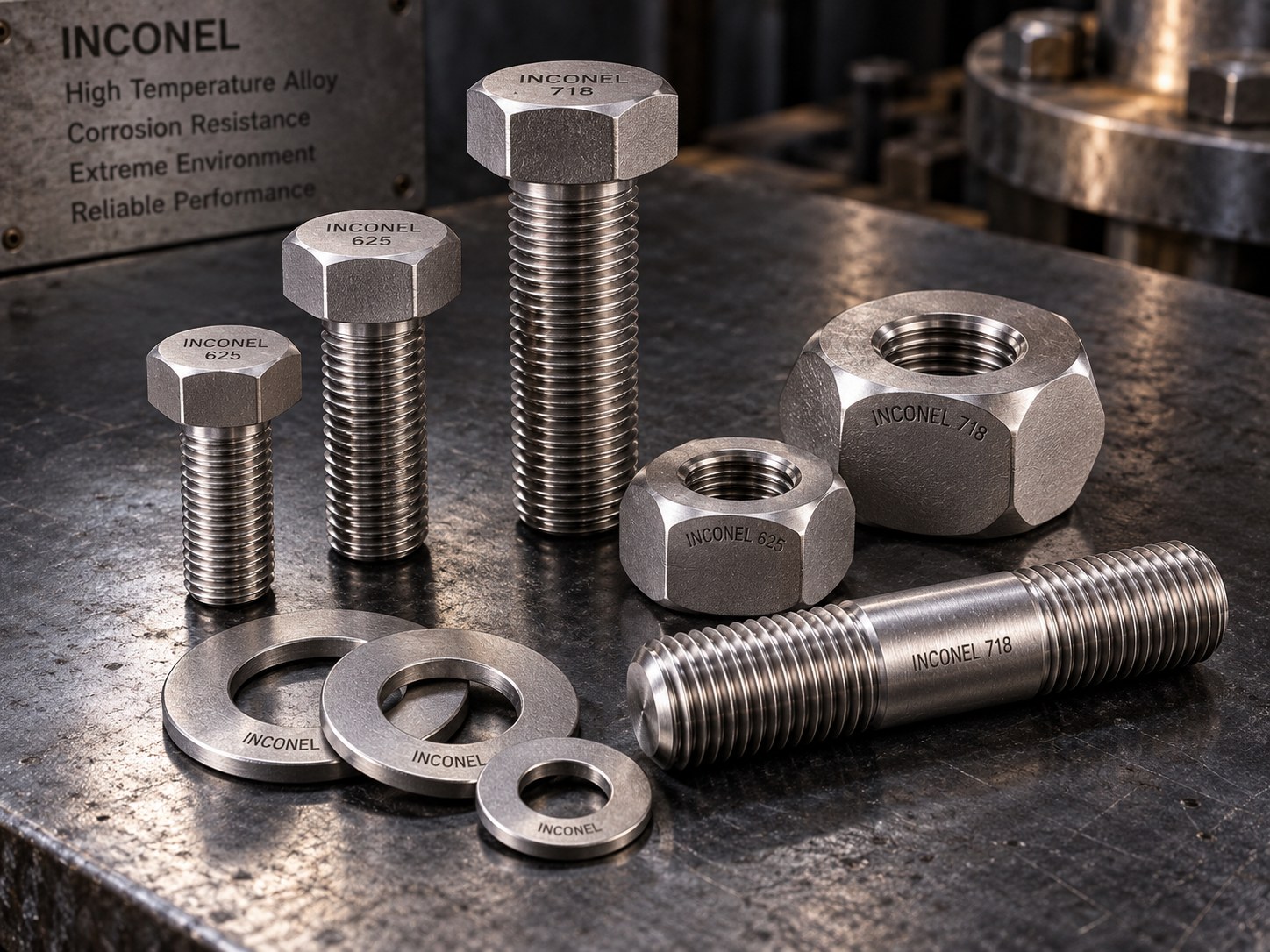
 Inconel Fasteners: Bolts, Nuts, Washers, Studs – Complete Technical Guide | RAYCHIN LIMITED
17‑4 PH vs 15‑5 PH, 304, 316, Duplex, A286, Inconel 718, Titanium & More: The Ultimate Fastener Showdown
17‑4 PH stainless steel is the benchmark precipitation‑hardening fastener alloy—combining high strength with corrosion resistance at a reasonable cost. But when should you upgrade to Duplex 2205, Super Duplex, A286, Inconel 718, or Titanium? And when is a simple 316 bolt sufficient? RAYCHIN LIMITED, a specialist global manufacturer of all these alloys, provides this exhaustive comparison to help you navigate the trade‑offs and select the optimal fastener for your specific loading, temperature, and corrosion conditions.
1. 17‑4 PH vs 15‑5 PH Fasteners
15‑5 PH is the vacuum‑melted, refined sibling of 17‑4 PH. While both alloys share the same nominal chemistry (UNS S15500 vs S17400), 15‑5 PH offers superior transverse toughness and ductility, particularly in thick sections above 200 mm (8 inches). For most fastener diameters (under 2.5 inches), the difference is minimal, and 17‑4 PH provides identical corrosion resistance and strength at a lower cost. RAYCHIN stocks both grades and recommends 15‑5 PH primarily for aerospace applications where tight inclusion control and maximum fracture toughness are mandated by AMS 5659.
2. 17‑4 PH vs 304 and 316 Stainless Steel Bolts
304 and 316 are austenitic stainless steels that cannot be hardened by heat treatment. Their yield strengths are limited to 205–290 MPa (30–42 ksi) even when cold‑worked. 17‑4 PH in the H900 condition provides yield strength of 1170 MPa (170 ksi)—roughly four to five times higher. In terms of corrosion resistance, 316 offers superior pitting resistance in warm chlorides due to its molybdenum content, while 17‑4 PH is less resistant to pitting but far stronger. The decision rule: if strength is the primary requirement and chloride pitting is mild, choose 17‑4 PH; if corrosion dominates and strength is secondary, choose 316.
3. 17‑4 PH vs Duplex 2205 and Super Duplex Fasteners
Duplex 2205 (UNS S32205) and Super Duplex 2507 (UNS S32750) offer yield strengths of 450–550 MPa (65–80 ksi) combined with excellent chloride pitting resistance (PREN 35–43). 17‑4 PH has higher achievable strength but lower pitting resistance. Duplex alloys also have a practical temperature limit of 300°C, while 17‑4 PH can operate to about 315°C in H1150 condition. For sour service, duplex may not meet NACE requirements above certain hardness levels, whereas 17‑4 PH H1150D is explicitly approved. Use 17‑4 PH when you need higher strength and NACE compliance; use duplex when chloride pitting is the dominant threat.
4. 17‑4 PH vs A286 Fasteners
A286 (ASTM A453 Grade 660) is an iron‑nickel‑chromium superalloy that retains high strength to 650°C, far beyond the 315°C limit of 17‑4 PH. While 17‑4 PH H900 has a higher room‑temperature yield strength (170 ksi vs 85 ksi for A286 Class D), A286 maintains its strength at temperatures where 17‑4 PH rapidly over‑ages. For exhaust systems, turbochargers, and gas turbine accessories above 315°C, A286 is the required upgrade. Below 315°C, 17‑4 PH provides a cost advantage.
5. 17‑4 PH vs Inconel 718
Inconel 718 offers yield strength up to 150 ksi (1034 MPa) and operates to 704°C, with excellent resistance to oxidation and chloride SCC. However, it costs 4–5 times more than 17‑4 PH. For high‑temperature valves, wellhead equipment, and aerospace hot sections, Inconel 718 is the definitive choice when service exceeds 315°C or demands superior corrosion performance. For lower‑temperature high‑strength applications without severe corrosion, 17‑4 PH remains the most cost‑effective solution.
6. 17‑4 PH vs Titanium Bolts
Titanium Grade 5 (Ti‑6Al‑4V) provides yield strength of 828 MPa (120 ksi) at half the density of 17‑4 PH, making it ideal for aerospace weight‑sensitive structures. Titanium is immune to seawater corrosion, but its strength degrades above 400°C and it is vulnerable to reducing acids. 17‑4 PH is heavier, cheaper, and more resistant to acidic industrial environments. Choose titanium when weight is critical and temperature is moderate; choose 17‑4 PH for industrial applications requiring high strength, low cost, and moderate corrosion resistance.
7. 17‑4 PH vs 410 Stainless Steel Bolts
Alloy 410 is a standard martensitic stainless steel with yield strength up to about 450 MPa (65 ksi) in hardened condition, but its corrosion resistance is limited. 17‑4 PH offers nearly triple the strength and significantly better resistance to atmospheric and mild chemical corrosion. It also retains toughness at higher hardness levels. For valve stems, pump shafts, and other high‑strength applications, 17‑4 PH has largely replaced 410 in modern designs.
8. When to Use 17‑4 PH Instead of 316
Upgrade from 316 to 17‑4 PH when:
- The design requires a yield strength above 400 MPa (58 ksi).
- The component is subject to high static or fatigue loads.
- Weight reduction through smaller bolt diameter is needed.
- The operating temperature is between 100–315°C and 316's strength is inadequate.
- Sour service (NACE MR0175) applies, where 17‑4 PH H1150D is approved but 316 is not for high hardness.
9. 17‑4 PH H900 vs H1025: Strength‑Toughness Balance
H900 provides the ultimate tensile and yield strength (170 ksi YS), but at a hardness of 40–47 HRC, it has reduced impact toughness and is not permitted for sour service. H1025 (145 ksi YS, 34–42 HRC) offers a superior balance of strength and toughness, often required for aerospace landing gear and structural joints. In terms of corrosion resistance, both conditions have similar resistance to atmospheric and mild chemical media, but H900's higher hardness can slightly increase susceptibility to stress corrosion cracking in chloride environments. For NACE compliance, only H1150D is acceptable; for aerospace, H1025 or H1075 are preferred.
10. Best Stainless Steel for High Strength Bolts – Summary
11. RAYCHIN's Multi‑Alloy Manufacturing and Selection Support
RAYCHIN LIMITED supplies certified fasteners in every alloy mentioned in this comparison. Our manufacturing capabilities span all standard product forms and sizes, and our application engineers are ready to help you evaluate the trade‑offs specific to your service environment. Whether you need a few hundred H1150D studs for a sour gas manifold or thousands of H1025 bolts for an airframe program, we deliver factory‑direct quality with full traceability.
Send your operating conditions—temperature, pressure, environment, and strength requirements—to our technical team. We'll provide an unbiased alloy selection matrix and competitive quotation within 24 hours.
✉️ sales@ray-chin.com? www.ray-chin.com | 17‑4 PH · 15‑5 PH · Duplex · A286 · Inconel · Titanium
Request A Quote! We'll respond as soon as possible(within 12 hours)
Get a Quote