
Categories List
Recent Posts
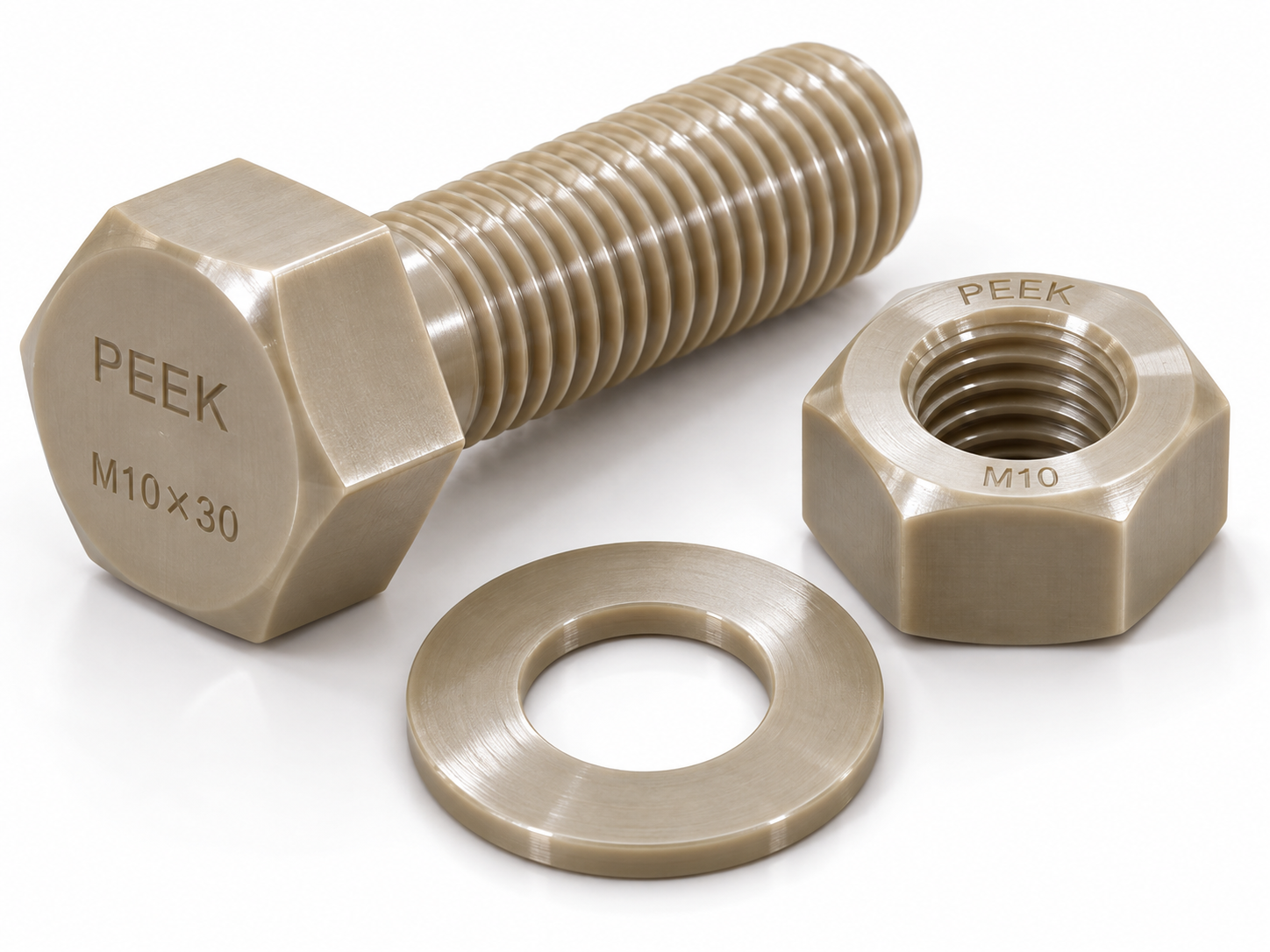
 PEEK Fasteners | Polyetheretherketone Bolts, Nuts, Screws – High-Performance Polymer | RAYCHIN LIMITED
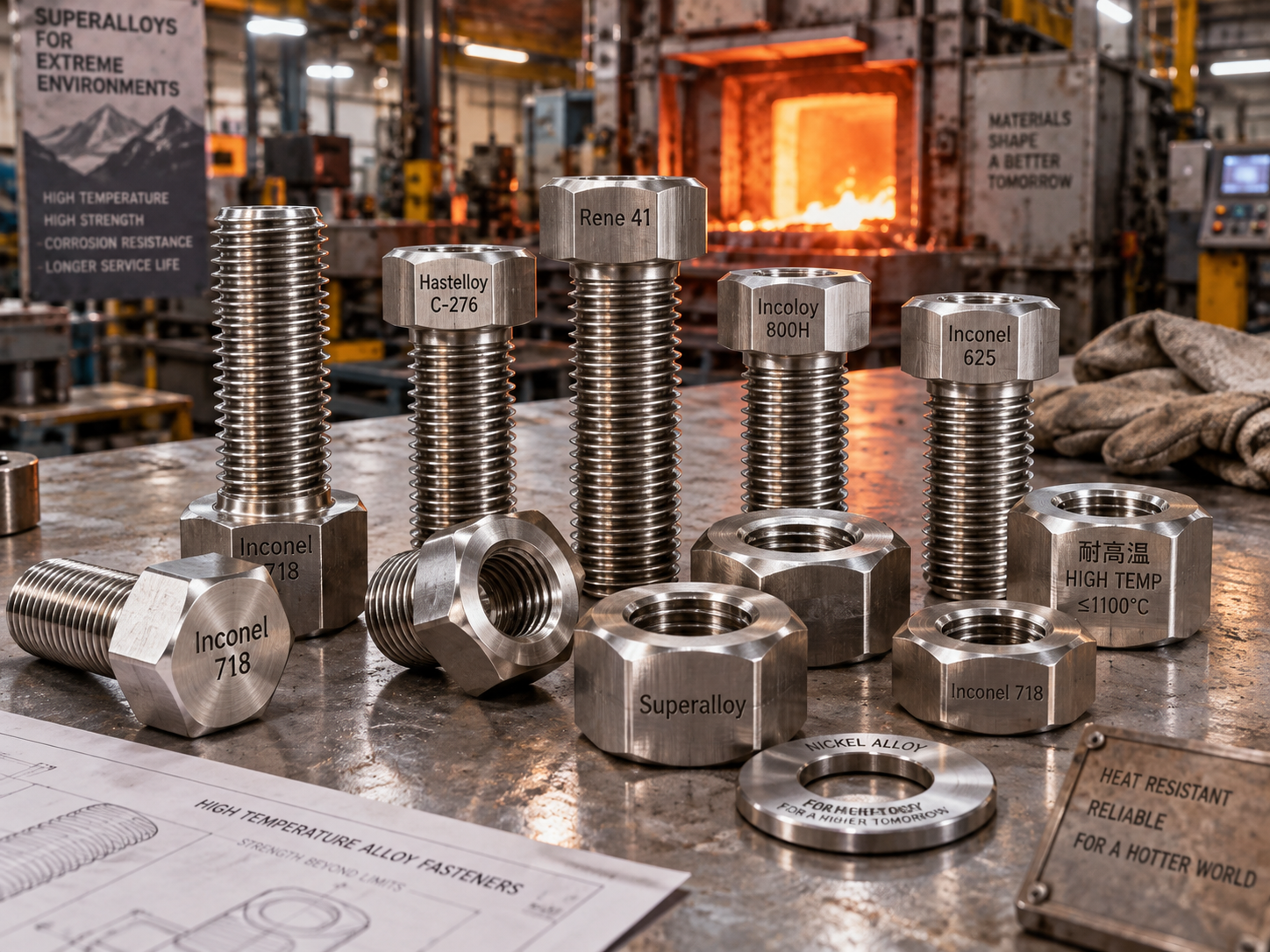
 High-Temperature Alloy Fasteners: Complete Material Guide, Chemistry, Performance Comparison | RAYCHIN LIMITED
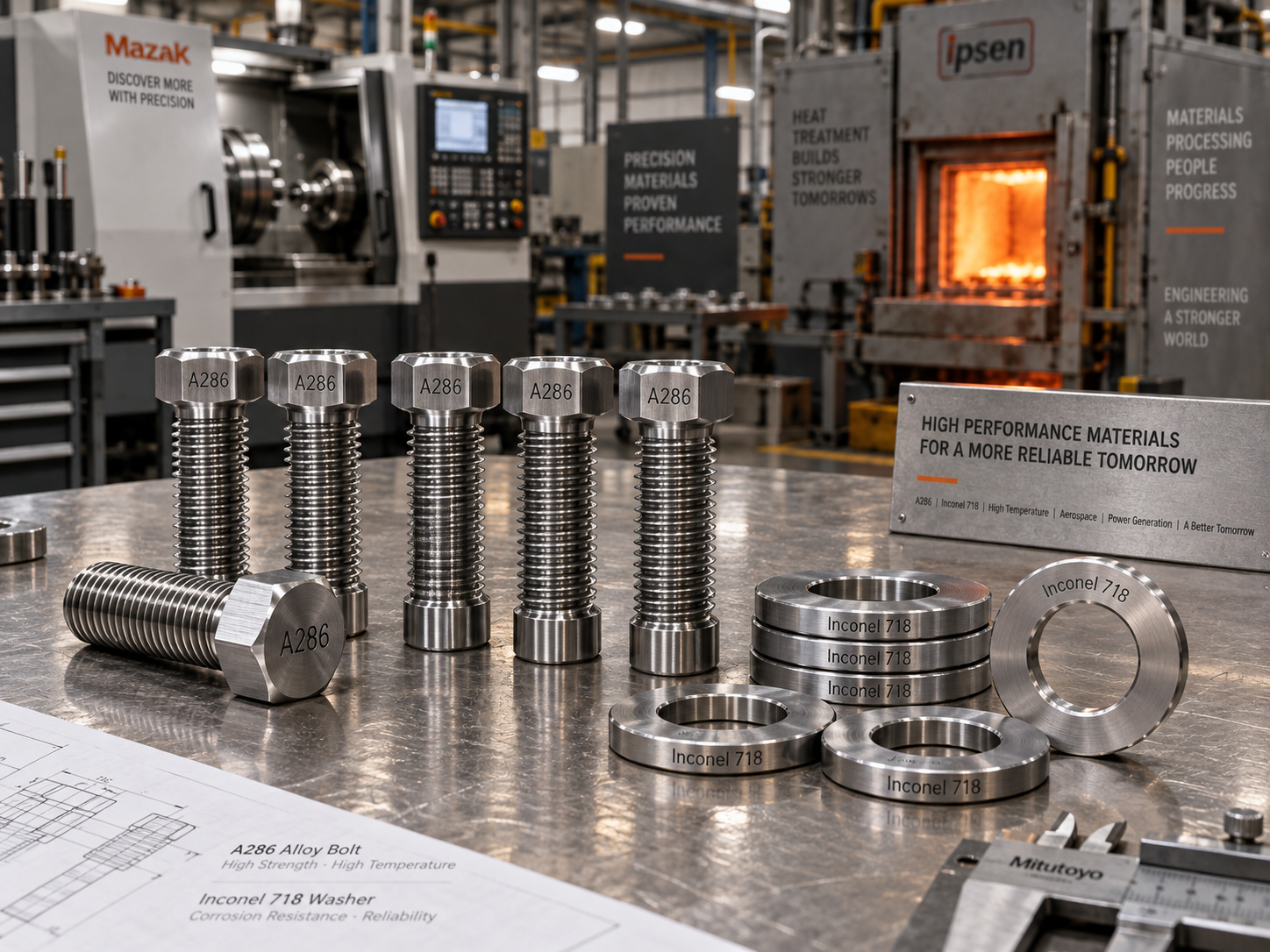
 High-Temperature Fastener Material Selection Guide | A286, Inconel 718, Nimonic 80A, Waspaloy – RAYCHIN LIMITED
In the unforgiving frontiers of deepwater energy production, aerospace propulsion, and critical chemical processing, fastener failure is simply not an option. A single bolted joint compromised by hydrogen embrittlement, chloride stress corrosion cracking, or galling can lead to catastrophic operational shutdowns, environmental harm, and significant financial exposure. At RAYCHIN, we have dedicated decades to the art and science of special alloy fasteners, building a world-class expert team that bridges the gap between advanced metallurgy and field-ready bolting solutions. This comprehensive guide centers on one of the most extraordinary materials in our portfolio—MP35N—and is crafted to give engineers, designers, and procurement professionals an exhaustive technical resource. From its fundamental metallurgy to intricate application best practices, we aim to provide the insight you need to specify and deploy MP35N fasteners with absolute confidence.
For a direct view of our MP35N fastener range and manufacturing capabilities, visit our dedicated product page:
https://www.ray-chin.com/Special-Fasteners/MP35N-Fasteners/MP35N-Fasteners.html
Decoding MP35N: More Than Just a Superalloy
MP35N, designated UNS R30035, is not a conventional precipitation-hardening alloy or a simple solid-solution strengthened nickel-chromium-molybdenum material. It is a vacuum-induction melted plus vacuum-arc remelted (VIM/VAR) multiphase cobalt-nickel-chromium-molybdenum alloy that relies on a carefully orchestrated synergy of cold work and thermal aging to reach its legendary mechanical properties. Its typical composition—nominally 35% nickel, 35% cobalt, 20% chromium, and 10% molybdenum—places it in a unique class where the cobalt content profoundly influences work-hardening response and the transformation kinetics during aging.
The genius of MP35N lies in its microstructure. In the solution-annealed condition, it is primarily a face-centered cubic (FCC) austenitic matrix. When cold worked, the alloy develops a dense dislocation substructure and, critically, begins to form fine, coherent hexagonal close-packed (HCP) platelets via a martensitic-like shear transformation. A subsequent thermal aging treatment (typically between 1000°F and 1200°F / 538°C–650°C) further precipitates a controlled dispersion of intermetallic phases, notably an Ni₃(Co,Cr,Mo)-type strengthening precipitate, within the already work-hardened and partially transformed structure. This dual strengthening mechanism—dislocation hardening from cold work plus precipitation hardening from aging—is what enables MP35N to achieve yield strengths well beyond 230 ksi (1586 MPa) while retaining a level of ductility that many other ultra-high-strength alloys cannot match. It is this microstructural sophistication that RAYCHIN’s metallurgical experts leverage to fine-tune fastener properties for each specific application.
Mechanical Properties in Detail: The Numbers That Matter
Understanding MP35N’s mechanical capabilities requires moving past generic data sheets. The alloy can be supplied across a spectrum of conditions, and RAYCHIN works closely with clients to select the exact state that balances strength, toughness, and elongation for the intended design load. The most common and critical condition for fasteners is the cold-worked + aged state, but it is instructive to see the full range.
Key takeaways from these numbers:
The cold-worked + aged condition delivers tensile strengths that rival tool steels, yet with far superior corrosion resistance.
The modulus of elasticity is approximately 34 x 10⁶ psi (234 GPa), a value that remains relatively stable across conditions and is critical for accurate bolted joint stiffness calculations.
Fatigue endurance limits in the aged condition, especially when threads are cold-rolled post-aging, can exceed 100 ksi (690 MPa) at 10⁷ cycles in rotating beam tests, which is exceptional for a fastener material operating in corrosive media.
Impact toughness at room temperature remains robust, typically absorbing over 30 ft-lbs (40 J) in Charpy V-notch testing even at high strength levels, providing crucial resistance to brittle fracture in subsea shock loading events.
RAYCHIN provides full tensile, hardness, and impact certifications per EN 10204 3.1 or 3.2 as standard, and our team can arrange additional testing such as stress-rupture, hydrogen embrittlement susceptibility per ASTM F519, or customized fatigue S-N curve generation when project specifications demand.
Unrivaled Environmental Resistance: Where MP35N Outshines All Alternatives
The mechanical strength of MP35N would mean little in extreme environments without its equally impressive ability to withstand chemical and electrochemical attack. This alloy’s corrosion profile is what makes it truly indispensable for critical fasteners.
Hydrogen Embrittlement Immunity — The Defining Advantage
In sour oil and gas fields containing hydrogen sulfide (H₂S), high-strength low-alloy (HSLA) steels are perennially at risk of hydrogen embrittlement cracking, even under the strict hardness controls of NACE MR0175/ISO 15156. MP35N, however, is widely accepted as being effectively immune to sulfide stress cracking and hydrogen embrittlement in the worst-case production environments. It fully meets the requirements of NACE MR0175/ISO 15156 Level VII, allowing its use in the most severe sour service without any hardness restrictions imposed by the standard for environmental cracking. This immunity arises from its stable FCC matrix, which exhibits extremely low hydrogen diffusivity and solubility, and the trapping behavior of its multiphase microstructure. For RAYCHIN fasteners deployed in deep HPHT wells, christmas trees, and manifolds, this property alone eliminates the principal catastrophic failure mode that plagues conventional bolting.
Pitting and Crevice Corrosion Mastery
With a high chromium content (20%) and substantial molybdenum (10%), MP35N exhibits a Pitting Resistance Equivalent Number (PREN) typically exceeding 50 (calculated as %Cr + 3.3 x %Mo). This makes it remarkably resistant to pitting and crevice corrosion in oxygenated, stagnant seawater, and chlorinated process streams. In subsea fastener applications where a minute crevice under a bolt head or washer can initiate corrosion in lesser alloys like 316 stainless or even duplex grades, MP35N stays passive and intact for decades.
Chloride Stress Corrosion Cracking (Cl-SCC) Resistance
Nickel-rich alloys with over 30% nickel content generally resist chloride stress corrosion cracking, and MP35N’s 35% nickel content pushes it well into the immune zone, even in boiling magnesium chloride environments. This makes it a go-to fastener material for marine atmospheric structures, desalination plants, and chemical processing equipment handling hot chloride brines.
Galvanic Compatibility
MP35N occupies a noble position in the galvanic series, close to titanium and other nickel alloys. When properly engineered into a joint, it minimizes the risk of being sacrificially attacked. RAYCHIN’s experts help design bolted assemblies that manage galvanic couples through insulator washers or precise cathodic protection setpoints, ensuring that MP35N bolts serve as the stable, enduring core of the joint.
RAYCHIN MP35N Fastener Product Classifications and Their Deep-Dive Applications
Our engineered MP35N fasteners are not off-the-shelf commodities; they are manufactured to precise standards (ASME B18.2.1, B18.3, B1.1, etc.) or to custom specifications. Below, we connect each product type to the real-world challenges they solve.
1. Heavy Hex Bolts and Hexagon Cap Screws
Typical Specifications: ASME B18.2.1, ASME B18.2.3.2, custom prints with controlled body/head fillets.
Subsea Wellhead and Christmas Tree Bolting: These connections face massive preloads, external hydrostatic pressure, and internal sour production fluids. Our MP35N heavy hex bolts provide the high yield strength required for a compact bolt circle without the risk of hydrogen cracking during service. Their immunity to cathodic over-protection damage on subsea structures is a critical design enabler.
BOP (Blowout Preventer) Stack Assemblies: The bolted connections on ram and annular BOPs must survive both pressure cycling and potential exposure to H₂S gas kicks. MP35N bolts are specified because they eliminate the need for multiple-decade replacement intervals due to stress corrosion, directly improving safety and reducing rig downtime.
2. Socket Head Cap Screws
Typical Specifications: ASME B18.3, DIN 912, ISO 4762.
Downhole Measurement-While-Drilling (MWD) and Logging-While-Drilling (LWD) Tools: These instruments operate in slender pressure housings where space is at a premium. MP35N socket head cap screws offer a small footprint with immense clamping force. Crucially, they resist the combined attacks of high chloride drilling fluids, extreme vibration, and the localized crevice corrosion that can seize conventional alloy steel screws, making tool teardown and maintenance efficient rather than a nightmare of drilling out broken fasteners.
Aerospace Actuator and Landing Gear Components: The high strength-to-weight ratio of MP35N allows for weight-optimized designs. Socket heads provide convenient tool access in densely packed assemblies, and the alloy’s resistance to jet fuel, hydraulic fluids, and deicing salts ensures functional integrity over the aircraft’s service life.
3. Stud Bolts and Threaded Rods
Typical Specifications: ASME B16.5/B18.2.2 compatible, continuous-thread or double-end with chamfered ends.
Riser and Flowline Flange Connections: Deepwater riser bolts endure an extraordinarily complex load spectrum—combined tension from internal pressure, bending from vortex-induced vibration, and thermal cycling from hot produced fluids versus cold seawater. MP35N stud bolts maintain a stable preload over time thanks to a high fatigue threshold and resistance to stress relaxation at temperature. RAYCHIN cold-rolls the threads after aging to induce beneficial compressive residual stress, dramatically extending fatigue life.
High-Pressure Compressor and Pump Casings: In gas injection or chemical processing, MP35N studs offer total resistance to sour gas environments that rapidly destroy precipitation-hardening alloys like 17-4PH. Their stability eliminates the need for periodic tensioning checks, cutting maintenance costs in inaccessible installations.
4. Hex Nuts, Heavy Hex Nuts, and Specialty Lock Nuts
Typical Specifications: ASME B18.2.2, ASME B1.1 Class 2B/3B threads.
Mating Components for Studs and Bolts: A properly functioning joint requires a nut that complements the bolt. RAYCHIN manufactures MP35N nuts with carefully controlled hardness—often produced in a slightly less hardened condition than the mating bolt to combat galling while maintaining full proof-load capacity. Our proprietary anti-galling surface treatments and approved lubricant protocols are integrated directly into the manufacturing workflow.
Prevailing-Torque Lock Nuts: For applications subject to severe vibration, such as marine propulsion shafts or high-speed rotating equipment, we produce MP35N lock nuts with elliptical deformation or nylon-free metallic locking elements capable of withstanding 800°F (427°C) peak temperatures while resisting relaxation.
5. Flat Washers, Belleville Springs, and Specialty Load Distributors
Typical Specifications: ASME B18.22.1, DIN 125, and custom engineered springs.
Galvanic Isolation and Load Spreading: MP35N flat washers placed under bolt heads or nuts distribute high preloads to prevent embedding into softer flange materials like aluminum bronze or titanium. They also serve as an essential part of a galvanic corrosion mitigation strategy, creating a noble interface that resists the corrosion-driven loosening seen with stainless steel washers in marine atmospheres.
Belleville Spring Washers: Manufactured in the precipitation-hardened condition, MP35N Belleville washers provide a live-loading element that compensates for thermal expansion and joint relaxation, invaluable in cryogenic to high-temperature cycling applications where maintaining a minimum gasket seating stress is critical for fugitive emission control.
6. Custom Engineered Fasteners and Precision Components
RAYCHIN’s true expertise shines when standard fasteners are not enough. We machine bespoke geometries—vented screws for vacuum service, captive fasteners, shear pins with calibrated fracture strengths, and specialty tension bars—directly from forged MP35N bar stock. Our application engineers collaborate with your design team to optimize grain flow direction and dimensional control, ensuring the finished component possesses the highest possible structural integrity for life-limited applications in deep-sea mining, nuclear fuel handling, and surgical implant locking mechanisms.
Critical Application Considerations: Engineering Best Practices from RAYCHIN Experts
Purchasing a high-performance alloy is merely the first step. The following guidance, born from decades of field experience, ensures that MP35N fasteners deliver their full potential in service.
1. State Verification and Material Certification
Never install an MP35N fastener without verifying its heat treatment condition. Over-aging (exposure to excessive time or temperature during aging) can cause averaging and a drop in ductility, while under-aging yields lower strength. RAYCHIN’s traceability system means every individual batch is linked to a heat lot, a cold-work reduction ratio, and a precise aging cycle. We furnish a complete certification package that includes chemistry, tensile properties, hardness, and microstructure evidence. For safety-critical applications, insist on EN 10204 3.2 certification with independent witnessed testing.
2. Managing the “Immune” — External Hydrogen Sources
While MP35N is intrinsically immune to hydrogen embrittlement from sour service, fastener failure can still occur if hydrogen is introduced during manufacture or by external coupling. Avoid electroplated coatings (zinc, cadmium) on MP35N, as the plating process can generate nascent hydrogen that may affect any high-strength material. RAYCHIN’s fasteners are furnished in the bare, passivated, or dry-film lubricated condition only. Furthermore, ensure that the fastener is not the cathode in a large-scale galvanic couple with an actively corroding low-alloy steel structure that generates hydrogen at the surface. An isolating washer or intelligent coating design on the structure side resolves this.
3. Aggressive Galling Prevention Protocol
Galling is an adhesive wear phenomenon that occurs under high contact pressure and sliding motion, to which all high-strength austenitic alloys are susceptible. With MP35N’s extreme hardness and work-hardening rate, like-on-like nut-and-bolt assemblies require a disciplined joining procedure:
Use a proven anti-seize compound. For general subsea and marine applications, a nuclear-grade, fluoropolymer-based paste is recommended. For high-temperature sour gas (above 300°F/150°C), a metal-free ceramic-filled paste prevents lubricant oxidation and sulfur cross-linking.
Provide a hardness differential. Whenever feasible, RAYCHIN specifies the MP35N nut to be approximately 2–4 HRC points softer than the mating bolt. This small delta shifts the initial plastic deformation to the nut thread, suppressing the galling onset at the critical contact peaks.
Control assembly speed. Power-tightening should occur at reduced RPMs. Heat generated from rapid tightening can instantaneously degrade lubricant film and trigger micro-welds. Slow, controlled makeup with a calibrated hydraulic or electric torque tool is strongly recommended.
Cleanliness is paramount. Contamination by metal fines or grit can initiate galling. Our fasteners are supplied ultrasonically cleaned and sealed.
4. Torque, Tension, and Joint Integrity
The ultra-high yield strength of aged MP35N allows for exceptionally high preloads, enabling smaller bolt diameters. However, achieving the correct preload requires moving beyond generic torque tables. The relationship between applied torque and the resulting bolt preload depends heavily on the coefficient of friction :
T= K x F x d
where the nut factor is a function of thread friction and under-head bearing friction. For RAYCHIN MP35N fasteners with our standard molybdenum-disulfide-free lubricant, we provide experimentally derived -factors (typically in the range of 0.12–0.16) for specific surface finishes. For the most critical joints, we highly recommend moving to preload verification through ultrasonic measurement or hydraulic bolt tensioning, which completely bypasses friction uncertainty and ensures uniform clamping across the flange face.
5. Fatigue Design and Thread Rolling
For cyclically loaded fasteners, the thread root is the classic failure origin. RAYCHIN practices cold rolling of threads after the final aging treatment wherever possible. The cold rolling process plastically deforms the roots and flanks, leaving a deep, compressive residual stress layer that retards crack initiation. Even a rolled thread that is stress-relieved to a limited degree will outperform a cut-thread design. Ensure your part drawing specifies rolled threads per ASME B1.1 for diameters up to 2.5 inches. Additionally, a generous radius at the fillet transition between the shank and the head is essential; our engineering team can suggest optimal radii that significantly lower the stress concentration factor Kt
t
6. Elevated Temperature Limits and Aging Effects
MP35N fasteners can be used up to approximately 800°F (427°C) continuously while retaining substantial strength. However, it is vital to understand that prolonged exposure within and above this temperature range will cause further microstructural phase changes. Over time at 900°F–1200°F (480°C–650°C), the alloy can form topologically close-packed phases that reduce room-temperature ductility. If your application involves cyclic operation between cryogenic and high temperatures, or steady-state operation above 800°F, consult our metallurgy team. We can provide aged-only, cold-worked, or specially heat-treated variants that optimize stability for your specific thermal profile.
7. Post-Manufacture Operations: What Never to Do
Never weld on an MP35N fastener in the aged condition. Weld heat will destroy the intricate cold-worked and aged microstructure, creating a severely weakened heat-affected zone susceptible to cracking. There is no approved weld repair procedure for MP35N fasteners.
Avoid post-delivery machining unless absolutely necessary and only after consultation. Any grinding or machining that generates enough heat to “burn” the surface (blue discoloration) locally overtemps the metal, undoing the aging response. Should minor modifications be required, they must be done under rigorous process control, and the parts may need re-solution annealing, cold working, and re-aging—a process only RAYCHIN can certify.
8. Storage and Handling
Store MP35N fasteners in a clean, dry, indoor environment, segregated from carbon steel parts to prevent iron contamination that can rust and initiate crevice corrosion under the fastener head. Use dedicated wooden or polymer-lined shelving.
Why Partner with RAYCHIN for MP35N Fasteners?
Producing reliable MP35N fasteners is not just about owning a CNC lathe and buying raw material. It requires an intimate understanding of how the alloy’s work-hardening gradient, from the center of the bar to the outer thread surface, affects final properties after aging. It demands full control over forging reduction ratios to guarantee grain refinement and structural integrity in the head-to-shank transition. And it demands an expert application engineering team that can interpret a client’s Piping and Instrumentation Diagram or a downhole tool assembly drawing and recommend the precise fastener type, condition, and assembly protocol.
At RAYCHIN, we have built that team and that infrastructure over decades. We hold strategically positioned inventory of MP35N in various semi-finished states, enabling us to respond to urgent project needs without compromising on the required mechanical testing lead times. Every fastener we ship is a product of this uncompromising focus on a single discipline: special alloy fastening solutions.
Are you facing a bolting challenge in a hydrogen-sulfide-laden well, a deep-ocean riser, or a next-generation aircraft engine? Do you need a partner who speaks the language of material science and practical assembly engineering with equal fluency? Contact RAYCHIN’s technical specialists today. We will review your specifications, propose the optimal MP35N solution, and deliver a competitive, comprehensive quotation that covers every detail from certification to recommended installation torque values.
? Explore Our MP35N Fastener Capabilities and Submit Your Inquiry Now
Let RAYCHIN’s experience become your operational assurance.
Request A Quote! We'll respond as soon as possible(within 12 hours)
Get a Quote