
Hastelloy C276 vs C22 Fasteners: Which Alloy is Right for Your Corrosive Environment?
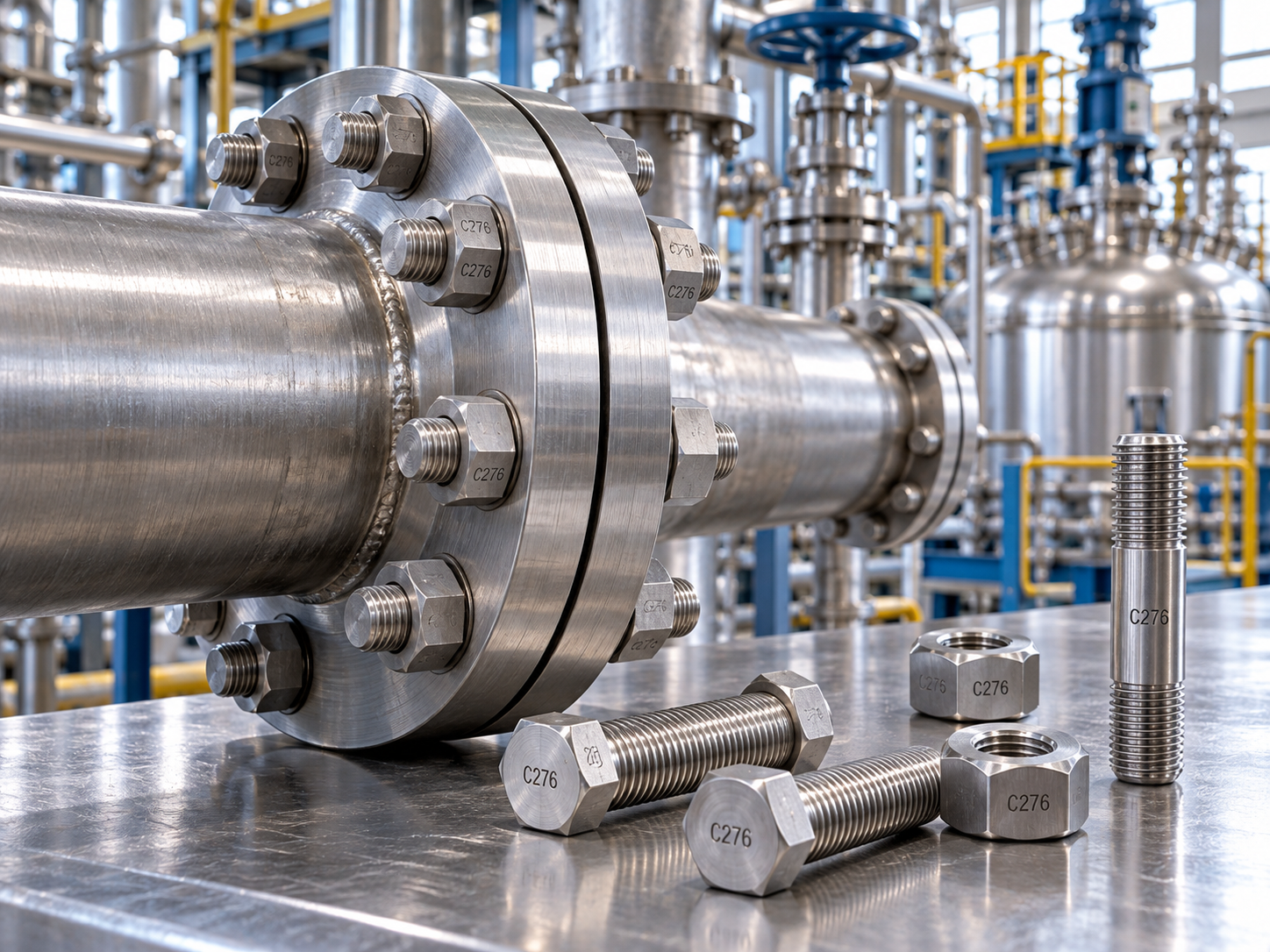
Hastelloy C276 and C22 are the two most widely specified nickel-chromium-molybdenum alloys for corrosion-resistant fasteners. While they share a common lineage and exhibit outstanding performance in aggressive chemicals, choosing the wrong one can lead to premature failure and costly downtime. As a specialist manufacturer of Hastelloy fasteners, RAYCHIN LIMITED has guided hundreds of engineers through this exact decision. This white paper distills our technical experience into a clear comparison to support your material selection process.
1. Chemical Composition: The Foundation of Corrosion Behavior
The subtle differences in chemistry between C276 and C22 dictate their performance in specific media. Both alloys are solid-solution strengthened nickel-based materials, but the balance of chromium, molybdenum, and tungsten shifts their corrosion resistance profiles.
The practical takeaway: C22 leans on higher chromium for oxidizing attack, while C276 utilizes more molybdenum and tungsten to combat reducing conditions. This distinction defines their application niches.
2. Corrosion Resistance: Where Each Alloy Excels
Generalized statements about corrosion resistance are risky. The real value lies in understanding how each alloy behaves in specific chemical environments.
2.1 Performance in Oxidizing Media
Oxidizing acids, such as nitric acid and wet chlorine, attack the passive film. Here, Hastelloy C22 demonstrates superior performance due to its elevated chromium content (≥20%). In bleach plants, chlorine dioxide stages, and pharmaceutical reactors using nitric acid, C22 bolting consistently outperforms C276. For fasteners exposed to ferric or cupric chloride solutions (common in printed circuit board etching), C22 is the preferred choice.
2.2 Performance in Reducing Media
Reducing acids like sulfuric and hydrochloric acid require high molybdenum and tungsten. Hastelloy C276 remains the benchmark in hot, concentrated sulfuric acid and in hydrochloric acid at moderate temperatures. In flue gas desulfurization (FGD) scrubbers, where condensing sulfuric acid attacks bolt heads, C276 has decades of proven service. It also excels in organic acids with reducing contaminants, such as hot polluted acetic acid in chemical processing plants.
2.3 Specific Environment Examples
- Chloride-Containing Sulfuric Acid (Mixed Acid): If the sulfuric acid stream contains oxidizing chloride species, C22's higher chromium provides a more stable passive film. RAYCHIN has supplied C22 studs for such mixed-acid heat exchangers with excellent results.
- Hot Polluted Acetic Acid: In the presence of reducing sulfur compounds or iodides, C276's higher molybdenum-tungsten synergy offers better protection. Our C276 bolting has become standard in many ethylbenzene and PTA (purified terephthalic acid) units.
- Seawater with Stagnant Conditions: Both alloys resist pitting in seawater, but C276's slightly higher PREN (Pitting Resistance Equivalent) may be beneficial in crevice-prone threaded connections at elevated temperatures.
3. Mechanical Properties & Manufacturing Standards
Both C276 and C22 fasteners are produced to ASTM B574 (for bars and shapes) and related standards. Mechanical properties are essentially identical, as both are solid-solution strengthened and typically used in the annealed condition.
Note that C22 offers slightly higher yield strength in the annealed condition, but both alloys are relatively low-strength compared to age-hardenable nickel alloys. This limits their use in high-pressure flanges unless larger diameters or higher bolt counts are feasible. RAYCHIN can also supply cold-worked material for moderate strength increases when permitted by specification.
4. Typical Application Areas
Drawing on our order history and field feedback, the following industry usage patterns emerge:
- Hastelloy C276 Fasteners:
- Flue Gas Desulfurization (FGD) absorber internals and outlet duct bolting
- Chemical process reactors handling sulfuric, hydrochloric, and phosphoric acids
- Waste incineration scrubbers and pollution control equipment
- Pulp and paper bleach plant washers (where chlorine dioxide is present)
- Geothermal wellhead components
- Hastelloy C22 Fasteners:
- Pharmaceutical reactors and sterile process piping
- Food processing equipment exposed to acidic sanitizers
- Fine chemical and agricultural chemical mixers
- Nuclear fuel reprocessing (resistance to nitric acid and oxidizing fission products)
- Chlor-alkali membrane cell components
5. Cost, Availability & RAYCHIN's Stock Program
Historically, C276 has been slightly more cost-effective due to higher production volumes and broader market availability. However, the price difference has narrowed as C22 adoption has grown. At RAYCHIN LIMITED, we maintain extensive stocks of both C276 and C22 round bar in diameters from 1/2" to 3", enabling short lead times for standard fasteners. For custom large-diameter or long-length studs, we can source certified mill material quickly.
Our in-house manufacturing includes CNC machining, thread rolling, and full heat traceability. Every order is accompanied by an EN 10204 3.1 certificate, with optional 3.2 third-party inspection by Lloyds, DNV, or Bureau Veritas.
6. Expert Conclusion: Which Alloy Should You Select?
Based on RAYCHIN's application engineering experience, we offer this straightforward decision framework:
- Choose Hastelloy C276 if you need a robust, versatile fastener that handles a broad spectrum of corrosive chemicals—especially reducing acids and environments where the exact composition may vary. It's the safe, cost-effective default for chemical plants, FGD, and waste treatment.
- Choose Hastelloy C22 if your process is dominated by strongly oxidizing acids (nitric, chlorine dioxide) or requires the highest resistance to localized attack in mixed oxidizing-chloride media. The premium is justified for pharmaceutical, food, and nuclear applications where product purity and avoidance of contamination are paramount.
Still uncertain? RAYCHIN's engineers are available to review your specific process conditions, temperature, and pH data. We can provide a material recommendation memo and, if needed, arrange corrosion coupons for field testing. With decades of experience in special alloy fasteners, we help you avoid the high cost of a wrong selection.
Need Help Selecting Between C276 and C22?
Send your process details, drawings, or RFQ to our technical sales team. We'll respond with a detailed material recommendation and competitive quotation within 24 hours.
✉️ Contact sales@ray-chin.com Now? www.ray-chin.com | ASTM B574 Compliant Fasteners with Full Certification