
Categories List
Recent Posts
 Hastelloy C276 Fasteners: Bolts, Nuts, Screws, Studs & Washers for the World's Most Aggressive Corrosive Environments
 Inconel Fasteners: Bolts, Nuts, Washers, Studs – Complete Technical Guide | RAYCHIN LIMITED
 MP35N vs Inconel, Titanium, C276, Complete Material Comparison Guide for Fasteners | RAYCHIN LIMITED
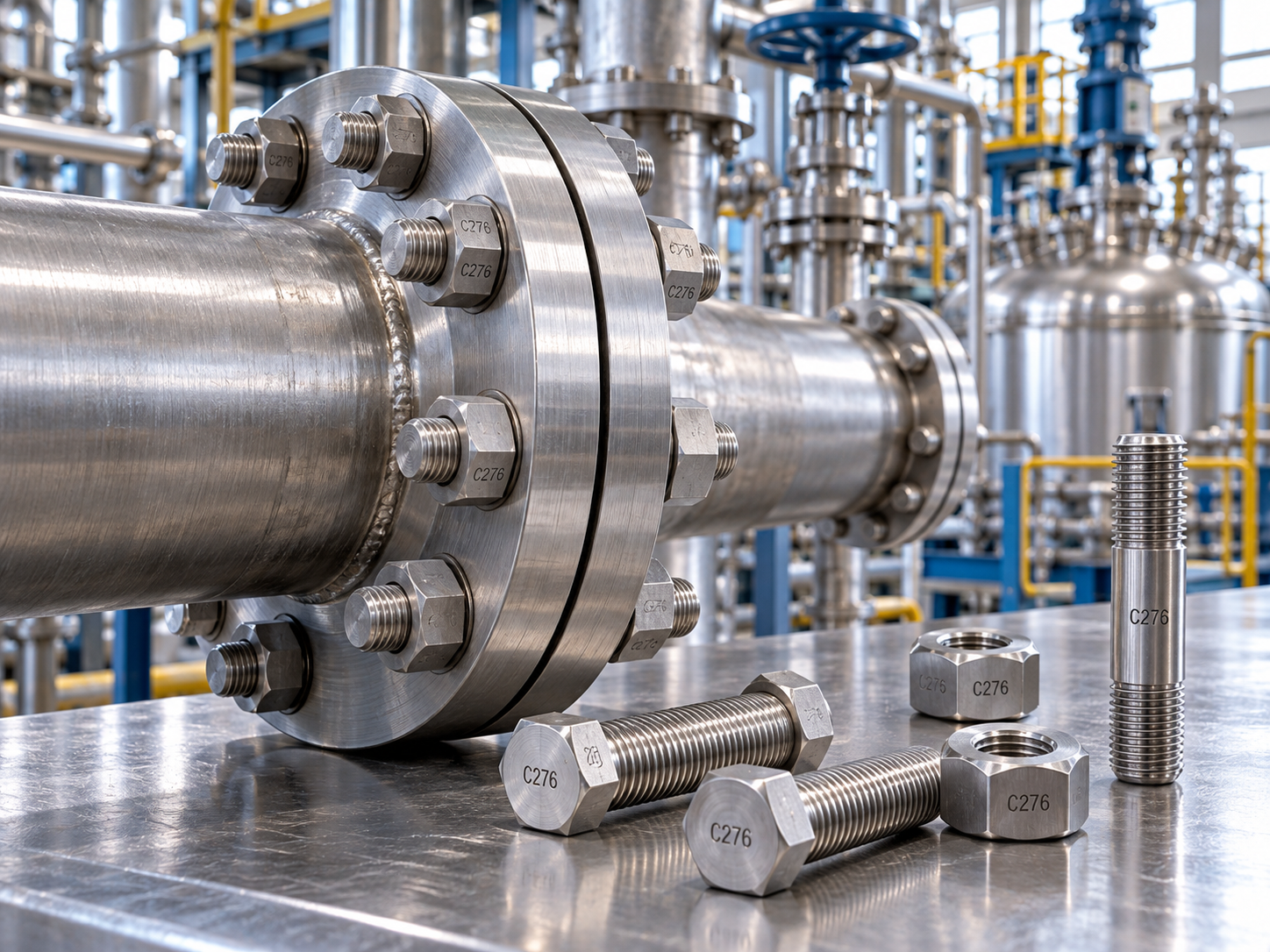
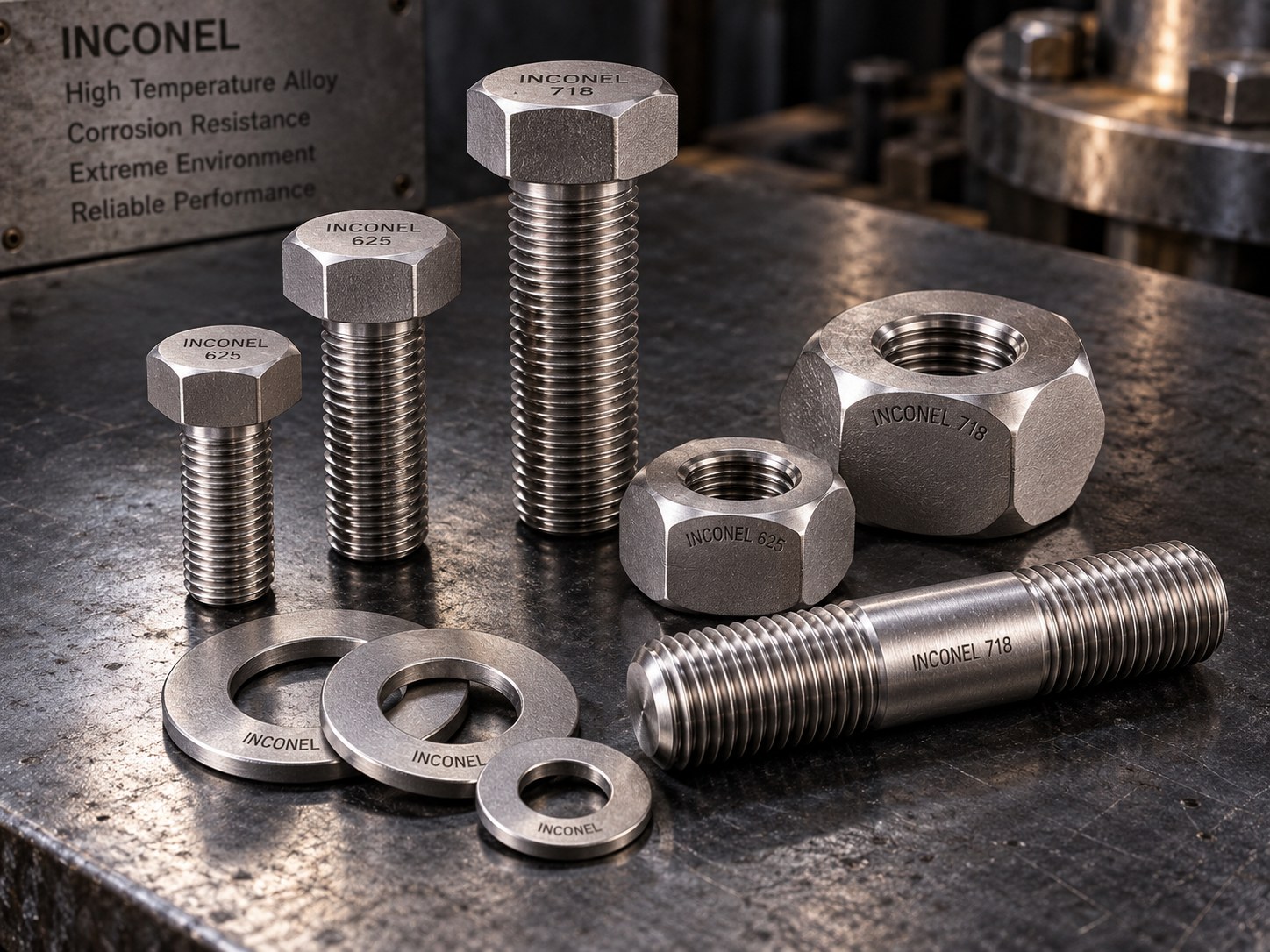
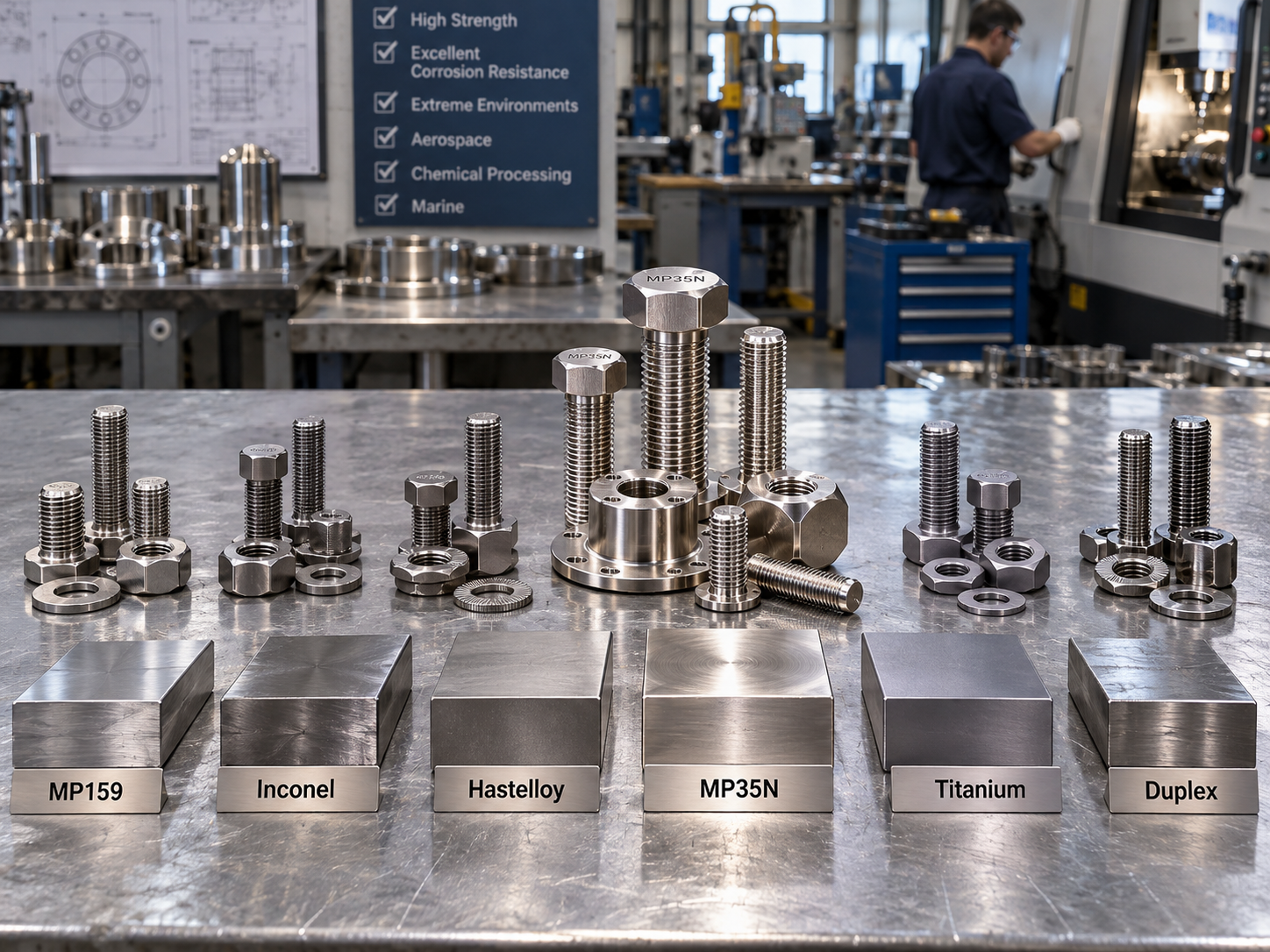
Before installing hastelloy c276 hex bolts, a careful inspection is essential to ensure corrosion resistance, load performance, and long-term reliability in demanding metal processing equipment. From surface condition and thread accuracy to material traceability, understanding how to evaluate hastelloy c276 fasteners and c276 bolts can help engineers, buyers, and quality teams avoid costly failures and choose the right hastelloy bolts for critical applications.
In metal processing equipment, bolted joints often operate under combined exposure to chlorides, acids, heat cycling, vibration, washdown, and aggressive cleaning media. Under these conditions, the difference between a properly inspected Hastelloy C276 hex bolt and an unchecked fastener can determine whether a flange remains sealed for 24 months or fails during an unplanned shutdown after a few weeks. Inspection before installation is therefore not a routine paperwork step; it is a practical risk-control process.
This guide is written for researchers, operators, technical evaluators, buyers, quality personnel, project managers, distributors, maintenance teams, and business decision-makers who need a clear and usable method for inspecting C276 bolts before they go into service. It focuses on real-world inspection points, acceptance criteria, documentation, procurement implications, and installation readiness within the metal processing equipment sector.
As a company focused on the development, manufacturing, and global supply of standard and customized fasteners in high-performance specialty metals, RAYCHIN LIMITED supports customers who need material guidance, dimensional reliability, and practical support for critical applications. That background is especially relevant when specifying and checking Hastelloy C276 hex bolts for corrosive equipment, process skids, furnaces, chemical handling assemblies, and related metal processing systems.
Why Pre-Installation Inspection Matters in Metal Processing Equipment
Hastelloy C276 is selected because it offers broad corrosion resistance in oxidizing and reducing environments, especially where stainless steel may pit, crevice corrode, or suffer rapid attack. In metal processing equipment, this often includes acid pickling lines, wet scrubber assemblies, reactor supports, heat exchanger frames, filter housings, and bolted covers exposed to mixed process media. Even so, the material grade alone does not guarantee field performance. A C276 hex bolt with damaged threads, mixed material, or improper finish can still become the weak point of the assembly.
The financial impact of overlooking inspection can be much larger than the fastener cost itself. A single bolt failure may cause leakage, gasket blowout, equipment misalignment, or extended downtime. In many plants, one unplanned stop can last 6 to 24 hours, and in process-critical lines the downstream cost may exceed the purchase value of the entire fastener lot by a wide margin. That is why quality teams usually treat high-performance specialty metal bolts as controlled items rather than generic hardware.
Inspection also matters because metal processing equipment often contains mixed-joint conditions. A Hastelloy C276 bolt may be paired with a C276 nut, another nickel alloy washer, or a mating component in duplex stainless steel, PTFE-lined steel, or coated carbon steel. If the dimensions are incorrect by even a small amount, for example an out-of-tolerance pitch or undersized across-flats dimension, the assembly torque window can narrow significantly. That increases the chance of galling, poor preload, or sealing inconsistency.
Another issue is traceability. In purchasing channels where multiple nickel alloys may appear visually similar, confusion between C276, C22, Monel, Inconel, or stainless products can happen unless inspection is disciplined. For procurement and commercial teams, the pre-installation stage is the last practical checkpoint to confirm that the delivered bolts match the specified alloy, standard, size, and documentation before they disappear into inventory or become part of a larger assembly.
Typical failure modes when inspection is skipped
- Thread mismatch between bolt and nut, resulting in binding within the first 2 to 3 turns.
- Surface contamination from iron particles, storage debris, or shop residues that compromise corrosion performance.
- Wrong bolt length causing insufficient thread engagement, often less than 1 full diameter in heavily loaded joints.
- Loss of preload due to damaged bearing surface, washer mismatch, or head deformation.
- Material substitution that is not obvious visually but becomes critical once exposed to chlorides or acids.
Who benefits most from a documented inspection process
Operators benefit because fewer bolt-related defects mean safer startup and fewer in-service interventions. Technical evaluators benefit because incoming inspections provide evidence that the fastener matches the design basis. Purchasing teams benefit because they can link supplier performance to measurable criteria such as documentation completeness, dimensional consistency, and lot traceability. Quality and safety personnel benefit because inspection records support audits, root-cause analysis, and maintenance planning.
For distributors and project managers, inspection data also improves communication across the supply chain. When a lot contains 500 or 2,000 pieces, it is easier to quarantine 1 nonconforming batch before installation than to manage scattered field replacements later. In larger projects with multiple skids or modular units, a structured bolt inspection process can reduce installation delays during the final 7 to 14 days before commissioning.
What to Check First: Visual, Dimensional, and Surface Condition Review
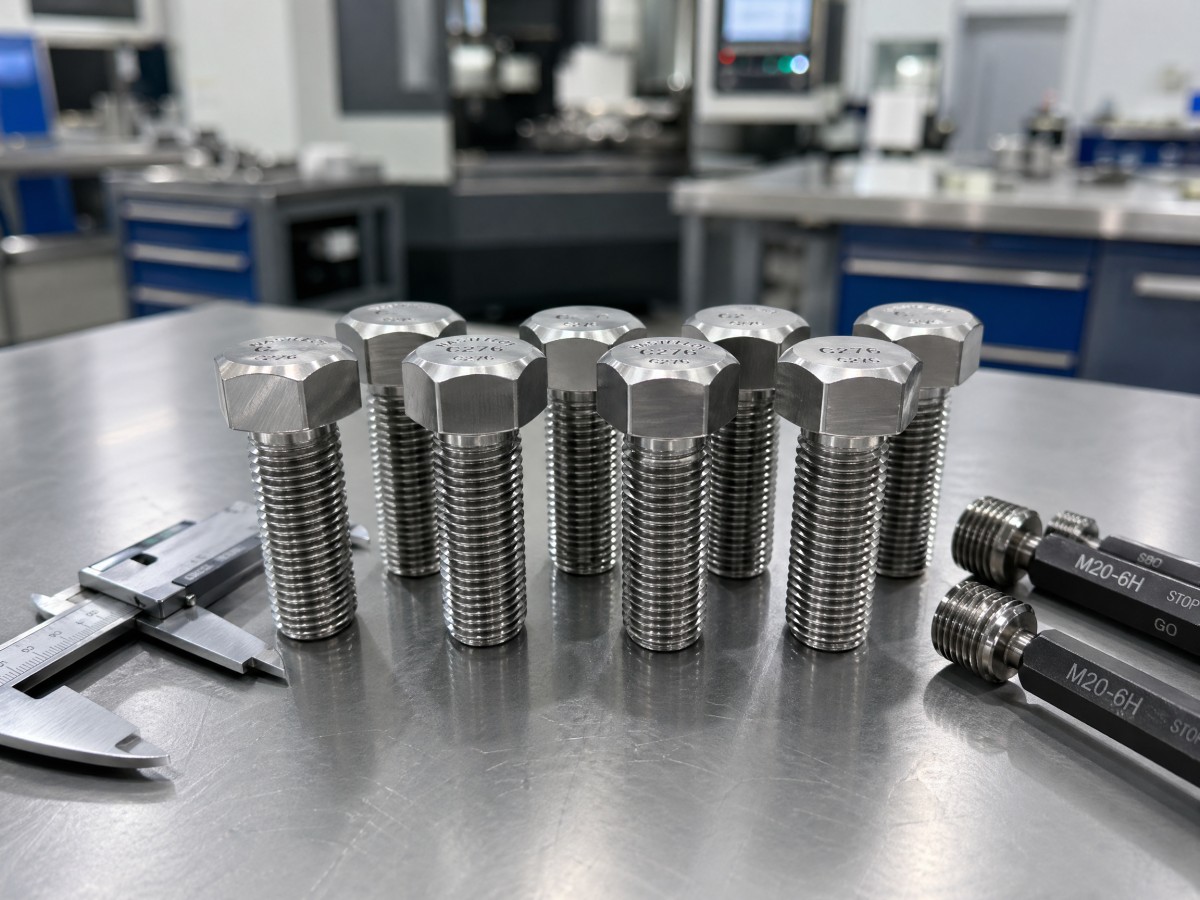
The first inspection layer should always be a systematic visual and dimensional review. This stage is fast, requires limited equipment, and often identifies the most common nonconformities before more specialized checks are needed. In practice, a receiving or quality team can screen a batch of Hastelloy C276 hex bolts using calibrated calipers, a thread gauge, good lighting, and a clean inspection surface. For critical joints, 100% inspection may be justified; for lower-risk positions, sampling by lot is common.
Begin by confirming that the delivered fastener type matches the purchase requirement. A hex bolt should have the required head form, size, length, thread configuration, and finish condition. Compare against the drawing, purchase order, and approved specification. In metal processing equipment, small dimensional mismatches can affect tool access, washer seating, enclosure clearance, insulation thickness, and flange alignment. For example, a bolt that is 3 mm too short may not provide the required engagement after a corrosion-resistant washer and gasket stack are included.
Surface condition is the next priority. Inspect the bolt head, shank, threads, and bearing face for dents, flattening, tool marks, rolled burrs, scratches, embedded particles, discoloration, or signs of mishandling. Minor cosmetic differences are not always functional defects, but sharp thread damage, local gouging, or deformed bearing surfaces should trigger segregation. In corrosive equipment, crevice-like defects can become initiation points for local attack, especially if process deposits accumulate there over repeated wet-dry cycles.
Thread quality deserves close attention because nickel alloy fasteners can be vulnerable to galling if the threads are rough, contaminated, or poorly matched. Run a compatible nut by hand when permitted by the inspection procedure. A properly made set should engage smoothly without cross-threading or seizure in the first several turns. If torque is needed just to start assembly, stop and investigate. In many maintenance environments, thread damage identified before installation saves several hours of rework at elevated platforms or congested equipment locations.
Core dimensions to verify
For C276 hex bolts used in metal processing equipment, the minimum dimensional review normally includes nominal diameter, thread pitch, overall length, thread length, head height, and across-flats dimension. Where washers, insulated covers, clamps, or thermal shields are used, installed grip length should also be checked. If the assembly relies on blind holes or fixed stud projection, even a 1 to 2 pitch error can create installation problems that are not visible until final fit-up.
The table below summarizes practical first-stage checks that maintenance, receiving, and QA teams often use before accepting Hastelloy C276 hex bolts into installation stock.
The key conclusion from this first-stage review is simple: most avoidable installation problems show up in visible form before the bolt ever reaches the joint. If teams standardize these checks and record findings by lot number, they can prevent a large share of fit-up issues without waiting for advanced testing. For projects under schedule pressure, that can save 1 full shift or more during equipment assembly.
Practical visual acceptance checklist
- Confirm packaging labels, part number, alloy designation, size, and quantity.
- Inspect 100% of exposed surfaces for handling damage if the bolts will be used in critical corrosive service.
- Measure at least 3 key dimensions per sample lot, or more if the specification requires tighter control.
- Check thread engagement with a compatible nut by hand for representative samples.
- Segregate any bolts showing head damage, thread tearing, contamination, or questionable markings.
Storage condition before installation
Inspection should extend to storage readiness. Even a conforming Hastelloy C276 bolt can pick up contamination if left open in a fabrication bay near carbon steel grinding, chloride-bearing wash chemicals, or humid packaging debris. Store bolts in clean, dry, labeled containers and keep mixed alloy lots physically separated. In maintenance shutdowns lasting 3 to 10 days, that simple control prevents traceability loss and accidental mixing at the work front.
Material Verification and Traceability for Hastelloy C276 Fasteners
Visual inspection alone is not enough for high-value or safety-relevant joints. Material verification and traceability are the second major layer of pre-installation control. Because C276 bolts can look similar to other nickel-based or corrosion-resistant fasteners, buyers and quality teams should confirm that the delivered items match the ordered alloy and manufacturing documentation. In practical terms, that means checking heat or lot references, certificates, packaging identity, and any customer-required verification method before the bolts are released for use.
Traceability is especially important when bolts will be installed in acid transfer skids, fume treatment units, plating systems, and wet metal processing lines where the cost of replacement is high. If a field issue appears 6 months later, the plant must be able to identify which lot was installed, where it was used, and whether similar bolts remain in stock. Without that link, corrective action becomes slower and broader, often affecting more equipment than necessary.
The most common documentation checkpoint is the mill or material test certificate linked to the supplied lot. Purchasing and QA teams should compare the order requirements with the certificate details and delivery labels. The goal is not to create paperwork for its own sake, but to confirm consistency across at least 4 points: alloy designation, size, quantity, lot or heat reference, and any requested standard. If one of those points does not align, the batch should be held for clarification before installation.
Where the application is highly critical, additional verification such as positive material identification may be requested by the end user or EPC contractor. That requirement is common when the fasteners are part of corrosive service boundaries, elevated-temperature assemblies, or export projects with documented inspection plans. The exact method depends on project practice, but the principle remains the same: confirm the material before the bolt is loaded in service, not after a failure investigation begins.
What traceability should cover
- Supplier identity and delivery reference for each batch or partial shipment.
- Lot or heat information that links bolts, nuts, and washers where required.
- Quantity received, quantity inspected, quantity accepted, and any segregated items.
- Inspection date, inspector name, and disposition status such as accepted, hold, or rejected.
- Installation destination, especially for critical equipment tags or module numbers.
The table below gives a practical framework for matching documentation and traceability controls to different risk levels in metal processing equipment.
For procurement and commercial evaluators, this approach helps separate qualified specialty fastener supply from generic sourcing. A low unit price is not necessarily a low total cost if the lot cannot be traced, verified, or matched reliably to installation records. In corrosive equipment, the administrative discipline around the fastener is often as valuable as the material itself.
Common traceability mistakes
Mixing lots after receiving
One frequent problem is transferring bolts from original packaging into shared bins without preserving batch identity. This may seem efficient during shutdown work, but it breaks the traceability chain. If even 20 pieces from another alloy or size are mixed into a larger container, the whole bin may become questionable for critical use.
Separating bolts from documents
Another issue is storing certificates in a procurement file while the physical fasteners move into warehouse stock with no linked reference. Best practice is to ensure the lot number or receiving code follows the bolts through warehousing, kitting, issue to site, and final installation. That can be done with simple labels, controlled bins, or project-specific receiving sheets.
Mechanical Fit, Thread Engagement, and Installation Readiness
Once material identity and visual condition are confirmed, the next question is whether the Hastelloy C276 hex bolt is mechanically ready for installation in the actual joint. This includes fit with the mating nut, usable thread engagement, wrench access, washer compatibility, and expected torque procedure. In metal processing equipment, the installation environment is often cramped, elevated, or contaminated by process residue, so any fit issue becomes more expensive to solve once work begins.
Thread engagement should be sufficient for the load case and joint design. A practical field rule is to avoid marginal engagement where only a few threads carry the load, especially in corrosive or vibrating service. If the bolt is too short after washers, insulation pads, clamping plates, or flange thickness are considered, preload may be unreliable. Conversely, a bolt that is excessively long can interfere with guards, rotating parts, or maintenance clearances. These problems are easy to miss if inspection is limited to nominal length on paper rather than actual installed stack-up.
Fit-up testing is also valuable because nickel alloy fasteners are more likely to suffer galling when poor thread finish, contamination, or unsuitable assembly practice is present. Before field installation, representative samples should be paired with the intended nuts and washers. The assembly should run smoothly by hand for initial turns. If anti-seize or a controlled lubricant is specified by the project or maintenance procedure, the inspection team should verify that the chosen installation method is consistent across the work package. A mismatch between dry torque tables and lubricated field practice can create significant preload deviation.
For project managers and installation supervisors, readiness means more than accepting the hardware. It means confirming that the hardware, tools, joint geometry, and installation procedure will work together on site. In shutdown windows of 12 to 72 hours, this can be the difference between a clean execution and repeated rework. A pre-installation trial on a sample joint often saves more time than it costs.
Mechanical readiness checkpoints
- Verify bolt and nut compatibility by size, thread form, and running fit.
- Confirm grip length against the real joint stack, including washers and gaskets.
- Check head seating area and washer face for full, even contact.
- Ensure wrench clearance and turning access in the installed position.
- Review assembly method for lubrication, anti-galling control, and torque consistency.
The table below highlights common installation-readiness problems and the best time to catch them.
The main takeaway is that installation readiness should be proven, not assumed. If a lot of C276 bolts passes visual and material checks but fails mechanical fit-up, the project still carries a real risk. A 30-minute mock-up can prevent 3 to 5 hours of on-site correction, especially for equipment installed in confined spaces or elevated platforms.
Anti-galling considerations for C276 bolts
Nickel alloy fasteners may be more prone to adhesive wear during tightening than some general-purpose steel fasteners. That does not make them unsuitable; it means the installation method must be controlled. Clean threads, matched nuts, proper handling, and a consistent assembly procedure are essential. Where the job specification allows it, teams often use an approved anti-seize or controlled lubricant, but the torque method should then reflect that condition. Mixing dry and lubricated practice in the same work package can produce wide preload variation.
When to reject instead of rework
If a C276 bolt shows torn threads, heavy galling marks, severe head distortion, or clear evidence of mixed threading, replacement is usually safer than field dressing. In high-performance corrosive service, aggressive rework can remove protective surface integrity or create dimensional uncertainty. For critical joints, replacement with traceable stock is typically the lower-risk choice.
Inspection Workflow, Acceptance Criteria, and Procurement Control
A good inspection result depends not only on what is checked, but also on how the process is organized. Plants and project teams that work with Hastelloy C276 fasteners regularly should define a repeatable workflow from receiving to release for installation. This improves consistency, shortens decision time, and makes it easier to compare supplier performance over multiple orders. For B2B buyers and commercial decision-makers, that structure also turns inspection into a procurement intelligence tool rather than a stand-alone quality activity.
A practical workflow often has 5 stages: receiving verification, visual and dimensional screening, material traceability review, fit-up confirmation, and final release or segregation. Each stage should have an acceptance decision. If the lot passes, it moves forward. If not, it is placed on hold with a clear nonconformance record. This approach prevents questionable bolts from reaching site crews through informal warehouse issue or mixed project kitting. In many organizations, the largest inspection failures are procedural rather than technical.
Acceptance criteria should be tied to the application criticality. A non-pressurized cover in mild service may allow broader sampling than a sealed joint on acid-handling equipment. The key is to define the rule before delivery, not during a schedule crisis. Buyers should align purchase orders, technical specifications, and inspection checklists so that suppliers know whether the project expects dimensional sampling, lot traceability, test certificates, special packaging, or job-specific marking. Clear requirements reduce disputes and speed up receiving decisions.
This is also where an experienced specialty fastener partner adds value. Companies such as RAYCHIN LIMITED, with focus on standard and customized fasteners in high-performance specialty metals, can support material selection, supply coordination, and technical review before the bolts arrive at the customer site. That front-end support matters because many costly inspection issues begin with incomplete specifications, undefined mating hardware, or unclear service conditions during procurement.
Suggested 5-step incoming inspection workflow
- Receiving check: verify shipment quantity, packaging condition, part description, and purchase order match.
- Visual and dimensional review: inspect representative samples or 100% of critical lots for visible damage and key dimensions.
- Traceability review: confirm lot identity, certificate linkage, and storage labeling.
- Mechanical fit-up: test nut engagement, stack-up suitability, and basic installation access.
- Disposition: accept, hold, or reject, then label stock clearly before warehouse release.
Procurement factors that should appear on the order
For buyers and technical evaluators, the purchase document should define at least the alloy, fastener form, size, thread, quantity, mating hardware requirement, documentation expectation, and any special inspection or packaging instructions. If the equipment will be installed across multiple modules, lot separation and package labeling should be specified as well. These details may appear administrative, but they determine whether the delivered C276 bolts can be inspected efficiently within a 1-day receiving window or whether clarification drags on for 3 to 5 days.
The table below provides a practical procurement control matrix for teams sourcing Hastelloy C276 hex bolts for metal processing equipment.
From a business standpoint, inspection-friendly procurement reduces soft costs that are rarely visible on the unit price sheet. These include engineer review time, site waiting hours, warehouse segregation, emergency expediting, and shutdown extension. When those costs are considered, a better-documented specialty fastener source often has stronger total-value performance than a lower-price but poorly controlled supply route.
Nonconformance handling
How to isolate suspect C276 bolts
If any bolt in a sampled lot shows serious dimensional mismatch, unidentified material status, or functional thread damage, the safe response is to place the batch on hold pending review. For critical service, avoid partial informal acceptance unless the lot is clearly separated and individually identified. Clear quarantine labeling prevents accidental issue to maintenance crews during urgent work.
When to request supplier clarification
Request clarification when there is inconsistency between labels, documents, and physical product; when size or pitch does not match the order; or when the project specification requires a control point that has not been satisfied. Early communication often resolves documentation questions within 24 to 48 hours, while delayed escalation can hold the project much longer.
Common Mistakes, FAQ, and Final Recommendations Before Installation
Even experienced teams sometimes make the same avoidable mistakes when handling Hastelloy C276 hex bolts. The most common is assuming that a premium alloy fastener is automatically ready for service because the material is well known. In reality, service life depends on a chain of factors: correct alloy, correct dimensions, clean surface, proper thread condition, compatible mating hardware, controlled storage, and a suitable installation method. Break the chain at any point, and the performance margin shrinks quickly.
Another recurring mistake is focusing only on corrosion resistance while ignoring mechanical fit. In metal processing equipment, preload reliability, thread engagement, and head seating are just as important as alloy selection. A correctly specified C276 bolt can still underperform if installed with damaged threads, wrong-length stack-up, or inconsistent torque practice. The safest inspection approach balances material verification with practical assembly readiness.
For organizations buying high-performance specialty metal fasteners across multiple projects, standardizing an inspection checklist is one of the fastest improvements available. It can be deployed in receiving, warehouse issue, shutdown planning, and final installation control. Whether the batch size is 20 pieces for maintenance or 2,000 pieces for a project package, consistency improves accountability and shortens decision time.
RAYCHIN LIMITED supports customers in demanding applications by combining specialty metal fastener supply with technical guidance on material and application fit. For buyers, engineers, and project teams dealing with Hastelloy C276 fasteners, that kind of support is valuable when requirements are complex, service conditions are aggressive, or standard catalog hardware does not fully match the equipment design.
FAQ: How many bolts should be inspected from each lot?
The answer depends on application criticality, lot size, and project rules. For highly critical corrosive joints, some users choose 100% visual inspection plus dimensional checks on all or most pieces. For lower-risk service, representative sampling may be acceptable. A practical minimum is to define the sampling rule before the shipment arrives, not after issues are found. If the lot contains signs of inconsistency, expand the sample or hold the entire batch.
FAQ: Are discoloration marks always a reason to reject C276 bolts?
Not always. Light visual variation can come from manufacturing or handling and may not affect function. However, discoloration should trigger closer review if it appears with roughness, residue, pitting-like spots, embedded particles, or localized damage. In corrosive equipment, questionable surface conditions should be evaluated conservatively because local defects can matter more than appearance alone.
FAQ: What is the biggest installation risk with nickel alloy bolts?
One major risk is galling during tightening, especially when threads are dirty, mismatched, rough, or assembled without a controlled method. Preventive steps include checking thread quality, using matched components, keeping parts clean, and following the specified assembly practice. A short pre-installation fit-up trial is often the simplest way to detect this risk before field work begins.
FAQ: Should old stock be re-inspected before use?
Yes, especially if storage duration exceeds 6 to 12 months, packaging has been opened, or the bolts have been moved between locations. Re-inspection should cover identification, surface cleanliness, thread condition, and document linkage. Long-stored specialty fasteners may remain fully usable, but only if they have been protected from contamination and mixing.
Final pre-installation checklist
- Confirm alloy identity and lot traceability against the order and receiving records.
- Verify size, thread, and length against the actual joint stack, not just the drawing title.
- Inspect for clean surfaces, intact threads, and undamaged head bearing faces.
- Run a sample fit-up with mating hardware before issuing bolts to site crews.
- Store accepted lots in clearly labeled, clean containers until installation.
A disciplined inspection routine for Hastelloy C276 hex bolts reduces the risk of leakage, seizure, downtime, and costly rework in metal processing equipment. The most effective approach combines 4 essentials: visible condition review, dimensional accuracy, material traceability, and installation readiness. When these controls are in place, engineers and buyers can specify C276 bolts with greater confidence, and maintenance teams can install them with fewer surprises.
If you need support selecting, verifying, or sourcing Hastelloy C276 fasteners for demanding corrosive service, contact RAYCHIN LIMITED for technical guidance, customized fastener options, and application-focused support. You can also reach out to discuss project requirements, inspection expectations, and the most suitable specialty metal fastener solution for your equipment.
Request A Quote! We'll respond as soon as possible(within 12 hours)
Get a Quote