
Categories List
Recent Posts
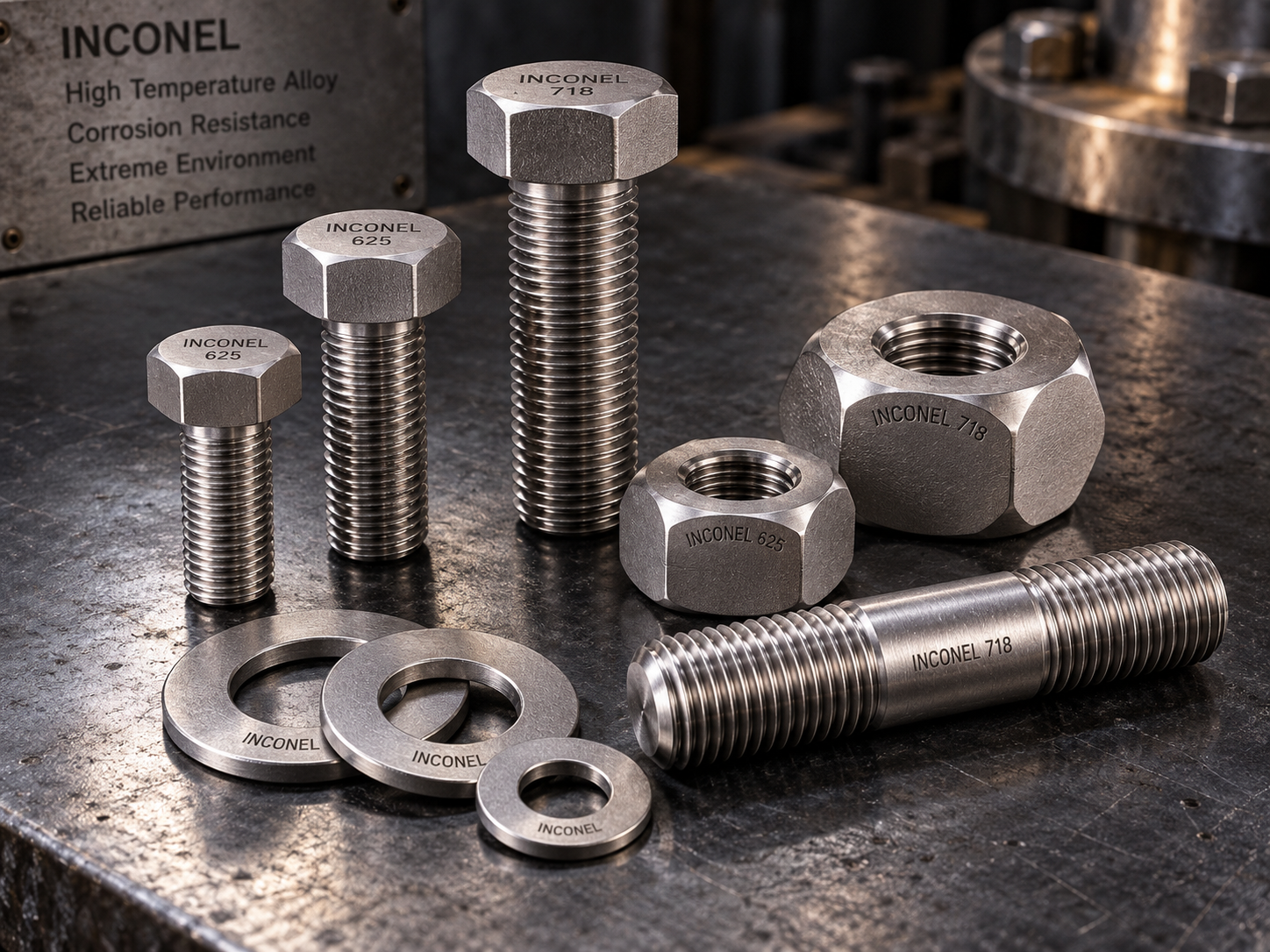
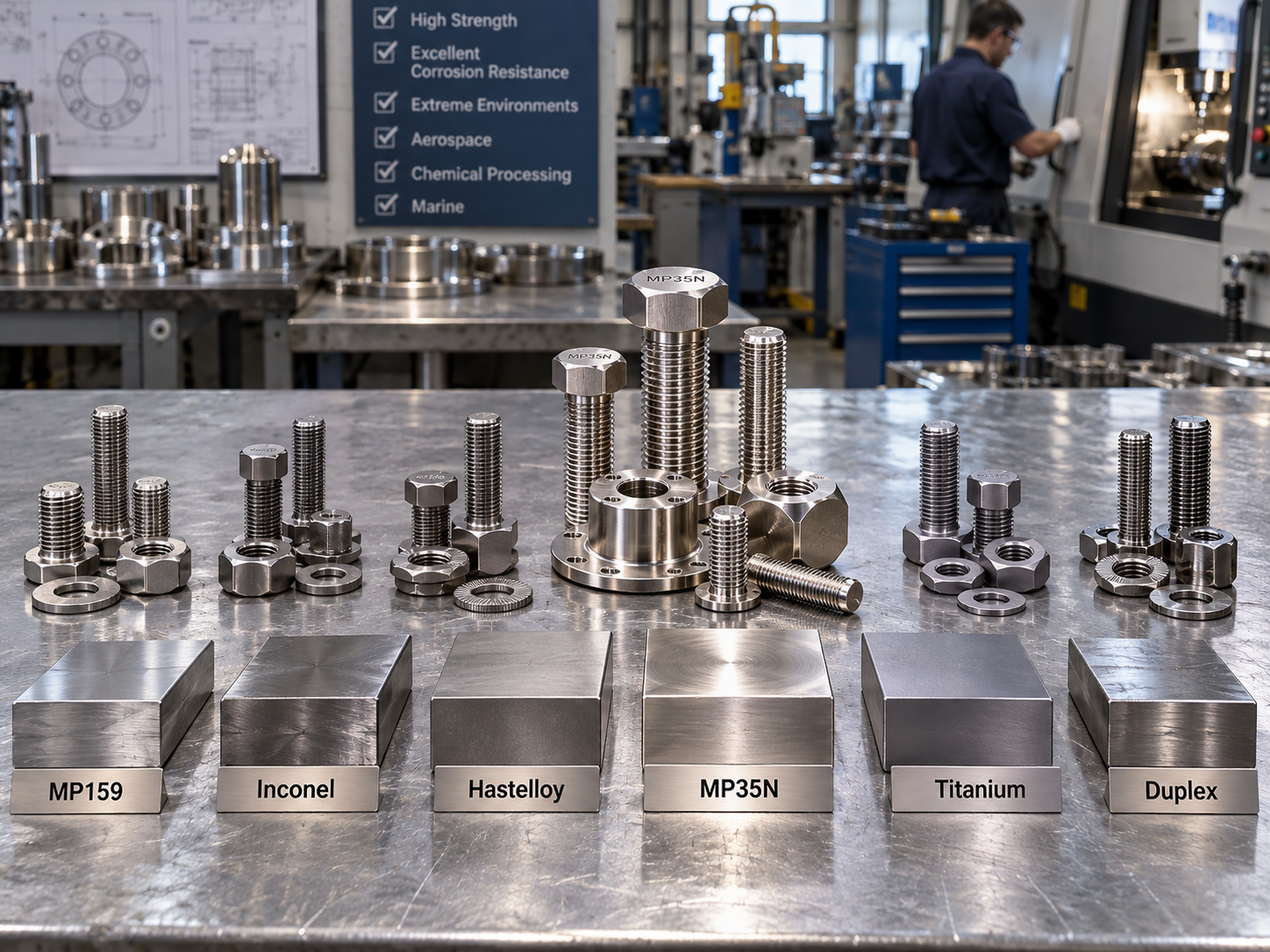
In aerospace assemblies, every fastener must deliver strength, heat resistance, and long-term stability under extreme conditions. That is why a286 screws, a286 fasteners, and a286 bolts are widely trusted for critical applications. From high-temperature engines to structural connections, A286 offers an excellent balance of corrosion resistance, durability, and reliable performance—making it a preferred choice for engineers, buyers, and technical teams seeking dependable fastening solutions.
Why do aerospace assemblies rely on A286 under high heat and vibration?
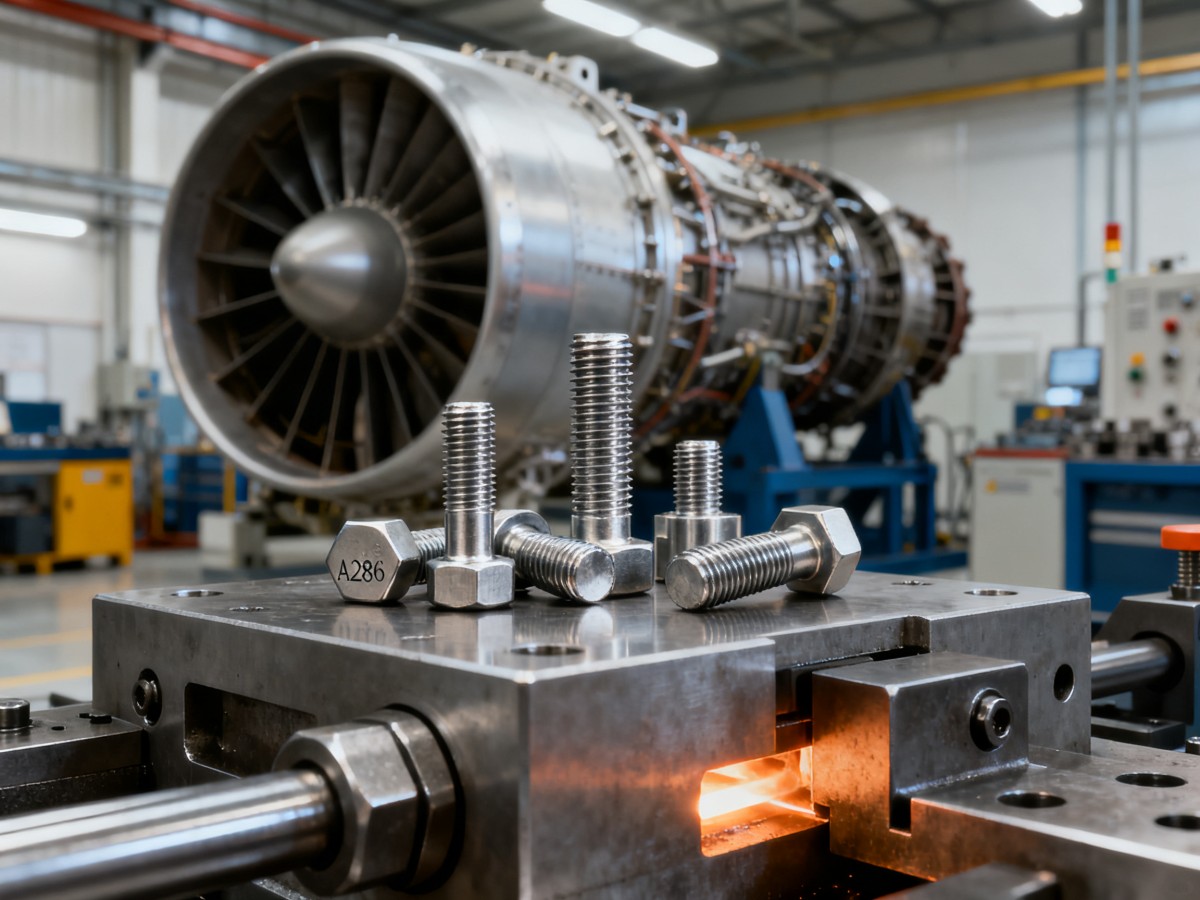
Aerospace fastening is never a simple matter of joining parts. In engines, nacelles, exhaust-adjacent structures, and hot-zone support systems, screws and bolts must maintain clamp load while exposed to heat cycling, vibration, humidity, and long maintenance intervals. In these conditions, A286 is often selected because it combines age-hardening capability, oxidation resistance, and mechanical stability in service environments where many common stainless fasteners begin to lose reliability.
For users in the metal processing equipment sector, the value of A286 is also practical. Manufacturers, machining teams, quality personnel, and sourcing departments need a material that can move from drawing review to batch production without creating uncertainty around heat resistance or dimensional consistency. In many procurement evaluations, the decision is not only about tensile strength. It is also about whether the fastener can keep preload over 2–4 inspection cycles and remain serviceable after repeated assembly and disassembly.
A286 is especially relevant when assemblies operate in elevated-temperature ranges that exceed the comfort zone of standard stainless grades. While actual service limits depend on design, installation method, atmosphere, and safety factor, engineering teams commonly look at A286 when they need a fastener for sustained exposure in the medium-to-high temperature band rather than short, incidental heat spikes. This makes it a strong candidate for aerospace systems where thermal exposure is part of the normal duty cycle.
Another reason for its adoption is risk management. A fastener failure in aerospace can trigger inspection costs, downtime, secondary component damage, and compliance concerns. Buyers and project managers therefore tend to favor materials that have a predictable performance profile across strength, corrosion resistance, and manufacturability. That balance is where A286 stands out. It is not chosen because it is universal, but because in the right temperature and load window, it reduces compromise.
What properties matter most in real assembly conditions?
In actual aerospace use, reliability depends on more than a single datasheet value. Engineers usually evaluate at least 5 key dimensions: elevated-temperature strength retention, corrosion resistance, resistance to relaxation under load, compatibility with mating materials, and manufacturability into the required head style or thread form. If one of these areas is weak, the assembly may still pass initial installation but fail during long-term service.
- Strength retention at temperature: the fastener must preserve useful mechanical performance after repeated thermal cycles, not just in room-temperature testing.
- Oxidation and corrosion resistance: this matters for humid environments, salt exposure during logistics, and mixed-material aerospace assemblies.
- Preload stability: in vibration-prone systems, maintaining clamp force across hundreds or thousands of operating hours is often more important than headline tensile numbers.
- Processability: machining, forming, and heat treatment must be controllable enough for standard and custom fastener production.
This combination explains why technical evaluation teams frequently place A286 into the shortlist when they need a high-performance specialty metal fastener rather than a commodity screw. It fits a wide range of decision points, from design verification to maintenance replacement planning.
How does A286 compare with other aerospace fastener materials?
Material comparison is one of the most searched topics among technical assessors and procurement teams. The key question is not whether A286 is “better” in every case, but whether it is the most suitable for the temperature, load, corrosion, and cost profile of a given assembly. In metal processing equipment and aerospace-related manufacturing, three alternatives are commonly discussed alongside A286: general stainless grades, nickel alloys for more extreme heat, and titanium alloys where weight reduction is the top priority.
The following comparison helps decision-makers review common trade-offs. It is not a substitute for design validation, but it offers a practical screening tool during supplier discussions, RFQ preparation, and early engineering reviews. Most organizations use 3 stages in this process: preliminary material screening, drawing-and-standard review, and final approval based on manufacturing and service risk.
For many buyers, A286 occupies a useful middle position. It usually offers stronger high-temperature capability than standard stainless fasteners, while remaining more practical and often more cost-manageable than some premium nickel-based alternatives. Compared with titanium, it may carry a weight penalty, but it can provide advantages in heat resistance, wear behavior in some joints, and broad familiarity in fastening applications.
This table summarizes common material-selection logic for aerospace fastening teams comparing temperature performance, corrosion behavior, and purchasing impact.
The comparison shows why A286 is often selected as a practical engineering compromise rather than an extreme solution. It helps organizations avoid over-specifying a very expensive alloy where it is not required, while also avoiding under-specifying a standard stainless fastener that may struggle in thermal service.
Where does A286 create the strongest value?
A286 creates the most value when service conditions combine at least 3 demanding factors: heat, vibration, and maintenance interval. If a joint will be opened every few weeks, the material decision may be more flexible. But if the assembly is expected to remain stable over months or longer, and if rework costs are high, the value of a dependable specialty alloy rises quickly.
This is particularly important for distributors and sourcing teams serving customers in repair, overhaul, and specialized manufacturing. They need a material option that can satisfy both technical review and commercial review without forcing an immediate jump to the highest-cost class of fasteners.
Which aerospace and metal processing equipment scenarios fit A286 best?
Although the discussion starts with aerospace assemblies, the selection logic also matters to companies making or maintaining metal processing equipment for aerospace supply chains. Fixtures, thermal processing units, high-load fastening points, and precision tooling systems may all require specialty metal fasteners that perform consistently under repeated heat exposure. In these settings, A286 can support both direct aircraft-related parts and the equipment used to manufacture or service them.
Common application scenarios include engine-adjacent hardware, hot-air duct interfaces, exhaust-related support points, thermal shield attachments, and structural joints that must resist corrosion during storage and transport. In industrial equipment, suitable use cases may include furnace accessories, high-temperature clamping devices, and tooling systems that cycle from ambient conditions to elevated temperatures in scheduled production runs of 8–12 hours.
For project managers and maintenance teams, the question is often operational: does the material reduce unplanned intervention? When a fastener keeps its functional stability through repeated cycles, maintenance scheduling becomes more predictable. That can help lower inspection disruptions, especially in systems where access is difficult and part replacement involves significant labor time.
The material is not automatically necessary for every location. Good engineering practice divides the assembly into thermal zones and load classes, then reserves higher-performance fasteners for the points where they create measurable reliability value. This zoned approach often improves cost control across medium-volume and large-volume programs.
How do typical use cases differ by team objective?
Different stakeholders look at the same fastener from different angles. Engineering wants service performance. Procurement wants supply stability and cost clarity. Quality teams want traceable material control. Operators want easy installation and predictable torque behavior. A strong supplier must address all of these viewpoints in one coordinated process.
The table below maps frequent application scenarios to the main concerns raised by aerospace buyers, quality managers, and equipment users.
This scenario view makes one point clear: A286 selection should be linked to the functional environment, not just to the word “aerospace.” When the joint sees repeated thermal stress, difficult access, or a high consequence of loosening, the case for A286 becomes much stronger.
Practical checklist before specifying A286
- Define the operating temperature band and whether exposure is continuous, intermittent, or short-duration peak loading.
- Confirm whether the fastener is load-critical, alignment-critical, or mainly used for enclosure retention.
- Review the mating material to reduce galling, galvanic concerns, or preload variability during assembly.
- Check whether the order is prototype, pilot batch, or production batch, because the sourcing path may differ for each volume level.
- Decide early whether standard dimensions are acceptable or whether custom drawings are required for head, shank, or thread modifications.
Teams that complete these 5 checks early usually reduce delays during quotation and avoid material changes late in the project cycle.
What should buyers, engineers, and quality teams check before ordering?
A286 is a performance-driven material, so purchasing should never be separated from technical review. For aerospace and metal processing equipment programs, the most effective sourcing process usually includes 4 linked steps: drawing confirmation, material and standard confirmation, sample or first-article review, and batch release planning. Skipping one of these stages often leads to hidden costs later, especially when the fastener is custom-made.
Procurement teams should verify more than unit price. A low quotation can become expensive if the fasteners require reinspection, dimensional sorting, or emergency replenishment. Commercial reviewers therefore tend to examine total supply risk across lead time, documentation, packaging control, lot traceability, and supplier responsiveness. In many projects, a 7–15 day difference in delivery can affect assembly schedules far more than a modest material-price gap.
Quality and safety personnel also need to confirm how the supplier controls manufacturing variables. In specialty alloys, consistency in raw material, forming route, machining, heat treatment, and inspection is important. Even if the nominal material is correct, poor process control may cause variation in threads, surface condition, or mechanical response. That is why experienced buyers often request a document package aligned with the specific project requirement instead of assuming all suppliers provide the same level of support.
When the requirement includes custom dimensions or nonstandard head forms, technical communication becomes even more important. A supplier with experience in specialty metals can often identify manufacturability risks before production starts. This is valuable for engineering teams under schedule pressure, because it reduces redesign loops and helps keep the order moving through approval, sampling, and release.
A procurement guide for aerospace fastener projects
The following checklist is designed for engineers, procurement officers, quality teams, and project managers evaluating specialty metal fasteners for critical use.
- Confirm service conditions clearly: temperature range, load type, vibration level, maintenance interval, and environmental exposure should be documented before requesting quotation.
- Specify geometry completely: thread standard, shank length, head type, coating requirement if any, and tolerance expectations must match the drawing and assembly method.
- Review material route and documentation: ask what material traceability and inspection records can be supplied for project approval.
- Assess supply timing: check sample lead time, production lead time, and whether partial shipment is possible for urgent schedules.
- Plan life-cycle cost, not only purchase price: include maintenance risk, replacement frequency, and the cost of downtime if the wrong fastener is installed.
For many customers, especially those balancing technical and commercial priorities, a supplier that can discuss both material behavior and delivery execution creates a clear advantage. This is where specialized support becomes practical rather than promotional.
How RAYCHIN LIMITED supports complex fastener selection
RAYCHIN LIMITED focuses on the development, manufacturing, and global supply of standard and customized fasteners made from high-performance specialty metals. For buyers handling difficult operating environments, that matters because material selection and execution quality must work together. A supplier that understands special material fasteners can support early-stage selection, custom requirement review, and manufacturing coordination more effectively than a general fastener trader.
This support is especially useful when the project involves demanding applications, multiple stakeholder reviews, or uncertainty around the best material option. Instead of treating the order as a simple catalog request, the process can include guidance on challenging applications, discussion of suitable material routes, and coordination on standard versus customized supply. Teams looking for A286 Fasteners often need exactly this combination of technical understanding and supply-chain responsiveness.
For distributors, project owners, and sourcing managers, this can shorten decision time and improve confidence during supplier comparison. It also helps when the order volume changes from small-batch validation to larger repeat purchases, because the conversation does not need to restart from zero each time.
What are the common mistakes, cost questions, and FAQs around A286 fasteners?
Even experienced buyers can make avoidable mistakes when sourcing high-performance fasteners. The most common error is assuming that all elevated-temperature fasteners solve the same problem. In practice, material selection must match the service profile. Choosing a lower-grade material to save initial cost can increase maintenance risk. Choosing a much higher alloy than required can also hurt the project by extending lead time and inflating cost without adding usable value.
Another frequent issue is incomplete specification. If the inquiry includes only material name and size, but not temperature conditions, mating material, installation method, or required documents, suppliers may quote different assumptions. This makes comparison difficult and may lead to change orders later. A better approach is to define 3 groups of information at the start: operating environment, dimensional requirements, and documentation expectations.
Cost planning should also consider quantity tier. Prototype lots, pilot runs, and production orders may carry very different cost structures because setup, tooling, inspection, and material utilization change with volume. For custom parts, the unit price in a 20-piece order may be very different from that in a 2,000-piece order. This does not mean one quote is unreasonable; it reflects the economics of specialty alloy manufacturing and controlled quality processes.
Below are practical questions raised by engineers, procurement teams, and maintenance personnel when evaluating a286 screws and related aerospace fastening solutions.
How should A286 be evaluated against budget limits?
Start with consequence of failure, not unit price. If the fastener is in a high-heat or difficult-access location, the cost of replacement labor, downtime, inspection, and potential secondary damage may exceed the original purchase price by a large margin. In those cases, a higher-grade fastener often makes economic sense. If the location is low-risk and service temperatures are moderate, a different material may be more appropriate. The right answer depends on the joint’s duty profile.
Typical cost drivers to review
- Raw material class and market availability at the time of ordering.
- Whether the fastener is standard or custom-machined.
- Inspection scope, traceability records, and packaging requirements.
- Order quantity tier, from small prototype lots to repeat production batches.
A structured cost discussion usually leads to better decisions than asking for the lowest available price without defining the service requirement.
Which misconceptions should technical teams avoid?
One misconception is that corrosion resistance alone makes a fastener suitable for aerospace hot zones. Another is that strength at room temperature predicts performance after thermal cycling. A third is that any supplier can deliver the same outcome as long as the alloy name matches. In specialty metals, process capability and application guidance matter. The material is only one part of the reliability chain.
Teams should also avoid treating all replacement needs as standard catalog purchases. In maintenance environments, a direct substitute may appear dimensionally correct but still differ in material condition, documentation, or service suitability. That is why replacement planning should include specification verification rather than visual matching alone.
How long is the usual delivery cycle?
Delivery depends on whether the requirement is for standard stock, modified standard fasteners, or fully customized parts. In many industrial supply cases, stock or near-stock items may move faster, while custom drawings can require a longer window for review, manufacturing, and inspection. A practical planning range is often 1–2 weeks for some readily available items and 2–6 weeks for customized batches, but exact timing depends on quantity, geometry, and documentation needs.
When should a buyer request samples or first-article review?
Samples are especially useful in 4 situations: a new design, a new supplier, a custom geometry, or a safety-sensitive joint. A small pre-production review can confirm fit, thread engagement, surface quality, and assembly behavior before full release. This step is often less costly than correcting a large batch after delivery.
Why choose a specialty fastener partner for A286 projects?
When the application is critical, buyers need more than a list price. They need a partner that understands specialty materials, can communicate clearly with engineering and purchasing teams, and can support both standard and customized supply. This is especially true in aerospace-related assemblies and metal processing equipment, where service conditions are demanding and mistakes are expensive.
RAYCHIN LIMITED brings that project-oriented approach through its focus on high-performance specialty metal fasteners, technical expertise, and global distribution capability. For customers facing difficult operating conditions, the practical value lies in coordinated support: material selection guidance, review of custom requirements, discussion of delivery windows, and alignment on documentation and quality expectations. That approach helps reduce uncertainty from the first inquiry to repeat purchasing.
If your team is evaluating hot-zone fastening, replacement parts, or custom aerospace hardware, a focused technical discussion can save time and reduce risk. You can consult on 6 key topics before ordering: material suitability, dimensional confirmation, application temperature range, customization feasibility, expected delivery cycle, and quotation structure for sample or production quantities. For projects requiring tailored support, A286 Fasteners can be reviewed against your drawings, operating conditions, and sourcing priorities.
If you are comparing suppliers now, the most useful next step is to provide your drawing, quantity range, service condition, and documentation expectation. That allows a more accurate discussion around product selection, lead time, custom options, sample support, and quotation planning—so your team can move from uncertainty to a faster, better-informed decision.
Request A Quote! We'll respond as soon as possible(within 12 hours)
Get a Quote