
Categories List
Recent Posts
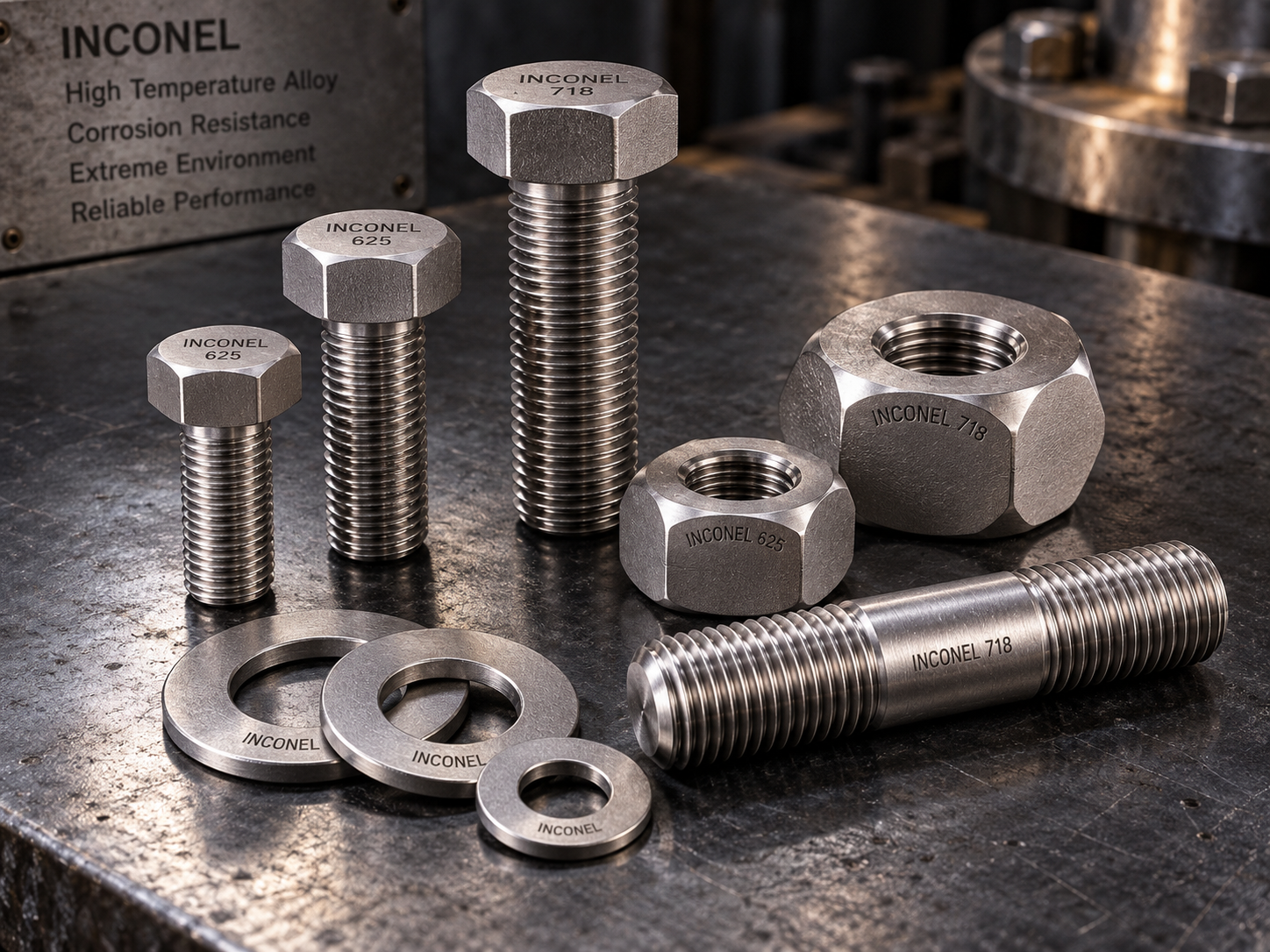
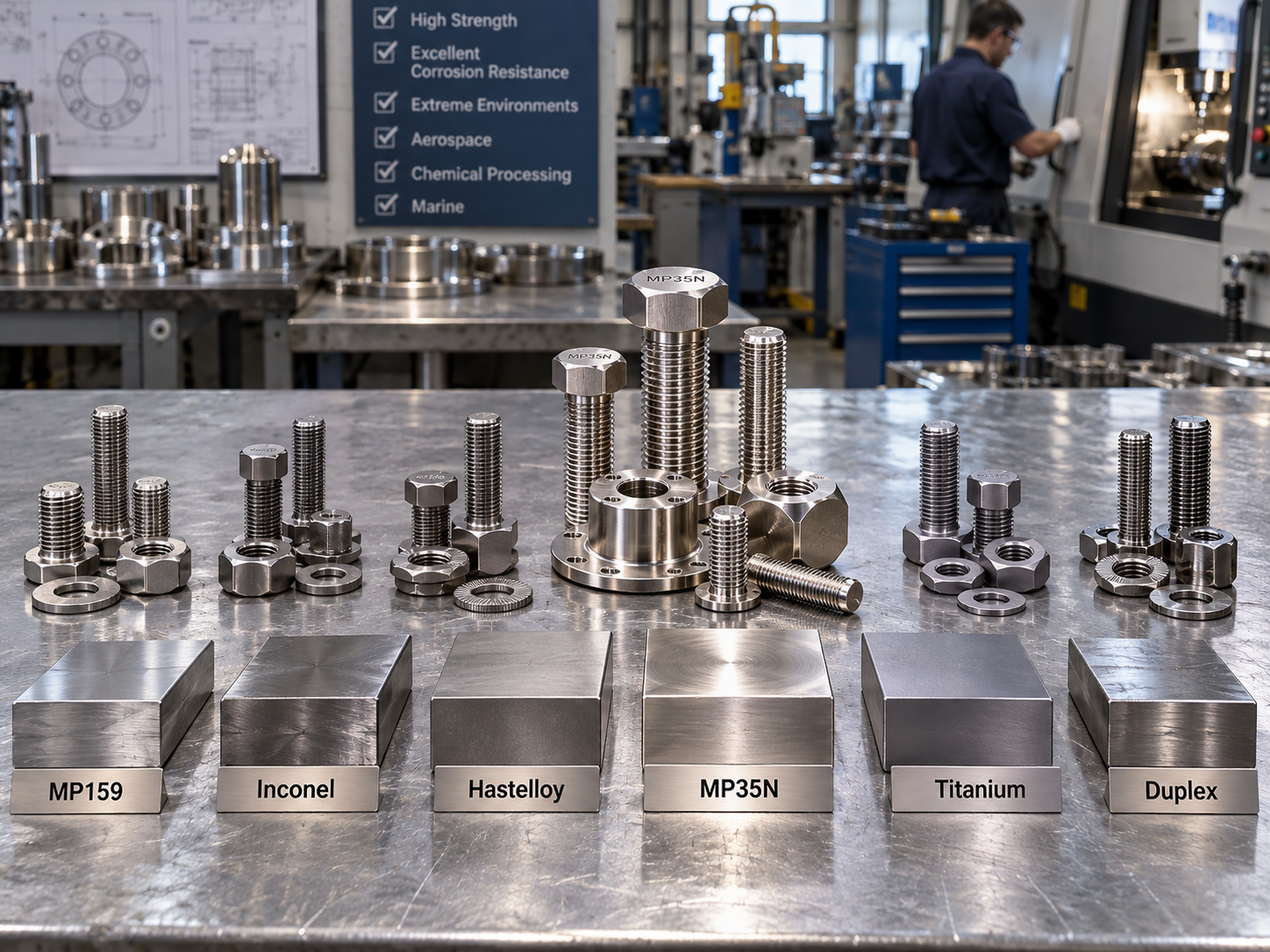
1. Understanding Inconel Bolts and the Impact of Thermal Cycling
Inconel bolt performance under thermal cycling often surprises even experienced engineers. Despite its reputation for strength and corrosion resistance, unexpected failures can occur when exposed to repeated temperature fluctuations. Understanding why these specialty fasteners behave unpredictably is crucial for maintaining system reliability in high-temperature environments. This article explores the metallurgical factors, stress mechanisms, and design considerations behind such failures, offering actionable insights from RAYCHIN LIMITED’s expertise in Specialty Metals Fasteners.
Inconel, a nickel-chromium-based superalloy, is widely used in metal processing equipment and aerospace, power generation, and chemical process industries. Known for its stable performance up to 1100°C and its corrosion resistance to extreme chemical environments, Inconel bolts are often considered the “go-to” choice for high-stress assemblies. However, service conditions involving cyclic temperature changes between 200°C and 800°C can trigger phenomena that undermine their expected durability.
Thermal cycling causes periodic expansion and contraction of not only the fastener material but also the assembly components. The mismatch in thermal expansion coefficients creates cyclic stresses. Over time, these stresses contribute to fatigue, creep, and oxidation-assisted cracking, shortening the bolt’s effective life by up to 40% compared to static condition predictions. RAYCHIN LIMITED has found through practical observations that such failures often occur after 500–1000 cycles, depending on load type and joint configuration.
To properly interpret failure trends, it is essential to delve into the metallurgical characteristics of Inconel alloys—particularly the role of gamma prime (γ') and gamma double prime (γ'') precipitates, grain boundary structure, and oxide film evolution. These microstructural factors dictate not only tensile strength but also the alloy’s recovery and recrystallization behavior under repeated heating and cooling. Improper stress relief treatment or bolt machining parameters can further amplify these vulnerabilities.
In this first part, we establish a working understanding of Inconel bolts in thermal environments as a foundation for the detailed examination of their failure mechanisms presented in later sections. Understanding these underlying principles enables engineers, procurement specialists, and maintenance managers to make informed decisions during design and material selection.
2. Metallurgical Factors Behind Inconel Bolt Degradation
The microstructure of Inconel bolts evolves significantly during repeated thermal cycling between low and high operating temperatures. When subjected to temperature ranges of 300°C–900°C, the strengthening phases responsible for its high-temperature performance undergo coarsening or partial dissolution. This section outlines the principal metallurgical processes that accelerate degradation.
At elevated temperatures above 800°C, γ' and γ'' precipitates start to coarsen after as little as 200–300 hours of exposure. This reduces hardness by 10–15% and tensile strength by nearly 8%. On cooling to sub-zero or ambient conditions, rapid contraction amplifies residual stress around precipitate interfaces. Repeatedly cycling these phases induces microvoids and dislocation pileups that evolve into fatigue cracks.
Another crucial metallurgical factor is carbide precipitation at grain boundaries. Secondary carbides such as M23C6 appear when holding between 600°C and 750°C for prolonged times, promoting grain boundary embrittlement. If the bolt is not solution-annealed or improperly aged, susceptibility to intergranular cracking increases by roughly 25% based on laboratory simulations performed on similar Ni-Cr alloys.
Moreover, oxidation films formed during cycling thicken progressively by about 0.5–1.0 µm per cycle group (around 50–100 cycles) under dry air. The outer Cr2O3 layer tends to spall off at interfaces due to thermal mismatch, exposing fresh material underneath. This cycle of oxide fracture and reoxidation causes surface roughness increases up to Ra 2.5 µm, accelerating stress initiation sites under tensile load.
The synergy between microstructural degradation and environmental oxidation explains why Inconel bolts can unexpectedly fail earlier than traditional calculations predict. A well-controlled heat treatment and surface coating regimen can improve cyclic life by 1.5–2 times when precisely tailored to the bolt’s specific thermal history.
Typical Microstructural Effects During Thermal Cycling
The table below summarizes the common metallurgical transformations affecting Inconel bolts through prolonged thermal cycling in high-temperature metal processing equipment.
Understanding the precise correlation between operating temperature and microstructural transformations allows engineers to predict maintenance intervals and implement preventive actions. For instance, bolts exposed to sustained 700°C operations should undergo nondestructive inspection every 500 cycles instead of the usual 1000-cycle inspection used for lower-temperature applications.
3. Mechanical Stress Factors and Failure Mechanisms
Beyond metallurgical aging, mechanical loading plays a dominant role in Inconel bolt failure. Thermal cycling generates alternating tensile and compressive stresses that, combined with preload torque and vibration, create complex multiaxial stress fields within the threads and shank area.
Finite element simulations show that for a standard M12 Inconel 718 bolt subjected to temperature swings between 200°C and 800°C, thermal stress amplitude can reach 350–420 MPa at critical thread roots. When combined with preload torque of 70–90 N·m, the von Mises stress surpasses the fatigue threshold of approximately 450 MPa after 800 cycles, leading to initiation of micro cracks in 9–12% of the bolt surface observed during periodic inspection in metal processing furnace assemblies.
Axial strain mismatch between the bolt and mating components also contributes to joint relaxation. For flanged assemblies with Inconel bolts and stainless-steel fastened parts, the differential thermal expansion rate (13.0×10⁻⁶ vs. 17.3×10⁻⁶ per °C) can induce cyclic shear stresses up to 80 MPa. Over 1000 cycles, this alternating load produces measurable elongation of 0.08–0.12 mm for bolts 100 mm long—enough to degrade clamping force by nearly 18% without visible damage.
Creep deformation is another damaging mechanism, particularly for components that sustain high torque during long high-temperature dwell periods. At 700°C, Inconel 625 exhibits a creep rate around 1×10⁻⁶ s⁻¹ at 400 MPa stress, increasing the risk of progressive preload loss. Creep-fatigue interaction is the primary factor explaining why some Inconel fasteners fail after only 1,500 cycles despite theoretical design lives exceeding 2000 cycles.
Thus, accurate stress estimation under real service profiles, combined with proper torque control and periodic retightening, can reduce premature failures by as much as 30%. Incorporating friction coefficient variation (usually 0.12–0.18 for coated bolts) into torque-tension correlation calibration is essential to ensure consistency between theoretical and actual preload levels.
4. Design and Material Selection Considerations
When designing bolted joints for high-temperature and cyclic environments, the selection of alloy grade, thread geometry, and surface treatment must consider both short-term strength and long-term stability. RAYCHIN LIMITED recommends that design engineers analyze at least four parameters: alloy composition, bolt size ratio, protective coating, and preload control method. Each factor affects the bolt’s ability to maintain integrity after thousands of temperature cycles.
Inconel 718 remains a popular choice because it provides an excellent balance between tensile strength (up to 1250 MPa) and thermal stability. However, for continuous operation beyond 800°C or in aggressive oxidative atmospheres, Inconel 625 or 601 with enhanced nickel-chromium-molybdenum composition may provide a 20–25% longer service life. Choosing the correct variant based on the operating temperature range is more cost-efficient than overspecifying the fastener strength grade. This is particularly relevant for equipment such as heat treatment furnaces and extrusion presses operating 20–24 hours daily.
In addition, RAYCHIN’s design studies show that surface treatments like shot peening and ceramic coatings can extend fatigue life by 1.8× when compared to untreated bolts. Coating thickness around 25–50 µm with thermal barrier paints can reduce oxidation growth rate by 40%. Helicoil reinforcement in tapped holes, and round thread root profiles with radius ≥0.15 mm, further slow fatigue initiation.
Another crucial parameter is threading tolerance. Overly tight fits increase assembly friction and localized heating during torqueing, resulting in microstructural distortion. Using lubricants with consistent viscosity (index 90–120) mitigates these variations. Finally, preloading control within ±5% accuracy is recommended for bolts used in temperature cycling beyond 600°C. Digital torque monitoring systems now allow such control in industrial environments.
Comparative Evaluation of Inconel Bolt Options
The selection chart below demonstrates how different Inconel alloys and protective finishes perform under cyclic temperature loading:
By choosing the optimal alloy and surface treatment combination, designers can extend maintenance intervals from 12 months to 18–20 months without compromising safety. RAYCHIN engineers typically conduct a 3-step material suitability check covering thermal profile compatibility, corrosion risk assessment, and fatigue simulation validation before recommending final bolt specifications.
5. Inspection, Maintenance, and Quality Assurance Strategies
In-service monitoring and timely maintenance are vital for preventing catastrophic failure of Inconel bolts under thermal cycling. Regular inspections based on operational hours, temperature fluctuation rates, and mechanical load frequency are needed to correlate failure models with real usage data. For metal processing facilities, inspection intervals typically range between 6–12 months or 500–1500 thermal cycles depending on process intensity.
RAYCHIN LIMITED recommends a multi-step inspection strategy combining visual checks, dimensional verification, and nondestructive testing (NDT). Dye penetrant or eddy current scanning detects early fatigue cracks as small as 0.1 mm. Dimensional checks should keep thread pitch deviation within ±0.02 mm of nominal to confirm that plastic deformation has not occurred due to creep. Bolts exceeding torque retention loss of 10% or showing oxide scaling deeper than 3 µm should be replaced promptly.
Proper documentation of service cycles is also crucial in predictive maintenance models. Digital torque monitoring combined with cycle counting allows engineers to map cumulative stress history. With this data, facilities can adopt “Replace by Cycle Count” methods—commonly around 1500–2000 cycles for Inconel 718 and 2500–3000 for Inconel 625. Implementing this approach reduces unplanned downtime by 15–20% while optimizing inventory usage.
In terms of quality assurance, bolt production must meet consistent specifications, including controlled forging temperature (980–1020°C range), uniform aging time (8–10 hours), and homogeneous grain size distribution (ASTM 5–7). RAYCHIN’s manufacturing process control ensures less than ±3% variation in hardness along bolt shanks, significantly improving predictable service life under cyclic loading conditions.
Recommended Maintenance Intervals and Parameters
The table below summarizes a recommended maintenance matrix appropriate for Inconel bolts used in thermal cycling environments common to the metal processing industry.
Following these interval-based procedures results in documented reliability improvement for metal processing facilities. Case studies show downtime reduction equivalents of 18–25% in high-temperature furnace operations after adopting such predictive schedules supported by RAYCHIN technical recommendations.
6. Practical Procurement Insights and Implementation Guide
To successfully integrate Inconel fasteners into thermal cycling systems, procurement and project teams must align design, material certification, logistics, and documentation processes. In B2B environments, transparency across the supply chain ensures compliance with standards like ASTM B637 and ASME SB-446, which specify the mechanical and chemical properties for nickel-based superalloy fasteners.
RAYCHIN LIMITED provides a five-step process supporting global clients in selecting and implementing specialty fasteners with optimal performance-cost balance:
- Project Environment Analysis: Define temperature range, cycle count expectation, and chemical exposure parameters.
- Alloy and Coating Recommendation: Match alloy types (e.g., Inconel 625 vs. 718) based on mechanical need and lifecycle targets.
- Prototype Testing: Conduct mechanical and oxidation fatigue testing for up to 2000 cycles before bulk production.
- Production and Certification: Ensure traceable HR, grain structure, and chemical composition reports verified by third-party labs.
- Ongoing Technical Support: Provide expert evaluation every 6–12 months or after reaching 70% of nominal cycle life.
Procurement professionals should also evaluate suppliers not only by price but by their capability to maintain heat treatment consistency and documentation integrity. Firms offering ISO 9001 and AS9100 certified facilities typically achieve ±2% cycle life predictability compared with baseline laboratory results, ensuring confidence during equipment commissioning.
When installing new fasteners, operators need to ensure that assembly torque tools are calibrated within 1% accuracy. RAYCHIN specialists emphasize preheating of assemblies to around 200°C before final tightening when used for extremely high-cycle thermal applications, as this minimizes post-installation relaxation. With these measures, operational reliability and bolt life expectancy can be extended by approximately 25–30% relative to baseline applications.
7. Conclusion and Next Steps
Inconel bolts remain vital components in high-temperature machinery and metal processing equipment where durability and corrosion resistance are non-negotiable. Yet, as this analysis demonstrates, failures under thermal cycling stem from a complex interplay of metallurgical transformation, stress concentration, oxidation, and preload management issues. By addressing these factors through precise design, proper material selection, and systematic maintenance planning, engineers and procurement teams can drastically enhance bolt longevity and plant safety.
RAYCHIN LIMITED’s ongoing innovation in Specialty Metals Fasteners and its commitment to customized engineering solutions offer clients measurable improvements in reliability and performance predictability. Whether your application involves continuous thermal cycling above 600°C, frequent temperature oscillations, or severe oxidation exposure, RAYCHIN's professional experts support each stage—from design validation to operational troubleshooting.
To minimize unplanned downtime and enhance safety margins, consult RAYCHIN LIMITED today for a tailored materials recommendation or engineering consultation. Our specialists can guide your team in optimizing fastener configurations designed for endurance, precision, and value in complex thermal environments.
Contact us to explore advanced Inconel bolt solutions that ensure your equipment performs consistently cycle after cycle, enabling higher efficiency and total assurance in every operation.
Request A Quote! We'll respond as soon as possible(within 12 hours)
Get a Quote