
Categories List
Recent Posts
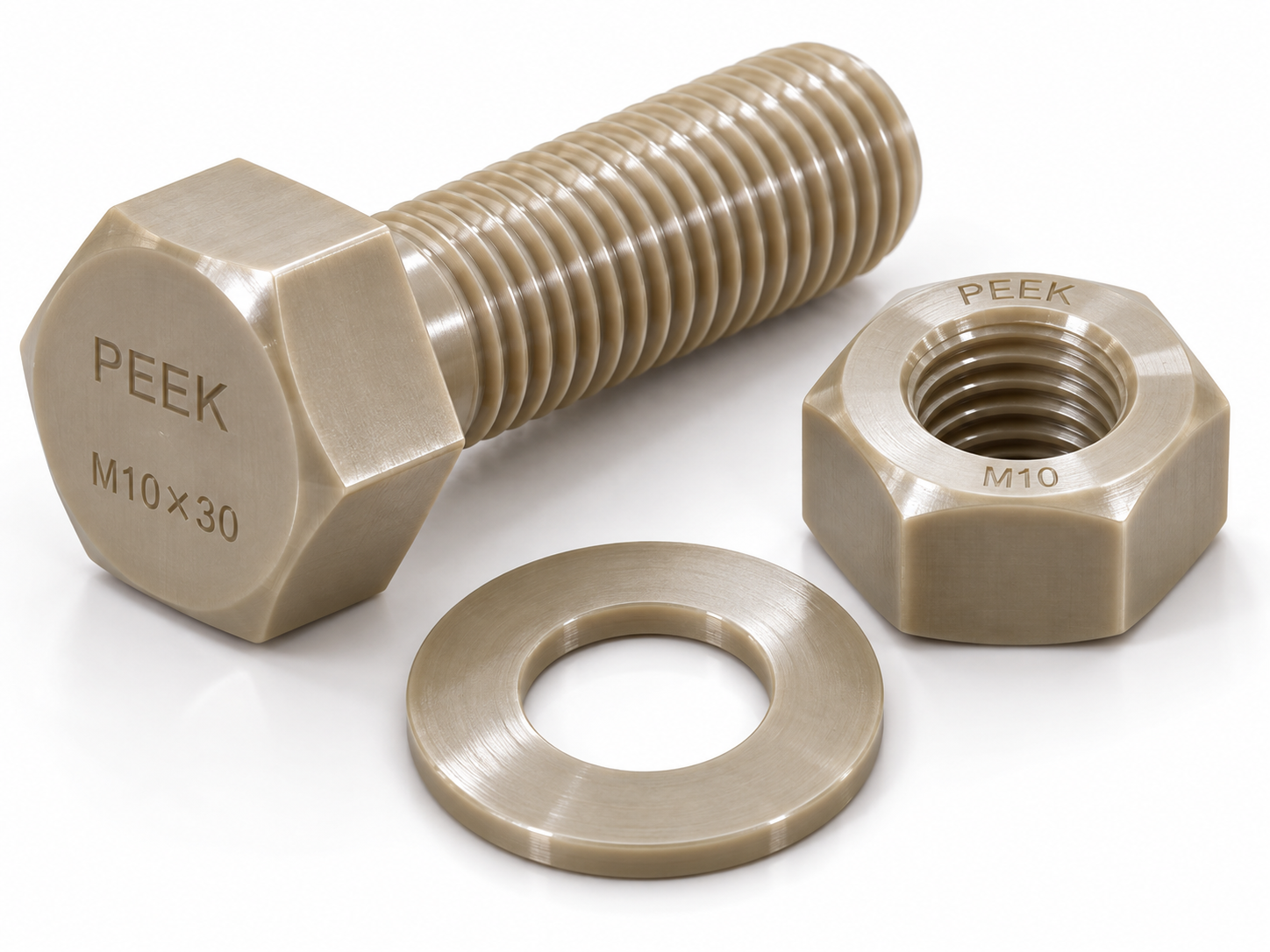
 PEEK Fasteners | Polyetheretherketone Bolts, Nuts, Screws – High-Performance Polymer | RAYCHIN LIMITED
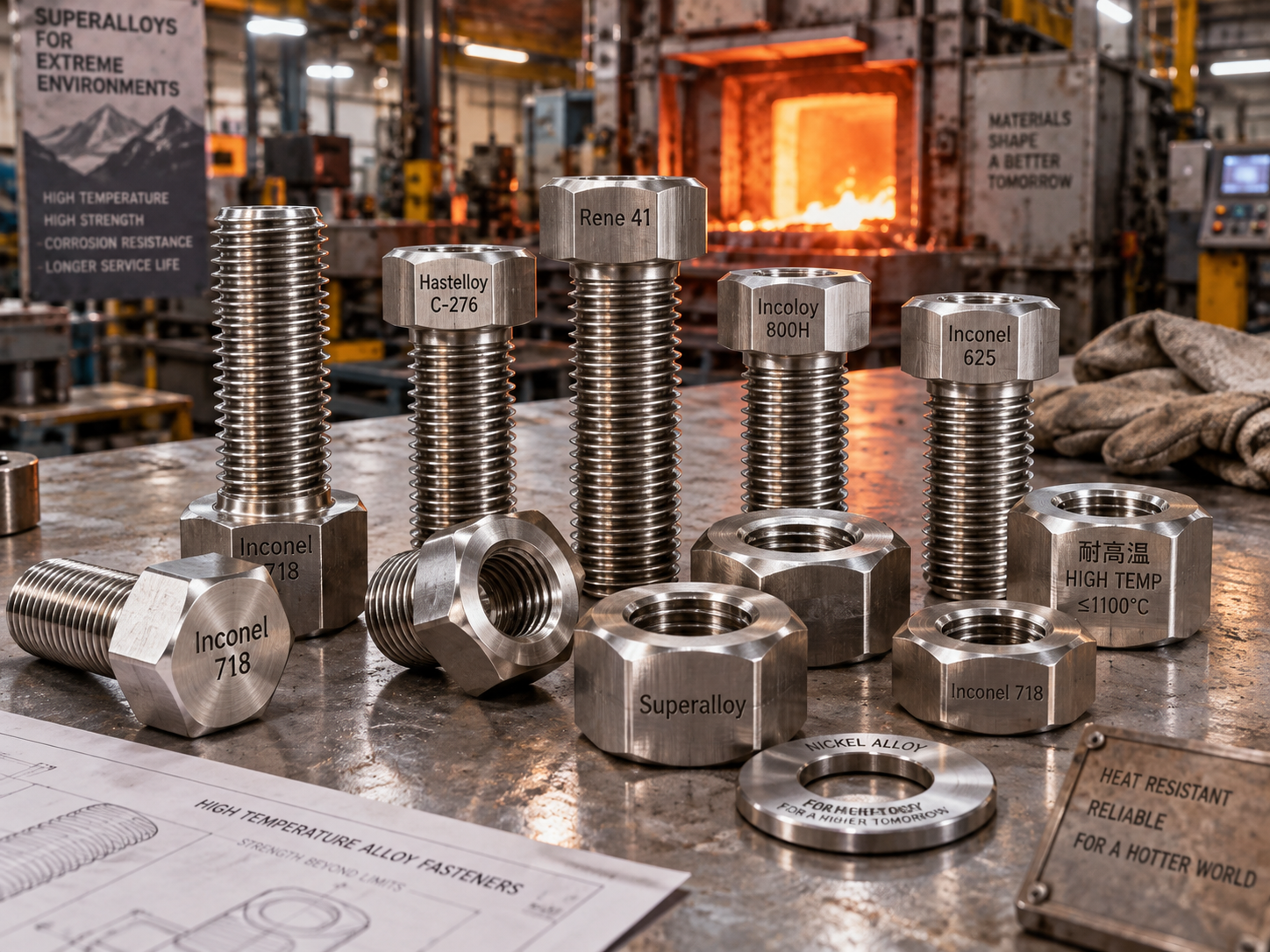
 High-Temperature Alloy Fasteners: Complete Material Guide, Chemistry, Performance Comparison | RAYCHIN LIMITED
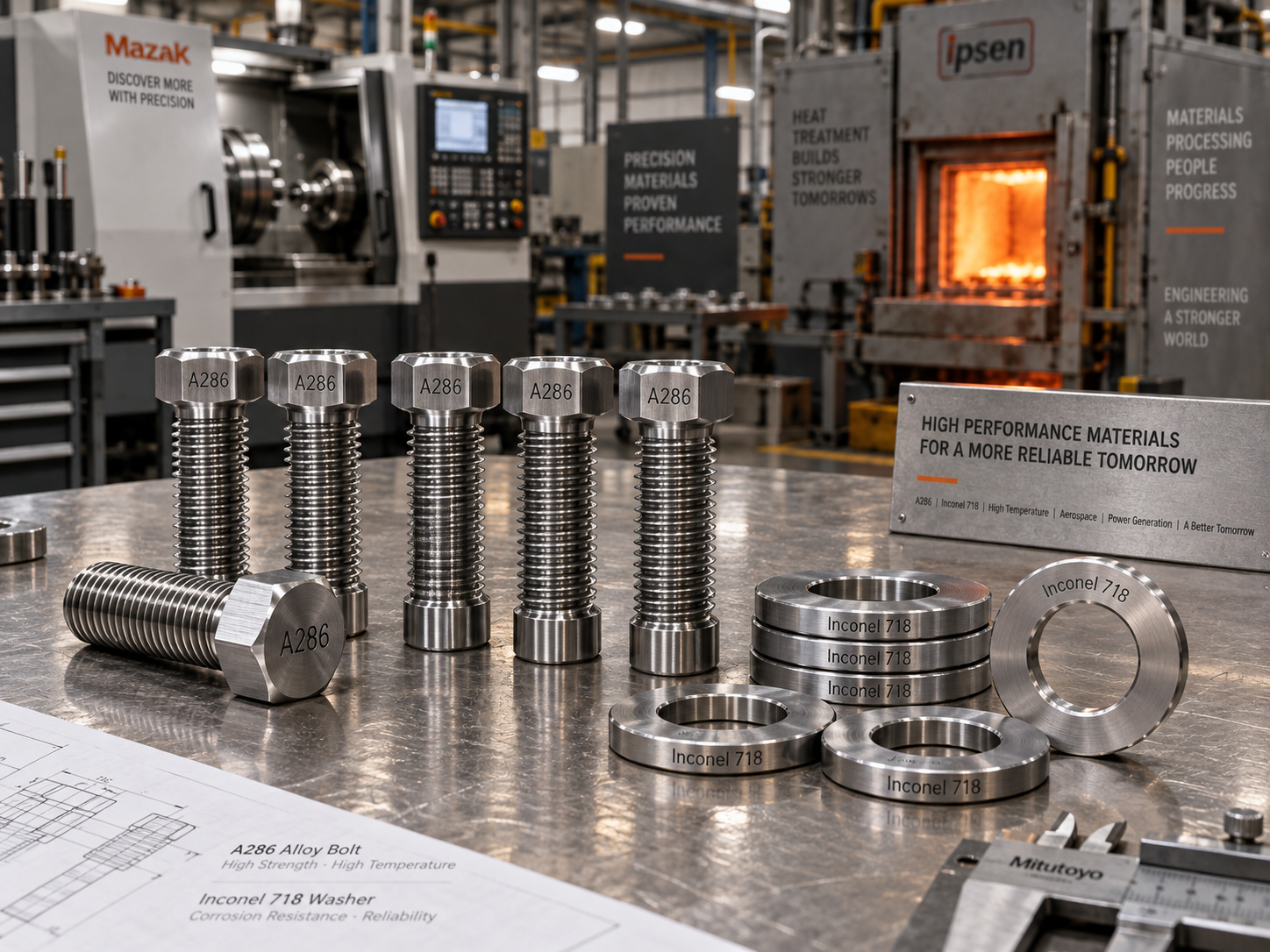
 High-Temperature Fastener Material Selection Guide | A286, Inconel 718, Nimonic 80A, Waspaloy – RAYCHIN LIMITED
Understanding Inconel Fasteners in Aerospace Structures
As aerospace projects push performance limits, the demand for extreme durability and precision in every component becomes critical. Recent advancements have highlighted how each Inconel bolt plays a decisive role in ensuring structural reliability under severe conditions. This article explores what new aerospace developments reveal about Inconel bolt reliability, offering valuable insights for engineers, project managers, procurement professionals, and decision-makers seeking dependable fastening solutions in high-stress environments.
Inconel alloys, primarily based on nickel-chromium compositions, represent a cornerstone in aerospace fastening systems due to their superior strength and oxidation resistance up to 980°C. The recent acceleration of projects in reusable launch systems, hypersonic platforms, and turbine-integrated propulsion has emphasized the indispensable contribution of Inconel fasteners in structural integrity. During static and fatigue testing across 10,000–20,000 cycles, Inconel bolts consistently maintain tensile retention above 90% of their rated yield strength.
RAYCHIN LIMITED has built its expertise around specialty metals fasteners, including Inconel 625, 718, and 925 grades. Each alloy grade exhibits unique mechanical behaviors under stress gradients, enabling tight torque tolerances (±0.5%) and stable preload retention across temperature ranges of −200°C to +700°C, which are routine in aerospace assembly. The firm’s integration of material science and precision machining supports aerospace clients aiming to minimize mechanical risk while optimizing assembly productivity.
The aerospace industry’s shift toward “lighter yet stronger” structural philosophies has generated increasing demand for bolts with a high strength-to-weight ratio. Compared to titanium fasteners, Inconel maintains superior creep resistance at high loads and offers a longer fatigue life, averaging 25–40% better under simulated cyclic load environments. For manufacturers, this means a sustained operational margin that directly affects maintenance cost intervals—often reduced from 5,000 to 3,000 flight hours per inspection sequence.
Material Properties That Define Inconel Bolt Reliability
The metallurgical architecture of Inconel bolts determines their long-term reliability in aerospace applications. Inconel’s crystal structure retains toughness even under extreme mechanical loading, where equivalent stainless-steel bolts may experience microcracking above 600°C. The addition of molybdenum (8–10%) and niobium (5.1%) enhances phase stability and yields exceptional creep rupture strength—a key factor for components exposed to 20,000+ temperature cycles per mission.
Metallurgical tests indicate that Inconel 718 bolts exhibit a yield strength exceeding 1,030 MPa at 25°C and approximately 850 MPa at 650°C, maintaining structural reliability over an extended operational life. Moreover, oxidation rates of less than 0.1 mg/cm² after 100 hours at high-temperature exposure demonstrate superior stability against chemical corrosion, making these bolts ideal for engine mounts, combustion chambers, and high-temperature actuator assemblies.
The micro-segregation control applied during vacuum induction melting and vacuum arc remelting (VIM-VAR) improves elemental uniformity, minimizing microporosity levels below 0.05%. This manufacturing precision ensures consistency in tensile load distribution, reducing risk factors in aerospace drive structures and satellite docking frameworks. RAYCHIN LIMITED continuously develops such refining approaches to synchronize metallurgical quality with international aerospace material standards such as AMS 5663 and ASTM B637.
Procurement specialists evaluating Inconel fasteners must consider three critical data points: yield-to-weight ratio, fatigue tolerance under torque cycles (>10⁵), and corrosion potential under mixed chemical exposure. The combination of these properties defines long-term bolt reliability across multi-modal load transfer environments typical of launcher and aircraft assembly lines.
Analyzing the data illustrates how Inconel 718’s superior yield strength and controlled thermal limit provide a reliable balance for structural fastening in turbine engine environments. Engineers leverage these parameters during finite element modeling (FEM) simulations to calculate preload stability and safety margins exceeding 1.8 on aerospace fastening joints.
Manufacturing Precision and Quality Assurance Procedures
In aerospace fastener production, the degree of dimensional precision directly determines bolt reliability. RAYCHIN LIMITED deploys multi-axis CNC machining with thread tolerance controlled within ±0.02 mm and concentricity below 0.01 mm across shaft diameters. These values satisfy the typical AS9100 and ISO 9001:2015 quality standards required for aerospace components entering critical load-bearing applications.
Each batch of Inconel bolts undergoes a 5-stage inspection protocol involving ultrasonic non-destructive testing (NDT), microhardness scanning, tensile verification, torque coefficient testing, and surface roughness inspection. The torque coefficient (K-factor) must remain between 0.14 and 0.18, ensuring consistent preload across thousands of assembly points. The repeatability test ratio R=σ/μ is maintained below 0.03, confirming minimal variability between parts.
Thermal treatment processes such as solution annealing at 980°C followed by double aging sequences (720°C × 8 h + 620°C × 8 h) stabilize the γ'' precipitates, the primary strengthening phase in Inconel 718. This procedural adherence results in a performance gain of up to 12–15% in fatigue cycles before crack initiation. Surface integrity management, employing passivation and controlled shot peening techniques (intensity 0.006–0.008 A), further enhances residual stress balance and corrosion resistance.
RAYCHIN’s manufacturing infrastructure integrates both quantitative controls and material traceability, guaranteeing full lot history transparency. This enables aerospace clients to align components with mission-critical documentation under SAE and NADCAP approval systems, reducing project lead times by 15–20% while maintaining zero deviation in mechanical conformity.
By systematically validating each step, RAYCHIN ensures that every Inconel bolt reaches repeatable mechanical homogeneity, assuring that bolt yield strain deviation remains below 1%. This consistency eliminates unplanned rework cycles and reduces assembly torque revalidation frequency by approximately 25% across production runs.
Operational Insights from Recent Aerospace Projects
Recent aerospace programs—ranging from reusable rockets to electric propulsion aircraft—illustrate the evolving challenges surrounding fastener reliability. NASA-type mission timelines involve launch loads exceeding 10g acceleration peaks, requiring fasteners to preserve preload over vibration spectra spanning 20–2,000 Hz. Inconel bolts, due to their low creep under sustained stress, outperform alternative alloys in preventing joint loosening and leak path formation.
In turbine housings, Inconel 718 fasteners have demonstrated less than 3% elongation drift after continuous operation for 10,000 service hours at 650°C. Similarly, in cryogenic tank assemblies utilizing Inconel 625 bolts, failure probability modeling (Weibull distribution) yields a β parameter above 2.5, reinforcing consistent time-to-failure intervals that correlate strongly with calculated design expectations.
From an engineering management standpoint, adopting Inconel fasteners enables reduced maintenance scheduling and higher reliability index per flight cycle. Project managers have observed mean time between overhauls (MTBO) improvements of 18–22% compared to conventional high-strength steel bolts. On a system level, this optimization directly supports mission-readiness ratios above 0.98, critical for military and commercial launch operations.
Procurement departments focusing on supply chain resilience should note that advanced Inconel fasteners often feature longer lead times, typically ranging from 2 to 4 weeks depending on grade and finish. RAYCHIN LIMITED addresses this by maintaining global stock rotation and providing flexible MOQs (minimum order quantities) as low as 20–50 units for urgent aerospace replacement batches while ensuring full traceability documentation.
Procurement and Selection Criteria for Aerospace Fasteners
Choosing the correct Inconel fastener requires balancing performance metrics against lifecycle cost and logistics considerations. Procurement professionals typically evaluate five core criteria: mechanical grade, thread interface design, surface treatment compliance, certification availability, and supplier capability maturity. Aligning these dimensions minimizes assembly risk and ensures regulatory compliance under aerospace part approval documentation (PPAP).
RAYCHIN LIMITED supports clients through technical consultations mapping torque load data, temperature exposure profiles, and design envelope dimensions. Typical specification tolerances within aerospace bolts include tensile strength classification per NASM 1312 standards (Class A–F) and proof load requirements exceeding 75% of yield ratings. Verifying these ensures that fasteners not only meet but maintain projected fatigue safety margins through service life requirements over 20 years.
Supplier reliability also defines long-term success. Aerospace manufacturers seek to reduce variation across distributed suppliers by employing auditing frameworks that score vendors based on dimensional compliance (>98%), material traceability completeness (100%), and delivery timeliness (≥95%). Effective suppliers like RAYCHIN combine metallurgical expertise, small-batch configurability, and international distribution networks that sustain consistent availability for critical-path projects.
When evaluating options, enterprises should prioritize full documentation transparency including Mill Test Reports (MTRs), Certificates of Conformance (CoC), and Non-Conformance Reports (NCR)—mandatory for regulatory inspection. Purchasing departments operating in aerospace procurement cycles averaging 60–120 days benefit from early alignment on specification sheets to avoid program delays related to requalification testing.
Common Procurement Decision Factors
- Material grade and mechanical characterization (e.g., Inconel 625 vs. 718)
- Thread geometry and torque specifications under NAS/AS standards
- Surface treatment: passivation, dry film lubrication, or plating
- Certification status and full traceability records
- Supplier capability in precision manufacturing and delivery time
These five selection pillars define procurement efficiency and operational reliability outcomes across global aerospace assembly programs. Applying structured evaluation tools can reduce rework frequencies by up to 30% and extend component service intervals by an average of 4–5 maintenance cycles.
Maintenance, Risk Management, and Lifecycle Optimization
While Inconel bolts deliver superior baseline stability, effective maintenance planning remains crucial. Aerospace quality control teams routinely apply torque revalidation intervals of every 1,500 flight hours, combined with corrosion inspection frequencies aligned to maintenance levels A, B, and C. Recent data reveals that tightening protocols adhering to ±5% torque deviation reduce premature fastener fatigue incidents by nearly 17%.
Visual and ultrasonic inspection cycles help detect subsurface crack initiation long before functional failure. The probability of detection (POD) for ultrasonic scanning in fastener inspection typically reaches 0.90 at a 0.5-mm flaw size threshold. Integrating nondestructive evaluation (NDE) ensures that structural reliability remains statistically predictable, safeguarding mission readiness without unnecessary downtime.
Maintenance procedures should also address environmental exposure. Bolts in marine or cryogenic zones should undergo periodic passivation and verifications for residual chloride contamination levels under 200 ppm. Using controlled torque wrenches with calibration verification every 6 months sustains preload stability, reducing potential galling or thread friction deviations.
Lifecycle optimization strategies promoted by RAYCHIN incorporate predictive modeling that links fastener composition variables to maintenance cost curves. Clients have reported ROI improvements of 10–15% through the adoption of tailored Inconel fasteners engineered for mission-specific stress maps. This optimization directly supports sustainability goals by decreasing component waste rates and minimizing raw material consumption across production cycles.
Conclusion and Next Steps
The evolution of aerospace engineering continues to expand the operational frontiers for high-performance materials. Inconel bolts remain a fundamental element enabling reliability under severe environmental and mechanical stresses. Their proven resistance to creep, oxidation, and fatigue has positioned them as indispensable components in propulsion systems, fuselage structures, and thermal interface assemblies.
For industry professionals—from design engineers to logistics coordinators—the insights derived from recent aerospace projects highlight a consistent truth: robust materials science, precise manufacturing, and structured quality control together form the foundation of fastener reliability. Organizations like RAYCHIN LIMITED, by focusing on specialty metal fasteners and continuous technical innovation, deliver the assurance necessary for every high-risk mission.
Enterprises seeking improved lifecycle stability, traceability, and performance uniformity across their fastening systems are encouraged to collaborate with specialized partners who not only supply products but also provide applied engineering guidance. Contact RAYCHIN LIMITED to explore custom Inconel fastener solutions, receive expert material recommendations, and discover how our global support network can strengthen your next aerospace project.
Request A Quote! We'll respond as soon as possible(within 12 hours)
Get a Quote