
Categories List
Recent Posts
 Hastelloy C276 Fasteners: Bolts, Nuts, Screws, Studs & Washers for the World's Most Aggressive Corrosive Environments
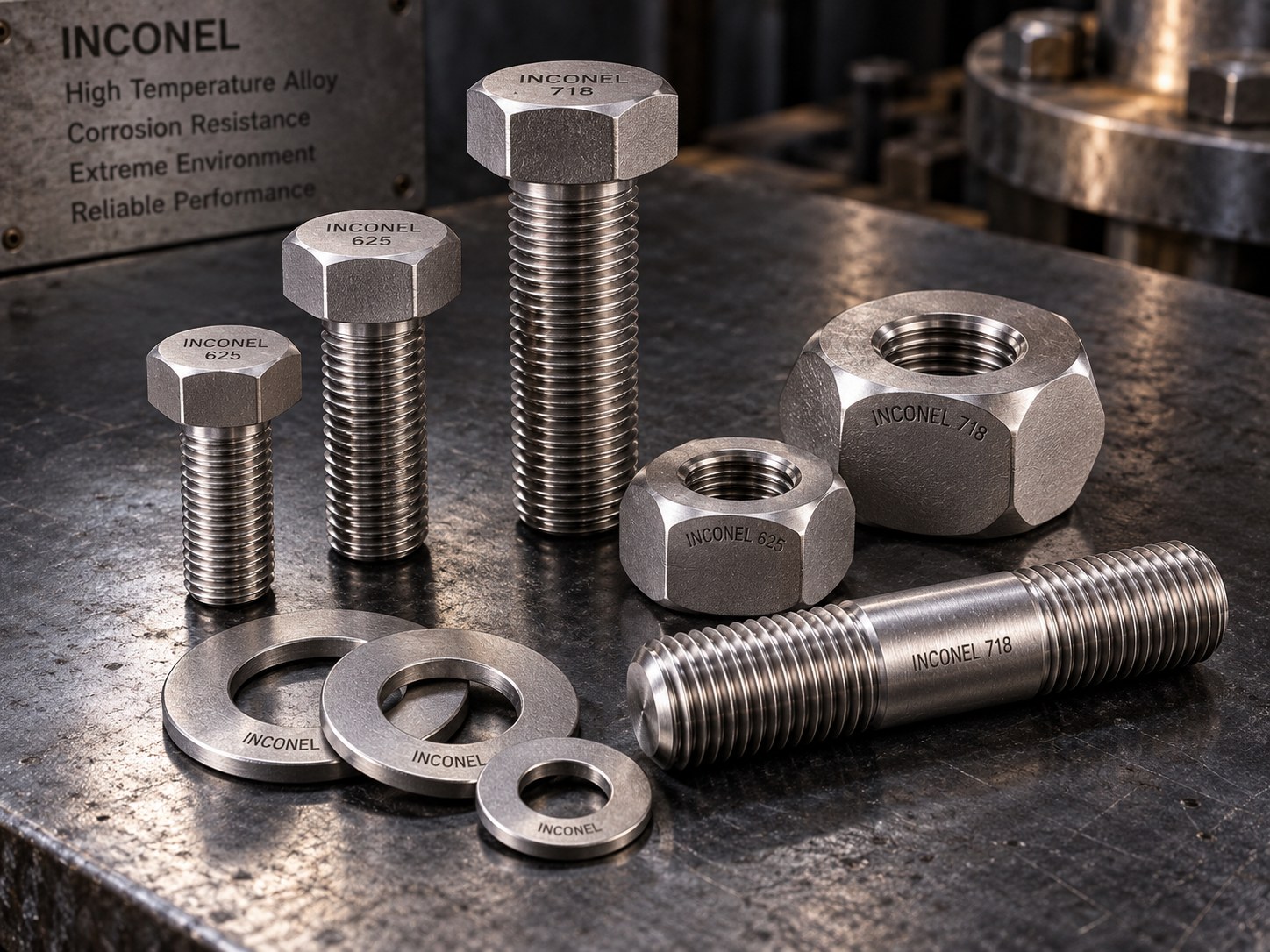
 Inconel Fasteners: Bolts, Nuts, Washers, Studs – Complete Technical Guide | RAYCHIN LIMITED
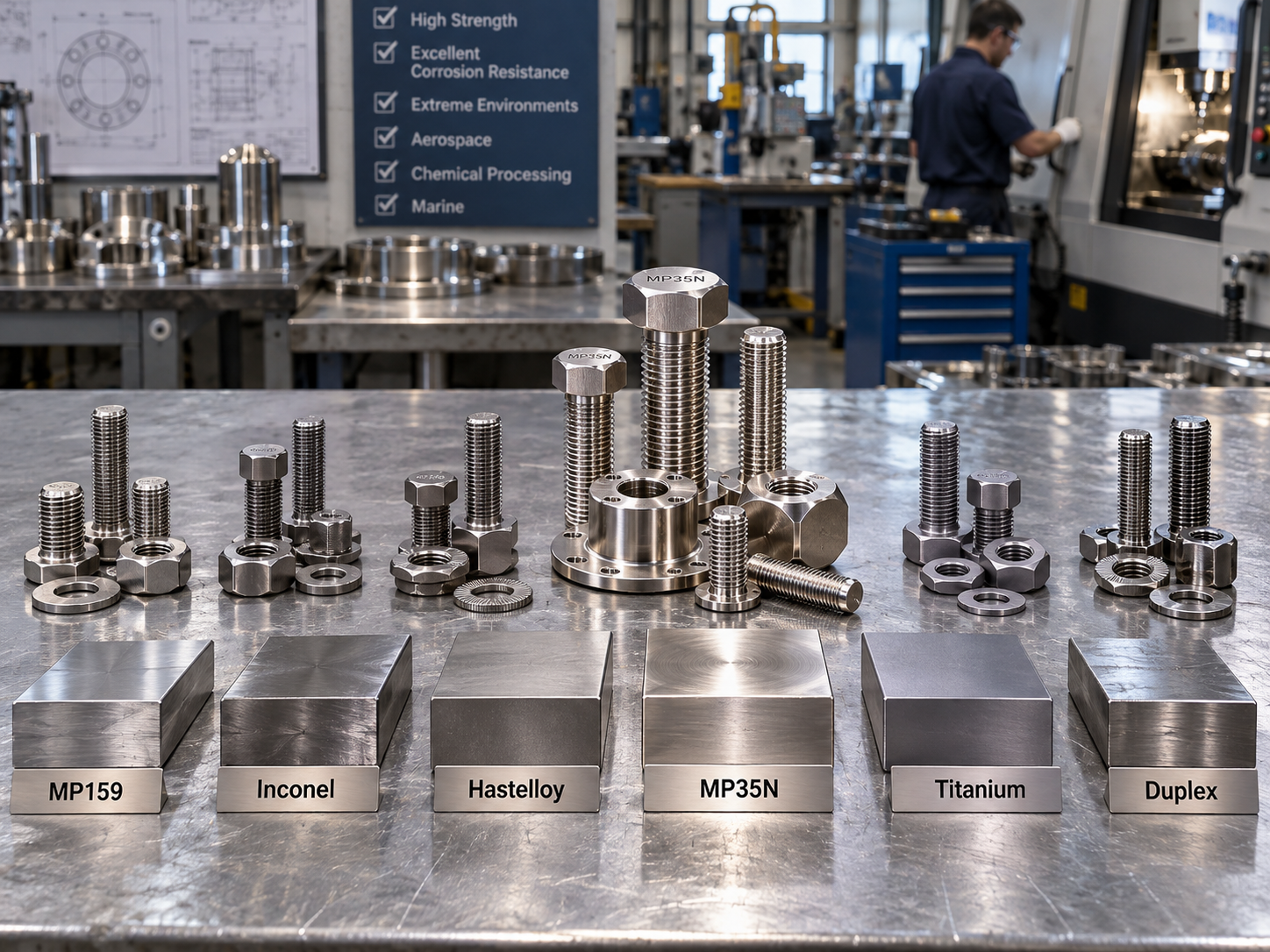
 MP35N vs Inconel, Titanium, C276, Complete Material Comparison Guide for Fasteners | RAYCHIN LIMITED
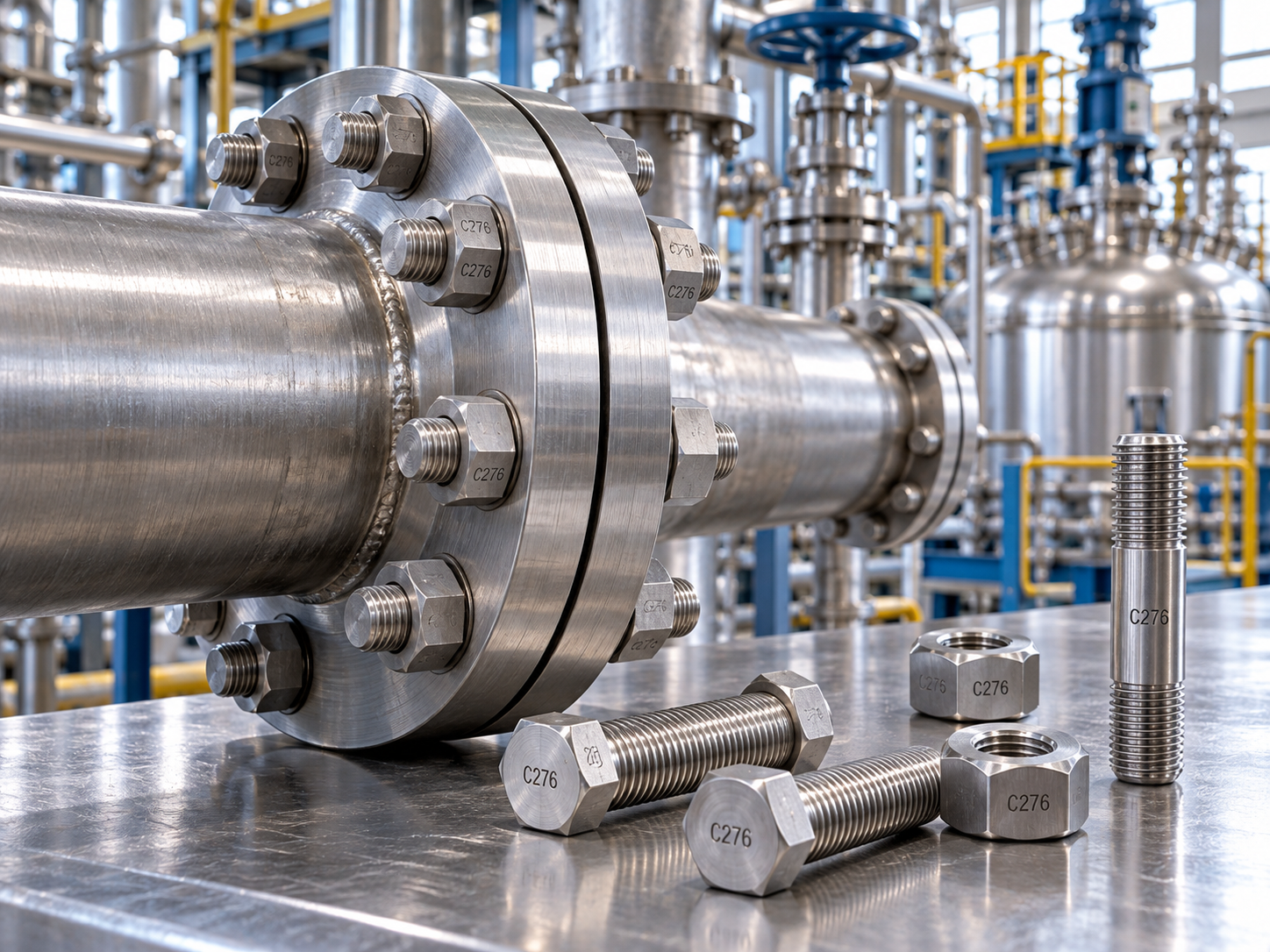
Hastelloy C276 Fasteners: Complete Technical Guide – Mechanical Properties, Torque, Galling & Machining
As a premier global manufacturer of special alloy fasteners, RAYCHIN LIMITED presents this exhaustive technical reference for engineers specifying Hastelloy C276 bolts, studs, and nuts. This guide consolidates our decades of manufacturing experience and answers the most critical questions about tensile strength, torque values, galling prevention, machining challenges, heat treatment, hardness limits, cryogenic behavior, and maximum service temperature. Bookmark this resource for your next project involving corrosive chemical environments.
1. Hastelloy C276 Mechanical Properties: Tensile & Yield Strength
Hastelloy C276 (UNS N10276) is a solid-solution strengthened nickel-chromium-molybdenum-tungsten alloy. Its mechanical properties in the annealed condition are defined by ASTM B574. Typical room temperature values for bars used in fastener manufacturing are:
It is essential to note that Hastelloy C276 cannot be strengthened by heat treatment. It relies entirely on solid-solution hardening. Cold working increases strength but must be carefully controlled to avoid excessive hardness that could impair corrosion resistance or ductility. RAYCHIN typically supplies fasteners in the solution-annealed condition unless cold-drawn studs are explicitly requested.
2. Maximum Temperature Use & Cryogenic Properties
Hastelloy C276 maximum temperature use: In oxidizing atmospheres, continuous service up to 1000°C (1832°F) is possible, but for fastener applications under load, the practical upper limit for maintaining reasonable strength is around 600°C (1112°F). Above this temperature, stress rupture and oxidation scaling accelerate. For applications above 700°C, Hastelloy X or Inconel 718 are often more appropriate.
Cryogenic properties: Hastelloy C276 retains excellent toughness and ductility down to -196°C (-320°F) and even lower. There is no ductile-to-brittle transition, making it a reliable choice for LNG, liquid oxygen, and deep cryogenic chemical processes. Charpy V-notch impact values at -196°C typically exceed 60 J (44 ft-lbf). RAYCHIN has supplied C276 fasteners for multiple cryogenic pump and valve assemblies.
3. Solution Annealing Heat Treatment & Hardness Limits
Hastelloy bolt heat treatment solution annealing is critical to restore corrosion resistance after hot forming and to achieve uniform mechanical properties. The recommended procedure:
- Heat to 1120–1160°C (2050–2120°F) and hold for an appropriate time based on section thickness.
- Rapid water quench or forced‑air cool to prevent precipitation of carbides or intermetallic phases.
Incorrect annealing can leave the fastener susceptible to intergranular corrosion. At RAYCHIN, every batch undergoes solution annealing in calibrated furnaces with continuous temperature recording. After heat treatment, hardness limits are verified: the typical maximum is 100 HRB (or 248 HBW). For NACE MR0175 / ISO 15156 sour service, hardness is further restricted to ≤ 35 HRC when required by the specification, although C276 naturally falls well below this threshold.
4. Hastelloy Fastener Torque Values & Tightening Chart
Proper bolt preload ensures leak‑tight joints. Hastelloy C276, like other nickel alloys, exhibits a higher friction coefficient than carbon steel. Lubrication drastically changes torque requirements. The torque-tension relationship follows: T = K × D × P, where K is the nut factor, D is nominal diameter, and P is desired preload. Typical K-factors:
- 0.12 – 0.16 for well-lubricated threads with anti‑seize compound (e.g., nickel‑based)
- 0.20 – 0.30 for dry or lightly oiled threads
Below is a Hastelloy bolt tightening torque chart based on 50% of yield strength (assumed 283 MPa yield) with a lubricated K=0.15. These are guideline values only; always verify with joint analysis.
RAYCHIN recommendation: Always use a calibrated torque wrench and nickel‑compatible anti‑seize. We can supply detailed torque tables specific to your bolt geometry and coating upon request.
5. Galling Resistance & How to Prevent Galling in Hastelloy Bolts
Galling is a severe adhesive wear phenomenon common to austenitic nickel alloys. When two clean Hastelloy surfaces slide under pressure, microscopic junctions form and tear, leading to seizure and thread damage. How to prevent galling in Hastelloy bolts is a cornerstone of RAYCHIN's manufacturing and support.
- Use high‑quality anti‑seize lubricant formulated for nickel alloys (e.g., moly‑disulfide or PTFE‑based). RAYCHIN can pre‑coat threads.
- Reduce tightening speed. Power tools should be set to low RPM; hand wrenching is safer for critical joints.
- Employ different material or hardness for nut vs. bolt. Using a Nut of slightly different hardness or a different nickel alloy (e.g., Alloy 625 nut on C276 stud) disrupts the identical material adhesive tendency.
- Rolled threads provide a smoother, work‑hardened surface less prone to galling than cut threads. RAYCHIN rolls threads whenever possible.
- Clean threads thoroughly before assembly to remove any metallic debris.
Our production quality system includes surface finish checks to minimize galling risks. We've successfully reduced field galling incidents to near zero through these best practices.
6. Machining Hastelloy Fasteners: Challenges & RAYCHIN's Solutions
Machining Hastelloy fasteners challenges include rapid work hardening, high cutting forces, and built‑up edge on tooling. At RAYCHIN, our experienced machinists navigate these difficulties daily:
- Rigid machine setups with positive rake carbide tools (PVD‑coated).
- Low cutting speeds (10–30 m/min for turning, 5–15 m/min for threading) and heavy feed rates to cut below the work‑hardened layer.
- Generous coolant flow (high‑pressure, sulfurized/chlorinated cutting oil) to control temperature.
- Annealing between machining stages if significant cold work accumulates, especially for thread cutting on large diameters.
Our manufacturing cell is specifically equipped for nickel alloys, enabling precise threads and dimensional accuracy even on full‑length studs over 3 meters long. We can manufacture from M6 to M100 and 1/4″ to 4″ diameter.
7. The RAYCHIN Advantage: From Material to On‑Site Support
When you source Hastelloy C276 fasteners from RAYCHIN LIMITED, you gain a partner who understands the full lifecycle of special alloy bolting. We offer:
- Material certification to EN 10204 3.1/3.2 with PMI test reports.
- In‑house torque‑tension testing on demand.
- Application‑specific anti‑galling recommendations and pre‑lubrication.
- Global inventory for rapid MRO dispatch.
- Technical consulting for joint integrity in FGD, chemical, and marine environments.
No matter the challenge—be it a high‑temperature scrubber bolt or a cryogenic tie rod—RAYCHIN delivers certified quality and engineering expertise.
Contact our engineering sales team for detailed Hastelloy fastener torque tables, material certifications, and a competitive proposal.
✉️ sales@ray-chin.com? www.ray-chin.com | + Global Delivery | 24‑Hour Response
Request A Quote! We'll respond as soon as possible(within 12 hours)
Get a Quote