
Categories List
Recent Posts
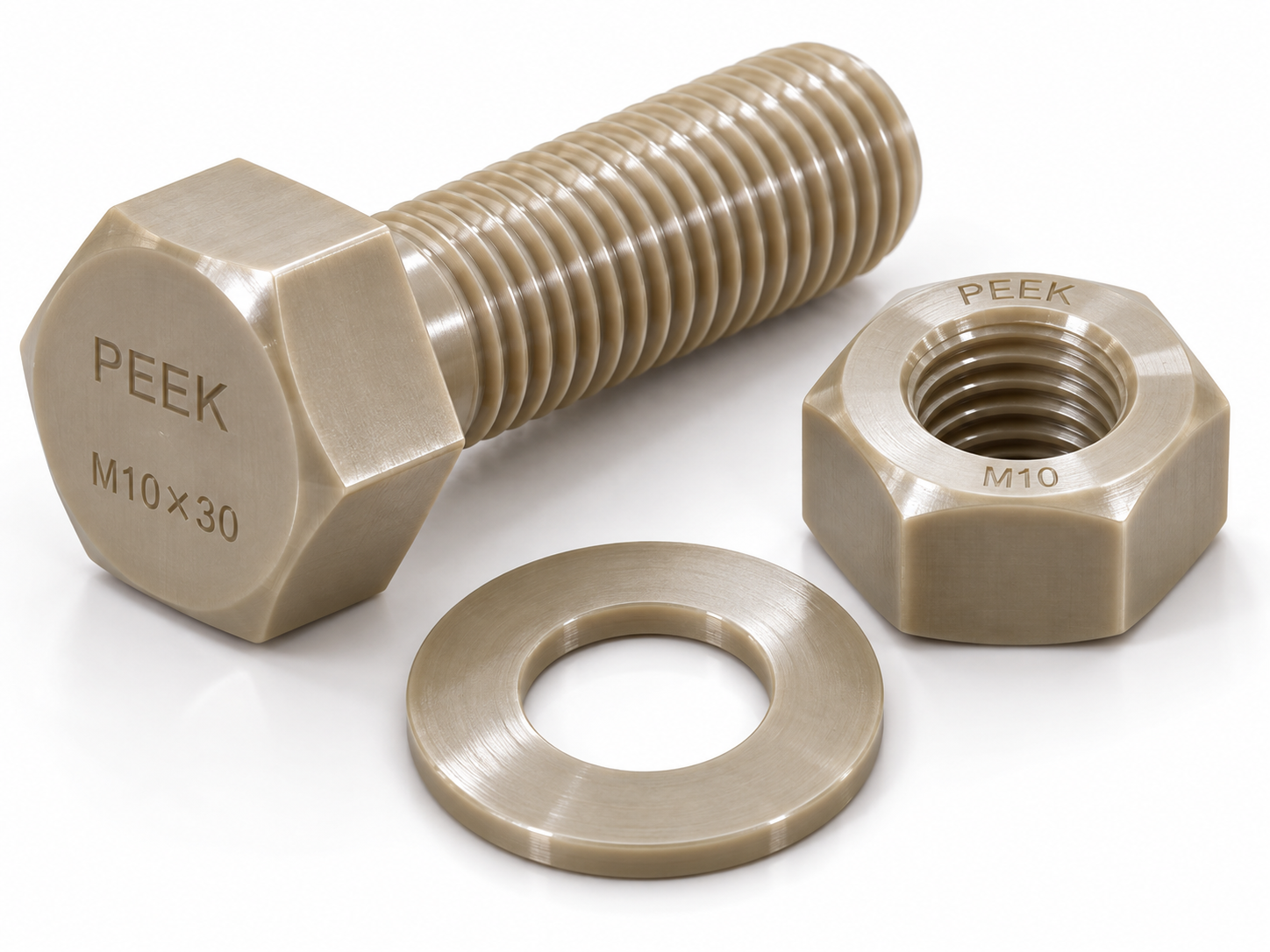
 PEEK Fasteners | Polyetheretherketone Bolts, Nuts, Screws – High-Performance Polymer | RAYCHIN LIMITED
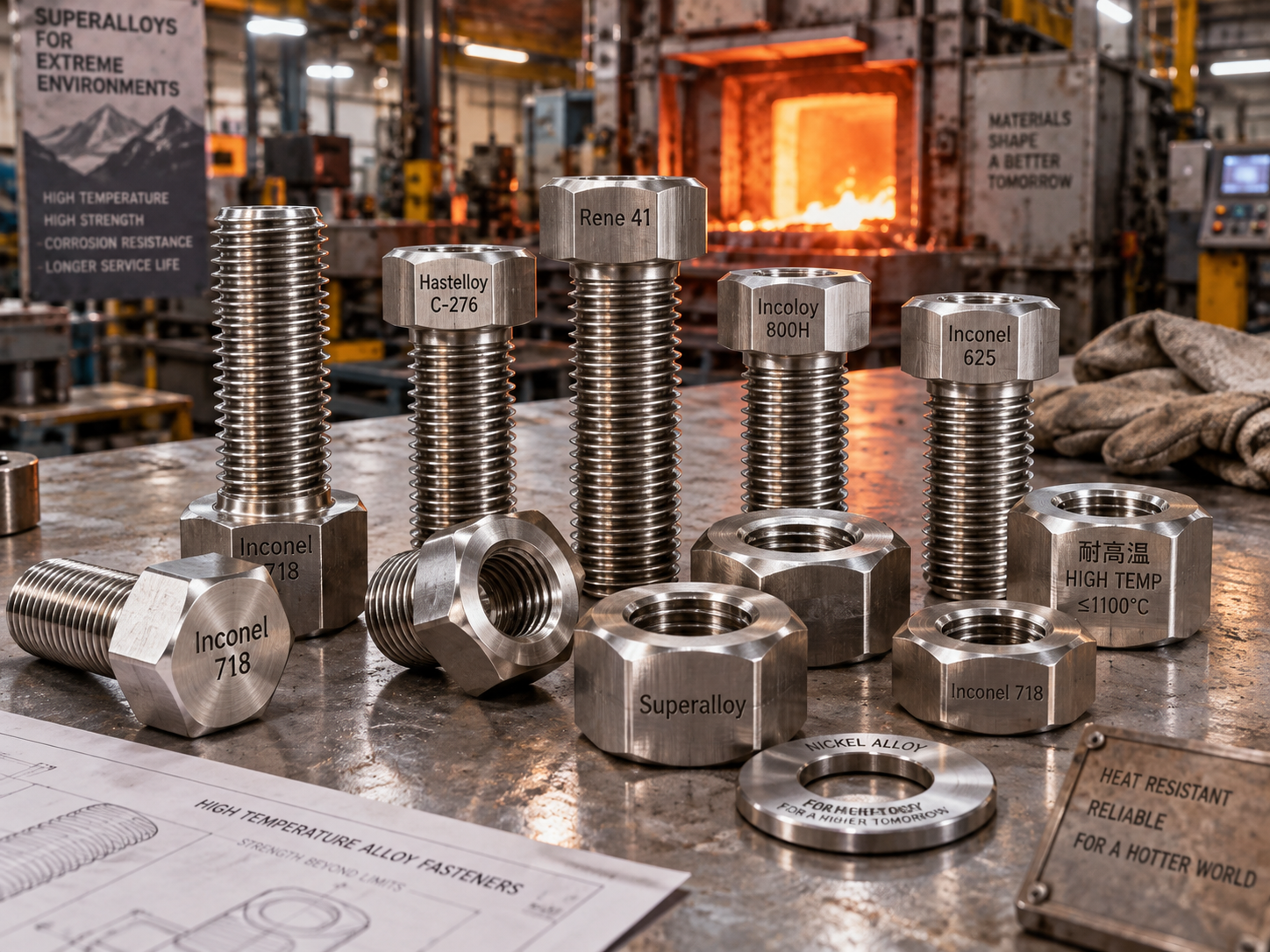
 High-Temperature Alloy Fasteners: Complete Material Guide, Chemistry, Performance Comparison | RAYCHIN LIMITED
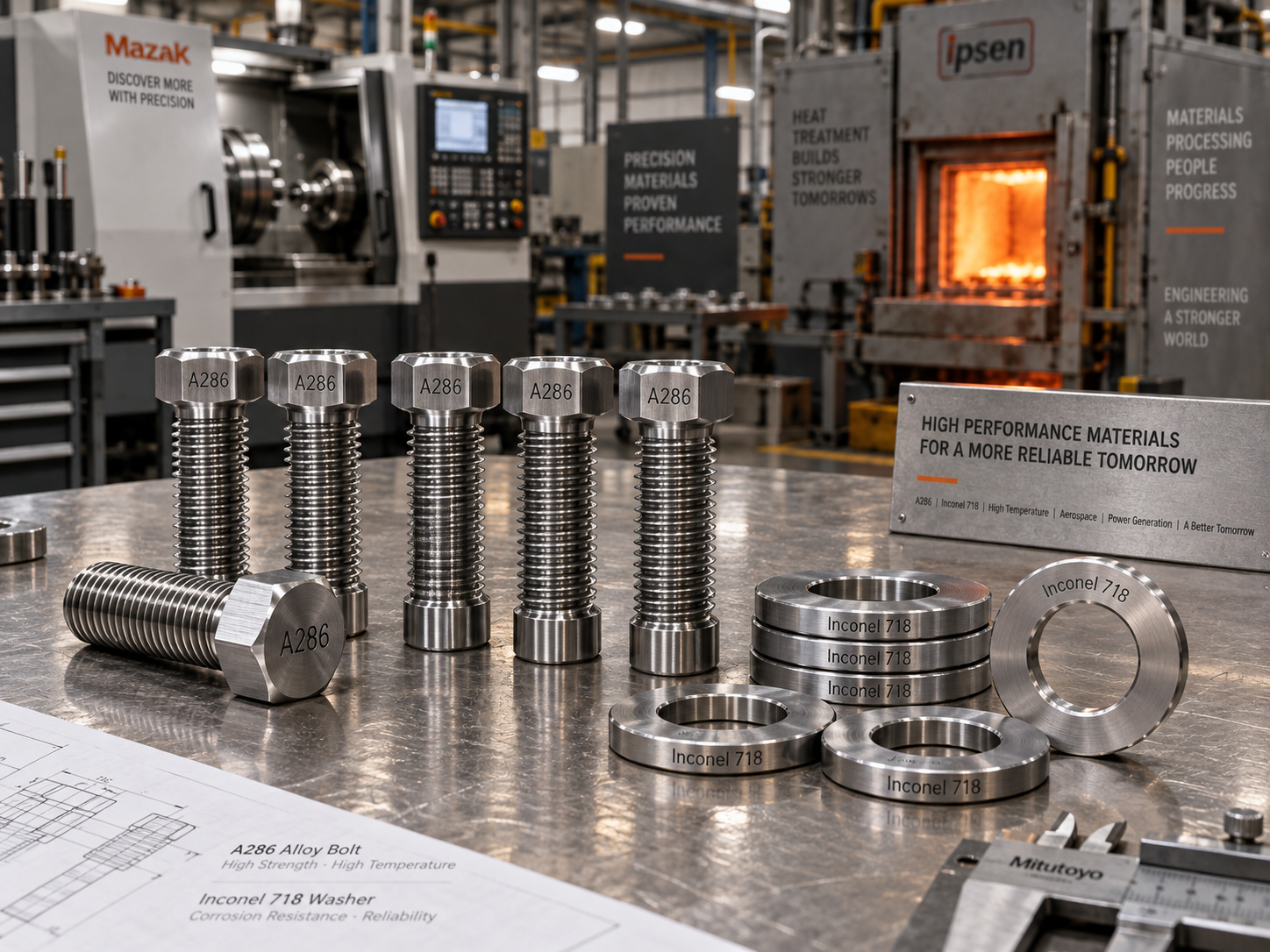
 High-Temperature Fastener Material Selection Guide | A286, Inconel 718, Nimonic 80A, Waspaloy – RAYCHIN LIMITED
Alloy 20 vs 316L, 317L, 904L, Duplex, AL6XN, Hastelloy & More: The Acid‑Resistant Fastener Showdown
For engineers specifying fasteners in sulfuric, phosphoric, or mixed‑acid environments, the material selection decision can be daunting. Alloy 20 (UNS N08020, Carpenter 20) has been the benchmark for sulfuric acid bolting for decades, but how does it truly compare against 316L, 317L, 904L, duplex 2205, AL6XN, Hastelloy C‑276, Monel 400, and Incoloy 825? The answer depends on acid concentration, temperature, chloride contamination, and budget. RAYCHIN LIMITED, a specialist global manufacturer of all these alloys, presents this definitive, data‑driven comparison to help you specify the right fastener for your acid service.
1. Alloy 20 vs 316L Fasteners
Alloy 20 vs 316L fasteners is the most fundamental upgrade for acid service. 316L relies on its 2–3% molybdenum for pitting resistance but has no inherent resistance to sulfuric acid. In concentrations above 5% at moderate temperatures, 316L corrodes rapidly. Alloy 20, with its 32–38% nickel and 3–4% copper, passivates in sulfuric acid up to 40% concentration at temperatures approaching boiling. 20Cb‑3 vs 316L for acid service is not a close comparison—Alloy 20 is in a completely different league. When to use Alloy 20 instead of 316: whenever sulfuric, phosphoric, or mixed acids are present at concentrations that would attack standard stainless steel. 316L is suitable for general atmospheric and mild chemical exposure; Alloy 20 is required for real acid resistance.
2. Alloy 20 vs 317L Fasteners
317L contains 3–4% Mo, providing a moderate improvement in pitting resistance over 316L. However, like 316L, it lacks the nickel and copper content necessary to resist sulfuric acid. In acid service, Alloy 20 vs 317L fasteners shows the same decisive performance gap. Alloy 20 is required for sulfuric acid; 317L is only a marginal upgrade over 316L for chloride‑dominated environments.
3. Alloy 20 vs 904L Bolts
904L (UNS N08904) is a higher‑nickel (23–28%) austenitic stainless steel with better acid resistance than 316L or 317L. It resists sulfuric acid up to about 20% concentration at moderate temperatures. However, Alloy 20 vs 904L bolts still favors Alloy 20 for the most aggressive acid service. Alloy 20's 32–38% nickel and 3–4% copper provide superior resistance to higher concentrations and temperatures. For marginal acid conditions, 904L may suffice; for reliable, long‑term performance in strong sulfuric or phosphoric acid, Alloy 20 is the better choice.
4. Alloy 20 vs 2205 Duplex Fasteners
Duplex 2205 provides high strength (450 MPa yield) and good chloride pitting resistance but is not designed for sulfuric acid service. In reducing acid environments, duplex stainless steels can suffer from selective corrosion and hydrogen embrittlement. Alloy 20 vs 2205 duplex fasteners: choose Alloy 20 for acid service; choose 2205 for high‑strength bolting in chloride environments without strong acids.
5. Alloy 20 vs AL6XN Fasteners
AL6XN is a 6Mo super austenitic stainless steel with exceptional chloride pitting resistance (PREN 44–46). It resists seawater, bleach, and acidic brines but is not specifically formulated for sulfuric acid. Alloy 20 vs AL6XN fasteners: AL6XN is the champion for warm seawater and oxidizing chloride environments; Alloy 20 is the champion for sulfuric and phosphoric acid. The two alloys serve different primary functions, though both outperform 316L dramatically.
6. Alloy 20 vs Hastelloy C‑276 Bolts
Hastelloy C‑276 provides the most comprehensive corrosion resistance—handling reducing acids, oxidizing acids, and chlorides—but at a cost 3–5 times that of Alloy 20. Alloy 20 vs Hastelloy C‑276 bolts: for sulfuric acid service in the concentration and temperature ranges where Alloy 20 passivates (up to 40%, near boiling), Alloy 20 provides sufficient resistance at far lower cost. Hastelloy C‑276 is required when mixed acids, oxidizing contaminants, or extreme temperatures are present simultaneously.
7. Alloy 20 vs Monel 400
Monel 400 is a nickel‑copper alloy with excellent resistance to hydrofluoric acid and seawater, but only fair resistance to sulfuric acid. Alloy 20 vs Monel 400: Alloy 20 is superior for sulfuric and phosphoric acid; Monel 400 is superior for HF and marine environments. The two alloys are rarely interchangeable.
8. Alloy 20 vs Incoloy 825 Fasteners
Incoloy 825 (UNS N08825) is a nickel‑iron‑chromium alloy with added molybdenum and copper. It resists sulfuric and phosphoric acids and is often considered a direct competitor to Alloy 20. In many applications, Alloy 20 vs Incoloy 825 fasteners are interchangeable, with similar acid resistance profiles. Alloy 20 is more commonly specified in US‑based sulfuric acid alkylation and chemical processing designs, while Incoloy 825 may appear in European projects. RAYCHIN manufactures both and can advise on the most cost‑effective option for your project.
9. Best Material for Sulfuric Acid Bolts — Decision Matrix
10. Alloy 20 vs Carpenter 20 Cost and Availability
Alloy 20 vs Carpenter 20 cost: these are the same material, with "Carpenter 20" being a trademark of Carpenter Technology. Pricing is identical. Compared to standard stainless steels, Alloy 20 costs approximately 3–4 times more than 316L, but less than half the price of Hastelloy C‑276. For projects where 316L is inadequate but nickel alloys are unaffordable, Alloy 20 is the cost‑effective sweet spot.
Send your acid concentration, temperature, and presence of chlorides or oxidizers to our technical team. We'll provide an unbiased alloy recommendation and competitive quotation within 24 hours.
✉️ sales@ray-chin.com? www.ray-chin.com | Alloy 20 · 316L · 904L · Hastelloy · Incoloy 825
Request A Quote! We'll respond as soon as possible(within 12 hours)
Get a Quote