
Categories List
Recent Posts
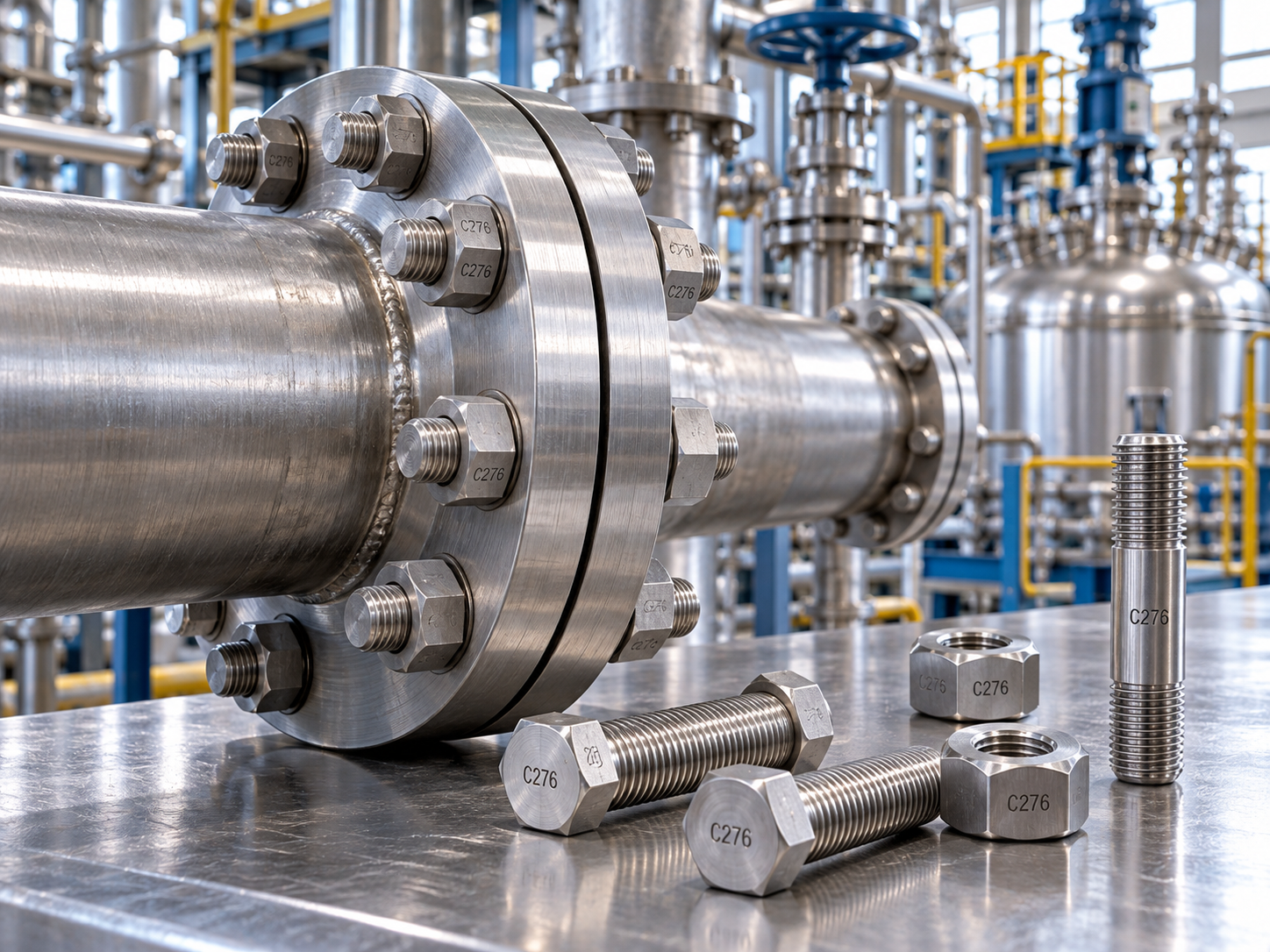
 Hastelloy C276 Fasteners: Bolts, Nuts, Screws, Studs & Washers for the World's Most Aggressive Corrosive Environments
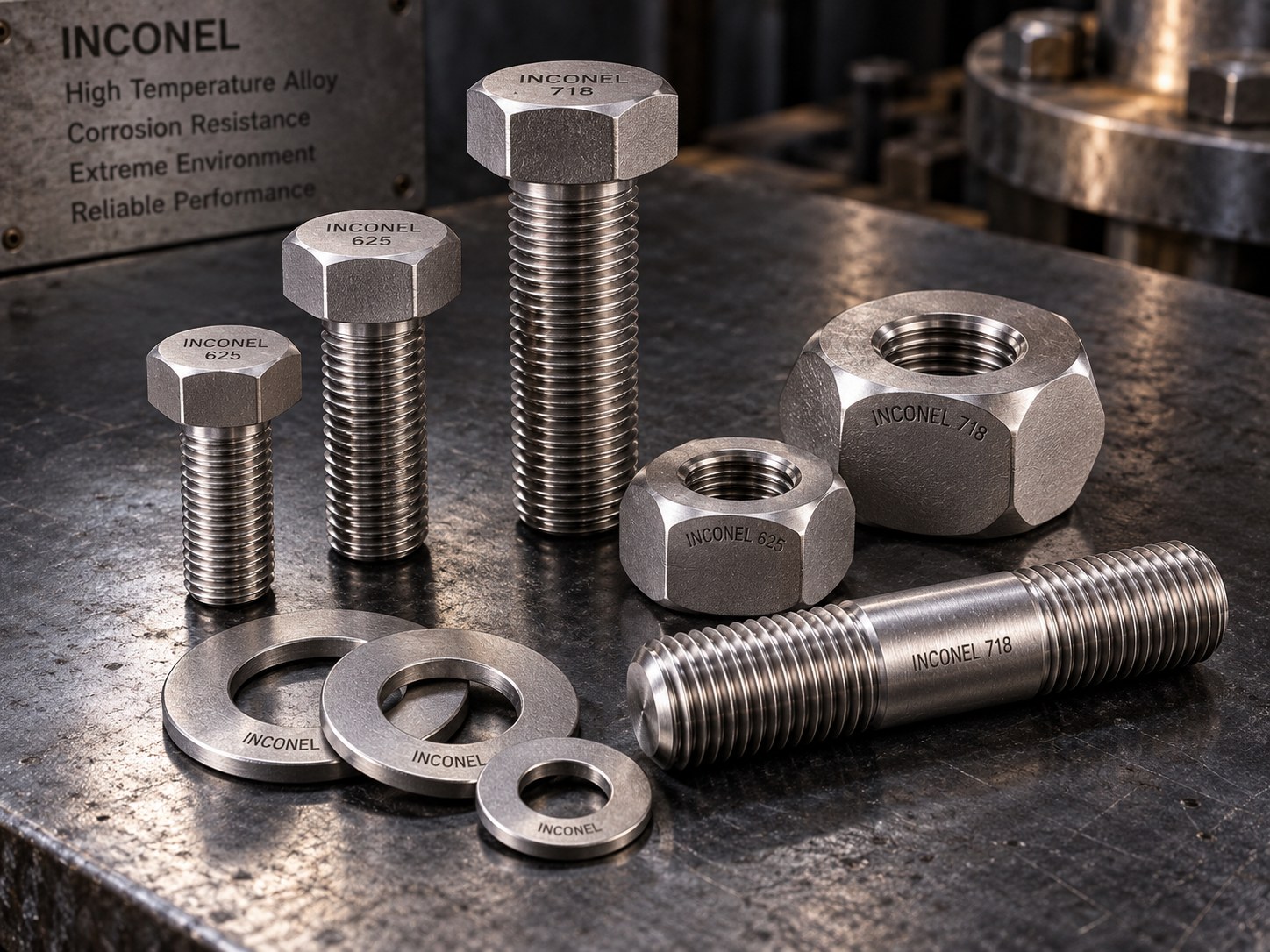
 Inconel Fasteners: Bolts, Nuts, Washers, Studs – Complete Technical Guide | RAYCHIN LIMITED
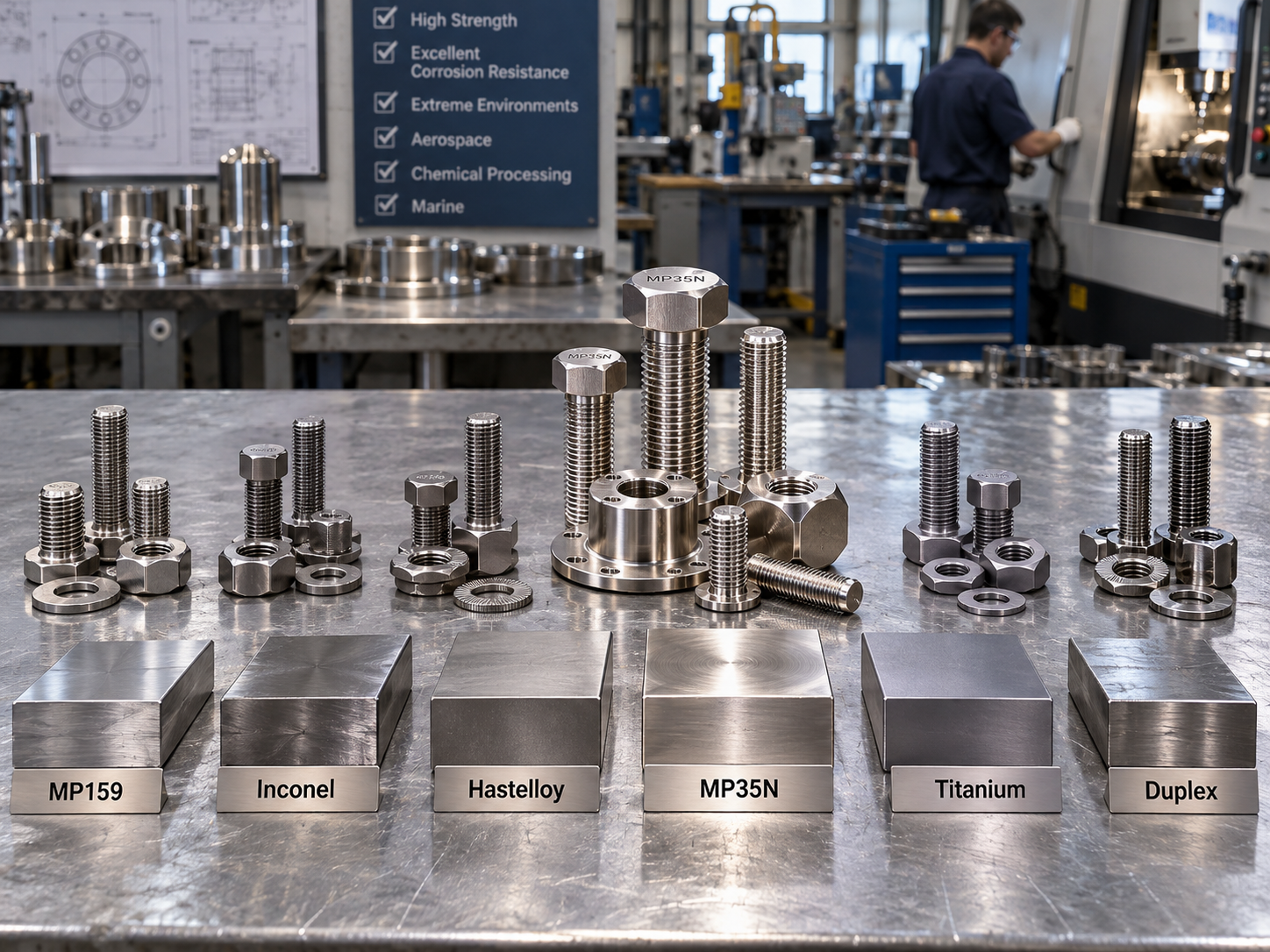
 MP35N vs Inconel, Titanium, C276, Complete Material Comparison Guide for Fasteners | RAYCHIN LIMITED
Incoloy vs 310, 316L, Alloy 20, Hastelloy, Inconel, Super Duplex & More: The Ultimate Fastener Showdown
Selecting the right fastener material for high-temperature, corrosive, or sour service environments requires careful navigation across a wide field of candidate alloys. The Incoloy family—spanning 800, 800H, 800HT, 825, 925, and 25-6Mo—offers a versatile range of properties, but how do these grades truly compare against 310 stainless, 316L, Alloy 20, Hastelloy C276, Inconel 718, 17-4PH, super duplex 2507, and AL6XN? RAYCHIN LIMITED, a specialist global manufacturer of all these alloys with decades of in-house experience, presents this definitive, data-driven comparison to help you specify the optimal fastener for your temperature, corrosion, and strength requirements.
1. Incoloy 800 vs 310 Stainless Steel Fasteners
Incoloy 800 vs 310 stainless steel fasteners is a key comparison for high-temperature furnace and heat-treatment applications. Both alloys offer excellent oxidation resistance, but their strengths diverge under carburizing conditions. 310 (UNS S31000) relies on 20% nickel and 25% chromium for oxidation resistance up to 1100°C. Incoloy 800, with its 32% nickel and 21% chromium, provides superior carburization resistance due to the higher nickel content, which blocks carbon diffusion. For purely oxidizing furnace atmospheres, 310 is a cost-effective choice; for carburizing or nitriding environments, Incoloy 800 or 800H is required.
2. Incoloy 825 vs 316L Bolts
Incoloy 825 vs 316L bolts highlights a dramatic upgrade in both acid resistance and chloride tolerance. 316L has a PREN of approximately 24 and no meaningful resistance to sulfuric acid. Incoloy 825, with its 38–46% nickel, 2.5–3.5% molybdenum, and copper, provides a PREN of 31–34 and excellent resistance to sulfuric, phosphoric, and mixed acids. When to use Incoloy 825 instead of 316: whenever sulfuric acid, phosphoric acid, or strong chloride solutions are present at temperatures that would pit or corrode 316L within days. For general atmospheric and mild chemical service, 316L remains adequate and more economical.
3. Incoloy 825 vs Alloy 20 Fasteners
Alloy 20 (UNS N08020) and Incoloy 825 are direct competitors for sulfuric acid service. Both contain nickel, chromium, molybdenum, and copper, providing excellent acid resistance. Alloy 20 has slightly higher nickel (32–38%) and chromium (19–21%), while Incoloy 825 has a broader nickel range (38–46%) and includes titanium stabilization. In practice, Incoloy 825 vs Alloy 20 fasteners are often interchangeable for sulfuric acid alkylation and pickling operations. RAYCHIN manufactures both grades and can advise on the most cost-effective option based on your specific acid concentration and temperature.
4. Incoloy 825 vs Hastelloy C276 Bolts
Hastelloy C-276 provides the most comprehensive corrosion resistance—handling reducing acids, oxidizing acids, and chlorides simultaneously—but at a cost 3–5 times that of Incoloy 825. Incoloy 825 vs Hastelloy C276 bolts: Incoloy 825 is the cost-effective standard for sulfuric and phosphoric acid service, where its resistance is more than adequate. Hastelloy C-276 is required for the most extreme mixed-acid environments, where both strong reducing and oxidizing conditions coexist, or where the temperature and concentration exceed Incoloy 825's capability.
5. Incoloy 925 vs Inconel 718 Fasteners
Incoloy 925 vs Inconel 718 fasteners is a comparison between two age-hardenable, NACE-compliant high-strength alloys. Inconel 718 offers a higher room-temperature yield strength (150 ksi vs 110 ksi for Incoloy 925) and operates to 704°C. Incoloy 925 offers excellent corrosion resistance, particularly in sour gas and chloride environments, at a lower cost. Incoloy 925 vs super duplex fasteners similarly shows that Incoloy 925 provides superior strength and sour service performance. For HPHT wellhead fasteners below 650°C where cost is a driver, Incoloy 925 is often selected; for maximum tensile strength or temperatures above 650°C, Inconel 718 is preferred.
6. Incoloy 925 vs 17-4PH Bolts
17-4PH H900 provides high room-temperature strength (170 ksi YS) at a lower cost than Incoloy 925. However, 17-4PH is limited to 315°C and is not NACE-compliant for sour service. Incoloy 925 vs 17-4PH bolts: Incoloy 925 maintains its strength to 650°C, is fully NACE MR0175 compliant, and offers far superior resistance to chloride stress corrosion cracking. For sour oil and gas applications, subsea equipment, and any environment where H₂S is present, Incoloy 925 is the required upgrade; 17-4PH is suitable only for non-sour, moderate-temperature industrial bolting.
7. Incoloy 925 vs Inconel 625
Inconel 625 is solid-solution strengthened with a yield strength of 60–100 ksi, lower than Incoloy 925's 110 ksi minimum. However, Inconel 625 provides exceptional seawater corrosion resistance and operates to 650°C. Incoloy 925 vs Inconel 625: Incoloy 925 offers higher strength and is age-hardenable, making it preferred for high-pressure wellhead and subsea fasteners. Inconel 625 is chosen when maximum seawater corrosion resistance is needed and strength requirements are moderate.
8. Incoloy 800 vs Inconel 600 Fasteners
Inconel 600 (UNS N06600) contains 72% nickel and 15% chromium, providing exceptional carburization resistance and high-temperature oxidation resistance up to 1150°C. Incoloy 800 offers similar temperature capability at a lower cost due to its lower nickel content. Incoloy 800 vs Inconel 600 fasteners: Incoloy 800 is the economical choice for most furnace and heat-treatment applications. Inconel 600 is reserved for the most severe carburizing conditions or where the highest chloride SCC resistance is required.
9. Incoloy 800H vs Alloy 330 Bolts
Alloy 330 (UNS N08330) contains 35% nickel and 19% chromium, offering excellent carburization resistance. Incoloy 800H, with 32% nickel and 21% chromium, provides similar carburization performance with better creep strength at high temperatures due to its controlled carbon content. Incoloy 800H vs Alloy 330 bolts: Incoloy 800H is often preferred when elevated-temperature strength is the primary driver; Alloy 330 is selected when maximum carburization resistance in severe furnace atmospheres is critical. The two are frequently interchangeable in practice.
10. Incoloy 25-6Mo vs AL6XN Fasteners
Incoloy 25-6Mo vs AL6XN fasteners is essentially a comparison of two identical 6% molybdenum super austenitic stainless steels. Incoloy 25-6Mo is the Special Metals designation for UNS N08926, while AL6XN (UNS N08367) is the Allegheny Ludlum tradename for essentially the same alloy. Both offer a PREN of 43–47 and perform identically in seawater and high-chloride environments. The choice comes down to project specification and regional availability.
11. Best Material for Sulfuric Acid Bolts and High-Temperature Fasteners — Decision Matrix
12. Best Nickel Alloy for High Temperature Fasteners
The best nickel alloy for high temperature fasteners depends on the temperature window and atmosphere. For 800–1100°C in carburizing or oxidizing atmospheres, Incoloy 800H/800HT provides the best cost-performance balance. For extreme temperatures above 1150°C, Inconel 601 with its alumina scale is preferred. For sour HPHT wellheads at moderate temperatures, Incoloy 925 or Inconel 718 deliver the necessary strength and NACE compliance.
13. RAYCHIN's Multi-Alloy Manufacturing and Expert Guidance
RAYCHIN LIMITED is not aligned with a single alloy. We manufacture certified fasteners across the entire Incoloy, Inconel, Hastelloy, duplex, and stainless steel spectrum. This unique position allows us to provide genuinely unbiased material selection guidance. Our in-house manufacturing, vacuum heat treatment, and complete mechanical testing ensure that whichever alloy you choose, the fasteners we deliver will match their certificates—every time.
Send your temperature, corrosion environment, and strength requirements to our technical team. We'll provide an unbiased alloy recommendation and competitive quotation within 24 hours.
✉️ sales@ray-chin.com? www.ray-chin.com | Incoloy · Inconel · Hastelloy · Duplex · Global Supply
Request A Quote! We'll respond as soon as possible(within 12 hours)
Get a Quote