
Inconel Fasteners: Bolts, Nuts, Screws, Studs & Washers
The definitive engineering guide to Inconel bolting — grades 718, 625, 600, 601, 725, X-750 and 825. Chemical composition, mechanical properties, ASTM specifications, galling prevention, sour-service compliance, and real-world selection criteria from the shop floor to the wellhead.
Why Inconel Fasteners Are Not “Just Another Stainless Bolt”
When a flange joint leaks on a subsea Christmas tree, when a turbine casing bolt relaxes at 650 °C, or when a sour-gas wellhead stud fails a hardness check, the root cause is rarely the nut or the bolt as a shape. It is almost always a failure of material selection and bolting engineering.
Inconel® alloys — the nickel-chromium family that includes 718, 625, 600, 601, 725, X-750 and 825 — exist precisely for the operating envelopes where carbon steel, duplex stainless, and even 316L cannot survive. They are specified for creep resistance at temperature, sour-service compliance under NACE MR0175 / ISO 15156, and corrosion resistance in chlorides, seawater, and reducing acids.
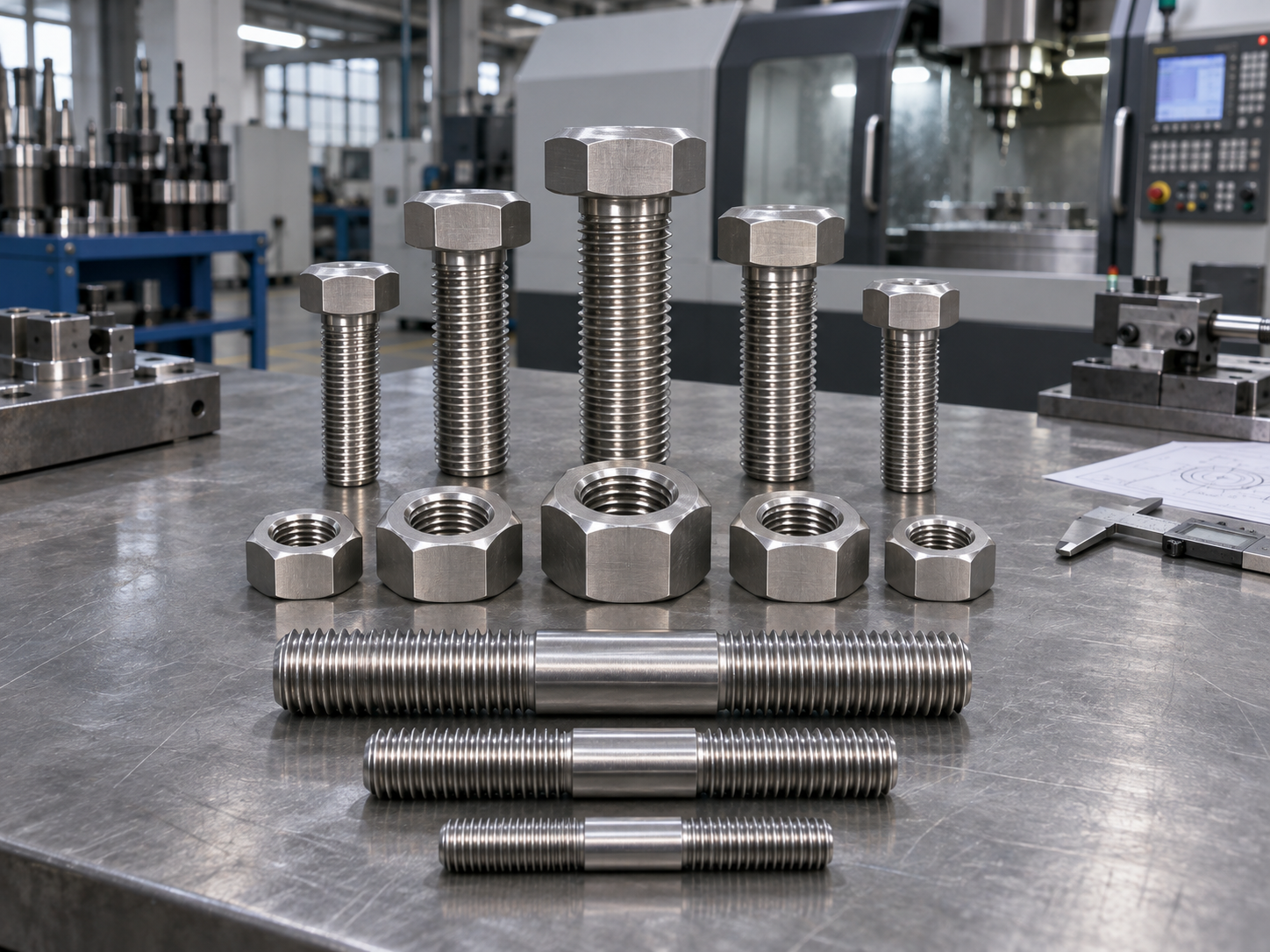
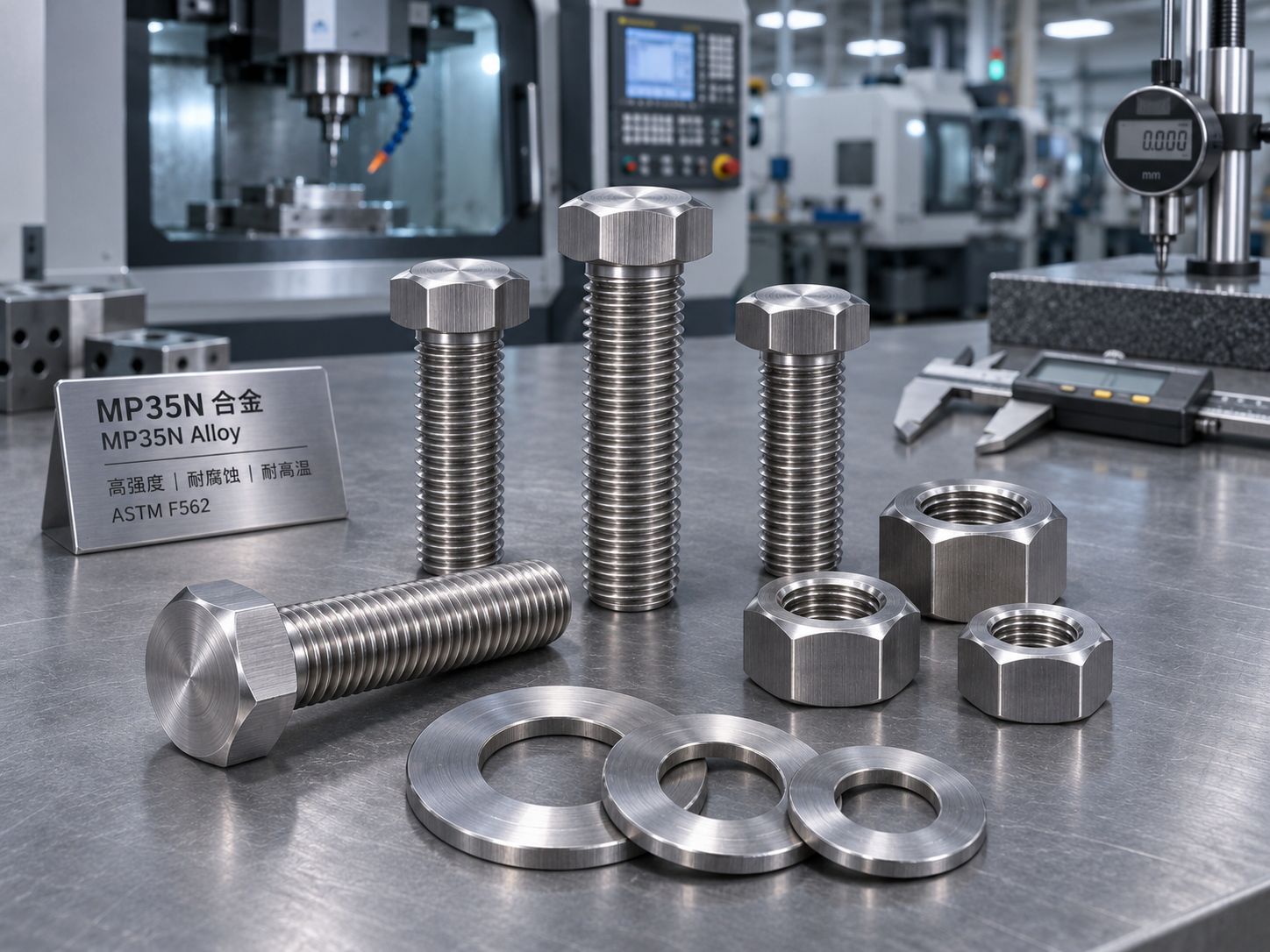
RAYCHIN LIMITED manufactures Inconel bolts, nuts, screws, studs, and washers across the full nickel-alloy spectrum — from certified mill stock through machining, heat treatment, and final testing. Every order ships with EN 10204 3.1 material certification, PMI reports, and mechanical test results. This guide distills the metallurgy our engineers apply daily.
1. Inconel Fastener Grades at a Glance
No single Inconel grade is “best.” Each alloy is a deliberate balance of nickel, chromium, molybdenum, niobium, and titanium. The table below compares the grades RAYCHIN produces routinely, with their primary bolting rationale.
Chemical ranges are nominal; refer to the applicable ASTM / AMS specification for purchase-order limits. RAYCHIN verifies chemistry by PMI on every lot.
2. The Four Workhorse Grades — Engineered for Bolting
Inconel 718 Bolts & Studs
UNS N07718 is the default choice when a bolted joint must hold preload at temperature. The γ″ (gamma-double-prime) precipitate, formed by a solution treat at 1700–1850 °F followed by a double age, delivers 185 ksi (1275 MPa) tensile and 150 ksi (1034 MPa) yield at room temperature, with stress-rupture capability to 650 °C (1200 °F).
For bolting, 718 is specified under ASTM B637 (bar) and AMS 5662 / 5663 (aerospace stock). Sour-service versions are aged to a maximum 40 HRC for sulfide stress-cracking resistance under NACE MR0175. RAYCHIN machines 718 studs and nuts with digitally recorded heat-treat cycles and verifies hardness (36–44 HRC) on every lot.
Inconel 625 Nuts & Washers
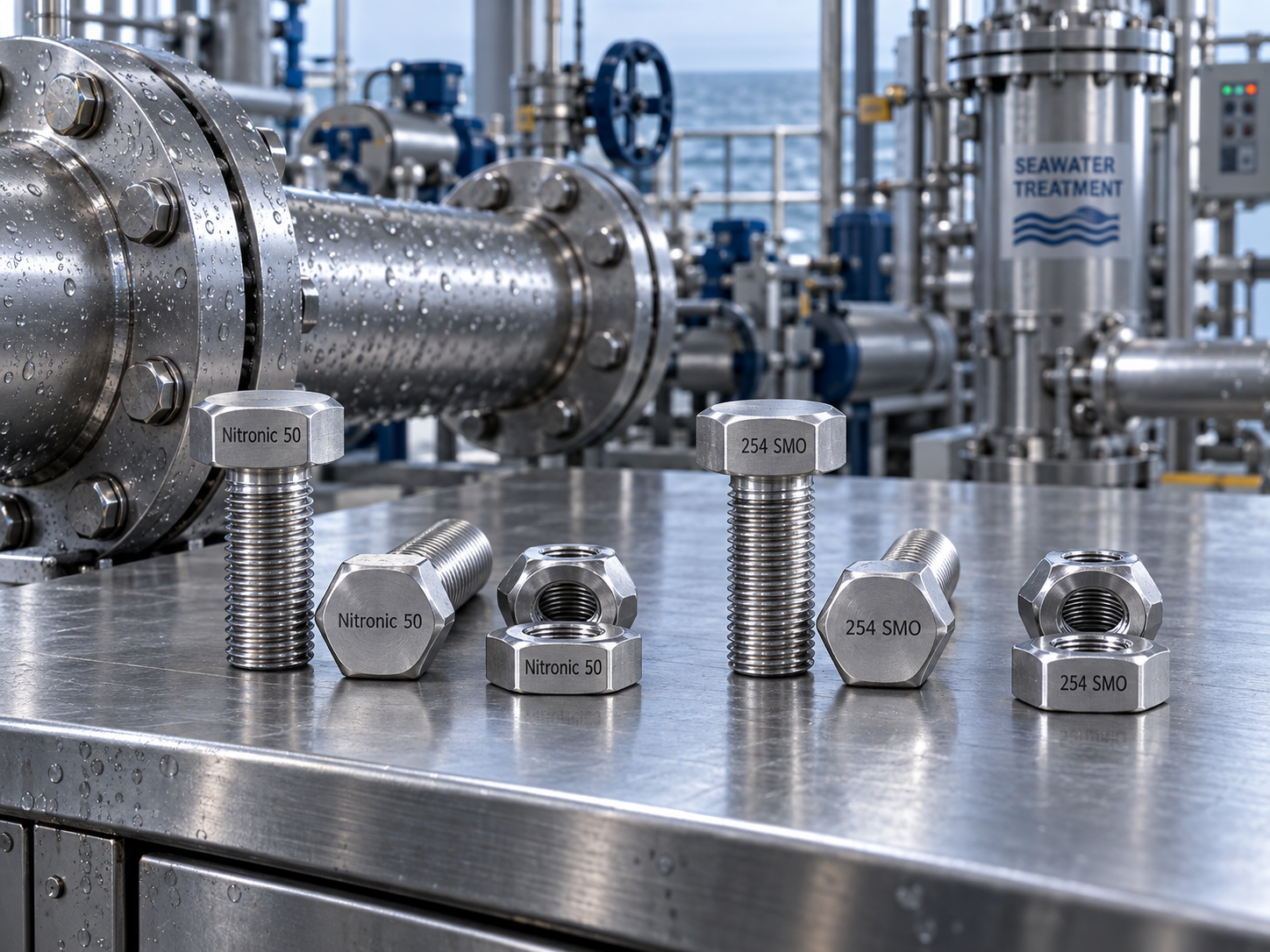
UNS N06625 is a solid-solution alloy molybdenum and niobium in a nickel-chromium matrix give it exceptional resistance to pitting, crevice corrosion, and chloride-induced stress-corrosion cracking. It is the grade specified when the environment, not the strength, is the limiting factor: seawater, wet chlorine, subsea manifolds, and sour gas.
ASTM B446 defines two bolting conditions: Grade 1 (annealed) for service up to 1100 °F (593 °C), and Grade 2 (solution annealed) for higher temperatures where creep and rupture resistance matter. For sour service, 625 fasteners are supplied NACE MR0175 / ISO 15156 compliant and are commonly paired with 718 studs in dissimilar-alloy flange joints.
Inconel 600 Studs & Screws
UNS N06600 contains no molybdenum, which makes it less resistant than 625 to pitting and crevice attack — but it is a workhorse for dry, high-temperature oxidation and chloride stress-corrosion cracking. With ≥72% nickel, it resists sensitization and maintains ductility through thermal cycling.
In bolting, 600 is selected for furnace hardware, chemical evaporators, and heat-treat fixtures where the operating mode is oxidation rather than aqueous corrosion. It is often the cost-effective alternative when 625’s molybdenum is metallurgically unnecessary.
Inconel X-750 Turbine Bolting
UNS N07750 is the spring and fastener superalloy. Hardened by γ′ (gamma-prime) precipitates of titanium, aluminium, and niobium, it delivers 170 ksi tensile / 115 ksi yield (Type 2, under 2½ in.) and keeps useful strength to about 1300 °F (704 °C) — with the relaxation resistance that turbine bolting demands.
ASTM B637 defines three heat-treatment types with different strength/creep balances. X-750 is non-magnetic and is used for turbine casing bolts, high-temperature springs, and nuclear hardware. RAYCHIN supplies X-750 fasteners from certified B637 bar with PMI on every lot.
3. How to Select the Right Inconel Grade for Bolting
Material selection for fasteners is not the same as selection for a pressure boundary. A bolted joint has a unique failure mode — preload relaxation — and the grade must be chosen with that in mind.
3.1 Strength vs. Corrosion: The 718 / 625 Decision
This is the most common specification dilemma. The rule of thumb is straightforward:
- Choose 718 when high tensile strength and creep resistance are paramount — gas turbine bolting, HPHT wellheads, and aerospace shear joints. 718 is roughly three times stronger than 625 in yield, but its corrosion resistance in reducing acids and chlorides is lower.
- Choose 625 when the environment is highly corrosive — seawater, wet chlorine, subsea manifolds, and sour gas — and the strength requirement is moderate. 625 is the safer choice for aqueous corrosion, but it will not hold the same preload at temperature as 718.
- Choose 725 when you need both: it offers approximately twice the strength of 625 with comparable corrosion resistance, and is NACE MR0175 compliant for sour service.
3.2 Sour Service: NACE MR0175 Is a Floor, Not a Ceiling
In oil and gas, sour-service bolting is governed by NACE MR0175 / ISO 15156, which limits hardness and mandates qualified alloys. This is a compliance point, not a preference. For wellhead, subsea, and flowline flanges exposed to H2S, CO2, and chlorides, Inconel 625 is widely specified for its corrosion resistance, while 718 aged to ≤40 HRC and 725 are used where strength plus sour resistance is required.
Hardness is the gatekeeper. Even a compliant alloy can fail a sour-service specification if the heat treatment is not controlled. RAYCHIN verifies hardness on every lot and supplies full traceability to the mill heat.
3.3 Temperature: Where Each Grade Stops Working
4. Galling: The Inconel Bolting Problem You Must Design Around
Inconel fasteners are prone to galling (cold welding). This is not a defect — it is an intrinsic consequence of the same ductility and corrosion resistance that make the alloys desirable. During tightening, the protective oxide film on the threads is sheared, nascent metal atoms contact, and micro-welds form. Under continued rotation, chunks of thread material tear out, friction escalates, and the joint seizes.
4.1 Prevention Is a Process, Not a Product
- Use a qualified anti-seize compound. Molybdenum disulfide (MoS₂)-based pastes are the single most effective prevention measure for stainless and nickel-alloy threads. Nickel-based anti-seize is preferred for higher temperatures.
- Control tightening speed. High-speed installation generates localised heat that softens the metal and accelerates adhesive wear. Slow, steady rotation is safer.
- Specify the right thread tolerance and finish. A slightly looser fit and a smoother surface reduce the contact pressure at asperities.
- Consider dry-film lubricants for aerospace and high-vacuum applications where wet paste is unacceptable. MoS₂ and WS₂ dry films are qualified for Inconel 718 and similar alloys.
RAYCHIN’s bolting note: We supply Inconel fasteners either bare or pre-lubricated with a customer-approved anti-seize. For critical joints, we recommend specifying the lubricant and the target torque in the purchase order — not leaving it to the field.
5. Where Inconel Fasteners Earn Their Keep
5.1 Aerospace and Gas Turbines
Inconel 718 is the premier aerospace bolting alloy. It is specified in AMS 5662 / 5663 and in aerospace bolt standards such as EN 3327, which covers double-hexagon-head, close-tolerance bolts in Inconel 718 for shear-loaded applications, classified at 1275 MPa / 650 °C. X-750 is the choice for turbine bolting and high-temperature springs where relaxation resistance is the limiting property.
5.2 Oil & Gas: Wellheads, Subsea, and Sour Service
Sour-service bolting is governed by NACE MR0175 / ISO 15156, which limits hardness and mandates qualified alloys. Inconel 625 is widely used for wellhead, subsea, and flowline flange fasteners exposed to H₂S, CO₂, and chlorides — environments where standard duplex or stainless steel would eventually fail. Inconel 718, aged to ≤40 HRC, and Inconel 725 are specified for higher-strength sour-service joints, including API 6A CRA bolting.
5.3 Chemical Processing and High-Temperature Furnaces
Inconel 600 and 601 are the oxidation workhorses for furnace hardware, kiln bolts, and heat-treat fixtures. Inconel 625 and 825 are selected for chemical processing where chlorides, sulfuric acid, or phosphoric acid are present. The common thread is that the fastener is often the first component to see the aggressive environment — and the hardest to replace.
6. What “Certified Inconel Fasteners” Actually Means
A purchase order for Inconel bolting should never be fulfilled on the basis of “we used the right bar.” The specification chain must be closed at every step:
- Mill certification: EN 10204 3.1 material test report, traceable to the heat number.
- Positive Material Identification (PMI): Every lot verified for the major alloying elements — Ni, Cr, Mo, Nb — before machining.
- Heat-treatment records: Solution treat and age parameters digitally recorded; hardness verified to the applicable ASTM / AMS limit.
- Mechanical testing: Tensile, yield, elongation, and where required, stress-rupture and hardness.
- Dimensional and thread inspection: UNC, UNF, 8UN, and metric thread forms gauged to the drawing.
RAYCHIN operates an ISO 9001 quality system and supplies Inconel fasteners with full documentation packages for oil & gas, aerospace, and chemical processing end users.
Need Inconel Fasteners That Hold the Joint?
Send your bolting specification — grade, size, thread form, ASTM / AMS reference, NACE requirement, and quantity — to RAYCHIN LIMITED. Our engineers will review the metallurgy, confirm the heat-treat condition, and quote a fully traceable Inconel fastener package.
www.ray-chin.com · sales@ray-chin.com
✉️ Email Our Bolting Team Visit ray-chin.com